
BMW M4 Models by Year: Complete 2015–2026 Guide

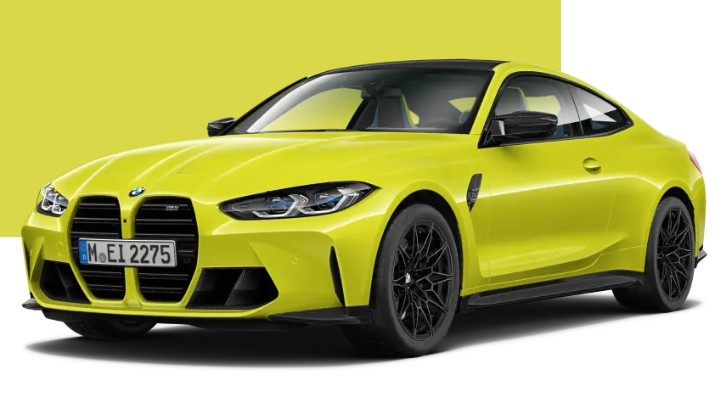
The BMW M4 models by year tell a fascinating story of how one performance coupe evolved from a relatively raw, rear-wheel-drive machine into one of BMW M's most versatile and technologically advanced cars.
When BMW introduced the M4, it wasn't simply launching another model. It was changing a formula enthusiasts had known for decades. The legendary M3 Coupe disappeared, and the M4 took its place as the performance flagship of the 4 Series family.
That change initially caused plenty of debate. Yet today, the M4 has developed its own identity.
Across two generations, BMW has offered manual transmissions, dual-clutch gearboxes, conventional automatics, rear-wheel drive, M xDrive all-wheel drive, Competition variants, convertibles and several highly collectible special editions.
That means comparing one M4 year with another isn't always straightforward.
A 2015 BMW M4 and a 2026 BMW M4 share a badge, but their personalities are quite different. One feels compact, edgy and mechanical. The other feels brutally fast, sophisticated and almost supercar-like.
So, let's break down the BMW M4 models by year, from the original F82 generation to the modern G82, and see what changed along the way.
Content in this publication
- BMW M4 Generations Overview
- Why BMW Created the M4
- First-Generation BMW M4 F82 and F83
- 2015 BMW M4: The Beginning
- 2016 BMW M4: Competition Package Changes the Formula
- 2017 BMW M4: Facelift Era Begins
- 2018 BMW M4: A Strong Used-Car Sweet Spot
- 2019 BMW M4: Mature F82 Performance
- 2020 BMW M4: End of the Original Generation
- Second-Generation BMW M4 G82 and G83
- 2021 BMW M4: G82 Arrives
- 2022 BMW M4: M xDrive Arrives
- 2023 BMW M4: The CSL Arrives
- 2024 BMW M4: Mature Pre-Facelift G82
- 2025 BMW M4: Major Refresh
- 2026 BMW M4: Refined Modern Formula
- BMW M4 Models by Year Quick Comparison
- BMW M4 Engines by Generation
- S55 Engine in the F82 M4
- S58 Engine in the G82 M4
- BMW M4 Transmission Differences
- Rear-Wheel Drive vs M xDrive
- Best BMW M4 Years to Buy Used
- Best BMW M4 for Performance
- Best BMW M4 for Collectors
- F82 vs G82 BMW M4
- Are M4 Competition Models Worth Buying?
- What to Check Before Buying a Used BMW M4
- How the BMW M4 Changed Over the Years
- Which BMW M4 Model Year Is Best Overall?
- Conclusion
- Frequently Asked Questions About BMW M4 Models by Year
BMW M4 Generations Overview
There have been two main BMW M4 generations.
| Generation | Approx. Model Years | Coupe Code | Convertible Code | Engine | Main Character |
|---|---|---|---|---|---|
| First Generation | 2015–2020 | F82 | F83 | S55 3.0L Twin-Turbo I6 | Raw, compact, mostly RWD |
| Second Generation | 2021–Present | G82 | G83 | S58 3.0L Twin-Turbo I6 | Faster, larger, more advanced |
The first-generation M4 introduced the S55 twin-turbo inline-six and retained the traditional rear-wheel-drive layout BMW M fans expected.
The second-generation M4 changed the recipe considerably. It brought the more powerful S58 engine, available all-wheel drive, a redesigned interior, newer electronics and much more aggressive performance.
Before looking at individual years, though, it helps to understand why the M4 existed in the first place.
Why BMW Created the M4
For years, BMW's performance coupe was called the M3 Coupe.
That changed when BMW reorganized its model lineup.
Sedans continued under the 3 Series name, while coupes and convertibles moved into the newly established 4 Series range. Because BMW M models generally follow the naming system of their regular counterparts, the two-door M3 became the BMW M4.
The M3 Sedan remained.
The M3 Coupe disappeared.
And the M4 was born.
At first, some BMW fans struggled with the change. The M3 Coupe name carried enormous history.
Yet the M4 quickly proved it wasn't merely an exercise in marketing. It became one of BMW M's most recognizable cars.
First-Generation BMW M4 F82 and F83
The first-generation M4 established the characteristics that would define the model.
It used BMW's S55 twin-turbo six-cylinder engine and was available with either a six-speed manual or seven-speed M dual-clutch transmission.
The Coupe carried the F82 chassis code.
The Convertible was known as the F83.
Compared with the naturally aspirated V8-powered M3 Coupe it replaced, the M4 delivered significantly more torque at lower engine speeds.
The result was explosive acceleration.
It also gave the first M4 a reputation for being rather lively.
Apply the throttle aggressively in the wrong situation and the rear tires could suddenly become very interested in going somewhere else.
That slightly mischievous nature remains a big part of the F82's appeal.
2015 BMW M4: The Beginning
The 2015 BMW M4 represents the beginning of the M4 story for many markets, particularly North America.
Under the hood sat the 3.0-liter S55 twin-turbocharged inline-six engine.
Output was approximately 425 hp in U.S. specification, while European measurements typically listed the engine at 431 PS.
Torque arrived much earlier than in the previous naturally aspirated M3, fundamentally changing the driving experience.
Buyers could choose between:
- A six-speed manual transmission
- A seven-speed M dual-clutch transmission
- Coupe or convertible body styles
- Rear-wheel drive
The manual gave the M4 a more traditional personality.
The dual-clutch transmission made it significantly faster and more aggressive.
How the 2015 M4 Feels
Early F82 models feel more raw than many later M4s.
Steering responses are quick, the chassis feels eager and the huge wave of turbocharged torque can overwhelm the rear tires surprisingly easily.
There's something appealing about that.
The 2015 M4 doesn't always feel perfectly polished, but it does feel alive.
For enthusiasts who value involvement more than absolute refinement, early cars remain interesting.
2016 BMW M4: Competition Package Changes the Formula
The M4 range became considerably more interesting when BMW introduced the Competition Package.
The package wasn't merely cosmetic.
BMW increased engine output to approximately 444 hp in U.S. specification and revised several important chassis components.
The Competition Package included changes to suspension tuning, stability-control calibration, exhaust character and wheel design.
The result was a sharper and more cohesive M4.
Many drivers considered it a meaningful improvement over the original setup.
Why the Competition Package Matters
The standard M4 was already extremely fast.
The Competition Package didn't transform it into a completely different car, but it refined the edges.
It made the suspension feel more controlled, the chassis more confident and the overall package more purposeful.
That is why Competition-equipped F82 models tend to attract considerable attention in the used market.
2016 BMW M4 GTS
Then BMW took the F82 formula and turned the volume knob almost completely clockwise.
The result was the BMW M4 GTS.
The GTS was designed with track performance as a priority.
It received additional power, significant weight reduction, aggressive aerodynamics and specialized suspension hardware.
This was no ordinary M4 with a few decorative upgrades.
The GTS was a proper limited-production performance model.
What Makes the M4 GTS Special?
The M4 GTS represents one of the most extreme interpretations of the first-generation M4.
It sacrifices comfort and practicality in exchange for sharper track behavior.
Today, it occupies a considerably different market from a normal F82.
Most buyers looking for an everyday M4 probably won't choose one.
Collectors, however, often view it as one of the most significant F82 variants.
2017 BMW M4: Facelift Era Begins
The 2017 period brought visual updates to the M4 range.
BMW refreshed details such as the lighting design and updated several exterior and interior elements.
The fundamental mechanical architecture remained familiar.
Buyers still received the S55 engine, rear-wheel drive and a choice between manual and dual-clutch transmissions depending on configuration.
By this point, however, the M4 platform had become more mature.
BMW had spent several years refining the formula.
The result was a car that retained the aggressive personality of early F82 models while feeling more developed.
2017 BMW M4 CS
Another major addition was the BMW M4 CS.
The CS was positioned between the regular Competition model and the hardcore M4 GTS.
That's an interesting place to be.
It offered additional performance and weight-saving measures without becoming quite as uncompromising as the GTS.
For many enthusiasts, the CS represented a near-perfect balance.
It was special enough to feel exotic but still practical enough to use regularly.
2018 BMW M4: A Strong Used-Car Sweet Spot
The 2018 BMW M4 didn't completely reinvent the platform.
And that may actually be one of its strengths.
By this stage, buyers benefited from a mature version of the first-generation car.
The styling updates were already incorporated, Competition versions were established and the platform had been on the market long enough for BMW to refine it.
For used-car shoppers, that makes a 2018 M4 particularly interesting.
You still receive the classic F82 character without necessarily paying collector prices for a CS or GTS.
Why a 2018 Competition Can Be Attractive
A clean 2018 M4 Competition offers an appealing combination of:
- Strong S55 performance
- Rear-wheel-drive dynamics
- Updated styling
- Available manual or DCT
- More mature chassis tuning
- Lower prices than rare special editions
It's a bit like buying a well-developed version of the original recipe rather than the first batch out of the kitchen.
2019 BMW M4: Mature F82 Performance
The 2019 M4 continued the established first-generation formula.
By then, BMW wasn't trying to reinvent the car every year.
Instead, the F82 had entered its mature phase.
This means buyers comparing 2018, 2019 and 2020 models should pay close attention to condition rather than focusing exclusively on the number printed on the registration document.
A properly maintained 2018 M4 can easily be a better purchase than a neglected 2020 example.
What Matters More Than Model Year?
When buying an M4, service history can matter enormously.
These cars often attract enthusiastic owners.
That's good when the car has been cared for.
It's less attractive when modifications, aggressive launches and neglected maintenance become part of the story.
Things worth checking include:
- Complete service history
- Accident records
- Aftermarket engine tuning
- Suspension modifications
- Brake condition
- Tire wear
- Evidence of track use
- Transmission behavior
A specialist inspection can be worth every penny.
2020 BMW M4: End of the Original Generation
The 2020 model year represents the final stage of the first-generation M4 in many markets.
By this point, the F82 had become a fully developed product.
Buyers looking for the newest possible version of the original M4 often gravitate toward late-production examples.
There's another reason these cars are interesting.
They represent the end of a specific BMW M philosophy.
The next M4 would be larger, substantially more powerful and available with all-wheel drive.
The F82 therefore marks the end of the compact, rear-drive-focused first chapter.
For some enthusiasts, that alone makes late F82 models particularly desirable.
Second-Generation BMW M4 G82 and G83
The second-generation M4 represented a much larger transformation.
BMW introduced the G82 M4 Coupe and G83 M4 Convertible with dramatically different styling and engineering.
The giant vertical kidney grille attracted most of the initial attention.
It was impossible to ignore.
Some people hated it.
Others loved it.
Many simply needed time to get used to it.
But underneath the controversial design was a considerably more capable performance car.
The biggest mechanical change was the switch from the S55 engine to BMW's newer S58 twin-turbo inline-six.
2021 BMW M4: G82 Arrives
The 2021 model year introduced the new generation.
BMW offered two main versions of the Coupe.
The standard M4 retained rear-wheel drive and a six-speed manual transmission.
The M4 Competition received significantly more power and an eight-speed M Steptronic automatic.
That created a fascinating split within the lineup.
Enthusiasts wanting a more traditional experience could still choose three pedals.
Drivers prioritizing maximum acceleration could choose the Competition.
Manual M4 vs Competition
The standard manual M4 isn't simply a cheaper Competition.
Its personality is different.
With a manual gearbox and rear-wheel drive, the base model emphasizes driver involvement.
You may be interested in reading Subaru Impreza vs XV: Which Subaru Is Better for You?
The Competition is faster, smoother and considerably easier to drive quickly.
Which one is better?
That depends entirely on what we want from the car.
The manual asks us to participate.
The Competition simply launches down the road like something has offended it.
2022 BMW M4: M xDrive Arrives
The 2022 BMW M4 introduced one of the biggest changes in the model's history.
All-wheel drive.
BMW's M xDrive system became available on the M4 Competition.
For traditional BMW M enthusiasts, this sounded almost controversial.
After all, rear-wheel drive had been central to the M3 and M4 identity for decades.
But M xDrive wasn't designed like a conventional economy-car AWD system.
It remained heavily rear-biased and focused on performance.
Why M xDrive Changed the M4
Traction became dramatically better.
Launching a 500-plus-horsepower rear-wheel-drive car requires restraint.
Launching an M4 Competition xDrive requires considerably less negotiation.
The system allows the engine to use far more of its available torque without immediately overwhelming the rear tires.
That turned the M4 into something almost absurdly quick in real-world conditions.
2022 BMW M4 Convertible
The new-generation M4 Convertible also became an important part of the lineup.
The G83 replaced the previous retractable hardtop with a lighter soft-top-style roof.
That helped reduce roof weight while maintaining the open-air character buyers wanted.
The Convertible naturally weighs more than the Coupe, but outright performance remains impressive.
It's less of a pure sports car and more of a luxurious open-top performance machine.
For long trips on a sunny road, that trade-off can make perfect sense.
2023 BMW M4: The CSL Arrives
The BMW M4 CSL became the headline version of the G82 generation.
CSL stands for Competition, Sport, Lightweight.
Those three letters carry serious history within BMW.
The modern CSL followed the traditional formula.
More performance.
Less weight.
Less compromise.
Production was extremely limited, making the CSL considerably rarer than normal M4 versions.
How the CSL Differs From a Normal M4
BMW focused heavily on reducing weight and sharpening track performance.
The CSL received significant chassis changes, additional power and a more focused interior.
It wasn't designed to be the comfortable choice.
It was designed to be the intense choice.
Who Should Buy an M4 CSL?
For everyday commuting, a standard Competition makes far more sense.
For collectors and serious enthusiasts, however, the CSL occupies another level entirely.
It represents the extreme end of what BMW was willing to do with the G82 platform.
2024 BMW M4: Mature Pre-Facelift G82
The 2024 BMW M4 continued the established second-generation formula.
At this point, the G82 had moved beyond its controversial launch phase.
The styling was no longer new.
The S58 engine had earned a strong reputation among performance enthusiasts.
M xDrive had proven that an all-wheel-drive M4 could still feel like a genuine BMW M car.
For buyers who don't necessarily need the facelift introduced afterward, a 2024 model can be interesting.
It delivers most of the modern M4 experience without necessarily carrying the premium attached to a newer refreshed example.
2025 BMW M4: Major Refresh
The 2025 BMW M4 brought a meaningful update to the G82 range.
Exterior changes included revised lighting.
Inside, BMW updated the technology and infotainment experience.
But enthusiasts probably cared most about what happened under the hood.
Certain Competition xDrive versions received additional power.
That pushed the already brutally quick M4 even further into supercar territory.
Different M4 Power Levels
Depending on market and configuration, buyers could find several distinct versions.
The manual rear-wheel-drive M4 remained the enthusiast-oriented entry point.
The rear-wheel-drive Competition delivered more power with an automatic transmission.
The Competition xDrive offered maximum traction and even stronger acceleration.
Then BMW placed the CS above them.
2025 BMW M4 CS
The M4 CS returned for the second generation.
Once again, it sat between the regular Competition and the extreme CSL.
That's arguably where the CS concept works best.
It delivers more performance, more special hardware and more exclusivity without eliminating as much everyday usability as the CSL.
The modern M4 CS uses M xDrive and receives more aggressive chassis tuning.
BMW also incorporates carbon-fiber-reinforced plastic throughout the car to reduce weight.
The result is one of the most complete M4 variants ever produced.
M4 CS Edition VR46
BMW also created an ultra-limited M4 CS Edition VR46 linked to motorcycle racing legend Valentino Rossi.
Production numbers were extremely small.
That places the VR46 firmly in collector territory.
For most shoppers, it won't even enter the buying conversation.
But it demonstrates just how far BMW has expanded the M4 family since the original 2015 model.
2026 BMW M4: Refined Modern Formula
The 2026 BMW M4 continues the refreshed second-generation formula.
Rather than introducing an entirely new generation, BMW continues developing the existing G82 platform.
That means buyers still get the S58 engine, modern digital interior, sophisticated chassis electronics and available M xDrive.
For someone purchasing a new M4, this maturity can actually be reassuring.
BMW has had several years to refine the second-generation platform.
At the same time, performance remains extraordinary.
A modern M4 Competition xDrive can deliver acceleration figures that would have belonged to exotic supercars not that long ago.
BMW M4 Models by Year Quick Comparison
| Model Year | Generation | Main Change | Important Variant |
|---|---|---|---|
| 2015 | F82/F83 | Original M4 introduced | Standard M4 |
| 2016 | F82/F83 | Competition Package added | M4 GTS |
| 2017 | F82/F83 | Facelift period | M4 CS |
| 2018 | F82/F83 | Mature facelifted model | Competition |
| 2019 | F82/F83 | Late-generation refinement | Competition |
| 2020 | F82/F83 | Final first-generation stage | Competition |
| 2021 | G82 | Second generation introduced | M4 Competition |
| 2022 | G82/G83 | M xDrive expands lineup | Competition xDrive |
| 2023 | G82/G83 | Lightweight flagship arrives | M4 CSL |
| 2024 | G82/G83 | Mature pre-refresh version | Competition xDrive |
| 2025 | G82/G83 | Facelift and power updates | M4 CS |
| 2026 | G82/G83 | Refreshed generation continues | Competition xDrive |
BMW M4 Engines by Generation
BMW has used two main engine families throughout the M4's history.
Both are 3.0-liter twin-turbocharged inline-six engines.
But their personalities and performance levels differ considerably.
S55 Engine in the F82 M4
The first-generation M4 uses BMW's S55 engine.
This motor represented a major change from the naturally aspirated V8 found in the previous-generation M3 Coupe.
Turbocharging delivered considerably more low- and mid-range torque.
That's one reason early M4s can feel so aggressive.
Press the throttle and the power arrives rapidly.
The S55 also became popular among tuning enthusiasts because aftermarket modifications could unlock substantial additional output.
Its exhaust note remains more controversial.
Some enthusiasts love its aggressive sound.
Others prefer the smoother tone of earlier naturally aspirated BMW M engines.
Performance, however, has never been the S55's problem.
S58 Engine in the G82 M4
The G82 uses the newer S58 engine.
This is arguably one of the defining features of the modern M4.
It delivers substantially more performance while maintaining the classic BMW straight-six layout.
Different M4 variants use different power outputs.
The regular manual car sits at the lower end.
Competition models receive more power.
CS and CSL versions move even further.
The engine also responds extremely well throughout the rev range.
It can cruise comfortably through city traffic and then produce explosive acceleration when required.
That versatility perfectly matches the personality of the second-generation M4.
BMW M4 Transmission Differences
Transmission choice has changed significantly over the years.
The F82 offered two options.
A six-speed manual.
Or a seven-speed M dual-clutch transmission.
The DCT became one of the defining characteristics of the first-generation car.
Changes could feel incredibly fast and aggressive.
At lower speeds, however, the gearbox sometimes reminded us that it wasn't a conventional automatic.
The G82 Competition moved to an eight-speed automatic.
Some enthusiasts initially considered that a downgrade.
In reality, the eight-speed works extremely well.
It's smoother around town and still changes gears remarkably quickly when driving aggressively.
Which M4 Transmission Is Best?
If engagement is the goal, choose the manual.
If we want the dramatic character of the first-generation performance gearbox, the F82 DCT is difficult to beat.
If everyday usability and outright speed matter most, the G82 eight-speed automatic makes enormous sense.
There isn't one correct answer.
Each transmission gives the M4 a different personality.
Rear-Wheel Drive vs M xDrive
Rear-wheel drive defines the traditional BMW M formula.
Every first-generation M4 follows that approach.
The early second-generation models continued it.
Then BMW introduced M xDrive.
The difference is dramatic.
A rear-wheel-drive M4 requires careful throttle management when conditions are poor or when accelerating hard.
You may be interested in readingSubaru Impreza vs XV: Which Subaru Is Better for You?You may be interested in reading
Subaru Impreza or Similar: Best Alternatives ComparedThe xDrive version simply finds traction and goes.
Fast.
Very fast.
Is M xDrive Better Than Rear-Wheel Drive?
For maximum acceleration, yes.
For wet-weather confidence, yes.
For traditional BMW M character?
That's more subjective.
Rear-wheel-drive models can feel more playful and interactive.
M xDrive cars feel almost unstoppable.
It's similar to choosing between a very sharp chef's knife and a power tool.
Both work brilliantly.
They simply create different experiences.
Best BMW M4 Years to Buy Used
Picking the best M4 year depends largely on budget and priorities.
For buyers seeking the traditional F82 experience, facelift-era cars are particularly appealing.
Roughly speaking, 2018 through 2020 models offer an attractive balance of maturity and performance.
Competition versions add another layer of desirability.
For buyers wanting a modern M4, the G82 provides significantly greater performance.
The Competition xDrive is arguably the strongest all-rounder.
It offers tremendous acceleration, advanced technology and better traction than any first-generation car.
Best M4 for Driving Engagement
A manual rear-wheel-drive model deserves serious consideration.
The early F82 manual cars provide an old-school feeling that is becoming increasingly rare.
The G82 manual continues that tradition while adding a much newer chassis and engine.
Neither will necessarily produce the fastest acceleration figure.
But that's not always the point.
Sometimes the slower way is the more entertaining way.
Best BMW M4 for Performance
If maximum real-world performance matters, look toward the G82 Competition xDrive.
The combination of S58 power and all-wheel-drive traction produces staggering acceleration.
It's almost difficult to imagine how much faster a road-going coupe realistically needs to be.
The CS increases the intensity further.
The CSL goes even further again.
But for normal road use, the Competition xDrive already delivers enormous capability.
Best BMW M4 for Collectors
Collectors naturally gravitate toward limited-production models.
The first-generation M4 GTS is one obvious example.
The F82 M4 CS is another.
From the second generation, the M4 CSL sits near the top of the hierarchy.
The newer M4 CS and ultra-limited special editions may also become desirable over time.
That doesn't guarantee future appreciation.
Performance-car values depend on mileage, originality, condition, rarity and market demand.
Still, special M variants generally occupy a different category from standard-production cars.
F82 vs G82 BMW M4
This comparison goes beyond specifications.
The F82 M4 feels smaller and more energetic.
Its rear-wheel-drive layout and optional DCT create a slightly wild personality.
The G82 M4 feels considerably more mature.
It has more power, newer technology and substantially greater traction when equipped with M xDrive.
Choose the F82 If We Want
We should consider the F82 when we value a more traditional BMW M experience.
It feels lighter in spirit.
The controls feel more mechanical.
The styling is also less dramatic than the G82.
Used prices can make it considerably more accessible as well.
Choose the G82 If We Want
The G82 makes sense when outright capability matters more.
Its S58 engine is phenomenal.
The interior is more modern.
Performance is dramatically stronger.
And M xDrive makes that performance easier to access.
The G82 isn't necessarily better in every way.
It's simply a more advanced interpretation of the M4 formula.
Are M4 Competition Models Worth Buying?
For many buyers, yes.
Competition versions often deliver exactly what people expect when they hear the words BMW M4.
More power.
Sharper chassis tuning.
More aggressive styling details.
And, on newer generations, different drivetrain configurations.
However, don't assume a Competition badge automatically makes a particular used example superior.
Vehicle condition still matters more.
A carefully maintained standard M4 can be a far smarter purchase than an abused Competition.
What to Check Before Buying a Used BMW M4
Buying a performance car requires more caution than shopping for an ordinary commuter.
The M4 encourages spirited driving.
Some owners modify them heavily.
Others use them on track.
Neither is automatically a problem.
Poor maintenance is.
Try to determine how the car has actually been treated.
Pay close attention to service records, modifications, tires, brakes, suspension and transmission behavior.
Aftermarket ECU tuning deserves particular attention because it can dramatically increase engine output.
Before buying, arranging an independent inspection with a BMW specialist is usually a smart move.
How the BMW M4 Changed Over the Years
The evolution of the M4 becomes obvious when we compare the earliest cars with current models.
The original M4 produced roughly 425 hp in U.S. specification.
Modern Competition xDrive versions comfortably exceed 500 hp.
But horsepower isn't the only difference.
Technology changed.
Suspension systems evolved.
All-wheel drive appeared.
Interior displays became significantly more advanced.
Safety and driver-assistance systems expanded.
Even the role of the Competition badge changed.
Originally, Competition was essentially an upgraded version of the regular car.
Today, Competition variants are central to the lineup.
The M4 has grown from a relatively straightforward performance coupe into a complete family of high-performance models.
Which BMW M4 Model Year Is Best Overall?
There's no universal winner.
A buyer interested in traditional BMW M character may prefer a late F82 Competition.
Someone looking for maximum acceleration may choose a G82 Competition xDrive.
Drivers who want three pedals may prefer either generation with the six-speed manual.
Collectors may focus exclusively on the GTS, CS or CSL.
The important thing is matching the car to the experience we actually want.
Buying the fastest M4 simply because it is fastest doesn't automatically make it the best choice.
Sometimes the most enjoyable car is the one that asks more from us behind the wheel.
Conclusion
Looking at BMW M4 models by year reveals just how dramatically the car has evolved since its introduction.
The first-generation F82 established the identity.
It combined a twin-turbo inline-six with rear-wheel drive, manual or dual-clutch transmissions and a playful chassis that demanded respect.
Competition models refined the formula.
The GTS and CS pushed it into specialized territory.
Then the G82 arrived and changed almost everything.
Power increased.
Technology improved.
The S58 replaced the S55.
The Competition model switched to an eight-speed automatic.
M xDrive brought all-wheel drive to the M4 for the first time.
Then models such as the CSL and CS demonstrated just how far BMW could push the platform.
Which generation should we buy?
For character and a more traditional driving experience, the F82 remains extremely compelling.
For modern technology and outrageous performance, the G82 wins.
For collectability, special editions deserve attention.
And for pure driver engagement, a manual M4 remains difficult to ignore.
The best BMW M4 model year isn't necessarily the newest one.
It's the one that fits our budget, driving style and expectations every time we get behind the wheel.
Frequently Asked Questions About BMW M4 Models by Year
What Year Did the BMW M4 First Come Out?
The BMW M4 was introduced during 2014 and became widely associated with the 2015 model year in markets such as the United States. It replaced the previous M3 Coupe after BMW moved its two-door models into the 4 Series family.
What Years Are the F82 BMW M4?
The F82 represents the first-generation BMW M4 Coupe and generally covers the 2015 through 2020 model years. The related convertible version carries the F83 chassis code.
What Year Did the G82 BMW M4 Start?
The second-generation G82 BMW M4 arrived for the 2021 model year. It introduced the S58 engine, radically different styling and a much more advanced interior.
What Year Did the BMW M4 Get All-Wheel Drive?
M xDrive became available during the second generation, with Competition xDrive models arriving around the 2022 model year. Earlier first-generation M4 models were rear-wheel drive.
What Is the Best BMW M4 Year to Buy Used?
There isn't one best year for everyone. Late F82 Competition models are attractive for buyers wanting a more traditional rear-wheel-drive experience, while G82 Competition xDrive models suit drivers wanting maximum acceleration, traction and modern technology. Condition and maintenance history should always be considered before model year alone.
You may be interested in readingSubaru Impreza vs XV: Which Subaru Is Better for You?You may be interested in reading
Subaru Impreza or Similar: Best Alternatives ComparedYou may be interested in reading
Subaru Impreza vs Forester: Which Subaru Fits You Best?If you want to know other articles similar to BMW M4 Models by Year: Complete 2015–2026 Guide you can visit the category Models.
Haval Jolion vs Omoda C5: Which SUV Is Better?
Haval Jolion vs Chery Tiggo 4 Pro: Full Comparison
Haval Jolion vs H6: Which SUV Is Better in 2026?
Haval Jolion vs Toyota Corolla Cross: Which SUV Is Better?
Haval Jolion vs Jaecoo J5: Which SUV Is Better?
Volkswagen T-Cross vs Volkswagen T-Roc: Which Is Better?
Leave a Reply
More content of your interest