

Alfa Romeo Tonale Specs: Engines, Performance, Dimensions and Features

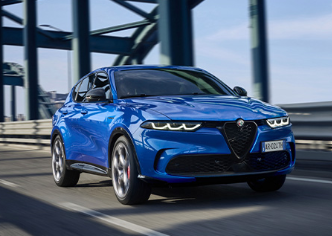
The Alfa Romeo Tonale specs tell us plenty about this compact luxury SUV, but numbers alone don't explain why the Tonale feels rather different from the typical premium crossover. Alfa Romeo has tried to inject some genuine personality into a category where practicality, efficiency, and touchscreen size often dominate the conversation.
And there's an important detail we need to clear up immediately: Tonale specifications vary significantly by market and model year.
For the 2026 U.S. market, Alfa Romeo offers the Tonale with a 2.0-liter turbocharged four-cylinder gasoline engine producing 268 horsepower and 295 lb-ft of torque, connected to a nine-speed automatic transmission and standard Q4 all-wheel drive. The previous plug-in-hybrid option is no longer offered in the U.S. for 2026.
European buyers have a considerably different menu. The latest European Tonale range includes a 175 HP 1.5-liter hybrid, a 270 HP plug-in hybrid Q4, and a 130 HP 1.6-liter diesel.
So rather than throwing every Alfa Romeo Tonale specification into one confusing pot, we'll separate them and explain what the numbers actually mean.
Content in this publication
- Alfa Romeo Tonale Specs at a Glance
- What Kind of SUV Is the Alfa Romeo Tonale?
- 2026 Alfa Romeo Tonale Engine Specs in the USA
- Alfa Romeo Tonale Hybrid Specs
- Alfa Romeo Tonale Plug-in Hybrid Specs
- Tonale Plug-in Hybrid Electric Range
- Alfa Romeo Tonale Diesel Specs
- Alfa Romeo Tonale Dimensions
- Wheelbase and Passenger Space
- Alfa Romeo Tonale Cargo Space
- Alfa Romeo Tonale Weight
- Tonale Fuel Economy
- Tonale Towing Capacity
- Suspension and Steering Specs
- Alfa Romeo Tonale Interior Technology
- Tonale Safety and Driver-Assistance Technology
- Tonale Infotainment Specs
- Alfa Romeo Tonale Wheel Sizes
- U.S. Tonale vs European Tonale Specs
- Which Alfa Romeo Tonale Engine Is Best?
- Is the Alfa Romeo Tonale Fast?
- How Practical Is the Tonale?
- Does the Tonale Still Feel Like an Alfa Romeo?
- Alfa Romeo Tonale Specs: What Matters Most
- Conclusion: Understanding Alfa Romeo Tonale Specs
- Frequently Asked Questions About Alfa Romeo Tonale Specs
Alfa Romeo Tonale Specs at a Glance
Here are the key specifications buyers are most likely to compare.
| Specification | 2026 U.S. Tonale | European Hybrid | European Plug-in Hybrid Q4 |
|---|---|---|---|
| Engine | 2.0L turbo I4 | 1.5L turbo hybrid | 1.3L turbo PHEV |
| Maximum output | 268 hp | 175 HP | 270 HP |
| Torque | 295 lb-ft | 240 Nm engine torque | 270 Nm engine torque |
| Transmission | 9-speed automatic | 7-speed TCT | 6-speed automatic |
| Drivetrain | Q4 AWD | FWD | eAWD/Q4 |
| Battery | — | 0.77 kWh, 48V | 15.5 kWh |
| Seats | 5 | 5 | 5 |
| Length | Approx. 178 in | 4,522 mm | 4,522 mm |
| Width without mirrors | — | 1,841 mm | 1,841 mm |
| Wheelbase | — | 2,636 mm | 2,636 mm |
| Cargo/boot volume | 27.0 cu ft rear seats up | 500 L | 385 L |
| Maximum cargo | 54.7 cu ft | 1,550 L | 1,430 L |
| 0–100 km/h | Market specification varies | 8.5 sec | 6.6 sec |
| Top speed | Market specification varies | 212 km/h | 195 km/h |
| Towing capacity | 3,307 lb | 1,500 kg | 1,250 kg |
European technical figures come from Alfa Romeo/Stellantis specifications, while U.S. figures reflect the current 2026 American-market model.
What Kind of SUV Is the Alfa Romeo Tonale?
The Tonale sits in the premium compact SUV segment. That puts it in broadly similar territory to vehicles such as the BMW X1, Audi Q3, Mercedes-Benz GLA, Volvo XC40, and Lexus UX.
Yet Alfa Romeo approaches the recipe differently.
Where some compact luxury SUVs feel like downsized versions of their manufacturers' larger models, the Tonale tries to make styling and driver involvement central to its personality. It has the familiar Alfa shield-shaped grille, heavily sculpted bodywork, relatively quick steering, and a cockpit designed around the driver.
Think of it as an Italian espresso in a segment increasingly filled with very competent cups of filter coffee. Both wake us up, but one is deliberately stronger in personality.
At the same time, the Tonale isn't some impractical sports car wearing SUV boots. Five seats, folding rear seats, a useful cargo compartment, modern infotainment, driver-assistance technology, and available electrified powertrains make it a genuine everyday vehicle.
2026 Alfa Romeo Tonale Engine Specs in the USA
One of the biggest changes to the Tonale occurred for the 2026 model year in the United States.
2.0-Liter Turbocharged Four-Cylinder
The American-market 2026 Tonale uses a 2.0-liter direct-injection DOHC turbocharged inline-four gasoline engine.
Output reaches:
268 horsepower and 295 lb-ft of torque.
Power reaches the wheels through a nine-speed automatic transmission, while Alfa Romeo's Q4 all-wheel-drive system is standard.
Those numbers place the Tonale firmly toward the sporty side of the compact luxury SUV segment.
More importantly, 295 lb-ft gives the engine meaningful low- and mid-range muscle. That's the sort of specification we notice when merging onto a highway or accelerating out of a corner rather than when simply reading a brochure.
Why Did the U.S. Tonale Change?
Earlier American Tonales were strongly associated with plug-in-hybrid technology. For 2026, however, Alfa Romeo states that the American Tonale is gasoline-only, eliminating the PHEV from the U.S. lineup.
That makes searching for "Alfa Romeo Tonale specs" slightly tricky because older specifications frequently appear alongside the newest vehicle.
If we're considering a used 2024 or 2025 Tonale, therefore, we shouldn't automatically assume the specifications described here apply.
Alfa Romeo Tonale Hybrid Specs
Move across the Atlantic and the story changes considerably.
European versions of the latest Tonale include a 1.5-liter gasoline hybrid producing 175 HP combined.
1.5-Liter Ibrida 175 HP
The engine itself is a turbocharged 1.5-liter gasoline unit incorporating a variable-geometry turbocharger.
Alfa Romeo pairs it with a 48-volt hybrid system and a seven-speed TCT dual-clutch transmission.
The electric motor contributes up to 15 kW, or roughly 20 CV/PS, and 55 Nm according to Alfa Romeo. The hybrid system is sophisticated enough to allow limited electric-only movement during low-speed driving, maneuvering, and certain coasting conditions.
That's an important distinction.
This isn't merely a traditional stop-start mild hybrid where the motor provides a little assistance but cannot meaningfully propel the vehicle. Alfa has engineered the system to give the Tonale some genuine low-speed EV behavior.
Hybrid Performance
Official European technical specifications quote approximately 8.5 seconds from 0 to 100 km/h for the 175 HP hybrid and a 212 km/h top speed.
That's hardly supercar territory, of course, but it's brisk enough for a family-sized crossover.
More significantly, the hybrid weighs substantially less than the plug-in model. The published DIN kerb weight is around 1,525 kg, compared with about 1,835 kg for the PHEV.
Less mass can pay dividends in steering feel, braking, and everyday agility.
Alfa Romeo Tonale Plug-in Hybrid Specs
This is where the Tonale's engineering becomes especially interesting.
1.3-Liter Plug-in Hybrid Q4 270 HP
The latest European Tonale Ibrida Plug-in Q4 combines a turbocharged 1.3-liter gasoline engine with electric propulsion.
Combined output is 270 HP.
Rather than mechanically driving all four wheels in the conventional manner, the architecture uses the gasoline engine to drive the front axle while an electric motor powers the rear axle.
The result is an electric all-wheel-drive system, or eAWD.
Alfa Romeo gives the plug-in model a 15.5-kWh lithium-ion battery, and its electric motor can deliver up to 94 kW of continuous power according to the technical documentation.
Tonale PHEV Acceleration
Official figures put the latest 270 HP Tonale PHEV at around:
0–100 km/h in 6.6 seconds.
Maximum speed is approximately 195 km/h, while pure-electric top speed reaches roughly 135 km/h.
That's properly quick for a compact crossover designed to carry five people and their luggage.
The acceleration isn't violent, but there's an immediacy to electrified torque that suits Alfa Romeo's sporty positioning remarkably well.
Tonale Plug-in Hybrid Electric Range
Electric range depends heavily on wheels, temperature, road conditions, climate-control use, driving style, and homologation configuration.
Alfa Romeo's latest European technical sheet quotes up to approximately 61 km of WLTP combined electric range, with urban electric range reaching as much as roughly 81 km under the applicable test conditions.
Those numbers matter because a PHEV only makes sense when we actually charge it.
Use the battery frequently and a typical commute might happen largely without gasoline. Never plug it in and we're essentially dragging a heavy battery around while asking the combustion engine to do most of the work.
Charging Time
Using a 7.4-kW AC charging station, Alfa Romeo specifies approximately 2.5 hours for a full 0–100% recharge.
A roughly 3-kW domestic source can require under 6.5 hours according to the official technical sheet.
That naturally makes overnight charging straightforward.
Alfa Romeo Tonale Diesel Specs
Diesel hasn't disappeared everywhere.
European buyers in selected markets can still obtain a 1.6-liter diesel Tonale producing 130 HP.
The engine generates a healthy 320 Nm of torque and works with a six-speed TCT dual-clutch transmission driving the front wheels.
Performance is more relaxed than the gasoline and hybrid alternatives.
Official specifications indicate roughly 10.9 seconds from 0–100 km/h and a 195 km/h top speed.
Why consider it?
For drivers covering substantial motorway mileage, the diesel's combination of torque and relatively economical cruising can still make sense. The calculation becomes less attractive for short urban trips, particularly as regulations and diesel taxation vary widely from one country to another.
Alfa Romeo Tonale Dimensions
The Tonale occupies an interesting middle ground.
It feels substantial enough to serve as a family vehicle while remaining compact enough for European streets or crowded North American parking lots.
Alfa Romeo lists the latest European Tonale at approximately 4,522 mm long, 1,841 mm wide without mirrors, and 2,082 mm wide with the mirrors extended. The wheelbase measures 2,636 mm.
In U.S. terminology, Alfa Romeo quotes the 2026 model at about 178 inches long, 63 inches high, and 82 inches wide including mirrors.
Why the Dimensions Work Well
At roughly 4.52 meters long, the Tonale isn't enormous.
That's good news.
Modern SUVs have a tendency to grow like houseplants placed beside a sunny window. Every generation seems wider, longer, and heavier.
The Tonale remains manageable.
We get useful passenger space without feeling as though we're guiding an airport shuttle through the supermarket parking lot.
Wheelbase and Passenger Space
The 2,636-mm wheelbase is particularly important because wheelbase often tells us more about interior packaging than exterior length alone.
Longer spacing between the axles generally helps manufacturers create more usable rear-seat room.
The Tonale seats five passengers, and its cabin proportions make it a realistic option for couples, smaller families, and drivers who regularly carry adults in the rear seats.
It's still a compact SUV, though.
Three adults can technically occupy the rear bench, but we'd consider it better suited to two adults for longer journeys.
Alfa Romeo Tonale Cargo Space
Cargo capacity varies considerably between powertrains because the plug-in hybrid's battery and associated hardware occupy valuable packaging space.
European Cargo Capacity
The latest European hybrid and diesel models provide approximately 500 liters of luggage capacity with the seats in place and up to 1,550 liters with the rear seats folded.
The plug-in hybrid drops those numbers to approximately 385 liters and 1,430 liters, respectively.
That's a significant difference.
The PHEV gives us more performance and the possibility of electric commuting, but we pay for those abilities in both weight and luggage capacity.
U.S. Cargo Capacity
Alfa Romeo quotes 27.0 cubic feet of cargo room behind the rear seats in the 2026 U.S. Tonale.
Fold those seats down and capacity expands to approximately 54.7 cubic feet.
Those are useful figures for a premium compact SUV and make the Tonale far more practical than its dramatic Italian styling might suggest.
Alfa Romeo Tonale Weight
Weight is where electrification becomes impossible to ignore.
The European 175 HP hybrid has an official DIN kerb weight of approximately 1,525 kg, while the plug-in hybrid reaches around 1,835 kg.
That's roughly a 310-kg difference.
The 15.5-kWh PHEV battery itself weighs approximately 125 kg, with motors, electronics, additional drivetrain equipment, and structural requirements contributing to the remaining difference.
The extra weight doesn't automatically make the plug-in inferior. Its electric motors also deliver considerably more performance.
But physics always sends an invoice.
More mass influences braking, tire wear, suspension behavior, and ultimately how nimble a vehicle can feel.
Tonale Fuel Economy
Fuel economy is another specification that should never be interpreted without considering powertrain and market.
For the 2026 U.S. gasoline Tonale, Alfa Romeo gives a manufacturer estimate of approximately 21 mpg city, 29 mpg highway, and 24 mpg combined.
European WLTP figures tell another story because they cover different engines and use a different testing protocol.
The latest European technical data quotes around 5.7–5.9 L/100 km for the 175 HP hybrid and approximately 5.3–5.5 L/100 km for the diesel, depending on configuration.
Plug-in-hybrid fuel-consumption numbers should always be treated carefully because their laboratory results assume regular battery charging.
A PHEV can be wonderfully economical on a 30-km commute when charged nightly and surprisingly thirsty on repeated long journeys with an empty battery.
Tonale Towing Capacity
Can the Alfa Romeo Tonale tow?
Yes, but once again the number depends on the version.
The 2026 U.S. Tonale is rated to tow up to 3,307 pounds according to Alfa Romeo.
European technical specifications quote approximately 1,500 kg for the 175 HP hybrid and 1,250 kg for the PHEV, subject to specification and local homologation requirements.
That makes the Tonale suitable for modest trailers, recreational equipment, or similar loads rather than heavy-duty towing.
Always verify the precise towing limit shown for the specific vehicle, market, hitch equipment, and trailer configuration before towing.
Suspension and Steering Specs
This is the section enthusiasts tend to care about.
A vehicle can have impressive horsepower figures and still drive like a refrigerator on wheels. Alfa Romeo therefore pays considerable attention to steering and chassis behavior.
European technical specifications show a MacPherson-type suspension layout at both ends of the current Tonale. Steering is electrically assisted, with steering ratios varying according to powertrain.
Higher-specification Tonales can also feature more sophisticated sport-oriented suspension hardware.
The U.S. Veloce equipment, for example, emphasizes sport suspension tuning, while certain premium configurations add Alfa's adaptive suspension technology.
Brembo Brakes
Available Brembo braking hardware reinforces the Tonale's performance theme.
It isn't merely cosmetic. Stronger brake hardware becomes particularly relevant on powerful or heavier versions where repeated braking generates considerable heat.
Those unmistakable calipers peeking through Alfa's telephone-dial-inspired wheels also happen to look fantastic.
Sometimes engineering and theater can happily occupy the same garage.
Alfa Romeo Tonale Interior Technology
Open the door and the Tonale continues the driver-focused theme.
The current model features a 12.3-inch configurable digital instrument cluster paired with a 10.25-inch Alfa Connect touchscreen infotainment display.
Wireless Apple CarPlay and Android Auto are available, meaning we don't necessarily need cables snaking across the center console just to run navigation or music.
The digital instrument cluster retains Alfa Romeo's familiar "Cannocchiale" visual theme, essentially translating the brand's traditional instrument binnacles into the digital age.
That's an intelligent approach.
Technology should modernize a cabin without stripping away its identity.
Tonale Safety and Driver-Assistance Technology
The modern Tonale offers an extensive collection of active safety systems.
Depending on market, trim, and option packages, equipment can include adaptive cruise control, lane-keeping assistance, autonomous emergency braking, traffic-sign recognition, driver-attention monitoring, blind-spot monitoring, rear cross-path detection, parking assistance, and surround-view camera technology.
Some configurations also support Level 2 assisted driving, where steering and longitudinal assistance can operate together under defined conditions while the driver remains responsible for supervising the vehicle.
We should emphasize the last part.
"Level 2" does not mean autonomous driving. The person behind the wheel remains the driver.
Tonale Infotainment Specs
Screen size grabs headlines, but usability matters more.
The Tonale's 10.25-inch central touchscreen and 12.3-inch digital instrument panel strike a relatively sensible balance.
Rather than mounting a tablet large enough to block the sunrise, Alfa integrates the center screen into the dashboard while keeping important driving information directly ahead.
Wireless smartphone connectivity further reduces the need to interact with Alfa's native interface for every function.
And that's often exactly what we want.
Alfa Romeo Tonale Wheel Sizes
Wheel diameter depends on specification.
Current Tonale configurations range from relatively modest wheels emphasizing comfort and efficiency to large 20-inch designs fitted to more visually aggressive versions such as the Sport Speciale. Alfa Romeo's current European specification lists 17-inch wheels on entry configurations and distinctive 20-inch "Fori" wheels on the Sport Speciale.
Larger wheels undeniably sharpen the visual drama.
But remember the trade-off.
A smaller wheel with a taller tire sidewall usually provides better impact absorption, potentially cheaper replacement tires, and greater resistance to pothole damage.
Twenty-inch wheels look like tailored Italian shoes. Smaller rims are more like excellent running sneakers.
Choose according to where you'll actually drive.
U.S. Tonale vs European Tonale Specs
This is arguably the most important section of the entire article.
Search the web for Tonale specifications and we can easily encounter 175 HP, 268 hp, 270 HP, 285 hp, hybrid, diesel, PHEV, FWD, AWD, six-speed, seven-speed, and nine-speed figures.
They aren't necessarily contradictory.
They're often describing different markets or model years.
For 2026 in the United States, the specification is straightforward: 2.0-liter turbo gasoline engine, 268 hp, 295 lb-ft, nine-speed automatic, and Q4 AWD as standard.
For the latest European range, Alfa Romeo offers the 175 HP hybrid, 270 HP PHEV Q4, and 130 HP diesel, although availability can vary by individual country.
That distinction should always be checked before buying parts, comparing performance, estimating fuel consumption, or evaluating a used Tonale.
Which Alfa Romeo Tonale Engine Is Best?
There isn't one universally correct answer.
The American 268-hp 2.0 turbo is arguably the easiest choice for someone wanting straightforward performance without worrying about plugging in. Its generous torque, conventional gasoline layout, nine-speed automatic, and standard AWD create an appealing everyday package.
The European 175 HP hybrid is arguably the sweet spot for buyers balancing economy, performance, luggage capacity, and lower weight.
The 270 HP PHEV Q4 makes more sense when we have reliable access to charging and complete a significant percentage of our journeys within its usable electric range.
Meanwhile, the 130 HP diesel remains interesting for high-mileage drivers spending much of their time cruising longer distances.
Driving pattern matters more than badge prestige.
Is the Alfa Romeo Tonale Fast?
The answer depends heavily on version.
The European 270 HP PHEV's official 6.6-second 0–100 km/h time certainly qualifies as quick for this class of vehicle.
The 175 HP hybrid requires around 8.5 seconds, while the diesel takes about 10.9 seconds.
Raw acceleration isn't the entire Alfa story, though.
Steering response, chassis balance, braking feel, and the way a car changes direction can matter just as much once the novelty of launching from traffic lights wears off.
That's precisely where the Tonale tries to separate itself from ordinary crossovers.
How Practical Is the Tonale?
More practical than its badge and styling might suggest.
We have seating for five, useful luggage capacity, folding rear seats, a manageable exterior footprint, and enough available driver-assistance technology to make long motorway trips considerably easier.
The non-plug-in European models provide particularly strong cargo capacity at up to 500 liters with the rear seats upright and 1,550 liters when folded.
The PHEV sacrifices some space, but that's the price of accommodating a considerably larger battery and electric rear drive system.
Families should therefore think beyond horsepower.
A beautifully engineered 270 HP PHEV isn't automatically the better purchase if a stroller, luggage, dog crate, and shopping bags regularly compete for every centimeter of cargo space.
Does the Tonale Still Feel Like an Alfa Romeo?
That may be the question enthusiasts care about most.
SUVs aren't traditionally what built Alfa Romeo's reputation. That heritage came from sports cars, lightweight coupes, expressive sedans, and competition machinery.
But automotive reality has changed.
Rather than pretending the SUV boom doesn't exist, Alfa has tried to apply its traditional ingredients—distinctive design, responsive steering, aggressive wheel designs, powerful brakes, driver-focused instrumentation, and charismatic styling—to a practical compact crossover.
The Tonale isn't a Giulia Quadrifoglio on stilts.
It shouldn't be.
Instead, it aims to make everyday SUV ownership feel a little less ordinary.
Alfa Romeo Tonale Specs: What Matters Most
It's tempting to judge a vehicle by whichever figure is largest.
Horsepower? Take 270.
Cargo space? Take 1,550 liters.
Electric range? Take the PHEV.
But choosing a car that way is like selecting a restaurant because it has the longest menu.
Context matters.
The most important Tonale specification might actually be the one matching how we'll use the vehicle every morning.
Urban commuters with home charging can exploit the PHEV. Long-distance drivers may appreciate efficient conventional or diesel powertrains where offered. U.S. drivers wanting uncomplicated turbocharged performance now get 268 horsepower and standard AWD.
The Tonale's greatest strength may therefore be that, globally, it isn't confined to one mechanical personality.
Conclusion: Understanding Alfa Romeo Tonale Specs
The Alfa Romeo Tonale specs paint a picture of a compact premium SUV that's trying to balance several personalities at once.
It needs to be comfortable enough for commuting, spacious enough for everyday family duties, efficient enough for modern regulations, technologically competitive, and sporty enough that putting an Alfa Romeo badge on the nose doesn't feel like marketing theater.
For 2026, American buyers receive a particularly simple formula: a 268-horsepower 2.0-liter turbocharged engine, 295 lb-ft of torque, nine-speed automatic transmission, standard Q4 AWD, 27 cubic feet of cargo capacity, and a maximum towing rating of 3,307 pounds.
European buyers have considerably broader powertrain choice, including a 175 HP 1.5-liter hybrid, 270 HP 1.3-liter plug-in hybrid Q4, and 130 HP 1.6-liter diesel.
The key lesson?
Never look at a Tonale specification without checking model year, engine, and market.
Once we do that, the numbers become much more meaningful—and beneath those numbers sits something increasingly rare among compact luxury SUVs: genuine character.
Frequently Asked Questions About Alfa Romeo Tonale Specs
1. What engine does the 2026 Alfa Romeo Tonale have?
In the United States, the 2026 Alfa Romeo Tonale uses a 2.0-liter turbocharged four-cylinder gasoline engine producing up to 268 horsepower and 295 lb-ft of torque. It comes with a nine-speed automatic transmission and standard Q4 all-wheel drive. European specifications differ and include hybrid, plug-in-hybrid, and diesel engines.
2. How much horsepower does an Alfa Romeo Tonale have?
It depends on the market and version. The 2026 U.S. Tonale produces 268 hp. Current European versions include a 175 HP hybrid, 270 HP plug-in hybrid Q4, and 130 HP diesel.
3. What are the Alfa Romeo Tonale dimensions?
The latest European Tonale measures approximately 4,522 mm long and 1,841 mm wide without mirrors, with a 2,636-mm wheelbase. Width increases to approximately 2,082 mm with mirrors extended. The U.S. 2026 model is listed at roughly 178 inches long, 63 inches high, and 82 inches wide including mirrors.
4. How big is the Alfa Romeo Tonale trunk?
European non-PHEV versions offer approximately 500 liters with the rear seats upright and as much as 1,550 liters when folded. The European PHEV provides approximately 385–1,430 liters. In the U.S., Alfa Romeo quotes 27.0 cubic feet behind the second row and 54.7 cubic feet with the rear seats folded for the 2026 Tonale.
5. Is the Alfa Romeo Tonale AWD?
It depends on the version. The 2026 U.S. Tonale includes standard Q4 all-wheel drive. In Europe, the 175 HP hybrid and diesel are front-wheel drive in the current technical specification, while the 270 HP plug-in hybrid uses an electrified Q4/eAWD system in which an electric motor drives the rear axle.
If you want to know other articles similar to Alfa Romeo Tonale Specs: Engines, Performance, Dimensions and Features you can visit the category Service and Parts.
Suzuki Swift Fuel Tank Capacity: Complete Guide
Mazda CX-5 Weight (2013–2026): Complete Guide in Pounds and KG
Kia Sportage Dashboard Symbols and Warning Lights

MINI Cooper Weight (2002–2027): Complete Weight Chart & Guide

Toyota RAV4 Engine Sizes: Complete Guide (1994–2026)

Toyota RAV4 Weight (2002–2026): Complete Guide by Year and Model
Leave a Reply
More content of your interest