
MINI Cooper Weight (2002–2027): Complete Weight Chart & Guide

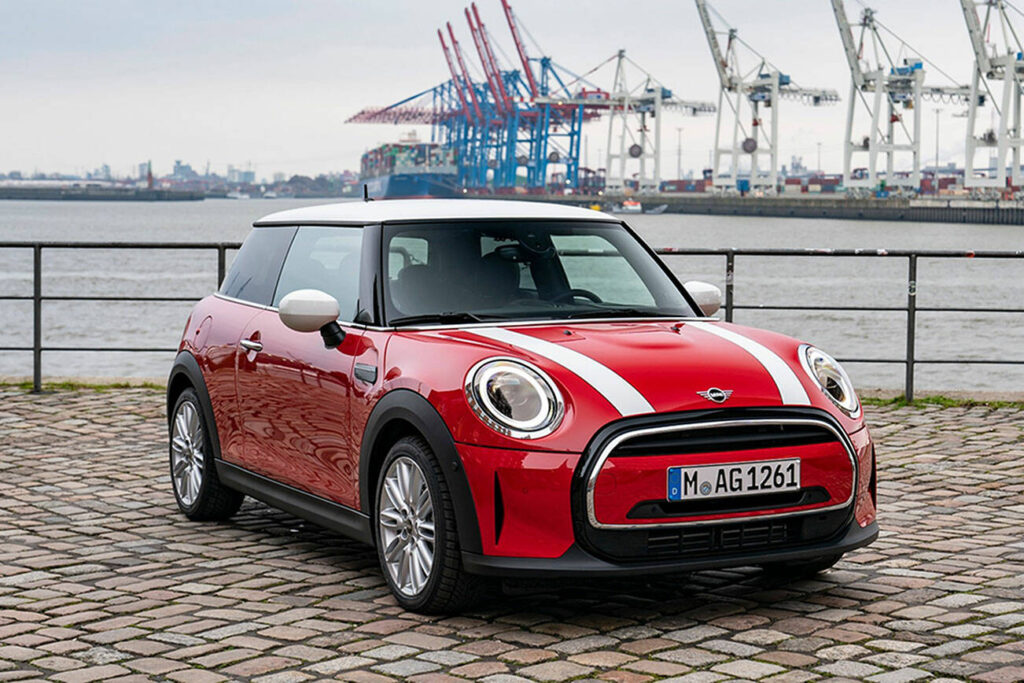
How much does a MINI Cooper weigh? The answer depends on the model year, generation, engine, transmission, and body style. Although the MINI Cooper is famous for its compact dimensions and go-kart-like handling, its weight has changed considerably since the modern MINI arrived in 2002.
Early MINI Cooper hatchbacks were remarkably lightweight, with some versions weighing around 2,315 lbs (1,050 kg). Newer models have become heavier because of additional safety equipment, advanced technology, larger dimensions, and more sophisticated powertrains.
For example, the 2027 MINI Cooper C and Cooper S 2 Door have published curb weights of approximately 3,014 lbs (1,367 kg), while the John Cooper Works version weighs approximately 3,047 lbs (1,382 kg) in the US market.
In this comprehensive MINI Cooper weight guide, we'll explore:
- MINI Cooper weight by year from 2002 to 2027.
- Weight differences between MINI Cooper, Cooper S, and John Cooper Works.
- MINI Cooper weight in pounds and kilograms.
- How much the MINI Cooper Convertible weighs.
- Electric MINI Cooper weight compared with gasoline models.
- Why newer MINI Coopers are heavier.
- How vehicle weight affects performance, fuel economy, and handling.
Whether we're comparing generations, researching a used MINI, or checking the specifications of a newer model, this guide will help us understand the differences.
Content in this publication
- How Much Does a MINI Cooper Weigh?
- MINI Cooper Weight by Year (2002–2027)
- First-Generation MINI Cooper Weight (2002–2006)
- Second-Generation MINI Cooper Weight (2007–2013)
- Third-Generation MINI Cooper Weight (2014–2024)
- Fourth-Generation MINI Cooper Weight (2025–2027)
- MINI Cooper vs Cooper S Weight Comparison
- MINI Cooper John Cooper Works Weight
- MINI Cooper Convertible Weight
- Electric MINI Cooper Weight
- Why Has the MINI Cooper Become Heavier?
- Does MINI Cooper Weight Affect Performance?
- Does MINI Cooper Weight Affect Fuel Economy?
- How Does MINI Cooper Weight Compare With Other Small Cars?
- What Is the Lightest MINI Cooper?
- What Is the Heaviest MINI Cooper?
- How to Find the Exact Weight of Your MINI Cooper
- Frequently Asked Questions About MINI Cooper Weight
- Final Thoughts: MINI Cooper Weight From 2002 to 2027
How Much Does a MINI Cooper Weigh?
The modern MINI Cooper 2 Door has ranged from approximately 2,315 lbs to more than 3,000 lbs depending on the year and configuration. Electric versions can be considerably heavier.
For a quick comparison, here are several representative examples:
| MINI Cooper Model | Curb Weight (lbs) | Curb Weight (kg) |
|---|---|---|
| 2002 MINI Cooper Hatchback | 2,315 | 1,050 |
| 2006 MINI Cooper Manual | 2,524 | 1,145 |
| 2007 MINI Cooper Manual | 2,546 | 1,155 |
| 2010 MINI Cooper Manual | 2,568 | 1,165 |
| 2015 MINI Cooper Hardtop | 2,625 | 1,191 |
| 2024 MINI Cooper Manual | 2,711 | 1,230 |
| 2024 MINI Cooper SE Electric | 3,143 | 1,426 |
| 2027 MINI Cooper C 2 Door | 3,014 | 1,367 |
These figures apply to specific configurations rather than every version sold in those years.
The key takeaway is that MINI has gradually introduced heavier equipment and vehicle structures, although weight increases have not been identical across every model generation.
MINI Cooper Weight by Year (2002–2027)
The following MINI Cooper weight chart covers model years from 2002 through 2027.
To keep the comparison consistent, we're focusing on the standard gasoline-powered MINI Cooper 2 Door Hardtop rather than combining hatchbacks, convertibles, four-door versions, and Countryman models.
| Model Year | Curb Weight (lbs) | Curb Weight (kg) | Generation |
|---|---|---|---|
| 2002 | 2,315 | 1,050 | R50 |
| 2003 | 2,557 | 1,160 | R50 |
| 2004 | 2,524 | 1,145 | R50 |
| 2005 | 2,524 | 1,145 | R50 |
| 2006 | 2,524 | 1,145 | R50 |
| 2007 | 2,546 | 1,155 | R56 |
| 2008 | 2,546 | 1,155 | R56 |
| 2009 | 2,546 | 1,155 | R56 |
| 2010 | 2,568 | 1,165 | R56 |
| 2011 | 2,535 | 1,150 | R56 |
| 2012 | 2,535 | 1,150 | R56 |
| 2013 | 2,535 | 1,150 | R56 |
| 2014 | 2,605 | 1,182 | F56 |
| 2015 | 2,625 | 1,191 | F56 |
| 2016 | 2,605 | 1,182 | F56 |
| 2017 | 2,625 | 1,191 | F56 |
| 2018 | 2,625 | 1,191 | F56 |
| 2019 | 2,625 | 1,191 | F56 |
| 2020 | 2,767 | 1,255 | F56 |
| 2021 | 2,707 | 1,228 | F56 |
| 2022 | 2,712 | 1,230 | F56 |
| 2023 | 2,711 | 1,230 | F56 |
| 2024 | 2,711 | 1,230 | F56 |
| 2025 | 3,014 | 1,367 | F66 |
| 2026 | 3,014 | 1,367 | F66 |
| 2027 | 3,014 | 1,367 | F66 |
Important: These are representative published curb weights for US-market standard Cooper configurations. The transmission and equipment specifications are not identical throughout the table. Exact weights may vary depending on the vehicle, so the figures should be used as a general comparison rather than a substitute for an individual car's specification sheet.
Looking at the chart, we can identify several important changes.
The first generation was particularly light, while the second generation maintained a relatively low curb weight.
The third-generation MINI became slightly larger and incorporated more modern equipment. The fourth-generation gasoline Cooper introduced another substantial increase in published US-market curb weight.
First-Generation MINI Cooper Weight (2002–2006)
The first generation of the modern MINI used the R50 designation for the regular Cooper and the R53 designation for the supercharged Cooper S.
These cars established the modern MINI's reputation for responsive steering, agile handling, and an entertaining driving experience.
2002 MINI Cooper Weight
The 2002 MINI Cooper Hatchback had a published base curb weight of approximately 2,315 lbs (1,050 kg), while the Cooper S was listed at approximately 2,513 lbs (1,140 kg).
The regular Cooper used a naturally aspirated 1.6-liter four-cylinder engine, whereas the Cooper S featured a supercharged version of the engine.
This relatively low weight helped the early MINI feel responsive even without particularly high horsepower.
2003–2006 MINI Cooper Weight
Later first-generation MINI Cooper models had published curb weights of approximately 2,524–2,557 lbs for the regular hatchback, depending on the year and configuration.
By 2006, the manufacturer's specifications included the following figures:
| 2006 MINI Model | Manual Weight | Automatic Weight |
|---|---|---|
| Cooper | 2,524 lbs | 2,557 lbs |
| Cooper S | 2,679 lbs | 2,723 lbs |
The supercharged Cooper S was heavier because of its performance-oriented powertrain and additional equipment.
Despite the added weight, the first-generation Cooper S remains popular among drivers who value its relatively compact size and distinctive engine character.
Second-Generation MINI Cooper Weight (2007–2013)
The second-generation MINI, commonly identified as the R56, arrived with a redesigned platform and updated engines.
Although the styling remained familiar, there were important mechanical changes.
The regular Cooper used a naturally aspirated 1.6-liter engine, while the Cooper S switched to turbocharging.
MINI Cooper R56 Weight
Published second-generation hatchback weights generally fell around 2,535–2,646 lbs for the regular Cooper, depending on the model year and transmission.
A 2007 MINI owner's manual provides the following specifications:
| 2007 MINI Model | Manual | Automatic |
|---|---|---|
| Cooper | 2,546 lbs | 2,634 lbs |
| Cooper S | 2,668 lbs | 2,723 lbs |
For the regular Cooper, this means the automatic version was approximately 88 lbs heavier than the manual.
By 2013, the manufacturer's published figures had changed to approximately 2,535 lbs for the manual Cooper and 2,612 lbs for the automatic version.
Was the R56 MINI Cooper Heavier Than the R50?
Not necessarily by a large margin.
For example, the 2006 manual Cooper weighed 2,524 lbs, compared with 2,546 lbs for the 2007 manual Cooper.
That's a difference of just 22 lbs.
We can see that MINI managed to retain much of the car's lightweight character despite the generational update.
Third-Generation MINI Cooper Weight (2014–2024)
The F56 generation introduced one of the most significant changes in modern MINI history.
The car became larger, received updated BMW Group engines, and incorporated more modern electronics, safety systems, and convenience features.
2014–2019 MINI Cooper Weight
The standard MINI Cooper F56 used a turbocharged 1.5-liter three-cylinder engine in many markets.
For the US-market Hardtop 2 Door, published standard Cooper weights were typically around 2,605–2,625 lbs during these early years.
The Cooper S, with its larger turbocharged 2.0-liter four-cylinder engine, was heavier.
For example, the 2017 lineup included:
| 2017 MINI Version | Weight (lbs) | Weight (kg) |
|---|---|---|
| Cooper | 2,625 | 1,191 |
| Cooper S | 2,785 | 1,263 |
| John Cooper Works | 2,845 | 1,290 |
The Cooper S weighed approximately 160 lbs more than the standard Cooper in this comparison.
2020–2024 MINI Cooper Weight
During the later F56 years, automatic transmissions, additional equipment, and continuing updates affected published vehicle weights.
The 2024 MINI Hardtop 2 Door offers a particularly useful comparison:
| 2024 MINI Model | Curb Weight (lbs) | Curb Weight (kg) |
|---|---|---|
| Cooper Manual | 2,711 | 1,230 |
| Cooper Automatic | 2,769 | 1,256 |
| Cooper S Manual | 2,813 | 1,276 |
| Cooper S Automatic | 2,841 | 1,289 |
| John Cooper Works Manual | 2,892 | 1,312 |
| John Cooper Works Automatic | 2,951 | 1,339 |
| Cooper SE Electric | 3,143 | 1,426 |
The electric Cooper SE is particularly interesting because it demonstrates how much weight battery-electric technology can add to a small hatchback.
Fourth-Generation MINI Cooper Weight (2025–2027)
The fourth-generation gasoline MINI Cooper 2 Door, known as the F66, introduced updated styling, redesigned interior technology, and a revised powertrain lineup.
In the United States, the Cooper C and Cooper S use turbocharged 2.0-liter four-cylinder gasoline engines with different power outputs.
2025 MINI Cooper Weight
The 2025 MINI Cooper 2 Door has a published curb weight of approximately 3,014 lbs for the standard Cooper and Cooper S, while the John Cooper Works version is listed at approximately 3,047 lbs.
This makes the newer gasoline-powered MINI noticeably heavier than the outgoing F56 model.
2026 MINI Cooper Weight
For 2026, the US-market published curb weights are:
| 2026 MINI Version | Weight (lbs) | Weight (kg) |
|---|---|---|
| Cooper C 2 Door | 3,014 | 1,367 |
| Cooper S 2 Door | 3,014 | 1,367 |
| John Cooper Works 2 Door | 3,047 | 1,382 |
These figures refer to the gasoline-powered 2 Door models, not the all-electric MINI offered in other markets.
2027 MINI Cooper Weight
For the 2027 model year, MINI USA's technical specifications list the following curb weights:
| 2027 MINI Version | Weight (lbs) | Weight (kg) |
|---|---|---|
| Cooper C | 3,014 | 1,367 |
| Cooper S | 3,014 | 1,367 |
| John Cooper Works | 3,047 | 1,382 |
These figures indicate that the regular Cooper C and the more powerful Cooper S have the same published curb weight.
However, their performance characteristics differ because of their engine outputs and equipment.
When comparing the latest MINI Cooper models, we should always distinguish the gasoline hatchback from the separate electric platform.
MINI Cooper vs Cooper S Weight Comparison
One of the most common questions is whether the MINI Cooper S weighs more than the standard Cooper.
Historically, the answer has generally been yes.
The Cooper S has typically used a more powerful engine, along with components and equipment designed for increased performance.
Let's compare representative model years.
| Model Year | Standard Cooper | Cooper S | Difference |
|---|---|---|---|
| 2002 | 2,315 lbs | 2,513 lbs | +198 lbs |
| 2006 | 2,524 lbs | 2,679 lbs | +155 lbs |
| 2007 | 2,546 lbs | 2,668 lbs | +122 lbs |
| 2017 | 2,625 lbs | 2,785 lbs | +160 lbs |
| 2024 | 2,711 lbs | 2,813 lbs | +102 lbs |
| 2027 | 3,014 lbs | 3,014 lbs | 0 lbs |
The table compares published manual-transmission versions where available and the newer automatic models for 2027.
For the latest generation, identical published curb weights do not mean identical driving performance.
The Cooper S provides more power, allowing it to achieve stronger acceleration despite its similar mass.
MINI Cooper John Cooper Works Weight
The John Cooper Works, commonly abbreviated as JCW, is the performance-focused version of the MINI Cooper.
It typically features more powerful engines, performance brakes, upgraded suspension components, and model-specific equipment.
For example, the 2024 John Cooper Works Hardtop weighs 2,892 lbs with the manual transmission and 2,951 lbs with the automatic.
The 2027 JCW is listed at approximately 3,047 lbs.
Although the JCW can be heavier than a standard Cooper, its additional horsepower and performance hardware can offset that weight increase in acceleration and driving dynamics.
When comparing JCW weight across generations, we should also consider changes in engine output, transmission type, tires, and suspension tuning.
MINI Cooper Convertible Weight
The MINI Cooper Convertible is generally heavier than the equivalent hardtop.
The convertible requires additional body reinforcement and equipment for the folding roof.
For example, the 2006 MINI Cooper Convertible with a manual transmission weighed approximately 2,700 lbs, compared with 2,524 lbs for the equivalent hardtop.
That represents an additional 176 lbs.
The difference also appears in later generations because convertible models need structural reinforcement to compensate for the absence of a fixed roof.
Does the Extra Convertible Weight Matter?
The additional weight can affect acceleration, efficiency, body rigidity, and overall driving feel.
However, manufacturers account for these differences when tuning the suspension and chassis.
A MINI Convertible can still deliver enjoyable handling, even if it isn't quite as light as the corresponding hardtop.
Electric MINI Cooper Weight
The electric MINI Cooper deserves separate consideration because battery technology significantly changes the vehicle's curb weight.
Unlike a conventional gasoline model, an electric vehicle carries a large high-voltage battery pack.
That battery can add hundreds of pounds to the vehicle.
MINI Cooper SE Weight (2020–2024)
The earlier electric MINI Cooper SE, based on the F56 platform, had a published curb weight of approximately 3,143–3,153 lbs, depending on the model year.
This was significantly heavier than the equivalent gasoline-powered Cooper.
However, electric motors deliver torque differently from combustion engines, so vehicle weight alone doesn't determine acceleration performance.
New Electric MINI Cooper Weight (2024–2027)
The newer electric MINI Cooper uses a different platform from the contemporary gasoline-powered F66 hatchback.
Depending on the configuration and market, newer electric versions can weigh around 1,605–1,680 kg, although these figures may follow different national weight-measurement conventions.
The exact weight also depends on battery capacity, equipment, and model specification.
This is why we should avoid comparing European electric MINI figures with US gasoline-model figures without checking how each weight was measured.
Is the Electric MINI Cooper Too Heavy?
Not necessarily.
A heavier battery-electric MINI has a different center of gravity because much of the battery mass is positioned low in the vehicle.
This can improve resistance to body roll, although it does not eliminate the effects of additional mass on braking, tires, and cornering loads.
The driving experience can therefore remain agile even when the electric version weighs considerably more than older gasoline MINI models.
Why Has the MINI Cooper Become Heavier?
Comparing the earliest and newest MINI Cooper models reveals how much the vehicle has evolved.
Several factors explain the changes.
1. Additional Safety Equipment
Modern vehicles incorporate more sophisticated safety structures, crash-management components, airbags, sensors, and electronic systems.
These improvements can increase weight even when manufacturers use weight-saving materials.
2. Larger Vehicle Dimensions
The MINI Cooper has grown in size since the first modern generation.
The original 2002 hatchback was approximately 142.8 inches long.
By 2027, the MINI Cooper 2 Door measures approximately 152.6 inches.
That is an increase of nearly 10 inches in overall length.
Additional body structure and increased dimensions can contribute to a higher curb weight.
3. Larger Engines and Transmissions
Different generations have used naturally aspirated engines, supercharged engines, turbocharged engines, manual transmissions, conventional automatics, and dual-clutch transmissions.
These systems have different weights.
A more powerful engine doesn't automatically make a car heavier, but the supporting mechanical components may add mass.
4. Improved Technology
Modern MINI Coopers are equipped with features that were unavailable or uncommon in the earliest models.
Large digital displays, driver-assistance systems, upgraded audio equipment, electrically operated accessories, and additional wiring all contribute to vehicle complexity.
5. Comfort and Refinement
The MINI Cooper is no longer focused exclusively on providing a minimalist small-car experience.
Newer models generally offer improved noise insulation, more comfortable interiors, and additional convenience equipment.
These improvements can add weight, but they also make the vehicle more suitable for everyday driving.
Does MINI Cooper Weight Affect Performance?
Absolutely. Vehicle weight influences acceleration, braking, cornering, and overall responsiveness.
However, we need to consider weight together with engine output, suspension characteristics, tires, and vehicle geometry.
Acceleration
A lighter vehicle generally requires less energy to accelerate.
If two cars have identical engines and gearing, the lighter car will usually accelerate more quickly under similar conditions.
But the newer MINI Cooper S demonstrates why horsepower matters.
Although it is heavier than older Cooper S generations, its more powerful engine and modern transmission can provide stronger acceleration.
Handling
Weight plays an important role in how a vehicle changes direction.
Lighter vehicles generally require less force to accelerate laterally and can place lower demands on tires and suspension components.
However, weight distribution, suspension geometry, tire construction, and steering calibration are also essential.
That's why a heavier modern MINI can still feel responsive and enjoyable on winding roads.
Braking
A heavier vehicle typically carries more kinetic energy at the same speed.
This energy must be dissipated during braking.
Manufacturers can compensate by fitting larger brakes, improving brake cooling, and optimizing tire performance.
Nevertheless, vehicle mass remains an important factor in braking performance.
Does MINI Cooper Weight Affect Fuel Economy?
Yes, although the relationship depends on driving conditions.
A heavier vehicle generally needs more energy when accelerating or climbing hills.
This makes vehicle weight particularly relevant in stop-and-go urban driving.
At steady highway speeds, aerodynamic drag and powertrain efficiency become especially important.
The MINI Cooper's fuel economy has also been affected by engine development, transmission improvements, and changes in vehicle dimensions.
Therefore, a heavier modern MINI Cooper can still achieve better fuel economy than an older, lighter model if its engine and transmission are more efficient.
For electric versions, additional weight can increase energy consumption, although regenerative braking can recover part of the energy used during deceleration.
How Does MINI Cooper Weight Compare With Other Small Cars?
The MINI Cooper competes with several small hatchbacks, although the exact alternatives depend on the market.
Examples include the Volkswagen Polo, Volkswagen Golf, Suzuki Swift, Mazda2, and Toyota Yaris.
The MINI has traditionally emphasized sporty handling and premium design rather than being the lightest possible hatchback.
We should also remember that comparing models solely by weight can be misleading.
A larger hatchback may have more interior room, a different engine, additional safety equipment, or a higher gross vehicle weight rating.
The best comparison uses vehicles with similar body styles, powertrains, and equipment levels.
What Is the Lightest MINI Cooper?
Among the published US-market reference figures in this guide, the 2002 standard MINI Cooper Hatchback is the lightest, weighing approximately 2,315 lbs (1,050 kg).
Its combination of compact dimensions and relatively low mass helped establish the modern MINI's reputation for engaging driving dynamics.
However, other early market-specific configurations can have different published weights.
If we're searching for a lightweight used MINI Cooper, the R50 and R56 generations are particularly relevant.
What Is the Heaviest MINI Cooper?
The answer depends on which models we include.
Among the 2027 US gasoline-powered MINI Cooper 2 Door versions discussed here, the John Cooper Works is the heaviest at approximately 3,047 lbs.
However, modern electric MINI Cooper variants can weigh substantially more because of their battery packs.
We should also distinguish the Cooper hatchback from the larger MINI Countryman and other MINI-branded vehicles.
The Countryman is a separate, larger model and should not be included when comparing the weight of the MINI Cooper 2 Door.
How to Find the Exact Weight of Your MINI Cooper
If we're checking a specific vehicle, the most reliable information is its manufacturer documentation.
Check the Owner's Manual
The owner's manual may contain model-specific weight tables, although some manuals cover multiple configurations.
Review the Manufacturer's Specifications
An official specification sheet can help identify the correct curb weight for a particular model year, engine, and transmission.
Check the Vehicle Certification Label
For loading limits, the vehicle certification label is especially important.
In US-market vehicles, this typically provides the gross vehicle weight rating and axle weight ratings rather than the actual curb weight.
Use a Vehicle Scale
For an exact individual vehicle weight, including optional equipment or modifications, a suitable certified vehicle scale can provide a direct measurement.
This is particularly relevant when calculating payload, transporting additional equipment, or preparing the vehicle for a long trip.
Frequently Asked Questions About MINI Cooper Weight
1. How Much Does a 2027 MINI Cooper Weigh?
The 2027 MINI Cooper C and Cooper S 2 Door have published US-market curb weights of approximately 3,014 lbs (1,367 kg).
The John Cooper Works version weighs approximately 3,047 lbs (1,382 kg).
These figures refer to the gasoline-powered hardtop models.
2. How Much Does a 2002 MINI Cooper Weigh?
The standard 2002 MINI Cooper Hatchback has a published base curb weight of approximately 2,315 lbs (1,050 kg).
The Cooper S is heavier, with a published reference weight of approximately 2,513 lbs (1,140 kg).
3. Is the MINI Cooper S Heavier Than the Regular Cooper?
In many earlier generations, yes.
The Cooper S generally weighs more because of its more powerful engine and related performance equipment.
However, the published 2027 US curb weights for the Cooper C and Cooper S 2 Door are identical at 3,014 lbs.
4. How Much Does an Electric MINI Cooper Weigh?
The earlier electric MINI Cooper SE weighs approximately 3,143 lbs in its 2024 US-market configuration.
The newer electric MINI Cooper platform has different weight figures, with some configurations weighing around 1,605–1,680 kg depending on the market, specification, and measurement convention.
5. Why Does a MINI Cooper Weigh More Than It Used To?
Newer MINI Cooper models have larger dimensions, updated powertrains, additional safety equipment, improved comfort features, and more sophisticated technology.
Electric variants also carry heavy high-voltage battery packs.
Although the additional weight changes the vehicle's characteristics, modern suspension and powertrain technology help preserve the responsive driving experience associated with MINI.
Final Thoughts: MINI Cooper Weight From 2002 to 2027
Looking at the MINI Cooper's evolution from 2002 to 2027, it's clear that the car has undergone substantial changes in size, engineering, and equipment.
The early modern MINI Cooper was notably light, with the 2002 hatchback weighing approximately 2,315 lbs in its published base configuration.
Later generations gradually introduced more technology and equipment, while the 2025–2027 gasoline Cooper 2 Door models reached a published curb weight of approximately 3,014 lbs.
Despite these changes, the MINI Cooper continues to emphasize compact dimensions and enjoyable driving characteristics.
For us, the most important lesson is simple: MINI Cooper weight depends on the exact model year, engine, transmission, body style, and market specification.
When comparing two MINI Coopers, checking those details is far more useful than relying on a single weight figure for the entire model range.
If you want to know other articles similar to MINI Cooper Weight (2002–2027): Complete Weight Chart & Guide you can visit the category Service and Parts.
Volvo S90 Engine Oil: Type, Capacity & Change Guide
Volvo S90 Boot Space: Size, Capacity and Practicality
SEO Title: Volvo S90 Oil Capacity: Complete Guide by Engine
Kia Sorento Oil Type: Complete Guide by Year & Engine
Kia Sorento Engine Capacity: Complete Guide by Year
Peugeot 308 Clutch Replacement Cost: Complete UK Guide for 2026
Leave a Reply
More content of your interest