
Toyota RAV4 Gas Tank Size (Chart & Explanation)

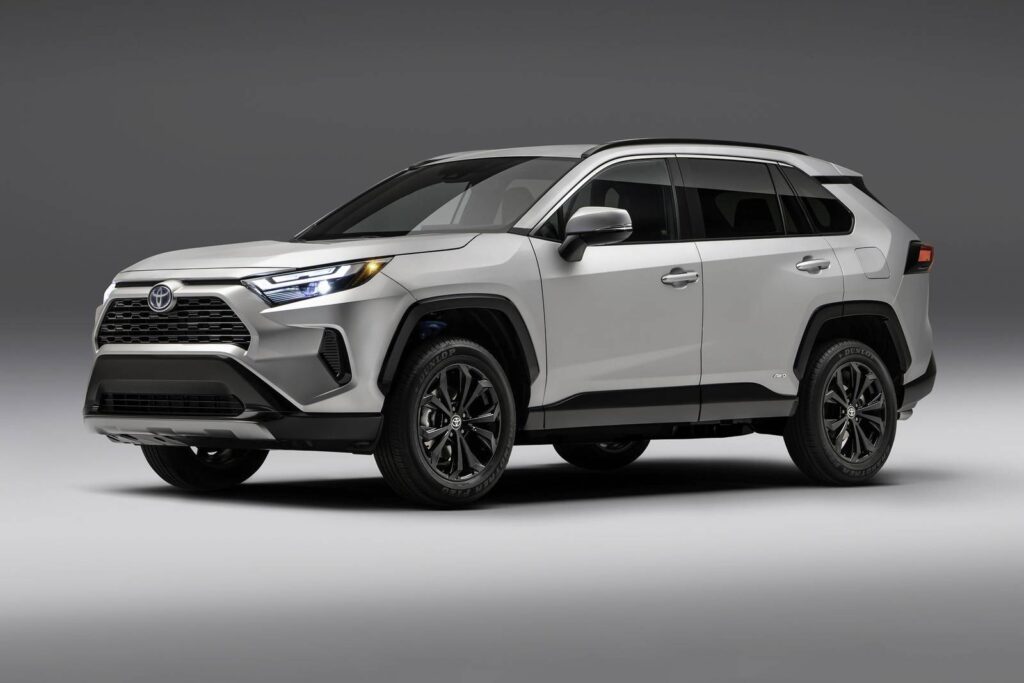
Knowing the Toyota RAV4 gas tank size is useful whether you're planning a road trip, comparing different model years, estimating fuel costs, or wondering why your SUV doesn't accept as much gasoline as expected.
The Toyota RAV4 has been one of the most popular compact SUVs for decades. However, its fuel tank capacity has changed several times as Toyota introduced new generations, engines, and hybrid powertrains.
Most Toyota RAV4 models from 2019 through 2026 have a 14.5-gallon (approximately 55-liter) fuel tank. Older versions may hold between 14.8 and 15.9 gallons, depending on the model year and powertrain.
There's also an important difference between the fuel tank's advertised capacity and the amount of gasoline you can actually add during a normal refill.
In this comprehensive guide, we'll examine Toyota RAV4 fuel tank sizes by year, compare gasoline and hybrid models, explain estimated driving range, and discuss common refueling concerns.
Content in this publication
- Toyota RAV4 Gas Tank Size: Quick Answer
- Toyota RAV4 Gas Tank Size by Year (1996–2026 Chart)
- Toyota RAV4 Fuel Tank Capacity by Generation
- Toyota RAV4 Gasoline vs. Hybrid Gas Tank Size
- How Far Can a Toyota RAV4 Go on a Full Tank?
- Why Does the Toyota RAV4 Have a Smaller Gas Tank Now?
- Why Won't My Toyota RAV4 Take 14.5 Gallons of Gas?
- Toyota RAV4 Fuel Tank Reserve Explained
- Toyota RAV4 Gas Tank Size in Liters
- How Much Does It Cost to Fill a Toyota RAV4?
- What Type of Gas Does a Toyota RAV4 Take?
- How to Refuel a Toyota RAV4 Correctly
- Does Toyota RAV4 Tank Size Affect Fuel Economy?
- How to Improve Toyota RAV4 Driving Range
- How to Check Your Toyota RAV4's Exact Fuel Tank Capacity
- Common Toyota RAV4 Fuel Tank Problems and Warning Signs
- Is a Larger RAV4 Gas Tank Better?
- Frequently Asked Questions About Toyota RAV4 Gas Tank Size
- Final Thoughts: Toyota RAV4 Gas Tank Size Explained
Toyota RAV4 Gas Tank Size: Quick Answer
The Toyota RAV4 fuel tank capacity depends primarily on its generation and whether it uses a conventional gasoline engine, hybrid system, or plug-in hybrid powertrain.
Here's a quick overview:
| Toyota RAV4 Model Years | Fuel Tank Size | Capacity in Liters |
|---|---|---|
| 2026 Hybrid and Plug-in Hybrid | 14.5 gallons | 54.9 L |
| 2019–2025 Gasoline and Hybrid | 14.5 gallons | 54.9 L |
| 2021–2025 RAV4 Prime | 14.5 gallons | 54.9 L |
| 2016–2018 Hybrid | 14.8 gallons | 56.0 L |
| 2013–2018 Gasoline | 15.9 gallons | 60.2 L |
| 2006–2012 Gasoline | 15.9 gallons | 60.2 L |
| 2001–2005 Gasoline | 14.8 gallons | 56.0 L |
| 1996–2000 Gasoline | 15.3 gallons | 57.9 L |
These figures describe typical U.S.-market specifications. RAV4 models sold in other countries may have different equipment or fuel tank specifications.
An important update concerns the 2026 model: Toyota introduced its sixth-generation RAV4 with hybrid and plug-in hybrid powertrains for the U.S. market, discontinuing the conventional gasoline-only version.
Toyota RAV4 Gas Tank Size by Year (1996–2026 Chart)
The following chart provides a detailed breakdown of Toyota RAV4 fuel tank capacities for individual model years.
| Model Year | Gasoline | Hybrid | Plug-in Hybrid |
|---|---|---|---|
| 2026 | Not offered | 14.5 gal | 14.5 gal |
| 2025 | 14.5 gal | 14.5 gal | 14.5 gal |
| 2024 | 14.5 gal | 14.5 gal | 14.5 gal |
| 2023 | 14.5 gal | 14.5 gal | 14.5 gal |
| 2022 | 14.5 gal | 14.5 gal | 14.5 gal |
| 2021 | 14.5 gal | 14.5 gal | 14.5 gal |
| 2020 | 14.5 gal | 14.5 gal | — |
| 2019 | 14.5 gal | 14.5 gal | — |
| 2018 | 15.9 gal | 14.8 gal | — |
| 2017 | 15.9 gal | 14.8 gal | — |
| 2016 | 15.9 gal | 14.8 gal | — |
| 2015 | 15.9 gal | — | — |
| 2014 | 15.9 gal | — | — |
| 2013 | 15.9 gal | — | — |
| 2012 | 15.9 gal | — | — |
| 2011 | 15.9 gal | — | — |
| 2010 | 15.9 gal | — | — |
| 2009 | 15.9 gal | — | — |
| 2008 | 15.9 gal | — | — |
| 2007 | 15.9 gal | — | — |
| 2006 | 15.9 gal | — | — |
| 2005 | 14.8 gal | — | — |
| 2004 | 14.8 gal | — | — |
| 2003 | 14.8 gal | — | — |
| 2002 | 14.8 gal | — | — |
| 2001 | 14.8 gal | — | — |
| 2000 | 15.3 gal | — | — |
| 1999 | 15.3 gal | — | — |
| 1998 | 15.3 gal | — | — |
| 1997 | 15.3 gal | — | — |
| 1996 | 15.3 gal | — | — |
Note: All gallons in this chart are U.S. liquid gallons, not Imperial gallons. Specifications are reference capacities rather than amounts that every normal refill will accept.
Toyota RAV4 Fuel Tank Capacity by Generation
Looking at each RAV4 generation makes it easier to understand how fuel tank sizes have evolved.
First Generation Toyota RAV4 (1996–2000)
The first-generation Toyota RAV4 introduced a compact SUV design that combined passenger-car handling with the practicality of a small utility vehicle.
For U.S.-market models, the fuel tank capacity was approximately:
- 15.3 U.S. gallons
- 57.9 liters
- 12.7 Imperial gallons
These early vehicles used a 2.0-liter gasoline engine and were available in different body styles and drivetrain configurations.
Although the original RAV4 had a larger fuel tank than today's version, its older engine technology generally delivered lower fuel efficiency.
Consequently, a larger tank didn't necessarily translate into greater driving range.
Second Generation Toyota RAV4 (2001–2005)
Toyota redesigned the RAV4 for the 2001 model year, introducing changes to its body, interior, and mechanical components.
The fuel tank capacity became approximately 14.8 gallons (56 liters).
This was slightly smaller than the previous generation's tank.
During this period, the RAV4 was available with gasoline engines, including a larger 2.4-liter engine in later U.S. models.
A 14.8-gallon tank offered a practical balance between vehicle packaging, fuel storage, and everyday driving requirements.
Third Generation Toyota RAV4 (2006–2012)
The third-generation RAV4 introduced a significantly larger body and additional practicality.
Toyota increased the fuel tank capacity to approximately:
15.9 gallons (60.2 liters).
This generation featured four-cylinder and available V6 gasoline engines in the United States.
The larger fuel tank was particularly useful for longer trips, considering that the more powerful engine configurations consumed more fuel.
For drivers comparing older RAV4 models, the 2006–2012 generation offers one of the largest gasoline tank capacities in the vehicle's history.
Fourth Generation Toyota RAV4 (2013–2018)
Toyota continued using a 15.9-gallon fuel tank in conventional gasoline models throughout this generation.
However, an important difference appeared with the introduction of the RAV4 Hybrid for the 2016 model year.
The capacities were:
| Powertrain | Fuel Tank Capacity |
|---|---|
| 2013–2018 Gasoline | 15.9 gallons |
| 2016–2018 Hybrid | 14.8 gallons |
The hybrid version had a smaller tank than its gasoline counterpart.
Nevertheless, improved fuel efficiency enabled the hybrid system to achieve competitive driving range with less gasoline.
This illustrates an important principle: fuel economy can be more valuable than tank capacity when determining how far a vehicle travels.
Fifth Generation Toyota RAV4 (2019–2025)
The fifth-generation RAV4 brought major changes to the vehicle's platform, design, and available powertrains.
For U.S.-market gasoline and hybrid models, Toyota standardized the fuel tank capacity at approximately 14.5 gallons (54.9 liters).
The RAV4 Prime plug-in hybrid, introduced for the 2021 model year, also uses a 14.5-gallon fuel tank.
Despite having a smaller tank than the previous gasoline-powered generation, modern RAV4 models can achieve excellent driving range thanks to improvements in fuel efficiency.
The hybrid versions are particularly impressive because they combine gasoline power with electric motor assistance.
However, certain early fifth-generation hybrid models experienced fuel gauge and refueling complaints, which we'll explain later.
Sixth Generation Toyota RAV4 (2026)
The 2026 Toyota RAV4 introduces another important evolution.
For the U.S. market, Toyota offers the redesigned model with two electrified powertrain types:
- Hybrid Electric Vehicle (HEV)
- Plug-in Hybrid Electric Vehicle (PHEV)
The conventional gasoline-only version is no longer part of the U.S. lineup.
Both the 2026 Hybrid and Plug-in Hybrid have a fuel tank capacity of approximately 14.5 U.S. gallons, or 55 liters.
Although the tank remains similar in size to the previous generation, improvements in hybrid technology help the RAV4 make more effective use of the gasoline it carries.
For 2026 buyers, fuel efficiency and powertrain selection will generally matter more to driving range than differences in fuel tank capacity.
Toyota RAV4 Gasoline vs. Hybrid Gas Tank Size
One of the most common questions concerns whether hybrid RAV4 models have smaller fuel tanks than gasoline versions.
The answer depends on the model year.
2016–2018: Different Fuel Tank Sizes
For these years, gasoline RAV4 models feature a 15.9-gallon tank, while hybrid versions hold 14.8 gallons.
That's a difference of 1.1 gallons.
Although the gasoline model can store more fuel, the hybrid can often travel farther on each gallon.
2019–2025: Similar Fuel Tank Capacities
Beginning with the fifth generation, gasoline and hybrid RAV4 models share the same nominal 14.5-gallon capacity.
The main difference is how efficiently they use gasoline.
For example, if two RAV4 models both have 14.5-gallon tanks but one averages 30 mpg while the other achieves 40 mpg, the hybrid has a substantial theoretical range advantage.
2026: Hybrid Powertrains Only
For the redesigned 2026 U.S. lineup, the choice is between a conventional hybrid and a plug-in hybrid.
Both retain approximately 14.5 gallons of gasoline capacity.
The plug-in hybrid can also travel using electricity stored in its rechargeable traction battery.
That means its gasoline consumption depends heavily on how frequently the driver charges it and how much driving occurs in electric mode.
How Far Can a Toyota RAV4 Go on a Full Tank?
The amount of gasoline a RAV4 can hold is only one factor affecting driving range.
Fuel efficiency is equally important.
We can estimate maximum theoretical driving range using the following formula:
Driving Range = Fuel Tank Capacity × Fuel Economy (MPG)
For example, if a RAV4 has a 14.5-gallon tank and averages 30 miles per gallon:
14.5 × 30 = 435 miles
The theoretical range would be approximately 435 miles.
However, this doesn't mean drivers should expect to travel exactly 435 miles before refueling.
Road conditions, climate, traffic, vehicle load, and fuel reserve behavior all affect usable range.
Toyota RAV4 Estimated Driving Range Chart
The following examples demonstrate how fuel efficiency affects theoretical driving range.
| Example Configuration | Tank Size | Assumed MPG | Theoretical Range |
|---|---|---|---|
| Older gasoline RAV4 | 15.9 gal | 26 mpg | 413 miles |
| Modern gasoline RAV4 | 14.5 gal | 30 mpg | 435 miles |
| Modern RAV4 Hybrid | 14.5 gal | 40 mpg | 580 miles |
| Efficient 2026 RAV4 Hybrid | 14.5 gal | 43 mpg | 624 miles |
These are illustrative calculations using assumed or representative fuel economy figures, not guaranteed ranges or certified ratings for every trim.
Notice that an efficient hybrid can have a considerably greater theoretical range than a gasoline vehicle with a larger tank.
In other words, the RAV4 with the largest gas tank isn't necessarily the RAV4 that travels the farthest.
Why Does the Toyota RAV4 Have a Smaller Gas Tank Now?
Some owners wonder why older RAV4 models used 15.9-gallon tanks while newer versions generally hold 14.5 gallons.
You may be interested in reading Toyota RAV4 Dashboard Warning Lights and Symbols Explained
Although Toyota's exact design decisions vary across generations, several engineering considerations help explain why manufacturers may choose smaller fuel tanks.
Improved Fuel Efficiency
Modern engines, transmissions, and hybrid systems can produce more useful driving range from each gallon.
A larger tank becomes less necessary when the vehicle consumes less fuel.
This is particularly noticeable in hybrid vehicles, which recover energy during braking and use electric motors to reduce gasoline consumption.
Vehicle Packaging
Modern SUVs need space for additional systems and components.
These can include safety structures, electronic components, emissions equipment, and hybrid batteries.
Fuel tank shape and location must work within the vehicle's overall design.
However, we shouldn't assume that hybrid battery placement alone explains every RAV4 tank-size change.
Vehicle Weight
Gasoline contributes to a vehicle's total operating weight.
One U.S. gallon of gasoline weighs approximately six pounds, depending on its composition and temperature.
Reducing nominal tank capacity by 1.4 gallons reduces the amount of fuel carried when both tanks are filled by roughly eight to nine pounds.
That difference is modest, but manufacturers evaluate many small weight and packaging decisions during vehicle development.
Driving Range Requirements
Manufacturers balance several competing priorities when determining fuel capacity.
These include convenience, vehicle efficiency, packaging, cost, and expected customer driving patterns.
A smaller tank can still provide sufficient range when paired with an efficient powertrain.
Why Won't My Toyota RAV4 Take 14.5 Gallons of Gas?
This is one of the most frequently discussed RAV4 fuel tank questions.
Some owners notice that their vehicle has a 14.5-gallon advertised capacity, but they can only add 10, 11, or 12 gallons when refueling.
There are several possible explanations.
1. The Tank Isn't Completely Empty
When the fuel gauge indicates empty, there may still be gasoline inside the tank.
Automakers design fuel level warnings to encourage drivers to refuel before the vehicle actually runs out.
Consequently, filling the tank when the low-fuel warning appears doesn't necessarily require the tank's entire advertised capacity.
2. Fuel Gauges Are Estimates
A fuel gauge doesn't directly measure every drop of gasoline inside the tank.
Instead, a fuel level sensor sends information to the vehicle's electronic systems.
Fuel tank shape, sensor characteristics, and the vehicle's position can influence the displayed level.
The dashboard reading should therefore be treated as an estimate.
3. The Fuel Pump Stops Automatically
Gas station nozzles contain automatic shutoff mechanisms designed to stop dispensing fuel when conditions at the filler neck indicate that the tank is full.
An early shutoff may happen because of fuel flow, nozzle position, or ventilation behavior.
However, repeated early shutoff can also indicate a problem that needs inspection.
4. Certain RAV4 Hybrid Models Had Refueling Concerns
Toyota documented refueling performance issues affecting certain 2019 and 2020 RAV4 Hybrid vehicles.
Owners reported symptoms such as:
- Fuel gauges not displaying full after refueling.
- Gas pumps shutting off earlier than expected.
- Lower-than-expected distance-to-empty readings.
- The apparent inability to add the expected amount of fuel.
Toyota issued technical guidance and a customer support program addressing qualifying vehicles.
The investigation identified fuel tank shape variation and possible fuel sender gauge positioning concerns.
Toyota subsequently developed updated components to address affected vehicles.
Not every RAV4 Hybrid from those years experienced the issue, and a low refill quantity alone doesn't establish that a vehicle is defective.
If you own an affected model and repeatedly notice unusual refueling behavior, contact a Toyota dealership and request a VIN-specific inspection and eligibility check.
Toyota RAV4 Fuel Tank Reserve Explained
Another common question concerns how much gasoline remains when the RAV4's low-fuel warning appears.
The important point is that there is no single reserve quantity that should be assumed for every RAV4 generation.
The remaining fuel amount depends on the specific vehicle, fuel gauge calibration, operating conditions, and model year.
Is the Empty Mark Really Empty?
Not necessarily.
The empty indication is intended to warn the driver that refueling is needed.
It isn't a reliable measurement of the exact quantity of gasoline remaining.
A vehicle may still have fuel inside the tank when its range display approaches zero.
However, that remaining quantity shouldn't be treated as guaranteed driving distance.
How Far Can You Drive After the Fuel Light Comes On?
There isn't a universal safe mileage figure for every Toyota RAV4.
The remaining distance depends on fuel consumption and the actual amount of usable gasoline.
For example, a vehicle averaging 30 mpg theoretically travels 30 miles on one gallon.
But that calculation doesn't tell us how much gasoline remains after the warning appears.
For this reason, we recommend refueling promptly rather than attempting to test the vehicle's maximum range.
Toyota RAV4 Gas Tank Size in Liters
Drivers outside the United States commonly measure fuel capacity in liters instead of gallons.
We can convert U.S. gallons into liters using this formula:
Liters = U.S. Gallons × 3.78541
Here are the principal RAV4 capacities:
| U.S. Gallons | Liters | Imperial Gallons |
|---|---|---|
| 14.5 | 54.9 | 12.1 |
| 14.8 | 56.0 | 12.3 |
| 15.3 | 57.9 | 12.7 |
| 15.9 | 60.2 | 13.2 |
The distinction between U.S. and Imperial gallons is important.
An Imperial gallon is larger than a U.S. gallon.
Consequently, a RAV4 advertised with a 55-liter tank in Australia or the United Kingdom holds approximately 14.5 U.S. gallons but only 12.1 Imperial gallons.
Always check which measurement system is being used when comparing specifications from different countries.
How Much Does It Cost to Fill a Toyota RAV4?
The cost of filling a Toyota RAV4 depends on gasoline prices and the amount of fuel required.
We can estimate the cost of a complete tank using:
Fuel Tank Capacity × Price Per Gallon = Estimated Cost
For a 14.5-gallon RAV4, the theoretical cost at different gasoline prices would be:
| Gas Price per Gallon | Cost of 14.5 Gallons |
|---|---|
| $3.00 | $43.50 |
| $3.50 | $50.75 |
| $4.00 | $58.00 |
| $4.50 | $65.25 |
| $5.00 | $72.50 |
These are hypothetical prices, not current pump price quotations.
The actual cost of a normal refill will usually be lower because gasoline remains in the tank when drivers stop to refuel.
For example, purchasing 11 gallons at $3.50 per gallon would cost $38.50.
Does the RAV4 Hybrid Cost Less to Fill?
If a gasoline RAV4 and a Hybrid have identical tank capacities, filling them from the same fuel level at the same gas station would cost approximately the same.
However, the hybrid will generally consume less gasoline over a comparable distance.
This can reduce overall fuel expenses and the number of required gas station visits.
What Type of Gas Does a Toyota RAV4 Take?
Most U.S.-market Toyota RAV4 gasoline and hybrid models are designed to operate on regular unleaded gasoline with a minimum octane rating of 87 AKI.
Premium gasoline is generally unnecessary unless the owner's manual for the specific vehicle states otherwise.
Before refueling, we recommend checking the fuel requirements specified in the owner's manual or fuel filler information.
Requirements can vary between international markets, where different octane rating systems are used.
For example, the United States typically uses the Anti-Knock Index (AKI), while many other countries display Research Octane Number (RON).
An 87 AKI fuel rating is therefore not directly equivalent to 87 RON.
You may be interested in readingToyota RAV4 Dashboard Warning Lights and Symbols ExplainedYou may be interested in reading
 Suzuki SX4 Real-World MPG & Fuel Economy (2007–2014)
Using the manufacturer-recommended fuel is more important than choosing an unnecessarily expensive premium grade.
How to Refuel a Toyota RAV4 Correctly
Following correct refueling procedures helps protect the vehicle's fuel system and ensures safe operation.
We recommend these steps:
- Park safely at the gas station and switch off the vehicle.
- Locate and open the fuel filler door using the procedure specified for your RAV4.
- Select the manufacturer-recommended gasoline grade.
- Insert the pump nozzle fully into the filler neck.
- Begin dispensing gasoline at a normal flow rate.
- Allow the pump to stop automatically.
- Avoid repeatedly topping off the tank after shutoff.
- Close the fuel cap, if equipped, and secure the filler door.
Plug-in hybrid models may have additional fuel system pressure-management procedures before the filler door opens, so follow the specific owner's manual instructions.
Should You Top Off the RAV4 Gas Tank?
We don't recommend repeatedly adding gasoline after the nozzle automatically stops.
Overfilling can interfere with evaporative emissions components and may lead to fuel spills.
It can also create unnecessary complications when diagnosing abnormal refueling behavior.
If the pump repeatedly stops well before the expected refill level and the gauge readings appear incorrect, have the vehicle inspected instead of forcing additional gasoline into the tank.
Does Toyota RAV4 Tank Size Affect Fuel Economy?
Fuel tank capacity and fuel economy are related to driving range, but they are different measurements.
Fuel tank capacity tells us how much gasoline the vehicle can store.
Fuel economy tells us how efficiently the vehicle uses that gasoline.
A larger tank doesn't automatically improve miles per gallon.
Consider two hypothetical vehicles:
Vehicle A
- Fuel tank: 15.9 gallons
- Fuel economy: 25 mpg
- Theoretical range: 397.5 miles
Vehicle B
- Fuel tank: 14.5 gallons
- Fuel economy: 40 mpg
- Theoretical range: 580 miles
Although Vehicle B has a smaller fuel tank, it can theoretically travel much farther before requiring additional gasoline.
This demonstrates why hybrid technology can make a major difference in daily operating costs and road-trip convenience.
How to Improve Toyota RAV4 Driving Range
If you want to get more miles from each tank, driving habits and vehicle maintenance can make a meaningful difference.
Maintain Correct Tire Pressure
Underinflated tires increase rolling resistance.
Checking tire pressure regularly helps maintain fuel efficiency, handling, and tire life.
Use the pressure information on the driver's door placard rather than assuming one pressure value applies to every RAV4.
Avoid Aggressive Acceleration
Frequent rapid acceleration can increase gasoline consumption.
Smooth driving and anticipating traffic conditions help reduce unnecessary energy use.
Reduce Unnecessary Weight
Carrying additional cargo increases the energy required to move the vehicle.
Remove unnecessary heavy items when they're no longer needed.
Limit Excessive Idling
An idling gasoline engine consumes fuel without adding driving distance.
Hybrid RAV4 models can automatically stop their gasoline engines under appropriate conditions, helping reduce wasted fuel.
Use Climate Control Efficiently
Heating and air conditioning requirements can affect fuel consumption, especially during extreme weather.
Use climate control as needed for safety and comfort, but avoid unnecessary energy demand.
Maintain the Vehicle Properly
Follow Toyota's recommended maintenance schedule, including tire inspections, fluid checks, and other scheduled services.
Mechanical problems can negatively affect fuel economy, even when the advertised fuel tank capacity remains unchanged.
How to Check Your Toyota RAV4's Exact Fuel Tank Capacity
Although model-year charts are useful, the most reliable way to confirm a particular vehicle's specifications is to consult its documentation.
We recommend checking the following:
Owner's Manual
Look for the specifications section, frequently titled "Maintenance Data" or "Fuel."
Toyota usually lists fuel tank capacity in gallons and liters.
Toyota Vehicle Specifications
Official Toyota model information can help identify the correct tank capacity for a particular trim and powertrain.
Vehicle Identification Number (VIN)
A Toyota dealership can use your VIN to identify the vehicle's configuration and determine which specifications or service information apply.
This is especially helpful for imported vehicles or model years with multiple powertrain options.
Market-Specific Documentation
A RAV4 sold in Australia, Canada, Europe, or Japan may have different specifications from a U.S.-market version.
For accurate information, consult the documentation supplied for that market.
Common Toyota RAV4 Fuel Tank Problems and Warning Signs
Most fuel tank concerns aren't caused by the tank being too small.
Instead, unusual behavior may involve the fuel level sensor, filler system, or associated components.
Some warning signs worth investigating include:
- The fuel gauge regularly showing incorrect levels.
- Gasoline odors around the vehicle.
- Fuel leaks or visible wetness near the tank.
- Repeated difficulty filling the tank.
- A check-engine light associated with an evaporative emissions issue.
- Significant fuel level changes that don't match normal consumption.
A fuel smell or visible leak requires prompt attention. Avoid driving or operating the vehicle near ignition sources if a leak is suspected.
For recurring gauge or refueling problems, a qualified technician can inspect the relevant components and review applicable Toyota service information.
Is a Larger RAV4 Gas Tank Better?
A larger tank can offer advantages, but it isn't always the most important feature.
The benefits of greater fuel capacity include fewer potential stops on longer journeys and more flexibility when gas stations are widely spaced.
However, the disadvantages can include additional fuel weight and more space occupied by the tank.
We should also consider that driving range depends heavily on efficiency.
For many buyers, a modern RAV4 Hybrid with a 14.5-gallon tank may be more convenient than an older gasoline model with a larger tank because it can travel farther on less gasoline.
When comparing vehicles, consider fuel capacity, real-world mpg, estimated range, and refueling convenience together.
Frequently Asked Questions About Toyota RAV4 Gas Tank Size
1. How many gallons does a 2025 Toyota RAV4 hold?
The 2025 Toyota RAV4 has a 14.5-gallon (54.9-liter) fuel tank in its U.S.-market gasoline, Hybrid, and Prime plug-in hybrid versions.
The actual amount of fuel added during a refill depends on how much gasoline remains in the tank.
2. What is the 2026 Toyota RAV4 gas tank size?
The 2026 Toyota RAV4 Hybrid and Plug-in Hybrid have a fuel tank capacity of approximately 14.5 U.S. gallons, equivalent to 55 liters.
Unlike previous model years, the 2026 U.S.-market RAV4 lineup doesn't include a conventional gasoline-only version.
3. Why does my Toyota RAV4 only take 11 gallons?
Your RAV4 may still contain several gallons of gasoline when the dashboard indicates that fuel is low.
Therefore, adding 11 gallons to a vehicle with a 14.5-gallon tank doesn't automatically mean the tank is defective.
However, certain 2019–2020 RAV4 Hybrid vehicles had documented refueling performance and fuel gauge concerns. Repeated abnormal behavior should be investigated.
4. Does the Toyota RAV4 Hybrid have a smaller gas tank?
That depends on the year.
The 2016–2018 RAV4 Hybrid has a 14.8-gallon tank, compared with 15.9 gallons for conventional gasoline models.
From 2019 through 2025, gasoline and hybrid RAV4 models have the same nominal 14.5-gallon capacity. The 2026 Hybrid also holds approximately 14.5 gallons.
5. How many miles can a Toyota RAV4 travel on a full tank?
Driving range varies according to the model, powertrain, fuel economy, and conditions.
For example, a RAV4 averaging 30 mpg with a 14.5-gallon tank has a theoretical range of 435 miles.
A hybrid averaging 40 mpg with the same tank capacity has a theoretical range of approximately 580 miles.
Actual driving range will differ, and drivers should refuel before the tank is empty.
Final Thoughts: Toyota RAV4 Gas Tank Size Explained
The Toyota RAV4 gas tank size has changed across generations, ranging from approximately 14.5 to 15.9 gallons for most U.S.-market models.
Older RAV4 versions, particularly those produced between 2006 and 2018, often feature larger fuel tanks than modern models.
However, newer RAV4 vehicles benefit from improved engine efficiency and increasingly sophisticated hybrid systems.
The 2026 RAV4 continues with a 14.5-gallon tank in its hybrid and plug-in hybrid configurations, demonstrating that a larger tank isn't necessarily required for impressive driving range.
It's also important to understand that advertised fuel tank capacity doesn't equal the amount of gasoline a vehicle will accept at every fill-up. Some fuel normally remains when the low-fuel warning activates, and fuel gauge readings are estimates.
For the most accurate information, always check the owner's manual for your specific model year, trim, and market.
Ultimately, when choosing between different Toyota RAV4 generations, we recommend looking beyond tank size alone. Fuel economy, practical driving range, powertrain efficiency, and reliability are equally important factors in everyday ownership.
You may be interested in readingToyota RAV4 Dashboard Warning Lights and Symbols ExplainedYou may be interested in reading
Suzuki SX4 Real-World MPG & Fuel Economy (2007–2014)You may be interested in reading
 Suzuki SX4 Top Speed: Complete Performance Guide (2006–2012)
If you want to know other articles similar to Toyota RAV4 Gas Tank Size (Chart & Explanation) you can visit the category Blog.
Volvo S90 Reliability: Problems, Costs & Best Years
Is Haval Jolion a Good Car? Honest Review, Reliability, Pros and Cons
How to Start Haval Jolion With Spare Key: Complete Guide
How to Calculate Per Diem on an Auto Loan

How to Calculate the Residual Value of a Car
Is the Honda Passport Selling Well? Sales Numbers Tell the Story
Leave a Reply
More content of your interest