

Nissan X Trail Hybrid Problems: What Owners Should Know

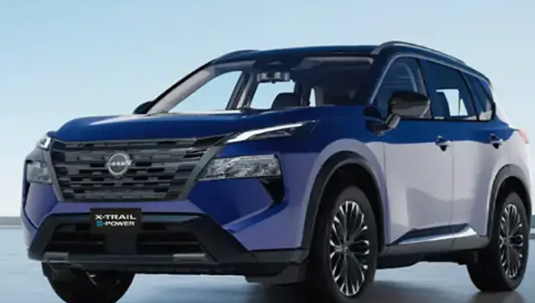
The Nissan X-Trail Hybrid is an interesting SUV because it takes a slightly different road from many of its rivals. In its latest e-POWER form, we get electric-motor propulsion without needing to plug the vehicle into a charger. That sounds like having our cake and eating it too.
But what about Nissan X Trail hybrid problems?
Search online for long enough and we will find everything from owners praising the X-Trail for smooth, quiet urban driving to drivers reporting battery warnings, e-POWER system errors, electrical glitches, and cars that suddenly refuse to enter READY mode.
The sensible answer lies somewhere between “they are unreliable” and “there is nothing to worry about.”
Most Nissan X-Trail hybrids do not automatically develop serious faults. However, there are several areas prospective buyers and current owners should understand, particularly the 12-volt battery, e-POWER control electronics, warning messages, sensors, infotainment equipment, petrol engine operation, and high-voltage battery system.
There is also an important recent development: in Australia, a recall published in July 2026 covers certain 2022–2026 X-Trail e-POWER vehicles because battery-controller software can potentially cause loss of motive power.
So, rather than throwing every complaint into one basket, let us separate documented issues from occasional owner reports and perfectly normal e-POWER characteristics.
Content in this publication
- How the Nissan X-Trail Hybrid System Actually Works
- 1. Nissan X Trail Hybrid 12-Volt Battery Problems
- 2. e-POWER System Malfunction Warnings
- 3. 2022–2026 X-Trail e-POWER Battery Controller Recall
- 4. High-Voltage Battery Failure
- 5. Long-Term Parking and Battery Discharge
- 6. Petrol Engine Noise That Feels Out of Sync
- 7. Possible EGR-Related Issues
- 8. Infotainment and Electrical Glitches
- 9. Cameras, Radar and Driver-Assistance Warnings
- 10. Regenerative Braking Can Feel Unusual
- 11. Reduced Power When Battery Charge Is Low
- 12. Is the Nissan X Trail Hybrid Unreliable?
- 13. Nissan X Trail Hybrid Problems vs Normal Characteristics
- 14. What to Check Before Buying a Used X-Trail e-POWER
- 15. Questions to Ask the Seller
- 16. Are X-Trail Hybrid Repairs Expensive?
- 17. How We Can Reduce the Risk of Hybrid Problems
- 18. Should We Avoid the Nissan X-Trail Hybrid?
- 19. Which Nissan X Trail Hybrid Problems Worry Us Most?
- 20. Final Verdict on Nissan X Trail Hybrid Problems
- Frequently Asked Questions
How the Nissan X-Trail Hybrid System Actually Works
Understanding the technology first makes diagnosing supposed problems much easier.
The current X-Trail e-POWER is not a conventional hybrid where both the petrol engine and electric motor can mechanically propel the wheels.
Instead, the electric traction motor drives the wheels. The petrol engine primarily operates as part of the electricity-generating system, producing energy that can supply the motor and charge the lithium-ion battery. Regenerative braking also feeds energy back into the battery.
In other words, imagine an electric car carrying its own petrol-powered generator.
That unusual arrangement explains several X-Trail behaviors that new owners occasionally mistake for faults.
Why e-POWER Feels Different From a Normal Hybrid
When accelerating, we receive the immediate response characteristic of an electric motor.
Yet the petrol engine can start even when we are not expecting it.
Nissan says the engine may operate when the battery charge is low, during hard acceleration, while warming itself up, when air conditioning requires it, and under several other operating conditions. It can even spin during certain downhill situations involving regeneration.
Therefore, an engine suddenly becoming audible is not automatically evidence of a hybrid malfunction.
The X-Trail Has Two Very Different Batteries
This distinction is crucial.
The vehicle contains a lithium-ion high-voltage battery for the e-POWER drivetrain and a conventional 12-volt battery supporting the vehicle's electrical systems. The high-voltage architecture also incorporates equipment such as an inverter, DC/DC converter, generator and electric drive motor.
A surprising number of apparent “hybrid problems” can actually begin on the 12-volt side of the car.
1. Nissan X Trail Hybrid 12-Volt Battery Problems
If there is one component we should not overlook, it is the humble 12V battery.
It seems almost ridiculous. We have electric motors, sophisticated lithium-ion storage, regenerative braking and hundreds of volts running through the drivetrain—yet a relatively ordinary 12V battery can still spoil the morning.
Without sufficient 12-volt power, the vehicle's control electronics may not initialize correctly.
Owners have reported symptoms ranging from warning messages and electrical oddities to vehicles refusing to start normally. A recent CarsGuide response concerning a 2024 X-Trail e-POWER also identified a weak or failed 12V battery as one possible cause when investigating an e-POWER malfunction message.
Common Signs of a Weak 12V Battery
Possible symptoms may include:
- The X-Trail will not enter READY mode.
- Multiple seemingly unrelated dashboard warnings appear together.
- Electronics behave strangely after startup.
- The vehicle appears completely dead.
- An e-POWER or electrical-system warning appears.
- Problems temporarily disappear after the battery is charged or replaced.
These symptoms are not proof that the battery is faulty, but they make checking 12V battery condition a sensible early diagnostic step.
Why Short Trips and Electrical Accessories Matter
Nissan specifically advises owners to operate electrical accessories with the e-POWER system running to avoid discharging the 12V battery. The owner's manual similarly warns that using the audio system for extended periods while e-POWER is switched off can discharge it.
That means sitting in the vehicle listening to music with the powertrain switched off is not as harmless as it might appear.
2. e-POWER System Malfunction Warnings
Few dashboard messages sound more alarming than “e-POWER system malfunction.”
Sometimes the underlying problem can be relatively straightforward. Other times professional diagnosis is essential.
An e-POWER vehicle depends on numerous controllers communicating correctly. The power-generating engine, battery, inverter, electric motor, DC/DC converter, sensors and control modules effectively perform an electronic orchestra. One instrument going out of tune can make the whole dashboard complain.
We should therefore avoid assuming that an e-POWER warning automatically means the expensive high-voltage battery has failed.
What Should We Do When an e-POWER Warning Appears?
First, read the exact message rather than relying on memory.
Some warnings concern driver-assistance systems rather than the drivetrain itself. Nissan's manual, for example, explains that certain system-fault warnings can be caused by malfunctioning assistance systems, while camera and radar availability can also be affected temporarily by environmental conditions.
If a genuine drivetrain warning remains active, particularly alongside reduced performance or inability to enter READY mode, professional diagnostic scanning is the sensible path.
Do not start replacing expensive hybrid parts based on forum guesses.
3. 2022–2026 X-Trail e-POWER Battery Controller Recall
This issue deserves particular attention because it is not merely an anecdotal complaint.
On July 9, 2026, Australia's vehicle recall authority published recall REC-006653, Nissan campaign R26A5, covering certain T33 X-Trail e-POWER variants produced across the 2022–2026 model-year range.
According to the recall notice, a software problem involving the Lithium-ion Battery Controller (LBC) could cause an affected vehicle to enter fail-safe mode while driving or during regenerative braking. That situation could potentially result in loss of motive power and prevent the vehicle from charging.
How Serious Is the Recall?
Potential loss of propulsion is obviously significant.
The Australian authority states that loss of motive power could increase accident risk. The remedy involves reprogramming the relevant software at an authorized Nissan dealer at no cost to affected owners.
However, we should keep this in perspective.
The recall does not prove that every X-Trail e-POWER worldwide has a defective battery, nor should we assume that recall populations are identical between countries. Campaigns and VIN ranges can vary by market.
If we own or plan to buy a used X-Trail e-POWER, checking the VIN against the applicable Nissan or government recall database in our own country is therefore important.
4. High-Voltage Battery Failure
This is the problem everyone fears because “hybrid battery” usually sounds like four figures disappearing from our bank account before breakfast.
There are individual online reports of X-Trail e-POWER high-voltage battery failures. They deserve consideration, particularly when inspecting a used vehicle, but owner reports alone do not establish how common such failures are across the total vehicle population.
Nissan's own documentation confirms that the vehicle monitors its lithium-ion battery system and can display a battery malfunction warning requiring system inspection.
Symptoms That Deserve Immediate Investigation
Persistent battery-system warnings, severe reduction in propulsion, repeated inability to activate the e-POWER system, unusual charging-related faults or diagnostic trouble codes relating to the high-voltage system should not be ignored.
This is also one area where driveway experimentation is a bad idea.
The X-Trail e-POWER system can operate at approximately 420 volts, according to Nissan. High-voltage cables and components should never be disconnected or dismantled by an untrained owner.
5. Long-Term Parking and Battery Discharge
Hybrid SUVs occasionally spend weeks parked at airports, second homes or garages.
That deserves consideration with e-POWER.
Nissan states that the lithium-ion battery gradually discharges when the vehicle remains parked for long periods. Its owner's manual recommends driving the vehicle for roughly 30 minutes at least once every two to three months to help prevent excessive discharge.
This is unlikely to trouble an X-Trail used several times per week.
But for a vehicle sitting untouched for months, it matters.
Is a Low Hybrid Battery Automatically a Fault?
No.
Battery state of charge normally rises and falls continuously during operation. Nissan's energy-flow display is designed to show those changes, and a relatively low indicated battery level does not automatically indicate battery deterioration.
The petrol engine should automatically generate electricity as needed.
That is a fundamental difference between e-POWER and a plug-in hybrid.
6. Petrol Engine Noise That Feels Out of Sync
This is one of those characteristics that can sound like something is wrong even when everything is working properly.
Because the petrol engine does not mechanically drive the wheels in the conventional sense, engine speed and road speed do not always have the relationship we expect.
Press the accelerator and the engine may suddenly become more audible because electricity demand has increased.
Then we may slow down while the engine continues operating.
Odd? Initially, yes.
Broken? Not necessarily.
When Engine Noise May Actually Be a Problem
We should become more suspicious if the engine becomes dramatically rougher than usual, develops persistent knocking, triggers an engine warning light, loses generating performance or accompanies an e-POWER malfunction message.
Normal generator operation should not be used as an excuse to ignore genuinely abnormal noises.
EGR, or exhaust gas recirculation, is another component occasionally associated with e-POWER malfunction discussions.
A June 2026 CarsGuide technical response concerning an X-Trail e-POWER malfunction pointed to a clogged or failed EGR valve as another reported possible cause, noting that such a fault may force the vehicle into a reduced-performance mode.
That does not mean every e-POWER X-Trail will suffer an EGR failure.
It means EGR operation belongs on the diagnostic checklist when appropriate symptoms and fault codes support it.
Why Diagnosis Matters More Than Guesswork
Imagine visiting a doctor and saying, “My head hurts, therefore I need surgery.”
That is roughly what we are doing when we see an e-POWER warning and immediately conclude, “The hybrid battery is dead.”
Several systems can potentially produce overlapping symptoms.
Proper fault-code analysis matters.
8. Infotainment and Electrical Glitches
Not every annoying X-Trail hybrid issue lives beneath the bonnet.
Modern SUVs are rolling computer networks, and occasionally they behave like computers—meaning the screen decides Monday morning is an excellent time to reconsider its life choices.
Owner-feedback summaries published by What Car? have mentioned minor electrical and infotainment glitches among X-Trail complaints, while also describing overall owner experiences as mixed rather than universally problematic.
Possible complaints can include freezing screens, connectivity hiccups, intermittent warnings or temporary electronic abnormalities.
Software Updates Can Be Important
With increasingly software-controlled vehicles, dealer updates should not be dismissed as trivial housekeeping.
The 2026 Australian recall itself demonstrates why: its remedy involves software reprogramming rather than replacement of the entire battery pack.
When buying used, we would therefore want evidence that outstanding campaigns and applicable software updates have been completed.
9. Cameras, Radar and Driver-Assistance Warnings
Suppose the dashboard lights up with a driver-assistance warning on a cold, rainy morning.
Has the hybrid system failed?
Probably not.
The X-Trail uses cameras and radar for several assistance features. Nissan notes that warnings can appear when those components are temporarily unavailable because of conditions such as excessive camera temperature or sensor obstruction.
Mud, road salt, heavy rain, snow and grime around sensor areas can create apparent electronic problems.
Temporary Warning or Genuine Sensor Failure?
A warning that disappears after cleaning the sensor area or after environmental conditions normalize is quite different from one appearing every journey.
Persistent faults require investigation.
A vehicle constantly disabling blind-spot monitoring, emergency braking or adaptive assistance should not simply be dismissed as “modern cars being modern cars.”
10. Regenerative Braking Can Feel Unusual
Regenerative braking converts the vehicle's kinetic energy back into electrical energy.
Drivers coming from conventional petrol SUVs may initially notice unusual deceleration behavior, especially when experimenting with e-Pedal Step and different driving modes.
That is not automatically a braking-system problem.
Nissan's e-POWER technology uses regenerative energy to recharge its lithium-ion battery, while e-Pedal Step allows increased accelerator-controlled deceleration.
When Braking Behavior Deserves Attention
Vibration, grinding, pulling strongly to one side, warning lights or a major unexplained change in braking response should still be inspected.
“It's regenerative braking” should never become a blanket explanation for every brake complaint.
11. Reduced Power When Battery Charge Is Low
Drivers may occasionally notice that maximum propulsion feels restricted when the lithium-ion battery is at a low state of charge.
Nissan's owner's manual states that less driving power may be available when the battery's remaining charge becomes low.
This can occur without representing permanent battery damage.
The vehicle's petrol engine then works to generate the electricity necessary for continued operation and battery replenishment.
12. Is the Nissan X Trail Hybrid Unreliable?
Calling the entire model unreliable would oversimplify the evidence.
There are genuine complaints. There are documented faults. There is now a significant Australian recall affecting certain 2022–2026 e-POWER vehicles. There are also owners experiencing electrical and infotainment annoyances.
But that is not the same thing as demonstrating that most X-Trail hybrids fail.
We should also be careful when reading reliability statistics for the “Nissan X-Trail” generally because older T32 petrol and diesel vehicles are mechanically very different from the current T33 e-POWER.
Mixing them together is like judging the reliability of today's smartphone using complaints about a phone built ten years ago.
13. Nissan X Trail Hybrid Problems vs Normal Characteristics
This distinction may save us considerable anxiety.
An engine switching on unexpectedly can be normal. Fluctuating lithium-ion state of charge is normal. Audible engine operation during electricity generation can be normal. Strong regenerative deceleration can be normal. A petrol engine operating even during certain downhill situations can also be part of normal e-POWER operation.
Persistent warnings, loss of propulsion, inability to reach READY mode, repeated 12V discharge, severe engine roughness and high-voltage battery warnings are different.
Those deserve diagnosis.
14. What to Check Before Buying a Used X-Trail e-POWER
A carefully inspected example is considerably more attractive than buying based on mileage and shiny paint alone.
Before committing, we should check the following: VIN recall status; complete service history; history of e-POWER warnings; 12V battery health; dashboard warning lights; infotainment operation; cameras and driver-assistance systems; smooth transition between battery and generator operation; abnormal engine noise; charging or battery error messages; and evidence of completed software campaigns.
A proper road test should include urban speeds, stronger acceleration and a longer section where the petrol engine has an opportunity to operate.
Never judge an e-POWER X-Trail after a two-minute loop around a dealership.
15. Questions to Ask the Seller
“Has it ever broken down?” is useful but too broad.
Ask whether the vehicle has ever displayed an e-POWER system malfunction, required a 12V battery replacement, had work performed on its high-voltage battery, experienced repeated warning lights, received software updates or been subject to recall work.
If an owner says, “It had an e-POWER warning once, but they fixed it,” ask what was actually replaced or updated.
Paperwork beats memory.
16. Are X-Trail Hybrid Repairs Expensive?
They can be, depending on the component involved.
Replacing a conventional 12V battery sits in a completely different financial universe from replacing an inverter, electric motor or high-voltage battery assembly.
This is why accurate diagnosis is so important.
Throwing expensive components at a warning message is not troubleshooting; it is gambling with a toolbox.
Warranty Coverage Becomes Particularly Valuable
For newer X-Trail e-POWER examples, remaining manufacturer or market-specific hybrid-system warranty coverage can substantially reduce financial risk.
Warranty terms vary between countries and sometimes between components, so buyers should verify coverage from Nissan using the VIN instead of relying on generic online statements.
17. How We Can Reduce the Risk of Hybrid Problems
No maintenance routine can guarantee a fault-free vehicle, but sensible ownership helps.
Keep scheduled servicing current. Do not ignore an aging 12V battery. Complete manufacturer recalls promptly. Allow technicians to install applicable control-module updates. Keep camera and radar areas clean. Avoid leaving accessories operating for extended periods with the e-POWER system switched off. And if the car is stored for months, follow Nissan's recommendations concerning periodic operation.
Most importantly, respond to persistent warnings early.
A small electrical complaint is easier to investigate before it evolves into a vehicle that refuses to move.
18. Should We Avoid the Nissan X-Trail Hybrid?
Not automatically.
The X-Trail e-POWER offers something genuinely different: electrically driven wheels without dependence on external charging infrastructure. That can make it particularly pleasant around town, where instant electric-motor response and regenerative braking suit stop-start traffic.
But sophisticated technology inevitably means more components and software layers than we would find in an old-school naturally aspirated petrol SUV.
That complexity deserves respect.
For a used purchase, our confidence would rise considerably with a clean diagnostic scan, strong 12V battery, complete servicing, no unexplained warning history and confirmation that every recall applicable to the VIN has been completed.
19. Which Nissan X Trail Hybrid Problems Worry Us Most?
We would separate the issues into three levels.
Minor irritations include occasional infotainment or temporary sensor problems. Mid-level concerns include recurrent 12V battery discharge, repeated warning lights and persistent EGR or engine-management faults.
At the serious end sit confirmed high-voltage battery faults, repeated e-POWER shutdowns and any problem capable of causing loss of propulsion.
The July 2026 Australian recall belongs in that last category because authorities specifically identify a potential loss-of-motive-power risk. Fortunately, the prescribed remedy is software reprogramming for affected vehicles rather than automatically replacing the battery.
20. Final Verdict on Nissan X Trail Hybrid Problems
The phrase Nissan X Trail hybrid problems can make the SUV sound far more troublesome than the evidence justifies.
There are legitimate areas worth monitoring. The 12V battery can create surprisingly dramatic electrical symptoms. e-POWER warning messages deserve proper diagnosis. Some owners report infotainment and electronic glitches. EGR-related faults have also been discussed in connection with malfunction warnings.
More importantly, certain Australian T33 X-Trail e-POWER vehicles from the 2022–2026 range are covered by a 2026 recall concerning lithium-ion battery-controller software that could potentially cause loss of motive power.
Yet we should not confuse those facts with a claim that every X-Trail hybrid is destined for trouble.
The smartest approach is straightforward: check the VIN, inspect the service history, test the 12V battery, scan for stored faults and take warning messages seriously.
The X-Trail e-POWER is a technologically complicated SUV, but complexity does not automatically equal unreliability. Think of it like a Swiss watch rather than a hammer: there are more pieces working together, so understanding what those pieces are doing matters.
Frequently Asked Questions
1. What is the most common Nissan X Trail hybrid problem?
Electrical complaints and 12V battery problems are among the issues frequently discussed by owners. A weak 12V battery can potentially trigger several warning messages or prevent vehicle systems from initializing normally, so it is worth checking before assuming the high-voltage battery has failed.
2. Does the Nissan X-Trail e-POWER have battery problems?
High-voltage battery failures have been reported by individual owners, but anecdotal reports do not establish that widespread battery-pack failure affects most X-Trails. Nissan does provide specific battery-system warnings when faults are detected. In addition, certain Australian 2022–2026 e-POWER vehicles are subject to a 2026 battery-controller software recall.
3. Why does my Nissan X-Trail e-POWER engine run when the battery is charged?
That can be completely normal. Nissan says the petrol engine can start for several reasons besides simply replenishing a low battery, including engine warm-up, hard acceleration, air-conditioning demand and certain regenerative-braking situations.
4. What does an e-POWER system malfunction mean?
It means the vehicle has detected a fault associated with a monitored system, but the warning alone does not tell us which component has failed. Causes can vary, so retrieving diagnostic trouble codes and checking the 12V electrical system are sensible first steps before assuming an expensive high-voltage failure.
5. Is a used Nissan X-Trail e-POWER worth buying?
Potentially, yes. We would prioritize vehicles with complete service records, healthy 12V batteries, no unresolved e-POWER warnings, clean diagnostic results and confirmation that every applicable recall or software campaign has been completed. A pre-purchase inspection becomes especially valuable because the drivetrain contains considerably more electrical hardware than a conventional petrol SUV.
If you want to know other articles similar to Nissan X Trail Hybrid Problems: What Owners Should Know you can visit the category Common Problems.
Volvo XC40 Sound Not Working? Complete Troubleshooting Guide

Mazda Diesel Engine Problems: Common Faults and Fixes

Volkswagen Key Not Detected or No Key Error: Causes and Fixes

Volvo S90 Common Problems: Reliability & Repair Guide
Volvo S90 No Sound: Causes, Fixes and Solutions

Nissan Rogue Smells Like Gas: Causes and Fixes
Leave a Reply
More content of your interest