

Nissan X-Trail Global Complaints: Common Problems, Owner Concerns, and What to Check

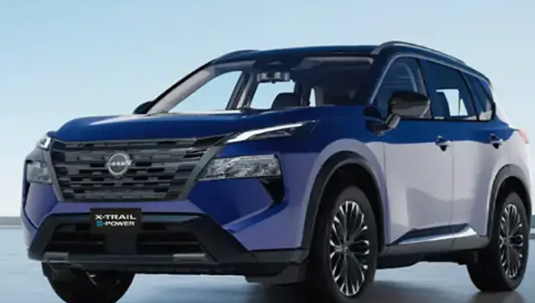
The Nissan X-Trail has spent decades doing what family SUVs are supposed to do: carrying people, luggage, pets, shopping bags, bicycles, and the occasional muddy pair of boots without making much drama about it. Across Europe, Australia, New Zealand, Asia, the Middle East, Latin America, and other markets, it has become one of Nissan’s most recognizable crossovers.
Yet search for Nissan X-Trail global complaints, and the picture quickly becomes complicated.
Some owners describe their X-Trail as dependable, comfortable, and surprisingly economical. Others tell stories about CVT shudder, electronic warning messages, diesel emissions equipment, faulty sensors, weak 12-volt batteries, infotainment glitches, or newer e-POWER systems that suddenly display alarming warnings.
So, which version is accurate?
In reality, both can be.
The X-Trail has been sold in several generations with very different engines, transmissions, electrical architectures, and hybrid systems. Complaints affecting an older diesel T32 do not automatically apply to a new T33 e-POWER, just as an issue reported in Australia might involve specifications that were never offered in the UK or elsewhere.
That distinction matters. A lot.
In this guide, we’ll sort through the most frequently discussed X-Trail complaints, explain which generations deserve closer inspection, and help prospective owners distinguish an irritating quirk from a potentially expensive problem.
Content in this publication
- Are Nissan X-Trail Global Complaints Really Widespread?
- Understanding the X-Trail Generations Before Reading Complaints
- Most Common Nissan X-Trail Complaints at a Glance
- X-Tronic CVT Complaints Remain the Biggest Historical Concern
- Diesel DPF Complaints
- EGR Valve Problems and Reduced Performance
- Nissan X-Trail e-POWER Complaints
- A 2026 e-POWER Recall Deserves Attention
- 12-Volt Battery Complaints Can Create Surprisingly Big Problems
- Radar and Driver-Assistance Complaints
- Infotainment Screen Complaints
- Parking Sensors and Camera Issues
- Suspension Knocks and Wear
- Steering Complaints
- Interior Rattles and Trim Complaints
- Fuel Economy Complaints
- Complaints About Engine Noise in e-POWER Models
- Are Older X-Trails More Reliable Than New Ones?
- Which Nissan X-Trail Complaints Are Most Expensive?
- What Complaints Can Usually Be Managed More Easily?
- How to Check a Used X-Trail Before Buying
- Should You Avoid the Nissan X-Trail Because of Complaints?
- Is the Nissan X-Trail Fundamentally Unreliable?
- Why Online Complaints Can Distort the Picture
- What Current T33 Owners Should Watch
- The Smartest Way to Interpret Nissan X-Trail Global Complaints
- Conclusion: Should Nissan X-Trail Complaints Stop You Buying One?
- Frequently Asked Questions
Are Nissan X-Trail Global Complaints Really Widespread?
The phrase “global complaints” can make things sound more dramatic than they are.
Millions of vehicles accumulate owner reports over time, and internet discussions naturally concentrate problems. People rarely create forum threads titled, “My X-Trail worked perfectly again today.”
What matters is repetition.
When the same symptoms repeatedly appear among vehicles sharing a particular transmission, engine, or generation, we should pay attention. With the X-Trail, several complaint categories stand out more than others.
The biggest historical concern is arguably the X-Tronic continuously variable transmission fitted to certain older models, particularly T32 versions. CarsGuide, for example, identifies CVT behavior as a notable reliability concern for that generation, mentioning symptoms such as delayed engagement and low-speed shuddering.
Meanwhile, modern T33 e-POWER complaints tend to revolve less around a conventional gearbox and more around electronics, warning systems, 12-volt electrical health, sensors, and hybrid-system behavior.
In other words, there isn't one universal “X-Trail problem.” There are different problem patterns.
Understanding the X-Trail Generations Before Reading Complaints
Before we blame every X-Trail equally, we need some context.
Older T30 and T31 vehicles were relatively conventional SUVs by modern standards. The third-generation T32 brought more sophisticated electronics, turbo-diesel options in some countries, and extensive use of Nissan's X-Tronic CVT.
The current T33 changed the formula again.
Depending on the country, buyers may encounter conventional petrol models, mild-hybrid versions, e-POWER models, or e-4ORCE all-wheel-drive variants.
Nissan's e-POWER arrangement is particularly unusual because the petrol engine generates electricity while the electric motor provides propulsion to the wheels. Nissan itself describes the configuration as an engine-generator feeding a battery and electric drive motor.
That architecture means comparing an e-POWER complaint directly with an old CVT complaint is rather like comparing a smartphone problem with a landline problem. They're still communication devices, but what can go wrong is very different.
Most Common Nissan X-Trail Complaints at a Glance
Across generations and countries, the recurring concerns we see most often include:
- X-Tronic CVT judder, hesitation, whining, or failure on some older models.
- Diesel DPF and EGR difficulties, particularly with repeated short-distance use.
- Turbocharger or performance complaints on certain diesel versions.
- 12-volt battery weakness causing starting or electronic irregularities.
- e-POWER system warnings or reduced-power messages on newer T33 models.
- Radar, camera, blind-spot, emergency-braking, and cruise-control warnings.
- Infotainment freezing, rebooting, or blank-screen complaints.
- Parking sensor and camera faults.
- Interior rattles, squeaks, and occasional trim-quality complaints.
- Suspension knocks as mileage accumulates.
- Fuel economy that disappoints owners expecting hybrid-like efficiency under every driving condition.
- Dealer diagnosis frustrations when intermittent faults cannot be reproduced.
Those complaints are not equally common, equally expensive, or equally serious. Let's dig deeper.
X-Tronic CVT Complaints Remain the Biggest Historical Concern
Why Owners Worry About the X-Trail CVT
If there is one subject that dominates older Nissan X-Trail reliability conversations, it is the continuously variable transmission.
A CVT does not change gears conventionally. Instead, it continuously adjusts its ratio to keep the engine operating efficiently.
When functioning properly, the result can feel remarkably smooth.
When something begins wearing internally, however, that smoothness can disappear.
Owners and used-car specialists have reported symptoms including juddering from a standstill, hesitation when Drive or Reverse is selected, engine revs increasing without proportional acceleration, whining noises, and occasional limp-mode behavior. CarsGuide specifically identifies low-speed judder and delayed selection of Drive or Reverse among warning signs worth investigating.
Which X-Trails Deserve the Closest CVT Inspection?
Concern tends to focus mainly on T31 and T32-era X-Trails equipped with CVT transmissions rather than manual models.
That doesn't mean every CVT-equipped X-Trail will fail.
Far from it.
A well-maintained example may cover substantial mileage without serious trouble. Still, transmission condition becomes especially important when buying used because previous maintenance, driving conditions, towing, heat exposure, and fluid condition can affect durability.
The Test Drive Matters More Than the Odometer
A low-mileage vehicle that has been neglected can be a worse purchase than a higher-mileage vehicle with meticulous servicing.
During a test drive, we would pay close attention when moving from Park into Drive or Reverse, accelerating gently from a stop, climbing a hill, and accelerating after the transmission is fully warm.
Any persistent shuddering or unusual whining deserves investigation before money changes hands.
Diesel DPF Complaints
Diesel X-Trails became popular in markets where long-distance economy mattered. Yet modern diesels also depend on complex emissions hardware.
The diesel particulate filter, or DPF, traps soot and periodically burns it away through regeneration.
That system works best when the engine reaches proper operating temperature.
Owners who spend nearly all their time making tiny urban journeys can unknowingly create ideal conditions for DPF trouble.
Repeated interrupted regenerations may eventually cause warning lights, reduced performance, excessive regeneration attempts, or limp mode.
Independent reliability guides commonly flag DPF trouble on 1.6 dCi T32 models, particularly where driving patterns involve frequent short journeys.
Why Driving Style Makes Such a Difference
A diesel SUV used for two-hour motorway journeys lives a very different life from one driven three kilometers to school each morning.
That is why blanket statements such as “the X-Trail diesel is unreliable” don't tell us much.
The better question is: how was this particular diesel X-Trail used?
If you're shopping for one, service documentation alone is useful but not enough. Ask about typical journey length and look for evidence of unresolved emissions-system warnings.
EGR Valve Problems and Reduced Performance
The exhaust gas recirculation system represents another complaint category on diesel models and has also entered discussions around newer powertrains.
A dirty, sticking, or malfunctioning EGR valve can contribute to rough running, warning lights, reduced engine performance, or limp-home behavior.
Interestingly, recent reporting around T33 e-POWER malfunction complaints has also mentioned EGR-related faults as a possible cause in some vehicles. In June 2026, CarsGuide discussed an X-Trail e-POWER hybrid-system malfunction and pointed to either a weakened 12-volt battery or EGR problems among reported causes.
We should not assume an EGR valve explains every hybrid warning, of course. Diagnostic codes matter.
A dashboard message is the symptom; it is not always the diagnosis.
Nissan X-Trail e-POWER Complaints
The New Technology Brings New Questions
The T33 e-POWER is mechanically fascinating.
Instead of mechanically driving the wheels through a conventional transmission, its petrol engine generates electricity while the electric propulsion motor drives the vehicle.
It creates an EV-like driving sensation without requiring drivers to plug the car into a charger.
But extra layers of software, battery management, power electronics, sensors, and control modules inevitably introduce different failure possibilities.
Owner discussions from several markets contain reports of warning messages, inability to restart, electrical faults, temporary loss of driver-assistance functions, and reduced-power conditions.
Importantly, Nissan's own owner documentation confirms the vehicle can display an “e-Power System Failure Power reduced” warning when the system detects a malfunction that reduces available motor power.
That doesn't prove widespread unreliability. It simply confirms that such warnings form part of the system's diagnostic architecture.
A 2026 e-POWER Recall Deserves Attention
One development makes current T33 research particularly important.
In Australia, a recall published on July 9, 2026 covers 13,795 X-Trail T33 e-POWER vehicles from model years 2022 through 2026. Australian authorities state that software within the lithium-ion battery controller may cause the vehicle to enter fail-safe mode while driving or during regenerative braking, potentially resulting in loss of motive power and preventing charging. The remedy involves dealer reprogramming.
That is a meaningful safety-related issue.
However, we should be careful about extrapolation.
A recall announced in Australia does not automatically mean every X-Trail sold worldwide is affected. Vehicle specifications, production batches, VIN ranges, regulatory campaigns, and recall coverage can vary by market.
Anyone considering a T33 e-POWER should therefore check the VIN against the official recall database for the country where the vehicle is registered.
12-Volt Battery Complaints Can Create Surprisingly Big Problems
Here's one of the stranger realities of modern electrified vehicles: a relatively ordinary 12-volt battery can make a technologically advanced hybrid appear catastrophically broken.
The 12-volt battery powers or initializes numerous electronics and control systems.
When voltage becomes unstable, computers can behave badly.
Owners may see multiple seemingly unrelated warnings illuminate at once. The car might refuse to enter its ready state, assistance systems may switch off, and the dashboard can resemble a Christmas tree that has developed anxiety.
Recent Australian reporting specifically mentions low or failing 12-volt batteries as one suspected cause of X-Trail e-POWER malfunction warnings.
Therefore, when several electronic faults suddenly appear together, battery voltage deserves testing before anyone assumes the high-voltage hybrid battery has failed.
Radar and Driver-Assistance Complaints
Modern X-Trails offer far more driver assistance than their ancestors.
Depending on trim, that can include adaptive cruise control, emergency braking, lane assistance, blind-spot monitoring, rear cross-traffic detection, cameras, and radar sensors.
Convenient? Absolutely.
Simple? Not really.
Some owners report intermittent warnings or temporary system unavailability.
But not every warning indicates a defective component.
Nissan's documentation states that front cameras and radar-based assistance features may become temporarily unavailable when sensors are obstructed by dirt, mist, water, ice, frost, or other environmental conditions. High camera temperatures can also temporarily disable some functions.
When Should We Actually Worry?
If a warning clears after cleaning a sensor or restarting the vehicle in normal conditions, the system may simply have encountered one of its designed limitations.
If the message repeatedly returns on a clean, dry vehicle under ordinary conditions, investigation becomes more important.
Nissan instructs owners to have systems checked if certain malfunction warnings remain after stopping and restarting the vehicle.
Infotainment Screen Complaints
Electronic complaints don't always involve something as dramatic as propulsion.
Sometimes the enemy is simply a black screen.
Owners have reported infotainment systems rebooting, freezing, disconnecting phones, losing sound, or temporarily displaying nothing.
These problems are frustrating precisely because they can be intermittent. A system might misbehave during the morning commute and behave perfectly when the technician tries to reproduce the fault that afternoon.
Software updates can sometimes help, while other cases may involve wiring, control modules, battery voltage, or the display unit itself.
For a used vehicle, spend several minutes experimenting rather than merely confirming that the screen turns on.
Connect a phone. Test Bluetooth. Use navigation. Try the reversing camera. Adjust audio. Restart the vehicle.
Five minutes of button pushing can expose problems a polished showroom presentation hides.
Parking Sensors and Camera Issues
Parking sensors live a tough life.
They face mud, rain, road salt, impacts, extreme heat, cold, and years of pressure washing.
Unsurprisingly, some X-Trail owners encounter parking-system warnings or cameras that intermittently stop displaying correctly.
Again, the key question is whether we're looking at contamination, connector trouble, sensor damage, software behavior, or something more expensive.
One failed parking sensor isn't a reason to condemn an otherwise excellent vehicle.
Multiple persistent sensor and camera errors, however, may hint at broader electrical or accident-repair issues.
Suspension Knocks and Wear
As X-Trails age, another recurring complaint is knocking or rattling from underneath the vehicle.
Suspension bushes, anti-roll-bar links, ball joints, top mounts, and shock absorbers are wear items.
Their lifespan depends enormously on road quality.
An X-Trail driven on silky Japanese highways experiences a different retirement plan from one spending every morning wrestling with potholes.
Therefore, mileage alone cannot predict suspension condition.
A knocking noise over small bumps generally warrants inspection, but it doesn't automatically signal catastrophe. Compared with an internal CVT failure, replacing ordinary suspension components can be relatively routine.
Steering Complaints
Some older examples develop steering noises, looseness, or vague responses as components age.
Any excessive play should be treated seriously because steering is safety-critical.
When inspecting an X-Trail, turn the steering wheel slowly at low speeds and listen for clunks. Pay attention to whether the vehicle tracks straight and whether the steering wheel naturally returns toward center after a corner.
Abnormal tire wear can also provide clues.
Sometimes what feels like a steering problem is actually alignment, worn suspension, tires, or wheel damage.
Interior Rattles and Trim Complaints
Not every global X-Trail complaint will strand us beside the highway.
Many are simply irritating.
Some owners report dashboard rattles, seat squeaks, center-console noises, door-trim vibrations, or panoramic-roof noises.
An owner account involving a T33 e-POWER, for example, described intermittent radar errors alongside a seat creak, center-console rattle, panoramic-roof whistle, and 12-volt battery trouble. That is anecdotal evidence rather than proof of fleet-wide defects, but it illustrates the type of “niggling” complaint that appears in owner communities.
Cabin noises also vary dramatically from vehicle to vehicle.
The important distinction is between a slightly annoying trim buzz and evidence of poor previous repairs or structural damage.
Fuel Economy Complaints
This is where expectation sometimes creates disappointment.
Some owners buy an e-POWER X-Trail assuming “electrified” means spectacular fuel economy everywhere.
But physics hasn't retired.
The X-Trail is still a substantial family SUV. Aerodynamic drag rises sharply with speed, and at sustained highway velocities the petrol engine must ultimately provide the energy being consumed.
As a result, the advantage of regenerative braking and electric propulsion can feel far more impressive in urban or mixed driving than during prolonged high-speed motorway use.
Online discussions therefore contain owners pleased with e-POWER consumption and others disappointed by it.
Before calling high fuel consumption a fault, we should consider speed, climate, terrain, tire pressure, passenger load, trip length, heater or air-conditioning usage, and whether the vehicle spends most of its life on highways.
Complaints About Engine Noise in e-POWER Models
Another characteristic surprises some drivers.
Because engine speed doesn't have to correspond directly with road speed, an e-POWER X-Trail can occasionally sound unusual to someone accustomed to a normal automatic gearbox.
You may accelerate and hear the petrol engine running at a speed that feels disconnected from the vehicle's acceleration.
That sensation is inherent to the architecture.
It isn't necessarily a defect.
The important distinction is between normal generator operation and abnormal rattling, knocking, vibration, or sudden changes accompanied by warning messages.
Are Older X-Trails More Reliable Than New Ones?
They're simpler.
That isn't exactly the same thing.
An older X-Trail has fewer cameras, fewer radar modules, less sophisticated infotainment, and no e-POWER battery control system. Consequently, there are fewer electronic systems capable of displaying an error.
But age introduces its own problems.
Rubber deteriorates. Bushes wear out. Sensors age. Cooling-system components become brittle. Oil seals leak. Bearings wear. Corrosion progresses.
A fourteen-year-old “simple” X-Trail can easily require more maintenance than a two-year-old technologically complicated T33.
Condition always beats mythology.
Which Nissan X-Trail Complaints Are Most Expensive?
We'd place transmission failure near the top of the list for older CVT-equipped vehicles.
Major diesel turbo or emissions-system repairs can also become expensive, particularly if several components have deteriorated simultaneously.
On the modern T33, major hybrid or high-voltage component failure could theoretically produce substantial repair costs once outside warranty, although the generation remains comparatively young, making long-term global durability harder to judge.
This is one reason warranty coverage matters more with complex newer powertrains.
A malfunction that is irritating under warranty can feel very different when you're paying the invoice yourself.
What Complaints Can Usually Be Managed More Easily?
Sensor contamination, isolated parking-sensor failures, ordinary suspension bushes, worn batteries, software updates, and minor interior noises generally sit at the less frightening end of the spectrum.
Context remains important.
A weak 12-volt battery is inexpensive compared with a high-voltage traction battery, yet its symptoms can look dramatic.
Similarly, a dashboard covered in assistance-system warnings might result from one failed sensor rather than half the vehicle suddenly collapsing.
Good diagnosis saves money.
Parts-cannon repairs don't.
How to Check a Used X-Trail Before Buying
The biggest mistake is buying based on appearance alone.
A freshly detailed X-Trail can sparkle like a showroom ornament while hiding thousands in deferred maintenance.
Service history should match the specification of the vehicle. On older CVT models, investigate transmission maintenance carefully. On diesel models, pay attention to emissions-system history and the previous owner's driving pattern.
On newer e-POWER vehicles, check for outstanding recalls and software campaigns using the VIN. Make sure every driver-assistance system works without persistent warnings.
Cold-start the vehicle rather than letting the seller warm it beforehand.
Then take a proper test drive.
A ten-minute loop around a dealership isn't enough. The vehicle needs to reach operating temperature so hesitation, transmission behavior, noises, sensor faults, and warning messages have an opportunity to reveal themselves.
Should You Avoid the Nissan X-Trail Because of Complaints?
No blanket answer makes sense.
The global X-Trail fleet is simply too diverse.
Avoiding every X-Trail because older examples have generated CVT complaints would be like avoiding every laptop because one generation had a troublesome keyboard.
Instead, choose by generation and powertrain.
For an older CVT-equipped X-Trail, transmission history should be a major buying criterion.
For a diesel, investigate DPF, EGR, turbo, and usage history.
For a T33 e-POWER, verify recalls, software updates, warranty coverage, battery condition, and whether electronic warnings have appeared previously.
That approach turns internet noise into useful information.
Is the Nissan X-Trail Fundamentally Unreliable?
Evidence doesn't justify treating the entire model line as fundamentally unreliable.
Even CarsGuide's broader assessment of the T32 describes it as fundamentally solid while emphasizing the CVT as its standout weakness.
Likewise, T33 e-POWER owner reports range from trouble-free experiences to frustrating electrical or hybrid-system faults.
That variation tells us something important.
Reliability isn't a brand logo stamped onto every vehicle forever.
It is the result of engineering version, production date, component supplier, maintenance history, driving environment, software revision, mileage, and plain old luck.
Why Online Complaints Can Distort the Picture
Imagine 1,000 owners.
Nine hundred and fifty drive home without thinking about their vehicle.
Forty experience minor annoyances.
Ten experience expensive failures.
Who do you think writes the longest internet posts?
Exactly.
Complaint websites and forums are excellent for identifying patterns but poor tools for calculating precise failure rates unless the underlying vehicle population is known.
We should therefore use owner complaints like smoke detectors.
They tell us where to investigate.
They don't always tell us how big the fire is.
What Current T33 Owners Should Watch
Modern e-POWER owners shouldn't live nervously watching the dashboard.
But persistent hybrid-system, battery, propulsion, or reduced-power warnings should not be ignored.
Australia's July 2026 recall shows why VIN-specific recall checking matters: affected T33 e-POWER vehicles can receive lithium-ion battery-controller software reprogramming at no cost under that campaign.
Drivers should also recognize that assistance features can legitimately deactivate when cameras or radar sensors are obscured. Nissan specifically documents temporary limitations caused by water, mist, fog, frost, dirt, high temperatures, and other conditions.
A temporary warning isn't automatically an emergency.
A persistent propulsion warning is another story.
The Smartest Way to Interpret Nissan X-Trail Global Complaints
Search by exact configuration.
Instead of typing only “Nissan X-Trail problems,” search for your generation, year, engine, transmission, and country.
For example, a useful investigation looks like:
2020 X-Trail T32 1.6 dCi CVT problems
That query is much more informative than mixing its results with a 2025 T33 e-4ORCE.
Global complaints become genuinely useful only after we organize them.
Otherwise, we end up putting completely unrelated mechanical problems into one enormous basket labeled “X-Trail reliability.”
Conclusion: Should Nissan X-Trail Complaints Stop You Buying One?
The Nissan X-Trail isn't flawless, but neither is it a single mechanical design with one universal weakness.
Older CVT-equipped versions deserve careful transmission inspection. Diesel models require attention to DPF and EGR history. High-mileage vehicles should be evaluated for ordinary suspension and steering wear.
The latest T33 introduces a different set of considerations. Owners have reported electronic warnings, 12-volt battery problems, driver-assistance glitches, and e-POWER system faults, while the Australian 2026 recall concerning lithium-ion battery-controller software provides a concrete example of why recall status should be checked before purchase.
Does that mean we should avoid the X-Trail?
Not necessarily.
It means we shouldn't buy one blind.
Choose the right generation, investigate the right components, insist on documented maintenance, check recall status using the VIN, and conduct a thorough pre-purchase inspection.
A carefully selected X-Trail can still make a comfortable, spacious, and practical family SUV.
The trick is knowing which stones to turn over before signing the paperwork.
Frequently Asked Questions
1. What is the most common Nissan X-Trail complaint?
On older T31 and T32 models, CVT transmission behavior is one of the most frequently discussed serious concerns. Owners and reliability specialists commonly mention shuddering, hesitation, delayed Drive or Reverse engagement, and unusual transmission noise.
2. Does the Nissan X-Trail e-POWER have reliability problems?
Some T33 e-POWER owners have reported hybrid-system warnings, electronic glitches, sensor issues, weak 12-volt batteries, and reduced-power conditions. However, owner reports do not establish that every e-POWER X-Trail will experience these problems. Nissan's documentation confirms reduced-power warnings can occur when the e-POWER system detects a malfunction.
3. Is there a recall for the Nissan X-Trail e-POWER?
Recall coverage depends on the market and VIN. In Australia, a recall published July 9, 2026 covers 13,795 T33 X-Trail e-POWER vehicles from the 2022–2026 year range because lithium-ion battery-controller software could trigger fail-safe mode and potentially lead to loss of motive power. Owners elsewhere should check their country's official recall database rather than assuming the Australian campaign applies globally.
4. Should I buy a used Nissan X-Trail with a CVT?
It can still be a reasonable purchase, but transmission condition and maintenance history deserve particularly careful examination. Test for judder, hesitation, unusual whining, delayed engagement, or engine revs rising without matching acceleration. A specialist pre-purchase inspection is valuable if anything feels suspicious.
5. Which Nissan X-Trail generation should I be most careful with?
There isn't one generation that every buyer should automatically avoid. T32 CVT examples warrant extra transmission scrutiny, diesel versions deserve careful DPF/EGR investigation, and newer T33 e-POWER models should have their recall, software-update, battery, and electronic-fault history checked. The safest purchase is usually the individual vehicle with the clearest maintenance history and cleanest inspection—not simply the newest one.
If you want to know other articles similar to Nissan X-Trail Global Complaints: Common Problems, Owner Concerns, and What to Check you can visit the category Common Problems.
Volvo XC40 Sound Not Working? Complete Troubleshooting Guide

Mazda Diesel Engine Problems: Common Faults and Fixes
Volkswagen Key Not Detected or No Key Error: Causes and Fixes

Volvo S90 Common Problems: Reliability & Repair Guide
Volvo S90 No Sound: Causes, Fixes and Solutions

Nissan Rogue Smells Like Gas: Causes and Fixes
Leave a Reply
More content of your interest