

Nissan X-Trail 4x4 Problems: Common Faults, Warning Signs, and What Owners Should Know

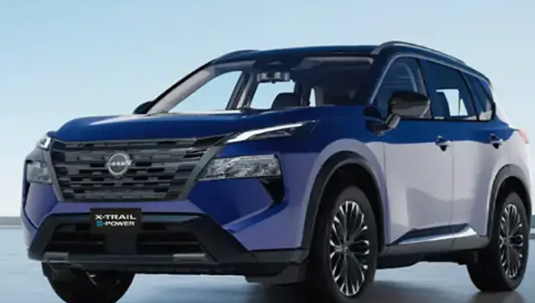
The Nissan X-Trail has built a reputation as a practical family SUV that can handle school runs, motorway journeys, muddy tracks, and the occasional adventure away from smooth pavement. Add Nissan’s intelligent four-wheel-drive systems into the mix, and the X-Trail starts looking like a reassuring all-rounder.
Still, no vehicle is perfect.
When people search for Nissan X-Trail 4x4 problems, they are usually worried about more than an annoying dashboard light. They want to know whether the four-wheel-drive system itself is unreliable, whether a particular fault could become expensive, and—perhaps most importantly—whether the X-Trail they own or plan to buy is worth keeping.
The tricky part is that the X-Trail has existed across several generations, engines, transmissions, and regional specifications. A diesel T31 with a manual gearbox is a very different machine from a newer T32 CVT or an e-POWER-equipped T33. Consequently, not every problem applies to every vehicle.
So, rather than throwing every complaint into one big mechanical soup, we’re going to break down the common trouble areas, explain what the symptoms may actually mean, and show where the 4x4 system fits into the picture.
Content in this publication
- Are Nissan X-Trail 4x4 Models Reliable?
- Understanding the Nissan X-Trail 4x4 System
- Most Common Nissan X-Trail 4x4 Problems
- 1. Nissan X-Trail 4WD Warning Light Problems
- 2. Rear Differential and Coupling Problems
- 3. Wheel-Speed Sensor Failures
- 4. CVT Transmission Problems Can Feel Like 4x4 Problems
- Common Nissan X-Trail CVT Symptoms
- 5. Uneven Tyres Can Cause AWD Problems
- 6. Driveshaft and CV-Joint Wear
- 7. Transfer Drivetrain Noise
- 8. Nissan X-Trail 4x4 Overheating
- 9. Battery and Low-Voltage Electrical Problems
- 10. ABS and Stability-Control Faults Affecting 4WD
- 11. Steering-Angle and Related Sensor Problems
- 12. Diesel X-Trail Problems That Can Affect 4x4 Performance
- 13. Turbocharger and Boost Issues
- 14. Wheel-Bearing Noise Often Gets Misdiagnosed
- 15. Clunking When Accelerating or Changing Direction
- 16. 4WD LOCK Mode Not Working as Expected
- 17. Can Off-Road Driving Damage an X-Trail 4x4?
- Which Nissan X-Trail Generations Have 4x4 Problems?
- How Much Do Nissan X-Trail 4x4 Problems Cost to Repair?
- How to Diagnose Nissan X-Trail 4x4 Problems Properly
- What to Check Before Buying a Used Nissan X-Trail 4x4
- Red Flags We Wouldn't Ignore
- How to Prevent Nissan X-Trail 4x4 Problems
- Is the Nissan X-Trail 4x4 Good Off Road?
- Is a Used Nissan X-Trail 4x4 Worth Buying?
- Should You Avoid a Nissan X-Trail Because of 4x4 Problems?
- Conclusion: Are Nissan X-Trail 4x4 Problems Serious?
- Frequently Asked Questions About Nissan X-Trail 4x4 Problems
Are Nissan X-Trail 4x4 Models Reliable?
Broadly speaking, a well-maintained X-Trail 4x4 can provide many years of useful service. The four-wheel-drive hardware itself is not automatically the weak link.
The bigger issue is that the drivetrain operates as a system. Transmission condition, wheel-speed sensors, tyres, electrical voltage, drivetrain fluids, engine performance, and electronic control modules can all influence how the 4WD system behaves.
That means an illuminated 4WD warning light doesn't necessarily tell us, “The four-wheel-drive unit is broken.”
Sometimes it means exactly that. Other times, something seemingly unrelated is upsetting the system.
Think of it like an orchestra. The 4x4 controller might be the conductor, but it can only perform properly when every instrument is playing in tune.
Understanding the Nissan X-Trail 4x4 System
Before discussing faults, it helps to understand what we are dealing with.
Traditional X-Trail generations have commonly used electronically controlled all-wheel-drive arrangements rather than the kind of permanently locked mechanical 4WD setup found in serious off-road vehicles.
Depending on generation and market, drivers may encounter modes such as:
- 2WD: primarily drives the front wheels.
- AUTO: automatically transfers torque rearward when conditions require it.
- LOCK: increases or maintains front-to-rear torque distribution at lower speeds for slippery surfaces.
Newer X-Trail models use different technology depending on the powertrain, particularly vehicles equipped with Nissan's electrified systems.
This distinction matters because searching for a universal “X-Trail 4x4 repair” without identifying the model year and drivetrain is like asking how to repair a house without mentioning whether the problem is the roof or plumbing.
Most Common Nissan X-Trail 4x4 Problems
There isn't one single defect responsible for every Nissan X-Trail AWD complaint. Instead, problems tend to fall into several categories:
- 4WD warning lights and electronic faults
- Rear differential or coupling problems
- Wheel-speed and ABS sensor issues
- CVT transmission concerns
- Uneven tyres affecting AWD behaviour
- Driveshaft or CV-joint wear
- Transfer-system noises
- Electrical and battery problems
- Overheating during demanding use
- Diesel-engine issues that indirectly affect drivability
Some are relatively inexpensive. Others can turn into four-figure repairs if ignored.
Let's examine them individually.
1. Nissan X-Trail 4WD Warning Light Problems
Few dashboard symbols raise eyebrows quite as quickly as an unexpected 4WD warning.
Owners may notice that the warning:
- appears immediately after starting,
- comes on intermittently,
- illuminates during motorway driving,
- appears after driving on slippery surfaces,
- or accompanies ABS and stability-control warnings.
What Causes the 4WD Warning Light?
Several faults can trigger it.
A diagnostic scan may ultimately point toward wheel-speed sensors, wiring faults, AWD-control components, overheating, low system voltage, or a malfunction elsewhere in the drivetrain.
The key lesson is simple: don't immediately replace an expensive AWD component based solely on the dashboard light.
Proper diagnostics should come first.
Can You Keep Driving With the 4WD Light On?
It depends on the fault.
The X-Trail may continue driving normally in two-wheel drive after disabling or limiting AWD operation. However, we shouldn't assume full traction assistance remains available.
If the warning is accompanied by grinding noises, overheating warnings, severe vibration, burning smells, or transmission problems, continuing to drive could worsen the damage.
2. Rear Differential and Coupling Problems
The rear section of the AWD drivetrain deserves particular attention on an older X-Trail.
Owners sometimes report noises or sensations such as:
- whining,
- humming,
- rumbling,
- vibration,
- clunking when accelerating,
- or unusual binding during turns.
These symptoms shouldn't automatically be blamed on the differential because wheel bearings, tyres, driveshafts, CV joints, and suspension components can create similar noises.
Differential Fluid Matters More Than We Think
Drivetrain fluid is easy to forget because it isn't something we stare at every morning.
Yet lubricant gradually deteriorates.
Old, contaminated, leaking, or insufficient fluid can reduce protection for internal gears and bearings. Once bearings or gear surfaces become damaged, the repair can rapidly become more expensive than a simple fluid service would have been.
Signs Worth Investigating
A steadily increasing whine with vehicle speed is particularly worth checking.
So is fresh oil around drivetrain seals.
A mild noise today can become the automotive equivalent of a dripping roof: inexpensive when caught early and painful after we've ignored it for a year.
3. Wheel-Speed Sensor Failures
Modern AWD vehicles depend heavily on electronic information.
Wheel-speed sensors tell the vehicle how quickly individual wheels are rotating. This information is used by several systems, including ABS, traction control, stability control, and—in many configurations—AWD management.
A faulty sensor can therefore create an impressive collection of dashboard warnings.
Typical Symptoms
We may experience:
- ABS warning light
- traction-control warning
- stability-control warning
- 4WD warning
- inconsistent AWD operation
This is actually one of the more reassuring possibilities because the root problem may be significantly cheaper than replacing major drivetrain hardware.
Wiring, connectors, corrosion, or damaged sensor rings can also contribute.
4. CVT Transmission Problems Can Feel Like 4x4 Problems
Here is where diagnosis gets messy.
Many Nissan X-Trail models use continuously variable transmissions. When a CVT develops problems, the symptoms can sometimes feel like an AWD malfunction.
Drivers may complain about hesitation, surging, shuddering, poor acceleration, unusual engine revving, or delayed power delivery.
Those symptoms naturally make us think something is wrong with the drivetrain.
And technically, something may be.
Just not necessarily the 4WD unit.
Common Nissan X-Trail CVT Symptoms
Possible transmission warning signs include hesitation when pulling away, juddering under acceleration, elevated engine revs without corresponding acceleration, whining noises, overheating, delayed engagement, or reduced-performance mode.
CVT reliability varies by generation, engine, maintenance history, driving conditions, and market specification.
That's why blanket statements such as “every X-Trail CVT fails” aren't particularly useful.
Maintenance history tells us far more than internet folklore.
CVT Fluid Maintenance
Correct fluid is crucial.
Using the wrong specification, neglecting fluid condition, or treating the transmission as maintenance-free forever can increase risk.
When buying a used X-Trail, documentation showing appropriate transmission maintenance is valuable.
A stamped service book is useful.
Invoices are even better.
5. Uneven Tyres Can Cause AWD Problems
This one catches people off guard.
AWD systems care about wheel speed.
If tyres differ substantially in circumference because of mismatched sizes, brands, construction, wear levels, or pressures, one wheel may rotate differently from another.
The electronic AWD system may interpret this discrepancy as wheel slip.
Suddenly, what looked like a cheap tyre shortcut starts confusing an expensive drivetrain.
Check All Four Tyres
On a used Nissan X-Trail 4x4, we should inspect:
- tyre size,
- tread depth,
- tyre pressure,
- overall condition,
- and whether all four tyres are reasonably compatible.
Replacing one badly worn tyre with a dramatically different tyre while leaving three heavily worn examples in place isn't ideal on many AWD vehicles.
Always follow Nissan's tyre specifications for the particular model.
6. Driveshaft and CV-Joint Wear
Mechanical wear can also produce classic “something is wrong with the 4x4” symptoms.
CV joints and driveshaft components must transmit power while accommodating suspension movement and steering.
Over time, boots can split, grease can escape, joints can wear, and vibrations can develop.
Common Symptoms of CV-Joint Problems
Clicking while turning is one of the classic clues.
Other possibilities include clunking during acceleration or deceleration, vibration under load, grease thrown around the inside of a wheel, or increasingly noticeable knocking.
A torn CV boot caught early may be inexpensive compared with replacing a completely worn joint.
That's why inspecting the boots during routine servicing is worthwhile.
7. Transfer Drivetrain Noise
Drivers occasionally describe humming, grinding, whining, or rattling from beneath the vehicle and immediately suspect the AWD transfer mechanism.
Sometimes they're right.
But noise diagnosis needs discipline.
Wheel bearings can imitate differential problems with Oscar-worthy accuracy. Tyre patterns can create humming noises. Exhaust heat shields can rattle. CV joints and driveshaft supports can create vibrations.
A technician should ideally reproduce the noise and determine whether it varies according to:
- road speed,
- engine RPM,
- acceleration,
- deceleration,
- steering angle,
- AWD mode,
- or road surface.
That little distinction can save a lot of unnecessary part swapping.
8. Nissan X-Trail 4x4 Overheating
Four-wheel-drive systems can generate additional heat when working hard.
Driving through deep sand, mud, snow, steep climbs, or situations involving prolonged wheel slip places considerably greater strain on the drivetrain than cruising along a dry motorway.
Some X-Trail AWD systems can temporarily reduce operation to protect themselves if temperatures rise too high.
Why Overheating Happens
Prolonged wheel slip can make clutch-type AWD components work continuously.
Imagine slipping a conventional clutch for several minutes. Heat builds quickly.
The same underlying principle applies: friction plus sustained load equals heat.
If an AWD warning appears during demanding conditions but disappears once the vehicle cools, overheating may be involved. Repeated overheating during ordinary road use, however, deserves investigation.
9. Battery and Low-Voltage Electrical Problems
Modern cars can behave strangely when voltage drops.
A tired 12-volt battery doesn't always announce itself with a dramatic no-start situation. Sometimes the engine still starts while electronic systems begin producing seemingly unrelated warnings.
AWD, ABS, stability control, stop/start, parking systems, and driver-assistance electronics can all depend on stable electrical supply.
Don't Overlook the Battery
If several warning lights suddenly appear together—particularly after cold starts or after the vehicle has been sitting—the battery and charging system deserve testing.
It's one of those beautifully frustrating situations where a modest electrical problem can impersonate a major drivetrain disaster.
10. ABS and Stability-Control Faults Affecting 4WD
AWD doesn't operate in isolation.
The ABS and electronic stability systems provide information that helps the vehicle determine what the wheels are doing.
Consequently, an ABS fault can sometimes affect 4WD operation.
That is why simultaneous ABS, traction-control, and AWD warning lamps can point us toward a shared electronic cause rather than three separate failures.
Diagnostic fault codes become especially valuable here.
Some stability and AWD systems also depend on knowing where the driver intends to steer.
Steering-angle information helps the vehicle compare intended direction with actual vehicle movement.
If related calibration or sensor data becomes inaccurate, warning lights or electronic-driver-assistance issues may appear.
Again, this highlights why diagnostics matter.
Replacing expensive drivetrain hardware without reading fault codes is like replacing the refrigerator because a kitchen fuse blew.
12. Diesel X-Trail Problems That Can Affect 4x4 Performance
Diesel X-Trails introduce another layer of complexity.
Depending on generation and engine, diesel owners may encounter issues involving emissions equipment, turbocharging, EGR systems, DPF regeneration, sensors, or fuel-system components.
These aren't technically AWD failures.
However, reduced engine performance can make the entire drivetrain feel weak or inconsistent.
DPF Problems
Vehicles primarily driven on short urban journeys can struggle to complete diesel particulate filter regeneration under certain circumstances.
Possible symptoms include warning lights, reduced performance, increased fuel consumption, or more frequent regeneration behaviour.
If the engine enters reduced-power mode, the owner may naturally interpret the sluggishness as a transmission or 4x4 problem.
13. Turbocharger and Boost Issues
Turbo-diesel versions can also suffer from boost-related faults.
A leaking hose, sensor issue, actuator problem, or turbocharger fault may produce:
- poor acceleration,
- limp mode,
- smoke,
- whistling noises,
- or inconsistent power delivery.
When AWD engages while the engine itself isn't producing expected torque, diagnosis becomes even more confusing.
We therefore need to separate engine performance from AWD performance.
14. Wheel-Bearing Noise Often Gets Misdiagnosed
A worn wheel bearing produces one of the most misleading noises in the automotive world.
The classic sound is a humming or growling noise that increases with road speed.
Because the X-Trail has AWD components around the front and rear axles, owners sometimes assume the differential is failing.
How Wheel-Bearing Noise Behaves
The sound may change when the vehicle turns because lateral load shifts from one side to the other.
A trained technician can often narrow down the culprit during a road test, though workshop inspection may still be needed.
Replacing a wheel bearing is normally far less dramatic than rebuilding an AWD differential, so accurate diagnosis really matters.
15. Clunking When Accelerating or Changing Direction
Another commonly reported complaint is a clunk when shifting from reverse to drive or when transitioning from acceleration to deceleration.
Possible causes stretch far beyond the 4WD system.
Engine mounts, transmission mounts, driveshaft joints, differential mounts, suspension bushes, CV joints, and drivetrain backlash can all contribute.
A faint amount of drivetrain movement can be normal.
A heavy metallic knock isn't something we'd ignore.
16. 4WD LOCK Mode Not Working as Expected
Some drivers misunderstand what LOCK actually means.
On X-Trail models equipped with selectable AWD modes, LOCK usually shouldn't be interpreted as the equivalent of mechanically locking both axles together on a traditional off-road truck.
Electronic controls still manage the system.
At higher speeds, operation may change automatically.
Why This Matters
If we're expecting the X-Trail to behave like a Nissan Patrol crawling through serious terrain, disappointment is almost guaranteed.
The X-Trail's AWD system is primarily designed to enhance traction on snow, gravel, wet grass, dirt tracks, and moderately challenging surfaces.
It isn't a heavy-duty rock-crawling drivetrain.
17. Can Off-Road Driving Damage an X-Trail 4x4?
Used sensibly, light off-road use is exactly where an AWD X-Trail can shine.
Abuse is a different story.
Deep mud, repeated wheel spinning, high-centering, heavy towing over difficult terrain, deep water, and aggressive rock driving can stress components beyond what the vehicle was designed to endure.
Ground clearance is another limitation.
Even when the AWD system finds traction, the underside of the vehicle may not have the protection or clearance of a purpose-built 4x4.
Use the X-Trail for What It Does Best
Think forest roads rather than boulder fields.
Snowy driveways rather than expedition trails.
Wet campsites rather than competition mud pits.
Used within those boundaries, the drivetrain has a much easier life.
Which Nissan X-Trail Generations Have 4x4 Problems?
Problems vary substantially between generations.
T30 X-Trail
Early X-Trails are now old enough that age-related deterioration becomes the main concern.
Rust, suspension wear, wheel bearings, driveshaft components, seals, electrical issues, and neglected fluids deserve attention.
At this stage, condition matters more than reputation.
A meticulously maintained older X-Trail can be a safer purchase than a newer one that has been neglected.
T31 X-Trail
The T31 remains popular in many markets and can be a capable, practical SUV.
Potential concerns vary by powertrain and can include diesel-related problems, drivetrain wear, bearings, suspension components, and transmission issues.
Again, service history is enormously important.
T32 X-Trail
The T32 moved the X-Trail further toward the crossover end of the SUV spectrum.
CVT behaviour is one of the areas prospective buyers often investigate carefully. Electronic systems also became more sophisticated, meaning warning lights should be professionally scanned rather than diagnosed through guesswork.
T33 X-Trail
The newer T33 uses much more sophisticated powertrain and electronic technology.
Because newer vehicles are fundamentally different from earlier models, historical T30, T31, or T32 problems shouldn't automatically be projected onto them.
Software updates, sensors, electronic modules, and electrified drivetrain components become increasingly important.
How Much Do Nissan X-Trail 4x4 Problems Cost to Repair?
There's no meaningful single number.
A dashboard warning caused by a sensor could be relatively inexpensive.
A worn bearing or CV joint sits further up the scale.
An internal transmission, differential, or AWD coupling failure can become significantly more expensive.
The biggest cost difference often comes from diagnosis timing.
Catch a leaking seal early and we may only need a seal and fluid.
Ignore it until the component runs low on lubrication and suddenly we're shopping for an entire assembly.
How to Diagnose Nissan X-Trail 4x4 Problems Properly
Guessing is expensive.
A sensible diagnostic sequence begins with the basics before condemning major components.
We should first confirm tyre sizes and pressures, inspect fluid leaks and visible drivetrain damage, test battery and charging voltage when appropriate, and scan all relevant electronic control modules—not merely the engine ECU.
From there, fault codes can guide mechanical inspections.
The important point is that fault codes are clues, not automatic repair instructions.
A code mentioning wheel speed doesn't necessarily prove the sensor itself has failed. Damaged wiring or connectors could produce the same result.
What to Check Before Buying a Used Nissan X-Trail 4x4
A used X-Trail deserves a proper road test rather than a five-minute lap around the dealership.
Pay close attention to drivetrain behaviour.
Listen for humming, clicking, whining, clunking, or vibration. Test acceleration gently and firmly once the engine is warm. Watch the dashboard for warnings.
Then inspect the tyres.
Four mismatched bargain tyres tell us something—not merely about the tyres, but potentially about how carefully the previous owner maintained the vehicle.
Service records matter just as much.
Look for evidence of routine servicing, correct drivetrain fluids, transmission maintenance where applicable, and repairs performed professionally.
Red Flags We Wouldn't Ignore
Certain symptoms deserve immediate investigation:
- Persistent 4WD warning lights.
- Loud differential whine or grinding.
- Severe shuddering under acceleration.
- Burning smells after normal driving.
- Repeated AWD overheating warnings on ordinary roads.
- Major fluid leaks around transmission or differential components.
- Strong vibration that increases under load.
- CVT slipping, severe hesitation, or loss of drive.
- Multiple stability, ABS, and AWD warnings that keep returning.
- Evidence that previous owners fitted dramatically mismatched tyres.
None automatically means the vehicle is beyond saving.
They simply mean we shouldn't buy—or continue driving blindly—until the cause is understood.
How to Prevent Nissan X-Trail 4x4 Problems
Preventive maintenance isn't glamorous, but neither is waiting beside a motorway with smoke curling from underneath the car.
Follow the maintenance schedule appropriate to the exact model and market. Use the correct specified fluids. Keep all four tyres properly inflated and reasonably matched. Investigate leaks early.
Avoid prolonged wheel spinning, especially in deep sand or mud.
If the vehicle frequently tows, travels off-road, climbs steep terrain, or operates in harsh conditions, maintenance may need to be more conservative than it would for a lightly used urban SUV.
Regular inspections should also include CV boots, wheel bearings, suspension components, driveshafts, underbody damage, and drivetrain seals.
Is the Nissan X-Trail 4x4 Good Off Road?
Within reason, yes.
The X-Trail 4x4 can be genuinely useful on slippery roads, gravel, snow, wet fields, campsites, and light trails.
Its advantage is versatility.
We can commute during the week, load the family into it on Saturday, and tackle a muddy access road on Sunday without driving something that feels like agricultural equipment on the motorway.
But capability and invincibility are very different things.
Serious off-road vehicles generally offer greater ground clearance, stronger underbody protection, more aggressive drivetrain hardware, and equipment designed around extreme terrain.
The X-Trail's sweet spot is everyday usability with extra traction when conditions deteriorate.
Is a Used Nissan X-Trail 4x4 Worth Buying?
It certainly can be.
The smartest purchase isn't necessarily the newest or cheapest example. It's the vehicle with the strongest combination of condition, maintenance records, appropriate tyres, smooth drivetrain operation, and clean diagnostic results.
A neglected bargain can become expensive astonishingly quickly.
By contrast, a properly serviced X-Trail that has spent its life on normal roads may have relatively little stress on its AWD system.
That's why we should judge the actual vehicle rather than buying—or rejecting—an entire model based on internet horror stories.
Should You Avoid a Nissan X-Trail Because of 4x4 Problems?
Not automatically.
Search engines naturally magnify problems because people rarely publish posts titled, “My Nissan started perfectly again today.”
Mechanical complaints therefore appear more common online than uneventful ownership experiences.
Nevertheless, we shouldn't dismiss genuine weaknesses.
CVT condition on applicable vehicles deserves attention. AWD warning lights deserve diagnosis. Drivetrain noises should never be shrugged off. Mismatched tyres and neglected fluids are avoidable risks.
The best approach sits somewhere between panic and denial.
Inspect carefully.
Maintain properly.
Diagnose intelligently.
That's a much better ownership strategy than assuming either that every X-Trail is unreliable or that every warning light is harmless.
Conclusion: Are Nissan X-Trail 4x4 Problems Serious?
Some can be.
But the phrase Nissan X-Trail 4x4 problems covers everything from a faulty sensor or mismatched tyre to potentially expensive transmission or differential damage.
The important distinction is recognizing symptoms early.
A 4WD warning doesn't automatically mean the AWD unit has failed. A humming sound isn't automatically a differential. Poor acceleration isn't automatically the transmission. Modern vehicles connect so many systems electronically that one relatively small fault can create several symptoms at once.
For us, the smartest approach is straightforward: buy on condition rather than reputation alone, insist on proper diagnosis before replacing expensive parts, keep drivetrain fluids and tyres in good condition, and investigate unusual sounds before they become permanent companions.
A maintained X-Trail 4x4 can still be an appealing family SUV—comfortable on ordinary roads, useful in difficult weather, and capable enough when the tarmac disappears.
The secret isn't finding an indestructible SUV.
It's finding one that hasn't been treated as though it were indestructible.
Frequently Asked Questions About Nissan X-Trail 4x4 Problems
1. What is the most common Nissan X-Trail 4x4 problem?
There isn't one universal failure across every generation. Frequently investigated concerns include 4WD warning lights, wheel-speed sensor faults, CVT behaviour on applicable models, wheel-bearing noises, tyre mismatches, and drivetrain wear. The exact pattern depends heavily on model year, engine, transmission, and maintenance history.
2. Why is the 4WD warning light on in my Nissan X-Trail?
Potential causes include AWD-system faults, wheel-speed sensor issues, ABS-related problems, electrical faults, low battery voltage, wiring problems, or drivetrain overheating. A diagnostic scan of the relevant control modules is normally the best starting point.
3. Can I drive my Nissan X-Trail with the 4WD warning light on?
The vehicle may still move normally if the AWD system has been disabled or restricted, but available traction assistance could be reduced. If the warning is accompanied by grinding, severe vibration, overheating, fluid leakage, transmission problems, or burning smells, driving should be minimized until the vehicle is inspected.
4. Can different tyres cause Nissan X-Trail AWD problems?
Significant differences in tyre size, rolling circumference, tread depth, or pressure can create wheel-speed discrepancies that may interfere with AWD operation. Using properly sized, similarly worn tyres and maintaining correct pressures is therefore particularly important on four-wheel-drive models.
5. Is repairing a Nissan X-Trail 4x4 expensive?
It depends entirely on the cause. Sensors, wiring, tyres, or minor seals may be relatively manageable, whereas internal CVT, differential, transfer, or coupling repairs can be considerably more expensive. Accurate diagnosis before replacing components is the best way to avoid unnecessary repair bills.
If you want to know other articles similar to Nissan X-Trail 4x4 Problems: Common Faults, Warning Signs, and What Owners Should Know you can visit the category Common Problems.
Volvo XC40 Sound Not Working? Complete Troubleshooting Guide

Mazda Diesel Engine Problems: Common Faults and Fixes
Volkswagen Key Not Detected or No Key Error: Causes and Fixes

Volvo S90 Common Problems: Reliability & Repair Guide
Volvo S90 No Sound: Causes, Fixes and Solutions

Nissan Rogue Smells Like Gas: Causes and Fixes
Leave a Reply
More content of your interest