
Nissan X-Trail Years: Generations, Changes, and the Best Era to Buy

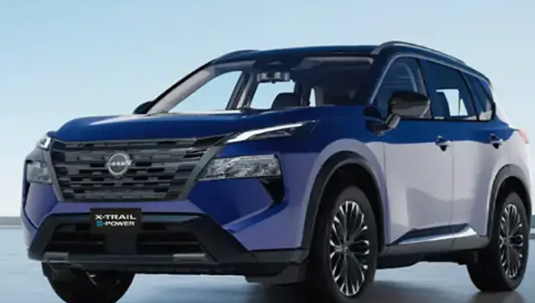
If we look at the Nissan X-Trail years as a whole, we are really looking at the evolution of one of Nissan's most important SUVs. The X-Trail started life as a relatively rugged, practical 4x4 and gradually transformed into a polished family crossover packed with technology, driver assistance, and electrified powertrains.
That transformation did not happen overnight.
Since its original launch in 2000, Nissan has produced four main generations: T30, T31, T32, and T33. Nissan itself identifies the X-Trail's history through these four generations, although exact introduction and retirement dates vary slightly depending on the country.
That's an important point. Search for a "2014 Nissan X-Trail," for example, and what you find in Australia may differ from what was being sold elsewhere. Model years, registration years, production years, and local launch dates don't always line up perfectly.
So rather than tossing a pile of dates onto the table and walking away, we're going to make sense of the entire family tree.
Content in this publication
- Nissan X-Trail Years at a Glance
- Why Nissan X-Trail Model Years Can Be Confusing
- First-Generation Nissan X-Trail Years: T30
- Second-Generation Nissan X-Trail Years: T31
- Third-Generation Nissan X-Trail Years: T32
- Fourth-Generation Nissan X-Trail Years: T33
- How the Nissan X-Trail Changed Through the Years
- Best Nissan X-Trail Years for Simplicity
- Best Nissan X-Trail Years for Family Use
- Best Nissan X-Trail Years for Technology
- Which Nissan X-Trail Years Should We Avoid?
- Mileage Versus Model Year: Which Matters More?
- Why Service History Matters More Than Internet Rankings
- How to Identify Your Nissan X-Trail Generation
- Are Nissan X-Trail and Nissan Rogue Years the Same?
- What Changed Most Between T31 and T32?
- What Changed Most Between T32 and T33?
- Which X-Trail Generation Offers the Best Value?
- How Long Has the Nissan X-Trail Been Around?
- Are Newer Nissan X-Trail Years Automatically Better?
- What to Check Before Buying Any Nissan X-Trail Year
- Nissan X-Trail Years: Our Overall Perspective
- Conclusion: Understanding Nissan X-Trail Years Makes Buying Easier
- Frequently Asked Questions About Nissan X-Trail Years
Nissan X-Trail Years at a Glance
Broadly, the Nissan X-Trail timeline looks like this:
| Generation | Chassis Code | Approximate Global Era | Character |
|---|---|---|---|
| First generation | T30 | 2000–2007 | Rugged, simple, practical |
| Second generation | T31 | 2007–2013 | Tougher and more refined |
| Third generation | T32 | 2013–2022 | Family-focused crossover |
| Fourth generation | T33 | 2020/2022–present, depending on market | Modern, electrified, technology-heavy |
Nissan's own retrospective lists the T30 as 2000–2007, T31 as 2007–2013, T32 as 2013–2022, and T33 as the current fourth generation. Nissan's technical literature uses slightly different transition boundaries—2000–2006, 2007–2012, 2013–2021, and 2022 onward—which illustrates why shoppers should identify a vehicle by generation and chassis code rather than year alone.
Why Nissan X-Trail Model Years Can Be Confusing
Here's where things get a little messy.
Cars aren't launched everywhere simultaneously. A generation can appear in Japan first, reach Europe later, and arrive in another market under a different model-year designation.
The fourth-generation X-Trail is a perfect example. The closely related North American Nissan Rogue debuted in its new generation in 2020, whereas Japan received the fourth-generation X-Trail in 2022.
Therefore, when comparing Nissan X-Trail years, we shouldn't ask only:
"What year is it?"
We should also ask:
"What generation is it?"
That second question often tells us far more.
First-Generation Nissan X-Trail Years: T30
2000–2007: Where the X-Trail Story Began
The first Nissan X-Trail appeared in 2000, and Nissan's heritage material identifies the original model by its T30 chassis designation. Nissan says the first-generation model was launched in November 2000, while its historical timeline records the X-Trail T30 as one of its important vehicles from that year.
Compared with today's sleek crossovers, the T30 looks almost refreshingly straightforward.
Boxy roofline? Check.
Large glass area? Check.
Useful cargo space? Absolutely.
It was built around the idea that an SUV should actually tolerate mud, wet clothing, outdoor equipment, and messy adventures rather than merely look adventurous while parked outside a café.
Nissan even equipped early versions with practical touches such as water-resistant interior materials and washable luggage-area components.
What Made the T30 Different?
The early X-Trail had a distinctive personality. Instead of trying to imitate a luxury SUV, it leaned hard into practicality.
Its cabin was almost like a good hiking backpack: not particularly glamorous, but intelligently designed for people who actually used it.
Depending on market and specification, buyers could find gasoline or diesel engines, manual and automatic transmissions, front-wheel-drive variants, and four-wheel-drive models.
One of the defining features of four-wheel-drive versions was Nissan's selectable system. Drivers could move between 2WD, AUTO, and LOCK settings, allowing the vehicle to adapt to everyday roads and slippery surfaces. Nissan notes that the system normally favored front-wheel drive for efficiency while electronically managing traction when required.
Who Should Consider an Early X-Trail?
Today, the T30 makes most sense for someone who values simplicity more than touchscreen technology.
However, age is now its greatest enemy.
Even a mechanically strong 2005 X-Trail is more than two decades old. Rubber components, suspension bushes, cooling systems, seals, electrical connections, corrosion protection, and previous-owner maintenance can matter far more than the number printed on the odometer.
When buying one, condition beats year almost every time.
Second-Generation Nissan X-Trail Years: T31
2007–2013: Familiar Shape, Better Execution
The T31 generation arrived in 2007 and maintained much of the personality that made the original popular. Nissan describes its development philosophy as essentially an evolution of the first-generation "tough gear" formula for outdoor use.
At first glance, someone unfamiliar with X-Trail history might even mistake an early T31 for a heavily redesigned T30.
That wasn't accidental.
Rather than throwing away the rugged proportions of its predecessor, Nissan refined them.
The second-generation car remained relatively square and functional at a time when many crossovers were becoming softer and more car-like.
Why Many Used Buyers Like the T31
There's something attractive about the middle child.
The T31 isn't as old-school as the T30, yet it doesn't carry the same level of electronics and complexity found in later models. For many second-hand shoppers, that combination can hit a sweet spot.
A properly maintained example can offer a spacious cabin, good visibility, useful cargo capacity, genuine all-weather ability, and mechanical simplicity that makes long-term ownership easier to understand.
That doesn't mean every T31 is automatically a smart purchase.
Far from it.
Diesel versions, gasoline versions, manual models, conventional automatics, and CVT-equipped variants can have very different maintenance histories and potential problems.
Early Versus Late T31 X-Trail Years
If we were choosing between two similarly maintained T31s, we would generally lean toward a later example.
Why?
Manufacturers continuously revise parts, software, trim, equipment, and production processes throughout a generation. A facelifted or late-production vehicle may also provide more contemporary features.
Yet the badge on the tailgate doesn't know whether its previous owner changed fluids on time.
Service history still wins.
A beautifully maintained earlier T31 can easily be a better purchase than a neglected late one.
Third-Generation Nissan X-Trail Years: T32
2013–2022: The Big Personality Shift
The third-generation X-Trail represented one of the biggest changes in the model's history.
Gone was much of the upright, chunky visual character.
In came flowing bodywork, a more sophisticated cabin, and a design philosophy much closer to the mainstream family crossover.
Nissan identifies the T32 as its third-generation X-Trail, beginning in 2013 and continuing into the early 2020s depending on the market. The company says this generation adopted a more premium design while retaining technologies including ALL MODE 4x4-i on applicable versions.
For some enthusiasts, this was the moment the X-Trail became less rugged.
For families, it arguably became more useful.
The X-Trail Became More Family-Oriented
The T32 wasn't simply an old X-Trail wearing curved body panels.
Its priorities changed.
Comfort became more important. Driver assistance expanded. Cabin refinement improved. The design became easier to cross-shop against mainstream rivals.
Depending on the region, certain versions also offered seven-seat configurations, giving families another reason to consider the X-Trail over smaller five-seat crossovers.
Nissan introduced technologies including Active Ride Control, Active Engine Brake and Cornering Stability Assist with this generation. Later updates brought additional driver-assistance equipment such as ProPILOT in markets and trims where it was offered.
T32 Hybrid Years
Electrification did not begin with today's X-Trail.
The T32 generation was available with both gasoline and hybrid powertrains in selected markets, representing an important stepping stone between the traditional combustion-powered X-Trail and the heavily electrified T33 generation.
This is worth remembering when browsing used listings.
"Hybrid X-Trail" doesn't automatically mean the latest generation.
Pre-Facelift Versus Facelift T32 Models
During a generation that lasted roughly a decade in some markets, updates were inevitable.
Later T32 models generally gained fresher styling, revised equipment, more driver-assistance technology, and improvements to infotainment or convenience features depending on location and trim.
This creates an interesting used-car dilemma.
An early T32 can be significantly cheaper.
A late T32 can feel much closer to a modern vehicle.
Which should we choose?
You may be interested in reading Nissan X-Trail Years to Avoid: Used Buyer’s Guide
The answer depends on price.
If the difference is modest, the younger vehicle often makes sense. If a well-maintained earlier example costs substantially less, however, paying thousands more simply for a newer registration year may accomplish little.
Fourth-Generation Nissan X-Trail Years: T33
2020/2022 Onward: The Modern X-Trail
And now we arrive at the T33.
This is where the X-Trail takes another big leap.
Nissan describes the T33 as its fourth-generation model and notes that its rollout differed geographically: the related Rogue generation launched in North America in 2020, while the X-Trail itself launched in Japan in 2022.
The modern X-Trail feels much more expensive and sophisticated than its distant T30 ancestor.
Yet Nissan deliberately tried to preserve some of the model's original "Tough Gear" character while combining it with greater refinement and newer technology. Nissan's engineering documentation explicitly describes those two development pillars as toughness and high quality.
The T33 X-Trail and e-POWER
One of the biggest talking points in current-generation X-Trails is Nissan's e-POWER technology where offered.
It works differently from many conventional hybrids.
With Nissan's e-POWER architecture, the wheels are driven by an electric motor, while the gasoline engine generates electricity rather than directly acting as the primary mechanical drive source to the wheels. Nissan describes the system as one in which the engine generates the electricity and the motor provides the driving force.
That gives the vehicle an EV-like driving character without requiring the owner to plug it into a charger.
It's a clever middle ground.
What Is e-4ORCE?
Some fourth-generation X-Trails pair electrification with e-4ORCE, Nissan's electric all-wheel-control technology.
Rather than thinking of it simply as an old-fashioned mechanical 4WD system, we should picture something far more software-driven.
Electric motors can respond quickly to traction requirements, allowing torque to be controlled electronically. Nissan developed the system partly to maintain the rough-road capability historically associated with the X-Trail while improving comfort and stability.
Is the T33 Still a Real X-Trail?
That's an interesting question.
Purists may look at a T30 and a T33 parked side by side and wonder whether they even belong to the same family.
But the underlying theme hasn't completely disappeared.
The first X-Trail was about making outdoor mobility practical.
The newest one is trying to achieve the same objective with electric motors, cameras, digital displays, driver assistance, sophisticated chassis controls, and a far more comfortable interior.
Different tools. Same broad mission.
How the Nissan X-Trail Changed Through the Years
Looking across all Nissan X-Trail years, we can divide its development into four personalities.
The T30 was the adventurer.
The T31 was the mature adventurer.
The T32 became the family crossover.
The T33 is the technology-focused family SUV.
And that progression tells us something important about used-car shopping: there isn't one universally "best" X-Trail generation.
There is a best generation for a particular type of owner.
Best Nissan X-Trail Years for Simplicity
If simplicity is the priority, older T30 and T31 models naturally have an advantage because they predate much of the increasingly sophisticated electronics used in current vehicles.
But simplicity comes at the cost of age.
That's the paradox.
An older car may have fewer complicated systems, yet it has also spent far longer bouncing over potholes, heating and cooling, absorbing moisture, and surviving previous owners.
Think of it like an old mechanical watch. Fewer electronics don't guarantee fewer problems if it has been dropped on the floor for 20 years.
For that reason, we'd generally consider a well-maintained later T31 an appealing compromise for buyers specifically seeking an older-school X-Trail.
Best Nissan X-Trail Years for Family Use
The T32 is arguably where the X-Trail became especially compelling as an everyday family SUV.
Its more crossover-like road manners, newer safety technology, improved cabin, available additional seating in some markets, and practical luggage space make it much easier to live with than the earliest models.
Later T32 examples are particularly attractive because they combine a relatively mature version of the third-generation platform with newer equipment.
For many used-car buyers, this could be the X-Trail era worth examining first.
Best Nissan X-Trail Years for Technology
No contest here.
The T33 wins.
The fourth-generation X-Trail offers the newest infotainment, safety systems, electrification, and chassis technology in the nameplate's history.
The trade-off?
More sophisticated technology means more systems to understand and potentially more expensive components outside warranty.
New doesn't mean bad. Complicated doesn't mean unreliable.
It simply means we're buying a different type of machine.
Which Nissan X-Trail Years Should We Avoid?
This is where overly simplistic articles often go wrong.
They'll label an entire year "bad" because several owners reported a particular problem.
We should be more careful.
X-Trail specifications vary dramatically between countries. Engines vary. Transmissions vary. Drivetrains vary. Even vehicles registered in the same year may belong to different generations.
Instead of automatically avoiding one particular year, investigate the exact engine, transmission, drivetrain, chassis code, recall history, maintenance record, and local specification of the vehicle you're considering.
CVT-equipped cars deserve especially careful service-history investigation because transmission neglect can become expensive. Diesel models need their own set of checks. Hybrid systems introduce another set. Older 4WD vehicles add different mechanical considerations again.
A year is only the beginning of the investigation.
Mileage Versus Model Year: Which Matters More?
Suppose we find two X-Trails.
One is five years younger but has traveled twice the mileage.
The other is older but has been meticulously serviced.
Which one wins?
There isn't a universal answer.
Mileage gives us only one dimension of wear. Age gives us another.
High mileage affects bearings, suspension components, driveline parts, interiors, and numerous mechanical systems. Age attacks rubber, plastic, seals, electrical connectors, fluids, paint, and corrosion-sensitive components even while a vehicle sits still.
The best purchase usually balances both.
More importantly, it comes with paperwork.
Why Service History Matters More Than Internet Rankings
We can rank X-Trail years until our keyboard wears out, but one thick folder of service invoices can overturn the entire ranking.
Imagine choosing between a supposedly desirable model year with virtually no maintenance records and another from a less fashionable year with annual servicing, correct fluids, documented repairs, quality tires, and evidence of careful ownership.
We'd take the documented vehicle.
Every time.
A used-car model's reputation tells us where to look.
The individual vehicle tells us whether to buy.
How to Identify Your Nissan X-Trail Generation
The easiest way is to identify the chassis generation.
You may be interested in readingNissan X-Trail Years to Avoid: Used Buyer’s GuideYou may be interested in reading
 Kia Carnival Alternative: Best Family Vehicles to Consider
A T30 belongs to the first generation.
A T31 belongs to the second.
A T32 belongs to the third.
A T33 belongs to the fourth.
That simple code can prevent enormous confusion when ordering parts, researching faults, checking specifications, comparing engines, or reading owner experiences online.
It's considerably more precise than saying, "I've got a 2013 X-Trail."
Around generation-change periods, that year alone may not tell the entire story.
Are Nissan X-Trail and Nissan Rogue Years the Same?
Not exactly.
The relationship between the X-Trail and North American Rogue became particularly important during the later generations. Nissan states that the T32 X-Trail was marketed as the Rogue in North America, while the fourth-generation platform also appeared there as the Rogue before the T33 X-Trail launched in Japan.
So American Rogue information can sometimes be relevant to an X-Trail owner—but we should never automatically assume every engine, trim level, component, or specification is identical.
Regional differences still matter.
What Changed Most Between T31 and T32?
If we had to choose the most dramatic transition in X-Trail history, T31 to T32 would be a strong candidate.
The T31 still looked like it belonged on a muddy forest trail.
The T32 looked ready for the school run.
That's slightly unfair to the T32 because capable all-wheel-drive versions remained available. Still, aesthetically and philosophically, Nissan clearly broadened the vehicle's appeal.
The cabin became more conventional.
The styling became smoother.
Technology became more prominent.
Family comfort moved closer to center stage.
The X-Trail had grown up.
What Changed Most Between T32 and T33?
Electrification and refinement.
The T33 takes the crossover philosophy established by the T32 and layers sophisticated powertrain and chassis technology over it.
Where available, e-POWER changes the sensation of acceleration because motor drive plays the starring role. Add e-4ORCE on compatible variants and the all-wheel-drive experience becomes fundamentally different from the mechanical systems associated with older X-Trails.
It's like moving from a good analog camera to a modern mirrorless one.
Both capture the picture.
One just has a lot more silicon involved.
Which X-Trail Generation Offers the Best Value?
For budget-conscious buyers, we'd first examine clean T31 examples.
For buyers who want a modern family SUV without paying near-new prices, later T32 models can be extremely interesting.
For anyone prioritizing the newest technology, quieter operation, electrified driving, and current-generation safety features, the T33 is the natural choice.
But there is a catch.
Used-car value changes constantly.
A generation that makes excellent sense at one price becomes far less compelling if sellers ask too much for it.
Always compare the X-Trail against contemporary alternatives at the actual price you're being asked to pay.
How Long Has the Nissan X-Trail Been Around?
The Nissan X-Trail reached its 25th anniversary in 2025.
Nissan says the first generation launched in November 2000 and reported cumulative global X-Trail sales exceeding 8.1 million units by the time it marked the anniversary in 2025.
That's quite a journey.
What started as a practical, washable-interior SUV for active drivers evolved into an international family crossover available with sophisticated electrified technology.
Yet you can still trace the family resemblance—not necessarily in the headlights or dashboard, but in the philosophy.
The X-Trail has always tried to be the SUV we can actually use.
Are Newer Nissan X-Trail Years Automatically Better?
Newer X-Trails are generally better in measurable areas such as cabin technology, safety equipment, refinement, emissions performance, connectivity, and driver assistance.
But "better" and "better for us" aren't always the same thing.
Someone living in a rural area who wants an inexpensive vehicle that a familiar independent mechanic can maintain may prefer a T31.
A city-dwelling family wanting modern safety assistance may vastly prefer a T33.
An owner trying to balance purchase price, comfort, space, and modern usability might settle right in the middle with a T32.
That's why generation matters.
What to Check Before Buying Any Nissan X-Trail Year
Whatever generation catches our eye, the same basic philosophy applies: inspect the vehicle rather than buying the reputation.
We should verify the service history, confirm the exact engine and transmission, check whether recalls or manufacturer campaigns apply, inspect the underside and suspension, test every electrical feature, check all warning lights, assess transmission behavior from cold and warm conditions, examine tires for uneven wear, listen for drivetrain noises, and obtain an independent pre-purchase inspection whenever possible.
One careful inspection can save more money than days spent arguing online about which year is supposedly best.
Nissan X-Trail Years: Our Overall Perspective
The entire X-Trail timeline tells a surprisingly coherent story.
The T30 established the formula in 2000 with rugged practicality and an outdoor-oriented interior.
The T31 refined that idea without abandoning its boxy SUV roots.
The T32 shifted decisively toward the mainstream family-crossover market.
And the T33 brought the nameplate into the electrified age with sophisticated systems including e-POWER and e-4ORCE on applicable models.
Nissan's own 25-year retrospective describes essentially the same journey: four generations continuously adapting the original X-Trail concept to changing technology and customer expectations.
So, which Nissan X-Trail year should we buy?
Don't start with the year.
Start with the generation.
Then identify the engine, transmission, drivetrain, trim, service history, mileage, condition, and price.
That's how we find the good ones.
Conclusion: Understanding Nissan X-Trail Years Makes Buying Easier
The Nissan X-Trail years span more than two decades and four distinct generations, but each era serves a different kind of buyer.
Older T30 models have charm and simplicity, though age now deserves serious consideration. T31 models retain much of the traditional rugged X-Trail personality and can offer strong used value. T32 vehicles are more polished and family-friendly, while the T33 represents the modern interpretation with dramatically more technology and available electrified powertrains.
There isn't one magical model year that suits everyone.
The smartest strategy is to narrow the search by generation, investigate the powertrain available in your country, compare individual service histories, and have any used example professionally inspected before money changes hands.
An X-Trail's year tells us when its story began.
Its condition tells us how that story has been written.
Frequently Asked Questions About Nissan X-Trail Years
1. What years was the Nissan X-Trail made?
The Nissan X-Trail has been produced since 2000 and remains in production today. Nissan divides its history into four principal generations: T30, T31, T32, and T33. Exact transition years differ slightly by market and model-year convention.
2. What are the Nissan X-Trail generations?
The four principal generations are the first-generation T30, second-generation T31, third-generation T32, and fourth-generation T33. Using the chassis code is often more reliable than using registration year alone when researching a particular X-Trail.
3. Which Nissan X-Trail years are best to buy used?
There is no universally best year. Later T31 models may appeal to buyers seeking relative simplicity, later T32 examples provide a strong blend of modern equipment and used pricing, while T33 models offer the newest technology. Maintenance history and mechanical condition should carry more weight than model year alone.
You may be interested in readingNissan X-Trail Years to Avoid: Used Buyer’s GuideYou may be interested in reading
Kia Carnival Alternative: Best Family Vehicles to ConsiderYou may be interested in reading
Kia Carnival Years to Avoid: A Smart Used-Buyer Guide4. When did the new-generation Nissan X-Trail come out?
The current T33 belongs to the fourth X-Trail generation. Its introduction varied by region: Nissan says the related fourth-generation Rogue launched in North America in 2020, while Japan received the fourth-generation X-Trail in 2022.
5. What does T30, T31, T32, or T33 mean on a Nissan X-Trail?
These designations identify the X-Trail's model generations. T30 identifies the first generation, T31 the second, T32 the third, and T33 the fourth. Knowing the code makes it easier to research compatible parts, engines, specifications, common issues, and ownership information.
If you want to know other articles similar to Nissan X-Trail Years: Generations, Changes, and the Best Era to Buy you can visit the category Models.
Kia Carnival Generations: Complete History From 1998 to Today
Kia Carnival Variants: Complete Guide to Trims, Engines and Features
Kia Carnival Years to Avoid: A Smart Used-Buyer Guide
Kia Carnival Alternative: Best Family Vehicles to Consider
Nissan X-Trail Years to Avoid: Used Buyer’s Guide
Alfa Romeo Tonale Competitors: The Best Alternatives Compared
Leave a Reply
More content of your interest