
Nissan X-Trail Hybrid Fuel Consumption: Real-World MPG, L/100km, Range, and Efficiency Explained

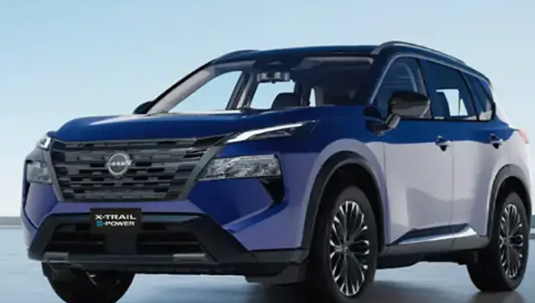
The Nissan X-Trail hybrid fuel consumption figures look attractive on paper, but how efficient is this family SUV once we leave the laboratory and join real traffic?
That is the question that matters.
The latest X-Trail e-POWER takes an unusual route to hybrid efficiency. Unlike a traditional hybrid, its petrol engine does not normally drive the wheels directly. Instead, the engine generates electricity, while an electric motor provides the propulsion. Nissan describes the system as giving the vehicle an electric-drive character without requiring external charging.
The result can be surprisingly economical, particularly around town. However, fuel use depends heavily on the version, market, road speed, weather, terrain, load, and driving style.
As a useful reference point, Nissan Australia currently quotes 6.1 L/100 km combined for the X-Trail e-POWER e-4ORCE, compared with 7.8 L/100 km for its conventional 4x4 petrol X-Trail. Nissan UK publishes WLTP figures that vary by drivetrain and specification, including a combined figure of 49.6 mpg UK for a 2WD e-POWER configuration.
So, is the hybrid worth it purely for saving fuel? Let's dig deeper.
Content in this publication
- What Is the Nissan X-Trail Hybrid?
- Nissan X-Trail Hybrid Fuel Consumption at a Glance
- How Economical Is 6.1 L/100 km?
- Nissan X-Trail Hybrid MPG Explained
- Why the X-Trail Hybrid Can Be Efficient Around Town
- Why Highway Fuel Economy Can Be Less Impressive
- Real-World Nissan X-Trail Hybrid Fuel Consumption
- City Fuel Consumption: Where e-POWER Makes Sense
- X-Trail Hybrid Fuel Consumption on Motorways
- X-Trail e-POWER vs Petrol Fuel Consumption
- How Far Can the Nissan X-Trail Hybrid Travel on a Tank?
- Does e-4ORCE Increase Fuel Consumption?
- How Driving Style Changes X-Trail Hybrid Economy
- Cold Weather and X-Trail Hybrid Fuel Economy
- Air Conditioning and Hot-Weather Consumption
- Do Larger Wheels Affect Fuel Consumption?
- Does Towing Increase X-Trail Hybrid Fuel Consumption?
- How to Improve Nissan X-Trail Hybrid Fuel Consumption
- How Accurate Is the X-Trail Fuel-Economy Display?
- Why Your Nissan X-Trail Hybrid May Be Using More Fuel Than Expected
- Is the Nissan X-Trail Hybrid Good on Fuel?
- Who Will Get the Best Fuel Economy From an X-Trail Hybrid?
- Is the X-Trail e-POWER a Plug-In Hybrid?
- Nissan X-Trail Hybrid vs Plug-In Hybrid Economy
- Long-Term Fuel-Cost Perspective
- Should You Buy an X-Trail Hybrid for Better Fuel Economy?
- Conclusion: What Fuel Consumption Should We Expect?
- Frequently Asked Questions
What Is the Nissan X-Trail Hybrid?
Before discussing litres per 100 kilometres and miles per gallon, we need to understand what Nissan means by "hybrid."
The current X-Trail can be offered with e-POWER, Nissan's series-hybrid system.
With conventional hybrids, the petrol engine and electric motor may both contribute mechanically to driving the wheels. Nissan e-POWER works differently. The petrol engine essentially becomes an onboard electricity generator.
The wheels are driven by an electric motor, while the engine produces electricity whenever the battery and drive system require additional energy. Nissan says this allows the engine to operate in more efficient conditions while providing the immediate response normally associated with an electric vehicle.
Think of the engine less like someone pedalling the bicycle and more like someone operating a generator beside it.
That distinction becomes important when we look at where the X-Trail performs best.
Nissan X-Trail Hybrid Fuel Consumption at a Glance
There is no single worldwide X-Trail hybrid fuel-economy number.
Specifications differ between countries, and testing methodologies differ as well. Even two visually identical X-Trails may carry different published numbers because of drivetrain configuration, trim level, wheels, equipment, or local certification procedures.
Current Nissan figures provide a useful snapshot:
| X-Trail version/example | Official combined consumption | Test/market context |
|---|---|---|
| X-Trail e-POWER e-4ORCE | 6.1 L/100 km | Australia |
| X-Trail 4x4 petrol | 7.8 L/100 km | Australia |
| X-Trail 4x2 petrol | 7.4 L/100 km | Australia |
| X-Trail e-POWER 2WD example | 49.6 mpg UK | UK WLTP |
| Japanese-market e-POWER 4WD development figure | 18.4 km/L | WLTC |
| Japanese-market e-POWER 2WD development figure | 19.7 km/L | WLTC |
Nissan's Australian specifications give the hybrid e-POWER e-4ORCE a combined consumption rating of 6.1 L/100 km and CO₂ emissions of 139 g/km. Its petrol-only versions are rated higher at 7.4 to 7.8 L/100 km depending on drivetrain.
Meanwhile, Nissan's technical documentation reported WLTC fuel efficiency of 18.4 km/L for a 4WD version and 19.7 km/L for a 2WD version during development of the new-generation X-Trail e-POWER system.
The numbers differ because markets and testing cycles differ. That is why comparing like with like is essential.
How Economical Is 6.1 L/100 km?
For a medium-sized family SUV with all-wheel drive, 6.1 L/100 km is respectable.
In US fuel-economy terms, that works out to roughly 38.6 mpg US. In UK terms, it is around 46.3 mpg Imperial.
Those conversions make the number easier to visualise.
A traditional petrol SUV of comparable size may consume considerably more fuel, especially in stop-and-go urban driving. Nissan itself rates the Australian X-Trail petrol 4x4 at 7.8 L/100 km versus 6.1 L/100 km for e-POWER e-4ORCE.
That represents an official consumption reduction of roughly 22%.
Not bad for a vehicle that never needs to be plugged into a wall.
What Does That Mean Over 10,000 km?
Imagine we cover 10,000 kilometres.
At 6.1 L/100 km, the X-Trail would theoretically consume about 610 litres of petrol.
A petrol X-Trail rated at 7.8 L/100 km would use approximately 780 litres over the same theoretical distance.
That is a difference of roughly 170 litres.
Of course, real driving rarely mirrors laboratory figures perfectly. But the calculation demonstrates why relatively small differences in L/100 km can become meaningful over several years of ownership.
Nissan X-Trail Hybrid MPG Explained
Fuel-economy terminology becomes messy because different regions speak different languages even when discussing the same thing.
Australia, New Zealand, and much of Europe commonly use L/100 km.
Japan may use km/L.
Drivers in the United States generally think in mpg US, while British drivers use mpg Imperial.
This matters because UK and US gallons are not the same size.
A vehicle recording 50 mpg UK is not achieving 50 mpg US.
For example, Nissan UK's current specification page lists 49.6 mpg combined WLTP for one 2WD e-POWER configuration, while also showing different results for individual low-, medium-, high-, and extra-high-speed portions of the WLTP cycle.
The wider lesson is simple: always check which gallon and testing cycle someone is talking about before comparing figures.
Why the X-Trail Hybrid Can Be Efficient Around Town
Urban traffic sounds like the enemy of good fuel economy. With a conventional petrol vehicle, it often is.
Accelerate. Brake. Idle. Accelerate again.
It is like repeatedly filling and emptying a bucket.
Hybrid systems can recover part of the energy that conventional vehicles waste as heat through their brakes. During deceleration, regenerative braking can feed electricity back toward the battery.
The X-Trail e-POWER system also avoids the traditional relationship between road speed, gear selection, and engine rpm because the petrol engine is not mechanically driving the wheels.
Nissan says this enables the engine operating point and running frequency to be optimized for efficiency.
Electric-Motor Driving Changes the Character
When we press the accelerator in an e-POWER X-Trail, the electric motor supplies propulsion.
That provides strong response from low speed while allowing the petrol engine to concentrate on generating electricity efficiently rather than constantly chasing wheel speed.
In congested traffic, that arrangement makes plenty of sense.
The electric motor is in its natural habitat.
Regenerative Braking Helps Too
Every slowdown represents potential energy.
Instead of wasting all that movement through friction brakes, regenerative braking captures some of it and converts it back into electrical energy.
No hybrid can recover everything. Physics still sends us the bill.
Nevertheless, frequent slowing and acceleration create opportunities for the system to recycle energy that a conventional petrol SUV simply throws away.
Why Highway Fuel Economy Can Be Less Impressive
Here we reach one of the most important points in any Nissan X-Trail hybrid fuel consumption discussion.
Do not assume a hybrid will improve its advantage indefinitely as speed rises.
At steady motorway speeds, there is less braking energy to recover. Aerodynamic drag also grows rapidly with speed, and the petrol engine may need to operate frequently to supply the electricity required by the traction motor.
Nissan UK's WLTP data illustrates the pattern nicely.
For one current 2WD e-POWER specification, Nissan lists 54.3 mpg in the low phase, 61.4 mpg in medium-speed testing, 58.9 mpg in the high phase, but only 39.2 mpg in the extra-high phase.
That drop tells us something important.
The X-Trail e-POWER's efficiency advantage shines brightest when the vehicle can exploit variable speeds and regenerative braking.
Long, fast motorway journeys are a tougher assignment.
Real-World Nissan X-Trail Hybrid Fuel Consumption
Official fuel-economy figures should be treated as benchmarks rather than promises.
A driver might beat the published combined figure under favourable circumstances. Another might see dramatically higher consumption.
Real-world fuel consumption depends on many factors, including:
- short journeys and repeated cold starts;
- motorway speed and aggressive acceleration;
- winter temperatures or heavy air-conditioning use;
- steep hills and mountainous roads;
- tyre pressure and wheel size;
- passengers, luggage, roof boxes, or towing;
- traffic density and available regenerative braking opportunities;
- driving mode and accelerator technique.
That is why one owner's 5.5 L/100 km does not prove another owner's 7.5 L/100 km represents a fault.
Their driving environments may be completely different.
City Fuel Consumption: Where e-POWER Makes Sense
If our normal week involves school runs, suburban traffic, shopping trips, and commuting, the hybrid system starts playing with home-field advantage.
The electric motor handles propulsion, while regenerative braking repeatedly recovers energy during slowing.
Because the petrol engine is freed from directly following wheel speed, the control system can choose more efficient operating conditions for electricity generation.
Nissan's technical description explains that the VC-Turbo engine and e-POWER architecture were engineered partly to improve the engine's operating efficiency and optimize when it runs.
It is not an EV, but its behaviour can feel distinctly EV-like.
Can the X-Trail Hybrid Drive Without the Engine Running?
Yes, for periods when battery charge and power demand permit.
However, this is not a plug-in hybrid with a huge battery intended to cover tens of kilometres on stored mains electricity.
The battery works as part of the hybrid energy-management system.
Eventually the petrol engine must run because the energy used to propel the vehicle has to come from somewhere.
That distinction is easy to overlook.
X-Trail Hybrid Fuel Consumption on Motorways
Suppose most of our annual driving is a straight motorway commute.
Should we still expect spectacular fuel savings?
Perhaps not.
At sustained higher speeds, the system faces continuous power demand and fewer regenerative opportunities. The engine must generate the electricity that the traction motor consumes, and every energy conversion carries some loss.
Aerodynamic drag also becomes increasingly demanding.
This does not suddenly make the X-Trail e-POWER inefficient. It simply means its relative advantage can narrow compared with urban operation.
Drivers whose journeys consist overwhelmingly of long high-speed runs should therefore compare actual motorway figures rather than relying entirely on the combined rating.
X-Trail e-POWER vs Petrol Fuel Consumption
The Australian specifications give us a particularly clear comparison.
The conventional X-Trail 4x4 is rated at 7.8 L/100 km, while the e-POWER e-4ORCE is rated at 6.1 L/100 km combined.
That difference can be meaningful.
Yet fuel cost should not be evaluated in isolation.
Hybrid variants may have different purchase prices, equipment levels, servicing considerations, insurance premiums, and resale values.
If we drive 5,000 km per year, the fuel saving may take a long time to offset a substantial purchase-price difference.
Drive 25,000 km through congested city traffic every year?
The economics can look much more compelling.
Is the Hybrid Always More Economical?
Not necessarily on every individual trip.
A heavily loaded X-Trail climbing a mountain in cold weather may return poor fuel consumption regardless of its hybrid badge.
Likewise, a gentle rural run in a lighter petrol vehicle could narrow the difference.
Hybrid technology improves opportunities for efficiency. It does not repeal physics.
How Far Can the Nissan X-Trail Hybrid Travel on a Tank?
The X-Trail e-POWER specification in markets such as Australia uses a 55-litre fuel tank, and Nissan UK's current 2WD e-POWER specifications also list a 55-litre capacity.
If we divide 55 litres by an official consumption rate of 6.1 L/100 km, the mathematical maximum is roughly 902 km.
But we should not read that as a guaranteed 900-km driving range.
Vehicles retain a fuel reserve, real consumption varies, and drivers rarely use every theoretical drop in the tank.
A practical trip-computer range could therefore be noticeably lower or occasionally higher depending on recent driving.
Why Estimated Range Keeps Changing
Have you ever filled a car and watched the predicted range jump dramatically?
The computer is estimating the future using the recent past.
Drive gently through town and the prediction may rise.
Spend an hour rushing along a motorway into a headwind, and the estimated range can tumble.
Nothing mysterious has happened to the fuel tank.
The vehicle simply changed its expectations.
Does e-4ORCE Increase Fuel Consumption?
All-wheel drive usually adds weight and mechanical or electrical demand.
The X-Trail e-4ORCE uses electric motors at both axles, enabling electronic control of front and rear propulsion.
Nissan's technical review reported WLTC development figures of 18.4 km/L for 4WD versus 19.7 km/L for 2WD, illustrating the efficiency advantage possible with the lighter two-wheel-drive arrangement.
That does not mean e-4ORCE is wasteful.
Far from it.
Buyers choosing it may value traction, stability, performance, and all-weather capability more than squeezing the final decimal point from fuel consumption.
How Driving Style Changes X-Trail Hybrid Economy
Hybrids reward anticipation.
If we accelerate hard toward a red traffic light and then brake sharply, the system can recover some energy—but we have still wasted plenty.
Smooth driving works better.
Lift earlier, let regenerative deceleration do more of the work, maintain sensible speeds, and avoid treating every slip road like a qualifying lap.
The best hybrid drivers are not necessarily slow.
They are predictable.
Use Eco Mode Intelligently
Eco modes typically soften accelerator response and encourage gentler energy use.
That can help in ordinary commuting.
But Eco mode cannot compensate for sitting at 130 km/h with a roof box, low tyre pressure, and four bicycles creating their own portable wind tunnel.
The basics still matter.
Learn the Regenerative Braking Behaviour
The e-Pedal Step and regenerative functions can help us manage deceleration more deliberately on equipped X-Trail versions.
Instead of thinking only about acceleration, we begin thinking about momentum.
That mental shift often produces more efficient driving than obsessively staring at the instantaneous consumption gauge.
Cold Weather and X-Trail Hybrid Fuel Economy
Winter can hurt hybrid fuel economy.
The engine and drivetrain must warm up. Cabin heating requires energy. Batteries operate differently at low temperatures, and wet or snowy roads increase resistance.
Short journeys amplify the problem because the vehicle may finish the journey just as everything reaches efficient operating temperature.
Therefore, an owner averaging 6 L/100 km in mild spring weather could see substantially higher figures through a cold winter.
That is normal to an extent.
Air Conditioning and Hot-Weather Consumption
Heat brings its own challenges.
Air conditioning consumes energy, particularly when we enter a sun-baked vehicle and demand maximum cooling immediately.
Still, climate-control consumption is only one part of the equation.
Tyre pressure, traffic, road speed, gradients, and trip duration can produce larger differences.
Rather than switching off the A/C and suffering through summer, we would focus first on avoiding unnecessary idling and maintaining sensible speeds.
Comfort has value too.
Do Larger Wheels Affect Fuel Consumption?
Potentially, yes.
Larger wheels can increase mass and may be paired with wider tyres. Wider tyres can increase rolling resistance and aerodynamic drag.
Manufacturers account for specification differences during homologation, which is one reason fuel-economy numbers can vary across trim levels.
For buyers who prioritize efficiency above appearance, the least extravagant wheel-and-tyre combination is often worth considering.
Huge wheels look dramatic.
Petrol stations are less impressed.
Does Towing Increase X-Trail Hybrid Fuel Consumption?
Absolutely.
A trailer adds mass, rolling resistance, and—often most importantly—aerodynamic drag.
A tall caravan can turn an efficient SUV into something that feels as though it is pushing a wardrobe through the wind.
Expect fuel consumption to increase, sometimes sharply.
The exact penalty depends on trailer weight, shape, road speed, gradients, weather, and driving style.
Anyone buying an X-Trail primarily for towing should budget using towing-specific real-world consumption rather than the unladen official combined figure.
How to Improve Nissan X-Trail Hybrid Fuel Consumption
There is no secret button that transforms a 6.5 L/100 km SUV into a 3.0 L/100 km economy champion.
Good efficiency comes from dozens of small decisions.
Maintaining correct tyre pressures, removing unnecessary external carriers, accelerating progressively, reading traffic well ahead, reducing excessive motorway speed, keeping servicing up to date, and avoiding unnecessary cargo can all help.
Perhaps most importantly, give the hybrid system room to do its job.
Hard acceleration followed immediately by hard braking is like pouring water into a bucket with a hole in the bottom.
Regeneration saves some of it, not all of it.
How Accurate Is the X-Trail Fuel-Economy Display?
Trip computers are extremely useful, but they are not laboratory instruments.
The dashboard consumption figure may differ slightly from calculations based on fuel added and distance travelled.
For a clearer long-term picture, we can calculate consumption manually over several tanks.
Divide litres added by kilometres travelled and multiply by 100.
One tank tells a story.
Ten tanks reveal a pattern.
That longer average is far more useful when diagnosing whether fuel economy is genuinely poor.
Why Your Nissan X-Trail Hybrid May Be Using More Fuel Than Expected
Suddenly poor economy deserves attention, particularly when the driving pattern has not changed.
Before assuming something expensive has failed, consider the simple variables.
Cold weather, low tyre pressure, short journeys, heavy traffic, roof racks, strong headwinds, new tyres, towing, extra cargo, or frequent high-speed driving can all move the number.
If consumption changes dramatically and remains unusually high despite similar journeys and conditions, inspection may be appropriate.
Warning lights, rough running, abnormal noises, loss of performance, or obvious battery/hybrid-system messages strengthen the case for professional diagnosis.
Is the Nissan X-Trail Hybrid Good on Fuel?
Overall, yes—especially considering the X-Trail's size and SUV format.
An official figure around 6.1 L/100 km for the Australian e-POWER e-4ORCE demonstrates that the hybrid can deliver a substantial efficiency improvement over Nissan's equivalent conventional petrol 4x4, officially rated at 7.8 L/100 km.
UK WLTP data also illustrates how strongly consumption depends on driving conditions: one 2WD e-POWER version is listed at 49.6 mpg combined, but its individual WLTP phases range considerably between medium-speed and extra-high-speed testing.
So the answer depends on where we drive.
City and mixed journeys?
The X-Trail hybrid makes plenty of sense.
Relentless high-speed motorway running?
The advantage becomes less spectacular.
Who Will Get the Best Fuel Economy From an X-Trail Hybrid?
The ideal owner is someone whose daily driving gives the hybrid system frequent opportunities to recover energy.
Suburban commutes, urban traffic, variable-speed roads, and moderate regional driving fit the formula well.
Drivers who anticipate traffic and brake progressively are also likely to see better results than those using the accelerator and brake pedals like on-off switches.
Conversely, owners spending most of their time towing, climbing steep terrain, or travelling at sustained high motorway speeds should expect consumption above the headline number.
Is the X-Trail e-POWER a Plug-In Hybrid?
No.
That makes ownership wonderfully simple for some drivers.
There is no nightly charging routine, no home wallbox requirement, and no need to locate charging stations before a long trip.
We simply fill it with petrol.
The compromise is equally straightforward: all of the vehicle's net propulsion energy ultimately comes from petrol rather than electricity imported from the grid.
Nissan explains that the petrol engine generates electricity while the electric motor drives the wheels, and the vehicle does not need to be plugged in to recharge the hybrid battery.
For drivers unable to charge at home, that can be an appealing middle ground.
Nissan X-Trail Hybrid vs Plug-In Hybrid Economy
This comparison can become misleading very quickly.
A plug-in hybrid may advertise astonishingly low official fuel consumption because part of its test cycle is completed using electricity previously drawn from the grid.
If the owner charges every night and mostly drives short distances, petrol consumption can indeed be tiny.
Never charge it?
The picture changes dramatically.
The X-Trail e-POWER avoids that complication. Its fuel economy is easier to interpret because petrol remains its external energy source.
It cannot give us weeks of petrol-free commuting, but neither does it rely on regular plugging in to achieve its basic hybrid function.
Long-Term Fuel-Cost Perspective
Fuel economy is most meaningful when converted into money.
Suppose one SUV uses 7.8 L/100 km and another uses 6.1 L/100 km.
The difference looks small: just 1.7 litres.
Over 20,000 km, however, that represents approximately 340 litres of fuel.
Multiply that by several years and the difference becomes difficult to ignore.
Yet we still need to compare the hybrid's purchase price with the conventional version.
Fuel savings are only one side of the ownership equation.
Should You Buy an X-Trail Hybrid for Better Fuel Economy?
If fuel efficiency is one of our priorities but we still want the practicality of a family SUV, the X-Trail e-POWER deserves serious consideration.
Its strongest argument is not simply that it saves petrol.
It is that it combines respectable fuel economy with the smooth, instant response of electric-motor propulsion without requiring external charging.
The biggest gains should generally appear in mixed and urban conditions where regenerative braking and efficient engine management can work repeatedly.
Drivers spending almost every kilometre at high motorway speeds should temper expectations.
There is no magic here.
Just a clever energy-management system playing to its strengths.
Conclusion: What Fuel Consumption Should We Expect?
The headline Nissan X-Trail hybrid fuel consumption figure can sit around 6.1 L/100 km combined for the e-POWER e-4ORCE in current Australian specifications, while other markets and drivetrain configurations publish different results. Nissan UK's figures, for example, show 49.6 mpg combined for one 2WD e-POWER specification.
But the headline number is merely the beginning.
The X-Trail hybrid generally performs best when driving includes traffic, changing speeds, and opportunities for regeneration. Fast motorway travel, cold weather, towing, hills, heavy loads, and aggressive driving can increase consumption significantly.
For many families, that balance is exactly the attraction.
We get an SUV that behaves a little like an electric car around town, fills up like an ordinary petrol vehicle on a long trip, and can consume noticeably less fuel than a comparable conventional petrol X-Trail.
Not revolutionary magic.
Just clever engineering doing useful work.
Frequently Asked Questions
1. What is the Nissan X-Trail hybrid fuel consumption in L/100 km?
Nissan Australia currently quotes 6.1 L/100 km combined for its X-Trail e-POWER e-4ORCE. Figures differ by country, drivetrain, trim, and testing procedure, so the specification for the exact vehicle should always be checked.
2. What MPG does the Nissan X-Trail e-POWER get?
It depends on specification and the gallon standard being used. Nissan UK currently lists 49.6 mpg Imperial combined WLTP for one 2WD e-POWER specification. Other X-Trail variants can produce different official results.
3. Is the X-Trail e-POWER more economical than the petrol X-Trail?
In Nissan Australia's official combined testing, yes. The e-POWER e-4ORCE is rated at 6.1 L/100 km compared with 7.8 L/100 km for the 4x4 petrol version and 7.4 L/100 km for the 4x2 petrol model.
4. How far can a Nissan X-Trail hybrid travel on one tank?
With a 55-litre tank and theoretical consumption of 6.1 L/100 km, simple mathematics produces approximately 900 km. Real usable range will vary with driving conditions, fuel reserve, temperature, speed, terrain, and recent consumption. Nissan lists a 55-litre tank for relevant current X-Trail specifications.
5. Does the Nissan X-Trail e-POWER need to be plugged in?
No. The e-POWER system does not require external charging. The petrol engine generates electricity, while the electric motor drives the wheels.
If you want to know other articles similar to Nissan X-Trail Hybrid Fuel Consumption: Real-World MPG, L/100km, Range, and Efficiency Explained you can visit the category Driving.
Mitsubishi Pajero Sport Fuel Consumption: What Should We Really Expect?
Peugeot RCZ MPG: Real-World Fuel Economy and Running Costs Explained
BMW i7 Range Miles: How Far Can This Luxury EV Really Go?

Infiniti QX60 Fuel Economy: MPG, Range and Real-World Guide

Land Rover Defender 90 MPG: Real-World Fuel Economy Explained
Toyota Hilux Long Range Fuel Tank: Complete Buyer’s Guide
Leave a Reply
More content of your interest