
Kia Carnival Alternative: Best Family Vehicles to Consider

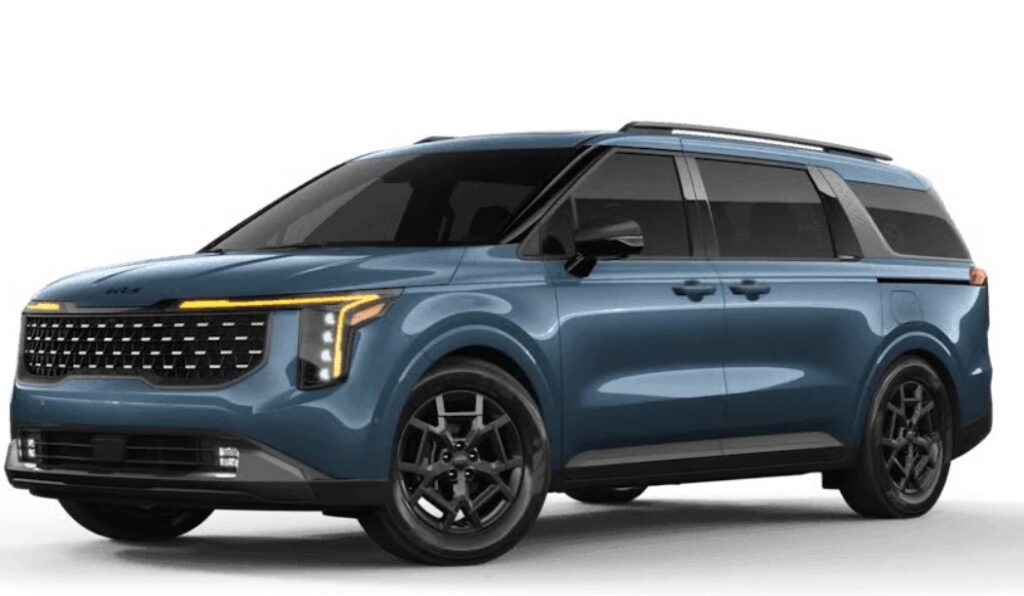
The Kia Carnival has carved out an interesting corner of the family-car market. It gives us the sliding doors and cavernous cabin of a minivan while dressing itself in something that looks noticeably more SUV-like. For families who need three rows, plenty of luggage room, and comfortable highway manners, that combination is tough to ignore.
Still, the Carnival isn't automatically the right choice for everyone.
Maybe we want standard hybrid efficiency. Perhaps all-wheel drive matters because snow and rough weather are part of everyday life. We might need more towing capacity, easier cargo flexibility, a more traditional SUV shape, or simply want to compare several vehicles before putting tens of thousands of dollars on the table.
That's where finding the right Kia Carnival alternative gets interesting.
The strongest alternatives aren't necessarily vehicles that copy the Carnival feature for feature. Some are conventional minivans that beat it in particular areas. Others are three-row SUVs that sacrifice sliding doors but bring extra capability, ground clearance, or styling.
Let's sort through the choices and see which ones genuinely make sense.
Content in this publication
- Why Look for a Kia Carnival Alternative?
- What Makes a Good Carnival Alternative?
- Toyota Sienna: Best Kia Carnival Alternative for Fuel Economy
- Honda Odyssey: Best Traditional Family-Minivan Alternative
- Chrysler Pacifica: Best Alternative for Flexible Cargo Space
- Toyota Grand Highlander: Best SUV Alternative to Kia Carnival
- Volkswagen Atlas: Best Carnival Alternative for Towing
- Kia Telluride: The SUV Alternative Within the Kia Family
- Hyundai Palisade: A More SUV-Like Family Experience
- Carnival Alternative Comparison: What Should We Prioritize?
- Which Kia Carnival Alternative Has the Most Cargo Space?
- Which Alternative Is Best for Large Families?
- Which Kia Carnival Alternative Is Best for Road Trips?
- Best Carnival Alternative for Snow and Bad Weather
- Best Kia Carnival Alternative for Towing
- Is an SUV Actually Better Than the Kia Carnival?
- Should We Buy a Kia Carnival Instead?
- How to Choose the Right Kia Carnival Alternative
- Final Thoughts on the Best Kia Carnival Alternative
- Frequently Asked Questions
Why Look for a Kia Carnival Alternative?
There is plenty to like about the Carnival itself.
For 2026, the gasoline Carnival uses a 3.5-liter V6 producing 287 horsepower, offers as much as 40.2 cubic feet of cargo room behind its third row on applicable configurations, and can tow up to 3,500 pounds. Kia also offers features such as VIP Lounge Seating on certain versions.
That's a strong starting point.
But vehicle shopping rarely comes down to asking whether a car is good. The more useful question is: good compared with what?
A family covering 20,000 highway miles every year may value fuel economy above almost everything else. Parents loading toddlers into car seats may care far more about sliding doors. Someone towing a camper may instantly eliminate vehicles capped around 3,500 pounds.
In other words, the best alternative depends on the problem we're trying to solve.
What Makes a Good Carnival Alternative?
A legitimate substitute should preserve most of the Carnival's family-friendly character rather than simply having three rows.
That means we should look closely at passenger comfort, third-row usability, cargo space, fuel economy, towing ability, drivetrain choices, door configuration, safety technology, and day-to-day practicality.
Think of the Carnival as a large family toolbox. Some rivals give us the same tools arranged differently. Others remove a few tools and replace them with heavier-duty equipment.
Minivan or Three-Row SUV?
This is the first fork in the road.
A minivan normally makes the most sense when maximum interior efficiency matters. Sliding doors are brilliant in tight parking spaces, low floors make entry easy, and the boxier body puts more of the vehicle's exterior footprint to practical use.
Three-row SUVs trade some of that packaging efficiency for attributes many buyers prefer: higher seating positions, available all-wheel drive, increased towing capability, more ground clearance, and rugged styling.
Neither format wins universally.
The question is whether we want our next vehicle to behave primarily like a family transporter or a family adventure vehicle.
Toyota Sienna: Best Kia Carnival Alternative for Fuel Economy
If fuel consumption sits near the top of our priority list, the Toyota Sienna is probably the first Carnival rival worth investigating.
Toyota's current Sienna is a hybrid minivan. Several 2026 trims carry manufacturer estimates of 36 mpg city and 36 mpg highway, while AWD-equipped versions such as the Woodland Edition are listed at 35/36 mpg. That same Woodland Edition includes a tow hitch and offers up to 3,500 pounds of towing capacity.
Those numbers fundamentally change the ownership equation.
A big family vehicle usually carries an unavoidable fuel penalty. The Sienna attacks that weakness directly.
Why the Sienna Makes Sense
Imagine the weekly rhythm many families know well: school runs, grocery trips, football practice, commuting, weekend errands, and then a few long road trips scattered through the year.
Fuel disappears surprisingly quickly in a large vehicle.
That's why the Sienna's hybrid powertrain feels less like an environmental novelty and more like a practical household feature. Fewer fuel stops mean both lower operating expenses and fewer interruptions.
Available all-wheel drive is another major distinction. Buyers living in climates where slippery winter roads are routine may find this especially persuasive.
Where the Carnival Still Has an Edge
Efficiency isn't everything.
The Carnival's design has a chunkier, more SUV-inspired personality, while the Sienna wears its minivan identity more openly. Some buyers will also prefer the character of Kia's V6 power delivery.
So our decision becomes fairly simple: if reducing gasoline consumption dominates the conversation, Sienna is one of the strongest choices. If performance feel, styling, or particular Carnival interior features matter more, Kia remains extremely competitive.
Honda Odyssey: Best Traditional Family-Minivan Alternative
The Honda Odyssey is almost impossible to leave out of this discussion because it represents the classic minivan formula polished over many years.
What makes it particularly appealing is cabin flexibility.
Honda says the 2026 Odyssey provides up to 158 cubic feet of total cargo space with its second-row seats removed and third row folded. Its available Magic Slide second-row seats can also make passenger access and seating arrangements considerably easier.
For parents, those features can matter more than flashy specifications.
The Odyssey's Practical Advantage
Picture three children occupying two rows.
One wants to climb into the third row. Another is sitting in a bulky child seat. Someone has dropped a water bottle under a seat, and we're parked beside another vehicle with barely enough room to open a normal door.
This is where minivans earn their keep.
Sliding side doors, configurable seating, a low load floor, and a huge rear opening reduce friction from everyday family life. Nothing sounds glamorous about that description, yet convenience becomes luxurious when we experience it five times every day.
Who Should Choose the Odyssey?
The Odyssey makes particular sense when interior flexibility matters more than AWD or hybrid economy.
It is less about pretending to be an SUV and more about being exceptionally good at being a minivan.
That's refreshing.
Chrysler Pacifica: Best Alternative for Flexible Cargo Space
If interior transformation is our priority, the Chrysler Pacifica deserves serious attention.
The 2026 Pacifica offers available Stow 'n Go seating that lets second- and third-row seats fold into the floor on applicable configurations. Chrysler lists up to 140.5 cubic feet of cargo volume behind the first row. Most versions seat seven, while eight-passenger configurations are available.
This system changes how easily we can switch between carrying humans and hauling large objects.
Why Stow 'n Go Matters
Removable seats sound useful until we're actually wrestling a heavy seat out of the vehicle and looking for somewhere to store it.
Stow 'n Go sidesteps much of that hassle.
One morning the Pacifica can carry children to school. Later, folded seats can help create something much closer to a small cargo van.
That's versatility we can feel rather than something that merely looks impressive in a brochure.
Pacifica Versus Carnival for Towing
The Pacifica also has a small towing advantage in certain configurations.
Chrysler lists a maximum towing capacity of up to 3,600 pounds when properly equipped, compared with the Carnival's published 3,500-pound maximum.
A 100-pound difference isn't reason enough by itself to choose the Chrysler. Nevertheless, buyers already attracted to the Pacifica's flexible interior may appreciate the extra margin.
Toyota Grand Highlander: Best SUV Alternative to Kia Carnival
What if we love the Carnival's passenger capacity but simply don't want a minivan?
Enter the Toyota Grand Highlander.
The 2026 Grand Highlander can seat seven or eight passengers depending on configuration. Toyota also offers gasoline, hybrid, and Hybrid MAX powertrains. Its conventional hybrid versions are particularly interesting because some trims reach manufacturer estimates around 37 mpg city and 34 mpg highway.
Toyota reports up to 97.5 cubic feet of cargo space with the rear rows folded.
Where the Grand Highlander Wins
The attraction is straightforward: it gives us substantial family space inside something that unmistakably looks and feels like an SUV.
We also gain choices.
Want conventional gasoline power? Available.
You may be interested in reading Kia Carnival Years to Avoid: A Smart Used-Buyer Guide
Want strong hybrid economy? Available.
Want considerably more performance? The Hybrid MAX configuration answers that question.
That's the Grand Highlander's real strength. Instead of forcing every family into roughly the same mechanical recipe, Toyota provides multiple ways to build the vehicle around different priorities.
Where a Minivan Remains Better
SUV proportions aren't magic.
Sliding doors remain dramatically easier in cramped parking lots, and minivans generally squeeze more usable passenger-and-cargo volume from comparable exterior dimensions.
A Grand Highlander may feel more adventurous. A Carnival can still feel more logical when four children, three backpacks, a stroller, and a week's worth of groceries enter the equation.
Volkswagen Atlas: Best Carnival Alternative for Towing
Families who tow frequently should look beyond minivans.
The 2026 Volkswagen Atlas is a useful example.
Volkswagen rates the current Atlas for up to 5,000 pounds of towing capacity. It seats up to seven, offers 20.6 cubic feet of cargo space behind the third row, and expands to 96.6 cubic feet with the rear seats folded.
That 5,000-pound tow rating moves the Atlas into territory the Carnival simply isn't designed to occupy.
When the Atlas Makes More Sense
Suppose our weekends involve towing a larger camper, utility trailer, or recreational equipment.
Suddenly the Carnival's superior minivan packaging becomes less important because towing capacity becomes the limiting factor.
The Atlas also provides the elevated driving position and conventional SUV silhouette many shoppers want.
Still, cargo space behind the third row is notably smaller than what Kia publishes for the Carnival. Kia cites up to 40.2 cubic feet behind its third row on applicable Carnival configurations, while Volkswagen cites 20.6 cubic feet behind the Atlas's third row.
That's a dramatic reminder that exterior size and usable family space aren't the same thing.
Kia Telluride: The SUV Alternative Within the Kia Family
Sometimes we don't really want to leave Kia.
We may like the company's interior design philosophy, controls, technology, dealership network, or styling but prefer traditional SUV proportions.
That's where the Telluride enters the conversation.
Conceptually, it sits on the opposite side of Kia's family-car equation. The Carnival maximizes van-like practicality while disguising some of it beneath SUV-inspired styling. The Telluride embraces the SUV format from the beginning.
Carnival or Telluride?
This choice is less complicated than it appears.
Choose the Carnival when sliding doors, maximum passenger accessibility, and cargo flexibility dominate.
Move toward the Telluride when ground clearance, SUV styling, available drivetrain capability, and the taller seating position matter more.
Two families with the same number of children can easily reach opposite conclusions.
Hyundai Palisade: A More SUV-Like Family Experience
The Hyundai Palisade belongs in much the same conversation as the Telluride.
Its appeal comes from giving us three-row family accommodation without visually announcing "minivan" from fifty yards away.
That might sound superficial, but people don't buy vehicles with spreadsheets alone. We see them in our driveway every morning. We spend hundreds of hours sitting inside them. Design matters.
Why Some Carnival Buyers Migrate Toward SUVs
There is a psychological difference between driving a minivan and driving a large SUV, even when both vehicles perform similar family duties.
The SUV feels taller and sometimes more substantial from behind the wheel.
However, practical compromises appear quickly. Conventional rear doors need more clearance. Third-row access may take extra gymnastics. Cargo capacity with every seat occupied can shrink dramatically.
The Carnival tends to disappear into family life. An SUV asks us to accommodate some of its packaging limitations in exchange for capability and style.
Carnival Alternative Comparison: What Should We Prioritize?
Rather than declaring one universal winner, it makes more sense to match vehicles to different priorities.
- Best for fuel efficiency: Toyota Sienna
- Best traditional minivan: Honda Odyssey
- Best seat-and-cargo flexibility: Chrysler Pacifica
- Best large hybrid SUV alternative: Toyota Grand Highlander Hybrid
- Best for heavier towing: Volkswagen Atlas
- Best for maximum minivan-style practicality: Kia Carnival itself
- Best for buyers who simply prefer SUVs: Telluride, Palisade, Grand Highlander, or Atlas
That distinction matters because buying the "best-rated" vehicle isn't particularly useful when it excels at things we don't need.
Which Kia Carnival Alternative Has the Most Cargo Space?
Cargo measurements deserve careful interpretation because manufacturers don't always measure or describe space in exactly the same fashion.
Still, some broad differences are clear.
The Odyssey emphasizes enormous maximum cargo capacity when its second row is removed and third row stowed, with Honda citing up to 158 cubic feet. Chrysler quotes as much as 140.5 cubic feet in the Pacifica behind the first row when the rear seating is appropriately stowed or removed.
Three-row SUVs can be spacious too, but minivans remain extraordinarily efficient boxes.
Don't Ignore Cargo Space With All Seats Up
Maximum cargo capacity can actually mislead families.
How often will we realistically remove or fold every rear seat?
For a household with six or seven occupants, the measurement behind the third row may matter far more.
That's one reason the Carnival's published 40.2 cubic feet behind the third row on qualifying configurations deserves attention.
A huge maximum figure doesn't help much if luggage won't fit when every passenger is aboard.
Which Alternative Is Best for Large Families?
For families regularly carrying six, seven, or eight people, minivans retain an enormous ergonomic advantage.
The Sienna, Odyssey, Pacifica, and Carnival were fundamentally designed around three-row passenger transport.
Large SUVs can accomplish the same mission, but access becomes part of the equation.
Try putting a child into the third row while another child seat blocks half the second row. Suddenly dimensions measured in inches become far less important than seat movement and door design.
Sliding Doors Are More Valuable Than They Look
Sliding doors may be the most underrated family-car feature ever invented.
They don't swing into neighboring vehicles.
Children can open them without threatening the paintwork beside us.
Parents can stand closer to the body while fastening younger passengers into seats.
On paper, sliding doors occupy a tiny line in the specifications. In daily life, they can change the entire ownership experience.
Which Kia Carnival Alternative Is Best for Road Trips?
For long-distance travel, we'd place the Toyota Sienna and Kia Carnival near the top of the discussion for different reasons.
The Sienna's exceptional fuel efficiency reduces fuel stops and operating costs.
The Carnival counters with a roomy interior, strong cargo capacity behind its third row, comfortable available seating, and V6 power.
The Odyssey also remains a road-trip specialist thanks to its passenger-friendly interior and massive available cargo volume.
The right answer depends on whether we're optimizing the journey around fuel economy, cabin versatility, or power.
Think Beyond MPG
A 600-mile journey exposes small annoyances.
Cupholders suddenly matter.
Third-row ventilation matters.
USB access matters.
You may be interested in readingKia Carnival Years to Avoid: A Smart Used-Buyer GuideYou may be interested in reading
Kia Carnival Variants: Complete Guide to Trims, Engines and FeaturesSeat comfort matters.
Road noise matters.
Cargo space matters enormously.
That's why we'd never choose a road-trip vehicle solely because one model beats another by a few miles per gallon. Comfort multiplied by eight hours becomes a serious feature.
Best Carnival Alternative for Snow and Bad Weather
This is one area where drivetrain selection becomes important.
The Toyota Sienna offers available all-wheel drive, while several three-row SUVs naturally provide AWD options as well.
If winter conditions form a major part of our driving year, that added traction may be worth prioritizing over the Carnival's other strengths.
Of course, drivetrain isn't the entire winter equation. Suitable tires remain critically important.
A front-wheel-drive minivan wearing excellent winter tires can be far more confidence inspiring than an AWD SUV fitted with inappropriate rubber.
Best Kia Carnival Alternative for Towing
The answer changes dramatically when trailer weight rises.
The Carnival's 3,500-pound rating works for modest towing needs. The Sienna Woodland Edition also advertises 3,500-pound capability, while the Pacifica can reach 3,600 pounds when properly equipped.
The Volkswagen Atlas stretches significantly farther to 5,000 pounds.
That doesn't automatically make Atlas better.
It simply makes it better suited to buyers whose trailer falls beyond normal minivan territory.
Always Check the Specific Configuration
Tow ratings are not universal across every trim and equipment package.
We need to account for trailer brakes, passengers, payload, tongue weight, accessories, and manufacturer requirements.
Never assume that seeing "5,000 pounds" in an advertisement means every example sitting at a dealership can safely tow exactly that amount under every condition.
Is an SUV Actually Better Than the Kia Carnival?
Sometimes.
But not automatically.
SUVs win when our lifestyle benefits from higher ground clearance, AWD, greater towing ability, or a more upright driving position.
Minivans win when passenger loading, cargo efficiency, third-row access, and parking-lot convenience dominate.
One isn't a grown-up version of the other.
They're different tools.
An SUV can be like a hiking boot: rugged, capable, and reassuring when conditions become messy.
A minivan is closer to a great running shoe. It may appear less adventurous, but when daily usability is the race we're actually running, efficiency wins.
Should We Buy a Kia Carnival Instead?
After comparing the alternatives, some shoppers will arrive right back where they started.
That's perfectly logical.
The Carnival occupies an unusually attractive middle ground. It provides minivan packaging without leaning as heavily into traditional minivan styling. Its V6 delivers 287 horsepower, the published tow rating reaches 3,500 pounds, and available luxury-style rear seating can make upper trims feel much more premium than the family-van stereotype suggests.
Competitors beat it in individual areas.
Sienna wins the fuel-economy battle.
Pacifica offers remarkable seat-folding versatility.
Odyssey is an exceptionally refined family-hauling formula.
Atlas provides significantly more towing capability.
Grand Highlander gives us SUV styling plus compelling hybrid options.
Yet the Carnival blends attributes remarkably well.
How to Choose the Right Kia Carnival Alternative
Before visiting dealerships, we should identify what would genuinely make us reject the Carnival.
If the answer is fuel economy, start with the Sienna.
If it's the absence of the particular drivetrain capability we want, compare AWD minivans and three-row SUVs.
If heavier towing is essential, look toward vehicles like the Atlas.
If maximum passenger practicality matters, keep the Odyssey and Pacifica high on the list.
And if our main objection is simply that we don't want a minivan-shaped vehicle, the Grand Highlander, Palisade, Telluride, and Atlas offer a more conventional SUV experience.
That approach is much smarter than comparing forty features with equal weighting.
One or two priorities usually determine which vehicle actually fits our life.
Final Thoughts on the Best Kia Carnival Alternative
Finding the best Kia Carnival alternative isn't about discovering a vehicle that beats the Carnival everywhere. That vehicle doesn't really exist.
Instead, each major rival pulls the family-car formula in a slightly different direction.
The Toyota Sienna is perhaps the strongest option for buyers obsessed with fuel economy and hybrid efficiency.
The Honda Odyssey remains one of the purest choices for everyday family practicality.
The Chrysler Pacifica stands apart with ingenious seating and cargo flexibility.
The Toyota Grand Highlander makes enormous sense when we want hybrid efficiency without giving up the appearance and feel of a three-row SUV.
The Volkswagen Atlas deserves attention when towing capability matters substantially more than sliding-door convenience.
And after driving all of them?
We may still decide the Carnival hits the sweet spot.
That's actually the point of comparison shopping. We're not trying to prove one vehicle is universally superior. We're trying to discover which compromises we're happy to live with for the next several years.
For one family, 36 mpg may be transformational. For another, sliding doors are priceless. For someone else, a 5,000-pound towing rating ends the debate before it starts.
The best vehicle isn't the one with the longest specification sheet.
It's the one that quietly makes our everyday life easier.
Frequently Asked Questions
1. What is the best alternative to a Kia Carnival?
The Toyota Sienna is one of the strongest overall alternatives because it combines minivan practicality with excellent hybrid fuel economy and available all-wheel drive. The Honda Odyssey and Chrysler Pacifica are also compelling minivan alternatives, while the Toyota Grand Highlander and Volkswagen Atlas work better for buyers wanting an SUV.
2. What SUV is comparable to the Kia Carnival?
Large three-row SUVs such as the Toyota Grand Highlander, Hyundai Palisade, Kia Telluride, and Volkswagen Atlas appeal to many of the same families. They generally sacrifice sliding-door convenience and some packaging efficiency but can offer additional drivetrain capability, ground clearance, or towing performance.
3. Is the Toyota Sienna better than the Kia Carnival?
The Sienna is better for certain priorities, especially fuel economy and available AWD. The Carnival may appeal more to buyers who prefer V6 performance, its SUV-inspired styling, generous behind-third-row cargo space, or its available premium second-row seating. There is no universal winner.
You may be interested in readingKia Carnival Years to Avoid: A Smart Used-Buyer GuideYou may be interested in reading
Kia Carnival Variants: Complete Guide to Trims, Engines and FeaturesYou may be interested in reading
Kia Carnival Generations: Complete History From 1998 to Today4. What is the best Kia Carnival alternative for towing?
Among the mainstream alternatives discussed here, the Volkswagen Atlas stands out with a manufacturer-rated towing capacity of up to 5,000 pounds. The Carnival is rated up to 3,500 pounds, while the properly equipped Chrysler Pacifica reaches up to 3,600 pounds.
5. Is a minivan or three-row SUV better for a family?
A minivan is usually better for maximizing passenger accessibility, cargo efficiency, and everyday convenience, particularly when young children are involved. A three-row SUV may be the better choice when AWD capability, ground clearance, heavier towing, or SUV styling matters more.
If you want to know other articles similar to Kia Carnival Alternative: Best Family Vehicles to Consider you can visit the category Models.
Haval Jolion vs Omoda C5: Which SUV Is Better?
Haval Jolion vs Chery Tiggo 4 Pro: Full Comparison
Haval Jolion vs H6: Which SUV Is Better in 2026?
Haval Jolion vs Toyota Corolla Cross: Which SUV Is Better?
Haval Jolion vs Jaecoo J5: Which SUV Is Better?
Volkswagen T-Cross vs Volkswagen T-Roc: Which Is Better?
Leave a Reply
More content of your interest