
Nissan X-Trail Years to Avoid: Used Buyer’s Guide

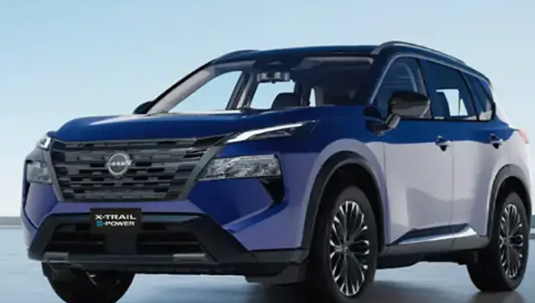
The Nissan X-Trail has spent more than two decades doing something remarkably well: offering families a practical SUV without demanding luxury-car money. It is roomy, generally comfortable, easy to live with, and—depending on the version—surprisingly capable away from smooth pavement.
But used-car shoppers often run into a much less comfortable question: what are the Nissan X-Trail years to avoid?
There is no perfectly universal answer.
An X-Trail sold in Australia may have a different engine and transmission from one sold in Britain, Japan, South Africa, New Zealand, or Latin America. Even two X-Trails from the same year can have dramatically different reliability prospects if one has a manual transmission and the other uses Nissan's Xtronic CVT.
Still, some periods deserve more caution than others.
If we were shopping for a used X-Trail, we would pay particularly close attention to early T31 models, roughly 2007–2010 depending on the powertrain, and early T32 examples, especially 2014–2016 models equipped with the 2.5-liter petrol engine and CVT.
That does not mean every vehicle from those years should be rejected. It means we should demand stronger evidence that it has been maintained correctly before handing over our money.
Let's break it down.
Content in this publication
- Quick Answer: Which Nissan X-Trail Years Should We Avoid?
- Why Nissan X-Trail Reliability Cannot Be Judged by Year Alone
- 2001–2007 Nissan X-Trail T30: Avoid or Buy?
- 2007–2013 Nissan X-Trail T31: The Generation That Requires Homework
- 2014–2016 Nissan X-Trail T32: The Years We Would Inspect Most Carefully
- What Actually Goes Wrong With the T32 CVT?
- 2017–2020 Nissan X-Trail: A Better Used-Car Sweet Spot?
- 2021–2022 Nissan X-Trail T32: Among the Safer T32 Bets
- 2022-Onward Nissan X-Trail T33: Should We Avoid Early Models?
- The Nissan X-Trail Problems That Matter More Than Model Year
- How to Test a Used X-Trail CVT
- Service History Can Turn an “Avoid Year” Into a Good Purchase
- Mileage: When Does an X-Trail Become Too Risky?
- Should We Avoid Every Nissan X-Trail With a CVT?
- Best Nissan X-Trail Years to Buy
- Worst Nissan X-Trail Year: Is There Really One?
- What to Ask the Seller Before Buying
- Our Used Nissan X-Trail Buying Strategy
- Conclusion: Which Nissan X-Trail Years Should You Avoid?
- Frequently Asked Questions
Quick Answer: Which Nissan X-Trail Years Should We Avoid?
For shoppers who simply want the short version, these are the periods we would approach most carefully:
| X-Trail period | Our risk level | Main concern |
|---|---|---|
| 2001–2003 T30 | Moderate | Age, corrosion, airbag campaigns, neglected maintenance |
| 2004–2007 T30 | Moderate | Age-related deterioration, diesel and drivetrain wear |
| 2007–2010 T31 | High on certain versions | CVT, diesel turbo/emissions problems, high-mileage wear |
| 2011–2013 T31 | Moderate | Better choice, but CVT condition remains important |
| 2014–2016 T32 | Higher risk | CVT judder, hesitation, valve-body and belt problems |
| 2017–2020 T32 | Moderate | Generally preferable to early T32s |
| 2021–2022 T32 | Lower-to-moderate | Mature generation, but maintenance remains crucial |
| 2022 onward T33 | Too new for a definitive verdict | Electronics/hybrid complexity; recall history should be checked |
The standout concern is the 2014–2016 T32 with the 2.5-liter petrol/CVT combination. Technical information published for mechanically related Nissan Rogue models describes CVT judder, hesitation and diagnostic procedures that could lead to valve-body or complete CVT replacement.
Used-car specialists likewise identify CVT condition as one of the most important checks on T32 X-Trails.
Why Nissan X-Trail Reliability Cannot Be Judged by Year Alone
This is where many “years to avoid” articles become too simplistic.
Imagine two 2015 X-Trails sitting beside each other.
They look almost identical.
One has travelled 80,000 miles, received regular transmission-fluid servicing, spent most of its life cruising highways and comes with a folder thick enough to stop a door.
The other has travelled 55,000 miles but has no CVT service records, was used mainly for short urban journeys and already shudders slightly under acceleration.
Which one would we buy?
Mileage alone tells us surprisingly little.
For the X-Trail, powertrain specification and maintenance history can matter more than the number printed beside “model year.”
The Four Nissan X-Trail Generations
Understanding the generations makes everything easier.
The X-Trail family broadly consists of the T30 first generation, T31 second generation, T32 third generation, and T33 fourth generation. Exact launch and retirement dates differ slightly among markets.
The rugged-looking T30 established the formula. The T31 refined it while retaining a fairly traditional SUV character. The T32 changed direction dramatically, becoming softer, rounder and much more family-crossover-like.
Then came the T33, introducing significantly newer technology and, in many markets, Nissan's electrified e-POWER drivetrain.
Each generation therefore brings a different set of concerns.
2001–2007 Nissan X-Trail T30: Avoid or Buy?
The original T30 is now old enough that condition matters much more than model year.
We would not automatically avoid a 2005 X-Trail simply because it was built in 2005. Nor would we automatically trust a late-production 2007 vehicle.
At this age, neglect becomes the elephant sitting in the passenger seat.
Rubber deteriorates. Bushings crack. Seals leak. Cooling systems age. Electrical connectors corrode. Previous owners improvise repairs. Suspension components wear. A supposedly cheap SUV can suddenly become a rolling restoration project.
2001–2003 X-Trail: Extra Caution Is Sensible
Early T30 examples deserve particularly thorough inspection because they combine first-generation age with the possibility of unresolved safety campaigns.
For example, Colombian safety authorities documented passenger-airbag campaigns covering certain early X-Trail vehicles, while Nissan Colombia currently lists X-Trail vehicles from the 2002–2007 period in its airbag safety campaign information.
That doesn't mean every T30 has a dangerous airbag today.
It means the VIN should be checked.
2004–2007 T30 Models Can Still Make Sense
Later T30s are not automatically bad buys. In fact, a carefully maintained example can appeal to buyers who prefer an older-school SUV with less electronic complexity.
The problem is finding one that hasn't been abused.
At twenty years old, a pristine maintenance history is worth more to us than an attractive set of alloy wheels or shiny paint.
What Matters Most on a T30?
We want a cold start, a thorough underside inspection, evidence of regular fluid changes, proper operation of the four-wheel-drive system where fitted, and confirmation that applicable recall work has been completed.
Rust deserves attention in climates where road salt is common.
So do oil consumption, unusual engine noises and cooling-system condition.
2007–2013 Nissan X-Trail T31: The Generation That Requires Homework
The second-generation T31 is arguably where the answer to “what Nissan X-Trail years should we avoid?” becomes more complicated.
These SUVs can be excellent workhorses.
They can also become expensive when the wrong drivetrain has been poorly maintained.
2007–2010 T31: Our Higher-Risk Window
We would inspect early T31 examples from roughly 2007–2010 more aggressively than later versions.
Why?
Because certain diesel versions can develop expensive turbocharger, emissions-system and fuel-system problems as mileage accumulates, while petrol versions equipped with CVTs introduce another potentially expensive component.
Independent technical sources discussing T31 ownership identify early diesel turbocharger issues and other engine-related concerns on some configurations.
This is precisely why blanket statements such as “the 2009 X-Trail is unreliable” are misleading.
A manual petrol vehicle and a diesel automatic are not the same mechanical proposition.
T31 CVT Problems
CVTs are wonderfully smooth when healthy.
Instead of stepping through fixed gears like a conventional automatic, a continuously variable transmission continuously adjusts its ratio. The engine can remain near its efficient operating range while vehicle speed rises.
The sensation is unusual if we're accustomed to traditional automatics, but unusual behavior is not necessarily faulty behavior.
Shuddering is different.
Delayed engagement is different.
A loud transmission whine is different.
A vehicle that accelerates as though an invisible elastic band is repeatedly stretching and snapping deserves investigation.
Reports from owners and repair-oriented sources consistently identify CVT condition as a major consideration on older X-Trails.
2011–2013 T31: Often the Smarter T31 Target
If we specifically wanted a T31, later examples would generally be our starting point.
By then Nissan had years to refine the generation, and newer production naturally avoids some of the age-related disadvantage of the earliest cars.
But this is not a free reliability pass.
A neglected 2012 CVT can still be far more troublesome than a meticulously serviced 2009 manual.
The golden rule remains the same: buy history, not mythology.
2014–2016 Nissan X-Trail T32: The Years We Would Inspect Most Carefully
Now we reach the period that deserves the strongest warning.
The third-generation T32 turned the X-Trail into a more polished crossover. It gained modern styling, family-friendly packaging, improved interior design and greater road comfort.
Unfortunately, early T32 examples equipped with Nissan's Xtronic CVT are also associated with some of the most concerning transmission complaints in the X-Trail story.
Why the 2014 X-Trail Is a Cautious Buy
First-year models often make us slightly nervous anyway.
Not because manufacturers suddenly forget how to build cars, but because the first production years combine new components, new software, revised manufacturing processes and fresh supplier relationships.
The 2014 T32 adds CVT concerns to that equation.
North American Nissan technical service information covering mechanically related 2014–2016 Rogue vehicles with the 2.5-liter QR25 engine documented judder and diagnostic codes that could require CVT replacement or inspection of the belt and control valve.
That makes a poorly documented 2014 automatic one of the X-Trails we would be least comfortable buying blindly.
You may be interested in reading Kia Carnival Alternative: Best Family Vehicles to Consider
2015 Nissan X-Trail: Similar CVT Concerns
The same fundamental warning applies to 2015.
A well-maintained example that drives perfectly and has documented transmission servicing could still be worthwhile.
But we would not accept excuses for juddering.
If the seller says, “They all do that,” our wallet should remain firmly in our pocket until an independent specialist has inspected the vehicle.
A CVT should deliver relatively smooth power.
It should not behave like someone is lightly pumping the brake pedal while we accelerate.
2016 Nissan X-Trail: Better, but Not Automatically Safe
By 2016, we are moving away from the very earliest T32 production, but transmission-related technical guidance still covered 2014–2016 vehicles in some markets and configurations.
Consequently, we would continue treating CVT history as a make-or-break factor.
Check for smooth engagement from Park into Drive and Reverse.
Drive slowly in traffic.
Accelerate moderately.
Then accelerate firmly.
Cruise at a constant speed.
Climb a hill.
A transmission problem may hide during a five-minute lap around a dealership and reveal itself when the CVT gets hot.
What Actually Goes Wrong With the T32 CVT?
CVT failure is often discussed online as though the entire transmission simply explodes without warning.
Reality tends to be more gradual.
Some vehicles develop judder. Others hesitate. Some produce whining noises or delayed engagement. Certain fault-code scenarios described in Nissan-related technical information call for checking the belt for evidence of slipping and determining whether the valve body or entire transmission requires replacement.
That distinction matters because repair costs can vary enormously.
A software issue and a mechanically damaged transmission are not remotely equivalent.
CVT Fluid Maintenance Matters
Transmission fluid is the CVT's lifeblood.
It lubricates, cools and helps the transmission operate hydraulically. Excessive heat and deteriorated fluid are enemies of long-term CVT life.
We therefore become suspicious when a seller proudly declares that the transmission fluid has “never needed changing.”
Maybe that sounds reassuring to them.
To us, it sounds like a question requiring documentation.
Always follow the maintenance requirements applicable to the exact model, market and operating conditions rather than assuming one universal interval applies to every X-Trail.
2017–2020 Nissan X-Trail: A Better Used-Car Sweet Spot?
For many buyers, this period makes more sense.
Later T32 models benefit from additional production maturity, and post-2017 examples are often viewed more favorably than early T32s by used-vehicle specialists. One Australian inspection-oriented buyer's guide specifically identifies pre-2017 CVT vehicles as the examples it sees as most affected by premature transmission trouble.
Does that make a 2018 bulletproof?
No.
Mechanical objects don't read reliability rankings.
A 2018 vehicle that has been neglected can still fail spectacularly.
But when everything else is equal, we would generally prefer a later T32 to a 2014 or 2015 example.
Diesel X-Trails Need a Different Inspection Strategy
Diesel buyers face another consideration: emissions equipment.
Diesel particulate filters work best when the vehicle regularly reaches operating temperature and gets sufficient sustained driving to complete regeneration cycles.
A diesel SUV used primarily for tiny urban journeys may therefore be less appealing than one that has spent its life covering longer distances.
Used-vehicle fault databases identify DPF blockage as one of the recurring T32 diesel concerns, particularly in cars used extensively for short journeys.
It's a perfect reminder that low mileage is not always good mileage.
2021–2022 Nissan X-Trail T32: Among the Safer T32 Bets
Late-generation cars are frequently attractive used purchases because the platform has enjoyed years of refinement.
The same logic applies here.
If we wanted a conventional T32 and prices were reasonable, 2021–2022 examples would sit high on our shopping list.
They're newer, generally have travelled fewer miles or kilometers, and represent mature T32 production.
However, newer does not mean maintenance-free.
We would still check CVT behavior, suspension noise, air-conditioning operation, warning lights, engine performance and service history.
Haynes, for example, notes several T32 faults worth watching for, including ABS/ESP warning-light issues, injector faults, air-conditioning problems and engine-specific concerns.
2022-Onward Nissan X-Trail T33: Should We Avoid Early Models?
The T33 deserves a different type of caution.
It is too new for us to make the same long-term durability judgments we can make about a fifteen-year-old T31.
In many markets, the newest X-Trail also incorporates substantially more electrification and electronics.
That makes early ownership data useful—but not necessarily predictive of how these SUVs will behave after 150,000 kilometers.
Early T33 Recalls Matter, but They Don't Automatically Make It Bad
Recalls should never automatically turn a vehicle into an “avoid.”
Modern manufacturers recall vehicles for problems ranging from relatively minor software issues to genuine safety defects.
What matters is whether the individual vehicle falls within an affected production range and whether the corrective work has been performed.
For example, Nissan Japan published recall information covering certain T33 X-Trail vehicles built during early production periods.
That is a reason to check the VIN, not a reason to condemn the entire generation.
The Nissan X-Trail Problems That Matter More Than Model Year
Instead of obsessing over a single year, we would concentrate on the expensive components.
The main areas we would investigate are:
- CVT condition: Watch for juddering, whining, hesitation, slipping sensations or delayed Drive/Reverse engagement.
- Diesel emissions equipment: Check the DPF and EGR system, particularly on cars used mainly for short journeys.
- Turbocharger health: Listen for abnormal whistles or rattles and investigate smoke or unexplained power loss.
- Engine oil history: Poor oil-change discipline can turn otherwise durable engines into expensive problems.
- Suspension wear: Knocking over rough roads can indicate worn links, bushes or related components.
- 4WD operation: Make sure warning lights stay off and the system behaves properly.
- Air conditioning: Confirm that it cools correctly and operates consistently.
- Recalls: Run the VIN through Nissan's official recall database for your country.
- Electronics: Test cameras, infotainment, parking sensors, electric tailgate equipment and driver-assistance features where fitted.
- Cold-start behavior: Never evaluate an unfamiliar used X-Trail only after the seller has warmed it up.
Those checks tell us far more than a model-year badge alone.
How to Test a Used X-Trail CVT
A proper test drive should begin with the vehicle cold whenever possible.
Start the engine and listen.
Then hold the brake and select Reverse.
Engagement should not be accompanied by an alarming delay, bang or violent shake.
Move into Drive and repeat the observation.
Once moving, accelerate gently. Then use moderate throttle. The CVT may allow the engine revs to rise differently from a conventional automatic, which is normal.
What we don't want is pronounced vibration.
We don't want persistent surging.
We don't want a metallic whine that grows with speed.
And we certainly don't want warning lights.
After driving long enough to warm the drivetrain, repeat the acceleration tests.
You may be interested in readingKia Carnival Alternative: Best Family Vehicles to ConsiderYou may be interested in reading
Kia Carnival Years to Avoid: A Smart Used-Buyer GuideSome transmission problems become more noticeable once the fluid heats up.
Service History Can Turn an “Avoid Year” Into a Good Purchase
Suppose we have a choice between two X-Trails.
Car A is from a supposedly “good” year with incomplete records.
Car B is from a higher-risk year but has been serviced religiously, has invoices for transmission maintenance, passes an independent mechanical inspection and drives beautifully.
We would seriously consider Car B.
Why?
Because reliability statistics describe populations.
We are purchasing one individual machine.
Maintenance history tells us what happened to that machine.
What Does a Good Service History Look Like?
We want more than stamps.
Invoices are better.
They tell us what oil was used, what parts were replaced, whether recurring problems appeared and whether transmission servicing was actually performed.
A thick folder of boring receipts is surprisingly exciting when we're buying a used SUV.
It is the automotive equivalent of a clean medical record.
Mileage: When Does an X-Trail Become Too Risky?
There is no magic mileage where an X-Trail transforms into a pumpkin.
A highway-driven vehicle with 180,000 km can be healthier than a neglected city vehicle with 90,000 km.
At higher mileage, however, we must budget for normal wear.
Suspension components, wheel bearings, engine mounts, cooling-system parts, sensors, air-conditioning components and drivetrain parts do not last forever.
Once an X-Trail passes roughly 150,000 km, we become increasingly interested in what has already been replaced.
Ironically, a high-mileage car with documented major maintenance can occasionally be more reassuring than a slightly lower-mileage example still running every original component.
Should We Avoid Every Nissan X-Trail With a CVT?
No.
That would throw the baby out with the transmission fluid.
Millions of CVT-equipped Nissan vehicles have covered substantial distances. The issue is that failures can be expensive enough that we should treat transmission condition seriously.
We simply would not buy one without driving it thoroughly.
On an older example, we would strongly prefer an inspection by a workshop familiar with Nissan/Jatco CVTs.
That inspection fee may feel expensive before buying the car.
It feels microscopic compared with paying for a transmission afterward.
Best Nissan X-Trail Years to Buy
If we wanted to reduce risk without abandoning the X-Trail entirely, our shopping strategy would lean toward later-production examples within each generation.
For the T31, we would generally look toward 2011–2013 before focusing on earlier cars.
For the T32, we would favor 2017-onward vehicles over 2014–2016 examples when condition, specification and price are similar.
Late T32 vehicles from around 2020–2022 can be particularly appealing because they combine the mature version of the platform with plenty of modern equipment.
The T33 is also attractive, but anyone seeking proven long-term durability should remember that it simply has not accumulated the decades of real-world aging that older generations have.
Worst Nissan X-Trail Year: Is There Really One?
We would resist choosing a single “worst Nissan X-Trail year.”
If forced to identify the period that deserves the strongest buyer caution, however, early T32 vehicles from 2014–2016 with the 2.5-liter petrol engine and Xtronic CVT would sit near the top of our inspection list because of the documented transmission-related technical concerns surrounding that drivetrain family.
Early T31 diesel and CVT vehicles can also become troublesome when poorly maintained.
And very old T30s bring a different risk: age itself.
There is therefore no single villain.
The villain is usually a combination of vulnerable components, deferred maintenance and an owner trying to sell before the next repair bill arrives.
What to Ask the Seller Before Buying
We would ask when the transmission fluid was last serviced, whether the vehicle has ever experienced CVT overheating or judder, whether any warning lights have appeared, whether recall work is complete, whether the diesel particulate filter has caused trouble, and whether major drivetrain components have ever been replaced.
Then we would verify those answers.
A seller saying “never had a problem” is not evidence.
An invoice is evidence.
Never Skip the VIN Recall Check
This is particularly important with older X-Trails.
Nissan operates market-specific safety campaigns, meaning internet articles cannot reliably tell us whether one particular vehicle requires recall work.
In Colombia, for example, Nissan provides a VIN/plate-based safety-campaign lookup, and historical government information confirms X-Trail airbag campaigns affecting certain vehicles.
Other countries maintain their own recall systems.
Check the actual VIN before purchase.
Our Used Nissan X-Trail Buying Strategy
If our own money were on the table, we'd begin with the newest well-maintained X-Trail that fits the budget rather than chasing the lowest advertised price.
For a T32, we'd lean toward post-2017 production.
If looking at 2014–2016, we'd demand exceptional service history and a clean CVT inspection.
For a T31, we'd favor later vehicles and investigate drivetrain-specific weak points carefully.
For a T30, we'd judge condition ruthlessly because age-related deterioration now matters more than internet reliability rankings.
And regardless of year, we'd walk away from transmission judder, unexplained warning lights, serious oil leaks, overheating history or suspiciously absent maintenance records unless the purchase price fully accounted for professional diagnosis and repair.
A cheap SUV with a dying transmission isn't cheap.
It's simply an expensive SUV wearing a discount sticker.
Conclusion: Which Nissan X-Trail Years Should You Avoid?
So, what are the Nissan X-Trail years to avoid?
Our strongest caution goes to early T32 models from roughly 2014–2016, particularly versions using the 2.5-liter petrol engine and Xtronic CVT. Transmission judder, hesitation and related CVT concerns make inspection especially important on these vehicles.
We would also approach early T31 models from around 2007–2010 carefully, especially high-mileage CVT or diesel examples without convincing maintenance records.
Early T30 vehicles are less about a uniquely unreliable year and more about age, corrosion, deferred maintenance and completed safety campaigns.
Later T31s and especially later T32s generally make more attractive starting points, assuming specification and maintenance history check out.
But here's the point worth remembering: a “bad year” with superb maintenance can be better than a “good year” that has been neglected.
Don't buy a model year.
Buy the actual vehicle sitting in front of you.
Have it inspected, check its service history, verify recalls and give its transmission a proper workout before money changes hands.
That approach will protect us far better than any simple blacklist ever could.
Frequently Asked Questions
1. What is the worst year for the Nissan X-Trail?
There isn't one universally worst year because specifications vary by country. However, 2014–2016 T32 models equipped with the 2.5-liter petrol engine and CVT deserve particularly careful inspection due to transmission judder, hesitation and related CVT concerns documented for this drivetrain family.
2. Should I avoid a 2015 Nissan X-Trail?
Not automatically. A 2015 X-Trail with excellent maintenance records, smooth CVT operation and a clean independent inspection can still be a sensible purchase. We would simply investigate its transmission history much more carefully than we might on a later T32.
3. Are Nissan X-Trail CVT transmissions unreliable?
Some X-Trail CVTs have developed juddering, hesitation, delayed engagement and internal wear, particularly among older examples. That does not mean every Xtronic CVT will fail. Service history, operating conditions and the specific transmission version matter greatly. Used-car guides nevertheless consistently recommend making CVT condition a central part of the inspection.
You may be interested in readingKia Carnival Alternative: Best Family Vehicles to ConsiderYou may be interested in reading
Kia Carnival Years to Avoid: A Smart Used-Buyer GuideYou may be interested in reading
Kia Carnival Variants: Complete Guide to Trims, Engines and Features4. Is the T31 or T32 Nissan X-Trail more reliable?
Neither generation wins automatically. The T31 is mechanically simpler in some specifications but is now older, so age-related deterioration becomes increasingly significant. The T32 is newer and more refined, but early CVT-equipped examples require particular scrutiny. A late, well-maintained example of either generation can make more sense than an abused vehicle from a supposedly superior year.
5. What should I check before buying a used Nissan X-Trail?
Prioritize transmission behavior, complete maintenance records, cold-start engine condition, oil or coolant leaks, suspension noises, four-wheel-drive operation, diesel DPF/EGR health where applicable, electronics, air-conditioning and outstanding safety recalls. Most importantly, arrange an independent pre-purchase inspection rather than relying solely on the seller's description.
If you want to know other articles similar to Nissan X-Trail Years to Avoid: Used Buyer’s Guide you can visit the category Models.
Haval Jolion vs Omoda C5: Which SUV Is Better?
Haval Jolion vs Chery Tiggo 4 Pro: Full Comparison
Haval Jolion vs H6: Which SUV Is Better in 2026?
Haval Jolion vs Toyota Corolla Cross: Which SUV Is Better?
Haval Jolion vs Jaecoo J5: Which SUV Is Better?

Volkswagen T-Cross vs Volkswagen T-Roc: Which Is Better?
Leave a Reply
More content of your interest