
Kia Carnival Diesel vs Hybrid: Which One Should We Buy?

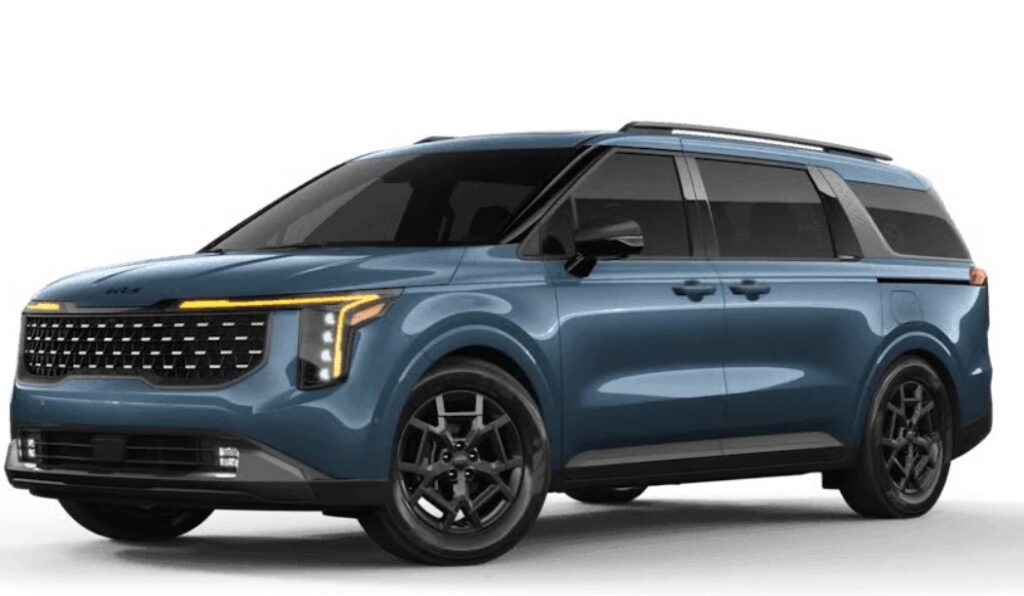
Choosing between the Kia Carnival diesel vs hybrid is no longer a simple case of picking the engine with the lowest fuel-consumption figure. Both versions make a strong argument, but they solve slightly different problems.
The diesel is the familiar long-distance workhorse. It delivers muscular low-rpm torque, suits loaded highway driving, and offers considerably more towing capacity in markets such as Australia. The hybrid takes another path. It combines a smaller turbocharged petrol engine with an electric motor, reducing fuel use while making stop-start urban driving quieter and smoother.
So, which Carnival deserves a place in our driveway?
For many families, the Kia Carnival Hybrid is the smarter everyday choice, particularly when most kilometres involve suburbs, school runs, traffic, and mixed commuting. If our Carnival regularly tackles highways, heavy loads, trailers, caravans, or very high annual mileage, however, the diesel still makes enormous sense.
Using the Australian 2026 Carnival as a useful real-world reference, Kia offers a 2.2-litre turbo-diesel and a 1.6-litre turbo-petrol hybrid. The diesel produces 148 kW and 440 Nm, while the hybrid develops 180 kW of combined system power. Official combined fuel consumption is approximately 6.5 L/100 km for the diesel and 5.8 L/100 km for the hybrid.
Those numbers tell us something.
They don't tell us everything.
Content in this publication
- Kia Carnival Diesel vs Hybrid at a Glance
- Understanding the Kia Carnival Diesel
- Understanding the Kia Carnival Hybrid
- Kia Carnival Diesel vs Hybrid Fuel Economy
- City Driving: The Hybrid's Natural Habitat
- Highway Driving: The Diesel Strikes Back
- Performance: Is the Hybrid or Diesel Faster?
- Towing Capacity: Diesel Wins Decisively
- Refinement and Noise
- Transmission Differences
- Cargo Space and Passenger Practicality
- Which Carnival Is Better for Large Families?
- Kia Carnival Diesel vs Hybrid Running Costs
- Servicing: Another Important Difference
- Hybrid Battery Longevity
- Which One Feels More Modern?
- Which One Is Better for Rural Driving?
- Which One Is Better for Short Trips?
- Kia Carnival Diesel vs Hybrid for High-Mileage Drivers
- What About Resale Value?
- Advantages and Disadvantages of Each Powertrain
- Does the Hybrid Save Enough Fuel to Justify Its Price?
- Kia Carnival Diesel vs Hybrid: Which Is Better to Drive?
- What About Long-Term Reliability?
- Who Should Buy the Kia Carnival Diesel?
- Who Should Buy the Kia Carnival Hybrid?
- Our Verdict: Kia Carnival Diesel vs Hybrid
- Frequently Asked Questions
- 1. Is the Kia Carnival Hybrid better than the diesel?
- 2. Which is more fuel-efficient, the Kia Carnival diesel or hybrid?
- 3. Can the Kia Carnival Hybrid tow as much as the diesel?
- 4. Does the Kia Carnival Hybrid need to be plugged in?
- 5. Should we buy a diesel or hybrid Carnival for mostly highway driving?
Kia Carnival Diesel vs Hybrid at a Glance
Let's start with the differences that matter most.
| Category | Carnival Diesel | Carnival Hybrid |
|---|---|---|
| Powertrain | 2.2L turbo-diesel | 1.6L turbo-petrol + electric motor |
| Maximum power* | 148 kW | 180 kW combined |
| Torque* | 440 Nm | Approx. 366–367 Nm combined/system figure |
| Transmission | 8-speed automatic | 6-speed automatic |
| Drive | Front-wheel drive | Front-wheel drive |
| Official combined economy* | 6.5 L/100 km | 5.8 L/100 km |
| Fuel | Diesel | Regular unleaded petrol |
| Australian braked towing capacity* | 2,000 kg | 1,000 kg |
| Best environment | Highway/heavy-duty use | Urban and mixed driving |
| Driving character | Strong, muscular | Smooth, quiet, responsive |
*Australian MY26 specifications used as the reference; specifications vary by market, trim, and model year.
The headline numbers immediately reveal the personality difference.
The hybrid wins the efficiency contest on paper and develops greater total system power. The diesel counters with noticeably stronger engine torque and twice the Australian braked towing rating.
That leads us to the first major conclusion: there is no universally superior Carnival powertrain. There is a better Carnival for how we actually drive.
Understanding the Kia Carnival Diesel
The Carnival diesel isn't trying to reinvent anything. That's part of its appeal.
Kia's Australian MY26 specification lists a 2,151 cc four-cylinder turbo-diesel producing 148 kW at 3,800 rpm and 440 Nm between 1,750 and 2,750 rpm. It sends power to the front wheels through an eight-speed automatic transmission.
That generous low-end torque gives the Carnival an effortless character when carrying passengers.
Imagine eight people, several suitcases, a fridge full of road-trip snacks, and enough children's luggage to mount an expedition to Antarctica. That's precisely the sort of situation where diesel torque feels reassuring.
We don't need to rev the engine hard. The Carnival simply gets on with the job.
Why Diesel Works So Well in a Large People Mover
Diesel engines traditionally make sense in large vehicles because they produce plenty of torque at relatively low engine speeds.
That suits a Carnival beautifully.
When we're cruising on a motorway, climbing a long hill, overtaking with passengers aboard, or pulling a trailer, strong low-rpm torque can make the vehicle feel relaxed rather than strained.
There's another advantage: highway efficiency.
Hybrid systems are brilliant when they can repeatedly recover energy during braking and use their electric motors at low speeds. On a steady motorway, however, those opportunities decrease.
That's where diesel can fight back.
Understanding the Kia Carnival Hybrid
The hybrid is much more interesting mechanically.
Instead of using a large engine, Kia pairs a 1.6-litre turbocharged four-cylinder petrol engine with an electric motor and a relatively small hybrid battery. The Australian version develops around 180 kW of combined system power and sends it through a conventional six-speed automatic transmission.
This is a regular hybrid, not a plug-in hybrid.
In other words, we don't need to connect the Carnival to a charger every evening.
The vehicle manages the battery itself. Energy is recovered through regenerative braking, and the petrol engine also contributes to maintaining the battery's charge.
What the Electric Motor Actually Changes
Don't think of the electric motor merely as an economy gadget.
It changes the Carnival's personality.
Electric motors produce immediate torque, so initial acceleration can feel responsive without requiring the petrol engine to work aggressively. In slow traffic, the Carnival can also move electrically under suitable conditions.
A contemporary road test described the transition between electric and petrol propulsion as virtually seamless and praised the hybrid's quiet behaviour around town.
For a family vehicle, that's meaningful.
A quieter school run may not look impressive on a specification sheet, but spend years driving children through traffic and we'll appreciate it.
Kia Carnival Diesel vs Hybrid Fuel Economy
Here comes the obvious question:
Which uses less fuel?
Official Australian combined-cycle figures give the advantage to the hybrid:
Diesel: approximately 6.5 L/100 km
Hybrid: approximately 5.8 L/100 km.
At first glance, case closed.
Not quite.
Why Your Driving Pattern Matters More Than the Official Number
Fuel economy isn't a tattoo. It changes constantly.
Traffic, temperature, tyre pressures, driving style, passenger load, elevation, air conditioning, road speed, and countless other variables influence consumption.
More importantly, diesel and hybrid systems respond differently to different environments.
A hybrid thrives in stop-start traffic because it can recover energy while slowing and reuse it when accelerating.
A diesel likes settling into a steady rhythm.
Consequently, a driver spending 80 percent of the week navigating urban traffic could see a more meaningful hybrid advantage than someone covering 500 motorway kilometres every weekend.
One Australian test of the Carnival Hybrid recorded 6.9 L/100 km during mixed but highway-heavy testing, compared with its official 5.8 L/100 km claim. That doesn't make the hybrid inefficient; it simply illustrates how substantially real-world conditions can change the result.
City Driving: The Hybrid's Natural Habitat
If our Carnival spends its life doing school runs, grocery trips, daycare pickups, sports practice, and suburban commuting, the hybrid begins to look exceptionally attractive.
This is where electrification earns its keep.
Every time we slow down, regenerative braking can recover some energy that would otherwise disappear as heat. Every time we crawl through traffic, the electric motor gets opportunities to assist or propel the vehicle.
The result?
Less fuel wasted while accomplishing very little actual movement.
Traffic Makes the Difference
Traditional combustion vehicles are least impressive when constantly accelerating, stopping, and idling.
Hybrid systems turn that weakness into an opportunity.
It's a little like collecting loose change every time we brake. One coin doesn't buy much, but thousands of braking events eventually matter.
There's also refinement.
Low-speed electric assistance makes the Carnival Hybrid particularly pleasant in environments where a people mover spends enormous amounts of its life: car parks, residential streets, school zones, and congested intersections.
Highway Driving: The Diesel Strikes Back
Take both Carnivals onto the open highway and the argument becomes more complicated.
Once we're travelling steadily at 100 or 110 km/h, regenerative braking plays a much smaller role. The petrol engine inevitably contributes more of the work.
Meanwhile, the diesel is operating in exactly the environment it likes.
Long distances.
Steady speeds.
Low engine revs.
Big torque.
This is why we'd lean toward the diesel for a family that regularly drives between cities or clocks enormous annual motorway mileage.
The Diesel Feels Built for Road Trips
There's something reassuring about a torquey diesel with a full passenger load.
When we ask for acceleration, there's a solid shove rather than a frantic rush. When the road climbs, the powertrain doesn't feel intimidated.
Think of the diesel as the marathon runner and the hybrid as the clever all-round athlete.
Both can cover the distance.
One particularly enjoys it.
Performance: Is the Hybrid or Diesel Faster?
Here's a surprise for anyone assuming the hybrid is purely an economy model.
The Australian hybrid's approximately 180 kW combined output exceeds the diesel's 148 kW.
That doesn't mean the hybrid suddenly transforms this enormous eight-seat people mover into a hot hatch.
Thankfully.
But electric assistance makes acceleration feel responsive, particularly at lower speeds.
The diesel offers a different sensation.
Its 440 Nm arrives low in the rev range, creating that familiar muscular diesel pull.
Power vs Torque Isn't the Whole Story
Comparing a hybrid's system output directly with a diesel engine's specifications can be misleading because the two powertrains deliver energy differently.
Electric motors respond instantly.
Turbo-diesels build their strength differently.
Gear ratios differ.
Vehicle weights differ.
You may be interested in reading Kia Carnival Years: Generations, Changes, and Best Years to Know
Software matters.
So instead of asking which number is bigger, we'd ask:
Which behaviour do we prefer?
For smooth and responsive everyday acceleration, hybrid.
For sustained load-hauling muscle, diesel.
Towing Capacity: Diesel Wins Decisively
If towing matters, this may settle the entire Kia Carnival diesel vs hybrid debate.
In Australia, the MY26 Carnival diesel is rated to tow 2,000 kg braked, while the hybrid is rated to 1,000 kg braked.
That's not a tiny difference.
It's double.
Anyone planning to tow a substantial caravan, boat, or loaded trailer should therefore study the diesel first.
When the Hybrid's Towing Limit Is Enough
A 1,000 kg braked rating can still cover lighter trailers and recreational equipment.
But it gives us much less headroom.
Remember that towing isn't simply about whether the trailer's advertised empty weight fits beneath a limit. Actual loaded weight matters.
If towing forms a meaningful part of our lifestyle, the diesel provides a significantly larger operating envelope.
Refinement and Noise
Diesel engines have become remarkably refined, yet combustion physics hasn't disappeared.
A diesel generally produces more characteristic clatter and vibration, especially when cold or accelerating from low speeds.
The hybrid naturally has an advantage here.
Its electric motor can help launch the Carnival quietly, and the petrol engine can switch off in circumstances where a diesel would remain running.
That gives the hybrid a more polished atmosphere around town.
And in a vehicle designed to carry families, refinement isn't frivolous.
When the cabin resembles a mobile living room, less mechanical noise is welcome.
Transmission Differences
The diesel uses an eight-speed automatic, whereas the hybrid uses a six-speed automatic in the Australian MY26 model.
Some buyers might see six gears and assume the hybrid is technically inferior.
That's not how we'd interpret it.
A hybrid electric motor fills gaps that would otherwise demand additional gear ratios. The entire powertrain is engineered as one system.
The advantage of both configurations is that they use conventional stepped automatic transmissions rather than relying on the driving sensation associated with some continuously variable hybrid transmissions.
Cargo Space and Passenger Practicality
This is one area where the powertrain debate becomes refreshingly boring.
The Carnival remains an enormous family machine.
Australian specifications quote 627 litres of luggage space with all seating rows in use and up to 2,827 litres with the third row folded.
That's one of the Carnival's greatest strengths.
Unlike some electrified vehicles where batteries compromise cargo packaging substantially, choosing the hybrid doesn't suddenly transform our spacious Carnival into a cramped science experiment.
Its battery is integrated beneath the vehicle's passenger compartment; Australian testing notes the hybrid battery is positioned beneath the second-row area.
Which Carnival Is Better for Large Families?
For a typical suburban household, we'd choose the hybrid.
Why?
Because families create exactly the sort of driving cycle hybrids love.
Short journeys.
Traffic.
Constant slowing and accelerating.
School-zone speeds.
Shopping-centre car parks.
Repeated starts.
Add the smoother low-speed operation and the hybrid feels engineered around everyday family chaos.
But that's only one family profile.
If our version of family life involves long rural journeys, interstate holidays, heavy luggage, boats, caravans, or significant highway kilometres, the diesel remains extremely persuasive.
Kia Carnival Diesel vs Hybrid Running Costs
This is where we need to resist overly simple online calculations.
People often multiply an official consumption figure by a fuel price and declare a winner.
Real ownership doesn't behave so neatly.
Fuel prices fluctuate, diesel and petrol can have very different price relationships across countries and even individual regions, and our actual economy may differ considerably from the laboratory figure.
Annual distance also matters enormously.
Saving 0.7 L/100 km barely moves the needle for someone driving 8,000 km annually.
Across 30,000 km?
Different conversation.
We also need to recover the hybrid's purchase-price premium before claiming it "saves money."
In the Australian 2026 range, equivalent hybrid variants carry a price premium over comparable diesels. For example, published pricing places the S diesel below the S hybrid and the Sport+ diesel below the Sport+ hybrid.
Therefore, fuel savings don't automatically make the hybrid cheaper overall.
A buyer keeping the Carnival for ten years and covering substantial urban mileage has a much stronger financial argument than someone replacing it after three years with low annual kilometres.
Servicing: Another Important Difference
Australian Carnival petrol and diesel versions have servicing scheduled every 12 months or 15,000 km, while the hybrid interval is 12 months or 10,000 km according to published MY26 information.
That difference deserves attention if we drive substantial distances.
A 30,000-km-per-year driver could potentially visit the workshop more frequently with the hybrid purely because of kilometre-based intervals.
For a 9,000-km-per-year suburban family?
It makes virtually no difference because both will reach their annual time interval first.
Diesel Maintenance Has Its Own Considerations
Diesel vehicles aren't maintenance-free heroes, either.
Modern diesels use sophisticated emissions-control equipment and generally prefer proper operating conditions, including regular journeys long enough for everything to reach temperature.
That's one reason we'd hesitate before buying a diesel purely for repeated tiny urban trips.
A diesel can absolutely handle normal city driving, but buying one for nothing but five-minute journeys ignores what the powertrain does best.
Hybrid Battery Longevity
Hybrid battery anxiety remains common.
Understandably so. Batteries sound expensive.
But modern automotive hybrid batteries aren't equivalent to the tiny rechargeable battery inside a phone. They use sophisticated thermal and charge management and aren't normally cycled from completely full to completely empty.
In Australia, published information for the Carnival Hybrid includes a seven-year/150,000 km warranty covering defects in the high-voltage system, including the battery, alongside Kia's broader vehicle warranty provisions.
Coverage differs internationally, so local warranty documents should always be checked before purchase.
Which One Feels More Modern?
Hybrid.
Easily.
The diesel is extremely competent, but the hybrid gives the Carnival a character more aligned with where passenger-car technology is heading.
Silent low-speed movement, regenerative braking, automatic engine shutdown, and electric torque make the vehicle feel sophisticated rather than merely economical.
And that's important because the Carnival is no longer simply a giant box for transporting children.
It's increasingly positioned as a premium family vehicle.
Which One Is Better for Rural Driving?
Diesel gets our vote.
Rural ownership frequently involves:
longer distances, higher average speeds, heavier loads, towing, and fewer stop-start situations.
Those conditions play directly into the diesel's strengths.
Fuel availability can also affect the decision depending on where we live, although both diesel and petrol are widely available across most developed markets.
If we regularly head hundreds of kilometres away from major cities, we'd value the diesel's relaxed long-distance character more than the hybrid's city advantages.
You may be interested in readingKia Carnival Years: Generations, Changes, and Best Years to KnowYou may be interested in reading
 Audi A6 Years to Avoid: The Used-Buyer’s Complete Guide
Which One Is Better for Short Trips?
Hybrid.
This isn't even especially close.
If our average journey is from home to school, school to supermarket, supermarket to work, and back again, buying the diesel primarily to save fuel becomes harder to justify.
The hybrid can exploit regenerative braking and electric assistance repeatedly.
It is quieter.
It's smoother at low speeds.
And its efficiency advantage becomes most relevant precisely where big combustion vehicles traditionally struggle.
Kia Carnival Diesel vs Hybrid for High-Mileage Drivers
This one depends on what those kilometres look like.
A rideshare driver spending all day moving through a major city?
Hybrid.
A private shuttle covering motorways between cities?
Diesel deserves serious consideration.
A family driving 25,000 km annually split evenly between motorway and suburban use?
Now we've entered the genuine grey zone.
We would calculate expected fuel costs using realistic economy figures rather than blindly trusting official numbers and then include servicing frequency, purchase price, resale expectations, and towing requirements.
One powertrain may save fuel without actually saving money.
What About Resale Value?
Predicting resale value several years into the future is dangerous.
Hybrid demand could strengthen as buyers increasingly prioritize lower consumption and electrification. Equally, well-maintained diesel Carnivals may remain desirable among buyers who specifically need towing and long-distance capability.
Instead of trying to predict the market like a crystal ball, we'd focus on buying the powertrain that suits our usage today.
The wrong engine bought for theoretical resale value can cost us convenience every single day.
Advantages and Disadvantages of Each Powertrain
If we reduce the whole comparison to one practical checklist:
- Choose the diesel for frequent highway travel, heavy passenger loads, substantial towing, strong low-rpm pulling power, longer kilometre-based service intervals in the Australian schedule, and traditional long-distance efficiency.
- Choose the hybrid for city driving, mixed commuting, lower official combined fuel consumption, quieter low-speed operation, electric assistance, regenerative braking, and a more modern driving experience.
- Think carefully before buying the diesel if nearly every journey is extremely short and urban.
- Think carefully before buying the hybrid if towing above its applicable rating is part of your plans.
- Calculate total ownership cost, not fuel consumption alone, because purchase price, servicing, fuel prices, mileage, insurance, depreciation, and resale all matter.
- Check your country's specifications before purchasing because engines, towing limits, warranty coverage, trims, equipment, and pricing differ across markets and model years.
Does the Hybrid Save Enough Fuel to Justify Its Price?
Sometimes.
But not automatically.
Using Australian official numbers, the difference between 6.5 and 5.8 L/100 km is 0.7 L/100 km.
Over 10,000 km, that's theoretically around 70 litres based purely on those official combined figures.
Over 20,000 km, roughly 140 litres.
Yet this basic calculation isn't enough because diesel and petrol don't necessarily cost the same, real-world economy differs, and hybrids may establish a bigger relative advantage in urban driving than on motorways.
That's why we'd never buy the hybrid solely because the brochure contains the smaller number.
Buy it because its entire operating character suits us.
Fuel savings then become a bonus.
Kia Carnival Diesel vs Hybrid: Which Is Better to Drive?
For everyday driving, our preference is the hybrid.
Its combination of electric assistance, smoother low-speed operation, and strong system output makes such a big vehicle surprisingly easy-going.
The diesel feels more purposeful.
Press the accelerator with a full cabin and there's an unmistakable sense that 440 Nm is ready for work.
Neither feels wrong.
They simply speak different dialects of the same language.
Hybrid Driving Personality
The hybrid feels relaxed, intelligent, and polished.
It's happiest adapting constantly: petrol engine on, petrol engine off, electric assistance added, energy recovered, then reused.
We barely need to think about what's happening underneath.
That's exactly how good hybrid technology should work.
Diesel Driving Personality
The diesel feels strong and predictable.
Its character barely changes whether we're cruising alone or carrying the extended family and half the contents of the house.
For some owners, that consistency is more valuable than sophisticated electrification.
What About Long-Term Reliability?
We shouldn't declare either system categorically more reliable without long-term, model-specific evidence spanning comparable production years.
The diesel is mechanically familiar but contains modern turbocharging, high-pressure fuel injection, emissions equipment, and associated components.
The hybrid adds an electric motor, high-voltage battery, inverter, and hybrid control electronics while potentially reducing certain types of combustion-engine operation during urban use.
Complexity exists on both sides.
What matters more?
Maintenance history.
Correct fluids.
Proper servicing.
Suitable driving patterns.
And addressing problems early rather than treating dashboard warnings like unwanted emails.
Who Should Buy the Kia Carnival Diesel?
The diesel remains our pick if we:
regularly tow; spend most of our time on highways; live outside major urban areas; routinely carry heavy passenger or luggage loads; cover very high long-distance mileage; or simply value substantial low-rpm torque.
For these buyers, the diesel isn't yesterday's technology hanging around without purpose.
It's a tool precisely matched to demanding usage.
The Ideal Diesel Owner
Imagine a family living two hours outside a major city.
They travel long distances several times each week, tow a trailer during holidays, load the Carnival heavily, and frequently cruise at motorway speeds.
That family may gain relatively little from prioritizing the hybrid.
The diesel fits their lifestyle like hiking boots on a mountain trail.
Who Should Buy the Kia Carnival Hybrid?
The hybrid is our pick if we:
mainly drive through suburbs or cities; do frequent school runs; encounter heavy traffic; don't need major towing capability; value refinement; want lower official fuel consumption; and plan to keep the vehicle for years.
That's probably a huge proportion of Carnival buyers.
The Ideal Hybrid Owner
Picture a family living in a metropolitan area.
Monday means school and work. Tuesday adds football practice. Wednesday brings shopping. The weekend involves restaurants, grandparents, and perhaps a motorway trip outside the city.
That's hybrid territory.
The drivetrain gets repeated opportunities to exploit regenerative braking and electric assistance without sacrificing the Carnival's huge interior.
Our Verdict: Kia Carnival Diesel vs Hybrid
After stripping away the marketing, the Kia Carnival Hybrid is the better all-round choice for many private family buyers, while the Carnival diesel remains the stronger specialist choice for long-distance driving and towing.
The hybrid makes an enormous vehicle feel surprisingly sophisticated. It is quieter around town, officially more fuel-efficient, responsive at low speeds, and beautifully suited to the stop-start routine that dominates family life.
The diesel answers with brute practicality.
Its 440 Nm of torque gives it a confident, hard-working personality, and its substantially greater Australian braked towing capacity makes the decision simple for owners pulling heavier trailers. The official fuel-consumption difference is also small enough that heavy highway drivers shouldn't automatically assume the hybrid will transform their running costs.
So our recommendation is straightforward.
Mostly city and suburban driving? Buy the hybrid.
Mostly highways, serious towing, or heavy-duty family travel? Buy the diesel.
If we're somewhere between the two, we'd lean hybrid unless towing enters the equation.
The Carnival has always succeeded because it makes carrying lots of people feel less like driving a commercial van and more like driving an oversized family SUV. The hybrid strengthens that idea. The diesel, meanwhile, reminds us that sometimes old-fashioned torque remains exactly the right tool.
Neither powertrain wins every battle.
The real winner is whichever one matches the roads we drive every week.
Frequently Asked Questions
1. Is the Kia Carnival Hybrid better than the diesel?
For city and mixed family driving, we'd generally choose the Carnival Hybrid because of its smoother low-speed operation, regenerative braking, electric assistance, and lower official combined fuel consumption. For frequent towing or long highway journeys, the diesel can be the better choice.
2. Which is more fuel-efficient, the Kia Carnival diesel or hybrid?
Using the Australian MY26 specification as an example, Kia quotes approximately 5.8 L/100 km for the hybrid and 6.5 L/100 km for the diesel on the combined cycle. Actual consumption depends heavily on traffic, speed, weather, passenger load, and driving habits.
3. Can the Kia Carnival Hybrid tow as much as the diesel?
No, not in the Australian specification referenced here. The diesel has a 2,000 kg braked towing capacity, while the hybrid is rated at 1,000 kg braked. Buyers should verify the exact rating for their country, model year, and vehicle specification.
You may be interested in readingKia Carnival Years: Generations, Changes, and Best Years to KnowYou may be interested in reading
Audi A6 Years to Avoid: The Used-Buyer’s Complete GuideYou may be interested in reading
Which Audi A6 to Buy? The Complete Buyer’s Guide4. Does the Kia Carnival Hybrid need to be plugged in?
No. The Carnival Hybrid is a conventional self-charging hybrid rather than a plug-in hybrid. The vehicle manages its small high-voltage battery automatically and recovers energy through regenerative braking.
5. Should we buy a diesel or hybrid Carnival for mostly highway driving?
For predominantly long-distance highway driving, we'd strongly consider the diesel. Its 440 Nm of low-rpm torque suits sustained high-speed travel and heavy loads, while the hybrid's largest efficiency advantages tend to appear in environments where regenerative braking and electric low-speed operation can be used more frequently.
If you want to know other articles similar to Kia Carnival Diesel vs Hybrid: Which One Should We Buy? you can visit the category Models.
Honda Passport vs Toyota 4Runner: Which SUV Is Better?
Honda Passport vs Ford Bronco: Which SUV Is Better?
Honda Passport vs Ford Explorer: Which SUV Is Better?
Honda Passport or Pilot: Which SUV Is Better?
Honda Passport vs Jeep Grand Cherokee: Which SUV Is Better?
Honda Passport vs Nissan Pathfinder: Which SUV Is Better?
Leave a Reply
More content of your interest