

Kia Carnival Years: Generations, Changes, and Best Years to Know

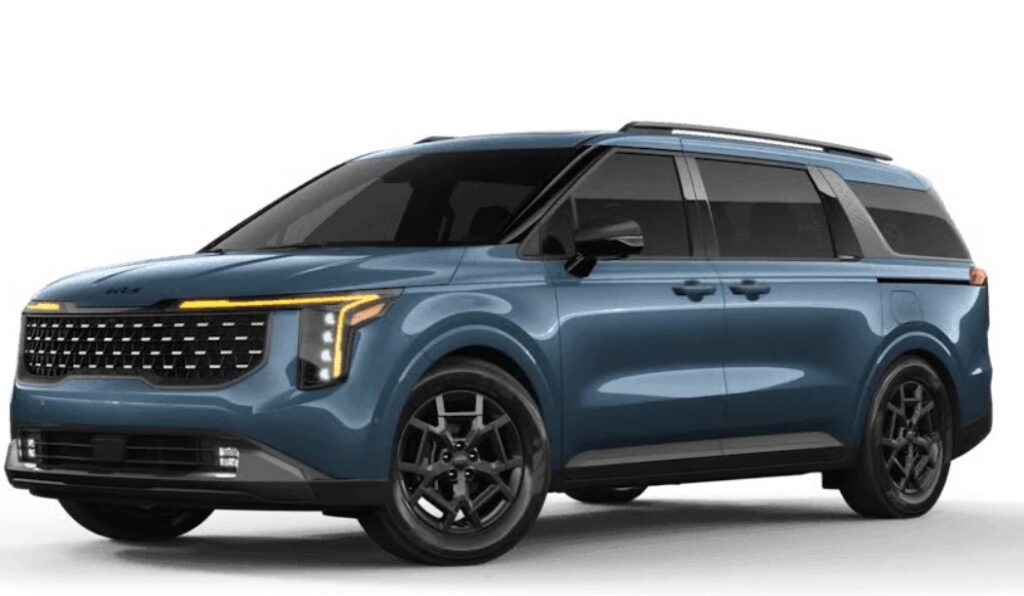
If we look at Kia Carnival years as one long family-car story, the model has changed almost beyond recognition. The earliest Carnival was a straightforward people mover. Today's version feels more like an SUV-shaped lounge with sliding doors.
Yet there is one wrinkle that makes the Carnival's history surprisingly confusing: the name did not appear everywhere at the same time.
Kia introduced the Carnival in South Korea in 1998, while several overseas markets knew the vehicle as the Kia Sedona for years. In North America, for example, the modern Carnival name did not replace Sedona until the 2022 model year. Kia's own heritage archive dates the original Carnival to 1998, the major third-generation redesign to 2014, and the fourth generation to 2020.
So, when somebody asks, "What years did Kia make the Carnival?" the answer depends on where we are standing.
Let's untangle the timeline, explore what changed through each generation, and figure out which Kia Carnival years deserve the most attention from used-car buyers.
Content in this publication
- What Years Has the Kia Carnival Been Made?
- Kia Carnival First Generation: 1998–2005 Era
- Kia Carnival Second Generation: 2005/2006–2014 Era
- Kia Carnival Third Generation: 2014–2020/2021 Era
- Kia Carnival Fourth Generation: 2020 to Present
- 2022 Kia Carnival: A Major Year for North America
- 2023 and 2024 Kia Carnival Years
- 2025 Kia Carnival: The Important Refresh
- 2026 and Newer Kia Carnival Years
- Which Kia Carnival Years Are Best?
- Which Kia Carnival Years Should We Avoid?
- How Kia Carnival Years Differ by Country
- Kia Carnival vs Kia Sedona Years
- How Long Can a Kia Carnival Last?
- Are Newer Kia Carnival Years Better?
- What Changed Most Across the Kia Carnival Generations?
- How to Choose the Right Kia Carnival Year
- Is an Older Kia Carnival Worth Buying?
- Kia Carnival Year Timeline at a Glance
- Final Thoughts on Kia Carnival Years
- Frequently Asked Questions About Kia Carnival Years
What Years Has the Kia Carnival Been Made?
Globally, the Kia Carnival has been produced since 1998. Kia's heritage records identify the original Carnival as a 1998 vehicle, developed as the company's entry into the large family-MPV market.
The broad generational timeline looks like this:
| Generation | Approximate Global Introduction | Common Model Code | Main Character |
|---|---|---|---|
| First generation | 1998 | KV-II | Traditional family minivan |
| Second generation | 2005/2006 | VQ | Larger, more refined people mover |
| Third generation | 2014 | YP | More polished and premium |
| Fourth generation | 2020 | KA4 | SUV-inspired modern Carnival |
These dates can overlap slightly depending on country, manufacturing schedule, and whether we're talking about calendar years or formal model years. That's why two perfectly legitimate Carnival histories can appear to disagree by a year.
Why North American Kia Carnival Years Look Different
Here's where many searches become tangled.
For decades, Kia sold its minivan in North America primarily as the Kia Sedona. The Carnival name arrived there with the latest generation for the 2022 model year. That means a North American buyer searching classifieds may see:
Older equivalent: Kia Sedona
Newer model: Kia Carnival
Cars.com, for example, groups the North American Carnival generation beginning with the 2022 model year, while Kia's global history places the fourth-generation vehicle's original introduction in 2020.
Nothing mysterious happened. We're simply looking at the same family tree through different market windows.
Kia Carnival First Generation: 1998–2005 Era
The first Carnival arrived in 1998 and established the formula that would carry the model forward: lots of passenger space, front-wheel drive, family-friendly practicality, and considerably more comfort than a traditional commercial van.
Kia describes the first Carnival as an important vehicle in its history, helping establish the company's family-car business during a difficult period for the Korean auto industry.
What Was the Original Carnival Like?
Compared with today's Carnival, the first generation feels almost agricultural. That's not necessarily criticism. Cars of this era were simpler.
Kia's archive lists gasoline, LPG, and diesel powertrains depending on market, with engines ranging roughly from 2.5 to 2.9 liters on the original vehicle. It was front-wheel drive and measured approximately 4,890 mm long.
The emphasis was space rather than sophisticated infotainment, driver assistance, digital dashboards, or luxury ambience.
Think of it like an old family suitcase: bulky and unsophisticated, perhaps, but built around one simple purpose—carrying everyone and everything.
Should We Buy a First-Generation Carnival Today?
Only with realistic expectations.
These vehicles are now old enough that condition matters far more than model year. Rubber components, suspension joints, cooling systems, electrical connections, transmission servicing, corrosion, and previous repairs can overshadow any inherent advantage one year once had over another.
A beautifully maintained older Carnival can be preferable to a newer example that has spent its life neglected.
For most families seeking dependable everyday transportation, though, later generations will usually make more sense.
Kia Carnival Second Generation: 2005/2006–2014 Era
The second-generation Carnival represented a substantial step forward.
Depending on the market, its launch is generally associated with 2005 or 2006, and the generation remained available into the early 2010s. Historical references commonly place second-generation production around 2006–2014 globally.
It also appeared in short- and long-wheelbase forms in some countries, increasing the model's usefulness for different family and commercial needs.
A More Mature Family Vehicle
The second Carnival became wider, more spacious, and more polished. It started feeling less like a budget alternative and more like a serious rival to established minivans.
Kia also gradually modernized the design. Around the later part of the generation, the company's recognizable "Tiger Nose" design language began appearing, giving the Carnival a stronger family resemblance to newer Kia models.
Why Later Second-Generation Years Can Be Appealing
Used buyers often gravitate toward later years within an established generation.
Why?
Because early production bugs may have already been corrected, equipment tends to improve, and manufacturers frequently refine software, interior materials, transmissions, suspension tuning, or minor mechanical components during a model's life.
That does not automatically make every late second-generation Carnival reliable. Age is now an unavoidable part of the equation.
If we're shopping in this generation, documentation is gold.
Kia Carnival Third Generation: 2014–2020/2021 Era
The third generation was where the Carnival started shedding much of its old-school minivan image.
Kia unveiled this major redesign in 2014, increasing sophistication, improving packaging, and positioning the model as a more premium family vehicle. Kia's heritage archive describes this generation as an evolution toward greater safety, space efficiency, and premium functionality.
In many markets, this generation continued into 2020 or 2021 depending on local model-year schedules.
The transformation wasn't merely cosmetic.
The third-generation vehicle was around 5,115 mm long according to Kia's historical specifications and was offered globally with V6 gasoline and four-cylinder diesel powertrains depending on market.
Cabin design became cleaner. Technology improved. Materials became more convincing. Safety systems progressed.
It was as if the Carnival finally stopped apologizing for being a minivan.
Third-Generation Carnival as a Used-Car Sweet Spot
This period may be particularly interesting for buyers who don't need today's giant screens and newest driver-assistance hardware.
A well-kept late third-generation Carnival can offer a compelling mixture of:
space, comfort, comparatively modern safety equipment, useful technology, and substantially lower used pricing than a nearly new Carnival.
The crucial phrase is well-kept.
Service history still matters more than chasing one supposedly magical model year.
Kia Carnival Fourth Generation: 2020 to Present
The fourth-generation Carnival changed the personality of the vehicle dramatically.
Kia introduced it globally in 2020, describing it as a "premium van" designed for both personal and business use. Its styling moved strongly toward the SUV world, even though the underlying recipe remained wonderfully practical.
This is the generation many shoppers now picture when they hear "Kia Carnival."
Why the Fourth Generation Looks Like an SUV
Traditional minivans tend to advertise exactly what they are.
The current Carnival takes another route.
Its upright front fascia, strong body lines, long hood appearance, substantial grille, and squared-off proportions make it resemble a large crossover from several angles.
But then the sliding rear doors open.
That's the clever bit.
We get much of the visual attitude buyers want from an SUV while retaining one of the most useful inventions ever given to parents: a huge power sliding door that doesn't smash into the car parked beside us.
Fourth-Generation Size and Layout
Kia's heritage information lists the fourth-generation Carnival at approximately 5,155 mm long and 1,995 mm wide, although configurations and specifications differ by country. The platform continues with front-wheel drive, while engine choices vary considerably across global markets.
That last point deserves emphasis.
You may be interested in reading Audi A6 Years to Avoid: The Used-Buyer’s Complete Guide
A Carnival sold in Australia, Korea, North America, or another region may have a different engine, trim structure, seating arrangement, towing specification, and equipment package.
Never assume specifications from another country's website apply to the vehicle sitting in front of you.
2022 Kia Carnival: A Major Year for North America
For American and Canadian shoppers, 2022 is one of the most important Kia Carnival years.
This was when the Carnival badge replaced the Sedona name with the fourth-generation vehicle in that market. Consequently, search results that describe the "first Kia Carnival" as a 2022 model are not necessarily wrong—they're discussing North America rather than the worldwide history.
That's an SEO distinction worth understanding because both search intents exist simultaneously.
Globally: Carnival since 1998.
North American Carnival badge: 2022 onward.
2023 and 2024 Kia Carnival Years
The next couple of model years largely continued the fourth-generation formula.
This can actually be attractive on the used market.
We're no longer buying the very first year of a brand-new North American nameplate and platform introduction, but we're also not paying for every feature associated with the newest refreshed versions.
For buyers focused on value rather than bragging rights, that middle territory is often where a vehicle begins to make financial sense.
A two- or three-year-old family car can lose the new-car smell while retaining most of the technology we actually use.
And new-car smell doesn't carry children, luggage, dogs, groceries, or grandparents.
2025 Kia Carnival: The Important Refresh
The 2025 model year became another major chapter, particularly because the Carnival received refreshed styling and expanded powertrain choices in markets including the United States.
Most significantly, Kia introduced the Carnival Hybrid to North American buyers, giving shoppers an alternative to the conventional V6-powered Carnival.
This changed the equation considerably.
The Carnival was no longer simply a choice between "minivan practicality" and "SUV image." Buyers could now also weigh traditional gasoline power against electrified efficiency.
Does the Refresh Make Earlier Carnivals Obsolete?
Not at all.
A facelift has a funny effect on used cars. Overnight, the model parked on yesterday's showroom floor looks older even though nothing about its usefulness has changed.
That's potentially good news for second-hand shoppers.
Pre-refresh fourth-generation Carnivals may become more attractive if depreciation pushes prices down while their fundamental passenger space and flexibility remain excellent.
2026 and Newer Kia Carnival Years
By the 2026 model year, buyers in markets offering both gasoline and hybrid versions could choose between two rather different approaches to the same family-hauling mission.
At this point, the Carnival has travelled a remarkable distance from its 1998 ancestor.
Today's vehicle competes not merely through seating capacity but through cabin technology, driver assistance, premium seating options, connectivity, design, and electrified powertrains.
The minivan didn't disappear.
It simply learned how to dress like an SUV.
Which Kia Carnival Years Are Best?
There isn't one universally best Carnival year because budgets and priorities differ.
For buyers wanting an older bargain, a late third-generation model can be an interesting target, provided its maintenance record and mechanical condition are strong.
For buyers wanting modern styling and technology without necessarily buying brand new, 2023–2024 fourth-generation examples can make sense because they sit after the initial North American introduction but before the refreshed models.
For shoppers prioritizing the newest cabin design and hybrid availability, 2025-and-newer versions deserve attention.
However, we should avoid treating model year like a reliability horoscope.
A carefully serviced 2022 can easily be a smarter purchase than an abused 2024.
Which Kia Carnival Years Should We Avoid?
Rather than declaring a blanket blacklist, we'd approach Carnival years through risk.
The most cautious shoppers may prefer not to buy the first model year after a complete redesign, simply because entirely new vehicles introduce more new components, software, electronics, and manufacturing processes at once.
That principle applies to almost every manufacturer, not specifically Kia.
Older Carnivals present a different problem: age.
Even a historically dependable 12- or 15-year-old vehicle can require significant maintenance simply because seals, plastics, hoses, bearings, bushings, electrical components, and interior mechanisms deteriorate over time.
So we'd be particularly careful with any Carnival showing the following warning signs:
- Missing or inconsistent maintenance records
- Harsh shifting, hesitation, or drivetrain warning lights
- Cooling-system problems or evidence of overheating
- Uneven tire wear suggesting suspension or alignment issues
- Malfunctioning power sliding doors
- Persistent dashboard warnings
- Water intrusion or electrical problems
- Heavy accident repairs
- Poor-quality aftermarket modifications
- Repeatedly missed scheduled servicing
A model year can guide us toward the right neighborhood. A pre-purchase inspection tells us whether we're knocking on the right door.
How Kia Carnival Years Differ by Country
This is one of the most important details in the entire discussion.
Kia sells the Carnival internationally, but specifications aren't universal.
Australia has historically had strong demand for diesel-powered Carnival variants. Korea has offered configurations and powertrains not necessarily available elsewhere. North America has centered heavily on gasoline V6 power in the modern generation, followed by the introduction of a hybrid option.
Seat counts can differ too.
One market might emphasize eight-seat family configurations while another offers luxury seating or commercial-style arrangements.
Therefore, when researching a specific Carnival year, always search using:
model year + country + engine + trim
That's far more accurate than simply typing "2020 Kia Carnival specs."
Kia Carnival vs Kia Sedona Years
The relationship between the Carnival and Sedona deserves its own explanation.
They are not two completely unrelated minivans.
For many years, Sedona was essentially the name used for the Carnival in markets such as North America. With the fourth generation, Kia increasingly standardized the Carnival identity globally, including adopting Carnival for the North American 2022 model year.
That means anyone researching an older used Carnival in the United States should also investigate the corresponding Kia Sedona years.
Otherwise, we're reading only the final chapters of a book that started decades earlier.
How Long Can a Kia Carnival Last?
There is no guaranteed mileage at which every Carnival expires.
Longevity depends enormously on maintenance, driving environment, engine type, climate, accident history, towing use, and previous ownership.
A vehicle used for calm highway commuting has lived a very different life from one that spent a decade performing short cold starts, carrying maximum passenger loads, towing, and crawling through city traffic.
Regular fluid changes, cooling-system maintenance, correct oil, transmission care, prompt repair of leaks, and attention to suspension wear can make an enormous difference.
When buying used, mileage tells us how far a Carnival has travelled.
You may be interested in readingAudi A6 Years to Avoid: The Used-Buyer’s Complete GuideYou may be interested in reading
Which Audi A6 to Buy? The Complete Buyer’s GuideService history tells us how it travelled.
The second number isn't printed on the odometer, but it's often more important.
Are Newer Kia Carnival Years Better?
Usually in technology and safety capability, yes.
But "better" depends on what we're measuring.
A newer Carnival may offer more sophisticated infotainment, cameras, driver-assistance systems, convenience features, connectivity, and fuel-saving technology. At the same time, additional electronics mean additional systems that can eventually require diagnosis or repair.
Older models are simpler but lack the refinement and active-safety technology of newer versions.
It's a familiar trade-off.
New cars behave like smartphones on wheels. Older ones behave more like appliances.
Neither philosophy is automatically wrong.
What Changed Most Across the Kia Carnival Generations?
The biggest transformation wasn't horsepower or screen size.
It was identity.
The first Carnival existed primarily to move a lot of people efficiently. The second generation matured that formula. The third started feeling genuinely sophisticated. The fourth turned the concept into something aspirational enough that buyers might choose it because they want a Carnival rather than because they reluctantly accepted that they needed a minivan.
That is a substantial achievement.
From Minivan to MPV
Kia increasingly describes the Carnival as an MPV, or multi-purpose vehicle.
Technically, the distinction doesn't magically erase the sliding doors or family-van architecture. But the language reflects a genuine change in positioning.
The Carnival now blends characteristics associated with:
family vans, large crossovers, executive transport, road-trip vehicles, and premium passenger shuttles.
It's a Swiss Army knife wearing a tailored jacket.
How to Choose the Right Kia Carnival Year
Buying the right Carnival isn't really about finding a single number.
We need to match the generation to our priorities.
If budget dominates everything, older models deserve consideration—but only after a thorough mechanical inspection.
If we want the strongest balance of modern design and used value, the early-to-middle fourth-generation years become compelling.
If efficiency is particularly important and the hybrid is available in our market, newer versions deserve a closer look.
And if we're considering a nearly new Carnival, warranty status, recall completion, service history, trim equipment, and actual purchase price may matter more than whether the badge says one model year or the next.
Mileage vs Model Year
Would we rather own a low-mileage older Carnival or a high-mileage newer one?
There isn't a universal winner.
Highway miles can be relatively gentle. Extremely low mileage can hide years of short trips and prolonged storage.
Look at the whole vehicle.
Inspect the tires. Test every sliding door. Operate every seat. Check all cameras and screens. Listen during cold startup. Test the air conditioning from every zone. Drive at city and highway speeds. Examine maintenance records.
A Carnival has lots of moving pieces because it does lots of jobs.
Check all of them.
Don't Forget the Seating Configuration
This sounds obvious until we find the perfect used Carnival and discover that its seating arrangement doesn't suit our family.
Depending on generation, country, and trim, Carnival configurations can vary considerably.
Luxury second-row seats can be fantastic for passengers yet less suitable for owners who constantly haul bulky cargo. An eight-passenger arrangement may be more valuable to a growing family than premium captain's chairs.
Buy the interior you need, not merely the trim badge you want.
Is an Older Kia Carnival Worth Buying?
It certainly can be.
The Carnival's basic appeal ages slowly. A wide cabin, flexible seating, sliding doors, useful cargo room, and comfortable road manners remain practical whether a vehicle is three years old or thirteen.
But financial logic matters.
A cheap older Carnival isn't cheap if it immediately needs tires, brakes, suspension repairs, air-conditioning work, cooling-system service, and transmission attention.
When shopping older examples, we should reserve part of the budget for post-purchase maintenance.
The sticker price gets the vehicle onto our driveway.
The maintenance budget keeps it there.
Kia Carnival Year Timeline at a Glance
The easiest way to remember the Carnival's evolution is this:
The story begins globally in 1998 with the original Carnival. A substantially redesigned second generation arrived around 2005–2006. Kia introduced the more sophisticated third generation in 2014. The dramatically restyled fourth generation appeared globally in 2020, before reaching North America wearing the Carnival badge for the 2022 model year.
That's the timeline underneath all the confusing names and market variations.
Final Thoughts on Kia Carnival Years
Understanding Kia Carnival years becomes much easier once we separate global history from regional naming.
The Carnival itself dates back to 1998, but buyers in North America knew previous generations primarily as the Kia Sedona. The current fourth-generation Carnival transformed the formula with sharper styling, more sophisticated technology, and an increasingly premium identity.
Which year should we buy?
For value, we'd look closely at well-maintained late third-generation models and early-to-middle fourth-generation examples. For the newest technology and available electrification, later refreshed fourth-generation Carnivals naturally rise to the top.
But model year should never replace inspection.
The best Kia Carnival isn't automatically the newest one, the cheapest one, or the version an online ranking crowns as number one.
It's the one with the right configuration, a clean history, sensible mileage, proper maintenance, and a price that leaves us enough breathing room to actually enjoy it.
Because once the doors slide open, everyone climbs aboard, and the luggage somehow disappears into the back, that's what the Carnival has always been about.
Frequently Asked Questions About Kia Carnival Years
1. What year did the Kia Carnival first come out?
The Kia Carnival debuted globally in 1998. Kia's own heritage archive identifies 1998 as the starting point for the first-generation Carnival. In some countries, however, the vehicle was sold under the Sedona name.
2. What year did the Kia Carnival come to the USA?
The Carnival nameplate arrived in the United States for the 2022 model year, replacing the Kia Sedona as Kia introduced the latest-generation minivan to North American buyers.
3. How many generations of Kia Carnival are there?
The Carnival has four main generations. Kia's historical archive documents the original 1998 vehicle, the later redesigned models, the 2014 all-new Carnival, and the fourth-generation model introduced in 2020. Facelifts within a generation should not be confused with completely new generations.
You may be interested in readingAudi A6 Years to Avoid: The Used-Buyer’s Complete GuideYou may be interested in reading
Which Audi A6 to Buy? The Complete Buyer’s GuideYou may be interested in reading
What Audi A6 Is Supercharged? Complete Model and Engine Guide4. What are the best Kia Carnival years to buy used?
There is no universally superior year, but later third-generation Carnivals can offer strong value, while 2023–2024 fourth-generation models may appeal to buyers wanting modern styling and technology without necessarily purchasing the newest refreshed version. Condition, maintenance history, recalls, mileage, engine choice, and market specification should ultimately determine the purchase.
5. Is the Kia Sedona the same as the Kia Carnival?
They belong to the same model lineage. Kia used the Sedona name for the Carnival in markets including North America before adopting the Carnival badge there for the fourth-generation vehicle. Consequently, American shoppers researching older Carnival generations should also search for Kia Sedona information.
If you want to know other articles similar to Kia Carnival Years: Generations, Changes, and Best Years to Know you can visit the category Models.
Honda Passport vs Toyota 4Runner: Which SUV Is Better?
Honda Passport vs Ford Bronco: Which SUV Is Better?
Honda Passport vs Ford Explorer: Which SUV Is Better?
Honda Passport or Pilot: Which SUV Is Better?
Honda Passport vs Jeep Grand Cherokee: Which SUV Is Better?
Honda Passport vs Nissan Pathfinder: Which SUV Is Better?
Leave a Reply
More content of your interest