
Weight of Nissan X-Trail: Complete Kerb Weight and Payload Guide

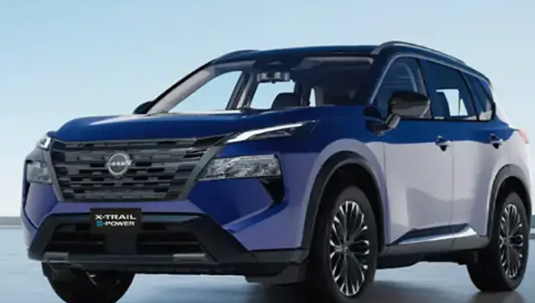
If you are trying to find the weight of Nissan X-Trail, the answer looks simple at first. Search for a number, write it down, job done. Except it does not quite work that way.
The Nissan X-Trail has been sold in numerous generations, trims, seating configurations, drivetrains, and markets. A basic front-wheel-drive petrol model can weigh considerably less than an e-POWER or all-wheel-drive version loaded with additional equipment.
For the current generation, we can broadly think of the Nissan X-Trail as weighing somewhere around 1,500 to 1,900 kg in kerb form, depending on specification and market. Some versions sit toward the lower end of that range, while heavily equipped electrified models can push close to 1.9 tonnes.
That difference is not trivial. It is roughly the equivalent of loading several adults and their luggage into the lighter vehicle.
So, instead of throwing one number at the question, let’s unpack exactly what Nissan X-Trail weight means, why it varies, and why it matters when we drive, tow, carry passengers, calculate payload, or compare SUVs.
Content in this publication
- How Much Does a Nissan X-Trail Weigh?
- Nissan X-Trail Weight at a Glance
- What Does Kerb Weight Mean?
- Nissan X-Trail Gross Vehicle Weight Explained
- What Is the Nissan X-Trail Payload?
- Why Does Nissan X-Trail Weight Vary So Much?
- Nissan X-Trail Petrol Weight
- Nissan X-Trail e-POWER Weight
- Nissan X-Trail e-4ORCE Weight
- Nissan X-Trail Weight in Australia
- Nissan X-Trail Weight in the UK
- Nissan X-Trail Weight in Pounds
- How Nissan X-Trail Weight Has Changed Through the Generations
- Does Nissan X-Trail Weight Affect Fuel Economy?
- Does X-Trail Weight Affect Acceleration?
- How Weight Affects Nissan X-Trail Handling
- Nissan X-Trail Weight and Towing
- Nissan X-Trail Roof Load Weight
- How Weight Affects Nissan X-Trail Tyres
- Nissan X-Trail Weight and Braking Distance
- Is the Nissan X-Trail Heavy for an SUV?
- How to Find the Exact Weight of Your Nissan X-Trail
- Should You Care About Nissan X-Trail Weight When Buying?
- Is a Lighter Nissan X-Trail Better?
- Conclusion: What Is the Weight of a Nissan X-Trail?
- Frequently Asked Questions
How Much Does a Nissan X-Trail Weigh?
The current Nissan X-Trail generally has a kerb weight of approximately 1,500 to 1,900 kg, although the exact figure depends on model year, engine, drivetrain, equipment, seating arrangement, and country.
Official Nissan Australia specifications, for example, list current X-Trail kerb masses ranging from roughly 1,540 kg for a lighter petrol specification to 1,911 kg for certain e-POWER versions.
That gives us a useful headline answer:
Typical Nissan X-Trail kerb weight: around 1.5-1.9 tonnes.
In pounds, that works out to approximately:
3,300-4,210 lb.
However, there is no universal weight figure that applies to every Nissan X-Trail.
Think about it like ordering the same backpack in different sizes and then filling each one with different equipment. The badge may remain the same, but what the vehicle carries underneath can change dramatically.
Nissan X-Trail Weight at a Glance
Here is a simplified overview using current-generation specifications as a general reference.
| X-Trail configuration | Approximate kerb weight |
|---|---|
| Petrol FWD | 1,500-1,600 kg |
| Petrol AWD/4x4 | 1,600-1,700 kg |
| Higher-spec petrol | 1,650-1,700 kg |
| e-POWER | Around 1,850-1,900+ kg |
| e-4ORCE/e-POWER AWD | Around 1,850-1,900+ kg |
These figures should be treated as a guide rather than a universal specification.
The exact number for your X-Trail should always be checked against the manufacturer documentation, vehicle identification plate, registration documents, or owner’s manual.
What Does Kerb Weight Mean?
When people ask how much a Nissan X-Trail weighs, they are usually looking for its kerb weight, also called kerb mass in markets such as Australia.
Kerb weight generally refers to the vehicle in road-ready condition with necessary operating fluids and equipment but without passengers or cargo.
That is different from putting the SUV on a scale after loading:
- five passengers,
- suitcases,
- camping equipment,
- roof boxes,
- bikes,
- accessories,
- and perhaps a trailer.
Those items increase the vehicle’s actual operating weight.
Kerb Weight vs Dry Weight
Dry weight strips the vehicle down conceptually by excluding certain liquids or operating items.
Kerb weight is much more useful for everyday buyers because it better represents the actual vehicle sitting on your driveway.
When comparing Nissan X-Trail models against rivals such as the Toyota RAV4, Honda CR-V, Mitsubishi Outlander, Hyundai Tucson, or Subaru Forester, kerb weight is normally the figure we want.
Nissan X-Trail Gross Vehicle Weight Explained
Another figure you may encounter is Gross Vehicle Weight, often abbreviated as GVW, or Gross Vehicle Mass, commonly called GVM in Australia.
This figure represents the maximum legal or manufacturer-approved loaded weight of the vehicle.
It includes:
- the vehicle itself,
- driver,
- passengers,
- luggage,
- accessories,
- cargo,
- and other permitted load.
Current Australian X-Trail specifications illustrate how dramatically this figure can differ from kerb mass. Nissan lists gross vehicle masses ranging from around 2,040 kg to 2,380 kg, depending on the model.
This distinction matters tremendously.
An X-Trail weighing 1,600 kg empty does not mean you can simply load another 800 kg into it because the suspension looks capable of handling it.
The manufacturer's GVM is the ceiling.
Why Gross Vehicle Weight Matters
Exceeding the permitted vehicle weight can affect:
- braking distances,
- suspension behaviour,
- tyre loading,
- steering response,
- fuel consumption,
- stability,
- insurance,
- and potentially legal compliance.
In other words, vehicle weight is not just trivia for specification sheets. It can become a safety issue.
What Is the Nissan X-Trail Payload?
Payload is effectively the amount of usable weight available after accounting for the vehicle itself.
A simple conceptual calculation is:
Payload = Gross Vehicle Weight – Kerb Weight
Suppose an X-Trail has:
- Kerb weight: 1,650 kg
- Gross vehicle weight: 2,295 kg
The theoretical difference is:
645 kg
However, definitions and manufacturer allowances can vary, so we should always use Nissan's stated payload figure where available rather than relying only on our own calculation.
Payload needs to cover people as well as luggage.
A family of five adults weighing an average of 75 kg each already represents:
375 kg
Add:
- 80 kg of luggage,
- 20 kg of accessories,
- 30 kg of roof cargo,
and suddenly our total additional load reaches 505 kg.
That is why payload can disappear faster than we expect.
Why Does Nissan X-Trail Weight Vary So Much?
Several factors influence how much an X-Trail weighs.
1. Front-Wheel Drive vs All-Wheel Drive
All-wheel-drive models require extra mechanical or electrical hardware.
Depending on generation and powertrain, this can include:
- additional drive components,
- rear drive hardware,
- extra shafts,
- electronic control equipment,
- additional cooling equipment.
The result?
AWD versions generally weigh more.
On current Australian petrol versions, Nissan's published figures demonstrate that equivalent 4x4 configurations can be over 100 kg heavier than their front-wheel-drive counterparts.
2. Petrol vs e-POWER
Nissan e-POWER technology operates differently from a conventional petrol drivetrain.
Instead of the petrol engine mechanically driving the wheels in the traditional way, the combustion engine primarily generates electricity while electric motors provide wheel propulsion.
That arrangement requires electrical components that add mass.
As a result, current e-POWER X-Trails can weigh notably more than conventional petrol versions.
Does Extra Hybrid Weight Matter?
Yes, but weight alone does not tell the whole story.
Electric motors can deliver immediate torque, so a heavier electrified X-Trail may still feel responsive around town.
The extra mass can actually contribute to a planted, substantial driving character.
Still, physics does not disappear. More mass means the brakes, tyres, suspension, and powertrain have more energy to control when accelerating, stopping, or changing direction.
3. Five Seats vs Seven Seats
A seven-seat Nissan X-Trail contains additional seating components, mounting systems, trim, seat belts, and associated hardware.
That adds weight.
The difference may not sound dramatic individually, but modern vehicles accumulate kilograms like loose change in a jar.
Third-row seats are only one ingredient.
Combine them with AWD hardware, larger wheels, powered seats, panoramic roofs, additional sound insulation, and premium interior equipment, and the final figure climbs quickly.
Nissan X-Trail Petrol Weight
Current conventional petrol X-Trail variants are generally the lighter choices within the lineup.
In Australia, Nissan lists examples starting around 1,540 kg in kerb mass, with other petrol versions moving through the 1,570-1,670 kg region depending on drivetrain and grade.
That relatively modest weight helps the petrol X-Trail in several areas.
It can contribute to:
- predictable handling,
- competitive fuel consumption,
- stronger payload availability,
- comparatively good towing capability,
- and less mass for the brakes and tyres to manage.
A lighter vehicle does not automatically mean a better vehicle, of course.
But when two SUVs have similar engines, dimensions, aerodynamics, and transmissions, carrying less dead weight is rarely a disadvantage.
Nissan X-Trail e-POWER Weight
This is where the scale moves upward.
Current Australian e-POWER variants are listed at approximately 1,871 to 1,911 kg, depending on grade.
That means some e-POWER models can weigh more than 300 kg heavier than entry-level petrol variants.
That sounds enormous because, frankly, it is a substantial difference.
But we are not simply bolting 300 kg of bricks beneath the boot.
The electrified vehicle contains additional propulsion hardware that changes how the X-Trail behaves.
The benefits may include smoother low-speed acceleration, electric-motor response, sophisticated traction control, and a driving experience closer to that of an electric vehicle in certain situations.
Why Is e-POWER Heavier?
Extra mass comes from components such as:
- electric drive motors,
- battery systems,
- inverter electronics,
- high-voltage wiring,
- supporting cooling systems,
- and associated structural hardware.
The petrol engine remains onboard as well.
So unlike a conventional petrol model, e-POWER essentially carries both a combustion engine and significant electric-drive technology.
Nissan X-Trail e-4ORCE Weight
Nissan's e-4ORCE setup introduces electric all-wheel-drive capability using front and rear motor control.
This gives Nissan tremendous flexibility over how torque is distributed.
From the driver's seat, that can translate into smooth acceleration and reassuring traction.
From the scale's point of view?
More equipment means more kilograms.
Consequently, e-4ORCE versions tend to sit among the heaviest X-Trail configurations.
We should not automatically interpret that weight negatively.
Mass is only one variable in vehicle dynamics. Engineers tune suspension, steering, braking, tyres, and power delivery around the vehicle's expected weight.
A well-engineered 1,900 kg SUV can feel more controlled than a poorly tuned 1,600 kg one.
Nissan X-Trail Weight in Australia
Australian buyers have one of the clearest examples of how dramatically specification affects vehicle weight.
Current Nissan Australia figures list approximately:
- ST petrol: from around 1,540 kg
- ST-L petrol: around 1,578 kg in lighter form
- Petrol 4x4 variants: roughly mid-1,600 kg territory
- Ti/Ti-L petrol models: around 1,668-1,672 kg
- e-POWER variants: around 1,871-1,911 kg
Depending on drivetrain and model, gross vehicle mass can range from roughly 2,040 kg to 2,380 kg.
Maximum roof load is currently listed at 100 kg in Australia.
That gives us an important lesson: specifying simply “Nissan X-Trail weight Australia” without identifying the trim may produce an answer that is hundreds of kilograms away from the vehicle you are actually considering.
Nissan X-Trail Weight in the UK
UK specifications differ because Nissan offers a different mix of engines and drivetrain combinations.
Current Nissan UK specifications show examples of kerb weight around 1,754-1,779 kg for some versions and around 1,855-1,880 kg for others.
Nissan UK also lists gross vehicle weight figures such as approximately 2,245 kg and 2,345 kg, depending on configuration.
Maximum roof load is listed at 75 kg on the UK specification page, another reminder that specifications can differ between countries.
So if we own a UK X-Trail, Australian weight data should not be used as a substitute.
Nissan X-Trail Weight in Pounds
For readers who think in pounds rather than kilograms, the conversion is straightforward:
1 kilogram = approximately 2.205 pounds.
That means:
- 1,500 kg ≈ 3,307 lb
- 1,600 kg ≈ 3,527 lb
- 1,700 kg ≈ 3,748 lb
- 1,800 kg ≈ 3,968 lb
- 1,900 kg ≈ 4,189 lb
A current Nissan X-Trail can therefore weigh roughly 3,300-4,200 lb, depending on version.
How Nissan X-Trail Weight Has Changed Through the Generations
The X-Trail has evolved significantly since the early generations.
Earlier models were relatively simple SUVs compared with today's technology-packed crossovers.
Modern versions can carry:
- larger infotainment displays,
- advanced driver assistance systems,
- multiple cameras,
- radar sensors,
- powered tailgates,
- panoramic roofs,
- electric motors,
- batteries,
- larger wheels,
- sophisticated sound insulation,
- and extensive safety structures.
Technology adds capability, but it also adds mass.
Older Nissan X-Trail Models
Earlier X-Trail generations commonly weigh less than many current electrified versions.
Exact figures vary enormously depending on:
- diesel vs petrol engine,
- manual vs automatic gearbox,
- 2WD vs 4WD,
- model year,
- trim,
- body configuration.
Anyone researching the weight of an older T30, T31, or T32 X-Trail should therefore use year-specific specifications.
Do not assume the current model's figures apply retrospectively.
Does Nissan X-Trail Weight Affect Fuel Economy?
Absolutely.
Every time the X-Trail accelerates, its engine or motors need to move the vehicle's mass.
More mass generally requires more energy.
Picture pushing two shopping carts. One is empty. The other is filled with bottled water.
Which one requires more effort to accelerate?
The vehicle faces the same fundamental physics.
But Weight Is Only Part of the Equation
Fuel economy also depends on:
- engine efficiency,
- hybrid technology,
- aerodynamics,
- tyre resistance,
- transmission calibration,
- driving speed,
- terrain,
- temperature,
- traffic,
- driving style.
That is why a heavier electrified X-Trail can potentially use less fuel in certain driving conditions than a lighter conventional petrol model.
Hybrid systems can recover energy and operate the combustion engine more efficiently.
Weight hurts efficiency, but technology can offset part of the penalty.
Does X-Trail Weight Affect Acceleration?
Generally, yes.
If two vehicles produce identical power and torque, the lighter one normally has an acceleration advantage.
But the current X-Trail lineup is not that simple.
e-POWER models can be heavier while also benefiting from strong electric-motor response.
The result is that the heavier vehicle may still feel punchier when pulling away from traffic lights.
This illustrates why power-to-weight ratio is more informative than vehicle weight alone.
Power-to-Weight Ratio
Conceptually:
Power-to-weight ratio = engine/motor output ÷ vehicle weight
More power and less weight generally produce stronger acceleration.
More weight and less power generally produce slower acceleration.
But gearing, traction, motor response, and torque delivery matter too.
How Weight Affects Nissan X-Trail Handling
Weight influences virtually every part of vehicle dynamics.
A heavier X-Trail carries more momentum into corners.
That can mean:
- greater load transfer,
- more work for the tyres,
- more energy for the suspension to control,
- and potentially greater braking demand.
Yet extra weight can also create a feeling of solidity.
Modern chassis tuning can disguise mass surprisingly well.
An e-POWER X-Trail may feel calm and planted rather than clumsy because Nissan's suspension and electric torque-control systems are designed around its weight.
Where You Notice Weight Most
You are more likely to notice vehicle mass during:
- emergency braking,
- repeated hard acceleration,
- quick direction changes,
- steep downhill driving,
- heavy towing,
- fast cornering.
During relaxed motorway cruising, the difference may be far less obvious.
Nissan X-Trail Weight and Towing
Vehicle weight becomes especially important when towing.
The current Australian X-Trail petrol range can offer a maximum braked towing capacity of up to 2,000 kg, while current e-POWER variants are listed at up to 1,650 kg. Unbraked towing capacity is generally listed at 750 kg.
However, towing capacity should never be treated in isolation.
We must also consider:
- vehicle payload,
- gross vehicle mass,
- trailer weight,
- tow-ball load,
- gross combination limits,
- occupants,
- luggage,
- accessories.
The Towing Weight Trap
Imagine the vehicle can legally tow 2,000 kg.
Great.
But then we load five people into the X-Trail, fill the boot, attach a roof box, and add tow-ball weight from the trailer.
We may run into another weight limit before reaching the headline towing capacity.
This is one reason serious towing calculations should be made from the vehicle's specific compliance information rather than marketing numbers alone.
Nissan X-Trail Roof Load Weight
Roof load is another frequently overlooked limit.
Current Australian specifications list a maximum roof load of 100 kg, while UK specifications list 75 kg on relevant current models.
That weight normally needs to account for the roof rack or carrier itself as well as what we put on top.
If a roof platform weighs 25 kg and the permitted roof load is 100 kg, we cannot automatically place another 100 kg of equipment on it.
The rack has already consumed part of the allowance.
This matters for:
- rooftop tents,
- bicycles,
- kayaks,
- roof boxes,
- camping equipment.
How Weight Affects Nissan X-Trail Tyres
Tyres carry the entire vehicle.
Their load rating therefore matters enormously.
A heavier SUV places greater demands on tyre construction, especially when we add passengers, luggage, and towing load.
This is one reason we should avoid selecting replacement tyres purely by size.
Correct tyres should meet the required:
- dimensions,
- load index,
- speed rating,
- manufacturer requirements.
A tyre may physically fit the wheel while still being unsuitable for the vehicle's permitted load.
Nissan X-Trail Weight and Braking Distance
More mass means more kinetic energy at a given speed.
The brakes must convert that energy into heat.
A heavily loaded X-Trail therefore asks more from the braking system than the same vehicle carrying only one driver.
Drivers should expect:
- slightly slower responses,
- potentially longer stopping distances,
- more brake heat on long descents.
This is particularly important when towing.
Leaving additional following distance is inexpensive insurance.
Is the Nissan X-Trail Heavy for an SUV?
Not unusually.
The X-Trail sits in the mainstream medium-SUV category, where modern vehicles commonly weigh around 1.5 to 2 tonnes depending on drivetrain.
Conventional petrol versions sit comfortably within expectations.
Electrified e-POWER models move toward the heavier end because of their additional electrical hardware.
But they are hardly unusual in today's market.
Modern hybrid and electric SUVs often weigh significantly more than equivalent combustion-powered models.
The better question is not:
“Is the X-Trail heavy?”
It is:
“Does the X-Trail use its weight effectively?”
In everyday driving, sophisticated chassis tuning and electric torque delivery can make raw kilograms far less noticeable than a spreadsheet suggests.
How to Find the Exact Weight of Your Nissan X-Trail
If you need the precise figure for your own vehicle, avoid generic online estimates.
Use sources in roughly this order:
- Vehicle compliance or identification plate
- Official Nissan documentation
- Owner's manual
- Registration documents
- Current Nissan specification sheet
- Public weighbridge for actual loaded weight
A weighbridge is especially useful if you tow or regularly travel with heavy loads.
It tells you what the car actually weighs in real-life configuration rather than what an empty factory specification suggests.
Should You Care About Nissan X-Trail Weight When Buying?
Yes, but we should keep it in perspective.
Weight influences:
- fuel economy,
- acceleration,
- braking,
- handling,
- tyre wear,
- towing,
- payload.
Still, buying the lightest model purely because it weighs less would be oversimplifying the decision.
An e-POWER X-Trail may be considerably heavier but may appeal because of its electric-style driving behaviour.
A 4WD petrol version may be heavier than FWD but offer better traction.
A seven-seater may add weight but provide the flexibility a family actually needs.
Specifications should serve our lifestyle—not the other way around.
Is a Lighter Nissan X-Trail Better?
Sometimes.
A lighter X-Trail can offer advantages such as:
- less inertia,
- potentially lower fuel use,
- potentially sharper response,
- reduced tyre and brake demand,
- greater potential payload depending on GVM.
But heavier versions may include equipment worth carrying.
We would not remove AWD hardware from a vehicle simply to save kilograms if we regularly drive on loose or slippery surfaces.
Likewise, an electrified powertrain might justify its additional mass through smoothness and efficiency.
The right weight is ultimately the weight associated with the X-Trail that suits your needs.
Conclusion: What Is the Weight of a Nissan X-Trail?
So, what is the weight of Nissan X-Trail?
For the current generation, a useful general estimate is around 1,500 to 1,900 kg kerb weight, or roughly 3,300 to 4,200 lb, depending on version.
Conventional petrol models tend to occupy the lighter end of the scale, while e-POWER and sophisticated all-wheel-drive models can approach or exceed 1.9 tonnes in some market specifications.
More importantly, kerb weight is only one part of the picture.
If we regularly carry a family, tow a caravan, mount bikes on the roof, or pack the X-Trail like a moving van every summer, we also need to understand payload, gross vehicle weight, roof-load limits, and towing limits.
That little number on the specification sheet controls far more than we might expect.
Vehicle weight influences how the X-Trail accelerates, corners, stops, drinks fuel, carries cargo, and handles a trailer.
So whenever accuracy matters, check the specification for the exact model year, trim, engine, drivetrain, seating configuration, and market.
Because asking how much a Nissan X-Trail weighs is a bit like asking how heavy a suitcase is.
The correct answer is: which one—and what is inside it?
Frequently Asked Questions
1. How much does a Nissan X-Trail weigh in kg?
A current Nissan X-Trail typically weighs approximately 1,500 to 1,900 kg in kerb form, depending on drivetrain, trim, market, and seating configuration. Petrol front-wheel-drive models are generally lighter, while e-POWER and all-wheel-drive versions tend to be heavier.
2. How much does a Nissan X-Trail weigh in pounds?
Depending on specification, a modern Nissan X-Trail generally weighs around 3,300 to 4,200 pounds. Exact figures vary by trim, powertrain, drivetrain, and country.
3. What is the gross vehicle weight of a Nissan X-Trail?
Gross vehicle weight varies by model. Current Australian specifications, for example, list gross vehicle masses ranging from roughly 2,040 kg to 2,380 kg across different versions. Always check the official figure for your specific vehicle.
4. Is the Nissan X-Trail e-POWER heavier than the petrol model?
Generally, yes. e-POWER models carry additional electrical propulsion equipment, including motors, battery components, power electronics, and associated systems. Current Australian specifications show e-POWER variants weighing substantially more than entry-level petrol versions.
5. Does Nissan X-Trail weight affect towing capacity?
Yes. Vehicle mass, payload, gross vehicle weight, tow-ball load, and trailer limits all interact when towing. Current Australian petrol X-Trails can be rated to tow up to 2,000 kg braked, while current e-POWER variants are listed at up to 1,650 kg, depending on specification.
If you want to know other articles similar to Weight of Nissan X-Trail: Complete Kerb Weight and Payload Guide you can visit the category Service and Parts.
Vauxhall Mokka Tyre Pressure Reset: Complete Guide
How to Reset the Tire Pressure System on Your Hyundai Tucson
Hyundai Kona Tire Pressure: Complete PSI Guide
Vauxhall Corsa Timing Belt Replacement Cost UK 2026
Mazda CX-5 Tire Size Chart: 2013–2026 Guide
How to Reset a Honda Civic: Complete Step-by-Step Guide
Leave a Reply
More content of your interest