

Nissan X-Trail vs Qashqai: Which Nissan SUV Is Better?

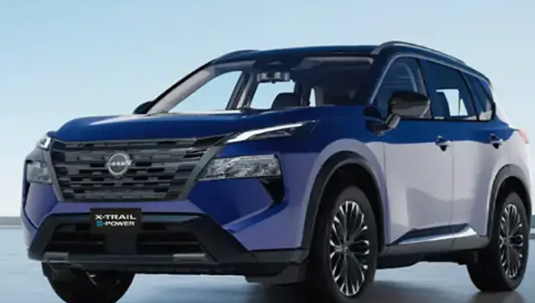
Choosing between the Nissan X-Trail vs Qashqai sounds easy until we actually start comparing them. They share the same badge, similar styling cues, modern hybrid technology, and plenty of Nissan DNA, yet they serve noticeably different buyers.
Think of the Qashqai as the lighter backpack we grab for a weekend in the city. The X-Trail is the larger suitcase we take when the whole family is coming along.
The Nissan Qashqai is smaller, easier to maneuver, generally cheaper to run, and especially well suited to urban driving and smaller families. The Nissan X-Trail, meanwhile, gives us considerably more road presence, additional passenger flexibility, available all-wheel drive, and, depending on the version and market, space for up to seven occupants.
So which one should we buy?
For many drivers, the Qashqai is actually the smarter choice. But if space, family practicality, and versatility matter more than compact dimensions, the X-Trail can justify its larger footprint and higher price.
Let's break down the differences.
Content in this publication
- Nissan X-Trail vs Qashqai at a Glance
- What Is the Main Difference Between Nissan Qashqai and X-Trail?
- Nissan X-Trail vs Qashqai Exterior Size
- Nissan X-Trail vs Qashqai Interior Space
- Nissan Qashqai vs X-Trail Seating Capacity
- Nissan X-Trail vs Qashqai Boot Space
- Nissan X-Trail vs Qashqai Engine Options
- What Is Nissan e-POWER?
- Nissan X-Trail vs Qashqai Fuel Economy
- Qashqai vs X-Trail Driving Experience
- Nissan X-Trail e-4ORCE vs Qashqai
- Comfort and Ride Quality
- Technology and Infotainment
- Nissan X-Trail vs Qashqai Safety
- Nissan X-Trail vs Qashqai Towing Capacity
- Which Is Cheaper to Own?
- Nissan Qashqai vs X-Trail Reliability
- Which Is Better for a Family?
- Which Is Better for Couples?
- Which Is Better for Long Road Trips?
- Which Is Better for Older Drivers?
- Should You Upgrade From Qashqai to X-Trail?
- Nissan X-Trail vs Qashqai: Which Should You Buy?
- Final Verdict
- Frequently Asked Questions
Nissan X-Trail vs Qashqai at a Glance
Although these two SUVs sit relatively close together in Nissan's range, their personalities are quite different.
| Feature | Nissan Qashqai | Nissan X-Trail |
|---|---|---|
| Vehicle type | Compact/midsize crossover | Larger family SUV |
| Seating | 5 seats | 5 or up to 7 in selected versions |
| UK overall length | 4,425 mm | 4,690 mm |
| UK wheelbase | 2,665 mm | 2,705 mm |
| Hybrid technology | Mild hybrid/e-POWER depending on version | e-POWER |
| All-wheel drive | Generally front-wheel drive on current UK e-POWER | e-4ORCE available |
| Best suited to | Cities, couples, small families | Families, road trips, heavier-duty use |
| Driving feel | Lighter and easier to maneuver | More substantial and planted |
| Running costs | Generally lower | Generally higher |
| Interior flexibility | Good | Better |
Current UK specifications illustrate the size difference particularly well. The Qashqai measures 4,425 mm long, while the X-Trail reaches 4,690 mm, making the X-Trail roughly 265 mm longer.
That might not sound enormous on paper, but we certainly notice it when loading luggage, carrying rear passengers, squeezing into parking spaces, or maneuvering through tight city streets.
What Is the Main Difference Between Nissan Qashqai and X-Trail?
The simplest answer is size and purpose.
The Qashqai is designed primarily as an everyday crossover. It gives us the elevated driving position people love about SUVs without feeling excessively bulky.
The X-Trail goes one step further.
It is aimed more directly at families who regularly carry passengers, luggage, sports equipment, pets, child seats, or combinations of all five. Nissan itself positions the Qashqai as its urban crossover and the X-Trail as a larger family-oriented model, with the latter available as a five- to seven-seat vehicle.
That distinction matters because buying the larger SUV simply because it looks more impressive can mean spending extra money for space we rarely use.
Qashqai Is the More Compact Choice
The Qashqai's smaller footprint is one of its greatest strengths.
At 4,425 mm long and 1,835 mm wide excluding mirrors in current UK specification, it remains relatively manageable for a modern SUV.
This becomes important when we regularly drive through narrow streets, underground parking garages, school pickup zones, or crowded supermarket car parks.
X-Trail Is the More Family-Oriented Choice
At 4,690 mm long and around 1,725 mm high in current UK specification, the X-Trail occupies noticeably more physical space.
The upside is obvious: it offers the kind of passenger and cargo versatility that larger families appreciate.
The X-Trail is not simply a stretched Qashqai. It feels like a more substantial SUV built around broader family requirements.
Nissan X-Trail vs Qashqai Exterior Size
Place these vehicles side by side and their family resemblance is obvious, but the X-Trail carries considerably more visual weight.
Its taller body, greater length, stronger shoulders, and more upright proportions give it a traditional SUV character.
The Qashqai looks leaner.
That can actually make the smaller Nissan look slightly more athletic, particularly in sportier trim levels.
Which Is Easier to Park?
The Qashqai wins.
We have less metal to position between parking lines, and its shorter body becomes particularly helpful when parallel parking.
Modern cameras and parking sensors reduce the difference, but physics still matters. No camera can make a vehicle 265 mm shorter.
Anyone living in a crowded city may appreciate that fact every single day.
Which Has More Road Presence?
The X-Trail.
Its larger dimensions make it feel more substantial, and its height gives us a stronger traditional-SUV stance.
For buyers who want something that visually feels like a family flagship rather than a crossover, the X-Trail has the advantage.
Nissan X-Trail vs Qashqai Interior Space
This is where the comparison starts leaning heavily toward the X-Trail.
Both vehicles provide comfortable front seating, modern dashboards, digital displays on higher trims, sensible storage, and a relatively airy cabin.
But the larger X-Trail simply has more room to work with.
Front Seat Space
Most drivers will be comfortable in either Nissan.
The Qashqai does not feel cramped. In fact, one reason it has been so successful is that it packages its cabin cleverly enough to feel larger inside than its footprint suggests.
The X-Trail, however, gives us that additional sensation of width and openness.
If two larger adults regularly occupy the front seats, the difference becomes easier to appreciate.
Rear Passenger Room
The X-Trail becomes increasingly compelling if adults regularly sit in the second row.
Its larger body allows Nissan to create a more family-friendly rear environment, while wider-opening rear doors can also make life easier when installing child seats.
The Qashqai remains perfectly suitable for a household with one or two children, but once we start carrying teenagers or adults regularly, extra space quickly becomes valuable.
For Child Seats, Bigger Really Can Be Better
Parents know that published legroom measurements tell only half the story.
A rear-facing child seat can turn a seemingly spacious vehicle into a puzzle worthy of an engineering degree.
The additional cabin length of the X-Trail gives families more breathing room when fitting bulky child seats without forcing the front passengers too far forward.
Nissan Qashqai vs X-Trail Seating Capacity
This could settle the entire decision.
The Qashqai is fundamentally a five-seat vehicle.
The X-Trail can be configured with up to seven seats on compatible versions and markets. Nissan's own current material describes the X-Trail e-POWER as an available five- to seven-seater.
For a family that genuinely needs six or seven seats, the Qashqai is immediately eliminated.
How Useful Is the X-Trail Third Row?
We should keep expectations realistic.
The X-Trail is not a full-size SUV or minivan. Its third row is best thought of as occasional extra seating rather than luxury accommodation for tall adults.
Children will normally find it far more comfortable than six-foot passengers.
Still, occasional third-row seating can be incredibly useful. Grandparents visiting? Children's friends coming home from school? Extra passengers during a vacation?
Suddenly those two folding seats feel like money well spent.
Nissan X-Trail vs Qashqai Boot Space
Cargo capacity matters almost as much as passenger space in this class.
The Qashqai performs well for its dimensions. Nissan currently quotes up to 504 litres under one measurement configuration and 1,447 litres with the rear seats folded, although actual capacity differs by drivetrain and equipment.
That is plenty for weekly groceries, several suitcases, or the normal chaos of family life.
The X-Trail, however, offers greater cargo flexibility because of its larger overall body.
Which Is Better for Family Holidays?
The X-Trail.
You may be interested in reading Nissan X-Trail vs Mazda CX-5: Which SUV Is Better?
Once we start packing suitcases, pushchairs, sports gear, children's bags, food, jackets, and the mysterious pile of things families somehow collect before every journey, additional cargo space becomes priceless.
The Qashqai can certainly handle holidays.
The X-Trail simply handles them with less Tetris.
Nissan X-Trail vs Qashqai Engine Options
Powertrain availability varies considerably between countries, but Nissan increasingly centers both models around electrification.
The Qashqai has been offered with mild-hybrid petrol engines as well as Nissan's e-POWER system.
Current Nissan UK information lists Qashqai mild-hybrid and e-POWER options, while the X-Trail is marketed there with e-POWER technology.
Understanding e-POWER is important because it behaves differently from an ordinary hybrid.
What Is Nissan e-POWER?
In Nissan's e-POWER system, the wheels are driven by an electric motor.
A petrol engine generates electricity for the battery and electric motor rather than mechanically driving the wheels in the traditional way. Regenerative braking can also recover energy.
Nissan describes the system as delivering electric-motor propulsion without requiring the driver to plug the vehicle in.
That creates a driving experience that feels surprisingly EV-like around town.
Acceleration is smooth.
Torque arrives quickly.
There is no conventional multi-speed automatic gearbox constantly hunting between ratios.
Yet we simply refill the petrol tank instead of plugging into a charger.
Qashqai e-POWER Performance
The current UK Qashqai e-POWER produces 190 PS in standard configuration, with Nissan listing up to 205 PS in Sport Mode for its latest system. Nissan quotes 0-62 mph in approximately 7.9 seconds, or 7.6 seconds under the Sport Mode figure shown in its current specification information.
That makes the Qashqai feel brisk enough for everyday driving without pretending to be a performance SUV.
X-Trail e-POWER Performance
Current UK X-Trail specifications show the front-wheel-drive e-POWER producing 204 PS, while the e-4ORCE all-wheel-drive version produces up to 213 PS. Nissan quotes approximately 8.0 seconds from 0-62 mph for the 2WD version and around 7.0 seconds for the e-4ORCE specification shown in its current technical data.
Despite being larger and heavier, the X-Trail therefore does not feel underpowered.
Nissan X-Trail vs Qashqai Fuel Economy
The Qashqai generally wins this category.
Why?
It is smaller, lighter, and requires less energy to move.
Current UK figures for the newest Qashqai e-POWER reach approximately 62.8-64.2 mpg under WLTP testing, according to Nissan.
By comparison, one current X-Trail 2WD e-POWER UK specification lists 49.6 mpg combined.
Real-world consumption will vary significantly according to speed, temperature, traffic, terrain, wheels, payload, and driving style, so we should treat official numbers as comparative laboratory figures rather than promises.
Still, the underlying conclusion is straightforward.
If fuel economy is one of our biggest priorities, the Qashqai is likely to cost less to run.
Qashqai vs X-Trail Driving Experience
Here's where bigger does not necessarily mean better.
On crowded roads, the Qashqai feels lighter on its feet.
It changes direction with less apparent mass and fits naturally into urban traffic. If most of our driving consists of commuting, parking, and short trips, that matters far more than having a larger vehicle.
The X-Trail takes a calmer approach.
Its extra size gives it a more substantial sensation on motorways, while the higher seating position and larger body can make longer journeys feel relaxed.
Which Is Better in the City?
The Qashqai.
We get excellent visibility and SUV-style seating without dragging around unnecessary length.
For dense urban environments, it hits a sweet spot.
Which Is Better on the Highway?
The X-Trail can feel more settled and substantial, especially when carrying several passengers.
That does not mean the Qashqai is uncomfortable on long trips. Far from it.
But if cross-country family travel forms a major part of our routine, the X-Trail's larger cabin and additional versatility become meaningful advantages.
Nissan X-Trail e-4ORCE vs Qashqai
One of the X-Trail's most interesting features is Nissan's e-4ORCE electric all-wheel-drive system.
Current Nissan material lists e-4ORCE availability on the X-Trail and identifies it as the AWD option associated with the model.
Rather than relying on a traditional mechanical AWD setup, e-4ORCE uses electric motor control to manage torque delivery.
The current UK e-4ORCE X-Trail combines a front electric motor rated at 204 PS with a rear electric motor rated at 136 PS, while total system output is listed at 213 PS.
Do We Actually Need AWD?
Probably not if we spend 99 percent of our life driving on dry paved roads.
But AWD becomes attractive for drivers who regularly encounter snow, wet rural roads, steep driveways, loose surfaces, or outdoor recreational environments.
For those buyers, the X-Trail opens possibilities the Qashqai is less focused on providing.
Comfort and Ride Quality
Both vehicles prioritize comfort over aggressive handling.
That is appropriate. Nobody buys one of these because they want to attack a racetrack on Sunday morning.
The Qashqai's smaller body can make it feel a little more agile, while the X-Trail tends to deliver a more mature, substantial sensation.
Wheel size matters too.
Large alloy wheels may look fantastic on a configurator screen, but smaller wheels with taller tyre sidewalls frequently produce a more forgiving ride over potholes and broken surfaces.
Before buying either SUV, we would test-drive the exact wheel and trim combination we intend to own.
Technology and Infotainment
Technology levels depend heavily on trim, but both models can provide the kinds of features buyers now expect from a modern family SUV: large central displays, smartphone connectivity, navigation on compatible specifications, digital driver information, surround-view cameras, driver-assistance technology, and connected services.
The experience is broadly similar enough that technology alone probably should not decide this comparison.
Instead, we would concentrate on which features are standard in the exact trim available locally.
Sometimes moving from one trim level to another makes a bigger difference than moving from Qashqai to X-Trail.
Nissan X-Trail vs Qashqai Safety
Both vehicles belong to a generation of Nissan products developed around increasingly sophisticated driver-assistance systems.
Depending on specification, features may include automatic emergency braking, blind-spot monitoring, adaptive cruise assistance, lane-support functions, parking cameras, traffic-sign recognition, and other electronic aids.
We should remember that availability varies between trim levels and countries.
You may be interested in readingNissan X-Trail vs Mazda CX-5: Which SUV Is Better?You may be interested in reading
Nissan X-Trail or Similar: Which SUV Should We Choose?Safety equipment is one area where checking the exact build sheet is far more valuable than relying on a generic model comparison.
Nissan X-Trail vs Qashqai Towing Capacity
Towing figures vary significantly according to engine, transmission, drivetrain, and market.
Current UK Qashqai technical information lists braked trailer limits ranging from 750 kg to 1,800 kg across different versions.
Consequently, we should never assume that every Qashqai—or every X-Trail—can tow the same amount.
For anyone buying specifically to tow a caravan, boat, or trailer, check the legal towing figure of the exact engine and trim before signing the contract.
The X-Trail's larger dimensions and available AWD can make it conceptually better suited to adventure-oriented use, but the actual homologated towing rating remains what matters.
Which Is Cheaper to Own?
The Qashqai should generally be easier on the wallet.
A smaller vehicle usually means a lower purchase price, potentially lower fuel consumption, and sometimes lower tyre and insurance costs.
The X-Trail asks us to pay for additional capability.
That extra money is worthwhile when we regularly use the larger cabin, optional third row, AWD, or increased versatility.
If those features remain unused, however, we are essentially paying extra to transport empty space.
Nissan Qashqai vs X-Trail Reliability
Because the two vehicles share broader Nissan technology and, in some markets, related powertrain concepts, neither comparison should be reduced to saying one model is automatically reliable and the other unreliable.
Reliability depends on model year, engine, drivetrain, maintenance history, climate, mileage, and how the vehicle has been treated.
For used examples, a documented service history is often more important than a small difference between model reputations.
e-POWER systems also deserve specialist inspection once vehicles become older, particularly because they combine petrol-engine components, high-voltage electronics, batteries, and electric drive motors.
Which Is Better for a Family?
For one or two children, the Qashqai may be all the SUV we need.
It gives us five seats, practical cargo space, comfortable road manners, and compact dimensions.
Once the family becomes larger—or once hobbies start consuming half the boot—the equation changes.
The X-Trail is better suited to households carrying several passengers regularly, especially where third-row seating might occasionally be needed.
Our Family Rule of Thumb
If we can comfortably fit everyone and everything into the Qashqai, we would choose it.
If we're already wondering whether the Qashqai will be big enough, we would probably buy the X-Trail.
Vehicles rarely become more spacious after we buy them.
Which Is Better for Couples?
Qashqai.
Unless we regularly transport outdoor equipment, large dogs, bicycles, or several relatives, buying an X-Trail may be unnecessary.
The Qashqai gives us most of the SUV experience in a package that is easier to park and cheaper to operate.
It is the more rational everyday vehicle.
Which Is Better for Long Road Trips?
The X-Trail gets our vote when several people are traveling.
The additional cabin room can make a huge difference after three or four hours behind the wheel.
But with only two occupants, the Qashqai can be equally appealing because it is efficient, comfortable, and still offers respectable luggage space.
Which Is Better for Older Drivers?
This comes down to priorities.
Both provide the elevated seating position that often makes getting in and out easier than in a low passenger car.
The Qashqai's smaller size is easier to judge and park.
The X-Trail can provide more interior space and a greater feeling of openness.
We would test both back-to-back, paying particular attention to seat height, visibility over the bonnet, door opening, parking-camera clarity, and ease of reaching the controls.
Should You Upgrade From Qashqai to X-Trail?
Only if the additional capability solves a real problem.
We would choose the X-Trail instead of the Qashqai when we genuinely need more passenger flexibility, regularly carry large amounts of luggage, want available AWD, need occasional seven-seat capability, or simply prefer the feeling of a larger SUV.
Otherwise, the Qashqai arguably offers better value.
This is one of those rare comparisons where the more expensive vehicle is not automatically the better choice.
The better vehicle is the one whose dimensions match our life.
Nissan X-Trail vs Qashqai: Which Should You Buy?
For most urban drivers, couples, commuters, and small families, we would choose the Nissan Qashqai.
It offers the best balance of space, efficiency, maneuverability, technology, and everyday usability.
It is large enough to feel like a proper SUV but compact enough that we don't curse every parking garage we enter.
The Nissan X-Trail, however, becomes the stronger choice when our lifestyle demands more.
Choose the X-Trail if passenger space, occasional seven-seat capability, family road trips, additional cargo flexibility, or available e-4ORCE AWD matter more than compact dimensions.
In simple terms, the Qashqai is the smarter everyday crossover.
The X-Trail is the more capable family SUV.
Final Verdict
The Nissan X-Trail vs Qashqai debate does not have one universal winner because these SUVs are designed for different stages of life.
The Qashqai feels like the sweet spot.
It is easy to drive, easier to park, potentially more economical, and spacious enough for most households. Current e-POWER technology also gives it a smooth electric-motor driving sensation without requiring external charging.
The X-Trail asks us to accept more size, more weight, and generally greater expense in exchange for something valuable: flexibility.
It gives growing families more room to breathe, offers up to seven-seat configurations in relevant markets, and adds the availability of Nissan's e-4ORCE all-wheel-drive technology.
So our decision is surprisingly simple.
Buy the Qashqai if five seats are enough. Buy the X-Trail if you regularly need the space and capability that the Qashqai cannot provide.
Going bigger just because we can rarely makes financial sense.
Going bigger because our family actually needs it absolutely does.
Frequently Asked Questions
Is the Nissan X-Trail bigger than the Qashqai?
Yes. Current UK figures list the X-Trail at 4,690 mm long compared with 4,425 mm for the Qashqai, making the X-Trail approximately 265 mm longer. The X-Trail also has a slightly longer wheelbase and a taller SUV profile.
Does the Nissan Qashqai have seven seats?
No. The current Qashqai is essentially a five-seat crossover. Buyers who need additional seating should look toward the X-Trail, which is available in five- and seven-seat configurations depending on version and market.
Is the Nissan Qashqai more economical than the X-Trail?
Generally, yes. The Qashqai is smaller and lighter, and current UK e-POWER figures illustrate the advantage. Nissan quotes up to 64.2 mpg for the newest Qashqai e-POWER, while one current X-Trail 2WD e-POWER specification is listed at 49.6 mpg combined. Actual economy will vary in real-world driving.
You may be interested in readingNissan X-Trail vs Mazda CX-5: Which SUV Is Better?You may be interested in reading
Nissan X-Trail or Similar: Which SUV Should We Choose?You may be interested in reading
Nissan X-Trail vs Skoda Kodiaq: Which Family SUV Wins?Which is better, Nissan X-Trail or Qashqai?
The Qashqai is better for drivers who want efficiency, easier parking, five-seat practicality, and lower everyday running costs. The X-Trail is better for larger families, buyers who want optional third-row seating, and drivers who value extra cargo room or available e-4ORCE all-wheel drive.
Is the X-Trail worth buying over the Qashqai?
Yes, but only if we need its extra capability. Families that regularly carry more passengers or equipment can easily justify the X-Trail. If five seats and the Qashqai's cargo space are sufficient, the smaller Nissan is usually the more economical and convenient choice.
If you want to know other articles similar to Nissan X-Trail vs Qashqai: Which Nissan SUV Is Better? you can visit the category Models.
Honda Passport vs Toyota 4Runner: Which SUV Is Better?
Honda Passport vs Ford Bronco: Which SUV Is Better?
Honda Passport vs Ford Explorer: Which SUV Is Better?
Honda Passport or Pilot: Which SUV Is Better?
Honda Passport vs Jeep Grand Cherokee: Which SUV Is Better?
Honda Passport vs Nissan Pathfinder: Which SUV Is Better?
Leave a Reply
More content of your interest