
Nissan X-Trail vs Skoda Kodiaq: Which Family SUV Wins?

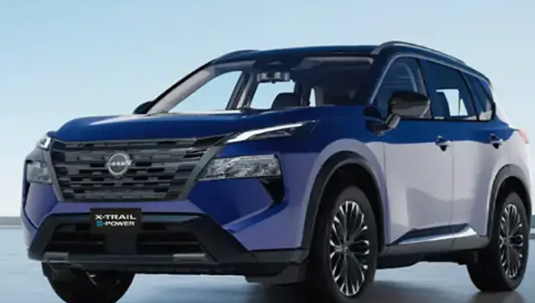
Choosing between the Nissan X-Trail vs Skoda Kodiaq is a little like choosing between two excellent family homes. One feels modern, clever, and surprisingly easy to live with. The other gives you more room to stretch out and seems designed by people who have actually tried packing children, suitcases, shopping bags, and half the contents of a garage into an SUV.
Both are serious family vehicles. Both can offer seven seats in selected versions. Both combine everyday comfort with enough SUV toughness to deal with bad weather, country roads, and the occasional family adventure. Yet they approach the job quite differently.
The Nissan X-Trail leans heavily into electrification. Its distinctive e-POWER system delivers an electric-car-like driving sensation without requiring owners to plug it in, while available e-4ORCE all-wheel drive adds extra confidence.
The Skoda Kodiaq takes a more traditional route. It concentrates on exceptional interior space, conventional petrol and diesel engines in many markets, available plug-in hybrid technology, and the kind of practicality that has become a Skoda trademark.
So which one deserves space on your driveway? Let's compare them where it really matters.
Content in this publication
- Nissan X-Trail vs Skoda Kodiaq at a Glance
- Exterior Design: Rugged Nissan or Sophisticated Skoda?
- Size and Dimensions
- Interior Quality and Cabin Design
- Passenger Space
- Seven-Seat Practicality
- Boot Space: Kodiaq Flexes Its Muscles
- Nissan e-POWER Explained
- Skoda Kodiaq Engines
- Performance and Driving Experience
- Comfort and Ride Quality
- Handling and Steering
- All-Wheel Drive and Bad-Weather Ability
- Fuel Economy and Running Costs
- Technology and Infotainment
- Safety and Driver Assistance
- Towing Ability
- Practicality for Families
- Reliability and Long-Term Ownership
- Nissan X-Trail vs Skoda Kodiaq for City Driving
- Nissan X-Trail vs Skoda Kodiaq for Long Trips
- Which One Is Better for a Large Family?
- Which One Is Better for a Smaller Family?
- Nissan X-Trail vs Skoda Kodiaq: Pros and Cons
- Which Should We Buy?
- Final Verdict
- Frequently Asked Questions
Nissan X-Trail vs Skoda Kodiaq at a Glance
Before diving into the details, here is the basic personality of each SUV.
| Category | Nissan X-Trail | Skoda Kodiaq |
|---|---|---|
| Main strength | Smooth electrified driving | Outstanding practicality |
| Seating | 5 or 7 depending on version | 5 or 7 depending on version |
| Character | Refined, high-tech, family-friendly | Spacious, mature, highly practical |
| Hybrid approach | e-POWER self-charging system | Mild-hybrid/PHEV depending on market |
| AWD availability | e-4ORCE | Selected 4x4 models |
| Best suited to | Urban and mixed family driving | Large families and long-distance use |
| Interior philosophy | Modern and technology-focused | Spacious and functional |
| Cargo advantage | Good | Excellent |
Neither vehicle runs away with the competition immediately. The better SUV depends on what we expect it to do every day.
Exterior Design: Rugged Nissan or Sophisticated Skoda?
Appearance may not determine how comfortably seven people fit inside, but let's not pretend it does not matter. We are going to see this thing parked outside our house every morning.
The X-Trail looks deliberately adventurous. Nissan gives it squared-off proportions, a prominent front end, defined wheel arches, and enough visual muscle to separate it from softer crossovers. It does not look like an off-roader in hiking boots, but it certainly wants us to think it could handle a muddy campsite.
The Kodiaq takes a cleaner and more restrained approach. The latest generation looks sophisticated rather than aggressive. Its long body and controlled surfaces give it an almost premium appearance, especially in higher specifications.
Which SUV Looks Better?
That depends entirely on taste.
If we want something that visually communicates adventure and SUV toughness, the X-Trail probably has the stronger personality.
If our preference is for understated European styling, the Kodiaq has an elegant maturity that ages well.
Neither is trying too hard, which is refreshing in a segment where enormous grilles and unnecessary body creases sometimes seem to reproduce overnight.
Size and Dimensions
Physical size matters enormously in this comparison because these vehicles are often bought specifically for family duties.
The Nissan X-Trail measures approximately 4,690 mm long, 1,840 mm wide excluding mirrors, and 1,725 mm high in current UK specification. Nissan quotes a 2,705 mm wheelbase.
The Kodiaq occupies the larger end of the family-SUV spectrum. That extra footprint is reflected particularly strongly in its passenger and cargo accommodation.
The Difference Behind the Numbers
A larger SUV is not automatically a better SUV.
Extra body length brings advantages when carrying passengers and luggage, but it can also make tight car parks, narrow streets, and urban manoeuvres more demanding.
That distinction helps explain the personalities of these vehicles. The X-Trail feels like a family SUV that remains relatively manageable in daily urban life. The Kodiaq feels more like a genuinely large family machine that prioritises usable space.
Urban Drivers May Prefer the X-Trail
For families spending much of their time navigating crowded cities, underground parking structures, school entrances, and narrow residential roads, slightly more compact dimensions can be valuable.
A few centimetres sound insignificant until we are trying to squeeze between two badly parked cars while somebody behind us has already decided the horn is the solution.
Interior Quality and Cabin Design
Step inside either SUV and the days of cheap, utilitarian family crossovers feel quite distant.
The Nissan X-Trail's cabin has a modern visual character with large digital displays available on higher trims. Current versions can combine a 12.3-inch digital instrument display, 12.3-inch central NissanConnect screen, and 10.8-inch head-up display.
The Kodiaq's interior feels similarly contemporary but follows Skoda's typical philosophy: technology should make life easier rather than simply decorate the dashboard.
Nissan X-Trail Interior
The X-Trail creates a welcoming driving environment. Controls are generally positioned where we expect them, visibility is good for a vehicle of this type, and the high seating position gives drivers that reassuring SUV perspective.
Materials in frequently touched areas feel suitably upmarket in well-equipped versions.
It strikes a useful balance. Nissan has embraced digital displays without completely turning the cabin into a touchscreen-controlled laboratory.
Skoda Kodiaq Interior
The Kodiaq's cabin feels spacious almost immediately.
There is a sense that practicality shaped the vehicle before somebody started adding decorative details. Storage areas are generous, passenger space is excellent, and small practical touches make family ownership easier.
It may not always deliver the theatrical technology experience of some rivals, but that is arguably part of the appeal.
Everything seems designed to work.
Cabin Winner: A Matter of Priorities
The X-Trail may appeal more strongly if we enjoy technology and modern presentation.
The Kodiaq gets our vote for sheer usability and the feeling of physical space.
Passenger Space
This is where the Nissan X-Trail vs Skoda Kodiaq comparison starts becoming more decisive.
Both are marketed toward families, but the Kodiaq's larger dimensions allow it to use space particularly effectively.
The first two rows in either SUV should satisfy most families comfortably. Adults can sit in the back without feeling punished for failing to call shotgun quickly enough.
The third row, however, requires a more nuanced discussion.
Seven-Seat Practicality
Both vehicles can be configured with seven seats in applicable versions and markets.
That does not mean either should be viewed as a full-size seven-passenger vehicle in the same way as a large MPV.
Nissan X-Trail Third Row
Nissan quotes 866 mm of third-row headroom for the X-Trail.
The rearmost seats are useful for children and occasional passengers, but adults will probably view them as short-trip accommodation rather than somewhere they want to spend half a day.
Think of them as emergency bedrooms rather than the master suite.
For a household with five regular occupants that occasionally needs six or seven seats, that arrangement can work brilliantly.
Skoda Kodiaq Third Row
The Kodiaq's larger body gives it a useful advantage when carrying larger families. The third row still cannot perform miracles, but it generally fits the seven-seat role more naturally.
If we expect to use every seating position frequently, the Skoda deserves particularly serious consideration.
Which Is Better for Seven People?
For occasional seven-seat use, either can work.
For frequent use of all three rows, we would favour the Skoda Kodiaq.
Boot Space: Kodiaq Flexes Its Muscles
Cargo capacity can make or break a family SUV.
On current UK figures, Nissan quotes up to 575 litres of luggage space for the five-seat X-Trail, with up to roughly 1,298–1,396 litres available when seats are folded depending on configuration.
Those are useful figures.
Then the Kodiaq walks into the room.
Skoda quotes 910 litres for the five-seat Kodiaq with the seats up and up to 2,105 litres with them folded. The seven-seat version provides 340 litres with all seats in use and as much as 2,035 litres with the rear rows folded. The five-seat plug-in hybrid has 745 litres.
That is a major advantage.
Why Boot Space Matters More Than We Think
A large boot changes everyday ownership.
We can throw a pushchair inside without mentally solving a three-dimensional puzzle. Holiday luggage becomes easier to manage. Flat-pack furniture stops looking like an engineering exam.
If cargo space sits near the top of our shopping list, the Kodiaq is difficult to beat.
Nissan e-POWER Explained
The Nissan X-Trail has one of the most interesting powertrain systems in this segment.
With e-POWER, the petrol engine and electric drive system work differently from the conventional hybrids many buyers know.
The wheels are driven electrically, creating a smoother, more immediate acceleration sensation than we normally associate with a petrol-powered SUV. The petrol engine effectively supports the electrical system rather than providing the conventional direct driving feel we might expect.
That means we gain some characteristics people like about EVs without needing to plug the vehicle into a charger.
How Does e-POWER Feel on the Road?
Around town, it suits the X-Trail exceptionally well.
Acceleration feels immediate and progressive. Stop-start traffic is less irritating. The powertrain avoids some of the disconnected engine-rev sensation associated with certain traditional hybrid systems.
Nissan currently lists a 204 hp front-wheel-drive e-POWER configuration in its UK range, while e-4ORCE versions add electrified all-wheel-drive capability.
The system makes the X-Trail feel different rather than merely efficient.
Skoda Kodiaq Engines
The Kodiaq offers a broader powertrain philosophy.
You may be interested in reading Nissan X-Trail and Rogue: Are They Really the Same SUV?
Depending on market and specification, buyers may find petrol, diesel, mild-hybrid, plug-in hybrid, and 4x4 configurations.
For example, Skoda's UK Kodiaq range has included 2.0-litre TSI petrol and 2.0-litre TDI diesel four-wheel-drive models as well as a five-seat plug-in hybrid.
That breadth is valuable.
Diesel Still Makes Sense for Some Drivers
Drivers covering large motorway distances may still find a diesel Kodiaq particularly appealing where such versions are sold.
Diesel engines tend to suit steady high-mileage driving and towing better than many small petrol engines.
For somebody doing 30,000 motorway miles a year, what makes sense can look very different from the ideal powertrain for a driver doing short trips around town.
Plug-In Hybrid Kodiaq
A plug-in hybrid can work brilliantly if we actually plug it in.
That last part matters.
A PHEV used intelligently can cover many everyday trips electrically while keeping a combustion engine available for longer journeys.
A PHEV that is never charged becomes somewhat like carrying gym equipment everywhere while never exercising.
Performance and Driving Experience
Neither SUV exists to set lap records.
That is good.
Family SUVs benefit more from smooth responses, predictable handling, good visibility, quiet cruising, and progressive braking than they do from aggressive suspension tuning.
X-Trail on the Road
The X-Trail feels particularly natural in urban and suburban environments.
The electrically driven response of e-POWER contributes to smooth acceleration, while available e-4ORCE can manage torque across the driven wheels to improve stability and traction.
The overall experience feels polished and easy.
This is a vehicle we can drive for an hour without thinking much about the process, which is often the highest compliment we can give a family car.
Kodiaq on the Road
The Kodiaq feels substantial.
Its road manners suit long journeys especially well. It settles into motorway speeds confidently and gives passengers the impression that they are travelling in something larger and more mature than the average crossover.
Despite its dimensions, it does not feel like a bus.
Which Is More Enjoyable?
The X-Trail's electrified character makes it more distinctive.
The Kodiaq feels more conventional but exceptionally competent.
For city driving, we lean toward Nissan.
For motorway touring, we lean toward Skoda.
Comfort and Ride Quality
Comfort is one of those qualities we barely notice when it is good and complain about constantly when it is bad.
Thankfully, both vehicles understand their mission.
The X-Trail's suspension does a respectable job of isolating families from broken surfaces without making the vehicle feel uncontrolled.
The Kodiaq has the longer-distance personality we expect from a large European family SUV. Depending on wheel size and suspension specification, it can be a very comfortable cruiser.
Beware of Giant Alloy Wheels
Large wheels look fantastic in brochures.
Physics is less impressed.
Lower-profile tyres generally give suspension systems less rubber through which to absorb sharp impacts. If comfort is our priority, choosing the biggest available wheels purely for appearance may be counterproductive.
The best-looking configuration is not necessarily the one we would choose for a six-hour family road trip.
Handling and Steering
The X-Trail feels relatively easy to place on the road. Steering is light enough for urban manoeuvring and sufficiently controlled at higher speeds.
The Kodiaq's additional size is noticeable, but the chassis remains composed.
Neither wants to impersonate a sports car, and both are better for resisting the temptation.
Which Feels Smaller to Drive?
The Nissan.
That can become surprisingly important if our daily routine includes city centres or compact parking spaces.
The Skoda rewards us with additional interior room, but we cannot magically hide the bodywork when parking.
All-Wheel Drive and Bad-Weather Ability
The X-Trail can be equipped with Nissan's e-4ORCE electrified all-wheel-drive system. Nissan positions the system around improved traction, smoothness, and control in changing conditions.
Certain Kodiaq engines are also offered with conventional 4x4 drivetrains.
Both therefore make sense for drivers who face snow, gravel, wet rural roads, or slippery surfaces.
Are They Real Off-Roaders?
Not really, and that is not an insult.
They are family SUVs designed primarily for roads.
They can venture beyond perfect asphalt far more comfortably than a low hatchback, but if our weekend involves serious rock crawling, deep mud, and trails requiring recovery equipment, we are shopping in the wrong category.
For normal family adventures, either provides plenty of capability.
Fuel Economy and Running Costs
Fuel consumption cannot be compared with one universal figure because engine choices, specifications, driving styles, weather, wheels, and regional testing procedures all influence results.
The more useful question is which powertrain matches our driving.
The X-Trail e-POWER is particularly attractive for drivers who spend significant time in mixed or urban conditions and want electrified driving without charging.
The Kodiaq can make more sense for drivers who want to choose among different conventional and electrified powertrains.
Consider Your Mileage Before Choosing
A simple approach helps:
- Mostly urban driving: X-Trail e-POWER is particularly appealing.
- Mixed family use: either vehicle works well.
- Frequent long motorway journeys: a suitable Kodiaq engine may have the advantage.
- Home charging available: the Kodiaq PHEV becomes more interesting.
- Regular seven-seat use: Kodiaq deserves the stronger look.
- Need AWD with electrified responses: X-Trail e-4ORCE is compelling.
- Maximum luggage space: Kodiaq wins comfortably.
The cheapest vehicle to run on paper is not necessarily the cheapest one for our actual life.
Technology and Infotainment
Modern family cars are increasingly judged by their screens almost as much as their engines.
That makes some sense. We interact with infotainment systems every journey.
The X-Trail offers an impressively technology-rich environment on higher trims. Nissan also offers technologies such as ProPILOT Assist with Navi-Link and an Intelligent Around View Monitor on applicable versions.
The latter is particularly useful in a vehicle this size.
Once we become accustomed to a good 360-degree camera system, parking without one can feel like somebody suddenly removed our mirrors.
Kodiaq Technology
Higher Kodiaq specifications can also be packed with driver assistance and convenience equipment. Available equipment in current UK versions includes technologies such as adaptive cruise control, area-view cameras, lane assistance, head-up display, and automated parking-related functions, depending on trim.
In other words, neither vehicle is technologically outdated.
The final difference often comes down to interface preference and specification.
Safety and Driver Assistance
Family SUVs carry precious cargo, so safety technology deserves more attention than acceleration figures.
Both models can offer extensive active-safety systems, including technology designed to help monitor surrounding traffic, support lane positioning, control cruising distance, and assist parking.
Exact equipment varies significantly by market and trim level.
We therefore recommend checking the specification of the exact vehicle rather than assuming every version includes every advertised feature.
Driver Assistance Is Assistance, Not Autonomy
Technology such as adaptive cruise and lane assistance can reduce workload, especially on long journeys.
It does not turn either SUV into a self-driving vehicle.
The driver remains responsible.
You may be interested in readingNissan X-Trail and Rogue: Are They Really the Same SUV?You may be interested in reading
Nissan X-Trail vs Toyota RAV4: Which SUV Should You Buy?That may sound obvious, but marketing terminology occasionally makes these systems seem more magical than they are.
Towing Ability
The X-Trail can be a useful towing vehicle. Nissan currently quotes up to 1,800 kg braked towing capacity for certain five-seat UK variants and up to 1,650 kg in certain seven-seat configurations.
Kodiaq towing capability varies substantially depending on engine, drivetrain, and specification.
If towing is central to our purchase, the correct approach is not simply asking, “Can a Kodiaq tow more than an X-Trail?”
We need to compare the precise variants.
Choose the Powertrain Around the Trailer
Regular towing changes what matters.
Torque delivery, transmission behaviour, cooling, vehicle weight, allowable tow mass, nose weight, and all-wheel-drive availability suddenly become more important than infotainment screen size.
For frequent heavy towing, suitable 4x4 Kodiaq variants can make a strong case.
For lighter recreational towing combined with everyday family use, the X-Trail remains perfectly relevant.
Practicality for Families
Numbers tell only half the story.
What we really want to know is whether the vehicle makes Tuesday morning easier.
Both provide the elevated seating, wide-opening doors, flexible rear seats, storage areas, and family-friendly versatility expected in this class.
The Kodiaq's huge cargo capacity gives it a meaningful practical advantage, though.
The Kodiaq Is the Packing Champion
Imagine we are heading away for a week with children.
There are suitcases.
Then backpacks.
Then coats.
Then food.
Then a football appears.
Somebody brings three stuffed animals that apparently cannot remain at home.
Suddenly, boot capacity becomes more emotionally important than horsepower.
This is where the Kodiaq shines.
The X-Trail Is Easier to Integrate Into Everyday Life
Not every family needs maximum capacity.
If we carry five people most of the time, occasionally need extra seats, and spend much of our driving in towns or suburbs, the Nissan's blend of manageable proportions and useful interior flexibility may actually be the smarter compromise.
Reliability and Long-Term Ownership
Reliability discussions deserve nuance.
A model name alone does not determine whether an individual vehicle will be trouble-free. Engine choice, transmission, model year, maintenance history, climate, mileage, and previous ownership all matter.
Newer X-Trail and Kodiaq models also contain significantly more electronic and electrified hardware than basic SUVs of the past.
More technology can improve efficiency, comfort, and safety, but it also makes correct maintenance increasingly important.
Buying Used? Service History Matters
For a used example, we would rather buy a properly maintained vehicle with slightly higher mileage than a suspiciously cheap low-mileage example with missing service history.
Check maintenance records, warning lights, tyres, brakes, infotainment operation, electrical equipment, gearbox behaviour, suspension noises, and hybrid-system operation where applicable.
A pre-purchase inspection is inexpensive compared with discovering somebody else's neglected maintenance after handing over the money.
Nissan X-Trail vs Skoda Kodiaq for City Driving
The X-Trail gets our vote.
Its electrified driving character fits stop-start traffic nicely, while its dimensions are slightly easier to manage.
Urban drivers who cannot conveniently charge an EV or PHEV may find e-POWER especially interesting because no external charging routine is required.
It gives some of the smoothness we associate with electric propulsion without asking us to reorganise our life around a charging cable.
Nissan X-Trail vs Skoda Kodiaq for Long Trips
The Kodiaq narrowly wins here.
It feels built for covering large distances with people and luggage aboard.
Its exceptional cargo room, broad engine selection in many markets, and spacious cabin create an excellent road-trip platform.
That said, the Nissan is hardly uncomfortable. The difference is more about emphasis than ability.
Which One Is Better for a Large Family?
The Skoda Kodiaq.
Its superior cargo capacity and strong seven-seat packaging make it the more obvious choice when maximizing space matters.
It feels as though the engineers started with the question, “How much family stuff can we fit?” and worked backwards.
The X-Trail remains an excellent family vehicle, but the Kodiaq simply gives us more room to play with.
Which One Is Better for a Smaller Family?
This is where we might choose the Nissan X-Trail.
A household with one or two children may not need the Kodiaq's enormous carrying ability every day.
The Nissan offers plenty of passenger room, flexible seating, useful luggage capacity, modern technology, and the unusual appeal of e-POWER.
Why carry a bigger box everywhere if we rarely fill it?
Nissan X-Trail vs Skoda Kodiaq: Pros and Cons
The Nissan's greatest strengths are its smooth electrified driving experience, manageable dimensions, modern technology, optional e-4ORCE system, and strong everyday family usability.
Its limitations are equally clear. Cargo capacity cannot match the Kodiaq, the third row is better suited to occasional use, and drivers wanting a broad selection of conventional engine types may find Skoda offers more flexibility.
The Kodiaq counters with exceptional luggage space, excellent family packaging, comfortable long-distance manners, and a broad powertrain portfolio in many markets.
Its main compromises come naturally from being larger. It occupies more road and parking space, and some buyers may simply not need all that capacity.
Which Should We Buy?
After comparing the Nissan X-Trail vs Skoda Kodiaq, there is no universal winner.
There is, however, a very clear decision framework.
Choose the Nissan X-Trail if we value smooth electrified driving, spend plenty of time in towns and suburbs, want occasional seven-seat flexibility, appreciate advanced technology, and prefer something slightly easier to manoeuvre.
Choose the Skoda Kodiaq if maximum family practicality is the priority, we regularly carry lots of luggage, use seven seats more frequently, cover substantial highway mileage, or simply want one of the most spacious SUVs in this class.
Final Verdict
The Nissan X-Trail and Skoda Kodiaq solve the same problem from different angles.
The X-Trail feels like the more innovative all-rounder. Its e-POWER technology gives it a distinctive personality, particularly in urban traffic, while the available e-4ORCE system adds extra all-weather confidence. It is spacious enough for most families without feeling unnecessarily huge.
The Kodiaq feels like the stronger pure family tool. Its cabin and boot space are difficult to ignore. Current UK figures illustrate just how significant the difference can become: Skoda quotes as much as 910 litres behind the seats in the five-seat version, while Nissan quotes up to 575 litres for the five-seat X-Trail.
If we were choosing for a family of four living mainly in an urban area, we would seriously consider the X-Trail e-POWER.
If we had three children, travelled frequently, routinely filled the boot, or needed seven seats on a regular basis, our money would lean toward the Kodiaq.
One is the more agile Swiss Army knife.
The other is the bigger toolbox.
The right one depends on how much equipment our family carries.
Frequently Asked Questions
Is the Skoda Kodiaq bigger than the Nissan X-Trail?
Generally, yes. The Kodiaq sits toward the larger end of the midsize family-SUV segment and uses its size particularly effectively for passengers and luggage. Nissan's current UK X-Trail measures 4,690 mm long, while its more compact overall package can make it easier to use in congested urban areas.
Which has more boot space, Nissan X-Trail or Skoda Kodiaq?
The Kodiaq has the clear advantage. Skoda quotes 910 litres for the current five-seat Kodiaq and 340 litres for the seven-seat model with all seats being used. Nissan quotes up to 575 litres for the five-seat X-Trail. Figures depend on configuration and market.
Is the Nissan X-Trail better than the Skoda Kodiaq for city driving?
We would generally choose the X-Trail for predominantly urban use. Its slightly more manageable dimensions and e-POWER drivetrain suit frequent stop-start journeys particularly well. The Kodiaq remains easy enough to drive, but its extra size delivers greater benefits when passenger and cargo capacity matter more than manoeuvrability.
You may be interested in readingNissan X-Trail and Rogue: Are They Really the Same SUV?You may be interested in reading
Nissan X-Trail vs Toyota RAV4: Which SUV Should You Buy?You may be interested in reading
Nissan X-Trail vs Hyundai Tucson: Which SUV Is Better?Which is better for seven passengers?
The Kodiaq is our preference for frequent seven-passenger use because its larger overall package better supports the needs of bigger families. The X-Trail's optional third row is useful, but we see it primarily as an occasional seating solution, especially when the rearmost occupants are adults.
Should I buy a Nissan X-Trail or Skoda Kodiaq?
Buy the Nissan X-Trail if you want an electrified, technology-rich family SUV that feels comfortable in both cities and on longer journeys. Buy the Skoda Kodiaq if cargo capacity, regular seven-seat use, and maximum family practicality are more important. Both are strong choices, but they excel in different situations.
If you want to know other articles similar to Nissan X-Trail vs Skoda Kodiaq: Which Family SUV Wins? you can visit the category Models.
Volkswagen T-Cross vs Volkswagen T-Roc: Which Is Better?
Hyundai Tucson Weight: Complete Guide to Curb, Gross, and Payload Specs

Honda Passport vs Toyota 4Runner: Which SUV Is Better?
Honda Passport vs Ford Bronco: Which SUV Is Better?
Honda Passport vs Ford Explorer: Which SUV Is Better?
Honda Passport or Pilot: Which SUV Is Better?
Leave a Reply
More content of your interest