

Nissan X-Trail vs Toyota RAV4: Which SUV Should You Buy?

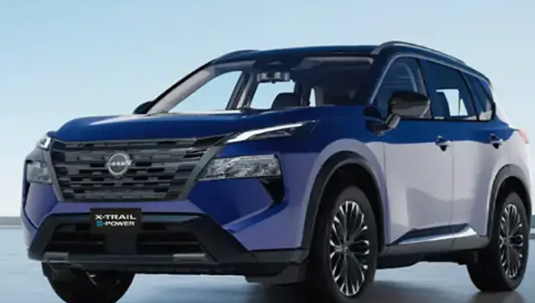
Choosing between the Nissan X-Trail vs Toyota RAV4 is a little like choosing between two excellent hiking boots. Both are comfortable, practical, capable of handling bad weather, and designed to go much farther than the school run. Yet once we look beneath the surface, they approach the family-SUV formula in noticeably different ways.
The Toyota RAV4 has built much of its reputation around efficiency, durability, hybrid technology, and straightforward ownership. The Nissan X-Trail, meanwhile, leans harder into family versatility, available seven-seat practicality, clever electrification, and a slightly more relaxed, comfort-oriented character.
So, which one deserves the space in our driveway?
There is no universal winner. A family carrying five people and camping equipment may reach a completely different conclusion from a couple commuting 50 miles every day. That's exactly why we need to dig deeper than horsepower figures and brochure claims.
In this comprehensive comparison, we'll explore Nissan X-Trail vs Toyota RAV4 reliability, interior space, fuel economy, hybrid systems, performance, comfort, technology, practicality, ownership costs, and overall value to determine which SUV works best for different kinds of buyers.
Content in this publication
- Nissan X-Trail vs Toyota RAV4 at a Glance
- Exterior Design: Rugged RAV4 or Sophisticated X-Trail?
- Interior Design and Cabin Quality
- Passenger Space: Which SUV Is Bigger Inside?
- Nissan X-Trail vs Toyota RAV4 Boot Space
- Nissan X-Trail vs Toyota RAV4 Hybrid Technology
- Fuel Economy: RAV4 vs X-Trail
- Performance and Acceleration
- Driving Experience
- X-Trail e-4ORCE vs RAV4 AWD
- Ride Comfort
- Technology and Infotainment
- Safety and Driver Assistance
- Nissan X-Trail vs Toyota RAV4 Reliability
- Maintenance and Running Costs
- Family Practicality
- Nissan X-Trail vs Toyota RAV4 for Long Trips
- Which Is Better for City Driving?
- Which SUV Is Better for Towing?
- Used Nissan X-Trail vs Used Toyota RAV4
- Nissan X-Trail vs Toyota RAV4: Pros and Cons
- Who Should Buy the Nissan X-Trail?
- Who Should Buy the Toyota RAV4?
- Nissan X-Trail vs Toyota RAV4: Which Is Better?
- Conclusion: Two Excellent SUVs With Different Priorities
- Frequently Asked Questions
Nissan X-Trail vs Toyota RAV4 at a Glance
Before diving into the details, the fundamental difference is surprisingly easy to understand.
The X-Trail tends to behave like the more family-focused SUV. Depending on the market and specification, it can provide up to seven seats, making it especially attractive to parents who occasionally need extra passenger capacity.
The RAV4 traditionally focuses on five-seat practicality while delivering strong hybrid efficiency and an excellent reputation for dependable long-term ownership.
In simple terms:
- Choose the Nissan X-Trail if passenger flexibility, comfort, seven-seat availability, and an EV-like hybrid driving experience matter most.
- Choose the Toyota RAV4 if efficiency, proven hybrid engineering, resale strength, straightforward ownership, and long-term durability are your priorities.
That sounds simple enough, but the details make the decision much more interesting.
Exterior Design: Rugged RAV4 or Sophisticated X-Trail?
Design is subjective, but these SUVs clearly speak different visual languages.
The RAV4 typically embraces a rugged, almost outdoorsy personality. Angular bodywork, pronounced wheel arches, chunky proportions, and squared-off elements make it look ready for a dirt trail even when it spends most of its life sitting outside a supermarket.
The X-Trail looks softer and slightly more sophisticated. It still has enough visual muscle to qualify as a proper family SUV, yet its styling generally appears less aggressive.
Think of the RAV4 as the person who arrives wearing hiking boots.
The X-Trail is wearing comfortable trainers and carrying snacks for everyone.
Which SUV Looks Better?
We would give the RAV4 the edge if rugged styling matters.
For buyers wanting something more restrained and family-friendly, however, the X-Trail arguably has broader appeal.
Neither looks anonymous, and that's important in a segment crowded with increasingly similar crossovers.
Interior Design and Cabin Quality
Step inside and the personalities continue to diverge.
The Nissan X-Trail usually creates an inviting cabin with an emphasis on comfort and technology. Higher specifications can feel surprisingly premium, with large displays, soft-touch surfaces, attractive trim, digital instruments, and useful storage areas.
Toyota traditionally approaches interior design from a slightly more functional perspective.
The RAV4's controls tend to prioritize ease of use over visual drama. Depending on generation and specification, some materials may feel utilitarian beside premium European rivals, but durability has traditionally been one of Toyota's strengths.
Nissan X-Trail Interior
The X-Trail cabin feels designed around real family life.
Wide-opening rear doors can make loading children easier, storage is generally plentiful, and Nissan places strong emphasis on passenger comfort.
The seating position is appropriately elevated without feeling truck-like.
Visibility is also good, helping the X-Trail feel less intimidating around cities than its exterior dimensions might suggest.
Toyota RAV4 Interior
The RAV4 cabin feels robust and purposeful.
Buttons, storage compartments, cupholders, screens, and controls are generally positioned logically.
It may not always deliver the same feeling of cabin luxury as the better-equipped X-Trail, but Toyota's approach has an appealing simplicity.
There's something refreshing about a vehicle that seems ready to survive muddy boots, coffee spills, shopping bags, children, and ten years of commuting without complaining.
Passenger Space: Which SUV Is Bigger Inside?
Both vehicles offer generous space, but this is where the Nissan begins playing one of its strongest cards.
The X-Trail has historically been positioned slightly more toward larger families, and selected versions provide seven seats.
That gives it an advantage the conventional five-seat RAV4 cannot easily overcome.
Front-Seat Comfort
Both models provide plenty of space for adults in the front.
Drivers benefit from elevated seating positions, while adjustment ranges are usually generous enough for drivers of different heights.
The X-Trail often feels particularly relaxed, with supportive seats and a cabin shaped around long-distance comfort.
The RAV4 feels similarly spacious but generally has a slightly more functional character.
Second-Row Space
Adults should be comfortable in either vehicle.
The Nissan's rear seating flexibility can be especially useful on versions featuring sliding or adjustable second-row seats.
That allows us to balance passenger room and cargo space depending on the journey.
Families will appreciate that flexibility more than any additional tenth of a second in acceleration.
Third-Row Seating Gives the X-Trail an Advantage
If we regularly need seven seats, the comparison becomes almost unfair.
Certain X-Trail configurations offer a third row, while the RAV4 is primarily a five-seat SUV.
The X-Trail's rear-most seats should still be viewed as occasional seating rather than limousine accommodation. Children will generally be happier back there than tall adults.
Nevertheless, having those seats available can completely change how useful a family car becomes.
School friends visiting?
Grandparents joining dinner?
Two extra children coming to football practice?
Suddenly those folding seats feel far more valuable than another fancy infotainment feature.
Nissan X-Trail vs Toyota RAV4 Boot Space
Cargo capacity is one of the most important considerations when buying a family SUV.
The precise numbers vary according to generation, powertrain, specification, measurement standard, and whether the X-Trail has five or seven seats.
Rather than obsessing over a single brochure figure, we should consider usability.
The RAV4 typically provides a broad, practical load area with enough room for suitcases, pushchairs, shopping, sports equipment, or camping gear.
The five-seat X-Trail is similarly useful and benefits from a flexible cargo area.
What Happens With Seven Seats in Use?
This is the compromise.
Using the X-Trail's third row reduces luggage capacity considerably. That's normal for almost every SUV of this size.
If seven people are travelling with seven large suitcases, we might quickly discover why roof boxes exist.
Fold the rear seats away, though, and the X-Trail becomes substantially more practical again.
Boot-Space Verdict
For five passengers and luggage, both SUVs perform well.
For families needing seating flexibility, the X-Trail wins because having optional additional seats gives us more ways to configure the vehicle.
Nissan X-Trail vs Toyota RAV4 Hybrid Technology
Here we reach one of the most fascinating differences.
Both Nissan and Toyota have embraced electrification, but they haven't always followed the same recipe.
Toyota has spent decades refining conventional hybrid systems and has become almost synonymous with petrol-electric vehicles.
Nissan's e-POWER technology takes a different route.
How Nissan e-POWER Works
In an e-POWER X-Trail, the petrol engine can generate electricity rather than mechanically driving the wheels in the conventional way associated with many petrol vehicles.
The electric motor provides the driving force at the wheels.
That creates an unusual experience.
Acceleration can feel more like an electric vehicle because power delivery is smooth and immediate, but we don't have to plug the vehicle into a charger.
We simply refuel it with petrol.
For drivers attracted to electric-car smoothness but unwilling or unable to charge at home, that concept can be extremely appealing.
How the Toyota Hybrid Approach Differs
Toyota's hybrid technology uses the petrol engine and electric motors together in a highly integrated system.
At low speeds and under light loads, electric assistance can reduce petrol consumption dramatically. The system constantly decides how to combine available energy sources.
The clever part?
Drivers barely need to think about it.
That's one reason Toyota hybrids have become so popular. We start the car, put it in Drive, and go.
Modern RAV4 availability increasingly includes plug-in hybrid technology in certain markets as well, providing the possibility of meaningful electric-only commuting when regularly charged.
Fuel Economy: RAV4 vs X-Trail
If fuel consumption is our main priority, Toyota has traditionally been particularly difficult to beat.
The RAV4 Hybrid can be impressively economical considering its size, especially in urban and mixed driving where regenerative braking and frequent electric assistance work effectively.
The X-Trail e-POWER can also deliver competitive efficiency, especially around town.
However, its biggest advantage is arguably not simply consumption.
It is the character of the power delivery.
The Nissan feels smoother and more electric than many conventional hybrids.
Real-World Economy Matters More Than Brochure Figures
Advertised consumption figures shouldn't be treated as guaranteed results.
Weather, traffic, wheel size, temperature, driving style, elevation, passenger load, journey length, battery charge, and speed all influence fuel use.
You may be interested in reading Nissan X-Trail vs Hyundai Tucson: Which SUV Is Better?
A driver travelling gently through urban traffic may achieve dramatically different numbers from somebody cruising at motorway speeds with a roof box.
Plug-in hybrids complicate comparisons further because their fuel consumption depends heavily on how often owners charge them.
A plug-in hybrid driven primarily on electricity can use very little petrol.
The same vehicle driven for long distances without regular charging may tell a very different story.
Performance and Acceleration
Neither SUV exists primarily to entertain us on a racetrack.
Still, modern electrified powertrains have made family SUVs surprisingly quick.
Electric motors produce torque immediately, meaning both vehicles can feel responsive when leaving junctions or overtaking.
X-Trail e-POWER Performance
The electric-driven character gives the Nissan a smooth response.
Press the accelerator and it tends to move forward without the gear-changing sensations associated with traditional automatic transmissions.
Higher-output e-4ORCE versions add electric all-wheel drive and can feel genuinely brisk.
The experience is less about engine drama and more about effortless progress.
RAV4 Hybrid Performance
Toyota's electrified systems can also deliver strong acceleration, particularly in more powerful all-wheel-drive or plug-in hybrid configurations.
The plug-in hybrid RAV4 is especially interesting because electric assistance can transform what appears to be an ordinary practical SUV into something unexpectedly rapid.
Nobody buys either model because they desperately need a sports car.
But having strong acceleration makes merging, overtaking, and carrying passengers considerably easier.
Driving Experience
So which one is nicer to drive?
That depends on what "nice" means.
If we value relaxed cruising, quiet low-speed operation, and an electric-like response, the X-Trail makes a compelling argument.
If we value predictability, efficiency, confident handling, and a proven hybrid feel, the RAV4 makes just as strong a case.
Around Town
Both SUVs are easy enough to drive despite their size.
Cameras, parking sensors, driver-assistance features, and elevated visibility help reduce stress.
The electric-motor character of the X-Trail e-POWER feels especially natural in stop-and-go traffic.
Toyota hybrids are also exceptionally well suited to cities because electric assistance becomes most useful at lower speeds.
On the Highway
At cruising speed, both settle comfortably into family-road-trip duties.
Road and tyre noise will vary depending on wheel size and trim.
The Nissan usually emphasizes comfort, while the Toyota can feel slightly firmer and more deliberate.
Neither is intended to behave like a sports sedan, and that's perfectly fine.
Sometimes what we really want after three hours of driving is a comfortable seat and silence from the back row.
X-Trail e-4ORCE vs RAV4 AWD
Buyers living in areas with snow, loose surfaces, steep roads, or frequent poor weather may want all-wheel drive.
Nissan's e-4ORCE system uses electric motors to manage power delivery between the axles.
Because electric motors respond quickly, the system can distribute torque rapidly and help provide confidence on slippery surfaces.
Toyota also offers sophisticated electrified all-wheel-drive solutions depending on model and market.
Neither SUV should be confused with a hardcore body-on-frame 4x4.
We're not talking about rock crawling or crossing rivers for entertainment.
For wet roads, gravel tracks, snow, muddy campsites, and everyday adventures, however, either can provide far more confidence than many conventional front-wheel-drive crossovers.
Ride Comfort
The Nissan X-Trail scores strongly here.
Its family-oriented personality generally favours a comfortable ride, making it pleasant over broken roads and during longer journeys.
The RAV4 remains comfortable, but some versions can feel firmer, particularly when fitted with larger wheels.
Tyres matter enormously.
A stylish set of oversized alloy wheels might look fantastic outside the café, but smaller wheels with taller tyre sidewalls often provide better ride quality.
That's worth remembering before ticking every option box.
Technology and Infotainment
Modern versions of both vehicles have moved far beyond the small, clunky screens that once defined mainstream SUVs.
Large touchscreens, smartphone connectivity, digital dashboards, navigation, wireless charging, premium audio systems, connected services, and head-up displays may be available depending on specification.
The Nissan's cabin can look especially impressive when equipped with its larger displays.
Toyota's latest-generation technology has also taken a major step forward.
Which Infotainment System Is Better?
This category changes quickly as manufacturers update software and introduce new generations.
Therefore, we wouldn't buy either vehicle based entirely on touchscreen size.
Instead, test the features we actually use.
Can we connect our phone quickly?
Are physical controls available for common functions?
Is the reversing camera sharp?
Can we operate climate settings without navigating three menus?
Those things matter every morning.
Safety and Driver Assistance
Both manufacturers offer broad suites of active-safety technology.
Depending on model year and trim, equipment may include adaptive cruise control, autonomous emergency braking, lane assistance, blind-spot monitoring, rear cross-traffic alerts, parking cameras, traffic-sign recognition, and other driver-support features.
Nissan's ProPILOT systems can reduce workload during highway driving.
Toyota Safety Sense provides a similarly comprehensive package of assistance technologies.
Don't Confuse Driver Assistance With Autonomous Driving
This point matters.
These systems assist drivers; they do not replace us.
Even sophisticated lane-centering and adaptive-cruise systems still require attention and control.
Think of them as a helpful co-pilot rather than an invisible chauffeur.
Nissan X-Trail vs Toyota RAV4 Reliability
For many buyers, this section could decide everything.
Toyota has one of the strongest reputations in the automotive world for long-term reliability.
Its hybrid systems have also been produced at enormous scale for many years.
That history gives the RAV4 a substantial psychological and practical advantage.
Is the Nissan X-Trail Reliable?
Modern X-Trails can provide dependable service, but reliability varies by generation, engine, transmission, maintenance history, and market.
Earlier used examples should be evaluated individually rather than assuming every X-Trail shares the same strengths or weaknesses.
The latest electrified versions also use different technology from older X-Trails, meaning problems associated with an earlier drivetrain shouldn't automatically be applied to newer e-POWER models.
Is the Toyota RAV4 More Reliable?
If we had to choose purely on reputation and historical evidence, we'd lean toward the RAV4.
Toyota's experience with hybrid technology is enormous, and the RAV4 has traditionally enjoyed a strong image for durability.
That doesn't mean every RAV4 is flawless.
No mechanical product is.
But for buyers hoping to keep an SUV for a decade or longer, Toyota's track record is difficult to ignore.
Maintenance and Running Costs
Running costs involve much more than fuel.
We should consider servicing, tyres, brakes, insurance, depreciation, taxes, repairs, and eventually battery or hybrid-system components.
Hybrid vehicles can reduce brake wear because regenerative braking handles part of the deceleration.
Both manufacturers also provide scheduled maintenance programs and hybrid-related warranties that vary by country.
Toyota's Resale Advantage
RAV4 models often retain value well because demand for Toyota hybrids remains strong.
Reliability reputation feeds resale value, and resale value feeds ownership confidence.
It's a useful cycle.
The X-Trail can still represent good value, particularly when purchase incentives or used prices are attractive.
For buyers planning to keep the vehicle for many years, however, purchase price matters less than total ownership cost.
Family Practicality
Here the X-Trail fights back hard.
If we judge these SUVs as pure family tools rather than engineering exercises, Nissan has made several smart choices.
You may be interested in readingNissan X-Trail vs Hyundai Tucson: Which SUV Is Better?You may be interested in reading
 Leapmotor C10 Life vs Design: Which Trim Should We Buy?
Seven-seat availability alone can be transformative.
Wide doors, configurable seating, plentiful storage, rear ventilation depending on trim, multiple charging points, and a flexible luggage compartment make the X-Trail extremely appealing.
The RAV4 remains an excellent five-seat family SUV.
It simply doesn't offer the same passenger-count flexibility in markets where the X-Trail comes with a third row.
Which Is Better With Children?
For two children, either is excellent.
For three, both can work depending on child-seat requirements.
For families occasionally carrying six or seven people, the X-Trail immediately becomes more attractive.
Before buying, always physically test child seats because seat width, ISOFIX location, and buckle accessibility can matter more than advertised cabin measurements.
Nissan X-Trail vs Toyota RAV4 for Long Trips
Both SUVs make good road-trip companions.
The X-Trail's comfort and extra seating flexibility give it a relaxed touring character.
The RAV4 counters with strong fuel efficiency and a reputation for dependable long-distance ownership.
If our idea of a weekend involves grandparents, children, backpacks, coolers, and a dog, we'd probably favour the Nissan.
If we're crossing large distances with four people and want efficiency with minimal ownership anxiety, we'd lean toward the Toyota.
Which Is Better for City Driving?
The RAV4's hybrid efficiency suits urban driving particularly well.
Frequent braking allows the hybrid system to recover energy, while low-speed electric operation can reduce fuel consumption and noise.
The X-Trail e-POWER is arguably even more interesting from a driving-feel perspective.
Because the electric motor drives the wheels, acceleration feels smooth and immediate.
That makes stop-and-start commuting surprisingly pleasant.
The catch?
Both are still medium-to-large SUVs.
A smaller Qashqai, Corolla Cross, or similar compact crossover might make more sense if narrow parking spaces dominate our daily routine.
Which SUV Is Better for Towing?
Towing capacities vary significantly by engine, drivetrain, generation, and country.
Therefore, buyers should never assume that every X-Trail or RAV4 can tow the same weight.
If towing a caravan, trailer, boat, or horsebox is important, check the exact legal braked towing capacity of the specific version under consideration.
All-wheel-drive models may offer better traction when pulling loads from slippery campsites or ramps, but maximum tow ratings still matter.
In other words, read the specification plate rather than trusting the badge on the tailgate.
Used Nissan X-Trail vs Used Toyota RAV4
The decision changes when buying used.
A five-year-old SUV is no longer simply "an X-Trail" or "a RAV4."
It is an individual machine with an individual history.
Service records, accident repairs, tyre condition, previous ownership, mileage, battery health, recalls, and driving environment become critical.
The Toyota may justify a higher used price because of its reputation and resale strength.
The Nissan can sometimes deliver more equipment or space for the same money.
That makes a used X-Trail particularly interesting for value-focused families.
What Should We Inspect Before Buying Used?
Service history should come first.
Next, check warning lights, electronics, infotainment functions, air conditioning, cameras, tyre wear, suspension noises, body damage, and drivetrain behaviour.
A professional pre-purchase inspection can be cheap insurance.
Saving a few hundred pounds or dollars by skipping an inspection makes little sense if a hidden problem costs thousands later.
Nissan X-Trail vs Toyota RAV4: Pros and Cons
The Nissan's biggest strengths are its optional seven-seat practicality, comfortable character, attractive interior, clever e-POWER system, and family-focused versatility.
Its main weakness is that Toyota maintains the stronger historical reliability reputation and often benefits from excellent resale demand.
The Toyota's biggest strengths are efficient hybrid technology, durability reputation, resale value, strong practicality, and straightforward everyday usability.
Its main limitation against the X-Trail is simple: if we need seven seats, the five-seat RAV4 cannot create two extra ones through clever engineering.
Who Should Buy the Nissan X-Trail?
The X-Trail makes the most sense for buyers who prioritize flexibility.
Families needing occasional third-row seating should place it high on their shortlist.
It's also attractive to drivers who like the smooth response of electric vehicles but don't necessarily want to plug their car into a charger every night.
The X-Trail feels like the SUV designed around life's unpredictable moments.
One day we're carrying children.
The next we're carrying flat-pack furniture.
Then luggage.
Then grandparents.
Then muddy camping gear.
It adapts.
Who Should Buy the Toyota RAV4?
The RAV4 is the stronger choice for buyers prioritizing long-term ownership confidence, fuel efficiency, resale value, and Toyota's extensive hybrid experience.
It's particularly appealing to drivers who simply want a dependable five-seat SUV that can quietly handle thousands of everyday miles without making ownership unnecessarily complicated.
For buyers with access to charging, newer plug-in hybrid versions add another dimension by allowing substantial everyday driving to be completed on electricity.
Nissan X-Trail vs Toyota RAV4: Which Is Better?
Now we reach the big question.
If we were choosing purely on reliability reputation, hybrid heritage, fuel efficiency, resale strength, and long-term ownership confidence, the Toyota RAV4 would be our winner.
It is the safer all-round recommendation for most five-seat SUV buyers.
However, that doesn't make the Nissan second-best in every respect.
If we need seven seats, a more flexible family cabin, a comfortable ride, and the distinctive electric-motor driving character of e-POWER, the Nissan X-Trail may actually be the better vehicle for our lifestyle.
And lifestyle is ultimately what matters.
A theoretically superior SUV isn't superior if it can't carry the people we need to carry.
Our Final Scorecard
For reliability reputation: RAV4.
For fuel efficiency: RAV4.
For family seating flexibility: X-Trail.
For seven-seat availability: X-Trail.
For EV-like hybrid driving without plugging in: X-Trail e-POWER.
For proven hybrid heritage: RAV4.
For resale strength: RAV4.
For cabin versatility: X-Trail.
For overall five-seat ownership: RAV4.
For larger-family usability: X-Trail.
Conclusion: Two Excellent SUVs With Different Priorities
The Nissan X-Trail vs Toyota RAV4 comparison doesn't produce one universal champion because these SUVs solve slightly different problems.
Toyota's RAV4 is the sensible long-term choice. It combines efficient electrified powertrains, practical dimensions, strong resale demand, useful technology, and one of the automotive industry's most respected reliability reputations.
The X-Trail takes a different route.
It asks what happens when our family occasionally grows from five passengers to six or seven. It considers comfort and cabin flexibility. Its e-POWER technology also delivers a distinctive driving experience that can feel closer to an electric vehicle without requiring us to plug into a charger.
If we only need five seats and want maximum peace of mind, we'd choose the RAV4.
If family flexibility matters more, we'd choose the X-Trail.
The best solution is ultimately simple: test-drive both with the people and equipment we normally carry. Bring the child seats. Open the boot. Fold the seats. Connect the phone. Drive over rough roads. Try parking.
The winner usually reveals itself long before we return the keys.
Frequently Asked Questions
1. Is the Nissan X-Trail better than the Toyota RAV4?
The Nissan X-Trail can be better for larger families because selected versions offer seven seats and flexible interior configurations. The Toyota RAV4 is generally the stronger option for buyers prioritizing hybrid efficiency, established reliability, resale value, and five-seat practicality. The better choice therefore depends on how the SUV will actually be used.
2. Which is more reliable, Nissan X-Trail or Toyota RAV4?
The Toyota RAV4 has historically held the stronger overall reputation for long-term reliability, particularly because Toyota has decades of experience producing hybrid vehicles. That doesn't mean every X-Trail is unreliable. Reliability varies by model year, engine, drivetrain, maintenance, and driving history, so used examples should always be evaluated individually.
3. Which is more fuel-efficient, Toyota RAV4 or Nissan X-Trail?
The RAV4 has traditionally performed extremely well for fuel efficiency, particularly in hybrid form. Nissan's e-POWER system can also deliver competitive economy and is especially smooth around town. Plug-in hybrid RAV4 versions can dramatically reduce petrol consumption when regularly charged, making driving patterns important when comparing real-world efficiency.
4. Does the Nissan X-Trail have more space than the Toyota RAV4?
Both provide generous passenger and luggage space, but the X-Trail has a major practicality advantage in markets where seven-seat versions are offered. Its configurable rear seating makes it especially useful for larger families. The RAV4 remains highly practical but is primarily designed as a five-seat SUV.
5. Which should we buy, Nissan X-Trail or Toyota RAV4?
Buy the Toyota RAV4 if reliability reputation, efficiency, resale value, and straightforward five-seat ownership are the priorities. Choose the Nissan X-Trail if seven-seat flexibility, comfortable family transport, cabin versatility, and Nissan's e-POWER driving experience are more important. Both are capable SUVs, but they suit slightly different buyers.
You may be interested in readingNissan X-Trail vs Hyundai Tucson: Which SUV Is Better?You may be interested in reading
Leapmotor C10 Life vs Design: Which Trim Should We Buy?You may be interested in reading
Leapmotor C10 2025 vs 2026: What Has Actually Changed?If you want to know other articles similar to Nissan X-Trail vs Toyota RAV4: Which SUV Should You Buy? you can visit the category Models.
Honda Passport vs Toyota 4Runner: Which SUV Is Better?
Honda Passport vs Ford Bronco: Which SUV Is Better?
Honda Passport vs Ford Explorer: Which SUV Is Better?
Honda Passport or Pilot: Which SUV Is Better?
Honda Passport vs Jeep Grand Cherokee: Which SUV Is Better?
Honda Passport vs Nissan Pathfinder: Which SUV Is Better?
Leave a Reply
More content of your interest