
Nissan X-Trail vs Hyundai Tucson: Which SUV Is Better?

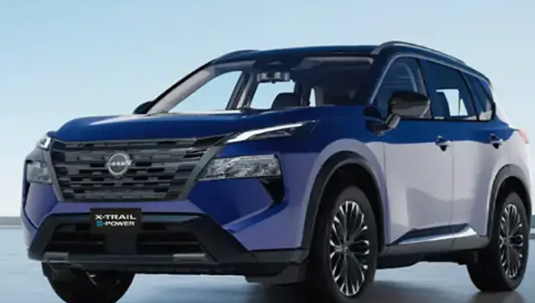
Choosing between the Nissan X-Trail and Hyundai Tucson is a little like choosing between two excellent holiday homes. One gives us more room to spread out and bring extra people along, while the other feels sleek, modern, and cleverly packaged. Neither is a bad choice. The real question is which SUV better matches the way we actually live.
The Nissan X-Trail has traditionally leaned toward family versatility. Depending on the market and configuration, it can offer up to seven seats, making it particularly appealing to larger families. The Hyundai Tucson, meanwhile, sticks with a five-seat layout but counters with a spacious cabin, strong hybrid options, sharp styling, and an increasingly premium-feeling interior.
There is another wrinkle: specifications vary substantially by country. European, Australian, Asian, and other international versions may have different engines, dimensions, trim names, cargo capacities, and standard equipment. So rather than pretending there is one universal specification sheet, we'll focus on what actually separates these two SUVs.
If we're shopping for a practical family SUV, which one deserves our money? Let's dig in.
Content in this publication
- Nissan X-Trail vs Hyundai Tucson at a Glance
- Nissan X-Trail vs Hyundai Tucson: Size and Dimensions
- Interior Space: Does the X-Trail Have the Advantage?
- Boot Space and Cargo Practicality
- Nissan X-Trail vs Hyundai Tucson Interior Quality
- Infotainment and Technology
- Nissan X-Trail e-POWER vs Hyundai Tucson Hybrid
- What About the Hyundai Tucson Plug-In Hybrid?
- Fuel Economy: Which One Uses Less Fuel?
- Nissan X-Trail e-4ORCE vs Hyundai Tucson AWD
- Ride Comfort
- Handling and Steering
- City Driving
- Safety and Driver Assistance
- Reliability: Nissan X-Trail vs Hyundai Tucson
- Maintenance and Running Costs
- Hyundai Tucson vs Nissan X-Trail for Families
- Which Has the Better Design?
- Which One Offers Better Value?
- Nissan X-Trail vs Hyundai Tucson for Used-Car Buyers
- Who Should Buy the Nissan X-Trail?
- Who Should Buy the Hyundai Tucson?
- Nissan X-Trail vs Hyundai Tucson: The Biggest Differences
- Which One Would We Choose?
- Nissan X-Trail vs Hyundai Tucson: Final Verdict
- Frequently Asked Questions
Nissan X-Trail vs Hyundai Tucson at a Glance
The simplest way to understand this comparison is to look at the personalities of the two vehicles.
The Nissan X-Trail feels like the family adventurer. It is generally larger, has an upright SUV shape, can be configured with seven seats in selected markets, and Nissan's e-POWER system gives some versions a distinctive electric-like driving character without requiring external charging.
The Hyundai Tucson feels more like the polished all-rounder. It looks bold, offers a roomy five-seat cabin, provides several electrified powertrain choices in many regions, and manages to combine practicality with an interior that feels more futuristic than we might expect from a mainstream compact SUV.
Think of the X-Trail as the SUV that asks, "Who else are we bringing?"
The Tucson asks, "How comfortable do we want the journey to be?"
Quick Comparison
| Category | Nissan X-Trail | Hyundai Tucson |
|---|---|---|
| Seating | 5 or up to 7 in some markets | 5 |
| Overall character | Family-oriented, versatile | Stylish, refined all-rounder |
| Hybrid focus | e-POWER available in various markets | Hybrid and PHEV options in various markets |
| AWD availability | Available, including e-4ORCE variants | Available on selected versions |
| Cabin feel | Practical and spacious | Modern and technology-focused |
| Best suited to | Larger families and versatility | Five-seat families and commuters |
| Third row | Available on selected versions | Not offered |
| Driving personality | Smooth, relaxed | Balanced and conventional |
| Cargo practicality | Very good | Very good |
| Main advantage | Seating flexibility | Strong overall balance |
Nissan X-Trail vs Hyundai Tucson: Size and Dimensions
The Nissan X-Trail generally sits on the larger side of this matchup.
Nissan's current UK specification lists the X-Trail at approximately 4,690 mm long, 1,840 mm wide without mirrors, and 1,725 mm high, with a wheelbase of 2,705 mm.
The Tucson's dimensions vary more noticeably between markets. Hyundai's European Tucson measures roughly 4.51 to 4.53 metres depending on version, while Australian-market versions extend to around 4.64 metres.
That's worth remembering whenever we see a simple online comparison declaring that one SUV is exactly X millimetres longer than the other. Regional models can differ.
In practical terms, however, the X-Trail generally feels taller and more substantial. Its boxier proportions also help communicate that traditional SUV character.
The Tucson feels slightly lower and more car-like. That can make it easier to place in a crowded urban environment while still providing plenty of interior room.
Which One Feels Bigger on the Road?
The X-Trail.
Its height, upright windscreen, squared-off body, and available third-row seating create the impression of a vehicle from a slightly larger category.
That can be good or bad.
Families may love the commanding seating position and spacious atmosphere. Someone navigating narrow streets and tiny parking garages every day may prefer the Tucson's somewhat less bulky personality.
Interior Space: Does the X-Trail Have the Advantage?
This is where Nissan starts making a compelling argument.
The X-Trail is designed primarily around family flexibility. Nissan lists generous first- and second-row accommodation, while selected versions add a small third row.
The Tucson may be a five-seater, but calling it cramped would be wildly unfair.
In some current specifications, Hyundai lists rear legroom exceeding one metre, depending on powertrain and market. That is excellent for a vehicle in this class.
If we're carrying four adults most of the time, the Tucson can actually feel wonderfully spacious because Hyundai doesn't need to package a third row behind them.
But if we occasionally need to transport six or seven people, the entire equation changes.
Nissan X-Trail Seven-Seat Advantage
The X-Trail's available seven-seat arrangement is one of its most important selling points.
We should keep expectations realistic, though. This isn't a giant American SUV with limousine-like seating in all three rows. The rearmost seats are best thought of as occasional seats, particularly useful for children or shorter trips.
Still, occasional seats are infinitely more useful than seats that don't exist.
Imagine school pickup. Two extra children suddenly need a ride home.
In the Tucson, someone may need another car.
In a seven-seat X-Trail, we may simply unfold the third row.
Who Actually Needs Seven Seats?
Families with three or more children should pay close attention. So should buyers who regularly travel with grandparents, friends, or children's classmates.
But if we know we'll never use more than five seats, the Tucson's simpler layout becomes a strength rather than a weakness.
We aren't hauling around seats we don't need, and all the available space is focused on five occupants and their luggage.
Boot Space and Cargo Practicality
Boot-space comparisons can become messy because manufacturers measure luggage capacity differently depending on seat configuration, powertrain, spare wheel, and market.
For perspective, Nissan currently lists up to 575 litres of luggage capacity for certain five-seat X-Trail configurations in the UK.
Hyundai's numbers vary considerably by version. Hyundai Spain quotes 616 litres for one Tucson Hybrid specification, while Australian specifications list 582 litres for hybrid models and 539 litres for petrol versions under their respective measurement standards.
So the takeaway isn't that one universally has a boot exactly 20 or 40 litres larger.
The meaningful point is that both have genuinely useful family-sized cargo areas.
Which SUV Is Better for Family Luggage?
For five-person trips, either vehicle works very well.
The Tucson's wide, accessible luggage area makes it excellent for suitcases, supermarket runs, sports equipment, and pushchairs.
The X-Trail becomes particularly useful when we're constantly changing configurations. Slide seats, fold seats, carry children today, carry camping equipment tomorrow—it adapts nicely.
With the third row raised on a seven-seat X-Trail, however, luggage space naturally becomes much more limited. That's the inevitable compromise of squeezing seven occupants into a vehicle of this size.
If seven people plus seven large suitcases are part of our regular routine, we should probably be looking at something larger altogether.
Nissan X-Trail vs Hyundai Tucson Interior Quality
Sit inside recent versions of either SUV and the old stereotype of mainstream Asian SUVs feeling cheap disappears quickly.
Both cabins can look surprisingly sophisticated.
The X-Trail's cabin tends to prioritize clarity. Controls are logically placed, the dashboard is relatively straightforward, and higher trim levels can add large displays, digital instrumentation, premium materials, and extensive convenience equipment.
The Hyundai takes a slightly more dramatic approach.
Recent Tucson interiors emphasize screens, horizontal dashboard lines, ambient styling details, and a cleaner visual layout. Some versions use large integrated displays that give the cabin a more tech-heavy atmosphere.
We'd give the Tucson a slight edge for visual drama.
Open the door and it tends to make a stronger first impression.
The X-Trail, though, fights back with family-friendly practicality. It often feels like the designers spent more time asking where parents would put everyday objects instead of simply asking what would photograph well in a brochure.
That's an underrated advantage.
Pretty dashboards impress us for the first week.
Good cupholders, storage areas, rear access, and practical seating arrangements impress us for years.
Infotainment and Technology
Both models can be equipped with the connectivity features buyers now expect: large central displays, smartphone integration, digital driver information, USB connectivity, navigation on selected trims, and numerous driver-assistance systems.
Exact screen sizes and features depend heavily on trim and country.
Hyundai has pushed particularly hard on cabin technology. For example, certain Tucson versions feature dual 12.3-inch displays integrated into a broad digital interface.
Nissan counters with its own digital displays, connected services, head-up display availability in selected versions, and a technology package that feels more sophisticated than older X-Trails.
Which System Is Easier to Live With?
The answer isn't necessarily the vehicle with the biggest screen.
Physical controls matter.
When we're driving at 100 km/h in heavy rain, adjusting something with a simple knob can be far less distracting than navigating three touchscreen menus.
That makes actual test-driving important. Spend ten minutes trying the climate controls, radio, navigation, parking camera, phone connection, and steering-wheel buttons.
Small annoyances during a dealership demo can become enormous after three years.
Nissan X-Trail e-POWER vs Hyundai Tucson Hybrid
Now we reach one of the most interesting differences.
The Nissan X-Trail's e-POWER system isn't simply trying to imitate the driving behavior of every conventional hybrid.
In Nissan's system, the petrol engine generates electricity while an electric motor drives the wheels. Nissan describes the result as providing an EV-like driving sensation without requiring the driver to plug the vehicle in.
The Hyundai Tucson Hybrid uses a more familiar hybrid architecture combining a petrol engine with electric assistance and an automatic transmission.
Both approaches aim to reduce fuel consumption and improve responsiveness, but they feel different.
How Nissan e-POWER Feels
Pull away gently and the X-Trail can feel remarkably smooth.
Because the electric motor is responsible for propulsion in e-POWER versions, throttle response has some of the immediacy we associate with electric cars.
Around town, that feels natural. We press the accelerator, and the vehicle responds without the sensation of an engine working through multiple conventional gears.
The petrol engine still exists, of course. Fuel still goes into the tank. This is not an EV, and it should not be confused with a plug-in hybrid.
But its operating philosophy creates an interesting middle ground.
How the Tucson Hybrid Feels
The Tucson Hybrid is more familiar.
There is still a conventional combustion engine directly participating in propulsion, supported by an electric motor. Transitions between electric and petrol operation are generally designed to happen smoothly, and the experience resembles driving a polished automatic SUV.
You may be interested in reading Leapmotor C10 Life vs Design: Which Trim Should We Buy?
Some buyers will prefer that.
The Tucson doesn't try to reinvent our expectations. It simply makes traditional hybrid driving feel refined and effortless.
Which Hybrid System Is Better?
That depends on what we value.
For urban driving and buyers intrigued by EV-like response without plugging in, X-Trail e-POWER is fascinating.
For buyers who want a proven-feeling conventional hybrid experience, the Tucson Hybrid is extremely easy to understand and live with.
Neither architecture automatically guarantees better real-world fuel economy in every situation. Driving speed, temperature, terrain, wheel size, traffic, and individual specifications all matter.
What About the Hyundai Tucson Plug-In Hybrid?
Depending on the country, Hyundai has another card to play: a plug-in hybrid Tucson.
This can fundamentally change the comparison.
A PHEV allows us to charge a larger battery externally and complete many shorter journeys using electricity before relying more heavily on the petrol engine.
Current European Tucson PHEV specifications can offer substantial electric-only range, although exact homologated range varies by version and market.
If we have home charging and drive 30 or 40 kilometres on a typical day, a plug-in Tucson could make enormous sense.
If we cannot charge regularly, the advantage becomes much smaller.
Buying a PHEV and never plugging it in is a bit like buying running shoes and using them exclusively as slippers. It works, but we're missing much of the point.
Fuel Economy: Which One Uses Less Fuel?
There is no honest universal winner here.
Why?
Because "Nissan X-Trail vs Hyundai Tucson" covers several engines, transmissions, drivetrains, wheel sizes, and regional specifications.
A front-wheel-drive Tucson Hybrid cannot fairly be compared with an all-wheel-drive seven-seat X-Trail and treated as though the difference is solely about vehicle engineering.
Driving conditions matter too.
Urban environments may favor electrified systems because regenerative braking and low-speed electric assistance become more useful.
Fast motorway driving changes the equation.
Cold weather changes it again.
Heavy loads change it yet again.
Anyone choosing between them based primarily on fuel consumption should compare official figures for the exact two trims being considered, then examine owner-reported real-world results from similar driving conditions.
Nissan X-Trail e-4ORCE vs Hyundai Tucson AWD
Drivers living in regions with snow, rough roads, wet countryside, or steep terrain may want all-wheel drive.
Nissan's e-4ORCE system is particularly interesting because it uses electrified control to manage power delivery. Nissan offers the technology with e-POWER on selected X-Trail models.
The Tucson also offers AWD in selected markets and powertrain combinations.
Neither vehicle should be mistaken for a hardcore rock-crawling off-roader.
We're talking about family crossovers, not Land Cruisers wearing hiking boots.
Still, AWD can improve confidence when conditions deteriorate.
Which One Is Better for Light Off-Road Driving?
We'd lean toward the X-Trail.
Its taller, more rugged personality and available AWD technology make it feel better suited to the occasional gravel track, muddy campsite, snowy road, or remote holiday property.
The Tucson can absolutely handle poor surfaces within reason, particularly in appropriate AWD form, but its personality feels more road-focused.
If our version of "off-road" means mounting a pavement outside the supermarket, either one is more than capable.
Ride Comfort
Family SUVs live or die by comfort.
Nobody wants children complaining after twenty minutes because the rear suspension treats every pothole like a personal enemy.
Both vehicles generally aim for comfort rather than aggressive sporting behavior.
The X-Trail's taller body and relaxed character make it well suited to long family journeys. Its suspension prioritizes everyday usability, and the elevated driving position reinforces the sense that we're piloting a proper SUV.
The Tucson can feel slightly more controlled and car-like. It generally balances comfort with reasonably tidy handling, creating an SUV that doesn't feel cumbersome in everyday driving.
Which Is Better on Long Trips?
It's extremely close.
The X-Trail's cabin flexibility is valuable if we're carrying many passengers.
The Tucson's comfortable five-seat layout and refined road manners make it an excellent motorway companion.
If there are five of us, we'd be happy crossing a country in either.
If there are six, Nissan wins before we even leave the driveway.
Handling and Steering
Neither SUV exists to chase lap records.
And that's fine.
The Tucson generally feels slightly more conventional and composed through bends, with predictable controls and a driving position that doesn't make the vehicle feel enormous.
The X-Trail is taller and emphasizes comfort. It isn't clumsy, but it communicates less enthusiasm for being thrown down a twisting road.
Enthusiastic drivers may prefer the Hyundai.
Relaxed drivers may not care at all.
When we're transporting children, luggage, a dog, and three bags of snacks, steering feedback probably isn't the deciding factor anyway.
City Driving
The Tucson deserves strong marks here.
Its slightly less imposing feel can make everyday maneuvering easier, and hybrid versions are particularly pleasant in stop-start conditions.
The X-Trail remains manageable, especially when equipped with parking cameras and sensors, but we are always aware that we're driving a fairly substantial family vehicle.
Its payoff comes in visibility.
The elevated seating position gives us an excellent view of traffic, and that alone can make the vehicle feel easier to control than its dimensions might suggest.
Parking
Technology changes everything.
A larger SUV with an excellent 360-degree camera can be easier to park than a smaller SUV with poor visibility.
So when comparing trims, don't dismiss parking technology as unnecessary showroom decoration. If we live in a dense city, a good surround-view camera may become one of the most frequently used features in the car.
Safety and Driver Assistance
Both Nissan and Hyundai have invested heavily in active safety.
Depending on specification, we may find features such as autonomous emergency braking, lane assistance, blind-spot monitoring, adaptive cruise control, driver-attention systems, rear cross-traffic assistance, parking cameras, and highway-driving aids.
Hyundai's current Australian Tucson specification, for example, lists a broad SmartSense package including collision-avoidance, lane-related, attention, and available highway-driving functions.
Nissan similarly offers an extensive suite of driver-assistance technology across current X-Trail ranges, though features depend on trim.
The important phrase is depend on trim.
Don't assume that because a technology appears in an advertisement, every X-Trail or Tucson includes it.
Reliability: Nissan X-Trail vs Hyundai Tucson
Reliability comparisons deserve more nuance than they usually get.
One owner can drive 200,000 kilometres with virtually no trouble. Another can experience an electronic problem during the first year. Neither story, by itself, tells us which model is objectively more reliable.
Generation matters.
Engine matters.
Transmission matters.
Maintenance matters.
Where the vehicle was built can matter.
Even how the previous owner treated a used example matters.
For a new purchase, we'd focus heavily on local warranty coverage, dealer reputation, service intervals, repair costs, and the exact powertrain being purchased.
What About Long-Term Hybrid Reliability?
Both brands now have considerable experience with electrification, but complexity still deserves consideration.
Modern hybrids contain combustion components, batteries, electric motors, power electronics, sensors, cooling systems, and extensive software.
That doesn't mean they're unreliable.
You may be interested in readingLeapmotor C10 Life vs Design: Which Trim Should We Buy?You may be interested in reading
Leapmotor C10 2025 vs 2026: What Has Actually Changed?It means that maintenance history becomes increasingly important as vehicles age.
If purchasing used, a complete service record is worth far more than a shiny set of aftermarket wheels.
Maintenance and Running Costs
Routine running costs can swing the decision just as much as purchase price.
Insurance classifications, servicing packages, replacement tires, registration taxes, fuel prices, warranty conditions, and labor rates vary dramatically between countries.
Wheel size deserves special attention.
The giant alloys that look fantastic under showroom lights often require more expensive tires. They may also reduce ride comfort compared with smaller wheels wearing taller sidewalls.
Sometimes the "boring" mid-range version is the smartest long-term buy.
We'd compare not only the monthly payment but also insurance, annual servicing, fuel, expected tire replacement costs, and local warranty conditions before signing anything.
Hyundai Tucson vs Nissan X-Trail for Families
If children are central to this decision, the X-Trail has an obvious weapon: optional seven-seat capability.
Even if we only need the third row five times per month, those five occasions may justify choosing Nissan.
Its upright body, practical cabin, and configurable seating suit the chaos that seems to follow family life everywhere.
The Tucson works brilliantly for smaller families.
Two adults plus two children? Excellent.
Two adults plus three children? Still entirely realistic, depending on child-seat requirements.
Five adults? Surprisingly comfortable for the class.
Add a sixth passenger, however, and Hyundai has no answer.
Which Has the Better Design?
Design is subjective, but these SUVs approach styling very differently.
The X-Trail looks rugged without becoming cartoonishly aggressive. Its proportions are straightforward: tall body, substantial front end, broad stance, and familiar SUV silhouette.
The Tucson is more adventurous.
Its lighting elements, geometric surfaces, dramatic creases, and modern detailing give it significantly more visual personality.
From fifty metres away, we're more likely to recognize the Hyundai immediately.
Exterior Winner: Tucson
For pure visual flair, we'd pick the Tucson.
It looks like designers were given permission to experiment.
Practical Design Winner: X-Trail
For buyers who want something understated and functional, Nissan's approach may age more gracefully.
Fashion attracts attention.
Simplicity often survives trends.
Which One Offers Better Value?
Value depends heavily on local pricing.
A well-equipped Tucson may cost less than an equivalent X-Trail in one country and considerably more in another. Manufacturer incentives can reverse the comparison again overnight.
Instead of simply asking which one is cheaper, ask:
- Which specification gives us the equipment we'll genuinely use?
- Do we need AWD?
- Do we need seven seats?
- Will we actually charge a PHEV?
- How much does insurance cost?
- What warranty does each brand provide locally?
- How close is the nearest dealer?
- How expensive are routine services?
- What will replacement tires cost?
- Which model is likely to retain value better in our local used market?
That is the only list that really matters.
Nissan X-Trail vs Hyundai Tucson for Used-Car Buyers
The equation changes when shopping used.
Condition becomes more important than badge.
A meticulously maintained Tucson with 70,000 kilometres may be a far better purchase than a neglected X-Trail with 45,000 kilometres—or vice versa.
We'd prioritize service history, accident history, correct tire fitment, warning lights, smooth operation of the hybrid system where applicable, air-conditioning performance, infotainment behavior, suspension noise, braking condition, battery health indicators where relevant, and evidence that recalls or service campaigns have been completed.
A pre-purchase inspection is inexpensive compared with repairing someone else's neglected SUV.
Who Should Buy the Nissan X-Trail?
The X-Trail makes the most sense for buyers who prioritize space and flexibility.
It is particularly compelling when seven seats matter. That single capability can outweigh almost every smaller difference in infotainment, styling, or driving feel.
It's also attractive for drivers who like the idea of Nissan's e-POWER driving experience and those considering e-4ORCE AWD.
The X-Trail is the SUV we'd choose when our weekends involve children, luggage, camping equipment, grandparents, muddy shoes, and plans that somehow become more complicated every hour.
Who Should Buy the Hyundai Tucson?
The Tucson makes enormous sense if five seats are enough.
It feels polished, looks distinctive, offers strong electrified choices in many regions, and packages a surprising amount of interior room into a manageable footprint.
Hybrid availability broadens its appeal, while PHEV variants in selected markets provide another option for drivers who can charge regularly.
For commuting, family use, shopping, school runs, motorway trips, and occasional adventures, it is exceptionally well rounded.
It is the vehicle we'd recommend to someone who says, "I just want one SUV that does almost everything well."
Nissan X-Trail vs Hyundai Tucson: The Biggest Differences
Strip away the marketing language and this matchup becomes surprisingly simple.
The X-Trail's defining strengths are flexibility, available seven-seat practicality, upright SUV proportions, and its unusual e-POWER drivetrain.
The Tucson's defining strengths are five-seat spaciousness, contemporary design, polished driving behavior, strong technology, and broad electrified powertrain availability in various markets.
The Nissan feels more specialized toward larger families.
The Hyundai feels more universally balanced.
That's why declaring one objectively superior doesn't make much sense.
We need to identify which compromise bothers us less.
Which One Would We Choose?
For a family that genuinely uses six or seven seats, we'd choose the Nissan X-Trail.
The Tucson simply cannot replace seats it doesn't have.
For a family that only needs five seats, however, our decision becomes much harder. The Tucson's interior space, hybrid options, styling, road manners, and technology make it an exceptionally convincing package.
In that scenario, we'd lean Hyundai Tucson for most buyers, particularly those who spend more time commuting and driving in cities than venturing onto poor roads.
But buyers drawn to the X-Trail e-POWER system shouldn't dismiss it. Its electric-motor-driven character gives it a personality that conventional hybrids don't exactly replicate.
Nissan X-Trail vs Hyundai Tucson: Final Verdict
The Nissan X-Trail vs Hyundai Tucson contest has no knockout punch because these SUVs overlap without being identical.
The X-Trail is the more versatile family tool. Available seven-seat configurations immediately put it ahead for larger households. Its cabin is practical, its SUV character is convincing, and e-POWER gives electrified versions a distinctive driving experience without requiring plug-in charging.
The Tucson is the polished five-seat alternative. It looks more daring, feels sophisticated inside, delivers excellent passenger space, and offers a compelling mix of petrol, hybrid, and—in certain markets—plug-in hybrid powertrains.
Our decision therefore comes down to lifestyle.
Need seven seats? X-Trail.
Need five seats and want an exceptionally balanced everyday SUV? Tucson.
Want something more rugged and family-adventure oriented? X-Trail.
Want something sleeker and slightly more urban? Tucson.
And if we're still undecided, the answer is wonderfully old-fashioned: drive both.
Sit in the back.
Load the boot.
Connect the phone.
Fold the seats.
Park them.
Drive over the roughest road near the dealership.
The SUV that fits naturally into our life after doing those things is probably the one we'll still be happy to own five years from now.
Frequently Asked Questions
1. Is the Nissan X-Trail bigger than the Hyundai Tucson?
Generally, yes. Current X-Trail specifications place it at roughly 4.69 metres long in markets such as the UK, while Tucson dimensions vary by region and can range from around 4.51 metres in some European specifications to about 4.64 metres in Australia. The X-Trail is also taller and offers up to seven seats on selected versions.
2. Which is better, Nissan X-Trail or Hyundai Tucson?
The X-Trail is arguably better for larger families because selected versions offer seven seats. The Tucson is an excellent choice for buyers who only need five seats and prioritize styling, cabin technology, hybrid options, and everyday road manners. The better SUV therefore depends more on our needs than on any single specification.
3. Does the Hyundai Tucson have seven seats?
No. The Tucson is fundamentally a five-seat SUV. Buyers requiring seven seats should consider the Nissan X-Trail's available seven-seat configuration or move to a larger Hyundai SUV where such models are offered.
4. Is Nissan e-POWER better than the Hyundai Tucson Hybrid?
Neither system is universally better. Nissan e-POWER uses a petrol engine to generate electricity while an electric motor drives the vehicle, creating a more EV-like response without plug-in charging. The Tucson Hybrid follows a more conventional hybrid approach. Buyers should test-drive both because their driving characteristics differ noticeably.
You may be interested in readingLeapmotor C10 Life vs Design: Which Trim Should We Buy?You may be interested in reading
Leapmotor C10 2025 vs 2026: What Has Actually Changed?You may be interested in reading
 Mazda CX-9 Equivalent: The Best Alternatives to Mazda’s Three-Row SUV
5. Which SUV is better for a family, the X-Trail or Tucson?
For families requiring occasional third-row seating, the X-Trail is the obvious choice. For households with four or five occupants, the Tucson can be equally practical and may appeal more through its roomy second row, modern interior, and broad selection of electrified powertrains. We'd choose according to seating requirements first and features second.
If you want to know other articles similar to Nissan X-Trail vs Hyundai Tucson: Which SUV Is Better? you can visit the category Models.
Honda Passport vs Toyota 4Runner: Which SUV Is Better?
Honda Passport vs Ford Bronco: Which SUV Is Better?
Honda Passport vs Ford Explorer: Which SUV Is Better?
Honda Passport or Pilot: Which SUV Is Better?
Honda Passport vs Jeep Grand Cherokee: Which SUV Is Better?
Honda Passport vs Nissan Pathfinder: Which SUV Is Better?
Leave a Reply
More content of your interest