
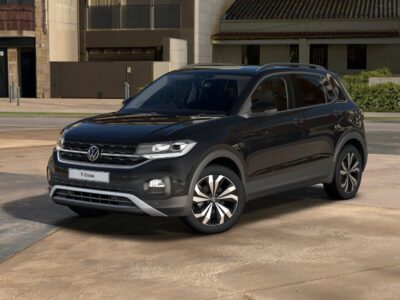
Nissan X-Trail or Similar: Which SUV Should We Choose?

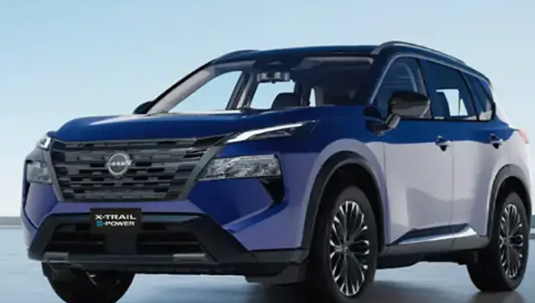
Searching for a Nissan X-Trail or similar SUV sounds simple until we actually start comparing cars. Suddenly, we are staring at the Toyota RAV4, Honda CR-V, Hyundai Tucson, Kia Sportage, Mazda CX-5, Mitsubishi Outlander, Subaru Forester, and several other family SUVs wondering whether the X-Trail is still the smartest choice.
And that is exactly where things get interesting.
The Nissan X-Trail sits in one of the most competitive parts of the automotive market. It is big enough for family duties, compact enough to remain manageable around town, and available in configurations designed to appeal to buyers who want efficiency, space, technology, or all-wheel-drive capability. Depending on the market and version, the current X-Trail can offer five or seven seats, while Nissan's e-POWER system gives it an unusual electrically driven hybrid character without requiring external charging.
But being good does not automatically make it the best option for everyone.
Some alternatives offer better fuel economy. Others feel more luxurious. Some provide stronger third-row practicality, sharper handling, or a lower purchase price. So rather than simply asking whether the X-Trail is good, we should ask a more useful question:
Which SUV works best for the way we actually drive?
Let's find out.
Content in this publication
- What Type of SUV Is the Nissan X-Trail?
- What Does “Nissan X-Trail or Similar” Actually Mean?
- Best Nissan X-Trail Alternatives at a Glance
- Nissan X-Trail vs Toyota RAV4
- Nissan X-Trail vs Honda CR-V
- Nissan X-Trail vs Hyundai Tucson
- Nissan X-Trail vs Kia Sportage
- Nissan X-Trail vs Mazda CX-5
- Nissan X-Trail vs Mitsubishi Outlander
- Nissan X-Trail vs Subaru Forester
- Which Nissan X-Trail Alternative Has the Best Interior?
- Which X-Trail Alternative Is Best for Fuel Economy?
- Is the Nissan X-Trail Good for Seven People?
- Which SUV Similar to the X-Trail Has the Biggest Boot?
- Which Nissan X-Trail Alternative Is Most Reliable?
- Which SUV Is Best for City Driving?
- Which Is Best for Long Road Trips?
- Is the Nissan X-Trail Worth Buying Over Its Rivals?
- How Should We Choose Between the X-Trail and Similar SUVs?
- Conclusion: Nissan X-Trail or Similar—What Should We Buy?
- Frequently Asked Questions
What Type of SUV Is the Nissan X-Trail?
The Nissan X-Trail is essentially a medium-sized family crossover positioned above the smaller Nissan Qashqai. Think of it as the Qashqai's bigger sibling—the one that brings an extra suitcase, invites more relatives, and is slightly more willing to leave paved roads behind.
Its biggest appeal is versatility.
The X-Trail does not try to be an aggressive off-roader or a sporty performance SUV. Instead, it aims to cover as many everyday jobs as possible. School runs? Easy. Motorway commuting? Absolutely. Family road trips? That is where it begins to shine.
Current versions in markets such as the UK include five- and seven-seat layouts, automatic transmissions, and two- or four-wheel-drive configurations. Nissan also offers e-POWER and e-4ORCE variants, although specifications vary considerably between countries.
That flexibility is one reason the X-Trail has so many natural competitors.
What Does “Nissan X-Trail or Similar” Actually Mean?
When rental companies, buyers, or comparison websites describe something as a Nissan X-Trail or similar, they usually mean a medium family SUV of roughly comparable size and purpose.
That normally means we should expect characteristics such as comfortable seating for five adults, a practical luggage area, a raised driving position, modern driver-assistance equipment, reasonable fuel economy, and enough cabin versatility for family use.
Seven seats may be available, but we should never assume that every “or similar” vehicle has them.
That distinction matters tremendously with rental cars.
If We See “X-Trail or Similar” on a Rental Booking
A booking category does not normally guarantee the exact vehicle pictured.
The Nissan might simply represent the class.
We could arrive at the rental desk and receive a Hyundai Tucson, Toyota RAV4, Kia Sportage, Mitsubishi Outlander, or another equivalent SUV depending on the rental company's fleet.
If a specific feature matters—particularly seven seats, all-wheel drive, hybrid power, automatic transmission, or luggage capacity—we should confirm it separately instead of assuming that “similar” means identical.
Best Nissan X-Trail Alternatives at a Glance
There is no universal winner because these SUVs emphasize different strengths. Our quickest way to narrow the field is to match the vehicle to the job.
- Toyota RAV4: a strong choice for efficiency, hybrid familiarity, and long-term ownership appeal.
- Honda CR-V: excellent for cabin space, comfort, and mature road manners.
- Hyundai Tucson: ideal if technology, bold styling, and equipment matter.
- Kia Sportage: a well-rounded value-oriented alternative with a modern interior.
- Mazda CX-5: one of the better choices for drivers who prioritize handling and cabin quality.
- Mitsubishi Outlander: particularly attractive when seven-seat versatility or plug-in hybrid capability matters.
- Subaru Forester: worth considering for all-wheel-drive confidence and outdoor use.
Those broad personalities already tell us something important: replacing an X-Trail is less about finding its clone and more about identifying which part of the X-Trail appeals to us most.
Nissan X-Trail vs Toyota RAV4
The Toyota RAV4 is probably one of the first alternatives most shoppers will consider.
Both models are family-oriented SUVs with strong reputations in the crossover segment, but they approach hybrid driving differently.
Why Choose the RAV4 Instead?
Toyota's biggest weapon is its established hybrid formula.
For drivers who spend a lot of time in congested urban areas and simply want an efficient, conventional hybrid experience, the RAV4 makes a persuasive case. Toyota has spent decades refining hybrid systems, and that experience gives the RAV4 a sense of familiarity.
It is also easy to understand.
Get in, drive normally, and let the system decide how to combine petrol and electric propulsion.
Why Choose the X-Trail Instead?
The Nissan takes a more unusual approach with e-POWER.
In an e-POWER X-Trail, the petrol engine generates electricity while propulsion comes from the electric motor rather than the petrol engine directly driving the wheels in the conventional manner. Nissan describes the result as an EV-like driving experience without needing to plug the car into an external charger.
That can make acceleration feel particularly smooth and immediate.
The X-Trail may also have an advantage for families who specifically need a third row because seven-seat versions are available in some markets.
Our Verdict: X-Trail or RAV4?
Choose the RAV4 if efficiency, simplicity, and a proven conventional hybrid setup dominate your priorities.
Choose the X-Trail if interior flexibility, EV-like power delivery, or optional seven-seat capability matters more.
Nissan X-Trail vs Honda CR-V
If comfort is at the top of our shopping list, the Honda CR-V belongs near the front of the queue.
The CR-V has traditionally followed a similar philosophy to the X-Trail: sensible dimensions, family-friendly packaging, good visibility, and an emphasis on everyday usability rather than flashy performance.
Where the CR-V Shines
The Honda tends to feel grown-up.
Its cabin design emphasizes space and straightforward functionality, while its driving character generally suits buyers who want refinement rather than excitement.
Long journeys are where this approach pays dividends. A family SUV does not need to attack corners like a sports coupe. Sometimes the better achievement is arriving after five hours without anyone desperately wanting to escape the cabin.
Where the X-Trail Fights Back
The X-Trail's available seven-seat configuration gives it a major practical card to play in markets where the CR-V is primarily offered as a five-seater.
The Nissan also has an unusually distinctive hybrid personality.
Honda's hybrid engineering is clever, but Nissan e-POWER arguably creates a stronger impression of driving something electric.
Our Verdict: X-Trail or CR-V?
For five-seat family comfort, the Honda CR-V is extremely convincing.
For greater seating flexibility and a slightly more distinctive drivetrain experience, we would lean toward the Nissan X-Trail.
Nissan X-Trail vs Hyundai Tucson
The Hyundai Tucson feels like the technological challenger in this group.
Where some family SUVs are conservative enough to disappear into a supermarket parking lot, the Tucson appears determined to make itself noticed.
Its exterior design is distinctive, but the bigger story is inside.
Technology Gives the Tucson an Edge
Modern Tucson versions place strong emphasis on displays, connectivity, driver assistance, and electrified powertrains.
Hyundai currently offers hybrid versions in various markets, combining petrol and electric power with regenerative braking.
For buyers who enjoy the feeling of stepping into a recently designed vehicle filled with digital features, the Tucson is compelling.
The X-Trail Feels More Family-Focused
The Nissan counters with exceptional practical thinking.
Its rear-seat arrangements, adaptable luggage solutions, high seating position, and availability of a third row make it feel designed around messy real life rather than showroom theatrics.
And messy real life matters.
We are talking muddy shoes, child seats, grocery bags, backpacks, sports equipment, grandparents, pets, and luggage that somehow multiplies overnight.
Our Verdict: X-Trail or Tucson?
The Tucson wins for buyers chasing bold styling and technology.
The X-Trail gets our vote when flexibility and family practicality carry greater weight.
Nissan X-Trail vs Kia Sportage
The Kia Sportage and Hyundai Tucson share a close corporate relationship, yet they have distinct personalities.
The Sportage has become one of the strongest all-rounders in this class because it mixes attractive technology with competitive equipment and usable space.
Sportage Makes a Strong Value Argument
Depending on market pricing, the Sportage can provide an impressive amount of equipment for the money.
That matters because family SUV buyers increasingly expect features that would have seemed luxurious not long ago: large infotainment systems, adaptive driver assistance, heated seats, surround-view cameras, wireless smartphone connectivity, and sophisticated ambient lighting.
You may be interested in reading Nissan X-Trail vs Skoda Kodiaq: Which Family SUV Wins?
The Sportage often competes aggressively on exactly those features.
X-Trail Offers Something Different
The Nissan feels less focused on visual drama and more focused on versatility.
If we need occasional seven-seat capability, the Sportage may fall off our shortlist immediately, while the X-Trail remains in contention.
Our Verdict: X-Trail or Sportage?
Pick the Sportage if equipment-per-dollar—or equipment-per-pound—is a major concern.
Pick the X-Trail if passenger flexibility is more important than having every gadget in the toy box.
Nissan X-Trail vs Mazda CX-5
This is where the comparison changes character.
The Mazda CX-5 has traditionally appealed to buyers who still enjoy driving.
Most crossovers behave like comfortable appliances. That is not necessarily criticism—we love refrigerators because they work.
But Mazda generally tries to inject more personality into steering, chassis behavior, interior design, and driving position.
A good CX-5 cabin often gives us the impression that Mazda spent its budget on materials rather than gimmicks.
Controls tend to feel carefully considered, the driving position is satisfying, and the dashboard design can look more expensive than expected.
For two adults with one or two children, it makes plenty of sense.
Where the Nissan Is More Practical
The X-Trail is the one we would rather bring when the passenger list starts expanding.
Its larger-family orientation and optional third row give it more flexibility than the typically five-seat CX-5.
The Nissan's electrified drivetrain options may also suit buyers who place efficiency and low-speed smoothness ahead of traditional engine feel.
Our Verdict: X-Trail or CX-5?
Driving enthusiasts should try the Mazda CX-5 before buying anything else.
Large families should probably start with the X-Trail.
Nissan X-Trail vs Mitsubishi Outlander
These two are particularly interesting because the X-Trail and Outlander occupy closely related territory.
Both aim at families who want more than a basic five-seat crossover.
Why the Outlander Deserves Attention
The Outlander is especially relevant for buyers interested in plug-in hybrid driving.
A PHEV can make enormous sense if we can charge at home and most daily journeys fit comfortably within its electric-driving capability.
Commute electrically during the week, keep petrol available for long weekend journeys—that is the basic attraction.
Why the X-Trail May Be Easier to Live With
The X-Trail e-POWER requires no external charging.
That makes it appealing to people living in apartments, using street parking, or simply unwilling to build their routine around charging.
Its petrol engine generates the electricity needed for the electric-drive system.
Different philosophy, different lifestyle.
Our Verdict: X-Trail or Outlander?
Choose the Outlander PHEV if regular charging is easy and electric commuting matters.
Choose the X-Trail e-POWER if we want electric-like driving behavior without plugging in.
Nissan X-Trail vs Subaru Forester
The Subaru Forester attracts a slightly different type of buyer.
While most family SUVs advertise adventure with dramatic photographs, Subaru has historically built much of its identity around actually coping with poor weather, gravel roads, and outdoor lifestyles.
Forester for All-Weather Confidence
Subaru's approach to all-wheel drive has long been central to its brand identity.
If our weekends involve skiing, muddy tracks, remote campsites, wet fields, or rough rural roads, the Forester deserves serious attention.
Visibility is another traditional strength.
X-Trail for Broader Family Flexibility
The X-Trail is arguably the more rounded urban-family proposition.
It can still offer all-wheel-drive capability through e-4ORCE versions, but its strengths extend beyond traction into passenger flexibility, modern hybrid behavior, and optional seven-seat packaging. Nissan's e-4ORCE setup uses electrified all-wheel-drive technology designed to improve traction and stability.
Our Verdict: X-Trail or Forester?
Choose the Forester if bad roads and bad weather are regular companions.
Choose the X-Trail if daily family versatility matters more.
Which Nissan X-Trail Alternative Has the Best Interior?
This depends on what we mean by “best.”
If best means luxurious appearance and tactile quality, we might prefer the Mazda CX-5.
If best means futuristic technology, the Tucson or Sportage can make a stronger impression.
If best means space and uncomplicated family comfort, the CR-V deserves attention.
And if best means adaptability—particularly where seven seats matter—the X-Trail becomes extremely difficult to dismiss.
The Nissan's current design includes sliding or adaptable second-row arrangements on certain seven-seat versions, while official specifications confirm third-row seating on applicable models.
There is no championship trophy for the prettiest dashboard when a child seat does not fit.
That is why our definition of “best” should begin with our daily routine.
Which X-Trail Alternative Is Best for Fuel Economy?
Hybrid SUVs dominate this discussion.
The Toyota RAV4 deserves serious consideration, as do hybrid versions of the Honda CR-V, Hyundai Tucson, Kia Sportage, and Nissan X-Trail.
But comparing advertised fuel consumption across countries can be misleading because testing cycles, specifications, wheel sizes, drivetrains, temperatures, and trim levels differ.
More importantly, our driving pattern changes the result.
Someone crawling through city traffic may see a different hierarchy from someone cruising at motorway speed every day.
Hybrid vs e-POWER vs Plug-In Hybrid
This distinction is worth understanding before spending thousands.
A conventional hybrid, such as those commonly associated with Toyota, blends engine and electric-motor assistance without requiring charging.
Nissan e-POWER also avoids external charging, but the wheels are driven electrically while the petrol engine supplies energy to the electrical system.
A plug-in hybrid carries a larger battery that can be charged externally and may complete substantial short journeys using electric power alone.
None is automatically superior.
The best one is the system that matches where we park, how far we drive, and whether plugging in is realistic.
Is the Nissan X-Trail Good for Seven People?
Yes—with an important asterisk.
Seven seats do not mean seven full-sized adult seats.
On most SUVs of this size, the third row is better viewed as occasional accommodation for children, teenagers, or shorter journeys.
Expecting compact third-row seats to behave like those in a large MPV is like expecting a sofa bed to replace a proper bedroom. It works. It can be incredibly useful. But there is a compromise.
You may be interested in readingNissan X-Trail vs Skoda Kodiaq: Which Family SUV Wins?You may be interested in reading
Nissan X-Trail and Rogue: Are They Really the Same SUV?Current Nissan documentation confirms both five- and seven-seat X-Trail configurations depending on drivetrain and specification.
For families who regularly carry seven adults, we would move beyond this class entirely and consider a larger SUV or people carrier.
Which SUV Similar to the X-Trail Has the Biggest Boot?
Boot comparisons look wonderfully objective until we inspect how manufacturers measure them.
Some quote space beneath the parcel shelf. Others include additional compartments. Hybrid batteries can change floor shapes, and seven-seat vehicles sacrifice luggage space when the third row is raised.
So published litre figures should guide us, not control the decision.
The better test is brutally simple: bring the objects we actually use.
A stroller tells us more than a spreadsheet.
So do golf clubs, suitcases, a dog crate, or the mountain of equipment required by two small children.
Nissan itself emphasizes the X-Trail's adaptable cargo arrangement, including configurable luggage boards on relevant models.
Which Nissan X-Trail Alternative Is Most Reliable?
Reliability is harder to reduce to one badge than online arguments sometimes suggest.
Toyota and Honda have historically built extremely strong reputations, but model generation, engine choice, transmission, maintenance history, production year, and even climate can matter enormously.
The same applies when buying a used X-Trail.
We would rather own a properly maintained example of a supposedly “average” model than a neglected example of the internet's favorite reliable SUV.
Service history beats mythology.
What to Check When Buying Used
For any X-Trail alternative, we should investigate the exact engine and transmission combination rather than relying solely on model-level reputation.
Look at service records, warning lights, tire wear, accident history, battery health on electrified models, cooling-system condition, suspension noises, electronics, recalls, and evidence that required fluids were changed on schedule.
One generation can differ dramatically from the next.
Which SUV Is Best for City Driving?
If most of our life happens between traffic lights, narrow parking spaces, schools, supermarkets, and crowded streets, the giant-SUV fantasy quickly loses its shine.
Here, hybrid systems become attractive because urban driving gives regenerative braking frequent opportunities to recover energy.
The X-Trail e-POWER also feels particularly at home at lower speeds because electric motors handle propulsion.
However, if we never use seven seats and rarely fill the boot, a smaller SUV may actually be smarter.
A Nissan Qashqai, Toyota Corolla Cross, Hyundai Kona, Kia Niro, or another compact crossover could cost less to run while being easier to park.
Sometimes the best alternative to an X-Trail is not another X-Trail-sized SUV at all.
Which Is Best for Long Road Trips?
Long-distance travel shifts our priorities toward seat comfort, ride quality, cabin noise, fuel range, luggage capacity, and driver-assistance systems.
This is where the Honda CR-V and Nissan X-Trail make particularly strong arguments.
The RAV4 remains attractive for buyers prioritizing efficiency, while the Mazda CX-5 offers a more engaging experience when long highways eventually turn into twisting roads.
But road trips expose another factor people often overlook: second-row comfort.
Adults sitting in the rear for six hours care far more about seat shape, legroom, ventilation, USB access, and ride quality than about how quickly the infotainment screen changes menus.
Bring the family on the test drive.
Their opinions may save us years of complaints.
Is the Nissan X-Trail Worth Buying Over Its Rivals?
For the right buyer, absolutely.
The X-Trail sits in a sweet spot between ordinary five-seat crossovers and much larger seven-seat SUVs.
Its key advantages are flexibility, family-oriented packaging, available all-wheel drive, an unusual e-POWER driving experience, and optional seven-seat capability in relevant markets.
Where it becomes less convincing is when one specific priority dominates.
If we want maximum driving enjoyment, the CX-5 may suit us better.
If hybrid familiarity is our obsession, the RAV4 deserves attention.
If we want bold technology, Tucson and Sportage are formidable.
If regular home charging is available and electric commuting is important, a plug-in Outlander may make more sense.
And if rough-weather capability sits at the top of the list, Subaru should not be ignored.
How Should We Choose Between the X-Trail and Similar SUVs?
Forget the badge for a moment.
Imagine an ordinary Tuesday.
How many people are in the car? Where is it parked? How long is the commute? Can we charge at home? Do we regularly carry bulky equipment? Are roads smooth? Will we keep the vehicle for three years or ten? Does anyone actually need a third row?
Now imagine the worst Tuesday.
Rain. Traffic. Three children. Shopping bags. A flat phone. Someone needs picking up unexpectedly.
The best family SUV is the one that still makes sense on that day.
That is why test-driving back-to-back matters so much.
Specification sheets tell us what a car contains.
Driving it tells us whether we want to live with it.
Conclusion: Nissan X-Trail or Similar—What Should We Buy?
The Nissan X-Trail remains one of the most versatile family SUVs in its class, but the phrase “X-Trail or similar” covers a remarkably talented group of alternatives.
The Toyota RAV4 is difficult to ignore for buyers seeking an established hybrid. The Honda CR-V delivers excellent family comfort. Hyundai's Tucson and Kia's Sportage attack with technology and value. Mazda's CX-5 adds a more driver-focused flavor. Mitsubishi's Outlander deserves attention from plug-in hybrid shoppers, while the Subaru Forester remains a natural fit for adventurous lifestyles.
Yet the X-Trail has one advantage that runs through almost every comparison: flexibility.
It does not have to be the sportiest, flashiest, or most luxurious SUV to make sense. Its appeal comes from combining several useful qualities in one package.
And that may be exactly what a family vehicle should do.
Instead of chasing the SUV that wins the most individual categories, we should choose the one that fits our lives with the fewest compromises.
For some of us, that will be a RAV4.
For others, a CR-V, Tucson, Sportage, CX-5, Outlander, or Forester.
But when we need a comfortable family crossover with electrified driving, available AWD, and the possibility of seven seats, the Nissan X-Trail deserves to remain very near the top of the shortlist.
Frequently Asked Questions
Is a Toyota RAV4 similar to a Nissan X-Trail?
Yes. The Toyota RAV4 is one of the closest mainstream alternatives to the Nissan X-Trail because both occupy the medium family SUV segment and offer electrified powertrains. However, the exact seating arrangements and drivetrain choices differ by market.
What Cars Are Similar to the Nissan X-Trail?
Some of the closest alternatives include the Toyota RAV4, Honda CR-V, Hyundai Tucson, Kia Sportage, Mazda CX-5, Mitsubishi Outlander, and Subaru Forester. Which one is closest depends on whether we prioritize hybrid efficiency, seven seats, interior space, AWD, technology, or driving enjoyment.
Is the Nissan X-Trail Bigger Than the Toyota RAV4?
Their overall footprints are broadly comparable, but packaging differs. One important distinction is that certain X-Trail versions offer seven seats, giving Nissan an advantage for buyers who occasionally need a third row. Always compare specifications for the exact market and model year because dimensions and configurations can change.
You may be interested in readingNissan X-Trail vs Skoda Kodiaq: Which Family SUV Wins?You may be interested in reading
Nissan X-Trail and Rogue: Are They Really the Same SUV?You may be interested in reading
Nissan X-Trail vs Toyota RAV4: Which SUV Should You Buy?Which Is Better, Nissan X-Trail or Honda CR-V?
The Honda CR-V is particularly strong for five-seat comfort and spacious family use, while the X-Trail has an advantage for buyers interested in optional seven-seat configurations and Nissan's distinctive e-POWER drivetrain. Neither is universally better; the winner depends on how many passengers we carry and the type of driving we do.
What Does “Nissan X-Trail or Similar” Mean When Renting a Car?
It usually means the rental company is offering a vehicle category rather than guaranteeing an X-Trail specifically. The actual SUV could be another model of broadly similar size and capacity. If seven seats, AWD, automatic transmission, or a particular luggage capacity is essential, confirm those features directly with the rental provider.
If you want to know other articles similar to Nissan X-Trail or Similar: Which SUV Should We Choose? you can visit the category Models.
Volkswagen T-Cross vs Volkswagen T-Roc: Which Is Better?
Hyundai Tucson Weight: Complete Guide to Curb, Gross, and Payload Specs

Honda Passport vs Toyota 4Runner: Which SUV Is Better?
Honda Passport vs Ford Bronco: Which SUV Is Better?
Honda Passport vs Ford Explorer: Which SUV Is Better?
Honda Passport or Pilot: Which SUV Is Better?
Leave a Reply
More content of your interest