

Nissan X-Trail vs Mazda CX-5: Which SUV Is Better?

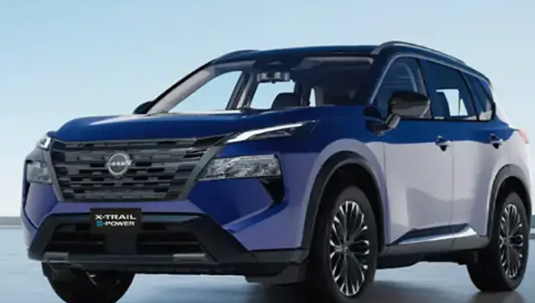
Choosing between the Nissan X-Trail and Mazda CX-5 looks simple until we actually start comparing them. Both occupy the hugely competitive midsize SUV space, both work well as daily family vehicles, and both offer the elevated driving position that has turned crossovers into the default family car.
Yet these two SUVs have surprisingly different personalities.
The Nissan X-Trail leans toward practicality, flexibility, technology, and family-friendly versatility. The Mazda CX-5 approaches the same problem from another direction. It feels more driver-focused, tends to emphasize cabin quality and road manners, and carries the polished character Mazda has built its reputation around.
So which one should we park in the driveway?
In this Nissan X-Trail vs Mazda CX-5 comparison, we'll examine comfort, engines, practicality, fuel economy, interior quality, driving dynamics, technology, reliability, towing capability, family usability, and overall value.
One important note before we dive in: powertrains, specifications, trim names, and even seating configurations vary by country and model year. Think of this comparison as a buyer's guide to the current-generation vehicles rather than a substitute for checking the exact specifications offered in your local market.
Content in this publication
- Nissan X-Trail vs Mazda CX-5 at a Glance
- Exterior Design: Rugged Nissan or Elegant Mazda?
- Size and Dimensions
- Seating Capacity: Five Seats vs Available Seven Seats
- Boot Space and Cargo Practicality
- Interior Quality: Does the Mazda Feel More Premium?
- Nissan X-Trail vs Mazda CX-5 Performance
- Nissan X-Trail e-POWER Explained
- Mazda CX-5 Engine Character
- Driving Experience: Mazda Takes the Driver's Road
- Ride Comfort
- Fuel Economy
- AWD and Bad-Weather Ability
- Technology and Infotainment
- Safety Equipment
- Towing Capacity
- Reliability: Nissan X-Trail vs Mazda CX-5
- Maintenance Costs
- Nissan X-Trail vs Mazda CX-5 for City Driving
- Which One Is Better on Long Road Trips?
- Nissan X-Trail vs Mazda CX-5 for Families
- Which SUV Feels More Expensive?
- Value for Money
- Nissan X-Trail Pros and Cons
- Mazda CX-5 Pros and Cons
- Who Should Buy the Nissan X-Trail?
- Who Should Buy the Mazda CX-5?
- Nissan X-Trail vs Mazda CX-5: Which One Should We Buy?
- Conclusion: Practicality or Personality?
- Frequently Asked Questions
Nissan X-Trail vs Mazda CX-5 at a Glance
The easiest way to understand these SUVs is to look at their priorities.
The Nissan X-Trail is generally the better choice for buyers who prioritize space, family flexibility, available electrified powertrains, and practicality. Depending on the market, Nissan also offers seven-seat versions, something that dramatically changes the equation for larger families.
The Mazda CX-5 is usually the stronger choice for buyers who care about steering feel, interior presentation, simplicity, and a more car-like driving experience.
Think of the X-Trail as the Swiss Army knife. It wants to handle school runs, luggage, road trips, shopping, unpredictable weather, and everything else family life throws at it.
The CX-5 is more like a tailored jacket. It still handles everyday jobs perfectly well, but refinement and the way everything feels matter almost as much as outright utility.
Which One Wins Overall?
There isn't a universal winner.
For families, we lean toward the Nissan X-Trail.
For drivers who value road manners and cabin atmosphere, we lean toward the Mazda CX-5.
That distinction becomes clearer the deeper we go.
Exterior Design: Rugged Nissan or Elegant Mazda?
Styling is subjective, but these SUVs clearly speak different visual languages.
The X-Trail looks upright and substantial. Its tall stance, squared-off proportions, and SUV-inspired design make it appear ready for family adventures even when its biggest challenge is squeezing into a supermarket parking bay.
Mazda takes a more sculptural approach. The CX-5 traditionally uses cleaner surfaces, a long bonnet, relatively restrained detailing, and flowing bodywork. Instead of shouting that it is an SUV, it looks more like a raised premium hatchback.
The latest generation moves the CX-5 toward a larger and more contemporary shape while preserving Mazda's minimalist design philosophy.
X-Trail Styling Personality
The Nissan looks purposeful.
Its taller body can create the impression of greater cabin space before we've even opened the doors. Nissan has also intentionally given the X-Trail enough visual toughness to separate it from softer urban crossovers.
For buyers who want their SUV to actually look like an SUV, that works.
CX-5 Styling Personality
Mazda plays the elegance card.
The CX-5's design usually avoids excessive creases, fake vents, and complicated decorations. Instead, proportions do most of the work.
The result feels mature rather than flashy.
We might describe the difference this way: the Nissan arrives wearing hiking boots; the Mazda arrives wearing polished sneakers.
Size and Dimensions
Modern versions of the two vehicles are closer in exterior size than many buyers might expect.
For example, Nissan lists the current X-Trail at around 4.69 metres long in the UK, while Mazda's latest Australian-market CX-5 is also approximately 4.69 metres long. Width and height differ, with the X-Trail retaining the taller, more upright profile.
That similarity in length doesn't mean they use their dimensions in the same way.
Nissan packages the cabin around passenger flexibility.
Mazda places more emphasis on a comfortable five-seat arrangement.
And this brings us to perhaps the biggest practical difference between them.
Seating Capacity: Five Seats vs Available Seven Seats
If you regularly need more than five seats, the decision could almost end here.
Depending on the country and powertrain, the Nissan X-Trail can be available with seven seats. The Mazda CX-5 is fundamentally a five-seat SUV.
Those rear X-Trail seats aren't limousine chairs. Like most third rows in this class, they are better suited to children or occasional short journeys than full-size adults spending hours on the motorway.
Still, having those seats is incredibly useful.
Imagine grandparents unexpectedly joining dinner. Or two extra children needing a lift home from football practice. Suddenly that compact third row feels like a superpower.
Which SUV Is Better for a Family of Five?
The comparison becomes closer if we only need five seats.
The Mazda provides a comfortable conventional layout, while Nissan's more upright body and flexible second-row arrangement give the X-Trail a particularly family-oriented feel.
Current Nissan specifications list approximately 892 mm of second-row legroom in some markets, helping explain why the X-Trail can feel generous behind the front seats.
Families carrying bulky child seats should test both vehicles personally. Numbers help, but nothing replaces actually installing the seats you intend to use.
Boot Space and Cargo Practicality
This is another area where the Nissan X-Trail makes a strong argument.
Five-seat X-Trail versions can offer around 575 to 585 litres of cargo capacity, depending on specification and the measurement method used. Nissan's Australian documentation lists 585 litres for certain conventional models and 575 litres for e-POWER versions, while Nissan UK quotes 575 litres on certain five-seat configurations.
Mazda states that the latest CX-5 offers 466 litres of VDA-measured cargo capacity with the rear seats upright. That's an improvement over the preceding model and comes with a larger overall body.
Raw numbers aren't everything, of course.
Opening width, floor height, wheel-arch intrusion, seat-folding mechanisms, and whether the load floor remains flat all affect real-world usefulness.
Still, Nissan has the advantage for buyers who routinely carry prams, luggage, sports gear, camping equipment, or a week's worth of supermarket shopping.
The Seven-Seat Trade-Off
Adding a third row naturally reduces luggage flexibility.
When those extra seats are being used, luggage space shrinks substantially. This isn't uniquely a Nissan problem; it's basic geometry.
A seven-seat X-Trail is therefore best viewed as a five-seater with occasional additional seating rather than a replacement for a full-size three-row SUV.
This category has historically been a Mazda strength.
Sit inside a well-equipped CX-5 and the cabin often feels as though the designers were trying to sneak into the premium segment without paying the premium-brand membership fee.
Materials, trim textures, dashboard simplicity, and control placement tend to create a mature atmosphere.
The Nissan isn't cheap inside, though.
Recent X-Trails are significantly more sophisticated than older generations, with available digital instrumentation, large infotainment displays, head-up displays, configurable driver-assistance technology, and higher-grade interior materials.
Mazda CX-5 Interior
Mazda generally favors visual simplicity.
Buttons and switches tend to feel intentionally placed rather than scattered around the dashboard. Higher trims may feature leather upholstery, upgraded audio, heating and ventilation features, and carefully finished trim pieces.
The CX-5 cabin isn't trying to resemble a spaceship.
That's refreshing.
Nissan X-Trail Interior
The Nissan feels more technology-forward.
Available equipment varies by trim, but current X-Trail specifications in Australia include features such as 12.3-inch digital instrumentation, a head-up display, 360-degree camera technology, and various driver-assistance systems on higher grades.
It creates a more gadget-rich environment than the Mazda.
Which approach is better depends on us.
If we want minimalism, Mazda wins.
If we enjoy screens, cameras, displays, and electronic assistance, Nissan becomes very persuasive.
Nissan X-Trail vs Mazda CX-5 Performance
Comparing engines is complicated because the available powertrains vary substantially by region.
Nissan sells conventional petrol X-Trails in some markets while strongly promoting its e-POWER technology elsewhere.
Mazda traditionally relies on petrol engines, including naturally aspirated and turbocharged units depending on the market. The newest Australian CX-5 launched with a 2.5-litre naturally aspirated petrol engine and standard AWD, while Mazda has also announced plans for electrified powertrains in the broader model's future.
Rather than pretending there is one global engine matchup, we need to look at how each manufacturer's philosophy differs.
Nissan X-Trail e-POWER Explained
Nissan's e-POWER system is unusual.
Unlike a conventional hybrid where the petrol engine can directly drive the wheels, e-POWER relies heavily on electric-motor propulsion. The petrol engine acts primarily as a generator while the electric motors provide the driving force.
The result can feel surprisingly EV-like.
Throttle response is immediate, low-speed progress feels smooth, and we don't need to plug the vehicle into a charger.
Australian specifications for the current X-Trail e-POWER list front and rear electric motors in e-4ORCE versions and a total system output of 157 kW.
You may be interested in reading Nissan X-Trail or Similar: Which SUV Should We Choose?
Why e-POWER Can Be Attractive
For urban driving, it makes a lot of sense.
Traffic lights, stop-start congestion, and moderate-speed commuting are environments where electric-style response feels pleasant.
It's almost like sampling part of the EV experience without reorganizing our lives around charging stations.
But buyers should still compare real-world fuel consumption carefully. A vehicle being electrically driven doesn't mean energy magically appears. The petrol engine still has to generate electricity.
Mazda CX-5 Engine Character
Mazda follows a more traditional recipe.
In Australia, the latest CX-5 uses a 2.5-litre four-cylinder Skyactiv petrol engine producing a stated 132 kW and 242 Nm, paired with a six-speed automatic and standard i-Activ AWD.
There is something appealingly straightforward about that.
Engine. Gearbox. Wheels.
No complicated explanation required.
The Mazda may not deliver the same instant electric-motor sensation as an X-Trail e-POWER, but its conventional drivetrain gives it predictable, natural responses.
Drivers who dislike CVT-like behavior or heavily electrified drivetrains may find Mazda's approach refreshingly familiar.
Driving Experience: Mazda Takes the Driver's Road
This is where the CX-5 traditionally separates itself from many mainstream SUVs.
Mazda talks frequently about Jinba Ittai, roughly describing the connection between driver and vehicle.
Marketing slogans aside, that philosophy can actually be felt.
The steering tends to feel deliberate. Body movements are controlled. Pedal responses are tuned progressively. Everything seems designed to make the car react naturally rather than dramatically.
Mazda CX-5 Handling
Throw a winding road at the CX-5 and it generally feels composed.
No, we're not driving an MX-5 sports car wearing SUV boots.
Physics would laugh at that idea.
But within the family-SUV category, the CX-5 tends to make the driver feel more involved than many competitors.
Nissan X-Trail Handling
The X-Trail focuses more on comfort and ease.
Its steering is light enough for urban maneuvering, visibility is good, and the suspension suits everyday family driving.
The vehicle feels happiest performing normal SUV duties rather than begging us to find another mountain road.
That's not criticism.
Most SUVs spend considerably more time navigating speed bumps, schools, motorways, shopping centres, and potholes than attacking corners.
Ride Comfort
Ride comfort could actually matter more than handling for the typical owner.
The X-Trail's family-first personality gives it a relaxed nature over imperfect roads. Versions with smaller wheels may also ride more comfortably than aggressively styled top trims using larger wheels and lower-profile tyres.
The CX-5 balances control with comfort, although wheel and tyre choices again affect the result.
If comfort is critical, don't automatically buy the biggest wheels because they look fantastic in the showroom.
Rubber is suspension too.
More tyre sidewall often translates into a softer response over sharp road imperfections.
Fuel Economy
Here's where a simple winner would be misleading.
Fuel consumption varies enormously according to powertrain, drivetrain, wheel size, traffic, temperature, terrain, and driving style.
The X-Trail e-POWER can be particularly attractive in urban environments because the drivetrain benefits from electric propulsion and regenerative braking.
A conventional petrol CX-5 may perform predictably on longer motorway journeys, where sustained cruising minimizes some of the advantages electrification provides in stop-start driving.
Rather than comparing one laboratory figure against another, we would compare the exact trims available locally and ask one important question:
Where do we actually drive?
A commuter crawling through traffic every day has different needs from someone covering 30,000 motorway kilometres annually.
AWD and Bad-Weather Ability
Both SUVs can offer all-wheel-drive capability, depending on market.
Mazda's latest Australian CX-5 makes i-Activ AWD standard across its range.
Nissan offers AWD configurations as well, including the particularly interesting e-4ORCE system on e-POWER models.
Neither vehicle is a hardcore off-roader.
We shouldn't confuse plastic wheel-arch cladding and drive-mode selectors with a locking-differential expedition truck.
But for wet roads, gravel tracks, snow, muddy campsites, steep driveways, or loose surfaces, AWD can provide useful additional traction.
Which Is Better Off Road?
For genuinely demanding trails, we'd look elsewhere.
For light adventure use, both are capable enough, although tyre choice may matter almost as much as the AWD system itself.
An SUV on highway-focused tyres can quickly discover its limits once the road turns to slippery mud.
Technology and Infotainment
Technology is becoming one of the most decisive SUV battlegrounds.
The Nissan tends to provide a highly digital experience, especially in upper trims. Depending on specification, buyers can find digital gauges, large touchscreen systems, surround-view cameras, connected navigation, smartphone integration, and a head-up display.
Mazda's newest CX-5 has taken a significant technological step forward as well. Mazda says the latest generation brings more advanced driver assistance technology and increased cabin technology compared with its predecessor.
Older CX-5 versions can feel comparatively traditional.
Some buyers will actually prefer that.
Not everyone wants their dashboard behaving like a tablet store.
Safety Equipment
Both manufacturers provide comprehensive modern safety technology, although exact features depend on trim and country.
Available systems can include adaptive cruise control, autonomous emergency braking, blind-spot monitoring, rear cross-traffic alert, lane assistance, traffic-sign recognition, surround-view cameras, and driver monitoring.
Australian X-Trail specifications, for instance, list Intelligent Emergency Braking, Rear Cross Traffic Alert, Blind Spot Warning, Lane Departure Warning and Intelligent Cruise Control across multiple versions.
Mazda says its new CX-5 introduces an expanded driver-assistance package, including emergency steering assistance, radar cruise control, blind-spot monitoring and available 360-degree camera technology.
When shopping used, pay particularly close attention to the model year. Safety specifications often change halfway through a generation.
Towing Capacity
Planning to tow a trailer, small caravan, or boat?
Check the exact engine and market specification.
Current Australian Mazda information rates the latest CX-5 at up to 1,800 kg braked towing capacity.
X-Trail towing capacity varies by drivetrain. Earlier/current Australian specifications have listed up to 2,000 kg braked for certain petrol versions and lower limits for e-POWER models, while UK limits also differ according to seating and drivetrain configuration.
That variation matters.
Anyone towing near the maximum rating should compare not only the headline towing number but also payload, tow-ball limits, gross combination mass, and local legal requirements.
Reliability: Nissan X-Trail vs Mazda CX-5
Reliability discussions can become dangerous when people treat an entire model name as one mechanical object.
It isn't.
An X-Trail with one engine and transmission can have a completely different reliability story from another generation using another powertrain.
The same applies to Mazda.
Historically, the CX-5's conventional petrol engines and traditional automatic transmissions have contributed to its reputation for relatively straightforward ownership.
Older Nissan X-Trails using CVTs are often discussed differently from newer e-POWER models because the underlying technology is completely different.
That's why we'd never buy either SUV based solely on statements such as “Mazdas are reliable” or “Nissans have transmission problems.”
Those are shortcuts, not research.
Buying Used? Check These Areas
When inspecting either SUV, concentrate on maintenance history rather than badge mythology:
- Confirm scheduled services were completed on time, check for accident repairs, inspect tyres for uneven wear, test every electronic feature, listen for suspension noises, verify transmission or hybrid operation, inspect underneath for leaks, run a diagnostic scan where appropriate, and arrange an independent pre-purchase inspection before handing over the money.
A well-maintained example of the supposedly “less reliable” vehicle can be a much smarter purchase than a neglected example of the supposedly bulletproof one.
Maintenance Costs
Mazda's simpler naturally aspirated petrol configurations may appeal to owners who value mechanical familiarity.
You may be interested in readingNissan X-Trail or Similar: Which SUV Should We Choose?You may be interested in reading
Nissan X-Trail vs Skoda Kodiaq: Which Family SUV Wins?Nissan's electrified e-POWER architecture brings additional technology, although electrification can also reduce certain forms of conventional drivetrain wear.
Maintenance pricing depends heavily on where we live.
Dealer labour rates, service intervals, parts availability, warranty coverage, and independent workshop expertise can make more difference than the badge on the bonnet.
If long-term ownership costs matter, request the manufacturer's scheduled maintenance pricing for the first five years rather than estimating costs from internet anecdotes.
Nissan X-Trail vs Mazda CX-5 for City Driving
City drivers will find both SUVs manageable, but the Nissan has a particularly compelling argument when equipped with e-POWER.
Electric-motor response feels smooth in stop-start traffic, regenerative braking can reduce the constant dance between accelerator and brake, and surround-view camera technology makes parking considerably easier.
The Mazda feels smaller from behind the wheel than its dimensions might suggest.
Predictable steering and a natural accelerator response give it an easygoing character.
For dense urban environments, we'd choose the X-Trail e-POWER.
For mixed urban and open-road driving, the CX-5 becomes increasingly attractive.
Which One Is Better on Long Road Trips?
Now things flip again.
The X-Trail's spacious cabin, generous cargo area, optional extra seats, numerous storage solutions, and comfortable driving position make it an excellent road-trip companion.
The Mazda counters with supportive seating, composed highway manners, refined steering, and a cabin that can feel more premium over long journeys.
Families carrying mountains of luggage should favor the Nissan.
Couples or smaller families wanting something polished and pleasant to drive may prefer Mazda.
Nissan X-Trail vs Mazda CX-5 for Families
Family buyers should ask practical questions rather than obsessing over horsepower.
Can we fit our child seats?
Can the kids climb inside easily?
Will the pram fit without dismantling it like a piece of IKEA furniture?
Can adults sit comfortably behind us?
Do we occasionally need six or seven seats?
When viewed through that lens, the X-Trail's strengths become obvious.
Its larger-feeling cabin, cargo capacity, and available seven-seat layout make it exceptionally versatile.
The Mazda remains a very good five-seat family SUV, but versatility is Nissan's home turf.
Which SUV Feels More Expensive?
Mazda.
At least aesthetically.
Material choices, design restraint, and the way the controls operate often give the CX-5 an upmarket flavor.
The X-Trail fights back with technology.
Instead of trying to impress us purely through surfaces and trim, Nissan creates perceived value through screens, cameras, driver assistance, clever storage, and functionality.
One feels luxurious because of atmosphere.
The other feels expensive because it can do more.
Interesting difference, isn't it?
Value for Money
Price comparison only makes sense at the trim level.
A base CX-5 against a highly equipped X-Trail tells us very little.
We need to compare equivalent features including AWD, leather upholstery, panoramic roof, cameras, audio systems, adaptive cruise control, digital displays, heating, and warranty.
The X-Trail's value proposition improves dramatically if we genuinely need its extra practicality.
Paying for seven seats we'll never use isn't automatically good value.
Likewise, paying extra for premium CX-5 trim materials isn't rational if our children are going to cover them in biscuit crumbs by Tuesday.
Value is personal.
Nissan X-Trail Pros and Cons
The X-Trail's biggest strengths are practical space, an available seven-seat configuration in certain markets, clever family packaging, useful cargo capacity, an available e-POWER drivetrain, strong technology, good visibility, and comfortable everyday road manners.
Its disadvantages are equally straightforward. It doesn't feel quite as driver-focused as the Mazda, some versions can become expensive at higher trim levels, the third row is mainly useful for children or occasional passengers, and the complexity of choosing between petrol, hybrid-style, FWD and AWD versions can make the buying process confusing.
Mazda CX-5 Pros and Cons
The CX-5 shines through attractive styling, engaging handling, strong perceived interior quality, conventional and easy-to-understand drivetrain behavior, comfortable seats, controlled road manners, and a driving experience that feels unusually polished for a mainstream SUV.
Its weaknesses mostly revolve around practicality. It remains a five-seater, generally gives away some cargo flexibility to the Nissan, and buyers prioritizing electrification may find Nissan's e-POWER concept more interesting.
Who Should Buy the Nissan X-Trail?
Choose the X-Trail if practicality sits at the top of the shopping list.
It makes particular sense for growing families, parents regularly carrying children and luggage, buyers wanting occasional seven-seat capability, drivers interested in e-POWER technology, and anyone who values cabin flexibility more than sporty steering.
It's the vehicle we'd pick before a week-long family holiday.
Load it up. Throw bags everywhere. Bring the grandparents. Let the kids argue about seats.
The Nissan takes chaos in its stride.
Who Should Buy the Mazda CX-5?
Choose the CX-5 if we normally carry five people or fewer and genuinely enjoy driving.
The Mazda suits buyers who care about steering feel, cabin presentation, elegant design, straightforward controls, and the subtle sense that a car has been engineered for the person sitting behind the wheel rather than merely designed around passenger capacity.
It's still practical.
It just refuses to make practicality its entire personality.
Nissan X-Trail vs Mazda CX-5: Which One Should We Buy?
After comparing them across the categories that matter, the answer becomes surprisingly simple.
The Nissan X-Trail is the more versatile SUV.
The Mazda CX-5 is the more driver-oriented SUV.
Families that need maximum passenger and cargo flexibility should start with the X-Trail. Available seven-seat versions alone give Nissan an advantage the CX-5 cannot match, while e-POWER adds a genuinely distinctive drivetrain option.
The Mazda CX-5 answers with refinement.
Its cabin can feel more sophisticated, its handling is typically more engaging, and its conventional drivetrain will appeal to buyers who value simplicity and predictability.
If we were choosing a family vehicle with children, luggage, pets, and occasional extra passengers, we'd take the X-Trail.
If we were choosing for a couple or smaller family that values driving experience and interior atmosphere, we'd take the CX-5.
Neither decision is wrong.
They're simply two different interpretations of what a midsize SUV should be.
Conclusion: Practicality or Personality?
The Nissan X-Trail vs Mazda CX-5 comparison isn't really about discovering which manufacturer has built the objectively superior SUV.
It's about deciding what matters more.
The Nissan gives us flexibility. It adapts. It carries. It accommodates.
The Mazda gives us polish. It communicates. It feels carefully engineered from the driver's seat.
The X-Trail behaves like the friend who arrives with a toolbox, spare chairs, snacks, and a plan.
The CX-5 is the friend who arrives in a perfectly fitted jacket and somehow makes the journey itself more enjoyable.
For maximum family practicality, the Nissan X-Trail is our winner.
For driving enjoyment and interior sophistication, the Mazda CX-5 takes the prize.
Drive both before deciding. Specifications can tell us what a vehicle can do, but twenty minutes behind the wheel often tells us which one we actually want.
Frequently Asked Questions
Is the Nissan X-Trail better than the Mazda CX-5?
The Nissan X-Trail is generally better for buyers prioritizing passenger space, cargo flexibility, available seven-seat capability, and electrified powertrain options. The Mazda CX-5 is more compelling for buyers who prioritize handling, interior ambience, and a more connected driving experience.
Which is more spacious, Nissan X-Trail or Mazda CX-5?
The X-Trail generally has the practical advantage. Five-seat versions can offer a larger cargo area, while selected markets also receive seven-seat configurations. Mazda's latest CX-5 has grown and offers improved rear passenger and cargo space, but it remains a five-seat SUV.
Which is more fuel efficient, Mazda CX-5 or Nissan X-Trail?
It depends on the drivetrain. Nissan's e-POWER versions are particularly suited to urban stop-start driving, while conventional petrol CX-5 models may appeal to drivers covering substantial open-road distances. Compare official fuel figures for the exact trim sold in your country rather than applying one market's ratings globally.
You may be interested in readingNissan X-Trail or Similar: Which SUV Should We Choose?You may be interested in reading
Nissan X-Trail vs Skoda Kodiaq: Which Family SUV Wins?You may be interested in reading
Nissan X-Trail and Rogue: Are They Really the Same SUV?Which is more reliable, Nissan X-Trail or Mazda CX-5?
Reliability depends strongly on model year, engine, transmission, maintenance history, and operating conditions. Mazda's conventional petrol drivetrains have the advantage of mechanical familiarity, while newer Nissan e-POWER models use a fundamentally different drivetrain from older CVT-equipped X-Trails. A pre-purchase inspection is strongly recommended when buying either vehicle used.
Which is better for a family, X-Trail or CX-5?
For most larger families, we'd choose the Nissan X-Trail because of its practical cabin, generous luggage capability, and available third-row seating in certain markets. Smaller families who only need five seats and place greater value on interior quality and driving dynamics may prefer the Mazda CX-5.
If you want to know other articles similar to Nissan X-Trail vs Mazda CX-5: Which SUV Is Better? you can visit the category Models.
Honda Passport vs Toyota 4Runner: Which SUV Is Better?
Honda Passport vs Ford Bronco: Which SUV Is Better?
Honda Passport vs Ford Explorer: Which SUV Is Better?
Honda Passport or Pilot: Which SUV Is Better?
Honda Passport vs Jeep Grand Cherokee: Which SUV Is Better?
Honda Passport vs Nissan Pathfinder: Which SUV Is Better?
Leave a Reply
More content of your interest