

Which Mazda CX-9 Years to Avoid? A Used-Buyer’s Guide

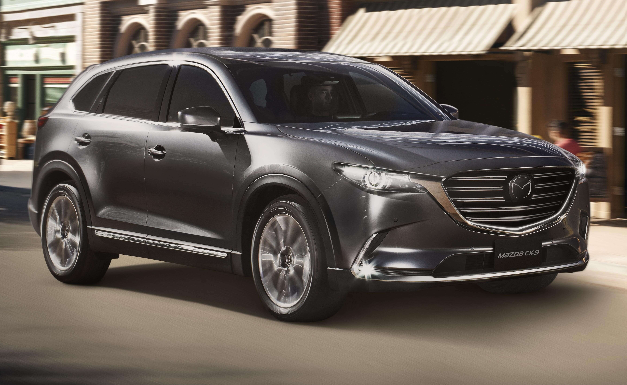
The Mazda CX-9 has always been a little different from the typical three-row family SUV. While many competitors feel like rolling appliances designed simply to move seven people from A to B, the CX-9 has traditionally brought sharper steering, attractive styling, and a surprisingly upscale cabin into the equation.
That doesn't mean every used CX-9 is equally desirable, though.
If we're shopping on the second-hand market, the big question is which Mazda CX-9 years to avoid. Some model years have accumulated noticeably more complaints than others, and several problems can become expensive enough to turn a bargain SUV into a financial headache.
The first-generation CX-9, sold from the 2007 through 2015 model years, deserves the most caution overall. Complaint databases show particularly notable problem patterns around 2008 and 2010–2012, while certain later first-generation vehicles can also suffer from expensive internal water-pump failures.
The second generation, introduced for 2016, is generally a more appealing ownership proposition, but it isn't spotless either. Mazda issued a warranty extension covering certain 2016–2020 CX-9s with the SKYACTIV-G 2.5T engine because coolant could leak around the cylinder head.
So, which years should we approach most cautiously? Let's sort through the evidence rather than simply declaring half the CX-9 lineup unreliable.
Content in this publication
- Quick Answer: Which Mazda CX-9 Years Should You Avoid?
- Why Some Mazda CX-9 Years Are Riskier Than Others
- 2008 Mazda CX-9: One of the Years We'd Approach Carefully
- 2010 Mazda CX-9: Brake and Engine Concerns
- 2011 Mazda CX-9: Another High-Complaint Year
- 2012 Mazda CX-9: Probably the First Generation's Biggest Red Flag
- What About the 2013 Mazda CX-9?
- 2014 Mazda CX-9: Better, But Age Still Matters
- 2015 Mazda CX-9: Watch the Water Pump
- 2016 Mazda CX-9: New Generation, New Engine, New Concerns
- 2017 Mazda CX-9: Generally More Appealing, With Caveats
- 2018 Mazda CX-9: Why Opinions Are Mixed
- 2019 Mazda CX-9: A Potential Sweet Spot With Checks Required
- 2020 Mazda CX-9: Not an Automatic Avoid
- 2021–2023 Mazda CX-9: Our Preferred Later Years
- The First-Generation CX-9's Biggest Problem: Water-Pump Failure
- Brake Booster Problems on Older CX-9s
- How Much Mileage Is Too Much for a Mazda CX-9?
- FWD or AWD: Which Used CX-9 Is Safer to Buy?
- What to Check Before Buying Any Used Mazda CX-9
- Are Used Mazda CX-9s Unreliable Overall?
- Which Mazda CX-9 Years Would We Buy?
- Which Mazda CX-9 Years to Avoid: Final Verdict
- Frequently Asked Questions
Quick Answer: Which Mazda CX-9 Years Should You Avoid?
If we want the shortest possible answer, the 2008, 2010, 2011, and 2012 Mazda CX-9 model years deserve the closest scrutiny when shopping used.
The 2013–2015 models aren't automatically bad purchases, but the first-generation 3.7-liter V6 has an important Achilles' heel: its internally located water pump. If it fails in the wrong way, coolant can contaminate the engine oil and potentially cause catastrophic engine damage.
Complaint data particularly highlight water-pump-related engine failures in years such as 2008, 2013, and 2015.
For second-generation CX-9s, we wouldn't automatically avoid every 2016–2020 vehicle. Instead, we would verify whether a prospective vehicle falls within Mazda's cylinder-head coolant-leak warranty-extension population and examine its repair history carefully. Mazda's program covers certain 2016–2020 CX-9 vehicles for the specified cylinder-head coolant leak for 10 years or 120,000 miles, whichever occurs first.
A practical ranking would look like this:
- Highest caution: 2008, 2010, 2011, 2012
- Buy only after particularly careful inspection: 2013–2015
- Check cylinder-head history carefully: 2016–2020
- Generally more attractive later choices: 2021–2023, assuming maintenance history and inspection are good
That doesn't mean every older CX-9 will fail. A meticulously serviced 2012 could be a far better purchase than an abused 2021. Model-year trends simply help us determine where to look more carefully.
Why Some Mazda CX-9 Years Are Riskier Than Others
Cars rarely become problematic because of one tiny weakness. Usually, several factors converge.
With the first-generation CX-9, we're dealing with increasingly old vehicles, relatively complex AWD systems, a large V6 engine, brake-system complaints, suspension-related campaigns, and potentially costly cooling-system problems.
Age magnifies everything.
A rubber seal that was perfectly healthy at five years old may be brittle at fifteen. A small coolant seep can become an overheating event. A previous owner who ignored maintenance for several years can turn an otherwise solid SUV into a ticking clock.
That's why buying an older CX-9 solely because its purchase price looks tempting can be dangerous.
Sometimes the cheapest car in the classifieds is simply the most expensive one wearing a disguise.
2008 Mazda CX-9: One of the Years We'd Approach Carefully
The 2008 Mazda CX-9 frequently appears in discussions about problematic early CX-9s, and water-pump-related engine trouble is the main reason.
Owner complaint records include instances in which water-pump failure allowed coolant to enter the engine oil and ultimately contributed to engine failure.
Why the Water Pump Matters So Much
On many vehicles, a failing water pump is annoying but relatively straightforward. The engine begins leaking coolant, we notice the leak, replace the pump, refill the cooling system, and move on.
The CX-9's first-generation Ford-sourced 3.7-liter V6 makes the situation considerably more serious because of the water pump's location.
An internal leak can potentially allow coolant to mix with engine oil.
Oil and coolant mixing together is about as healthy for an engine as pouring sand into a coffee grinder. Bearings and other lubricated internal components depend on clean oil maintaining a protective film between moving surfaces.
Once coolant compromises that lubrication, major internal damage can follow.
Would We Buy a 2008 CX-9?
Only at the right price and after a very thorough inspection.
We'd want documented maintenance, evidence that the cooling system has been monitored properly, clean engine oil, stable coolant levels, no overheating history, and ideally information about previous water-pump work.
Without records, we'd be much less enthusiastic.
2010 Mazda CX-9: Brake and Engine Concerns
The 2010 Mazda CX-9 is another model year that deserves a prominent place on our caution list.
Complaint data show numerous reports involving the braking system, while engine complaints include engine failure and internal water-pump leakage.
Brake Booster Problems Are the Big Story
One of the most widely discussed early CX-9 issues involves the brake booster.
A failing brake booster doesn't necessarily mean the brakes disappear completely. Instead, the driver can lose some power assistance, making the pedal significantly harder to press and potentially increasing stopping effort.
That's an important distinction.
A broken cupholder is irritating.
A brake pedal suddenly requiring considerably greater force is a safety concern.
Mazda previously extended warranty coverage related to the brake booster on certain 2007–2013 CX-9 vehicles, and complaint records show the 2010 model receiving significant attention for this problem.
What a Test Drive Can Reveal
When testing a 2010 CX-9, we would pay particular attention to pedal effort.
The brakes should feel predictable, assisted, and consistent. A hard pedal, hissing noise, unusually long stopping distance, or dramatic change in pedal feel should be investigated before purchase.
Never assume an odd braking sensation is simply "how an old SUV feels."
2011 Mazda CX-9: Another High-Complaint Year
The 2011 CX-9 sits squarely within the period where braking complaints become difficult to ignore.
One complaint-analysis dataset based on NHTSA records identified brakes and stability as the dominant category around the 2010–2012 model years.
That doesn't prove every 2011 CX-9 is problematic, of course.
Complaint totals have limitations. Older vehicles have been exposed to the road longer, model-year sales volumes vary, and unhappy owners are naturally more likely to file reports than satisfied ones.
Still, recurring patterns matter.
Should We Automatically Reject a 2011 CX-9?
No.
We'd simply raise our inspection standards.
A 2011 with full service documentation, excellent brake performance, clean fluids, no coolant loss, and extensive preventative maintenance could still provide useful service.
But if another similarly priced CX-9 from a more favorable year is sitting beside it, why voluntarily choose the higher-risk candidate?
Used-car shopping isn't about proving that a risky car can survive.
It's about improving our odds.
2012 Mazda CX-9: Probably the First Generation's Biggest Red Flag
If someone asks us to name one particularly troublesome first-generation CX-9 year, the 2012 Mazda CX-9 deserves immediate attention.
CarComplaints records more owner complaints for the 2012 CX-9 than any other year in its CX-9 model-year comparison, with brake power boost unit failure appearing as the most frequently reported problem for that year.
Other complaint analyses similarly show elevated reports involving the 2012 model.
Why 2012 Makes Us Cautious
The problem isn't simply that the SUV is old.
It's the combination of age and established complaint patterns.
We're buying a vehicle that may already have well over 100,000 miles, while simultaneously taking on exposure to first-generation cooling-system and brake-system weaknesses.
That doesn't make the 2012 CX-9 worthless.
It simply means the purchase price needs to compensate for the additional risk.
A Low Price Doesn't Automatically Make It a Bargain
Suppose two similar SUVs are available.
One costs $6,000 and another costs $9,000.
The $6,000 CX-9 looks like the obvious deal until it needs several thousand dollars of engine work.
You may be interested in reading BMW M2 Years to Avoid: Which Used M2 Should You Skip?
Suddenly the supposedly expensive vehicle was cheaper all along.
This is why service records matter so much when buying an aging CX-9.
What About the 2013 Mazda CX-9?
The 2013 model is a more complicated case.
We wouldn't place it quite as firmly in the same avoid-at-all-costs category as the 2010–2012 period, but engine complaints deserve attention.
CarComplaints identifies the 2013 CX-9 as one of the first generation's notable years for reported engine problems, including reports involving water-pump failure.
Water-Pump History Becomes Extremely Valuable
When considering a high-mileage 2013 CX-9, documentation becomes gold.
If the water pump has already been professionally replaced and the vehicle has been maintained carefully, that can substantially change our impression compared with a similar CX-9 whose owner has no idea whether the pump has ever been touched.
"No records" shouldn't automatically mean "bad car."
But it does mean "unknown risk."
And unknown risk should influence what we're willing to pay.
2014 Mazda CX-9: Better, But Age Still Matters
The 2014 CX-9 often occupies an awkward middle ground.
It's newer than the complaint-heavy 2010–2012 vehicles, yet still uses the first-generation platform and 3.7-liter V6.
Consequently, the fundamental concerns associated with buying an aging first-generation CX-9 haven't disappeared.
Don't Shop by Model Year Alone
This is where many "best and worst years" articles oversimplify things.
A model-year recommendation should be a filter, not a substitute for inspecting the actual vehicle.
At this age, we care about oil-change intervals, cooling-system maintenance, transmission condition, AWD servicing, suspension wear, brake repairs, rust exposure, accident history, and how previous owners drove the vehicle.
A beautifully maintained 2014 could easily be the smarter purchase than a neglected second-generation CX-9.
2015 Mazda CX-9: Watch the Water Pump
The 2015 CX-9 deserves special mention because some complaint databases rank it poorly largely due to the potential severity and repair cost of reported engine failures.
CarComplaints lists its most severe reported CX-9 problem as a 2015 water-pump failure that destroyed the engine, with a substantial average repair cost among the complaints it collected.
That doesn't mean 2015 is necessarily the CX-9 year with the highest failure rate.
Severity and frequency aren't the same thing.
But catastrophic engine failure is exactly the type of low-frequency, high-cost event used-SUV shoppers should understand before handing over their money.
2016 Mazda CX-9: New Generation, New Engine, New Concerns
The 2016 CX-9 represented a dramatic transformation.
Mazda ditched the naturally aspirated 3.7-liter V6 and introduced its turbocharged 2.5-liter SKYACTIV-G engine.
The second-generation CX-9 is lighter-feeling, more sophisticated, more efficient, and arguably much closer to the vehicle Mazda originally wanted the CX-9 to be.
Unfortunately, early versions of the turbocharged engine introduced another issue worth knowing about.
Cylinder-Head Coolant Leaks
Mazda established warranty extension program CSP11 covering certain 2016–2020 CX-9s equipped with the 2.5T engine.
According to Mazda's documentation filed through NHTSA, affected vehicles may develop a coolant leak at the cylinder head around the exhaust-manifold area. Coverage for the specified repair was extended to 10 years or 120,000 miles.
That's much more authoritative than an internet rumor.
Does This Mean Avoid Every 2016 CX-9?
Not necessarily.
The better approach is VIN-specific research.
Before buying, determine whether the particular CX-9 falls within the relevant production range, whether repairs have already been completed, whether coolant loss has ever been documented, and whether warranty-extension coverage remains available.
That's far more useful than putting a giant red X over every 2016 model.
2017 Mazda CX-9: Generally More Appealing, With Caveats
The 2017 CX-9 benefits from being one year removed from the redesign launch, and complaint totals seen on several databases are lower than those associated with some troublesome first-generation years.
Still, it uses the same general 2.5-liter turbo powertrain architecture.
Therefore, the coolant-leak question remains relevant.
We'd inspect the coolant reservoir, ask about unexplained coolant top-offs, inspect around the engine for evidence of leakage, and review dealer records wherever possible.
A pre-purchase inspection from a Mazda specialist is particularly valuable here.
2018 Mazda CX-9: Why Opinions Are Mixed
Interestingly, the 2018 CX-9 receives mixed assessments depending on which dataset or methodology we examine.
One complaint-analysis source classifies 2018 among less desirable CX-9 years based on the number and severity of NHTSA reports.
The year was also involved in a later fuel-pump recall population. Mazda's NHTSA defect chronology identifies certain 2018 and 2019 CX-9 vehicles in connection with a fuel-pump impeller problem that could cause the pump to stop operating.
Again, though, recalls aren't necessarily a reason to reject a vehicle.
An outstanding recall that has never been completed is a concern.
A recall that was completed correctly can simply be part of the vehicle's maintenance history.
2019 Mazda CX-9: A Potential Sweet Spot With Checks Required
The 2019 CX-9 can be attractive on today's used market.
By this point the second generation had been in production for several years, yet the vehicle still looks modern and offers much of the refinement people expect from newer midsize SUVs.
However, both the cylinder-head coolant-leak coverage and fuel-pump recall history can apply to certain vehicles, making VIN verification essential.
The VIN Matters More Than Internet Rankings
We can't emphasize this enough.
Two apparently identical 2019 CX-9s can have very different histories.
One may have completed every recall, received dealer servicing from new, and already undergone relevant warranty repairs.
The other may have missed maintenance, overheated, changed owners repeatedly, and never visited a Mazda dealer for campaigns.
The badge on the tailgate doesn't tell us that story.
The paperwork does.
2020 Mazda CX-9: Not an Automatic Avoid
Some buyers see the 2016–2020 cylinder-head warranty extension and conclude they should simply avoid all five model years.
We think that's too simplistic.
Certain 2020 CX-9s are included in Mazda's warranty-extension population, but the coverage is based on specified VIN and production ranges rather than an assumption that every vehicle will experience the problem.
A properly maintained example with a clean inspection and documented dealer history can still be an excellent used SUV.
This is where research saves money.
2021–2023 Mazda CX-9: Our Preferred Later Years
If our budget allows it, the later second-generation CX-9s are generally where we'd start looking.
They're newer, have fewer years of accumulated wear, and move beyond the production years identified by Mazda's 2016–2020 cylinder-head coolant-leak warranty-extension program.
That doesn't make them immune to problems.
You may be interested in readingBMW M2 Years to Avoid: Which Used M2 Should You Skip?You may be interested in reading
 Toyota Hilux Years to Avoid: The Models We’d Inspect Twice Before Buying
No used vehicle is.
But when we combine lower age with the benefit of several years of second-generation production experience, these final CX-9 years make compelling targets.
The CX-9 was discontinued after the 2023 model year as Mazda shifted attention toward newer products such as the CX-90, which means a clean late-production CX-9 can be an interesting way to get a mature version of Mazda's three-row SUV.
The First-Generation CX-9's Biggest Problem: Water-Pump Failure
If we remember only one mechanical issue from this guide, this should probably be it.
Water-pump trouble matters because the potential consequences extend far beyond replacing the pump itself.
Owner complaint databases document first-generation CX-9 cases in which water-pump failure was associated with coolant contamination and major engine damage.
Warning Signs We Wouldn't Ignore
Watch the coolant level closely.
Unexplained coolant disappearance deserves investigation, even if we can't see a puddle underneath the vehicle.
Likewise, overheating, unusual exhaust smoke, contaminated-looking oil, coolant odors, misfires, warning lights, or abnormal engine noises should never be dismissed.
Get a Professional Inspection
This isn't the place to save $150 by skipping an inspection.
When purchasing an older CX-9, having a knowledgeable mechanic inspect it before purchase could be one of the best investments we make.
They aren't clairvoyant, of course.
No mechanic can guarantee that a water pump won't fail six months later.
But an inspection can uncover signs we would never notice while walking around the SUV in a dealership parking lot.
Brake Booster Problems on Older CX-9s
The other major first-generation concern involves braking assistance.
Complaint records show particularly strong concentrations of brake-related problems during the 2010–2012 period.
When test-driving an older CX-9, we shouldn't focus exclusively on whether the infotainment system works or whether the air conditioning blows cold.
Find a safe location and evaluate the brake pedal carefully.
It should feel consistent.
Stopping effort shouldn't suddenly become excessive.
If something feels wrong, get it diagnosed before purchase rather than negotiating a discount and hoping for the best.
How Much Mileage Is Too Much for a Mazda CX-9?
Mileage alone can't answer that question.
We'd rather buy a properly maintained 120,000-mile CX-9 than a neglected 70,000-mile example.
Highway miles under careful ownership can be remarkably gentle. Short trips, skipped oil changes, repeated overheating, and delayed repairs can brutalize a vehicle at far lower mileage.
Once an older CX-9 moves beyond roughly 100,000 miles, however, we'd budget more aggressively for maintenance and age-related repairs.
That's simply sensible used-car ownership.
Suspension components, engine mounts, wheel bearings, hoses, seals, alternators, starters, air-conditioning components, and numerous other parts do not last forever.
FWD or AWD: Which Used CX-9 Is Safer to Buy?
If we don't need AWD, a front-wheel-drive CX-9 is mechanically simpler.
That doesn't automatically make FWD the "reliable" version, but fewer driveline components mean fewer components that can eventually wear or require servicing.
AWD can be valuable in snow, slippery conditions, and particular driving environments.
But if we're buying an older vehicle purely for suburban use in a mild climate, simplicity has its charm.
Think of it as luggage.
Every additional mechanical system we carry can be useful, but it also adds something else that may eventually need attention.
What to Check Before Buying Any Used Mazda CX-9
Regardless of model year, our purchase process matters at least as much as the year printed on the registration.
We would verify the VIN for outstanding recalls and campaigns, request maintenance records, check coolant level and condition, inspect the engine oil, test braking performance, listen for suspension noise, test the transmission from cold and hot, confirm AWD operation when applicable, scan the vehicle for stored diagnostic codes, inspect underneath for fluid leaks and corrosion, and obtain an independent pre-purchase inspection.
We'd also insist on seeing the vehicle when the engine is cold.
A seller who warms up a vehicle before we arrive may have an innocent reason—but a cold start can reveal rattles, smoke, misfires, slow starting, and other behavior that disappears once everything reaches operating temperature.
Are Used Mazda CX-9s Unreliable Overall?
No.
Calling the entire CX-9 lineup unreliable would miss the nuance.
The model has several known areas that deserve attention, particularly within the first generation, but plenty of CX-9s accumulate substantial mileage without catastrophic problems.
Our job as buyers isn't to find a vehicle that can never break.
That vehicle doesn't exist.
We're trying to identify predictable risk and purchase accordingly.
A CX-9 with a transparent service history, strong inspection results, and evidence of careful ownership can be a much more attractive bet than one chosen purely because an online ranking labeled its model year "best."
Which Mazda CX-9 Years Would We Buy?
If budget permits, we'd focus primarily on 2021–2023 models.
They retain everything that made the second-generation CX-9 attractive—the premium-feeling interior, composed road manners, powerful turbocharged engine, and elegant styling—while sitting outside the 2016–2020 model-year range referenced by Mazda's specific cylinder-head coolant-leak warranty extension.
For buyers seeking a lower price, a carefully inspected 2017–2020 example can still make sense, especially if dealer records establish that applicable recalls or warranty work have been handled.
Among first-generation vehicles, we'd shop much more selectively.
Maintenance history would outweigh trim level, paint color, navigation systems, or leather upholstery.
Which Mazda CX-9 Years to Avoid: Final Verdict
So, which Mazda CX-9 years should we avoid?
The years that deserve our strongest caution are 2008 and 2010–2012, largely because of the complaint patterns involving brakes and, on first-generation vehicles more broadly, potentially serious water-pump-related engine problems. Complaint analyses consistently place several of these years among the CX-9's more troublesome periods.
We would also approach 2013–2015 examples carefully because they retain the first generation's 3.7-liter V6 and its potentially costly water-pump concerns. Severe owner-reported water-pump failures have appeared particularly in years including 2013 and 2015.
For 2016–2020, the story changes. These aren't necessarily years to avoid outright, but certain vehicles fall within Mazda's extended coverage for coolant leakage around the 2.5T cylinder head. That makes VIN checks, service history, coolant inspection, and dealer records especially important.
If we want the simplest used-buying strategy, later 2021–2023 CX-9s are our preferred starting point.
Still, remember the golden rule of used cars:
Condition beats reputation.
The best model year can become a terrible purchase after years of neglect, while a supposedly risky year can continue running beautifully when an attentive owner has maintained it properly.
Buy the history, inspect the vehicle, and never allow an attractive price to rush the decision.
Frequently Asked Questions
What is the worst year for the Mazda CX-9?
There isn't one universally agreed "worst" year because rankings depend on whether we prioritize complaint volume, repair severity, safety complaints, or engine failures. The 2012 CX-9 stands out because CarComplaints records the highest overall complaint count among the CX-9 years it lists, particularly involving brake power boost unit failure. Meanwhile, 2015 receives a poor overall rating from the same source because of severe and potentially expensive reported water-pump-related engine damage.
Which first-generation Mazda CX-9 years should I avoid?
We would be most cautious with 2008 and 2010–2012 models. Complaint patterns involving braking problems are especially noticeable around 2010–2012, while first-generation CX-9s also deserve scrutiny for internal water-pump failures that can potentially damage the engine.
Does the Mazda CX-9 have water-pump problems?
The first-generation CX-9's 3.7-liter V6 has generated owner reports of water-pump failures, including instances in which coolant entered the engine and serious engine damage followed. Complaint databases identify water-pump-related failures in model years including 2008, 2013, and 2015.
You may be interested in readingBMW M2 Years to Avoid: Which Used M2 Should You Skip?You may be interested in reading
Toyota Hilux Years to Avoid: The Models We’d Inspect Twice Before BuyingYou may be interested in reading
 Leapmotor B10 vs C10: Which Electric SUV Should You Buy?
Do 2016–2020 Mazda CX-9s have engine problems?
Certain 2016–2020 CX-9s equipped with the SKYACTIV-G 2.5T engine are covered by Mazda warranty extension CSP11 for a specified coolant leak at the cylinder head near the exhaust manifold. Coverage was extended to 10 years or 120,000 miles for qualifying vehicles. Buyers should check the individual VIN and repair history rather than assuming every CX-9 from those years is affected.
What are the best Mazda CX-9 years to buy used?
For buyers who can afford them, we'd begin with 2021, 2022, and 2023. They are among the newest CX-9s available and sit beyond the 2016–2020 model-year range identified in Mazda's cylinder-head coolant-leak warranty extension. A well-documented 2017–2020 vehicle can also represent good value after a comprehensive inspection and VIN-specific campaign check.
If you want to know other articles similar to Which Mazda CX-9 Years to Avoid? A Used-Buyer’s Guide you can visit the category Models.
Volkswagen T-Cross vs Volkswagen T-Roc: Which Is Better?
Hyundai Tucson Weight: Complete Guide to Curb, Gross, and Payload Specs

Honda Passport vs Toyota 4Runner: Which SUV Is Better?
Honda Passport vs Ford Bronco: Which SUV Is Better?
Honda Passport vs Ford Explorer: Which SUV Is Better?
Honda Passport or Pilot: Which SUV Is Better?
Leave a Reply
More content of your interest