

How Long Does a Mazda CX-9 Last? Mileage, Lifespan, and Reliability Explained

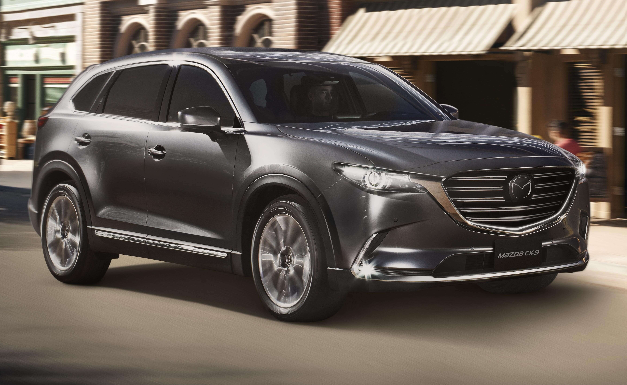
Buying a three-row SUV is rarely a short-term decision. We expect it to survive school runs, highway trips, grocery missions, vacations, and thousands of ordinary commutes without turning every strange noise into an expensive appointment with a mechanic. So, how long does a Mazda CX-9 last?
A properly maintained Mazda CX-9 can realistically remain useful for around 150,000 to 200,000 miles, while well-maintained examples may push beyond 200,000 miles. That could translate to roughly 12 to 17 years of service for someone driving around 12,000 miles annually.
But mileage alone doesn't tell the whole story.
A CX-9 that reaches 180,000 miles after years of careful servicing can be a far safer bet than one showing 90,000 miles with missing maintenance records, overheating history, neglected oil changes, or unresolved mechanical problems.
That's especially important with the CX-9 because Mazda produced two quite different generations. Early models used a naturally aspirated V6, while the second-generation CX-9 switched to Mazda's turbocharged 2.5-liter four-cylinder engine. Each comes with its own aging characteristics.
Let's dig into what actually determines Mazda CX-9 lifespan and what owners can do to squeeze as many dependable miles as possible from one.
Content in this publication
- How Many Miles Can a Mazda CX-9 Last?
- How Many Years Does a Mazda CX-9 Last?
- Is the Mazda CX-9 a Long-Lasting SUV?
- First-Generation vs. Second-Generation CX-9 Longevity
- First-Generation Mazda CX-9 Lifespan
- Second-Generation Mazda CX-9 Lifespan
- Can a Mazda CX-9 Reach 200,000 Miles?
- Does the Mazda CX-9 Engine Last a Long Time?
- How Long Does the Mazda CX-9 Transmission Last?
- Does Highway Driving Help a CX-9 Last Longer?
- How Maintenance Changes Mazda CX-9 Life Expectancy
- Driving Habits That Can Shorten CX-9 Lifespan
- How Rust Affects Mazda CX-9 Longevity
- How to Make a Mazda CX-9 Last 200,000 Miles
- Is a High-Mileage Mazda CX-9 Worth Buying?
- When Does a Mazda CX-9 Become Too Expensive to Keep?
- Mazda CX-9 Lifespan Compared With Other SUVs
- What Mileage Is Too High for a Used Mazda CX-9?
- Signs Your Mazda CX-9 Still Has Plenty of Life Left
- Final Verdict: How Long Can a Mazda CX-9 Really Last?
- Frequently Asked Questions
How Many Miles Can a Mazda CX-9 Last?
For most buyers, 150,000 to 200,000 miles is a sensible expectation for a Mazda CX-9 that receives consistent maintenance.
Crossing 200,000 miles certainly isn't impossible. However, we wouldn't approach vehicle lifespan like a finish line where every CX-9 automatically expires at a certain number.
Cars aren't milk cartons.
Two identical SUVs can age completely differently depending on maintenance, climate, driving conditions, towing, accident history, previous repairs, and how aggressively they have been driven.
A rough way of looking at Mazda CX-9 longevity is:
- Under 100,000 miles: Generally still relatively young when serviced correctly.
- 100,000–150,000 miles: Larger wear-related repairs become increasingly likely.
- 150,000–200,000 miles: Achievable with strong maintenance history.
- Over 200,000 miles: Possible, but overall condition matters much more than the odometer.
- 250,000+ miles: Exceptional territory rather than something every CX-9 owner should automatically expect.
The important question isn't simply, "Can it reach 200,000 miles?" It's whether keeping the vehicle running at that mileage still makes financial sense.
How Many Years Does a Mazda CX-9 Last?
Mileage becomes easier to understand when we convert it into years.
Someone driving approximately 10,000 miles annually would need 20 years to accumulate 200,000 miles. At 12,000 miles per year, the same mileage would take roughly 16 to 17 years. A driver covering 15,000 miles each year might hit 200,000 miles in around 13 years.
That gives us a practical estimate of roughly 12 to 17 years for a carefully maintained CX-9.
Age introduces its own problems, though. Rubber seals harden. Bushings deteriorate. Plastic connectors become brittle. Corrosion can creep underneath the vehicle. Sensors fail, batteries weaken, and suspension components wear out.
So an older low-mileage CX-9 isn't automatically better than a newer high-mileage one.
Mileage vs. Age: Which Matters More?
Both matter, but maintenance history usually wins.
Imagine two CX-9s sitting beside each other.
The first has 95,000 miles but irregular oil changes, four previous owners and no meaningful service documentation.
The second shows 135,000 miles but comes with records showing timely servicing, coolant checks, fluid changes, scheduled inspections and preventative repairs.
We would usually feel much more comfortable examining the second vehicle.
Mileage tells us how far the car traveled. Maintenance records tell us how it was treated along the way.
Is the Mazda CX-9 a Long-Lasting SUV?
Overall, we'd describe the CX-9 as capable of providing good long-term service rather than labeling it indestructible.
Mazda's scheduled maintenance documentation repeatedly emphasizes maintenance at the recommended intervals to support long-term reliability. For example, the 2023 CX-9 maintenance schedule calls for regular oil and filter replacement and specifies replacement of turbo-engine spark plugs at 40,000 miles under the applicable U.S. schedule.
That's a useful reminder: longevity isn't created by the badge on the grille. It's created one oil change, inspection and repair at a time.
What Usually Determines Mazda CX-9 Lifespan?
The biggest factors include:
- Oil-change history.
- Cooling-system health.
- Driving environment.
- Previous overheating.
- Transmission maintenance and condition.
- Rust exposure.
- Suspension wear.
- Engine version and model year.
- Accident history.
- Whether developing problems were repaired quickly.
A tiny coolant leak ignored for months can become far more significant than a worn interior button or scratched bumper ever will.
First-Generation vs. Second-Generation CX-9 Longevity
Not every Mazda CX-9 underneath the same badge is mechanically the same.
That makes generation especially important when discussing high mileage.
First-Generation Mazda CX-9 Lifespan
The original CX-9 arrived for the 2007 model year and remained in production through the 2015 model year. These vehicles used V6 power rather than the four-cylinder turbo found in the later generation.
At this age, condition dominates almost everything.
Even a mechanically healthy first-generation CX-9 can now need work involving suspension components, engine mounts, bearings, seals, air-conditioning components, electronics or other age-related parts.
The Water-Pump Issue Matters
One reason we would inspect older CX-9s particularly carefully is the history of water-pump complaints.
CarComplaints identifies water-pump failures among the most expensive owner-reported problems for first-generation CX-9 models, including reports where coolant contamination contributed to major engine damage.
This doesn't mean every older CX-9 will suffer catastrophic water-pump failure.
It does mean that when shopping for one, we wouldn't simply start the engine, admire the leather and hand over the money.
A proper mechanical inspection matters.
What We'd Check on an Older CX-9
We'd pay attention to:
- Coolant condition.
- Cooling-system maintenance.
- Unexplained coolant loss.
- Signs of coolant contamination.
- Engine temperature behavior.
- Service records.
- Brake operation.
- Transmission behavior.
- Suspension noises.
- Underbody corrosion.
Remember that a 15-year-old vehicle has survived thousands of heat cycles. Age itself becomes part of the mechanical equation.
Second-Generation Mazda CX-9 Lifespan
The redesigned CX-9 arrived for 2016 and dramatically changed the recipe.
Out went the previous V6. In came Mazda's 2.5-liter SKYACTIV-G turbocharged four-cylinder engine.
The second-generation CX-9 can absolutely accumulate substantial mileage, but there are specific production-year issues buyers should understand before purchasing a high-mileage example.
2016–2020 CX-9 Cylinder-Head Coolant Leak Concern
Mazda issued warranty-extension information concerning certain 2016–2020 CX-9 vehicles equipped with the 2.5T engine because coolant could leak from the cylinder head around the exhaust manifold.
For eligible U.S. vehicles, Mazda extended coverage for the specified repair to 10 years or 120,000 miles, whichever occurs first.
That's important information for anyone comparing used CX-9s.
It doesn't mean every 2016–2020 example will develop the problem. Mazda's own documentation specifically identifies certain subject vehicles rather than suggesting every CX-9 is affected.
Still, we'd check the VIN, examine service records and look carefully for evidence of coolant loss when buying one.
2021 CX-9 Oil-Consumption Concern
Certain 2021 CX-9 vehicles equipped with the turbocharged 2.5-liter engine were also included in a Mazda program associated with excessive oil consumption involving valve-stem seals.
Mazda documentation describes extended coverage of 7 years or 84,000 miles for qualifying oil-consumption-related repairs on eligible vehicles.
An earlier technical bulletin noted low oil-level warnings in certain affected 2021 turbo vehicles and discussed valve-stem seals as the suspected cause.
Again, context matters.
We're not saying every 2021 CX-9 burns oil. We're saying that anyone buying one should check its specific VIN and service history instead of assuming all model years are mechanically identical.
You may be interested in reading BMW M2 Insurance Cost: What Should You Expect to Pay?
Can a Mazda CX-9 Reach 200,000 Miles?
Yes, reaching 200,000 miles is possible.
But we'd consider it a result of good ownership rather than a guaranteed factory promise.
Think of a vehicle like an athlete. Genetics matter, but training, recovery, nutrition and injuries also determine how long the career lasts.
A CX-9 driven gently on highways, maintained on schedule and repaired promptly has a much easier life than one constantly subjected to short trips, neglected fluids, heavy towing and aggressive acceleration.
What Happens After 100,000 Miles?
Nothing magical.
The engine doesn't suddenly look at the odometer and give up.
But wear becomes more relevant. Around this stage, owners should expect increasingly frequent attention to components such as:
- Engine mounts.
- Suspension bushings.
- Shocks and struts.
- Wheel bearings.
- Belts and tensioners.
- Cooling-system components.
- Ignition components.
- Battery and charging system.
- Brake hardware.
- Various seals and gaskets.
Some may already have been replaced earlier.
High-mileage ownership is ultimately about managing these smaller repairs before several arrive simultaneously.
Does the Mazda CX-9 Engine Last a Long Time?
It can.
With consistent lubrication, proper cooling and regular servicing, an engine can provide many years of dependable operation.
Oil is especially important on turbocharged engines because the turbocharger itself operates under tremendous heat and rotational speed.
Skipping oil services to save a few dollars is therefore rather like refusing to change your running shoes during a marathon because the old pair still has laces.
Eventually, the savings can become expensive.
Oil Changes Are Critical
Mazda's maintenance documentation specifies regular oil-and-filter changes, with the exact interval depending on market, conditions and the maintenance schedule applicable to the vehicle.
For U.S. 2022 CX-9 models using Mazda's flexible maintenance schedule, the oil-change interval has a maximum of 12 months or 7,500 miles, while more demanding operating conditions may require more frequent servicing.
Always follow the schedule for the exact model year and market rather than relying on a universal number from the internet.
Check the Oil Between Services
Mazda also instructs owners to inspect the engine-oil level as part of owner maintenance.
That's simple but valuable.
Checking your oil periodically can reveal consumption or leakage before the warning lights become the opening scene of an expensive repair bill.
How Long Does the Mazda CX-9 Transmission Last?
There isn't one mileage at which every CX-9 transmission fails.
A well-treated automatic transmission may remain functional well into high mileage, while excessive heat, towing, neglected leaks or harsh use can reduce its life.
Signs we'd never ignore include:
- Delayed engagement.
- Harsh shifting.
- Slipping.
- Shuddering.
- Transmission-fluid leaks.
- Unusual whining.
- Sudden changes in shift quality.
Catching problems early often separates a manageable repair from a transmission replacement.
Does Highway Driving Help a CX-9 Last Longer?
Generally, steady highway miles are easier on a vehicle than constant short urban journeys.
Highway driving typically involves fewer cold starts, less braking, fewer gear changes and longer periods at stable operating temperature.
That's why a CX-9 with 130,000 highway-heavy miles isn't necessarily more worn than another with 85,000 miles spent almost entirely creeping through traffic.
Short Trips Can Be Surprisingly Hard on Cars
Engines operate most efficiently after reaching full temperature.
Repeated short journeys mean:
- More cold starts.
- More condensation.
- More stop-and-go transmission activity.
- More brake wear.
- More battery stress.
- Less time at full operating temperature.
So when evaluating a used CX-9, knowing how those miles were accumulated can be almost as useful as knowing how many miles appear on the odometer.
How Maintenance Changes Mazda CX-9 Life Expectancy
Maintenance is the closest thing we have to a longevity cheat code.
It won't make the vehicle immortal, but it significantly improves our odds.
Follow the Factory Service Schedule
Mazda's 2023 schedule includes regular inspection or replacement of numerous wear-related items and specifies the first engine-coolant replacement at 10 years or 120,000 miles under the applicable U.S. schedule, followed by shorter subsequent intervals.
The manufacturer also specifies periodic checks involving brakes, suspension, steering, tires and other components.
That's how long-lived vehicles are built—not just in the factory, but gradually in the owner's driveway and service bay.
Driving Habits That Can Shorten CX-9 Lifespan
Maintenance gets most of the attention, but driving style matters too.
Hammering the accelerator immediately after a cold start, repeatedly towing near maximum capacity, hitting potholes at speed and ignoring warning lights can accelerate wear.
A little mechanical sympathy goes a long way.
Let the Vehicle Warm Naturally
We don't need to let a modern CX-9 idle in the driveway for 20 minutes.
Instead, start the vehicle, allow it a brief moment to stabilize and drive moderately until the engine reaches normal operating temperature.
That reduces unnecessary stress while everything warms up.
Don't Ignore Warning Lights
Warning lights aren't decorative dashboard confetti.
A coolant warning, low oil indication or check-engine light deserves investigation.
A minor issue fixed today can prevent an enormous repair tomorrow.
How Rust Affects Mazda CX-9 Longevity
Mechanical reliability gets all the headlines, but structural corrosion can eventually determine whether an older vehicle remains worth keeping.
CX-9s living in regions where roads are regularly salted deserve additional scrutiny.
Look underneath the vehicle, not simply at the shiny paint.
Pay attention to suspension mounting areas, subframes, brake lines, exhaust components and other exposed metal.
An engine can run beautifully while the chassis underneath ages far less gracefully.
How to Make a Mazda CX-9 Last 200,000 Miles
If our goal were to keep a CX-9 as long as realistically possible, we'd focus on a handful of habits rather than searching for miracle additives.
The most useful long-term habits are:
- Change the oil on time.
- Check the oil level between services.
- Monitor coolant levels.
- Investigate unexplained coolant loss immediately.
- Replace spark plugs according to the applicable schedule.
- Inspect brakes and tires regularly.
- Repair leaks instead of continuously topping off fluids.
- Avoid repeated hard acceleration when the engine is cold.
- Pay attention to unusual transmission behavior.
- Keep complete maintenance records.
- Check for recalls or manufacturer service campaigns by VIN.
- Address suspension noises before worn parts affect surrounding components.
None of these tricks is exciting.
That's precisely the point.
You may be interested in readingBMW M2 Insurance Cost: What Should You Expect to Pay?You may be interested in reading
BMW M2 Depreciation: How Well Does the M2 Hold Its Value?Cars usually reach impressive mileage because owners repeatedly did boring things correctly.
Is a High-Mileage Mazda CX-9 Worth Buying?
It can be, but we'd buy condition rather than mileage.
A well-maintained CX-9 with 120,000 miles could make far more sense than an abused example showing 70,000.
What to Check Before Buying One
Before purchasing a high-mileage CX-9, we'd want:
- Complete maintenance history.
- Clean cold start.
- No unexplained oil consumption.
- Stable coolant level.
- Smooth transmission operation.
- No overheating history.
- No major fluid leaks.
- Healthy suspension.
- Even tire wear.
- Proper brake operation.
- VIN check for recalls and relevant Mazda programs.
- Independent pre-purchase inspection.
For older first-generation models, we'd pay particular attention to cooling-system and water-pump history.
For turbocharged second-generation vehicles, we'd check whether the specific VIN falls within Mazda programs related to cylinder-head coolant leakage or valve-stem-seal oil consumption where applicable.
When Does a Mazda CX-9 Become Too Expensive to Keep?
This is where lifespan becomes personal.
A vehicle isn't necessarily finished because it needs repairs.
The real decision comes when repair costs begin exceeding the value the SUV provides to you.
For example, replacing brakes, tires and a battery in one year might feel expensive, but those are wear items.
A failing engine, deteriorating transmission and serious corrosion arriving together tell a very different story.
Don't Compare Every Repair With the Car's Market Value
Suppose your CX-9 is worth $6,000 and needs a $1,500 repair.
That doesn't automatically mean fixing it is foolish.
Ask what replacing the vehicle would cost.
If a $1,500 repair gives you another two years of reliable transportation, keeping the car might still beat taking on a substantially larger replacement expense.
Mazda CX-9 Lifespan Compared With Other SUVs
The CX-9 competes in a crowded three-row segment that includes vehicles such as the Toyota Highlander, Honda Pilot, Kia Telluride and Hyundai Palisade.
Some rivals have particularly strong reputations for extreme high-mileage durability, but individual vehicle condition still outweighs internet mythology.
A neglected "reliable" model isn't a good purchase simply because its badge scores well in reputation surveys.
Likewise, a meticulously maintained CX-9 shouldn't automatically be rejected because another brand has a stronger reputation for 300,000-mile stories.
The actual car sitting in front of us matters most.
What Mileage Is Too High for a Used Mazda CX-9?
There isn't a universal cutoff.
Still, once we move beyond roughly 150,000 miles, we'd want stronger service records and a lower purchase price to compensate for increasing wear risk.
At 200,000 miles, we'd approach the SUV as an older high-mileage vehicle regardless of how well it drives.
That means budgeting for repairs becomes essential.
Would We Buy One With 100,000 Miles?
Yes, potentially.
A CX-9 with 100,000 miles and excellent maintenance history can still have plenty of useful life remaining.
We would simply inspect it carefully and price future maintenance into the purchase decision.
Would We Buy One With 200,000 Miles?
Possibly—but only under the right circumstances.
At that mileage, we'd want a very attractive price, extensive records, strong mechanical condition and an independent inspection.
We wouldn't buy it expecting another trouble-free 200,000 miles.
We'd buy it because its current condition makes financial sense.
Signs Your Mazda CX-9 Still Has Plenty of Life Left
Mileage aside, a healthy CX-9 usually gives encouraging clues.
The engine starts cleanly from cold. Oil and coolant levels remain stable. The transmission changes gears smoothly. The suspension feels controlled. There are no mystery warning lights. Maintenance records form a consistent timeline rather than disappearing for five-year stretches.
That's what we want.
A vehicle's story should make sense.
If the seller says, "It has never needed anything," yet the CX-9 has traveled 160,000 miles with no documented maintenance, that isn't necessarily reassuring.
Sometimes "never needed anything" simply means "nothing was done."
Final Verdict: How Long Can a Mazda CX-9 Really Last?
So, how long does a Mazda CX-9 last?
A sensible target is around 150,000 to 200,000 miles, with properly cared-for examples capable of exceeding the 200,000-mile mark. Depending on annual mileage, that can represent roughly 12 to 17 years of ownership, and potentially longer for lighter drivers.
But the odometer is only half the story.
The CX-9's true lifespan depends heavily on maintenance, operating conditions and model-specific mechanical history. Earlier first-generation vehicles deserve careful inspection for age-related problems and known water-pump concerns, while certain second-generation model years should be checked for applicable Mazda programs involving coolant leakage or oil consumption.
If we want a CX-9 to reach high mileage, there isn't one dramatic secret.
Change the oil.
Watch the coolant.
Fix problems early.
Treat the drivetrain kindly.
Keep records.
Do that consistently, and 100,000 miles doesn't have to feel like the beginning of the end. For a healthy CX-9, it may simply be halftime.
Frequently Asked Questions
1. Can a Mazda CX-9 last 200,000 miles?
Yes. A properly maintained Mazda CX-9 can potentially reach or exceed 200,000 miles. Maintenance history, driving conditions, climate and mechanical condition all influence whether an individual vehicle will reach that milestone without major repairs.
2. How long does a Mazda CX-9 engine last?
There is no manufacturer-defined expiration mileage for the CX-9 engine. With proper lubrication, cooling-system maintenance and timely repairs, the engine can potentially remain usable into the 150,000–200,000-mile range and beyond. Specific model-year issues should also be considered when evaluating longevity.
3. Is 100,000 miles high for a Mazda CX-9?
Not necessarily. A CX-9 with 100,000 miles can still provide years of service if it has been maintained correctly. At that mileage, however, we'd pay closer attention to service records, cooling-system health, suspension wear, transmission behavior and upcoming scheduled maintenance.
4. Is a Mazda CX-9 reliable after 150,000 miles?
It can be, although repair frequency usually increases as vehicles age. At 150,000 miles, maintenance history becomes much more important than the manufacturer's reputation alone. A documented, well-maintained example may still be dependable, while a neglected CX-9 can become costly much earlier.
5. What is the best way to make a Mazda CX-9 last longer?
Follow Mazda's maintenance schedule, change the engine oil at the required intervals, monitor oil and coolant levels, investigate leaks immediately, avoid hard driving while the engine is cold, maintain tires and brakes, and address unusual noises or warning lights before minor problems become major failures.
You may be interested in readingBMW M2 Insurance Cost: What Should You Expect to Pay?You may be interested in reading
BMW M2 Depreciation: How Well Does the M2 Hold Its Value?You may be interested in reading
 Is Leapmotor C10 a Good Car? Full Review and Buyer’s Guide
If you want to know other articles similar to How Long Does a Mazda CX-9 Last? Mileage, Lifespan, and Reliability Explained you can visit the category Blog.
How to Charge Leapmotor C10: Complete Charging Guide
Is Leapmotor C10 a Good Car? Full Review and Buyer’s Guide

BMW M2 Depreciation: How Well Does the M2 Hold Its Value?
BMW M2 Insurance Cost: What Should You Expect to Pay?
Is Mazda CX-9 a Good Car? A Complete Owner-Focused Guide

Subaru XV Reliability: How Dependable Is This Compact SUV?
Leave a Reply
More content of your interest