
BMW M2 Depreciation: How Well Does the M2 Hold Its Value?

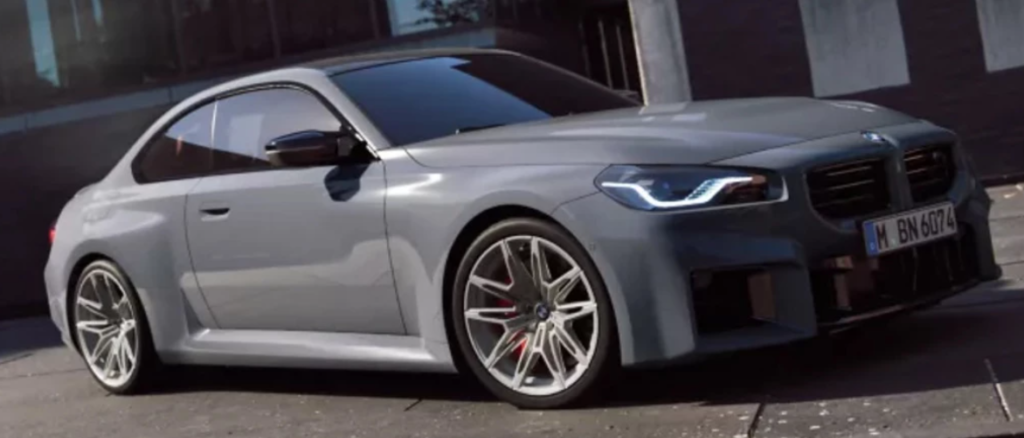
Buying a BMW M2 is rarely a purely logical decision. We see those muscular arches, hear that turbocharged straight-six wake up, and suddenly spreadsheets seem much less interesting. Still, sooner or later, one practical question deserves our attention: how much does a BMW M2 depreciate?
The good news is that the BMW M2 has several characteristics that support resale value. It is a genuine BMW M car, production numbers are relatively limited compared with mainstream BMW models, enthusiast demand remains strong, and manual-transmission examples have become particularly interesting to long-term buyers.
That does not mean the M2 is depreciation-proof. Far from it. Like virtually every modern performance car, it tends to lose value after leaving the showroom. Mileage, generation, transmission, modifications, accident history, condition, options, and even paint color can substantially influence what buyers will pay.
According to current iSeeCars depreciation modeling, a new BMW M2 is estimated to lose approximately 32.2% of its value over five years, retaining roughly 67.8%. Its analysis estimates depreciation of about 16.9% after three years and 45.6% after seven years. Those figures should be treated as market-level estimates rather than guarantees for an individual vehicle.
So, is BMW M2 depreciation something owners should fear? Not necessarily. In fact, buying at the right point in the depreciation curve can make the M2 surprisingly attractive.
Let's dig into the numbers.
Content in this publication
- How Much Does a BMW M2 Depreciate?
- What Is a New BMW M2 Worth Today?
- BMW M2 Depreciation After Three Years
- BMW M2 Depreciation After Five Years
- BMW M2 Depreciation After Seven Years
- First-Generation BMW M2 Depreciation
- BMW M2 Competition Depreciation
- BMW M2 CS Depreciation
- G87 BMW M2 Depreciation
- What Factors Affect BMW M2 Depreciation Most?
- Does the BMW M2 Depreciate Faster Than Other BMWs?
- BMW M2 vs M3 Depreciation
- BMW M2 vs M4 Depreciation
- When Is the Best Time to Buy a BMW M2?
- How to Minimize BMW M2 Depreciation
- Can a BMW M2 Appreciate in Value?
- Is Buying a Used BMW M2 a Better Financial Decision?
- BMW M2 Depreciation and Total Ownership Cost
- Will BMW M2 Values Stay Strong in the Future?
- Final Thoughts on BMW M2 Depreciation
- Frequently Asked Questions
How Much Does a BMW M2 Depreciate?
BMW M2 depreciation depends heavily on the year and generation we are talking about.
A brand-new car experiences a completely different depreciation pattern from an eight-year-old enthusiast example. New M2 buyers absorb registration costs, dealer pricing, options and the initial transition from "new" to "used." Older M2s have already passed through that expensive stage.
Current depreciation analysis from iSeeCars estimates the following approximate pattern:
| Vehicle Age | Estimated Depreciation | Estimated Value Retained |
|---|---|---|
| 3 years | 16.9% | 83.1% |
| 5 years | 32.2% | 67.8% |
| 7 years | 45.6% | 54.4% |
| 10 years | 63.9% | 36.1% |
These are broad estimates rather than a prediction of what every M2 will be worth. The actual resale price of an individual car can vary dramatically depending on specification and history.
Interestingly, that same research suggests the M2 depreciates more over five years than the average luxury sports car in its dataset, although it still performs considerably better than the average vehicle overall.
BMW M2 Depreciation in the First Year
The first year is usually one of the most unpredictable.
Traditional depreciation calculators often assume that cars automatically lose a large percentage immediately after purchase. Performance cars are more complicated.
Dealer discounts, waiting lists, production availability and changes between model years can temporarily distort the market.
An M2 purchased at MSRP during a period of strong demand may hold surprisingly close to its original transaction price. Someone who pays a substantial dealer markup, however, can effectively lose that markup almost immediately.
That distinction matters.
Depreciation should ideally be measured against the actual price we paid, not simply the manufacturer's published MSRP.
If MSRP is $70,000 but we pay $78,000 because of dealer adjustments, and the car is worth $64,000 one year later, our real depreciation is $14,000—not $6,000.
Why Dealer Markups Matter
Dealer markups are emotionally expensive.
They feel invisible when we're excitedly signing the paperwork, but they become painfully visible when it is time to sell.
A buyer evaluating our used M2 generally does not care that we paid $8,000 over sticker two years earlier. The market decides what the car is worth today.
That is why buying near MSRP can be one of the simplest ways to reduce BMW M2 depreciation.
What Is a New BMW M2 Worth Today?
BMW's current U.S. model information lists the 2027 BMW M2 Coupe from $69,500, while the newly offered M2 M xDrive Coupe starts at $73,600. BMW notes that pricing excludes items such as tax, title, registration and possible dealer adjustments.
That starting price matters because new-car pricing acts like a ceiling over the used market.
Imagine a two-year-old M2 advertised for $67,000 while buyers can configure a brand-new example for around $70,000 before options. Unless that used car has an unusually desirable specification, shoppers will naturally ask why they shouldn't spend a little more and buy new.
When BMW increases MSRP, however, older cars can suddenly appear more attractive.
That relationship between new and used prices is one reason M2 resale values can change even when nothing about the used car itself changes.
BMW M2 Depreciation After Three Years
Three years is often an interesting ownership milestone.
The car is still modern. Technology does not feel ancient. Mileage may remain relatively low. And many buyers consider a three-year-old M2 young enough to purchase without feeling they have entered "old performance car" territory.
The iSeeCars model currently estimates approximately 16.9% depreciation after three years, corresponding to roughly 83% retained value in its calculation.
That would represent unusually strong retention compared with many ordinary luxury vehicles.
But we should not assume every M2 follows that exact curve.
A heavily modified, high-mileage example could depreciate much faster.
A pristine manual car in a sought-after specification might do significantly better.
BMW M2 Depreciation After Five Years
Five years is where depreciation becomes particularly interesting.
Current iSeeCars estimates put five-year M2 depreciation at about 32.2%, leaving an estimated residual value of roughly 67.8%.
In other words, a simplified hypothetical $70,000 starting value following that exact percentage would translate to approximately:
- Original value: $70,000
- Five-year depreciation: about $22,500
- Remaining value: roughly $47,500
Again, this is an illustration rather than a promise of future resale value.
Still, it gives us a useful framework.
A five-year-old M2 can represent a sweet spot because the original owner has absorbed a meaningful portion of the depreciation while the car remains desirable enough to have a large enthusiast audience.
Why Five-Year-Old M2s Can Be Attractive
Performance-car depreciation is not always a straight downward ski slope.
At some point the curve begins flattening.
After several years, buyers stop comparing the car primarily with brand-new BMWs and begin evaluating it as an enthusiast vehicle.
Condition becomes increasingly important.
Specification becomes increasingly important.
Documentation becomes increasingly important.
And eventually, rarity starts entering the conversation.
That is when depreciation can slow considerably.
BMW M2 Depreciation After Seven Years
Current modeling puts seven-year depreciation around 45.6%, meaning an average example in that dataset retains approximately 54.4% of its original value.
By this stage, however, averages become less meaningful.
Two seven-year-old M2s can have completely different values.
One might have:
- 25,000 miles
- full dealer history
- factory paint
- desirable options
- no accidents
- tasteful factory specification
Another might have:
- 95,000 miles
- multiple owners
- aftermarket turbo modifications
- track use
- accident repairs
- incomplete service records
They may technically be the same year and model, but the market will not treat them remotely the same.
First-Generation BMW M2 Depreciation
The original F87 BMW M2 has entered a fascinating phase.
It is no longer simply a used BMW. Increasingly, enthusiasts view it as a distinct chapter in BMW M history.
Its compact dimensions, rear-wheel-drive layout, aggressive styling and old-school character give it a personality that newer cars cannot perfectly replicate.
That matters enormously for depreciation.
Does the F87 M2 Still Depreciate?
Yes, but depreciation can become slower as good examples become harder to find.
Cheap cars usually become cheap for a reason.
As the fleet ages, pristine, unmodified cars with strong documentation separate themselves from average examples.
Think of it like wine bottles disappearing from a cellar. As clean examples are crashed, modified or driven to extremely high mileage, the remaining original cars become increasingly scarce.
Scarcity alone does not guarantee appreciation, but it can help create a floor under values.
Manual F87 M2 Values
Manual transmission cars deserve special attention.
Modern performance cars increasingly rely on automatic or dual-clutch transmissions. That makes three-pedal performance cars more emotionally significant to enthusiasts.
A manual gearbox does not automatically turn an M2 into an investment, but it can increase desirability among buyers specifically searching for a long-term enthusiast car.
Originality Becomes More Valuable With Age
Ironically, modifications that make an M2 more exciting to its owner can sometimes make it less valuable to the market.
Exhausts, tunes, suspension upgrades, aftermarket wheels and aerodynamic components may appeal to certain buyers.
But when collectors start entering the market, originality usually carries weight.
Factory parts suddenly become valuable again.
BMW M2 Competition Depreciation
The BMW M2 Competition occupies an especially desirable position within the F87 generation.
Its S55 twin-turbo inline-six gave it stronger performance credentials and created a closer connection to contemporary M3 and M4 models.
Because of that, many enthusiasts see the Competition as more than a simple trim upgrade.
It feels like its own version of the M2 formula.
Will the M2 Competition Hold Its Value?
Potentially better than an ordinary luxury coupe, especially as supply becomes increasingly fixed.
That does not mean prices must rise.
You may be interested in reading Is Leapmotor C10 a Good Car? Full Review and Buyer’s Guide
Instead, the more realistic scenario is that depreciation eventually slows considerably for clean examples.
Mileage will matter.
Service records will matter.
Manual transmission availability may matter.
Factory specification will matter.
And originality will probably matter more with every passing year.
BMW M2 CS Depreciation
Now we enter different territory.
The M2 CS was designed as a more focused, limited-production version, making it fundamentally different from an ordinary volume-production M2.
Cars like this do not necessarily follow normal depreciation formulas.
Demand is driven partly by collectors rather than purely by transportation value.
Is the BMW M2 CS an Investment?
We would be careful with that word.
Cars cost money to store, insure, maintain and register. Tires age. Fluids need servicing. Opportunity cost exists. Transaction fees matter.
Even if a car appreciates nominally, that does not automatically mean its owner made a financial profit.
Still, limited-production M cars have characteristics that may support stronger long-term values:
- limited supply
- enthusiast significance
- special chassis tuning
- stronger performance
- recognizable model identity
- collector demand
A low-mileage M2 CS therefore operates in a different market from a standard daily-driven M2.
G87 BMW M2 Depreciation
The G87 M2 represents the modern chapter of the story.
When it arrived, its styling divided opinion. Some enthusiasts loved its muscular proportions; others needed time to warm up to the design.
That controversy matters less than we might expect.
Many legendary enthusiast cars were not universally adored when new.
What matters long term is whether people eventually associate the model with a distinctive driving experience.
The G87 has plenty working in its favor: powerful six-cylinder performance, rear-wheel drive availability, a manual transmission option and relatively compact dimensions compared with larger M cars.
Does the G87 M2 Hold Its Value?
It is still too early to declare a definitive long-term depreciation pattern.
As more cars enter the used market, supply should increase, and ordinary examples may gradually decline in price.
However, several factors could support values:
strong enthusiast demand, increasing prices of new performance cars, continued availability of a manual gearbox and the shrinking number of traditional rear-wheel-drive sports coupes.
The G87 does not need to become collectible to retain value reasonably well.
It simply needs buyers to continue wanting one.
What Factors Affect BMW M2 Depreciation Most?
Depreciation calculators are useful, but real cars do not live inside calculators.
Several variables can move resale value dramatically.
1. Mileage
Mileage remains one of the biggest factors.
An M2 driven 5,000 miles per year will generally appeal to more resale buyers than one covering 20,000 miles annually.
Performance-car buyers can be particularly mileage-sensitive because higher mileage creates concerns about:
- brake wear
- clutch wear
- suspension components
- turbocharger stress
- track use
- expensive future maintenance
That does not mean we should avoid driving the car.
An M2 sitting permanently under a cover misses the point.
We simply need to recognize that every mile has an economic cost.
2. Accident History
A clean vehicle-history report can make a substantial difference.
Buyers shopping for enthusiast cars often inspect them carefully, and structural repairs or substantial accident histories can drastically shrink the buyer pool.
Even a professionally repaired car may sell for less than an equivalent accident-free example.
3. Service History
A thick folder of invoices can be surprisingly valuable.
It tells the next owner, "Someone cared."
Regular oil changes, documented brake work, fluid servicing and dealer or specialist maintenance create confidence.
That confidence can translate directly into stronger resale value.
4. Modifications
Here is where things become tricky.
We may spend $5,000 improving the car and discover that buyers value those upgrades at approximately zero dollars.
Sometimes less than zero.
A highly modified car introduces questions:
Was it raced?
Was the tune aggressive?
Were modifications installed professionally?
Were factory components retained?
For resale purposes, tasteful reversible modifications are generally safer than permanent changes.
5. Transmission Choice
Manual M2s may have an advantage in enthusiast demand over the very long term simply because manual performance cars are becoming less common.
That does not necessarily mean automatics will depreciate badly.
The automatic versions are faster in many situations and easier to live with.
But collectors tend to chase experiences that become difficult to replace, and manual shifting fits that description perfectly.
6. Color and Specification
Color can matter more than people expect.
A rare BMW Individual shade may attract buyers willing to pay extra.
Conversely, an unusual combination that looks fantastic to one person may narrow the buyer pool.
Popular enthusiast colors can sometimes outperform conservative specifications, particularly once a model becomes older and buyers start searching for something distinctive.
Does the BMW M2 Depreciate Faster Than Other BMWs?
Not necessarily.
Ordinary luxury vehicles can suffer substantial depreciation because buyers value them heavily for new technology, warranty coverage and current styling.
An enthusiast car behaves differently.
The M2's appeal is rooted in things that age more slowly:
a powerful engine, rear-wheel-drive dynamics, compact dimensions and BMW M heritage.
A seven-year-old luxury sedan may simply look old beside a new one.
A seven-year-old M2 can feel like a different flavor of performance car.
That difference is critical.
BMW M2 vs M3 Depreciation
The M3 carries perhaps BMW M's most famous badge, but the M2 has several resale advantages of its own.
Its lower original purchase price creates a larger pool of potential used buyers.
Its smaller dimensions attract enthusiasts who prefer compact cars.
And its reputation as a more playful M car gives it a distinct identity rather than making it simply a cheaper M3.
In the used market, identity matters.
Cars people actively search for tend to age better than cars buyers merely settle for.
BMW M2 vs M4 Depreciation
The M4 is more expensive, larger and generally more luxurious.
That higher initial price means the dollar amount lost to depreciation can potentially be greater even when percentage depreciation is similar.
Imagine two cars each losing 30%.
You may be interested in readingIs Leapmotor C10 a Good Car? Full Review and Buyer’s GuideYou may be interested in reading
How to Charge Leapmotor C10: Complete Charging GuideA $70,000 M2 loses $21,000.
A $90,000 M4 loses $27,000.
Same percentage. Very different bill.
For buyers concerned about minimizing absolute depreciation, the M2's lower entry price can therefore be attractive.
When Is the Best Time to Buy a BMW M2?
For value-focused buyers, buying new is rarely the only option.
A two-to-four-year-old M2 can potentially offer an appealing balance between depreciation and age.
The first owner has absorbed some early value loss, but the car remains modern.
However, the "best" purchase point depends on what we want.
Buying New
Best for:
- choosing our exact specification
- full warranty coverage
- knowing the complete history
- keeping the car long term
Worst for:
maximum depreciation exposure.
Buying Two to Four Years Old
Best for:
balancing price, condition and modern technology.
This is often where value-conscious enthusiasts should look first.
Buying an Older F87
Best for:
buyers focused on driving character and potential long-term value stability.
At this stage, condition becomes more important than age alone.
How to Minimize BMW M2 Depreciation
We cannot eliminate depreciation, but we can influence it.
The smartest strategy is surprisingly simple:
- Avoid paying huge dealer markups.
- Choose a desirable specification.
- Keep mileage reasonable.
- Maintain the car properly.
- Keep every service record.
- Avoid unnecessary permanent modifications.
- Store factory parts if modifications are installed.
- Repair cosmetic damage properly.
- Keep the interior clean and original.
- Sell when demand is strong rather than when forced to sell.
None of these steps will magically turn an M2 into a financial asset.
They simply help us preserve the value that already exists.
Can a BMW M2 Appreciate in Value?
Yes, theoretically—but appreciation should be viewed as a possibility rather than an assumption.
Certain versions have stronger potential than others.
Limited-production variants such as the M2 CS naturally attract collectors.
Extremely low-mileage manual cars may become desirable.
Rare factory colors could command premiums.
Exceptional originality can matter enormously.
But ordinary used M2s will generally continue aging, accumulating mileage and requiring maintenance.
A future classic is not necessarily a profitable investment.
What Makes an M2 Collectible?
Collectors tend to chase stories.
The last manual version.
The special lightweight version.
The rare color.
The limited edition.
The unusually low-mileage survivor.
The single-owner example with every invoice.
Those characteristics create a narrative around the car.
And in enthusiast markets, narrative has value.
Is Buying a Used BMW M2 a Better Financial Decision?
For many buyers, yes.
A used M2 lets someone else absorb part of the early depreciation.
That can give us essentially the same performance experience at a substantially lower effective ownership cost.
But the cheapest example is rarely the best example.
A bargain-priced M2 with deferred maintenance can become frighteningly expensive once tires, brakes, suspension work and mechanical repairs enter the picture.
Spend more for the right car rather than less for the wrong one.
That rule applies especially strongly to performance BMWs.
BMW M2 Depreciation and Total Ownership Cost
Depreciation is only one piece of ownership.
Suppose we buy an M2 for $65,000 and sell it several years later for $50,000.
Our depreciation cost is $15,000.
But we may also spend significant money on:
- insurance
- tires
- brakes
- maintenance
- fuel
- financing interest
- registration
- taxes
This is why purchase price alone tells us surprisingly little about whether an enthusiast car is affordable.
Sometimes a slightly more expensive car with better resale value costs less to own overall.
Will BMW M2 Values Stay Strong in the Future?
The M2 has several structural advantages.
The automotive industry is moving rapidly toward electrification, larger vehicles and increasingly complex performance systems.
The M2 represents something comparatively traditional: a compact coupe with a powerful inline-six engine and a driver-focused personality.
That combination may become increasingly unusual.
Does unusual automatically mean valuable?
No.
But rarity of concept can create demand.
If future enthusiasts want a relatively compact combustion-powered BMW M coupe, the M2 will probably remain somewhere near the top of their shopping lists.
That is a strong foundation for resale value.
Final Thoughts on BMW M2 Depreciation
BMW M2 depreciation is meaningful, but it is hardly catastrophic when viewed in the wider performance-car market.
Current market modeling estimates roughly 16.9% depreciation after three years and around 32.2% after five years, although real-world results vary substantially according to condition, mileage, model generation and specification.
The bigger story is what happens after those early years.
The M2 has qualities that enthusiasts genuinely care about: compact proportions, BMW M heritage, powerful six-cylinder engines, rear-wheel-drive character and, crucially, the availability of a manual gearbox in an era when manual performance cars are disappearing.
That doesn't make every M2 collectible.
But it does make the car more resistant to becoming irrelevant.
If we want the lowest possible depreciation, buying a carefully selected used example is probably the smarter move. If we want to configure the exact car we've dreamed about and keep it for many years, buying new can still make sense—especially if we avoid paying a substantial markup.
Ultimately, an M2 should not be treated like a stock certificate sitting in a garage.
It's a driver's car.
If we buy intelligently, maintain it properly and preserve its condition, we can enjoy one of BMW's most entertaining modern M cars without watching its value fall off a financial cliff.
And that's probably the best depreciation strategy of all.
Frequently Asked Questions
1. How much does a BMW M2 depreciate in five years?
Current iSeeCars modeling estimates that a new BMW M2 depreciates approximately 32.2% after five years, meaning it retains roughly 67.8% of its modeled original value. Individual vehicles can perform significantly better or worse depending on mileage, condition, specification, market conditions and accident history.
2. Does the BMW M2 hold its value well?
The M2 can hold its value reasonably well for a modern high-performance luxury car, particularly desirable manual, limited-production or exceptionally well-maintained examples. However, it still depreciates, especially during the earlier years of ownership.
3. Which BMW M2 will hold its value best?
Limited-production versions such as the M2 CS have the strongest collector-oriented characteristics. Among regular-production cars, manual transmissions, low mileage, desirable colors, strong service histories and factory-original condition may improve long-term resale appeal.
4. Is it better to buy a BMW M2 new or used?
Buying used can reduce depreciation exposure because the previous owner absorbs part of the early value loss. Buying new makes more sense when we want a specific configuration, full warranty coverage and a completely known ownership history.
5. Will the BMW M2 become a future classic?
Some M2 versions have a credible chance of becoming future enthusiast classics, particularly special editions and exceptionally preserved manual examples. However, classic status does not guarantee financial appreciation, and ordinary M2s should still be expected to depreciate as they age and accumulate mileage.
You may be interested in readingIs Leapmotor C10 a Good Car? Full Review and Buyer’s GuideYou may be interested in reading
How to Charge Leapmotor C10: Complete Charging GuideYou may be interested in reading
 Is Mazda CX-9 a Luxury Car? A Surprisingly Complicated Answer
If you want to know other articles similar to BMW M2 Depreciation: How Well Does the M2 Hold Its Value? you can visit the category Blog.
Volvo S90 Reliability: Problems, Costs & Best Years
Is Haval Jolion a Good Car? Honest Review, Reliability, Pros and Cons
How to Start Haval Jolion With Spare Key: Complete Guide
How to Calculate Per Diem on an Auto Loan

How to Calculate the Residual Value of a Car

Is the Honda Passport Selling Well? Sales Numbers Tell the Story
Leave a Reply
More content of your interest