

BMW M2 Issues: Common Problems, Reliability and What Owners Should Know

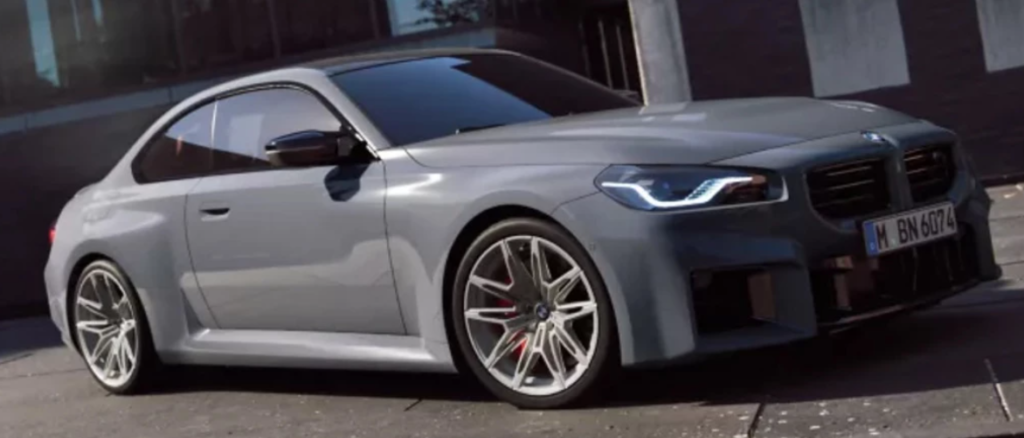
The BMW M2 has built a reputation as one of the most entertaining modern performance cars BMW has produced. Compact dimensions, rear-wheel-drive character, a muscular straight-six engine, and enough power to turn an empty road into an occasion—what's not to like?
Quite a lot, potentially, if we buy the wrong example.
The M2 isn't inherently unreliable, but it is a high-performance BMW. That means complicated turbocharged engines, expensive brakes, sophisticated differentials, tightly packaged cooling systems, and previous owners who may have treated every highway on-ramp like the Nürburgring.
When researching BMW M2 issues, we therefore need to separate three things: genuine mechanical weaknesses, normal performance-car maintenance, and problems created by tuning or abuse.
That's especially important because there isn't really one M2. The original F87 M2 uses BMW's N55 engine, the later M2 Competition and M2 CS use the S55, and today's G87 M2 uses the newer S58. Each has its own personality and its own areas to inspect.
So, is the BMW M2 troublesome? Not necessarily. But knowing where problems hide can make the difference between buying a brilliant driver's car and adopting a very expensive mechanical hobby.
Content in this publication
- Are BMW M2 Issues Common?
- BMW M2 Generations and Their Different Problems
- 1. BMW M2 Charge Pipe Problems
- 2. BMW M2 Crank Hub Issue
- 3. Oil Leaks on Older BMW M2 Models
- 4. BMW M2 PCV and Valve Cover Problems
- 5. Electric Water Pump Failure
- 6. BMW M2 Ignition Coil and Spark Plug Issues
- 7. High-Pressure Fuel Pump Problems
- 8. BMW M2 Cooling Issues
- 9. BMW M2 Differential Leaks and Rear-End Noises
- 10. DCT Transmission Issues on the F87 M2
- 11. Manual Transmission and Clutch Wear
- 12. BMW M2 Suspension Issues
- 13. Brake Wear Can Become Expensive
- 14. Exhaust Valve and Rattle Problems
- 15. G87 BMW M2 Issues
- 16. G87 Software and Electronics
- 17. BMW M2 Recall History
- 18. Modified BMW M2 Problems
- 19. BMW M2 Tire Wear Problems
- 20. Interior and Cosmetic Problems
- 21. Warning Signs We Wouldn't Ignore
- 22. BMW M2 Pre-Purchase Inspection Checklist
- 23. How Expensive Are BMW M2 Problems to Fix?
- 24. Which BMW M2 Has the Fewest Issues?
- 25. Is a BMW M2 Reliable Enough for Daily Driving?
- 26. How to Reduce BMW M2 Problems
- Conclusion: Should BMW M2 Issues Stop You Buying One?
- Frequently Asked Questions About BMW M2 Issues
Are BMW M2 Issues Common?
Compared with many highly stressed performance cars, the M2 has generally proven fairly robust. The fundamentals are strong, particularly when cars remain close to stock specification and receive proper maintenance.
That doesn't mean ownership is cheap.
Performance cars experience greater stresses than ordinary commuter vehicles. Their brakes get hotter, tires wear faster, suspension components work harder, and engines spend more time under boost. An M2 that has covered 40,000 gentle highway miles can therefore be healthier than another with 20,000 miles of launches, track days, burnouts, and aggressive tuning.
Official U.S. safety data also shouldn't be interpreted as evidence that every M2 develops a particular fault. NHTSA distinguishes between recalls and individual consumer complaints, and BMW M2 complaint volumes have historically been relatively limited compared with mass-market vehicles.
The larger question isn't simply, "How many miles does it have?"
We should be asking, "How were those miles driven?"
BMW M2 Generations and Their Different Problems
Understanding the engines is essential before discussing BMW M2 reliability.
Original F87 BMW M2: N55 Engine
The first-generation M2 arrived with a specially developed version of BMW's 3.0-liter turbocharged N55 inline-six.
This engine has a generally solid reputation, but owners should watch several familiar N55 weak points, including:
- Charge pipe deterioration
- Valve-cover and PCV problems
- Oil-filter-housing gasket leaks
- Electric water-pump failures
- Ignition coil and spark-plug wear
- Occasional wastegate-related noises
These aren't guarantees of failure. They're simply places we pay particular attention to when inspecting an older example. Independent BMW specialists regularly highlight the charge pipe, oil leaks, valve-cover/PCV system, and electric water pump among the original M2's main mechanical watchpoints.
BMW M2 Competition and CS: S55 Engine
The M2 Competition changed things considerably.
BMW replaced the N55 with the S55 twin-turbo straight-six related to the powerplant found in the contemporary M3 and M4. Performance improved significantly, but the S55 brought its own discussion point: the infamous crank-hub issue.
We'll cover that separately because it deserves more explanation than a frightening one-line warning.
G87 BMW M2: S58 Engine
The current G87 generation uses BMW's newer S58 twin-turbo straight-six.
Compared with the older F87, there simply isn't the same quantity of long-term real-world data yet. Early evidence doesn't suggest that the G87 carries all the same problems as its predecessors, and we shouldn't automatically transfer N55 or S55 weaknesses onto the S58.
That said, newer M2 buyers still need to consider software, cooling components, exposed underbody hardware, electronic systems, and signs of tuning or track use. Specialist buying guides also emphasize confirming proper running-in maintenance and checking for modification history on G87 cars.
1. BMW M2 Charge Pipe Problems
One of the better-known original F87 M2 issues involves the N55's charge pipe.
Why Does the Charge Pipe Fail?
The factory component uses plastic in an environment involving heat, vibration, and pressurized air. Over time, aging plastic can become brittle.
Think of repeatedly bending an old plastic ruler. It looks perfectly normal until the moment it decides it has had enough.
A crack or separation can allow pressurized intake air to escape.
BMW M2 Charge Pipe Failure Symptoms
Possible symptoms include:
- Sudden loss of engine power
- Boost pressure disappearing
- Check-engine warning
- Limp mode
- Hissing or unusual intake noises
- Reduced throttle response
The car may suddenly feel as if someone quietly removed half the horsepower.
Aftermarket aluminum charge pipes are therefore a popular preventive upgrade on N55-powered cars. A properly installed quality replacement can eliminate one known plastic weak point.
Does Every M2 Need an Upgraded Charge Pipe?
No.
Most importantly, we shouldn't assume that because a car still has its factory charge pipe, failure is inevitable tomorrow morning.
However, on an older N55 M2—particularly a modified example—its condition deserves inspection.
2. BMW M2 Crank Hub Issue
Few phrases make prospective M2 Competition buyers more nervous than "S55 crank hub."
The subject has generated mountains of forum discussions, some useful and some alarmist.
What Is the S55 Crank Hub Problem?
The S55 engine's crankshaft timing arrangement relies heavily on friction to maintain alignment. Under certain circumstances, movement at the hub can alter engine timing.
If significant timing movement occurs, the result may range from fault codes and poor running to major internal engine damage.
The concern principally relates to S55-powered M2 Competition and M2 CS models, not the earlier N55-powered standard M2. Independent BMW-focused buying guides consistently identify the S55 crank hub as one of the major issues worth understanding when shopping for an M2 Competition.
How Common Is a Spun Crank Hub on the BMW M2?
Here's where we need perspective.
Internet discussions can make the issue sound as if every S55 has a countdown timer strapped to the engine. That's not supported by evidence showing universal failure.
Plenty of completely stock S55 engines have covered substantial mileage without experiencing it.
Risk concerns usually become louder around cars with:
- Increased boost
- ECU tuning
- Aggressive torque increases
- Frequent launches
- Hard track use
- Unknown modification histories
So we wouldn't automatically reject an M2 Competition because it hasn't received an aftermarket crank-hub modification.
We would, however, investigate its history very carefully.
Should We Install a Crank Hub Upgrade?
For a heavily modified or frequently tracked S55, owners often consider upgraded solutions as preventive protection.
For a standard road car, the decision becomes less straightforward. Preventive work itself involves significant engine disassembly and needs to be completed by someone who knows exactly what they're doing.
The better starting point is buying the cleanest, best-documented car possible.
3. Oil Leaks on Older BMW M2 Models
Oil leaks aren't particularly glamorous.
Neither is discovering them dripping onto your garage floor.
As N55-powered M2s age, several seals and plastic engine components deserve inspection.
Oil Filter Housing Gasket Leaks
The oil filter housing gasket can deteriorate with age.
Early leakage may look harmless—a little wetness around the housing—but ignoring it isn't wise.
Oil contamination around the engine's accessory-drive area can create additional problems. Specialist BMW guides specifically call out oil-filter-housing gasket leakage as an N55 item worth checking.
Valve Cover Leaks
The valve cover and its gasket are another aging point.
Signs may include:
- Burning-oil smells
- Visible oil around the cylinder head
- Smoke from oil reaching hot components
- Oil consumption
- Rough idle if PCV components are affected
These problems become more relevant as first-generation M2s move deeper into used-car territory.
4. BMW M2 PCV and Valve Cover Problems
The positive crankcase ventilation system helps manage pressure and vapors inside the engine.
On N55 cars, the PCV system is integrated into the valve-cover assembly.
A failing system can produce symptoms such as:
- Whistling noises
- Rough idle
- Abnormal crankcase vacuum
- Increased oil consumption
- Mixture-related fault codes
This isn't normally the sort of failure that sends an engine exploding dramatically through the hood. It's more likely to begin as an annoying drivability problem that gradually becomes expensive if ignored.
5. Electric Water Pump Failure
BMW has used electrically driven coolant pumps on numerous turbocharged models, including N55 applications.
They're clever because pump speed can be controlled independently of engine RPM.
They're less clever when they stop working.
Signs of an M2 Water Pump Problem
We might notice:
- Rising coolant temperature
- Cooling fan running unusually hard
- Reduced-power warnings
- Intermittent overheating
- Coolant-related fault codes
Electric pumps don't always deteriorate with the courtesy of weeks of warning noises.
Sometimes they simply stop cooperating.
This is why service history matters so much on higher-mileage original M2s.
6. BMW M2 Ignition Coil and Spark Plug Issues
High-output turbo engines are demanding on ignition systems.
Spark plugs and coils are wear components, and problems become more likely when boost pressure has been increased through software tuning.
Symptoms commonly include:
- Misfires
- Hesitation under acceleration
- Rough idle
- Engine warning lights
- Reduced power
- Poor fuel economy
If an M2 stumbles only under full throttle, ignition components should be among the diagnostic possibilities.
That doesn't mean we immediately begin replacing random parts. Modern BMW diagnostic software can identify misfires by cylinder, dramatically reducing the guesswork.
7. High-Pressure Fuel Pump Problems
Fuel delivery becomes another area worth monitoring, especially on modified cars.
A weakening high-pressure fuel pump may cause:
- Difficult starting
- Hesitation
- Loss of power under load
- Fuel-pressure fault codes
- Misfires
Some specialists mention occasional high-pressure fuel pump failures among harder-used F87 cars, although this shouldn't be treated as a universal M2 defect.
A stock car with normal symptoms-free operation doesn't need a new pump merely because we read about one failing online.
8. BMW M2 Cooling Issues
High-performance engines produce considerable heat.
That's physics collecting its membership fee.
During ordinary road driving, a healthy M2 cooling system should comfortably control temperatures. The situation changes when we repeatedly accelerate hard or take the car onto a racetrack.
Track Use Changes Everything
Track sessions can place enormous heat loads on:
- Engine oil
- Coolant
- Turbochargers
- Transmission fluid
- Differential fluid
- Brakes
A car that performs perfectly during a Sunday drive may expose weak cooling components after fifteen minutes of continuous circuit abuse.
That's one reason buying a former track car requires a little detective work.
Upgrades themselves aren't necessarily bad. A properly maintained car with sensible cooling upgrades might actually be better prepared than a completely standard vehicle.
The quality of the work matters more than the mere presence of modifications.
9. BMW M2 Differential Leaks and Rear-End Noises
The Active M Differential is one of the ingredients that makes the M2 feel special.
It allows the car to put serious power down while retaining the playful rear-drive behavior enthusiasts love.
Like any mechanical assembly containing fluid, bearings, seals, and electronically controlled components, it can develop problems with age.
Potential warning signs include:
- Oil around differential seals
- Whining
- Clunking
- Vibrations
- Unexpected drivetrain warnings
Not every clunk means the differential is dying.
Performance BMW drivetrains naturally contain less isolation than a luxury sedan, meaning some mechanical noises are normal. The trick is distinguishing normal driveline behavior from progressive knocking, bearing noise, or excessive play.
A BMW specialist familiar with M cars is far better positioned to make that distinction than a general inspection station.
10. DCT Transmission Issues on the F87 M2
Many first-generation M2s use BMW's seven-speed dual-clutch transmission.
When healthy, it's wonderfully quick. Gear changes arrive like rifle shots.
The transmission is generally robust, but neglected or abused cars can exhibit problems.
Symptoms Worth Investigating
Watch for:
- Harsh engagement
- Delayed reverse selection
- Unusual shuddering
- Gearbox warnings
- Erratic shifts
- Fluid leakage
Some perceived DCT weirdness can also be software- or adaptation-related rather than mechanical failure.
A smooth test drive is therefore essential.
We should test the car cold and warm, in automatic and manual modes, during gentle driving and moderate acceleration.
11. Manual Transmission and Clutch Wear
The six-speed manual gearbox is one of the reasons many enthusiasts specifically seek an M2.
Fortunately, catastrophic manual gearbox problems aren't generally considered a defining weakness of the model.
The clutch is another story.
It's a wear item, and the M2 gives enthusiastic drivers plenty of opportunities to wear it.
How Do We Check an M2 Clutch?
Pay attention to:
- A high engagement point
- Slipping under high gear/full throttle
- Shuddering
- Burning smells
- Difficulty selecting gears
- Excessive drivetrain vibration
A heavily tuned car produces substantially more torque than BMW originally intended, which can accelerate clutch wear.
Never assume low mileage means low clutch wear. Five thousand miles of incompetent launches can be harder on a clutch than 50,000 miles of sensible highway driving.
12. BMW M2 Suspension Issues
The M2 has stiff suspension because it is designed around performance, not because BMW engineers forgot that roads have bumps.
Consequently, certain noises can be more noticeable than they would be in a softer vehicle.
Over time we may encounter wear involving:
- Control-arm bushings
- Ball joints
- Dampers
- Top mounts
- Wheel bearings
- Rear suspension components
Warning signs include knocking over rough surfaces, vague steering, uneven tire wear, or wandering under braking.
Modified Suspension Requires Extra Attention
Lowering springs, coilovers, wheel spacers, and aggressive alignment settings aren't automatically bad.
Cheap parts and poor installation are.
Look at tire wear. If the inside shoulders resemble racing slicks while the outer tread looks fresh, something about the alignment or suspension setup deserves investigation.
13. Brake Wear Can Become Expensive
M cars have serious brakes because they need to repeatedly convert serious speed into serious heat.
Replacement isn't cheap.
A used M2 therefore deserves close examination of:
- Rotor thickness and condition
- Brake pad remaining life
- Cracks or heat spotting
- Brake-fluid history
- Uneven wear
- Brake vibration
Track days can eat pads and tires like a hungry Labrador discovering an unattended kitchen.
That's not a defect. It's simply part of operating a performance vehicle.
Brake Judder
Steering-wheel vibration under braking can result from several causes, including uneven pad deposits, rotor condition, suspension wear, or wheel/tire problems.
Diagnosis is better than automatically ordering new discs.
14. Exhaust Valve and Rattle Problems
The M2 uses a valved exhaust system that changes sound depending on operating conditions.
With age, owners can occasionally encounter:
- Exhaust rattles
- Valve actuator problems
- Loose heat shields
- Vibrations at certain RPM
Usually these are irritating rather than catastrophic.
Still, noises underneath the car shouldn't be dismissed without inspection because damaged exhaust mounts or underbody components can produce similar symptoms.
15. G87 BMW M2 Issues
The newer G87 deserves its own discussion because treating it as an F87 with newer headlights would be misleading.
It uses BMW's S58 engine and an entirely different platform.
Is the S58 M2 More Reliable?
So far, there is less evidence of a signature catastrophic weakness equivalent to the S55 crank-hub controversy.
But the G87 is also much newer.
Long-term reliability cannot be judged with the same confidence as a platform owners have been driving for a decade.
When shopping used, we should focus on:
- Complete service records
- Correct break-in servicing where applicable
- ECU tuning history
- Underbody damage
- Cooling-system condition
- Electronic faults
- Accident repairs
- Track use
An S58 engine can tolerate impressive power, but this has also encouraged owners to modify them.
The fact that an engine can produce huge power doesn't mean we necessarily want to buy someone else's 700-horsepower science experiment.
16. G87 Software and Electronics
Modern BMWs contain far more software than earlier generations.
That brings wonderful functionality—and occasional glitches.
Potential annoyances can involve:
- Infotainment
- Driver assistance
- Connected services
- Digital keys
- Vehicle settings
- Software updates
Not every unusual message indicates physical component failure.
Software updates can sometimes resolve behavior that would once have required replacing hardware.
One early G87-related safety campaign in the United States involved software controlling power windows. Certain 2023 M2s were included in NHTSA recall 23V099000 because the system could allow windows or the sunroof to close when the digital key was no longer present.
That's a useful reminder that recalls are VIN-specific. We should check the individual car rather than relying on model-year assumptions.
17. BMW M2 Recall History
Recalls and common problems aren't the same thing.
A common problem might never become a government safety recall, while a recall can involve something owners rarely experience.
NHTSA recommends checking the actual VIN because its recall lookup can identify unrepaired campaigns associated with a specific vehicle.
Older M2s have been included in several campaigns over the years, while certain early G87 cars were involved in window/software-related and rear-seat side-airbag-cover actions. BMW documentation identified some G87 M2s built between November 1, 2022 and January 16, 2023 in the latter campaign.
Before buying, a recall lookup takes minutes.
There's little excuse not to do one.
18. Modified BMW M2 Problems
This may be the single biggest section for used buyers.
The M2 responds beautifully to tuning.
That also means used listings are full of cars that have experienced:
- ECU remaps
- Piggyback tuning modules
- Downpipes
- Intake upgrades
- Ethanol mixtures
- Bigger turbochargers
- Suspension modifications
- Track-oriented brake setups
Modifications aren't inherently dangerous.
A professionally tuned car maintained obsessively may be healthier than an unmodified car abused from cold every morning.
But modifications introduce variables.
Questions to Ask About a Tuned M2
We want to know:
- Who performed the tune?
- What power level was targeted?
- Which fuel was required?
- How long did the car operate at that power?
- Were supporting modifications installed?
- Was the car tracked?
- Has the ECU been returned to stock before sale?
- Are original components included?
A seller who enthusiastically produces invoices, logs, dyno sheets, and service documentation inspires far more confidence than someone saying, "I think the previous owner tuned it."
19. BMW M2 Tire Wear Problems
The M2's combination of torque, aggressive alignment, and enthusiastic driving can consume rear tires surprisingly quickly.
That's not necessarily a reliability issue.
It's part of the admission price.
Uneven tire wear, however, can tell us plenty about the car.
What Tires Reveal About an M2
Four quality tires of the correct specification suggest an owner willing to spend money where it matters.
Four mismatched bargain tires?
That's a different conversation.
Check:
- Inner shoulder wear
- Sidewall damage
- Tire age
- Matching brands and models
- Correct sizes
- Signs of track heat cycling
Tires are essentially the car's diary.
They reveal how it has been treated if we know how to read them.
20. Interior and Cosmetic Problems
BMW M2 mechanical issues may dominate discussions, but cosmetic condition deserves attention too.
Expect age-related wear such as:
- Seat bolster deterioration
- Steering-wheel wear
- Scratched trim
- Wheel curb damage
- Front bumper stone chips
- Paint imperfections
Again, context matters.
An M2 is a sports car. A few stone chips don't make it a bad vehicle.
In fact, a pristine ten-year-old front bumper combined with poor panel alignment might deserve more investigation than honest road wear.
Fresh paint sometimes hides history.
21. Warning Signs We Wouldn't Ignore
Most minor BMW M2 issues shouldn't immediately kill a purchase.
Some combinations should make us considerably more cautious.
We would investigate deeply if we find:
- Engine knocking
- Persistent misfires
- Heavy oil leaks
- Blue exhaust smoke
- Repeated overheating history
- Drivetrain warnings
- Gearbox faults
- Poorly executed modifications
- Multiple mismatched tires
- Missing service history
- Evidence of undisclosed crash repairs
- Freshly cleared fault codes
- Seller reluctance to permit inspection
One problem may be fixable.
Six unrelated problems suggest the car has been asking for help while its previous owner kept turning up the stereo.
22. BMW M2 Pre-Purchase Inspection Checklist
Before purchasing a used M2, we'd inspect the car methodically.
Before Starting the Engine
Look for fluid leaks, tire condition, panel alignment, damaged undertrays, wheel condition, coolant level, obvious modifications, and evidence the engine has already been warmed before our arrival.
A suspiciously warm engine can hide cold-start problems.
During the Test Drive
Listen for rattles, drivetrain clunks, bearing noises, suspension knocks, turbo/boost irregularities, misfires, brake vibration, and transmission hesitation.
Test everything.
Air conditioning, navigation, parking sensors, cameras, seat controls, infotainment, drive modes—everything.
After the Test Drive
Open the hood again.
Look for:
- Fresh leaks
- Coolant smells
- Oil smells
- Smoke
- Abnormal fan behavior
Then have a BMW specialist scan the car.
A professional pre-purchase inspection is particularly valuable with an M2 because one undiscovered major issue can cost far more than the inspection itself.
23. How Expensive Are BMW M2 Problems to Fix?
There's no universal answer.
A failed ignition coil may be relatively inexpensive.
An internal S55 engine problem obviously isn't.
That's why M2 ownership works best when we budget beyond routine servicing.
An owner who can afford the purchase price but cannot comfortably replace tires, brakes, suspension components, or repair a cooling-system fault may find the experience stressful.
Maintenance Is Cheaper Than Neglect
Preventive maintenance isn't exciting.
Nobody posts glamorous Instagram photos of fresh differential fluid.
Yet fluid changes, spark plugs, fresh brake fluid, proper warm-up habits, and early leak repairs are exactly what help these cars remain healthy.
We would rather buy a higher-mileage M2 with a folder full of invoices than a lower-mileage example surviving on promises.
24. Which BMW M2 Has the Fewest Issues?
For buyers prioritizing simplicity, the original N55-powered F87 has an appealing case.
Its known problems are relatively well understood, and many are manageable.
The M2 Competition introduces the more complicated S55 and the crank-hub discussion, although it also brings significantly stronger performance.
The newer G87 uses the excellent S58 and currently looks mechanically promising, but long-term age-related patterns are naturally less established.
So there isn't a universally "most reliable" M2.
Instead:
- Original F87 N55: simpler character and familiar aging issues.
- F87 M2 Competition: faster and more capable, but S55 history deserves scrutiny.
- M2 CS: special and desirable, though expensive mistakes become especially painful.
- G87 M2: newer technology and strong S58 fundamentals, with less long-term aging data.
The condition of the individual car matters enormously.
25. Is a BMW M2 Reliable Enough for Daily Driving?
Yes.
A properly maintained M2 can absolutely serve as a daily driver.
In fact, regular use can sometimes be healthier than leaving a performance car sitting for months at a time.
We simply need realistic expectations.
Running costs won't resemble a Toyota Corolla. Tires are wider, brakes are bigger, premium fuel disappears faster, and specialized repairs cost more.
But reliability and cheap ownership aren't the same thing.
A car can be reliable while still expensive to maintain properly.
The M2 falls comfortably into that category.
26. How to Reduce BMW M2 Problems
We can dramatically improve the ownership experience through sensible habits.
The most important approach is simple: don't treat maintenance intervals as suggestions written for somebody else.
Use quality fluids, investigate warning lights quickly, let the engine reach operating temperature before sustained heavy load, allow cooling after demanding track sessions, and resist cheap modifications.
Also keep records.
A documented service history protects both the car and its resale value.
Performance cars reward attentive owners.
Neglected ones collect debts—and eventually hand the invoice to the next person.
Conclusion: Should BMW M2 Issues Stop You Buying One?
No.
The BMW M2 has known weaknesses, but that isn't unusual for a powerful turbocharged performance car. More importantly, the biggest concerns vary substantially depending on which generation we're considering.
Original N55-powered F87 models deserve attention around charge pipes, oil leaks, PCV components, ignition parts, and cooling-system hardware. S55-powered M2 Competition and CS cars add the crank-hub discussion and make modification history especially important. The G87's S58 appears promising so far, but its youth means we simply have less long-term evidence.
The biggest BMW M2 problem may therefore not be BMW engineering at all.
It's the unknown previous owner.
Find a stock or intelligently modified example, demand proper records, arrange a specialist inspection, check outstanding recalls by VIN, and look beyond mileage alone.
Do that, and the M2 remains what attracted us in the first place: a compact, slightly mischievous performance coupe that feels alive at ordinary speeds and properly special when the road opens up.
Buy purely on price, shiny paint, and a loud exhaust?
That's when the fun car can start behaving like a financial trapdoor.
Frequently Asked Questions About BMW M2 Issues
1. What is the most common BMW M2 problem?
There isn't one universal fault across every generation. Older N55-powered M2s are commonly associated with charge-pipe deterioration, gasket leaks, PCV/valve-cover problems, and aging cooling-system components. S55-powered M2 Competition and CS models are better known for crank-hub concerns, while the G87 is still relatively young and doesn't yet have the same depth of long-term failure data.
2. Does the BMW M2 have crank hub problems?
The crank-hub concern primarily applies to S55-powered M2 Competition and M2 CS models. It isn't the defining issue of the earlier N55 M2, and it shouldn't simply be transferred to the S58-powered G87. Failure is not inevitable, but buyers should pay particularly close attention to tuning history and hard use on S55 cars.
3. Is the BMW M2 expensive to maintain?
Compared with an ordinary compact car, yes. Tires, brakes, fluids, labor, and performance-related components cost more. However, a well-maintained M2 doesn't necessarily require constant repairs. Budgeting for preventive maintenance is considerably smarter than buying the cheapest example available.
4. How many miles can a BMW M2 last?
There is no fixed lifespan. A well-maintained M2 can comfortably accumulate substantial mileage, while a neglected or aggressively modified lower-mileage example may develop expensive problems much sooner. Maintenance records, warm-up habits, tuning, track use, and overall condition matter more than the odometer alone.
5. Is buying a used BMW M2 risky?
It doesn't have to be. The safest approach is purchasing a documented example, inspecting its modification history, checking recall status, scanning the electronics for stored faults, and arranging a pre-purchase inspection with an independent BMW specialist. A carefully chosen M2 can provide years of enjoyable ownership.
If you want to know other articles similar to BMW M2 Issues: Common Problems, Reliability and What Owners Should Know you can visit the category Common Problems.
Volvo S90 Common Problems: Reliability & Repair Guide
Volvo S90 No Sound: Causes, Fixes and Solutions

Nissan Rogue Smells Like Gas: Causes and Fixes
Vauxhall Agila Problems: Common Faults & Fixes

Kia Sorento Jerking When Accelerating: Causes & Fixes

Jaguar F-Pace Low Battery: Causes, Warning Signs, and How to Fix It
Leave a Reply
More content of your interest