

BMW M2 Years to Avoid: Which Used M2 Should You Skip?

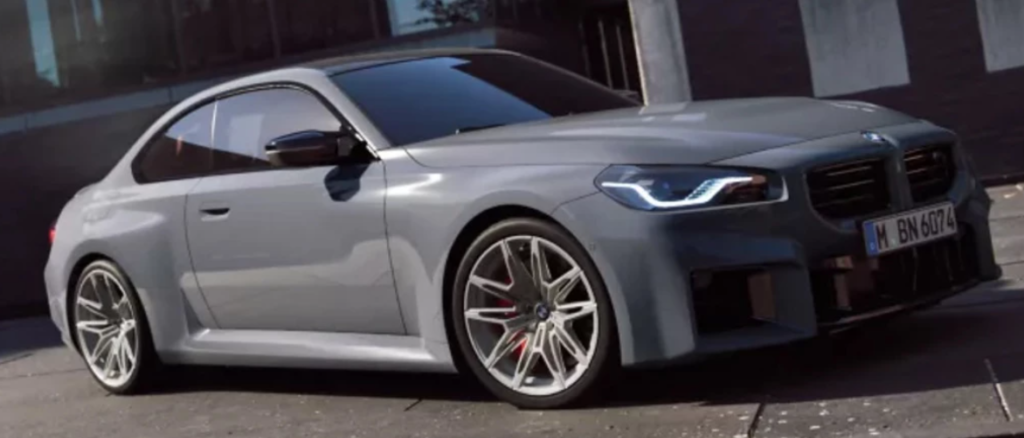
The BMW M2 has earned the sort of reputation most performance cars spend decades chasing. Compact dimensions, rear-wheel drive, a muscular straight-six engine, and enough attitude to make an ordinary commute feel like a qualifying lap—it is easy to understand why used examples remain desirable.
But if we are shopping for one, a more practical question quickly replaces the excitement: which BMW M2 years should we avoid?
There is no single disastrous M2 model year that deserves to be permanently blacklisted. The M2 has generally been a robust performance car when maintained correctly. However, certain years deserve more scrutiny because they represent early production, carry specific recall history, use different engines, or are now old enough for maintenance and modification history to become major concerns.
Our condensed verdict is this: 2016 is the BMW M2 year we would inspect most carefully, followed by certain early 2017 examples. Buyers looking at the newer G87 generation should also scrutinize the 2023 M2, primarily because it was the first model year of an entirely new generation rather than because it has demonstrated catastrophic reliability problems.
For many shoppers, the sweet spots are later F87 cars—particularly well-maintained 2018 models and 2019–2021 M2 Competition examples—or a 2024-and-newer G87 if the newer car fits the budget.
Let's break down why.
Content in this publication
- BMW M2 Years to Avoid at a Glance
- Why the 2016 BMW M2 Deserves the Most Caution
- Should You Avoid the 2017 BMW M2?
- Is the 2018 BMW M2 a Good Year?
- 2019 BMW M2 Competition: Avoid or Buy?
- Is the 2020 BMW M2 a Reliable Year?
- Why the 2021 BMW M2 Is One of the Best F87 Years
- What Happened to the 2022 BMW M2?
- Should You Avoid the 2023 BMW M2?
- Is the 2024 BMW M2 Better?
- What About 2025 and Newer BMW M2 Models?
- The Biggest Risk Is Often Not the Model Year
- Manual vs DCT: Which Used M2 Is Safer?
- How Modifications Affect BMW M2 Reliability
- What to Check Before Buying Any BMW M2
- Which BMW M2 Year Is the Most Reliable?
- Which BMW M2 Has the Best Engine?
- BMW M2 Generations Explained
- How Much Mileage Is Too Much for a Used BMW M2?
- Is a BMW M2 Expensive to Maintain?
- Are BMW M2s Reliable Overall?
- Our Final Ranking of BMW M2 Years
- Conclusion: Which BMW M2 Years Should You Avoid?
- Frequently Asked Questions
BMW M2 Years to Avoid at a Glance
Before getting buried beneath engine codes and enthusiast jargon, here is how we would approach the used market.
| Model year | Our verdict | Main reason |
|---|---|---|
| 2016 | Inspect very carefully | Earliest F87 cars, age, recall history, modification risk |
| 2017 | Caution | Early-generation car; maintenance history matters increasingly |
| 2018 | Generally good | Mature original M2, but verify recalls |
| 2019 | Recommended with inspection | M2 Competition brings major mechanical changes |
| 2020 | Strong choice | Mature Competition model; CS also available |
| 2021 | Strong F87 choice | Final production period of first-generation M2 |
| 2022 | No regular U.S. M2 model year | Generation transition |
| 2023 | Some caution | First G87 model year and early-production campaigns |
| 2024 | Recommended | More established G87 production |
| 2025+ | Promising | Newer examples, but long-term reliability data remain limited |
BMW itself records F87 M2 production from 2015 through 2021, with 61,856 cars produced at Plant Leipzig. That matters because the differences between early and late F87 cars are substantial enough that we should not treat every first-generation M2 as the same vehicle.
Why the 2016 BMW M2 Deserves the Most Caution
If someone asks us for one straightforward answer to "What BMW M2 year should I avoid?", 2016 is the year we would put at the top of the caution list.
Notice that we said caution—not automatically avoid.
The 2016 M2 introduced the F87 formula that made the car famous. It is raw, compact, engaging, and powered by BMW's turbocharged 3.0-liter inline-six. Enthusiasts still adore it. A pristine 2016 example with meticulous servicing could easily be a better purchase than a neglected 2020 car.
The problem is that early cars combine several risk factors.
They are now roughly a decade old. Many have been modified. Some have spent time at track days. Others have been tuned for more boost. Tires, suspension bushings, cooling components, gaskets, brakes, clutches, and electronic components have all had plenty of time to age.
A performance car's birthday matters differently from that of an ordinary commuter. Ten years in the life of a gently driven family sedan might mean supermarket runs and school pickups. Ten years in an M2 can mean launch control, mountain roads, burnouts, autocross events, and weekend track sessions.
2016 M2 Recall History Matters
Early F87 cars were also included in an important BMW recall concerning rear subframe bolts.
BMW documentation for NHTSA Safety Recall 16V-653 identified certain model-year 2015–2017 vehicles, including the M2 Coupe, concerning rear subframe bolts. BMW stated at the time that it was not aware of accidents or injuries associated with the issue.
That does not mean every 2016 M2 remains unsafe today. Recalls are normally repaired free of charge, and many affected cars will have received the required work years ago.
It does mean we should verify the VIN instead of assuming everything was completed.
NHTSA specifically recommends checking an individual VIN because its VIN lookup can identify unrepaired safety recalls.
Would We Still Buy a 2016 BMW M2?
Absolutely—at the right price and with the right history.
A stock 2016 M2 with complete documentation, careful ownership, sensible mileage, and a clean pre-purchase inspection could be fantastic. We would rather own that car than a newer example carrying mystery modifications and six different owners.
Think of the model year as the cover of the book. The service history is the actual story.
Should You Avoid the 2017 BMW M2?
The 2017 M2 sits in a slightly more comfortable position.
It retains much of the character enthusiasts love about the original M2, but buyers are no longer dealing exclusively with the first production run. Still, these cars are aging, and many of the same used-performance-car concerns apply.
A 2017 car may have had its suspension altered, ECU tuned, downpipe replaced, exhaust modified, or wheels changed. None of those things automatically make it bad. Some enthusiast-owned examples are maintained obsessively.
What makes us nervous is modification without documentation.
If an owner tells us the car is "completely stock" but diagnostic data, hardware marks, mismatched clamps, or aftermarket parts tell another story, we would walk away. Buying an M2 should not feel like conducting a forensic investigation.
N55 Engine Concerns on Early BMW M2 Models
Early M2 models used a turbocharged inline-six based around BMW's N55 engine family rather than the later M2 Competition's S55.
The N55 has a generally solid reputation when treated properly, but no high-performance turbo engine is maintenance-free. On older examples we would pay particular attention to oil leaks, cooling-system condition, charge-pipe hardware, ignition components, unusual turbo noises, rough running, and evidence of aggressive tuning.
Internet forums sometimes make every BMW engine problem sound inevitable. It is important not to confuse "a component can fail" with "every car will experience this failure."
Maintenance history matters more than frightening forum headlines.
Is the 2018 BMW M2 a Good Year?
For shoppers wanting the original M2 personality, 2018 can be one of the most attractive years.
By this stage, the F87 was no longer brand new. Buyers still received the character of the original car while benefiting from later production.
However, there is an interesting complication: depending on market and production timing, 2018 sits around the transition toward the M2 Competition.
That makes checking the exact car—not merely the registration year—important.
BMW introduced the substantially reworked M2 Competition in 2018. The company described it as receiving a new engine based on the power unit from the M3 and M4, producing 410 hp and 550 Nm in the cited global specification. BMW also revised areas including cooling, chassis reinforcement, brakes, steering, exhaust, and exterior design.
2018–2020 Recall Considerations
Certain F87 M2 and M2 Competition vehicles also fell within a knee-airbag safety recall.
BMW's recall documentation identified approximately 2,747 potentially affected U.S. F87 M2/M2 Competition vehicles across model years 2018–2020, covering relevant production dates from January 2018 through April 2019.
Again, this does not make 2018–2020 bad years.
It makes the VIN check mandatory.
2019 BMW M2 Competition: Avoid or Buy?
The 2019 M2 Competition is one of the most interesting used M2 choices, but it also deserves a knowledgeable inspection.
Why?
Because the Competition transformed the M2 into something closer to a miniature M3/M4.
Its S55-derived twin-turbocharged inline-six dramatically changed the personality of the car. BMW stated that the M2 Competition's engine was based on the contemporary M3/M4 power unit and delivered 410 hp in European specification.
The car gained serious performance potential—and serious tuning potential.
That final point matters enormously in today's used market.
Modified M2 Competition Cars Can Be a Gamble
An S55-powered M2 Competition responds very well to modifications. That is wonderful when we own the vehicle and control how the work is performed.
It becomes less wonderful when buying someone else's project.
A heavily tuned car may have lived for thousands of miles above factory boost levels. Even if it has been returned to stock before sale, its history remains relevant.
We would investigate previous ECU tuning, aftermarket downpipes, upgraded charge-air components, non-standard suspension, altered fueling systems, track-oriented tires, brake wear, drivetrain noises, and incomplete emissions equipment.
What About the Famous S55 Crank-Hub Discussion?
Anyone researching an S55 BMW will eventually encounter discussions about the crank hub.
The subject has generated enormous debate in the BMW enthusiast community. Reports exist, particularly in modified or aggressively driven applications, but it would be misleading to suggest that every S55-powered M2 Competition is a ticking time bomb.
We would treat it as a risk factor rather than a guaranteed failure.
For a stock street car with strong maintenance history, we would not reject an M2 Competition solely because somebody on the internet mentioned "crank hub."
For a heavily tuned car producing substantially more than factory output, our risk tolerance would change.
Is the 2020 BMW M2 a Reliable Year?
The 2020 model year earns one of our strongest recommendations within the F87 generation.
By then, BMW had several years of F87 manufacturing experience behind it, and the M2 Competition package was established.
You may be interested in reading Toyota Hilux Years to Avoid: The Models We’d Inspect Twice Before Buying
This does not magically eliminate maintenance. Tires remain expensive. High-performance brakes are expensive. BMW parts do not suddenly adopt economy-car prices simply because the vehicle is used.
But a stock, carefully serviced 2020 M2 Competition can represent a terrific balance of performance, age, refinement, and collectability.
The 2020 BMW M2 CS Is a Different Animal
Then there is the M2 CS.
Calling it merely another M2 trim undersells it.
BMW positioned the M2 CS above the M2 Competition and equipped the U.S. version with an uprated S55 developing 444 hp and 406 lb-ft. The car also used extensive carbon-fiber-reinforced plastic components, including weight-saving body elements, and BMW offered it for a single U.S. model year.
A CS is less likely to be an inexpensive used-car proposition, of course.
If anything breaks, we are still maintaining a specialized high-performance BMW. Unique carbon components can make careless parking lot damage hurt the wallet far more than expected.
Nevertheless, we certainly would not classify 2020 as an M2 year to avoid.
Why the 2021 BMW M2 Is One of the Best F87 Years
If our priority were buying a late first-generation M2 rather than chasing the cheapest possible example, 2021 would be high on our list.
BMW records F87 production ending in 2021. Final-year examples therefore benefit from being produced after BMW had spent years building and refining the platform.
Late-production status does not guarantee superior reliability, but generally we like buying toward the mature end of a vehicle's production cycle instead of jumping into year one.
A 2021 M2 also has another advantage: age.
All other things being equal, it has simply had fewer years to collect questionable owners, corrosion exposure, worn rubber components, track mileage, parking damage, or neglected servicing than a 2016 example.
The catch is price. Sellers know late F87s are desirable.
What Happened to the 2022 BMW M2?
Shoppers occasionally search for a 2022 BMW M2 and wonder why listings become confusing.
The first-generation F87 ended production in 2021, while the next-generation G87 M2 arrived afterward. BMW's own historical production information confirms the F87's 2015–2021 production period.
So when comparing M2 model years, we should think of 2022 primarily as part of the generational transition rather than a normal continuous U.S. M2 model year.
That brings us to the new car.
Should You Avoid the 2023 BMW M2?
The 2023 G87 M2 is the newer generation's model year that we would approach with the most caution—not because evidence shows it to be an unreliable disaster, but because first-year cars inherently involve more uncertainty.
The G87 introduced a dramatically different M2. It brought newer electronics, different styling, a modernized platform, and the S58-family engine architecture associated with BMW's contemporary high-performance models.
Whenever manufacturers release an all-new generation, small production issues and software quirks are more likely to surface early.
2023 M2 Recall and Production Campaigns
The 2023 M2 was included in a U.S. recall involving power-window software. The issue could allow the windows or sunroof to close in circumstances that did not comply with the applicable federal safety requirement.
BMW documentation also identified early G87 production within another campaign involving rear-seat side-airbag covers, including M2 Coupes produced from November 1, 2022 through January 16, 2023.
Neither issue suggests the drivetrain is fundamentally defective.
Still, when choosing between otherwise comparable 2023 and 2024 cars, we would usually lean toward the later-production vehicle unless the 2023 offered a compelling price advantage.
Is the 2024 BMW M2 Better?
For someone wanting the G87 generation, 2024 is arguably the easier used-buy recommendation.
By definition, we are beyond the launch model year. More cars have accumulated real-world mileage, production processes have had time to mature, and buyers have more ownership data available.
That does not mean a 2024 M2 cannot experience electronic glitches, interior rattles, drivetrain problems, or ordinary BMW repair expenses.
No sports car receives a force field at the factory.
But we would not presently classify the 2024 BMW M2 as a year to avoid.
What About 2025 and Newer BMW M2 Models?
Newer M2s are too young for us to make sweeping long-term reliability claims.
That distinction matters for SEO articles because it is tempting to label every year "reliable" simply because few problems have appeared. A two-year-old vehicle naturally has less accumulated wear than a ten-year-old one.
Low complaint counts do not prove how a car will behave at 100,000 miles.
BMW documentation issued in 2025, for example, included certain G87 M2 production dates in a delivery-stop bulletin related to a potentially leaking brake-fluid expansion tank. The affected G87 production interval cited was November 19, 2024 through February 7, 2025.
This is exactly why we prefer VIN-specific checks over blanket claims such as "all 2025 M2s are perfect."
The Biggest Risk Is Often Not the Model Year
Here is the twist many buying guides overlook.
The most dangerous BMW M2 may not be from the "worst" year.
It may be the cheapest one.
Performance cars attract modifications, hard driving, track use, rapid ownership turnover, deferred maintenance, and occasionally people whose maintenance philosophy consists of clearing warning lights immediately before selling the car.
A 2016 M2 maintained by one meticulous enthusiast can be a beautiful purchase.
A 2021 M2 Competition that has been tuned aggressively, crashed, repaired cheaply, and returned to stock can be a financial trap disguised behind polished paint.
Mileage tells only part of the story too.
Twenty thousand track-heavy miles can stress a performance car differently from 60,000 highway miles.
Manual vs DCT: Which Used M2 Is Safer?
Both transmissions have advantages.
The six-speed manual attracts enthusiasts who want maximum involvement. We would inspect the clutch carefully, particularly on cars that have been tuned or subjected to repeated hard launches.
BMW's seven-speed dual-clutch transmission used in F87 models delivers extremely rapid shifts and suits the M2's character remarkably well. Nevertheless, we would expect proper servicing and smooth operation.
Any hesitation, warning messages, unusual noises, violent engagement, or inconsistent shifting deserves investigation before money changes hands.
With either transmission, the key principle stays the same: condition beats specification.
How Modifications Affect BMW M2 Reliability
Few M2s are easier to modify than they are to leave alone.
A tune can unlock considerable additional performance. Coilovers can sharpen handling. Wider tires can increase grip. Exhaust changes can create the soundtrack owners crave.
But every modification changes our buying calculation.
Power increases add drivetrain load. Lower suspension changes geometry. Track-oriented alignment can accelerate tire wear. Cheap aftermarket parts can introduce rattles, leaks, warning lights, or fitment problems.
Professional modifications with receipts from reputable specialists are one thing.
Mystery modifications are another.
When somebody says, "The previous owner did all that stuff; I don't really know," our enthusiasm starts evaporating like water on a hot brake rotor.
What to Check Before Buying Any BMW M2
The smartest way to avoid a bad M2 is to investigate the individual car rather than obsessing over its model-year label.
We would verify the VIN for open recalls, obtain service records, examine accident history, check for evidence of tuning, confirm cold-start behavior, inspect underneath the vehicle, evaluate tire wear, measure brake condition, scan electronic modules for stored faults, inspect cooling and lubrication systems, test every electrical feature, and arrange an independent pre-purchase inspection with a BMW specialist.
You may be interested in readingToyota Hilux Years to Avoid: The Models We’d Inspect Twice Before BuyingYou may be interested in reading
 Leapmotor B10 vs C10: Which Electric SUV Should You Buy?
NHTSA notes that its VIN lookup can reveal whether a specific vehicle has an unrepaired recall, although completed recalls and certain other campaigns may not appear in the same way.
Spend the money on the inspection.
A few hundred dollars before buying an M2 can feel annoying. Several thousand dollars immediately afterward feels considerably worse.
Which BMW M2 Year Is the Most Reliable?
It is impossible to crown one year with scientific certainty because condition, mileage, environment, service history, and usage vary tremendously.
Still, if we were narrowing the field, 2020–2021 F87 M2 Competition cars are particularly compelling.
They come from the mature end of first-generation production, offer tremendous performance, and avoid the uncertainty associated with buying the earliest production cars.
For buyers who prefer the original N55-powered personality, a well-kept later original M2 such as a 2018 example may be even more appealing.
For the G87 generation, we would currently gravitate toward 2024 or newer, provided any applicable campaigns have been completed.
Which BMW M2 Has the Best Engine?
"Best" depends on what we want from the car.
The original N55-based M2 engine has charm. It sounds good, delivers strong real-world performance, and gives early F87 cars a slightly simpler character.
The S55-equipped M2 Competition turns the aggression dial several clicks clockwise. BMW's M3/M4-derived engine brings considerably greater performance potential.
The newer G87's powertrain raises capability again.
If we are chasing maximum performance and tuning headroom, newer engines make sense.
If we want the most character per dollar, the earliest F87 remains wonderfully difficult to dismiss.
Sometimes the "best" engine isn't the one producing the largest dyno number. It is the one that makes us invent excuses to take the long road home.
BMW M2 Generations Explained
The M2 story can essentially be divided into two major chapters.
The F87 generation, produced from 2015 through 2021, established the formula and ultimately evolved from the original M2 into the M2 Competition and limited-production M2 CS. BMW says 61,856 F87 M2s were produced at Leipzig.
The G87 generation then reinvented the car with newer architecture, much more modern technology, increased performance, and a substantially different aesthetic.
This distinction matters because asking whether a "BMW M2 is reliable" is almost as broad as asking whether a "BMW 3 Series is reliable."
Which generation? Which engine? Which year? Which transmission? Which owner?
Context changes everything.
How Much Mileage Is Too Much for a Used BMW M2?
We would not impose an arbitrary mileage ceiling.
A 75,000-mile car with comprehensive maintenance can be more attractive than a 30,000-mile car carrying no documentation.
At higher mileage, however, our purchase price needs to account for wear items and aging components.
Suspension parts, wheel bearings, cooling-system hardware, seals, braking components, ignition parts, drivetrain mounts, tires, batteries, and other consumables eventually need attention.
Performance-car depreciation may make an M2 affordable to purchase while maintenance costs stubbornly remember that it was an expensive BMW when new.
That is an important distinction.
Cheap to buy is not the same thing as cheap to own.
Is a BMW M2 Expensive to Maintain?
Compared with an economy car? Definitely.
Compared with exotic sports cars offering similar real-world excitement? The picture looks considerably friendlier.
The biggest budgeting mistake is buying the cheapest M2 available and having no reserve left afterward.
We would rather spend slightly more on a properly maintained car than spend every last dollar reaching the purchase price of a questionable example.
Premium tires, high-performance brakes, quality synthetic oil, specialist labor, and genuine or high-quality replacement parts are part of M2 ownership.
That is not necessarily bad news.
It is simply the admission price for driving something engineered to behave very differently from an ordinary coupe.
Are BMW M2s Reliable Overall?
Yes, with an important qualification.
The BMW M2 can be a reliable performance car when properly maintained, but it should not be evaluated by the same standards as a low-output commuter vehicle.
It has powerful turbocharged engines, sophisticated electronics, high-performance cooling systems, large brakes, wide tires, and components regularly subjected to substantial loads.
Reliability therefore depends heavily on ownership behavior.
Buy a good example, maintain it correctly, allow the engine to reach operating temperature before demanding everything from it, fix small problems before they grow, and the M2 can be remarkably usable.
Buy a neglected modified example because it is $5,000 cheaper than every comparable car online, and the ownership experience can change very quickly.
Our Final Ranking of BMW M2 Years
If we had to simplify the entire used market, our ranking would look like this: 2016 is the model year requiring the greatest caution; 2017 deserves careful inspection; 2018 is an attractive late original-F87 option; 2019–2021 M2 Competition cars are among our preferred first-generation choices; 2023 deserves normal first-model-year caution; and 2024-and-newer G87 cars currently look appealing, although long-term data remain limited.
None of that replaces a VIN check and pre-purchase inspection.
BMW model-year reputation gets us into the right neighborhood. Vehicle history tells us which house we should actually buy.
Conclusion: Which BMW M2 Years Should You Avoid?
So, what are the BMW M2 years to avoid?
We would be most cautious with 2016, particularly cars with incomplete histories, unresolved recalls, extensive modifications, or evidence of hard use. Certain 2017 cars deserve similar scrutiny simply because the earliest F87 examples are now aging performance vehicles.
We would also inspect 2023 G87 M2s carefully because they represent the first model year of a completely redesigned generation and early production was subject to specific campaigns.
But there is no BMW M2 year that we would tell every buyer to avoid without exception.
That is the key takeaway.
A well-maintained 2016 M2 could be a far better car than a neglected 2021 Competition. A carefully owned 2023 G87 can be a smarter purchase than a newer example that has already been modified and abused.
If we want the safest hunting ground, later F87 examples—especially 2020 and 2021 M2 Competition cars—make a compelling case. A 2024-or-newer G87 is another logical option for buyers who prefer the second-generation platform.
Ultimately, we should buy the history rather than the odometer, condition rather than cosmetics, and documentation rather than promises.
The M2 is far too entertaining to choose badly.
Frequently Asked Questions
What is the worst year for the BMW M2?
The 2016 model is the year we would inspect most carefully because it represents early F87 production, is now around a decade old, and certain early cars were involved in safety recalls. That does not mean 2016 M2s are inherently bad. A properly serviced example with documented recall completion can still be an excellent enthusiast car.
What are the best BMW M2 years to buy used?
For the F87 generation, 2020 and 2021 M2 Competition models are among our favorite choices because they come from the mature end of the production cycle. Buyers who prefer the original M2's personality should also consider a well-maintained 2018 example. For the G87, 2024-and-newer cars avoid the first model year, although long-term reliability evidence remains limited.
Should I avoid a 2019 BMW M2 Competition?
Not necessarily. The 2019 M2 Competition introduced the powerful S55-based drivetrain and is highly desirable. We would concentrate on maintenance records, modification history, recall completion, accident history, and evidence of track use. A stock or sensibly modified 2019 car with excellent documentation can be a very strong purchase.
Is a high-mileage BMW M2 worth buying?
It can be. Service history and condition matter more than mileage alone. A high-mileage M2 with detailed maintenance records may be safer than a low-mileage example that has been tuned, abused, or rarely serviced. Before purchasing one, budget for age- and mileage-related wear and arrange a specialist inspection.
You may be interested in readingToyota Hilux Years to Avoid: The Models We’d Inspect Twice Before BuyingYou may be interested in reading
Leapmotor B10 vs C10: Which Electric SUV Should You Buy?You may be interested in reading
Leapmotor C10 vs Jaecoo 5: Which SUV Makes More Sense?Is the BMW M2 reliable enough for daily driving?
Yes. Many owners use the M2 as a regular road car, and BMW designed even high-performance variants with everyday usability in mind. Maintenance and running costs will be higher than those of an ordinary compact car, though. Tires, brakes, fuel, servicing, and repairs should all be included in the ownership budget.
If you want to know other articles similar to BMW M2 Years to Avoid: Which Used M2 Should You Skip? you can visit the category Models.
Volkswagen T-Cross vs Volkswagen T-Roc: Which Is Better?
Hyundai Tucson Weight: Complete Guide to Curb, Gross, and Payload Specs

Honda Passport vs Toyota 4Runner: Which SUV Is Better?
Honda Passport vs Ford Bronco: Which SUV Is Better?
Honda Passport vs Ford Explorer: Which SUV Is Better?
Honda Passport or Pilot: Which SUV Is Better?
Leave a Reply
More content of your interest