

How to Charge Leapmotor C10: Complete Charging Guide

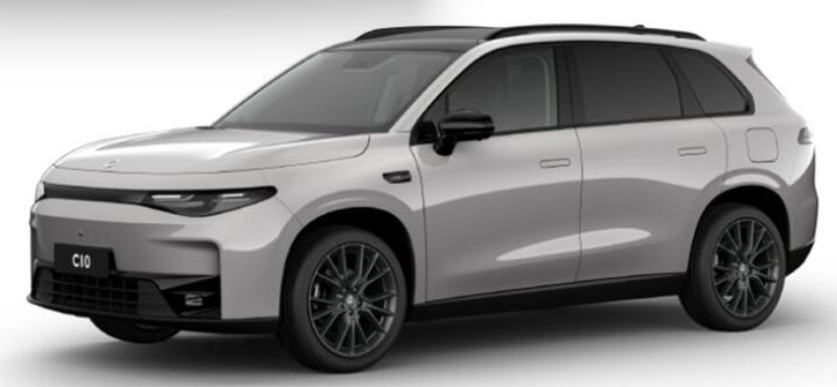
Learning how to charge Leapmotor C10 is refreshingly simple once we understand the basics. At first, EV charging can look like a bowl of alphabet soup: AC, DC, Type 2, CCS, Mode 2, Mode 3, kilowatts, charging curves. In practice, though, charging a C10 is not much more complicated than plugging in a laptop—just with considerably more electricity involved.
The Leapmotor C10 can be charged at home, from a dedicated wallbox, at public AC stations, or from DC rapid chargers. Which method makes the most sense depends on where we are, how far we drive each day, and which C10 version we own.
That final point matters. Charging specifications have evolved. Earlier European C10 BEV versions equipped with the 69.9 kWh battery were initially rated at around 6.6 kW AC and 83–84 kW DC, while newer C10 variants can support 11 kW AC and as much as 180 kW DC, depending on battery and drivetrain. Leapmotor's 2026 documentation lists different charging capabilities across the BEV, Long Range/AWD and REEV range, so we should always check the specification of our individual car rather than assuming every C10 charges identically.
Let's look at exactly how the process works.
Content in this publication
- Where Is the Leapmotor C10 Charging Port?
- What Charging Connector Does the Leapmotor C10 Use?
- How to Charge Leapmotor C10 at Home
- Charging the Leapmotor C10 With a Wallbox
- How to Charge Leapmotor C10 at a Public AC Charger
- How to Rapid Charge a Leapmotor C10
- Why Doesn't My C10 Charge at Its Maximum Advertised Speed?
- Should We Charge the Leapmotor C10 to 100%?
- Can We Schedule Leapmotor C10 Charging?
- How Much Does It Cost to Charge a Leapmotor C10?
- Home Charging vs Rapid Charging
- How to Stop Charging the Leapmotor C10
- Why Is My Leapmotor C10 Not Charging?
- Can We Run the Climate Control While Charging?
- Is It Normal to Hear Fans While the C10 Is Charging?
- Can the Leapmotor C10 Use Tesla Chargers?
- Does the Leapmotor C10 Support Vehicle-to-Load?
- How to Make Leapmotor C10 Charging More Convenient
- What Charger Should We Install for a Leapmotor C10?
- Is Rapid Charging Every Day Necessary?
- Which Leapmotor C10 Charges Fastest?
- Leapmotor C10 Charging Safety Tips
- What Is the Best Way to Charge a Leapmotor C10?
- Conclusion: Charging a Leapmotor C10 Is Easier Than It Looks
- Frequently Asked Questions
Where Is the Leapmotor C10 Charging Port?
The charging port on global C10 versions is located toward the rear of the left-hand side of the vehicle.
Walk up to that side of the C10 and we'll find the charging flap above and forward of the rear bumper area. Once opened, the charging connectors sit behind protective covers.
The owner's manual identifies separate connections for normal AC charging and DC rapid charging. When we're finished, the protective cap and outer flap should be closed properly to keep rain, dirt and foreign material away from the electrical contacts.
It becomes second nature after a couple of charging sessions.
What Charging Connector Does the Leapmotor C10 Use?
In European and many international markets, the C10 uses the familiar Type 2 connector for AC charging.
For rapid charging, it uses CCS/CCS2, which effectively expands the Type 2 socket with two larger DC contacts underneath.
This gives us two main charging routes:
| Charging method | Typical connector | Best use |
|---|---|---|
| Household charging | Type 2 via Mode 2 cable | Occasional or overnight charging |
| Home wallbox | Type 2 | Everyday home charging |
| Public AC station | Type 2 | Parking for several hours |
| DC rapid charger | CCS2 | Motorway trips and quick top-ups |
Leapmotor documentation confirms support for Mode 2 household charging, Mode 3 wallbox/public AC charging and Mode 4 DC rapid charging.
Type 2 AC Charging Explained
AC charging is what most of us will use at home.
Electricity from the grid enters the C10 as alternating current. The vehicle's onboard charger then converts that electricity into direct current before storing it in the battery.
This onboard charger creates an important limit.
A 22 kW AC station does not necessarily mean the C10 will accept 22 kW. If our particular C10 has an 11 kW onboard charger, it will normally draw no more than approximately 11 kW.
Earlier European C10 models used a 6.6 kW onboard charger, whereas current C10 BEV versions in Leapmotor's newer specifications can accept up to 11 kW AC.
CCS DC Rapid Charging Explained
DC rapid charging works differently.
Instead of relying heavily on the onboard AC charger, the charging station converts the power into DC before sending it directly toward the traction battery.
That's why DC charging can be dramatically faster.
Think of AC charging as filling a swimming pool with a garden hose. DC charging is closer to opening the fire hydrant.
How to Charge Leapmotor C10 at Home
For everyday ownership, home charging will usually be the easiest and most economical solution.
We park, plug in and leave the car charging while we sleep. By morning, the battery has quietly recovered the energy used during the previous day.
Step-by-Step Leapmotor C10 Home Charging
The basic process is:
- Park the C10 safely and select Park.
- Open the charging-port flap on the rear-left side of the vehicle.
- Remove the protective cover from the AC charging socket.
- Connect the charging cable to the wallbox or household charging equipment.
- Push the Type 2 connector firmly into the C10 until it is properly seated and locked.
- Confirm on the instrument display or infotainment screen that charging has started.
- Leave the vehicle connected until the desired battery percentage is reached.
- When finished, stop or unlock charging through the vehicle if required, disconnect the cable, replace the protective cap and close the charging flap.
Leapmotor's manual notes that the connection is successful when the plug engages correctly, and the vehicle's charging display indicates charging progress.
Simple enough.
Charging the C10 From a Household Socket
A Mode 2 portable cable can connect the C10 to a suitable grounded domestic power outlet where permitted.
Leapmotor's current brochure refers to Mode 2 single-phase home charging at up to approximately 3 kW. For the regular BEV, its quoted 30–80% time using this method is around 14 hours, demonstrating just how much slower household charging can be than a wallbox.
This method can still be useful.
If we drive only 20 or 30 miles per day and leave the car plugged in overnight, a domestic outlet may recover enough energy for the following day's driving.
However, it shouldn't automatically become the default long-term charging solution. A dedicated EV wallbox installed on a correctly designed electrical circuit is normally the better setup for regular charging.
Should We Use an Extension Lead?
Generally, no.
EV charging places a substantial continuous load on electrical equipment for hours at a time. Ordinary domestic extension leads, multi-plug adapters and improvised wiring are not intended for that purpose.
Leapmotor specifically warns against improper or unauthorized charging arrangements and instructs owners not to use damaged charging equipment.
With EV electricity, boring and properly installed is exactly what we want.
Charging the Leapmotor C10 With a Wallbox
A wallbox is the sweet spot for most C10 owners.
Instead of waiting all day for a household socket, we can connect the car in the evening and normally recover a substantial portion—or all—of the battery overnight.
Newer C10 electric versions support up to 11 kW AC charging, while some earlier cars are limited to approximately 6.6 kW.
The actual speed also depends on the electrical supply to our home.
A three-phase installation may be required to achieve the full 11 kW in many countries. On a common single-phase residential supply, the available power may be lower.
How Long Does the C10 Take to Charge on AC?
Charging time depends heavily on model.
Leapmotor's March 2026 brochure gives an approximate 30–80% AC charging time of 3 hours 50 minutes for the standard BEV at its maximum supported AC rate, while the newer BEV Long Range/AWD versions are quoted at approximately 4 hours 30 minutes.
Independent EV specifications for the newer 81.9 kWh C10 estimate roughly 8 hours 45 minutes for a broad 0-to-full equivalent session at 11 kW AC under their test assumptions.
Real charging time won't always match a brochure perfectly because charging losses, battery temperature, household voltage, battery state of charge and power-sharing arrangements can all affect the result.
How to Charge Leapmotor C10 at a Public AC Charger
Public AC charging works almost exactly like charging from a wallbox.
We park beside the station, open the charging flap, connect a Type 2 cable and authorize the session using whichever method the network requires.
Some stations have tethered cables permanently attached. Others require us to carry our own Type 2 cable.
Once connected, we should check that the C10 display confirms charging.
Public AC stations make particular sense when the car will already be parked for several hours—at work, a hotel, shopping centre or overnight destination.
Using a rapid charger while eating dinner is useful. Paying rapid-charging rates while the car sits unused for six hours usually isn't.
How to Rapid Charge a Leapmotor C10
This is where things become more interesting.
For longer journeys, we can connect the C10 to a compatible CCS DC rapid charger. The charger delivers high-power DC electricity directly to the battery system.
The procedure is familiar: park correctly, open the charging flap and appropriate covers, connect the CCS connector securely, authorize the charging station and verify that charging begins.
You may be interested in reading Is Mazda CX-9 a Luxury Car? A Surprisingly Complicated Answer
Leapmotor's owner's manual advises that owners should follow the charging-station instructions and never force the connector in or out.
Leapmotor C10 DC Charging Speed
Here we need to distinguish between generations.
The original 69.9 kWh European C10 was rated at approximately 83–84 kW maximum DC charging power, with Leapmotor quoting around 30 minutes for 30–80%.
Newer 81.9 kWh Long Range and AWD versions raise maximum DC power considerably, to as much as 180 kW. Leapmotor's newer brochure quotes around 22 minutes from 30–80% for these versions.
Independent EV Database figures place newer 81.9 kWh C10 variants at 180 kW peak and estimate approximately 30 minutes for 10–80% under favorable conditions.
Those numbers aren't contradictory; they refer to different charging windows and testing assumptions.
That's why we should be careful when someone says, "The Leapmotor C10 charges at 180 kW." Some do. Earlier versions don't.
Why Doesn't My C10 Charge at Its Maximum Advertised Speed?
This is probably one of the biggest misunderstandings in EV ownership.
A 180 kW peak charging rating does not mean the car will remain at 180 kW from 1% to 100%.
Battery charging follows a curve.
When the battery is relatively empty and at an ideal temperature, it can often accept high power. As the state of charge rises, the battery-management system normally reduces charging power to control temperature and protect the cells.
The result is perfectly normal: 160 kW one moment, perhaps 100 kW later, then progressively lower power as we approach a high battery percentage.
Battery Temperature Matters
A cold battery generally cannot accept energy as quickly as a battery operating within its ideal temperature window.
Extremely hot conditions can have the same effect.
So if our C10 charges more slowly on a freezing winter morning than during a mild afternoon, it doesn't necessarily mean anything is wrong.
The same principle applies after repeated high-power charging or prolonged high-speed driving in hot conditions.
State of Charge Matters Too
Rapid charging becomes progressively less advantageous as the battery fills.
Charging from 15% to 60% can be impressively quick.
Going from 90% to 100% can feel like watching paint dry.
This is why experienced EV drivers often stop at around 70–80% during long-distance travel, drive to the next charger, then repeat. Spending another 25 minutes squeezing the final few percent into the battery may save less time than simply getting back on the road.
Should We Charge the Leapmotor C10 to 100%?
Charging to 100% isn't automatically bad.
Sometimes we genuinely need the maximum available range—a long journey, a remote destination or a day when charging opportunities will be limited.
For daily use, however, many drivers do not need a completely full battery every morning.
The sensible strategy is to charge enough for our routine and follow any battery-charge-limit recommendations shown in the vehicle or provided for our exact battery chemistry and software version.
Different C10 versions may use different battery configurations, so generic EV advice shouldn't replace model-specific instructions.
Can We Schedule Leapmotor C10 Charging?
Where charging scheduling or charging limits are available through the infotainment system or associated software, they can make home charging significantly more convenient.
Scheduled charging can help us take advantage of cheaper overnight electricity tariffs.
Instead of plugging the car in at midnight ourselves, we can connect it earlier and allow the vehicle or wallbox to start charging automatically during the lower-cost period.
That's one of the quiet joys of EV ownership: the petrol station effectively comes home with us.
How Much Does It Cost to Charge a Leapmotor C10?
The calculation is straightforward.
We multiply the electricity used by the price per kilowatt-hour.
Suppose our charging session adds 50 kWh and our home tariff is £0.25 per kWh. The theoretical energy cost would be about £12.50 before considering charging losses.
At £0.10/kWh overnight, the same 50 kWh would cost £5.
At a public rapid charger charging £0.70/kWh, it would cost £35.
That's an enormous difference.
For anyone buying a C10 primarily to reduce running costs, cheap home electricity can matter almost as much as vehicle efficiency.
Home Charging vs Rapid Charging
Neither is inherently better. They serve different jobs.
| Feature | Home AC charging | DC rapid charging |
|---|---|---|
| Speed | Moderate | Fast |
| Convenience | Excellent overnight | Excellent on road trips |
| Typical cost | Usually lower | Usually higher |
| Ideal use | Daily charging | Long journeys |
| Battery heat | Generally lower | More heat generated |
| Time commitment | Usually irrelevant overnight | Important during trips |
For most owners, the ideal routine is simple: AC charge at home for normal driving and use DC charging when the journey demands it.
How to Stop Charging the Leapmotor C10
Don't simply yank the charging connector out.
The plug can lock into the vehicle during charging.
Leapmotor's owner's manual says the connector should be unlocked before removal. Depending on vehicle/software version, this may be done by unlocking the vehicle or selecting the appropriate charging plug unlock function from the central touchscreen.
Once the connector unlocks, remove it normally, replace the protective cap and close the charging-port flap.
What If the Charging Plug Will Not Release?
First, don't force it.
Check that the charging session has ended and the vehicle is unlocked. Try the charging-plug unlock control again.
The owner's documentation specifically warns that forcibly removing a locked connector can damage the locking mechanism. It also describes an emergency mechanical release for situations in which the connector cannot be removed after normal unlocking attempts.
That emergency release should be treated as exactly that—an emergency option rather than the everyday way to disconnect.
If the connector repeatedly sticks, an authorized Leapmotor service centre should inspect the system.
Why Is My Leapmotor C10 Not Charging?
Sometimes the problem is surprisingly mundane.
The station may have failed to initialize. The connector may not be fully inserted. The public charging network may require authorization. Scheduled charging may be preventing an immediate start. A domestic circuit may have tripped.
Start with the simple checks before assuming the battery has developed a problem.
Inspect the connector for visible damage and make sure the charging port is clean and dry. Reconnect the cable firmly, confirm the charging station is working and read any warning displayed by the vehicle.
If the same fault appears with several known-good chargers, that's when vehicle diagnosis becomes more appropriate.
Can We Run the Climate Control While Charging?
Yes, although using energy while charging can extend the time required.
You may be interested in readingIs Mazda CX-9 a Luxury Car? A Surprisingly Complicated AnswerYou may be interested in reading
 Is Subaru XV a Good Car? An Honest Look at Reliability, Comfort, AWD and Ownership
Leapmotor's manual specifically notes that operating the air-conditioning system during charging can increase charging duration.
This isn't necessarily a reason to avoid it.
Pre-heating or pre-cooling the cabin while still connected can be useful because we're making ourselves comfortable before departure while drawing at least part of the required energy from the charger rather than immediately draining the traction battery.
Is It Normal to Hear Fans While the C10 Is Charging?
Yes.
Don't be surprised if the C10 suddenly sounds alive while parked at a charger.
EV battery systems may activate cooling pumps, valves, fans and other thermal-management equipment during charging. Leapmotor explicitly notes that the cooling fan may automatically operate while the vehicle is charging and that this can be normal behavior.
A spinning fan is therefore not automatically a sign that something is overheating.
Can the Leapmotor C10 Use Tesla Chargers?
Potentially, but compatibility depends on the country and charging network.
In regions where selected Tesla Superchargers are open to compatible non-Tesla CCS vehicles, a CCS-equipped C10 may be able to use participating sites.
But we shouldn't assume that every Tesla charger is open to every vehicle. Access policies, connector standards and app requirements vary significantly by country and station.
The safer approach is to confirm compatibility in the relevant charging-network app before relying on a particular site during a journey.
Does the Leapmotor C10 Support Vehicle-to-Load?
Yes, compatible C10 versions support V2L, or Vehicle-to-Load.
That means the traction battery can power suitable external electrical equipment using the appropriate adapter.
This is separate from normal vehicle charging: instead of electricity going into the C10, energy flows outward from the battery.
Leapmotor documentation lists V2L capability on the C10, while independent specifications put maximum external output at around 3.3 kW for relevant BEV versions.
It's a surprisingly handy feature for camping, outdoor activities or powering modest equipment away from the grid.
How to Make Leapmotor C10 Charging More Convenient
The biggest improvement usually has nothing to do with buying the fastest charger we can find.
It's about creating a routine.
Install an appropriate home wallbox if possible. Keep our charging cable stored neatly. Plug in whenever convenient rather than waiting until the battery is almost empty. Use overnight electricity tariffs if they're available. Save rapid charging for situations where speed genuinely matters.
An EV becomes easiest to live with when charging fades into the background.
We shouldn't have to think, "I need to go charge my car."
We should arrive home, plug it in and forget about it.
What Charger Should We Install for a Leapmotor C10?
For most newer C10 owners, an 11 kW-capable Type 2 wallbox makes sense where the property has an appropriate three-phase electrical supply and local regulations allow it.
But buying an 11 kW wallbox doesn't magically create an 11 kW electrical connection.
A qualified installer must determine what the property can safely supply.
If our home only supports a lower AC rate, that's not necessarily a problem. A 7 kW-ish overnight charging setup is more than sufficient for many households because the car sits parked for far longer than it actually needs to charge.
Is Rapid Charging Every Day Necessary?
For most people, no.
DC charging is fantastic when we need speed. But if the C10 spends eight or ten hours parked outside our home every night, rapid charging doesn't offer much practical benefit.
Home AC charging is usually easier and cheaper.
It's similar to cooking. A microwave is brilliant when we're in a hurry, but we don't need every meal cooked in 90 seconds.
Which Leapmotor C10 Charges Fastest?
Among current electric versions, the newer 81.9 kWh C10 Long Range and AWD models represent a major charging improvement over the original 69.9 kWh C10.
They support up to approximately 180 kW DC, compared with roughly 84 kW on the earlier model. The newer battery versions also support up to 11 kW AC.
That distinction matters when reading older C10 reviews online.
Someone reviewing a 2024 or early 2025 car may describe the C10's rapid charging as relatively modest. Someone driving a newer Long Range or AWD model can experience substantially higher peak power.
Both descriptions can be accurate—they're simply talking about different versions.
Leapmotor C10 Charging Safety Tips
Charging equipment handles serious electrical power, so common sense matters.
Never use damaged cables or connectors. Don't modify charging equipment. Don't force a plug that won't disconnect. Keep the charging-port contacts free from water, dirt and foreign objects, and follow the instructions displayed by the charging station.
Leapmotor also advises owners not to wash or flush the open charging port during a charging session and warns against using damaged charging equipment.
If we smell burning, see smoke or notice obviously abnormal behavior, stop using the equipment and seek professional assistance.
What Is the Best Way to Charge a Leapmotor C10?
For the average owner, the best strategy is wonderfully uneventful.
Use a dedicated AC wallbox at home for everyday charging. Plug the C10 in overnight when needed. Schedule charging during cheaper electricity periods where possible. Use CCS rapid charging on longer trips, preferably arriving with a relatively low battery percentage so the car can take advantage of the faster section of its charging curve.
And don't chase 100% unless we actually need it.
Once we adopt that routine, charging becomes less of an event and more like charging our phone overnight.
Conclusion: Charging a Leapmotor C10 Is Easier Than It Looks
So, how do we charge a Leapmotor C10?
Open the charging port on the rear-left side, connect a compatible Type 2 AC or CCS DC charger, make sure the vehicle confirms that charging has started and let the car manage the rest.
For everyday driving, home AC charging is likely to be the most convenient option. Current versions can accept up to 11 kW AC, while rapid-charging performance varies considerably depending on C10 specification. Earlier 69.9 kWh cars peak at roughly 83–84 kW DC, whereas newer 81.9 kWh Long Range and AWD models can accept up to approximately 180 kW.
That difference is worth remembering when buying a used C10 or comparing charging figures online.
But whichever version sits on our driveway, the philosophy remains the same: plug in when convenient, use home electricity whenever practical, rapid-charge when speed matters and let the battery-management system handle the complicated stuff.
EV charging sounds technical.
Living with it usually isn't.
Frequently Asked Questions
1. What type of charger does the Leapmotor C10 use?
European and many global versions of the Leapmotor C10 use a Type 2 connector for AC charging and CCS/CCS2 for DC rapid charging. Leapmotor supports Mode 2 domestic charging, Mode 3 wallbox/public AC charging and Mode 4 DC rapid charging.
2. How fast can the Leapmotor C10 charge?
It depends on the version. Earlier 69.9 kWh C10 BEVs support around 6.6 kW AC and approximately 83–84 kW DC. Newer C10 BEV Long Range and AWD versions can support around 11 kW AC and up to 180 kW DC.
3. How long does a Leapmotor C10 take to rapid charge?
Leapmotor quotes approximately 30 minutes for 30–80% on the earlier standard BEV and around 22 minutes for 30–80% on newer Long Range/AWD models under suitable conditions. Actual charging times depend on battery temperature, charger capability and starting state of charge.
You may be interested in readingIs Mazda CX-9 a Luxury Car? A Surprisingly Complicated AnswerYou may be interested in reading
Is Subaru XV a Good Car? An Honest Look at Reliability, Comfort, AWD and OwnershipYou may be interested in reading
How Long Will a Subaru XV Last? Mileage, Lifespan, and Reliability Explained4. Can I charge the Leapmotor C10 from a normal household socket?
Yes, where local electrical standards and the supplied/approved Mode 2 cable permit it. However, household charging is considerably slower than using a dedicated wallbox, and the socket and wiring must be suitable for sustained EV charging. Leapmotor documents Mode 2 charging from a grounded domestic socket.
5. Why won't my Leapmotor C10 charging cable come out?
The connector may still be electronically locked. End the charging session, unlock the vehicle or use the charging-plug unlock function on the infotainment screen before removing it. Leapmotor warns against forcing the connector and provides an emergency mechanical-release procedure if normal unlocking repeatedly fails.
If you want to know other articles similar to How to Charge Leapmotor C10: Complete Charging Guide you can visit the category Blog.
How to Reset the Oil Light on a Kia Sportage
Volvo S90 Reliability: Problems, Costs & Best Years
Is Haval Jolion a Good Car? Honest Review, Reliability, Pros and Cons
How to Start Haval Jolion With Spare Key: Complete Guide
How to Calculate Per Diem on an Auto Loan

How to Calculate the Residual Value of a Car
Leave a Reply
More content of your interest