
Is Subaru XV a Good Car? An Honest Look at Reliability, Comfort, AWD and Ownership

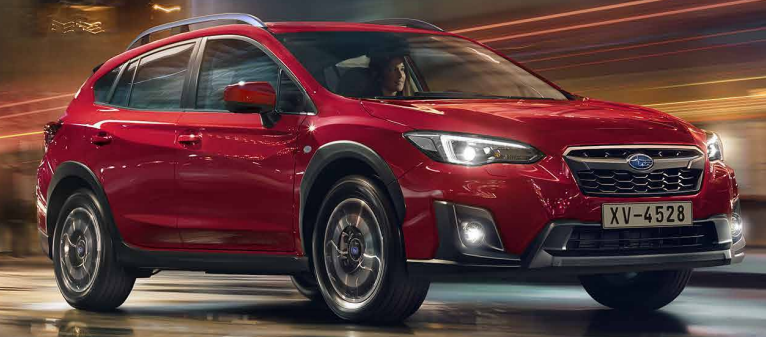
Yes, the Subaru XV is a good car, particularly for drivers who value all-wheel-drive capability, safety, ground clearance, easy everyday usability, and a reassuring feeling behind the wheel. It is not the quickest small SUV, nor does it have the biggest boot or the most exciting automatic transmission, but that was never really the XV's mission.
Think of the Subaru XV as the hiking shoe of compact SUVs. It may not look as dramatic as a racing boot or feel as plush as a designer sneaker, but when the road becomes slippery, broken or unpredictable, suddenly its priorities make a lot of sense.
For many buyers, that balance is precisely what makes the XV appealing.
The Subaru XV arrived in Australia in 2012 and continued through two major generations before Subaru replaced the XV nameplate with Crosstrek. Subaru Australia describes the Crosstrek as the next iteration of the XV, with the new model officially going on sale in Australia in May 2023.
So, is a Subaru XV a good car to buy used today?
For the right person, absolutely. But there are several things we would inspect carefully before handing over the money.
Content in this publication
- Is Subaru XV a Good Car? Quick Verdict
- What Exactly Is the Subaru XV?
- What Makes the Subaru XV Good?
- Subaru XV AWD: One of Its Biggest Advantages
- Is the Subaru XV Safe?
- Is the Subaru XV Reliable?
- Subaru XV Engine Reliability
- Is the Subaru XV CVT Reliable?
- Is Subaru XV Underpowered?
- How Does Subaru XV Drive?
- Is Subaru XV Comfortable?
- Is the Subaru XV Spacious?
- Is Subaru XV Fuel Efficient?
- Is Subaru XV Expensive to Maintain?
- What Are the Main Subaru XV Problems?
- Subaru XV First Generation vs Second Generation
- Is a Used Subaru XV Worth Buying?
- Who Should Buy a Subaru XV?
- Subaru XV vs Typical Small SUV: What Makes It Different?
- Does Subaru XV Hold Its Value Well?
- What Mileage Is Too High for a Subaru XV?
- Is Subaru XV Good for a Family?
- Is Subaru XV Good for Long Trips?
- Is the Subaru XV Better Than a Forester?
- So, Is Subaru XV a Good Car in 2026?
- Final Verdict: Should You Buy a Subaru XV?
- Frequently Asked Questions
Is Subaru XV a Good Car? Quick Verdict
The Subaru XV earns our recommendation because it combines several qualities that aren't always found together in the small-SUV class.
Its strongest characteristics are:
- Standard all-wheel drive on traditional petrol models
- Generous ground clearance
- Secure and predictable road manners
- Excellent outward visibility
- Strong historical safety credentials
- Comfortable everyday dimensions
- Useful capability on gravel and poor roads
- Generally straightforward petrol engines
- A practical driving position
There are compromises, though.
The biggest complaints normally concern modest acceleration, CVT behaviour, relatively limited luggage capacity, engine noise under hard acceleration and potential problems on neglected older examples.
In other words, the Subaru XV isn't perfect.
But perfection isn't really what makes a good used car.
A good used car needs to fit your lifestyle without regularly making you regret buying it, and for many people the XV does that remarkably well.
What Exactly Is the Subaru XV?
The XV sits somewhere between a conventional hatchback and a traditional SUV.
Underneath, earlier XVs share a considerable amount of their DNA with the Subaru Impreza. But Subaru raised the body, added tougher-looking exterior trim and gave the XV enough ground clearance to venture beyond clean suburban bitumen.
That combination created something interesting.
You don't feel as though you're driving a bulky SUV around town, yet you don't have to approach gravel roads, steep driveways or badly maintained tracks with the nervousness of someone driving a low-slung hatchback.
XV Versus Crosstrek: Are They the Same Car?
Essentially, the Crosstrek continues the concept established by the XV.
Subaru confirmed in October 2022 that Australia's next-generation XV would carry the Crosstrek name, and the new-generation vehicle reached Australian buyers in 2023.
Therefore, when browsing the used market:
- Subaru XV generally refers to the earlier generations.
- Subaru Crosstrek refers to the newer continuation of the same compact crossover concept.
This distinction matters because someone researching a used 2018 XV isn't necessarily looking at the same vehicle mechanically or technologically as someone considering a current Crosstrek.
What Makes the Subaru XV Good?
Rather than judging the XV by horsepower figures alone, we need to understand where Subaru spent its engineering budget.
Much of the XV's personality revolves around stability.
It feels planted.
Visibility is good.
Its proportions are manageable.
The suspension handles imperfect surfaces comfortably.
And when conditions deteriorate, its AWD system gives the vehicle another layer of usefulness.
That might sound less exciting than turbochargers and enormous touchscreens, but when you're driving home through heavy rain, climbing a loose gravel road or negotiating a wet campsite, sensible engineering suddenly becomes rather attractive.
Subaru XV AWD: One of Its Biggest Advantages
All-wheel drive is probably the single strongest reason to choose an XV instead of many conventional small SUVs.
Subaru's approach differs from numerous competitors that were primarily designed as front-wheel-drive urban crossovers.
Does Subaru XV Have Permanent AWD?
Subaru XV models are associated with Subaru's Symmetrical All-Wheel Drive system, although the precise operation varies depending on transmission and generation.
CarsGuide describes the XV as sending drive through all four wheels, while Subaru has continued AWD as one of the defining characteristics of the newer Crosstrek.
What matters to us as drivers is the result.
On loose or slippery surfaces, the XV feels reassuringly composed.
That doesn't make it a heavy-duty 4WD.
You shouldn't buy one expecting LandCruiser-style off-road capability. There is no low-range transfer case, and serious mud, deep water or rock crawling isn't what this vehicle was designed for.
But for:
- Gravel roads
- Wet grass
- Snow
- Light trails
- Steep driveways
- Camping access roads
- Rain-soaked highways
the system gives the XV an advantage over many ordinary front-wheel-drive crossovers.
Is Subaru XV Good Off-Road?
We would describe it as soft-road capable rather than genuinely off-road focused.
And that's not criticism.
Most owners aren't crossing deserts.
They want something that can travel comfortably through town Monday to Friday and reach a rural property, hiking trail or campsite on Saturday morning.
For that job, the XV makes considerable sense.
Is the Subaru XV Safe?
Safety has traditionally been one of the strongest arguments for the XV.
Australian-market XVs from the first generation performed strongly under the testing standards of their time. ANCAP recorded a five-star result for the 2012-era model, with an overall assessment score of 35.33 out of 37.
The second-generation XV introduced from May 2017 also received a five-star ANCAP rating under its applicable testing regime, scoring 35.80 out of 37.
Naturally, we shouldn't compare an old five-star rating directly with a brand-new five-star result because testing criteria evolve over time.
Still, those results show that occupant protection was a serious design priority.
Subaru EyeSight Makes Higher-Spec XVs More Appealing
Depending on year and trim, Subaru's EyeSight driver-assistance technology adds features such as autonomous emergency braking and other collision-avoidance assistance.
Equipment differs significantly between versions, so don't simply assume that every XV contains every safety system.
ANCAP specifically notes that on the 2017-generation XV, autonomous emergency braking and lane-support technology were not fitted to the base version but were optional or standard higher in the range.
That makes trim level worth checking when shopping second-hand.
Is the Subaru XV Reliable?
This is where the answer becomes more nuanced.
Broadly speaking, a properly maintained XV can provide dependable service.
However, reliability depends considerably on:
- Model year
- Previous maintenance
- Transmission condition
- Engine oil level history
- Recall completion
- How the vehicle was previously driven
A ten-year-old Subaru with impeccable servicing may be a safer purchase than a five-year-old example that has been abused and ignored.
Maintenance history matters enormously.
Subaru XV Engine Reliability
Most Australian XV buyers encountered Subaru's naturally aspirated boxer petrol engine.
The horizontally opposed configuration places cylinders flat rather than vertically, giving Subaru engines their characteristic architecture.
These engines aren't designed to provide explosive performance.
They're more about smooth everyday operation and packaging.
Does the Subaru XV Burn Oil?
Older Subaru engines have attracted reports regarding oil consumption, so we wouldn't dismiss this during an inspection.
CarsGuide specifically recommends checking the dipstick on older XVs because some Subaru engines can consume oil, while its earlier ownership reviews also mention reported cases involving excessive consumption.
That doesn't mean every XV burns excessive amounts of oil.
It means a used buyer should investigate.
What Should We Check?
Before buying an older XV:
- Inspect the engine oil level.
- Look for evidence of regular servicing.
- Ask whether oil has required topping up between services.
- Check underneath for leakage.
- Listen carefully during a cold start.
- Look for unusual exhaust smoke.
- Consider a pre-purchase mechanical inspection.
A neglected engine is like someone running a marathon without water. Eventually, something gives up.
Is the Subaru XV CVT Reliable?
The continuously variable transmission is arguably the part of an older XV that deserves the most careful inspection.
CVTs work differently from traditional geared automatic transmissions.
Rather than stepping between fixed gears, they continuously vary the transmission ratio.
In theory, that's excellent for efficiency.
In practice, some drivers don't enjoy the sensation.
How Does the XV CVT Feel?
When accelerating firmly, the engine can hold relatively high revs while road speed catches up.
To drivers accustomed to a conventional automatic transmission changing through clearly defined gears, this can feel strange.
The engine becomes vocal and acceleration can feel disconnected.
Some people barely notice.
Others dislike it immediately.
That's why we strongly recommend a proper test drive.
What CVT Symptoms Should You Avoid?
CarsGuide has repeatedly advised used XV buyers to watch for unusual CVT behaviour, particularly in earlier vehicles. Potential warning signs include shuddering during takeoff, hesitation, surging or unusually slow responses at low speeds.
During your test drive, pay attention when:
You may be interested in reading How Long Will a Subaru XV Last? Mileage, Lifespan, and Reliability Explained
- Moving away gently
- Accelerating hard
- Crawling through traffic
- Selecting Drive
- Selecting Reverse
- Climbing hills
- Parking at low speed
Smooth behaviour is what we're looking for.
Don't Confuse Normal CVT Behaviour With Failure
A CVT naturally behaves differently from a regular automatic transmission.
High revs under heavy acceleration don't automatically indicate a problem.
Juddering, clunking, persistent hesitation or obvious driveline vibration are much more concerning.
If you're uncertain, have the car inspected by someone familiar with Subaru drivetrains.
Is Subaru XV Underpowered?
Here's one criticism we won't dance around:
The Subaru XV isn't particularly fast.
And earlier versions can feel noticeably slow when asked to accelerate hard.
A 2016 Australian specification XV with the 2.0-litre petrol engine produced 110kW and 196Nm, with CarsGuide recording quoted 0–100km/h performance around 10.7 seconds for the CVT version.
That isn't catastrophic.
But nobody is going to mistake it for a WRX.
When Does the Lack of Power Matter?
You'll notice it most when:
- Overtaking at highway speeds
- Joining fast-moving motorways
- Carrying several passengers
- Climbing steep hills
- Accelerating with luggage onboard
Around town, performance is usually adequate.
And that's the key word: adequate.
If you want punchy acceleration, the XV probably isn't your ideal small SUV.
If you prefer predictable throttle response and don't care about winning imaginary traffic-light races, it may be perfectly acceptable.
How Does Subaru XV Drive?
Once we stop demanding sports-car acceleration, the XV becomes considerably easier to appreciate.
Its handling is nicely balanced.
The relatively low boxer engine helps keep the centre of gravity down, while the AWD system contributes to a planted feeling.
Steering is easy enough around town without making the car feel completely detached.
Ride Comfort
The XV's suspension is one of the features that suits real-world driving.
Broken roads, potholes and uneven surfaces are handled with reasonable composure.
You don't get the towering, floating feeling of a large SUV.
Instead, the XV feels closer to a lifted hatchback—which, for many drivers, is actually preferable.
Visibility
Visibility deserves special mention.
A sensibly shaped cabin, relatively generous glass area and elevated driving position make the surroundings easy to judge.
CarsGuide's early XV assessment similarly praised its light cabin and good outward vision.
This helps with:
- Parking
- Urban intersections
- Narrow roads
- Lane positioning
- Driving in unfamiliar environments
It's one of those qualities specifications rarely capture.
You notice it after living with the car.
Is Subaru XV Comfortable?
Generally, yes.
The XV has enough room for four adults to travel comfortably, although taller passengers and families wanting substantial luggage capacity may prefer something larger.
Front-seat comfort varies according to body shape and personal preference.
Some owners of early vehicles surveyed by CarsGuide criticised the shape and comfort of the driver's seat, so longer test drives are worthwhile if you're sensitive to seat support.
The cabin itself tends to prioritise practical ergonomics rather than luxury.
You're not entering a Lexus.
But buttons usually make sense, visibility is strong and the environment feels functional.
Is the Subaru XV Spacious?
Passenger space is reasonably impressive considering the XV's external footprint.
Boot space is less remarkable.
The luggage area is one of the recurring criticisms of the earlier XV, especially compared with more conventional compact SUVs.
Who Will Find the Boot Big Enough?
Probably:
- Singles
- Couples
- Commuters
- Small families
- Weekend travellers
- Dog owners with smaller pets
Who Might Want More Space?
Possibly:
- Families with large prams
- Owners carrying sports equipment regularly
- Frequent airport travellers
- People travelling with large dogs
- Families packing for extended road trips
This is where a Subaru Forester can make more sense.
The XV is compact by design.
Its manageable dimensions are a blessing in city parking spaces but inevitably place limits on cargo capacity.
Is Subaru XV Fuel Efficient?
Fuel economy is acceptable rather than class-leading.
Older 2.0-litre petrol versions have official combined figures around the seven-litre-per-100km region depending on specification. For example, CarsGuide lists approximately 7.1L/100km for a 2012 2.0i and quoted 7.0L/100km for a 2017 model.
Real-world consumption naturally depends on:
- Traffic
- Driving style
- Tyres
- Temperature
- Terrain
- Passenger load
- Maintenance
- Trip length
The permanent availability of AWD capability also means the XV shouldn't necessarily be compared directly with lighter front-wheel-drive economy-focused crossovers.
Is XV Fuel Economy Good Enough?
For most owners, yes.
But if minimising petrol consumption is your number-one priority, hybrid alternatives may prove more attractive.
The XV's value proposition is broader than fuel economy alone.
Is Subaru XV Expensive to Maintain?
We would describe servicing costs as something to investigate rather than fear.
Subaru uses scheduled maintenance intervals that vary by model year.
For example, Subaru Australia states that MY2018–2022 XV models use intervals of 12 months or 12,500km, whichever occurs first.
That makes service history easy to evaluate when inspecting those cars.
Missing services are a warning sign.
AWD Adds Mechanical Complexity
Compared with a basic front-wheel-drive hatchback, an AWD Subaru naturally contains additional driveline components.
That doesn't automatically make it unreliable.
But it does mean maintenance isn't an area where we'd try to save every possible dollar.
Correct fluids, appropriate tyres and scheduled servicing matter.
What Are the Main Subaru XV Problems?
No used vehicle deserves unconditional praise, so let's summarise what we'd pay attention to.
1. CVT Behaviour
Older examples deserve careful testing for juddering, hesitation or abnormal operation.
2. Oil Consumption
Monitor engine oil levels, particularly on earlier vehicles with uncertain maintenance histories.
3. Modest Acceleration
This is usually a characteristic rather than a fault.
The engine simply isn't enormously powerful.
4. Limited Boot Space
Buyers expecting traditional SUV cargo volume may be disappointed.
5. Infotainment
Older entertainment systems can feel particularly dated compared with modern interfaces.
6. Recalls
Previous XV generations were subject to recalls over different issues.
Check the vehicle identification number against the relevant recall database rather than assuming previous owners completed every campaign.
Subaru XV First Generation vs Second Generation
When someone asks whether the Subaru XV is good, model year makes an enormous difference.
First Generation: Roughly 2012–2017
The original XV established the formula.
It offered impressive ground clearance, AWD and compact exterior dimensions.
However, today's buyers should scrutinise earlier cars more carefully simply because of age.
Bushings, suspension parts, batteries, tyres and fluids may require attention even if the underlying model is fundamentally sound.
Best For
Budget-conscious buyers wanting an AWD crossover without buying something enormous.
Main Concerns
Condition, service history, oil consumption and transmission behaviour.
Second Generation: 2017–2023
The newer XV feels more sophisticated.
Safety technology improved, the structure evolved and the overall driving experience became more polished.
ANCAP's 2017 assessment applied across petrol and later hybrid XV variants under that rating.
If the budget allows, we'd generally lean toward a well-maintained second-generation vehicle because you're buying a newer interpretation of the same basic concept.
You may be interested in readingHow Long Will a Subaru XV Last? Mileage, Lifespan, and Reliability ExplainedYou may be interested in reading
 Land Rover Defender 90 Reliability: How Dependable Is It Really?
Is a Used Subaru XV Worth Buying?
Yes—provided you buy based on condition rather than badge.
A beautiful-looking XV with no service records should concern us more than a slightly scratched example with meticulous maintenance documentation.
When inspecting one, we'd prioritise:
- Complete service history
- Smooth CVT operation
- Correct engine oil level
- No dashboard warning lights
- Matching quality tyres
- Suspension condition
- Evidence that recall work was completed
- No accident-repair concerns
- Functional infotainment and electronics
- Independent pre-purchase inspection
Why Matching Tyres Matter on AWD Cars
Tyres become particularly important with an AWD drivetrain.
Ideally, the vehicle should wear four tyres with similar brand, type, wear and overall diameter.
An owner who has looked after tyres properly has often paid attention elsewhere too.
It's not a guarantee.
But it's a useful clue.
Who Should Buy a Subaru XV?
The XV makes particularly strong sense for drivers who frequently encounter unpredictable conditions.
We'd recommend putting it on your shortlist if you:
- Regularly drive on gravel roads
- Live somewhere with heavy rain
- Travel to rural areas
- Enjoy camping or hiking
- Want AWD without a large SUV
- Prefer excellent visibility
- Value safety over acceleration
- Need decent ground clearance
- Want something easy to manoeuvre around town
Who Should Probably Look Elsewhere?
The XV may disappoint you if your priorities are:
- Strong acceleration
- Large luggage capacity
- Maximum fuel economy
- Sporty automatic transmission behaviour
- Luxury interior materials
- Serious off-road performance
- Heavy towing
And that's perfectly fine.
Cars aren't exams with one correct answer.
They're tools.
The best car is the one whose strengths overlap with what you actually do.
Subaru XV vs Typical Small SUV: What Makes It Different?
The biggest philosophical difference is that Subaru didn't simply dress a city hatchback in rugged plastic and call it adventurous.
The XV's AWD system and useful ground clearance give its outdoor personality some genuine substance.
At the same time, there is a price for that engineering.
The XV isn't necessarily as economical as the lightest front-wheel-drive alternatives, nor does its boxer drivetrain produce huge performance from modest displacement.
So what are we choosing?
Capability over outright efficiency.
Confidence over speed.
Practicality over glamour.
For plenty of people, that's an excellent trade.
Does Subaru XV Hold Its Value Well?
Used-car values depend on location, condition, mileage and overall market demand, so we wouldn't make sweeping promises.
However, vehicles with credible reputations for safety, AWD capability and outdoor versatility often attract a defined group of second-hand buyers.
A clean XV with:
- Full service history
- Sensible kilometres
- Good tyres
- No accident damage
- Healthy drivetrain
will naturally be more desirable than a neglected example.
Maintenance isn't merely an expense.
On a used Subaru, it's part of the resale story.
What Mileage Is Too High for a Subaru XV?
There isn't a magical kilometre figure where an XV suddenly becomes a bad purchase.
We'd rather buy a well-maintained 150,000km vehicle than a neglected 80,000km example.
Once kilometres rise, however, inspection becomes more important.
Check components such as:
- Wheel bearings
- Suspension bushes
- Shock absorbers
- CV joints
- Cooling system
- Battery
- Brakes
- CVT operation
- Engine seals
- Air-conditioning system
Mileage tells us how far the car travelled.
Maintenance tells us how it travelled.
That's the more valuable information.
Is Subaru XV Good for a Family?
For a small family, yes.
The easy access, useful rear seats, safety credentials and elevated ride height make it a pleasant family crossover.
However, families with babies should physically test their pram in the luggage area.
Don't rely entirely on litre measurements.
A boot can look generous on paper yet become awkward because of its shape.
The opposite can also happen.
Bring the equipment you actually use.
That's much more useful than staring at specification tables.
Is Subaru XV Good for Long Trips?
Yes, assuming you find the seats comfortable.
Its highway stability, AWD security and relatively relaxed driving position make it well suited to road trips.
Where you'll notice the power limitation is during overtaking.
Plan passes rather than expecting instant acceleration.
Once cruising, however, the XV settles naturally into long-distance driving.
The combination of compact size and crossover clearance also works nicely when the journey involves city streets, highways and gravel roads in the same day.
Is the Subaru XV Better Than a Forester?
Neither is universally better.
They're designed for somewhat different buyers.
Choose an XV when you prefer:
- Smaller exterior dimensions
- Easier city manoeuvring
- Hatchback-like driving feel
- Lower purchase price in many used cases
Choose a Forester when you require:
- More cargo room
- More rear-seat space
- Greater family practicality
- A more traditional SUV layout
The XV is essentially the easier vehicle to live with when you don't actually need something bigger.
So, Is Subaru XV a Good Car in 2026?
Yes.
As a used vehicle, the Subaru XV remains a good car in 2026 for buyers who understand what they're getting.
It isn't a miniature performance SUV.
It isn't the champion of cargo space.
And an older CVT deserves careful inspection.
But those weaknesses shouldn't obscure what the XV gets right.
You receive a compact vehicle with useful ground clearance, AWD capability, good visibility, strong historical safety performance and easy everyday dimensions.
There's also a reason Subaru didn't abandon the formula. It renamed and evolved it: the Crosstrek continues the XV concept, and Subaru's current Australian model still emphasises Symmetrical AWD and generous ground clearance as core characteristics.
That tells us something.
The basic recipe worked.
Final Verdict: Should You Buy a Subaru XV?
If we were shopping for a compact used SUV and expected to encounter gravel roads, bad weather or rough surfaces regularly, the Subaru XV would absolutely deserve a place on our shortlist.
Our preference would be a later, well-maintained example with documented servicing, healthy tyres and a perfectly smooth transmission.
We wouldn't buy one blindly because Subaru has a reputation for AWD vehicles.
No brand deserves that level of faith.
Instead, we'd inspect the individual car.
Find a good example and the XV's personality becomes easy to appreciate. It's predictable rather than dramatic, useful rather than flashy, and capable without pretending to be an expedition vehicle.
Sometimes that's exactly what we need.
The XV is the friend who turns up wearing hiking boots when everyone else arrives in polished shoes.
Most days, that doesn't matter.
Then the road turns muddy.
Suddenly, we're very happy we invited it.
Frequently Asked Questions
1. Is Subaru XV a reliable car?
A properly maintained Subaru XV can be a reliable vehicle, but condition and service history are particularly important when buying used. On older cars, check engine oil consumption, ensure the CVT operates smoothly and verify that recalls and scheduled servicing have been completed. Reports surrounding older XVs mean a professional pre-purchase inspection is a sensible investment.
2. Is Subaru XV expensive to maintain?
Maintenance isn't necessarily excessive for the class, but Subaru's AWD drivetrain makes correct servicing important. Australian MY2018–2022 XVs have a scheduled service interval of 12 months or 12,500km, whichever occurs first. Buying a vehicle with complete service records can prevent a seemingly cheap XV from becoming an expensive one.
3. How long can a Subaru XV last?
There is no guaranteed lifespan because maintenance, driving conditions and previous ownership matter more than a fixed kilometre limit. A regularly serviced XV can cover substantial mileage, but as kilometres increase, components including suspension, wheel bearings and drivetrain parts deserve greater attention. Service history should carry more weight than odometer mileage alone.
4. What is the biggest disadvantage of the Subaru XV?
For many drivers, the biggest weakness is performance. Naturally aspirated 2.0-litre XV models can feel slow during highway overtaking or steep climbs, and the CVT can make the engine sound strained under heavy acceleration. Cargo capacity is another potential drawback for families needing considerable luggage space.
You may be interested in readingHow Long Will a Subaru XV Last? Mileage, Lifespan, and Reliability ExplainedYou may be interested in reading
Land Rover Defender 90 Reliability: How Dependable Is It Really?You may be interested in reading
 Infiniti QX60 Reliability: Is This Luxury SUV Dependable?
5. Is Subaru XV good for off-road driving?
The XV is good for light off-road use such as gravel roads, campsites, snowy roads and moderately uneven tracks. Its AWD system and useful ground clearance provide advantages over many front-wheel-drive small SUVs. However, it isn't a traditional low-range 4WD, so severe rock crawling, deep mud and extreme trails are outside its intended role.
If you want to know other articles similar to Is Subaru XV a Good Car? An Honest Look at Reliability, Comfort, AWD and Ownership you can visit the category Blog.
How to Reset the Oil Light on a Kia Sportage
Volvo S90 Reliability: Problems, Costs & Best Years
Is Haval Jolion a Good Car? Honest Review, Reliability, Pros and Cons
How to Start Haval Jolion With Spare Key: Complete Guide
How to Calculate Per Diem on an Auto Loan

How to Calculate the Residual Value of a Car
Leave a Reply
More content of your interest