

How Fast Is a BMW M2? Acceleration, Top Speed and Real-World Performance

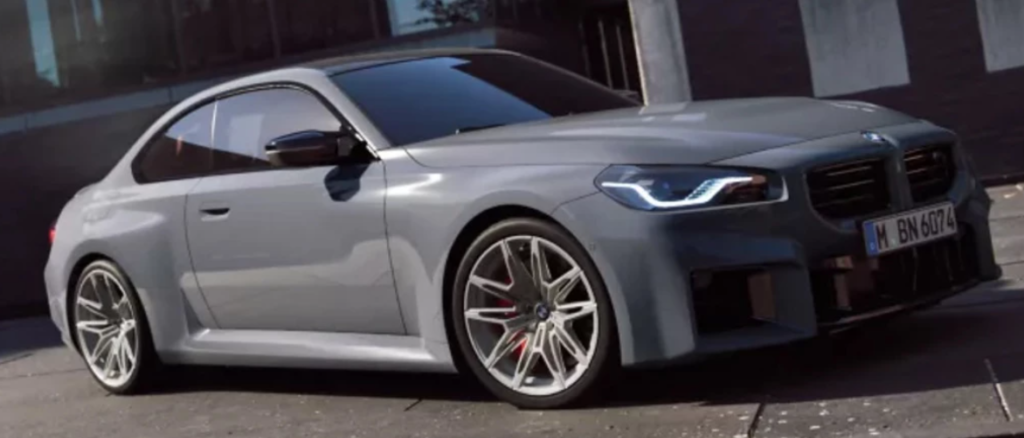
The BMW M2 is one of those cars that makes numbers feel almost secondary. Yes, we can talk about horsepower, acceleration times, and maximum speed all day, but the real attraction is how violently—and enthusiastically—the little BMW gathers speed.
So, how fast is a BMW M2?
A current rear-wheel-drive BMW M2 with the eight-speed automatic can accelerate from 0 to 60 mph in around 3.9 seconds, while the six-speed manual takes approximately 4.1 seconds according to BMW. The newer M2 M xDrive brings all-wheel-drive traction into the equation and drops the official 0–60 mph time to about 3.6 seconds.
Top speed is normally electronically limited to 155 mph (250 km/h). Equip the car with the available M Driver's Package, however, and BMW raises that limiter to around 188 mph (302 km/h).
Those figures already sound serious. Yet they only tell half the story.
The M2 is not simply fast for a compact coupe. It has reached the point where its acceleration overlaps with machinery that would once have been considered genuinely exotic.
Let's look at what that speed actually feels like, why the M2 launches so hard, and how the different versions compare.
Content in this publication
- BMW M2 Speed at a Glance
- How Fast Is a BMW M2 From 0 to 60 MPH?
- How Fast Is the BMW M2 M xDrive?
- What Is the BMW M2 Top Speed?
- Can a BMW M2 Really Reach 188 MPH?
- What Engine Makes the BMW M2 So Fast?
- Is the BMW M2 Faster Than It Feels?
- How Fast Is the BMW M2 in the Quarter Mile?
- How Fast Does the BMW M2 Feel in Everyday Driving?
- BMW M2 Launch Control: Where the Numbers Come Alive
- How Fast Was the Original BMW M2?
- BMW M2 Competition Speed
- BMW M2 CS: The Earlier Speed Champion
- Is the New BMW M2 Faster Than the Old M2?
- BMW M2 Manual vs Automatic: Which Is Faster?
- Does the BMW M2 Feel Faster Than an M240i?
- Is a BMW M2 Faster Than an M3?
- Is a BMW M2 Faster Than an M4?
- How Important Is Weight to BMW M2 Performance?
- How Does Weather Affect BMW M2 Acceleration?
- Can Tires Make a BMW M2 Faster?
- How Fast Is a Tuned BMW M2?
- How Fast Is Too Fast for the Street?
- Why the BMW M2 Feels Special Beyond Straight-Line Speed
- What Does 0–60 MPH in 3.9 Seconds Actually Feel Like?
- Should We Buy an M2 Just Because It Is Fast?
- How Fast Is a BMW M2 Compared With Normal Cars?
- Is the BMW M2 a Supercar-Fast Car?
- Final Verdict: So, How Fast Is a BMW M2?
- Frequently Asked Questions
BMW M2 Speed at a Glance
Before we disappear down the performance rabbit hole, here is the simple answer.
| BMW M2 configuration | 0–60 mph | Top speed |
|---|---|---|
| M2 6-speed manual | Approx. 4.1 sec | 155 mph |
| M2 8-speed automatic | Approx. 3.9 sec | 155 mph |
| M2 M xDrive automatic | Approx. 3.6 sec | 155 mph |
| With M Driver's Package | Depends on version | Up to 188 mph |
These are manufacturer figures, so actual results can vary with tires, surface temperature, altitude, fuel, driver technique, weather, and testing methodology.
Still, one thing becomes obvious immediately: the modern M2 is properly quick.
How Fast Is a BMW M2 From 0 to 60 MPH?
The current BMW M2 can hit 60 mph in roughly 3.6 to 4.1 seconds, depending primarily on drivetrain and transmission.
That puts it squarely into high-performance territory.
For perspective, a four-second 0–60 sprint means the car is covering roughly 88 feet per second by the time it reaches 60 mph. From behind the steering wheel, acceleration arrives like someone suddenly tightening an invisible elastic band attached to the horizon.
You press the throttle.
The turbocharged six wakes up.
The rear tires dig into the pavement.
Then the scenery begins arriving significantly faster than expected.
M2 Automatic 0–60 MPH Time
The eight-speed M Steptronic automatic is the quicker traditional rear-wheel-drive configuration.
BMW quotes roughly:
0–60 mph: 3.9 seconds
That speed comes partly from the gearbox's ability to shift faster and more consistently than most human drivers can operate a clutch and manual transmission.
There is very little interruption to acceleration.
Instead of power arriving in chunks, the automatic keeps the engine inside its strongest operating range and fires through ratios with almost mechanical impatience.
M2 Manual 0–60 MPH Time
The six-speed manual is slightly slower on paper:
0–60 mph: approximately 4.1 seconds
Should we care?
Probably not.
Nobody buys the manual M2 because they are desperately trying to remove two tenths of a second from the school run.
We choose the manual because it adds interaction.
The clutch, shift lever, throttle and rear axle turn every acceleration run into something we participate in rather than merely request.
Why the Manual Can Feel Faster Than the Stopwatch Suggests
Perception is funny.
A manual car may technically accelerate more slowly while feeling more dramatic because we're busier.
We hear the revs climb.
We anticipate the shift.
We depress the clutch.
We grab the next gear.
Then the car surges forward again.
The automatic delivers speed like an elevator.
The manual delivers it like climbing a staircase two steps at a time.
How Fast Is the BMW M2 M xDrive?
BMW has now pushed the M2 deeper into supercar-like acceleration territory with the addition of M xDrive all-wheel drive.
BMW quotes the M2 M xDrive at approximately:
0–60 mph: 3.6 seconds
Why does adding driven front wheels make such a difference?
Traction.
The engine may have plenty of muscle, but acceleration only happens when that power reaches the road.
With rear-wheel drive, two rear tires have to transmit a huge amount of torque. With M xDrive, the car can distribute power through all four wheels when necessary.
The result is a harder, cleaner launch.
Rear-Wheel Drive vs M xDrive Acceleration
Rear-wheel drive still has enormous appeal.
It feels traditional.
It encourages throttle adjustability.
And in a compact BMW M car, rear-wheel drive feels wonderfully appropriate.
But when the stopwatch matters, xDrive has the advantage.
Four driven wheels can simply exploit available engine output more effectively from low speeds.
That makes the M2 M xDrive the fastest factory M2 in terms of official 0–60 acceleration.
What Is the BMW M2 Top Speed?
Standard BMW M2 models are electronically limited to approximately:
155 mph / 250 km/h
That is already far beyond what we can legally explore on public roads in most countries.
But BMW offers another level.
With the M Driver's Package, maximum speed can rise to approximately:
188 mph / 302 km/h
Crossing the 300 km/h barrier in a compact BMW coupe is slightly ridiculous when we stop and think about it.
And that's exactly why enthusiasts love the M2.
It looks relatively compact and usable, yet beneath the surface sits performance that belongs in another universe compared with ordinary road cars.
Can a BMW M2 Really Reach 188 MPH?
With the appropriate factory package removing the lower electronic restriction, the current M2 can be configured with a claimed top speed around 188 mph.
But maximum speed depends on much more than horsepower.
At high velocity, aerodynamic resistance becomes the enemy.
Double a car's speed and aerodynamic drag does not simply double. The amount of power required to keep pushing through the air rises dramatically.
At 60 mph, air feels relatively harmless.
Near 180 mph, it might as well be an invisible wall.
Why Top Speed Requires So Much Power
Imagine running through waist-deep water.
The faster we attempt to move, the harder the resistance pushes back.
Air works similarly at extreme road speeds.
The M2's turbocharged six-cylinder engine therefore isn't merely accelerating the car's mass. At high speed, it is spending enormous amounts of energy fighting aerodynamic drag.
That is why gaining another 10 or 20 mph at the top end is much harder than gaining another 10 or 20 mph at city speeds.
What Engine Makes the BMW M2 So Fast?
At the center of the modern M2 is BMW M's celebrated 3.0-liter twin-turbocharged inline-six.
The current specification produces around 473 horsepower in markets such as the United States.
That engine is closely related to the powerplants used in larger BMW M cars.
And putting that kind of performance into the comparatively compact M2 creates a rather entertaining equation.
Lots of engine.
Short coupe.
Rear-wheel-drive attitude.
What could possibly happen?
Quite a lot.
Turbocharged Torque Changes Everything
Peak horsepower gets the headlines, but torque is what we often notice first.
Turbocharging gives the M2 a broad wave of midrange shove.
We don't necessarily need to wring the engine to its redline to feel serious acceleration.
Press the accelerator in the middle of the rev range and the car simply lunges.
Overtaking can feel less like gradually gaining speed and more like being pulled forward by a winch.
Is the BMW M2 Faster Than It Feels?
Interestingly, the answer can sometimes be yes.
Modern performance cars have become so refined that they can disguise their own speed.
Strong brakes, stiff body control, wide tires, advanced stability systems and precise steering make huge velocities feel strangely manageable.
Drive an older sports car at 80 mph and it might buzz, roar and shake.
An M2 can feel planted and composed.
That creates a problem.
We look at the speedometer and realize we are traveling considerably faster than our senses suggested.
Speed builds quickly, so restraint matters.
How Fast Is the BMW M2 in the Quarter Mile?
Independent performance tests typically place modern M2 variants comfortably in the 12-second quarter-mile neighborhood, with results varying according to specification and testing conditions.
That's extremely quick for a small four-seat coupe.
Quarter-mile performance tells us something the 0–60 figure cannot.
Launching quickly is one thing.
Continuing to accelerate strongly once aerodynamic resistance starts building is another.
The M2 does both.
Its turbocharged inline-six continues pulling with enthusiasm well beyond ordinary highway speeds.
Why Quarter-Mile Speed Matters
A car can produce an impressive 0–60 time through aggressive launch control and enormous traction yet lose urgency once speeds rise.
The M2 doesn't rely solely on the launch.
Its engine has enough sustained power to keep accelerating hard after 60 mph.
That broader performance envelope is part of what makes it feel like a genuine M car rather than simply a powerful compact coupe.
How Fast Does the BMW M2 Feel in Everyday Driving?
Very fast.
Perhaps unnecessarily fast.
In urban traffic, you will barely scratch the surface.
A short throttle application can take the M2 from ordinary commuting speed to "why is that number on the speedometer already?" territory almost instantly.
Highway merging is effortless.
Passing slower traffic requires little planning.
And a motorway entrance ramp can suddenly feel like the opening lap of a qualifying session.
Of course, public roads aren't racetracks.
The M2's performance is best appreciated responsibly, with track days being the proper environment for exploring its limits.
BMW M2 Launch Control: Where the Numbers Come Alive
Automatic versions can use launch-control technology to optimize standing-start acceleration.
Launch control coordinates several systems simultaneously:
- Engine output
- Transmission behavior
- Wheel slip
- Traction control
- Differential operation
- Throttle response
Instead of asking the driver to balance every variable manually, the electronics prepare the car for the strongest possible launch.
Release the brake and the M2 shoots forward.
There is very little ceremony.
Just traction, boost and momentum.
Why Launch Control Makes Acceleration Repeatable
A talented driver can launch a powerful rear-wheel-drive car quickly.
Doing it perfectly every time is much harder.
Too much throttle creates wheelspin.
Too little wastes time.
Release the clutch too gently and the launch becomes sluggish.
Release it too aggressively and traction disappears.
Launch-control software repeats the same optimized process far more consistently.
That's why modern automatic performance cars achieve such astonishing acceleration numbers.
How Fast Was the Original BMW M2?
The first-generation F87 M2 arrived with less power than today's G87 but was still genuinely fast.
Early M2 versions reached 60 mph in roughly the low-to-mid-four-second range depending on transmission and testing method.
At the time, that performance felt extremely serious.
Then BMW introduced increasingly potent variants.
The M2 Competition turned up the heat considerably.
The limited-production M2 CS went further again.
Today's M2 continues that escalation.
What used to require the most extreme version of the platform has gradually become normal M2 territory.
BMW M2 Competition Speed
The previous-generation M2 Competition remains one of the most desirable versions of the car.
Its twin-turbo inline-six produced significantly more power than the original M2 and pushed acceleration performance comfortably into serious sports-car territory.
Automatic versions could reach 60 mph in roughly four seconds under favorable conditions, while manuals were slightly slower.
Yet the M2 Competition was never merely about numerical speed.
Its personality mattered.
The chassis felt compact.
The rear axle felt alive.
The engine had enough muscle to overwhelm the tires when provoked.
It was the kind of car that made a normal road feel interesting.
BMW M2 CS: The Earlier Speed Champion
Before the current G87 generation appeared, the M2 CS represented the wildest factory expression of the original M2 formula.
More power, less weight, revised suspension and track-focused hardware turned the small coupe into something genuinely special.
Acceleration dipped further into the sub-four-second region in suitable configurations.
The CS also demonstrated an important point.
Speed isn't only about engine output.
Reducing mass, sharpening suspension behavior, improving grip and strengthening brakes can make a car significantly faster across an entire road or circuit without dramatically changing its top speed.
Is the New BMW M2 Faster Than the Old M2?
Yes.
In straight-line acceleration, the modern G87 M2 is generally faster than earlier mainstream M2 versions.
Technology has moved on.
The new car benefits from:
- More power
- A more sophisticated engine
- Faster automatic transmission technology
- Improved electronic control systems
- Wider performance tires
- Better traction management
- Available M xDrive
But there is a twist.
Faster doesn't automatically mean more enjoyable.
An older M2 may feel lighter, more compact and more playful.
The modern car gives us greater outright capability.
The older car can sometimes make lower speeds feel more exciting.
Which matters more depends entirely on what we want from a performance car.
BMW M2 Manual vs Automatic: Which Is Faster?
The automatic is faster.
There isn't much mystery here.
The eight-speed automatic changes gears faster than a human can reliably shift a six-speed manual and keeps engine output flowing with less interruption.
If pure acceleration matters, choose the automatic.
But if involvement matters more, the manual deserves serious consideration.
Choose the Automatic If We Want:
- Maximum acceleration
- Easier launch control
- Quicker shifts
- Better consistency
- Less effort in traffic
Choose the Manual If We Want:
- More driver involvement
- Traditional sports-car interaction
- Greater control over gear selection
- A more mechanical driving experience
- The satisfaction of mastering a good shift
Which Would We Pick?
For chasing numbers, automatic.
For chasing memories, manual.
Sometimes two tenths of a second matters less than the smile created by nailing a perfect third-to-fourth shift.
Does the BMW M2 Feel Faster Than an M240i?
Yes, particularly once speed increases.
The BMW M240i is already extremely quick, especially with xDrive.
In fact, its traction can make the initial launch remarkably strong.
But the M2 goes beyond acceleration.
It has an M-developed chassis, more aggressive suspension tuning, stronger performance hardware, a more powerful engine specification and a personality designed around high-performance driving.
The M240i is a very fast BMW.
The M2 feels like a dedicated performance machine.
That distinction becomes clearer as we push harder.
Is a BMW M2 Faster Than an M3?
This question is more complicated than it appears.
Certain BMW M3 configurations—especially Competition xDrive models—can accelerate faster than the rear-wheel-drive M2.
The M3 can also offer more power.
However, the M2 is smaller and deliberately positioned as a compact enthusiast-focused coupe.
Straight-line acceleration therefore tells only part of the story.
On a narrow technical road, the smaller dimensions of the M2 can make it feel incredibly agile and immediate.
The M3 may be the bigger hammer.
The M2 is the shorter handle.
Both can hit hard.
Is a BMW M2 Faster Than an M4?
Again, specification matters.
Higher-output M4 Competition and M xDrive models generally have more straight-line performance than a standard rear-wheel-drive M2.
But the gap isn't always as enormous as the price or model hierarchy might suggest.
That's part of the M2's appeal.
It delivers performance surprisingly close to BMW's more expensive M cars while preserving its own compact personality.
We aren't buying a "cheap M4."
We're buying something deliberately different.
How Important Is Weight to BMW M2 Performance?
Very important.
The modern M2 is powerful, but it isn't feather-light.
That matters because acceleration is fundamentally a battle between force and mass.
More horsepower helps.
Less weight helps too.
Weight affects:
- Acceleration
- Braking distance
- Tire load
- Direction changes
- Fuel consumption
- Suspension behavior
This explains why lightweight performance upgrades can transform how a car feels even without adding horsepower.
Power-to-Weight Ratio Explained Simply
Imagine two runners.
Both are equally strong.
One carries a backpack filled with bricks.
The other doesn't.
Who accelerates faster?
Cars work on a similar principle.
Horsepower tells us how much force is available.
Weight tells us how much mass that force must move.
The M2's strong power-to-weight relationship is one reason it accelerates so violently.
How Does Weather Affect BMW M2 Acceleration?
More than many drivers realize.
A 3.9-second manufacturer figure doesn't mean every M2 will run 3.9 seconds every Tuesday morning.
Conditions matter.
Acceleration can be affected by:
- Tire temperature
- Road surface
- Rain
- Ambient temperature
- Altitude
- Fuel quality
- Vehicle load
- Tire condition
Cold or wet roads can dramatically reduce traction in rear-wheel-drive models.
An M xDrive car will generally launch more consistently when grip is limited, although even all-wheel drive cannot overcome bad tires or extremely slippery conditions.
Can Tires Make a BMW M2 Faster?
Absolutely.
Tires are the only parts of the car actually touching the road.
Hundreds of horsepower mean little if the tires cannot transmit that output into pavement.
High-performance summer tires can improve:
- Launch traction
- Braking
- Cornering
- Steering response
- Stability at speed
Meanwhile, worn, cold or unsuitable tires can make the same M2 feel dramatically less capable.
We often obsess over horsepower while ignoring four comparatively small patches of rubber.
Yet those patches decide how much performance we can actually use.
How Fast Is a Tuned BMW M2?
This is where things become slightly ridiculous.
BMW's turbocharged six-cylinder engines have significant tuning potential.
Software modifications, intake changes, exhaust upgrades and supporting hardware can substantially increase output.
Highly modified M2s can produce horsepower figures well beyond factory specification.
That can translate into enormous acceleration gains.
However, more power introduces additional stresses.
A heavily tuned car may require upgrades to:
- Cooling
- Fueling
- Transmission components
- Tires
- Brakes
- Suspension
- Drivetrain hardware
We should also remember that modifications may affect warranty coverage, emissions legality, insurance and long-term reliability.
More speed isn't free.
Sometimes the invoice simply arrives later.
How Fast Is Too Fast for the Street?
This might be the more interesting question.
A modern BMW M2 can reach 60 mph in less than four seconds.
Most speed limits arrive before the engine has had time to properly stretch its legs.
That creates an unusual problem for modern performance-car enthusiasts.
Cars have become dramatically faster.
Roads haven't.
A full-throttle run can move the M2 from stationary to highway speed in roughly the amount of time it takes to read this sentence.
So where do we actually use its potential?
Track days make sense.
There we can explore braking performance, cornering balance and acceleration without treating public traffic as part of an experiment.
Why the BMW M2 Feels Special Beyond Straight-Line Speed
The best part of the M2 isn't necessarily its 0–60 time.
Plenty of electric cars can launch brutally.
Several larger performance sedans can outrun it.
Some SUVs can even produce similar acceleration.
Yet the M2 combines speed with compact proportions, rear-drive character and old-school sports-car ingredients.
That combination is becoming increasingly rare.
We get:
- A turbocharged straight-six
- Available six-speed manual transmission
- Rear-wheel drive
- Compact coupe proportions
- Aggressive M suspension
- Strong brakes
- Limited-slip differential behavior
- Serious track capability
It's fast, yes.
But it also asks us to drive.
What Does 0–60 MPH in 3.9 Seconds Actually Feel Like?
It's difficult to appreciate until we experience it.
At normal acceleration, our body barely notices the change in speed.
In a sub-four-second car, acceleration pushes us firmly into the seat.
Objects in peripheral vision begin blurring.
The next corner appears earlier than expected.
Passengers often stop talking.
The sensation can feel more dramatic than the numbers suggest because the M2 delivers its performance through noise, gear changes, engine vibration and rear-axle movement.
It isn't silent speed.
It's theatrical speed.
Should We Buy an M2 Just Because It Is Fast?
Probably not.
If maximum acceleration per dollar is the only goal, there are other options.
Electric performance cars can launch even harder.
Used super sedans can provide enormous horsepower.
Modified cars can achieve astonishing quarter-mile numbers.
The M2 makes sense because it combines speed with personality.
We buy one because we want the entire package.
The straight-six howl.
The short wheelbase.
The muscular bodywork.
The rear-driven balance.
The slightly mischievous feeling that the car always has another trick hidden beneath the throttle pedal.
Fast is only part of the equation.
How Fast Is a BMW M2 Compared With Normal Cars?
Extremely fast.
An ordinary family car may need somewhere between seven and ten seconds to reach 60 mph.
Some economy vehicles take considerably longer.
A modern M2 can complete the same task in approximately half that time.
That difference isn't subtle.
It's enormous.
Imagine two cars accelerating side by side from a traffic-light start.
By the time the normal vehicle is beginning to feel energetic, the M2 is already approaching highway speed.
Again, that doesn't mean we should race traffic lights.
It simply shows how wide the performance gap has become between modern M cars and conventional transportation.
Is the BMW M2 a Supercar-Fast Car?
In acceleration terms, the answer is increasingly yes.
A 3.6-to-3.9-second 0–60 time would have been genuine supercar territory not many years ago.
Today's supercars have moved even further ahead, of course.
But the performance threshold has changed dramatically.
The M2 isn't a supercar in layout, exclusivity or price.
It is a compact performance coupe.
Yet its straight-line numbers overlap with older exotic machinery.
That's astonishing when we consider that an M2 also has a usable trunk, rear seats and the ability to function as everyday transportation.
Final Verdict: So, How Fast Is a BMW M2?
The answer depends on which version we're discussing, but the modern BMW M2 is undeniably fast.
A rear-wheel-drive automatic M2 can reach 60 mph in roughly 3.9 seconds, while the manual takes approximately 4.1 seconds. The M2 M xDrive goes even further, hitting 60 mph in around 3.6 seconds thanks to its additional traction.
Standard top speed is electronically limited to around 155 mph, while an appropriately equipped M2 with the M Driver's Package can reach approximately 188 mph.
Those figures are impressive.
But they aren't the entire reason the M2 matters.
The magic lies in how the speed is delivered.
A compact coupe.
A powerful turbocharged straight-six.
Rear-wheel-drive roots.
Available manual transmission.
Enough performance to turn a short on-ramp into an event.
Many cars are fast.
The BMW M2 manages to make fast feel fun.
And that's a much harder trick to pull off.
Frequently Asked Questions
1. How fast is a BMW M2 from 0 to 60 mph?
A current rear-wheel-drive BMW M2 can accelerate from 0–60 mph in approximately 3.9 seconds with the eight-speed automatic and around 4.1 seconds with the six-speed manual. The M2 M xDrive can reduce that figure to roughly 3.6 seconds.
2. What is the top speed of a BMW M2?
The standard BMW M2 is electronically limited to approximately 155 mph (250 km/h). With the available M Driver's Package, the limiter can be increased to around 188 mph (302 km/h).
3. Is the BMW M2 faster with automatic or manual transmission?
The automatic M2 is faster in straight-line acceleration. Its eight-speed transmission changes gears more quickly and consistently, helping it reach 60 mph roughly two tenths of a second sooner than the manual rear-wheel-drive version.
4. Is the BMW M2 considered a fast car?
Absolutely. Any production car capable of reaching 60 mph in less than four seconds qualifies as seriously fast. The current M2 delivers acceleration that would have belonged to exotic performance cars not long ago.
5. Which BMW M2 is the fastest?
Among current factory configurations, the BMW M2 M xDrive offers the quickest official 0–60 mph acceleration, at approximately 3.6 seconds. For maximum speed, models equipped with the M Driver's Package can reach approximately 188 mph.
If you want to know other articles similar to How Fast Is a BMW M2? Acceleration, Top Speed and Real-World Performance you can visit the category Driving.
Can Nissan Rogue Pull a Boat? Complete Towing Guide
Can Nissan Rogue Be Flat Towed? Complete Towing Guide
Are Nissan Rogue Good on Gas? MPG, Fuel Economy, and Real-World Costs
Can Nissan Rogue Drive in Snow? Complete Winter Driving Guide

Kia Sorento Diesel Fuel Consumption: MPG, Efficiency and Real-World Range
Haval Jolion Hybrid Fuel Consumption: How Efficient Is It Really?
Leave a Reply
More content of your interest