
BMW i7 Specs: Power, Range, Battery, Dimensions and More

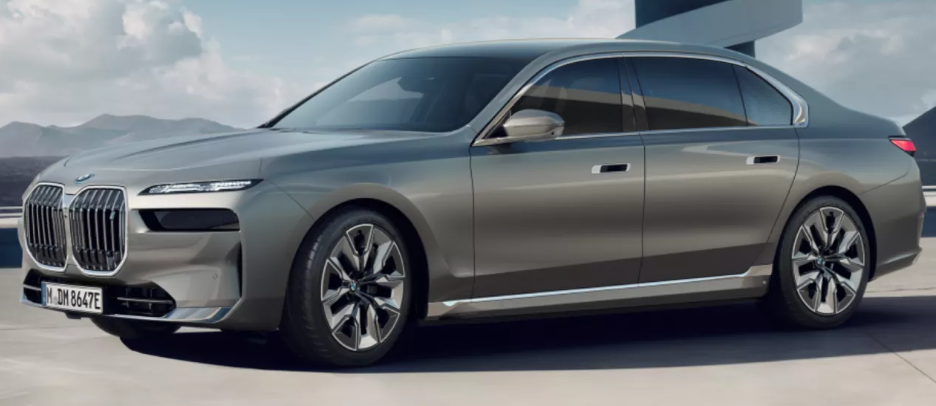
The BMW i7 specs tell us something interesting before we even get behind the wheel: this is not simply a 7 Series with an electric motor stuffed beneath the floor. It is BMW’s interpretation of what a flagship electric luxury sedan should be—huge, quiet, incredibly powerful, packed with screens, and capable of covering serious distances between charging stops.
But there is one catch when researching BMW i7 specifications online. The numbers can look surprisingly inconsistent.
That is because BMW specifications vary by model year, trim, wheel choice, market, and testing method. As of 2026, U.S. buyers may encounter specifications for both the 2026 BMW i7 and the newly announced 2027 BMW i7. The latter introduces significantly updated battery and charging technology. BMW’s 2026 range consists of the i7 eDrive50, i7 xDrive60, and performance-focused i7 M70, while the new 2027 model launches in i7 50 xDrive and i7 60 xDrive forms.
So rather than throwing numbers into a giant spec sheet and calling it a day, we are going to unpack what those numbers actually mean.
Content in this publication
- BMW i7 Specs at a Glance
- BMW i7 eDrive50 Specs
- BMW i7 xDrive60 Specs
- BMW i7 M70 Specs
- BMW i7 Battery Capacity
- BMW i7 Range
- BMW i7 Charging Specs
- BMW i7 Dimensions
- BMW i7 Weight
- BMW i7 Cargo Space
- BMW i7 Interior Specs and Technology
- BMW i7 Drivetrain and Electric Motor Technology
- BMW i7 Performance in the Real World
- 2026 BMW i7 vs 2027 BMW i7 Specs
- Which BMW i7 Specifications Matter Most?
- Are the BMW i7 Specs Impressive for Such a Large Car?
- What the BMW i7 Specs Tell Us About Its Character
- Conclusion: Understanding the BMW i7 Specs
- Frequently Asked Questions About BMW i7 Specs
BMW i7 Specs at a Glance
For shoppers looking specifically at the 2026 BMW i7, the three versions have distinctly different personalities.
| Specification | i7 eDrive50 | i7 xDrive60 | i7 M70 |
|---|---|---|---|
| Drivetrain | RWD | AWD | AWD |
| Horsepower | 449 hp | 536 hp | 650 hp |
| Torque | 479 lb-ft | 549 lb-ft | 749 lb-ft |
| 0–60 mph | 5.3 sec | 4.5 sec | 3.5 sec |
| Top speed | 127 mph | 130 mph | 155 mph |
| DC charging | Up to 195 kW | Up to 195 kW | Up to 195 kW |
| DC 10–80% | Approx. 34 min | Approx. 34 min | Approx. 34 min |
| Length | 212.2 in | 212.2 in | 212.2 in |
| Wheelbase | 126.6 in | 126.6 in | 126.6 in |
| Curb weight | 5,635 lb | 5,975 lb | 6,191 lb |
Those U.S.-market performance, charging, dimension, and weight figures come from BMW’s technical specifications for the 2026 models.
That table also tells us something bigger. Even the least powerful i7 develops 449 horsepower. The range effectively starts where many luxury cars finish.
BMW i7 eDrive50 Specs
The BMW i7 eDrive50 is the simplest member of the 2026 lineup mechanically, but calling a 449-hp limousine “basic” feels a bit like calling a private jet public transportation.
Its single-motor rear-wheel-drive configuration produces 449 horsepower and 479 lb-ft of torque. BMW lists a 0–60 mph time of approximately 5.3 seconds and an electronically limited top speed of 127 mph.
Why Rear-Wheel Drive Matters
The eDrive50 sends its power to the rear wheels rather than using the dual-motor all-wheel-drive layout fitted to the xDrive60 and M70.
That matters for more than tradition.
Fewer driven wheels help keep the configuration relatively simple and reduce weight. At approximately 5,635 pounds, the eDrive50 is hundreds of pounds lighter than the M70. It is still unquestionably a heavy car, but that weight difference helps explain why the eDrive50 can make excellent use of its battery without needing outrageous levels of power.
For drivers who want the i7 primarily because of its silence, comfort, cabin space, and technology, the eDrive50 may provide more performance than they will realistically use anyway.
BMW i7 xDrive60 Specs
The BMW i7 xDrive60 moves into dual-motor all-wheel-drive territory.
Its motors combine for 536 horsepower and 549 lb-ft of torque, dropping the official 0–60 mph figure to around 4.5 seconds for the 2026 U.S. model. Top speed is electronically limited to 130 mph.
That acceleration is remarkable when we remember what kind of vehicle we are discussing.
The i7 xDrive60 is not a stripped-out sports sedan. It is a 212-inch luxury flagship weighing nearly three tons, yet it can leave the line with the urgency of a serious performance car.
Is the xDrive60 the Sweet Spot?
On paper, the xDrive60 sits naturally between the other two versions.
We get significantly more traction and performance than the eDrive50 without jumping all the way into the M70’s extreme output. Its dual-motor setup also gives it all-wheel drive, which may matter to owners living in areas with frequent snow, rain, or slippery roads.
The important point is not simply that 536 horsepower sounds impressive. Electric motors deliver torque almost immediately, so acceleration feels effortless rather than dependent on an engine climbing through its rev range.
Press the accelerator and the i7 does not need to gather itself. It simply goes.
BMW i7 M70 Specs
Then we reach the BMW i7 M70, where restraint politely leaves the room.
The 2026 i7 M70 generates 650 horsepower and 749 lb-ft of torque in U.S. specification. BMW quotes 3.5 seconds from 0 to 60 mph, while top speed rises to 155 mph.
Think about that for a moment.
This is a luxury sedan measuring more than 17 feet long and weighing roughly 6,191 pounds, yet it can reach highway speed in the time many traditional sports cars need to do the same.
Performance Comes With a Trade-Off
Physics still sends an invoice.
The extra performance, additional hardware, and substantial curb weight mean the M70 is not the version we would choose purely for maximizing driving range. BMW lists 2026 i7 ranges that vary by trim and wheel configuration, with the M70 sitting below the less powerful models. BMW specifically notes that wheels, tires, weather, driving style, accessories, traffic, and charging behavior can alter real-world range.
In other words, the M70 exists because somebody looked at a 536-hp electric limousine and thought, “Could we make this considerably faster?”
BMW did.
BMW i7 Battery Capacity
Battery specifications require particular care because BMW has changed the technology for the newest i7.
Earlier versions use BMW’s fifth-generation electric architecture. In several global technical specifications, BMW lists 101.7 kWh of battery capacity for models such as the i7 xDrive60 and M70.
The newly announced 2027 i7 changes the picture dramatically.
The 2027 BMW i7 Gets a Larger Battery
BMW says the new i7 incorporates sixth-generation BMW eDrive cylindrical-cell technology. The updated battery offers as much as 112.5 kWh of usable energy, representing an increase of more than 10 percent over the previous generation’s usable energy content. BMW also says the cylindrical cells provide around 20 percent greater volumetric energy density than the previous prismatic-cell design.
That is a meaningful upgrade because increasing range by simply installing an enormous battery can add weight. Improving energy density allows manufacturers to store more energy within a given amount of space.
Battery Size Is Only Half the Story
A larger battery alone does not automatically make an EV efficient.
BMW also says the newest i7 benefits from efficiency improvements including silicon-carbide power electronics and friction-optimized wheel bearings. The company claims these measures contribute to an improvement in overall vehicle efficiency of up to seven percent.
This is why we should look at battery capacity, efficiency, aerodynamics, tires, and software as parts of the same equation rather than obsessing over one enormous kWh number.
BMW i7 Range
Range is probably the specification EV shoppers care about most.
For the 2026 U.S. lineup, BMW publishes ranges that depend on configuration. Its current range guidance lists approximately 301–314 miles for the 2026 i7 eDrive50, 296–311 miles for the i7 xDrive60, and 268–285 miles for the i7 M70.
Those figures demonstrate the familiar EV pattern: adding power and performance generally costs us some driving range.
What Changes for the 2027 BMW i7?
Quite a lot.
BMW’s updated U.S. technical information lists the new i7 50 xDrive at approximately 354–373 miles and the i7 60 xDrive at roughly 344–362 miles, although BMW notes that these figures may remain preliminary pending final EPA certification and that wheel/tire combinations affect the published result.
That puts the newer i7 into a much more comfortable long-distance category.
A 350-plus-mile luxury EV changes how we think about road trips. Charging remains important, obviously, but the question becomes less “Where is the next charger?” and more “Will we want coffee before the car actually needs electricity?”
BMW i7 Charging Specs
The 2026 i7 supports DC fast charging at up to 195 kW. BMW lists approximately 34 minutes for a 10-to-80-percent DC charge under suitable conditions.
That is respectable, although maximum charging power never tells the entire story.
Charging speed depends on battery temperature, starting state of charge, charger capability, battery conditioning, ambient conditions, and the vehicle’s charging curve.
2027 Charging Is Faster
The newer i7 moves the maximum DC charging rate to 240 kW, while BMW’s technical specifications show an estimated 29-minute 10-to-80-percent charging time for the new 50 xDrive and 60 xDrive.
BMW also lists roughly 105–110 miles of additional range from ten minutes of high-power charging for these versions under its specified test conditions.
Why the Charging Curve Matters More Than Peak kW
Imagine filling a bathtub.
Peak charging speed is like measuring how quickly the tap can flow when it is fully open. But what matters to us is how long the entire bath takes to reach the level we need.
EV batteries rarely accept their maximum charging rate throughout an entire session. The rate typically changes as the battery fills. That is why a 10-to-80-percent time can be more useful for road-trip planning than simply comparing 195 kW with 240 kW.
BMW i7 Dimensions
The BMW i7 is a genuinely large sedan.
For the 2026 U.S. version, BMW lists approximately 212.2 inches of length, 76.8 inches of width, 60.8 inches of height, and a 126.6-inch wheelbase.
The newer i7 grows slightly in published U.S. dimensions, at about 212.6 inches long and 61.3 inches high, while retaining a 126.6-inch wheelbase.
That wheelbase explains much of the car’s imposing profile and generous passenger area.
BMW i7 Size in Metric Measurements
Equivalent global specifications place the current i7 at roughly:
- Length: around 5.39 metres
- Width: around 1.95 metres
- Wheelbase: around 3.22 metres
- Height: roughly 1.54 metres, depending on configuration
BMW’s global technical data lists dimensions around 5,391 mm long and 1,950 mm wide for the earlier configuration.
This is not a car that disappears into a parking space.
It has presence in the literal sense.
BMW i7 Weight
Electric flagship sedans carry a lot of mass because they combine enormous batteries with the equipment expected from the most luxurious end of the market.
The 2026 U.S. curb weights illustrate the progression clearly: around 5,635 pounds for the eDrive50, 5,975 pounds for the xDrive60, and 6,191 pounds for the M70.
Why does that matter?
Weight influences acceleration, efficiency, braking, tire wear, and the way suspension engineers tune the vehicle.
Yet an EV can disguise its mass surprisingly well. The battery sits low in the chassis, helping lower the center of gravity, while sophisticated suspension systems manage body movement.
The result can feel less like piloting a two-and-a-half-ton machine and more like guiding something much smaller—until we reach a tight parking garage and physics sends us a reminder.
BMW i7 Cargo Space
The BMW i7 is a sedan rather than a liftback, so its cargo area is accessed through a conventional trunk.
BMW’s newest U.S. technical data lists approximately 17.7 cubic feet of cargo capacity for the updated electric models.
That is enough for ordinary luggage duties, although buyers needing maximum cargo flexibility will naturally find an electric SUV more practical.
The i7’s priorities are obvious: passengers come first.
And nowhere is that more apparent than in the rear compartment.
BMW i7 Interior Specs and Technology
This is where specifications stop looking like numbers from an engineering spreadsheet and begin resembling the equipment list from a futuristic hotel suite.
BMW highlights a 14.9-inch Curved Display up front, while rear passengers can be treated to the enormous 31.3-inch BMW Theatre Screen. Available luxury features and materials include Merino leather, cashmere, crystal details, and the Bowers & Wilkins Diamond Surround Sound System.
The Theatre Screen is especially memorable because it transforms the rear seating area into something closer to a private cinema than a conventional back seat.
The i7 Is Designed Around Rear-Seat Luxury Too
Many performance EVs treat the driver as the center of the universe.
The i7 takes a different approach.
Yes, it can be astonishingly fast. Yes, BMW still cares about what happens behind the steering wheel. But the i7 also recognizes that a flagship luxury sedan may spend much of its life carrying executives, clients, or owners who would rather relax in the back.
That changes the character of the car completely.
Luxury Becomes Part of the Specification Sheet
Normally, we compare cars using horsepower, range, acceleration, and battery size.
In an i7, seat comfort, display size, cabin isolation, lighting, audio quality, and rear-passenger amenities deserve similar attention.
A 3.5-second 0–60 time is spectacular.
A peaceful three-hour journey may matter more.
BMW i7 Drivetrain and Electric Motor Technology
The i7 uses BMW electric motors based on an electrically excited synchronous design rather than relying on permanent magnets in the same way as some rival EV architectures.
In practical terms, the system delivers the immediate response we expect from a powerful EV while allowing BMW to tune each variant for a different purpose.
The eDrive50 emphasizes efficiency with rear-wheel drive. The xDrive60 adds another driven axle and considerably stronger performance. The M70 pushes the architecture toward the limits of luxury-EV acceleration.
There is no conventional multi-speed automatic transmission here. The i7 uses a single-speed automatic drive arrangement, which is typical for modern battery-electric cars.
No gear hunting. No engine revving toward a redline. Just a smooth surge of acceleration.
BMW i7 Performance in the Real World
Specifications can make the i7 sound like an oversized electric sports sedan.
That description misses the point.
The impressive part is not simply how quickly the car accelerates. It is how little drama is required to produce that acceleration.
There is no launch-control soundtrack from a combustion engine building revs. Electric torque arrives rapidly and the cabin remains remarkably detached from the violence occurring outside.
Do We Really Need 650 Horsepower in a Luxury Sedan?
Need? Probably not.
But flagship cars have rarely been built around strict necessity.
A mechanical watch does not tell time dramatically better than a cheap digital one. A penthouse does not improve our ability to sleep. Likewise, the i7 M70’s immense output is partly about creating a sense of effortless excess.
That is the defining theme of the i7.
Nothing should feel strained.
2026 BMW i7 vs 2027 BMW i7 Specs
This distinction is particularly important for anyone shopping or writing about the BMW i7 in 2026.
The 2026 i7 uses the familiar eDrive50, xDrive60, and M70 structure in the U.S. market. The newly announced 2027 i7, meanwhile, launches with the i7 50 xDrive and i7 60 xDrive, introducing BMW’s newer Gen6-derived battery technology.
The newer car brings three particularly important specification changes: a battery with up to 112.5 kWh of usable energy, DC charging at up to 240 kW, and significantly higher estimated driving range.
For used-car shoppers, therefore, simply searching “BMW i7 specs” is no longer enough.
Model year matters.
Which BMW i7 Specifications Matter Most?
It is easy to drown in numbers when comparing electric cars, so we would concentrate on how the vehicle will actually be used.
If most journeys involve commuting and home charging, maximum DC charging speed may rarely matter. For frequent motorway travel, range and charging performance become far more important. Drivers dealing with winter conditions may value xDrive, while somebody prioritizing outright performance will naturally be drawn toward the M70.
And wheel choice deserves more attention than it usually receives.
BMW explicitly warns that wheels and tires can affect estimated EV range. Bigger, more aggressive wheels may look spectacular, but the efficiency penalty is real.
Sometimes the coolest option on the configurator is not the smartest option at the charging station.
Are the BMW i7 Specs Impressive for Such a Large Car?
Absolutely from a technical standpoint.
Consider the combination: several configurations offer more than 500 horsepower, the quickest 2026 version reaches 60 mph in around 3.5 seconds, the sedan stretches beyond 212 inches in length, and the newest announced versions push estimated range beyond the 350-mile threshold while supporting faster 240-kW charging.
No single number defines the car.
The impressive part is fitting all those numbers into one package without turning the i7 into a one-dimensional performance machine.
It can be brutally quick, yet speed is almost secondary to the experience.
What the BMW i7 Specs Tell Us About Its Character
Strip away the illuminated trim, giant displays, crystal details, and limousine-like rear cabin and the engineering philosophy becomes fairly clear.
BMW has not tried to make the i7 minimalistic.
It has gone in the opposite direction.
The i7 is unapologetically substantial. Large battery. Large dimensions. Huge output. Serious range. Huge screens. Enormous torque.
Some EVs whisper about efficiency through restrained design.
The i7 walks into the room wearing a tailored suit and carrying its own spotlight.
And somehow, that makes sense.
Conclusion: Understanding the BMW i7 Specs
The BMW i7 specs reveal an electric luxury sedan that operates at the extreme end of the market.
For the 2026 lineup, the eDrive50 offers 449 horsepower with rear-wheel drive, the xDrive60 raises output to 536 horsepower with all-wheel drive, and the M70 unleashes 650 horsepower and a 3.5-second 0–60 mph time.
The bigger development, however, is already arriving with the new 2027 generation. BMW has announced a battery with up to 112.5 kWh of usable capacity, 240-kW DC charging, and U.S. estimated ranges extending beyond 350 miles depending on model and configuration.
That evolution makes the i7 increasingly interesting. Early electric flagships often asked owners to tolerate limitations in exchange for silence and acceleration. The newest i7 is steadily removing those compromises.
It remains enormous. It remains heavy. It remains extravagant.
But perhaps that is exactly the point.
The BMW i7 is not trying to prove an electric luxury sedan can merely replace the traditional flagship. It is trying to show that electrification can make the flagship even more effortless.
Frequently Asked Questions About BMW i7 Specs
1. How much horsepower does the BMW i7 have?
It depends on the version and model year. For the 2026 U.S. lineup, the i7 eDrive50 produces 449 horsepower, the xDrive60 produces 536 horsepower, and the i7 M70 delivers 650 horsepower.
2. What is the BMW i7 battery capacity?
Earlier i7 specifications list a battery capacity around 101.7 kWh in several markets. The newly announced 2027 i7 introduces upgraded Gen6-based battery technology with as much as 112.5 kWh of usable energy.
3. What is the driving range of the BMW i7?
Range varies considerably by model year, trim, wheels, and testing conditions. BMW lists roughly 268–314 miles across the 2026 U.S. variants, depending on model and configuration. Newer 2027 specifications extend beyond 350 miles, with BMW currently listing approximately 354–373 miles for the new i7 50 xDrive and 344–362 miles for the i7 60 xDrive before final configuration-related differences.
4. How fast is the BMW i7?
The quickest 2026 model is the BMW i7 M70, which BMW lists at approximately 3.5 seconds from 0 to 60 mph with a 155-mph electronically limited top speed. The xDrive60 takes around 4.5 seconds, while the eDrive50 takes approximately 5.3 seconds.
5. How long does a BMW i7 take to charge?
BMW lists approximately 34 minutes for a 10–80% DC fast charge on 2026 versions capable of accepting up to 195 kW. The newer i7 raises maximum DC charging power to 240 kW and cuts the quoted 10–80% time to around 29 minutes under suitable charging conditions.
If you want to know other articles similar to BMW i7 Specs: Power, Range, Battery, Dimensions and More you can visit the category Service and Parts.
Peugeot RCZ Engine Swap: Options, Costs, Compatibility, and What You Need to Know
Mitsubishi Pajero Sport Engine Size: Complete Engine Guide
Mitsubishi Pajero Sport Weight: Kerb Weight, GVM, Payload and What It Really Means
Mitsubishi Pajero Sport Service Reset: Complete Step-by-Step Guide
Mitsubishi Pajero Sport Boot Space: Complete Cargo and Luggage Guide
Mitsubishi Pajero Sport Towing Capacity: Complete Towing Guide
Leave a Reply
More content of your interest