
Is Peugeot RCZ a Good Car? A Complete Used Buyer’s Guide

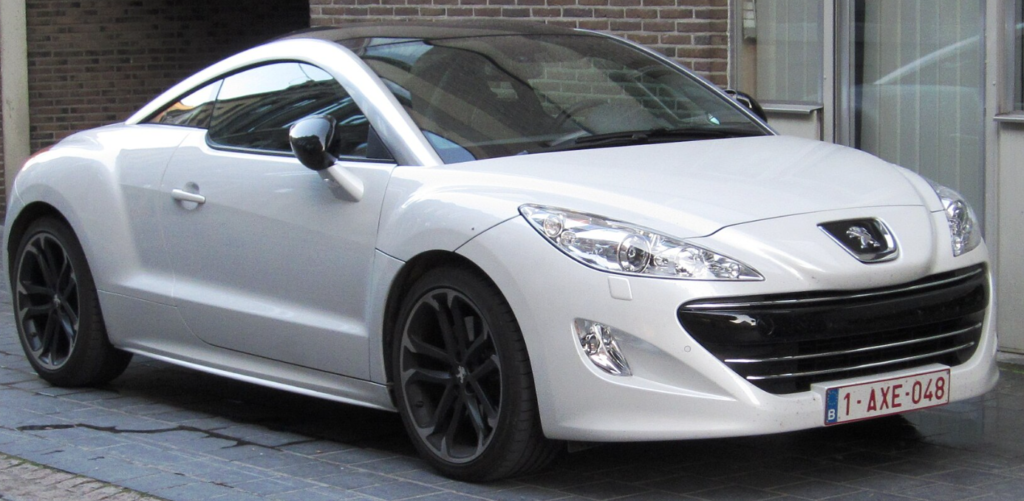
Yes, the Peugeot RCZ can be a very good car, particularly if we want a stylish, distinctive coupé that feels special without carrying the purchase price of many premium alternatives. But there is an important catch: with an RCZ, condition and maintenance history matter far more than the badge on the bonnet.
This isn't the sort of used car we should buy simply because the photographs look good.
And, admittedly, they usually look very good.
More than a decade after its launch, the RCZ can still turn heads like a considerably newer sports car. That flowing roof, muscular rear haunches and unusual double-bubble glass make it look as though a concept car somehow escaped from an auto show.
Underneath that dramatic body, however, things are surprisingly conventional. The RCZ shares much of its underlying engineering with mainstream Peugeot models of its era. That makes it more practical and approachable than its exotic shape suggests—but certain engines also have well-documented maintenance concerns that used buyers need to understand.
So, is Peugeot RCZ a good car today?
We'd say yes—for the right owner and, crucially, when buying the right example.
Let's dig deeper.
Content in this publication
- What Is the Peugeot RCZ?
- Is Peugeot RCZ a Good Car to Drive?
- Which Peugeot RCZ Engines Are Available?
- Is the Peugeot RCZ R a Good Car?
- Is the Peugeot RCZ Reliable?
- Peugeot RCZ Common Problems to Consider
- Is a Peugeot RCZ Expensive to Maintain?
- Is the Peugeot RCZ Practical?
- Is the Peugeot RCZ Comfortable for Daily Driving?
- Is Peugeot RCZ Fuel Efficient?
- Peugeot RCZ vs Audi TT
- Peugeot RCZ vs Volkswagen Scirocco
- What Is the Best Peugeot RCZ to Buy?
- What Should We Check Before Buying a Used RCZ?
- Does the Peugeot RCZ Still Look Good Today?
- Could the Peugeot RCZ Become a Modern Classic?
- Who Should Buy a Peugeot RCZ?
- Is a Peugeot RCZ Worth Buying Today?
- Final Verdict: Is Peugeot RCZ a Good Car?
- Frequently Asked Questions About the Peugeot RCZ
What Is the Peugeot RCZ?
The Peugeot RCZ was Peugeot's compact 2+2 sports coupé, produced during the first half of the 2010s and created as an alternative to cars such as the Audi TT and Volkswagen Scirocco.
Instead of simply building another hot hatchback, Peugeot wrapped familiar front-wheel-drive mechanical components in something dramatically different.
And the styling wasn't merely marketing fluff.
Even Peugeot now describes the RCZ as a potential modern classic, pointing particularly to its double-bubble roof and distinctive coupé proportions. The car also offers four nominal seats and a surprisingly useful 321-litre boot, expanding to approximately 639 litres with the rear seats folded.
That makes the RCZ an interesting contradiction.
It looks like a weekend toy but can perform some everyday duties remarkably well.
The Peugeot RCZ Was More Than Just Good Looks
Plenty of attractive cars become disappointing once we drive them.
The RCZ isn't one of them.
Contemporary road tests praised its cornering ability, grip and composure. Evo, for example, described the THP 200 as remarkably precise and poised, noting its ability to maintain impressive grip even when driven hard.
That doesn't mean it's a hardcore rear-wheel-drive sports car.
It isn't.
The RCZ is front-wheel drive, predictable and generally secure rather than tail-happy. Think of it as a sporty grand-touring coupé with genuinely capable handling, rather than a miniature Porsche Cayman.
For everyday owners, that may actually be preferable.
Is Peugeot RCZ a Good Car to Drive?
Absolutely.
This is arguably where the RCZ exceeds expectations.
Its dramatic styling might make us assume Peugeot concentrated its budget on the bodywork and forgot everything underneath. Yet the chassis was carefully developed, and the result is a car that feels planted, balanced and confident through bends.
The steering provides enough accuracy to place the car neatly on the road, while body movement is generally controlled.
It doesn't constantly beg us to attack corners, but when we do, the RCZ tends to respond confidently rather than falling apart.
Handling: Secure Rather Than Wild
The standard RCZ is more about grip than theatrics.
Push it through a sweeping bend and the front end holds its line remarkably well. We don't get the playful rear-wheel-drive balance of some sports cars, but we do get predictable responses.
That's useful on real roads.
A car that gives us confidence can ultimately be more enjoyable than something constantly trying to prove how exciting it is.
The RCZ 200 received additional praise when new because its chassis and stronger engine worked especially well together. Contemporary testing found it taut but still capable of absorbing everyday bumps without becoming painfully stiff.
Does the RCZ Feel Like a Proper Sports Car?
Mostly.
But we'd call it a sporty coupé first and a pure sports car second.
There are compromises.
The driving position isn't universally loved, the steering isn't overflowing with feedback, and the front-wheel-drive layout naturally gives the RCZ a different personality from something like a Toyota GT86 or Mazda MX-5.
Still, drive one down a twisting country road and it quickly becomes clear that Peugeot didn't merely build a pretty shell.
There is substance underneath.
Which Peugeot RCZ Engines Are Available?
Engine availability differs slightly between markets and model years, but the core range revolved around turbocharged petrol and diesel engines.
Peugeot's facelift-era official specifications included a 1.6 THP petrol with 156 hp, a stronger 1.6 THP with 200 hp, and a 2.0 HDi diesel producing 163 hp. The 156 petrol could also be paired with a six-speed automatic.
Later, Peugeot Sport turned the volume knob almost all the way up and created the RCZ R.
That car produced 270 hp from its turbocharged 1.6-litre petrol engine and added substantially more specialised chassis hardware.
| Version | Character | Best suited to |
|---|---|---|
| 1.6 THP 156 | Relaxed petrol choice | Style-focused daily driving |
| 1.6 THP 200 | Faster, sportier balance | Enthusiastic road driving |
| 2.0 HDi 163 | Strong low-speed torque | High-mileage cruising |
| RCZ R 270 | Serious performance model | Enthusiasts and collectors |
Peugeot RCZ 1.6 THP 156
The 156-hp version is perfectly adequate if we primarily want the RCZ's style.
Performance isn't slow, but it doesn't entirely match the drama of the body.
That's rather like ordering an espresso and discovering someone quietly poured a latte into the cup. There's nothing inherently wrong with it—it simply isn't as intense as appearances suggested.
The biggest reason for considering a THP 156 is usually purchase price. They're often among the more accessible examples on the used market.
If the car has an excellent service history, it can make sense.
But we'd still prioritize maintenance history over saving a small amount upfront.
Peugeot RCZ THP 200
For many enthusiasts, this is the sweet spot.
The 200-hp petrol engine adds the performance needed to complement the RCZ's design without pushing ownership into the more specialised territory of the RCZ R.
The engine feels eager, overtaking ability is strong, and the manual gearbox suits the car well.
Evo's original testing regarded the THP 200 as particularly well matched to the RCZ's chassis, praising its grip, handling accuracy and useful performance.
If we want an RCZ because we actually enjoy driving—not simply because it looks fantastic—the 200 deserves serious consideration.
Peugeot RCZ 2.0 HDi Diesel
A diesel sports coupé sounds slightly contradictory.
Yet the HDi RCZ makes more sense than we might initially imagine.
Its strong torque gives effortless everyday acceleration, particularly at motorway speeds. Long-distance drivers may also appreciate its cruising character and fuel economy.
The downside?
The heavier diesel engine makes the front end feel slightly less agile than the petrol versions. Period testing noted that additional front-end weight softened some of the petrol RCZ's responsiveness.
For long journeys, though, the HDi can be an excellent companion.
Who Should Consider the Diesel?
Someone regularly driving significant motorway distances.
If our usage consists mainly of short urban journeys, buying an ageing diesel simply for fuel economy may prove a false saving once emissions hardware and diesel-specific maintenance enter the equation.
The HDi makes sense when we're genuinely going to use its strengths.
Is the Peugeot RCZ R a Good Car?
Very much so—but it's a different proposition from an ordinary RCZ.
The RCZ R was developed with Peugeot Sport involvement and produced 270 hp and 330 Nm from its 1.6-litre turbo engine. Peugeot also equipped it with a Torsen limited-slip differential and specific chassis modifications. The company quoted 0–100 km/h in 5.9 seconds and a 250 km/h electronically limited top speed.
Those figures remain respectable even now.
More importantly, the R isn't merely a standard RCZ with the boost pressure turned up.
Peugeot strengthened and reworked numerous engine components and engineered significant chassis changes to cope with its increased performance.
RCZ R vs Regular RCZ
The difference is obvious once the road gets interesting.
The limited-slip differential helps the R deploy its power more effectively through the front tyres. Suspension changes sharpen its responses, and stronger brakes provide more confidence when driving quickly.
Think of the standard RCZ as someone arriving at dinner wearing an elegant tailored jacket.
The RCZ R is the same person arriving later in a racing suit.
It's recognisably related, but its intentions are very different.
Should We Buy an RCZ R?
Only if we understand what we're buying.
These cars are rarer, more specialised and potentially more expensive to maintain correctly. They also deserve extra scrutiny because previous owners may have driven them enthusiastically.
A carefully maintained R can be a hugely desirable modern performance coupé.
A neglected one can turn into an expensive restoration project.
Is the Peugeot RCZ Reliable?
This question needs a nuanced answer.
The RCZ itself isn't automatically unreliable. Owner satisfaction data has historically been reasonably positive, and Carbuyer reported that owners rated the model comparatively well while noting mixed experiences around reliability.
But there is a difference between asking whether the RCZ model is reliable and asking whether a particular 10-to-15-year-old RCZ will be reliable.
Today, history matters enormously.
A well-maintained car with regular servicing, documented repairs and sympathetic ownership could be a much better purchase than a lower-mileage example with gaps in its paperwork.
The 1.6 THP Deserves Extra Inspection
The petrol THP engines are the ones we'd investigate most carefully.
That doesn't mean every THP is waiting to explode.
Far from it.
But ageing direct-injection turbo engines contain enough interconnected components that ignoring strange noises, warning lights or poor servicing can become expensive quickly.
Before purchasing one, we'd want evidence of consistent oil changes and proper maintenance.
You may be interested in reading Peugeot RCZ vs VW Scirocco: Which Coupe Makes More Sense?
The following inspection points deserve particular attention:
- Listen carefully for abnormal rattling when the engine starts from cold.
- Check for engine-management warning lights or stored fault codes.
- Look for coolant loss, overheating history or evidence of cooling-system repairs.
- Make sure acceleration feels smooth rather than hesitant or uneven.
- Check that the clutch engages properly on manual cars.
- Inspect around the engine for oil and coolant leaks.
- Verify that servicing wasn't repeatedly stretched beyond sensible intervals.
- Request invoices rather than relying solely on stamped service-book entries.
- Test every electrical feature inside the car.
- Have a specialist inspect an unfamiliar car before purchase.
Those few checks can matter more than whether the odometer shows 60,000 or 80,000 miles.
Peugeot RCZ Common Problems to Consider
Age has now become as relevant as mileage.
Rubber components deteriorate. Sensors fail. Batteries weaken. Suspension bushes wear. Previous owners make questionable modifications.
That's normal territory for almost any ageing performance-oriented car.
So we shouldn't approach an RCZ expecting Toyota Corolla levels of indifference to neglect.
Engine Warning Lights and Running Problems
Several owner reports collected by Carbuyer mention engine and electrical faults, although individual owner reports don't establish that every RCZ will suffer the same problems.
If an RCZ hesitates, misfires or displays warning messages during a test drive, don't let excitement persuade us that it's “probably just a sensor.”
Maybe it is.
Maybe it isn't.
Modern turbocharged petrol engines can transform a small symptom into a surprisingly large invoice.
A diagnostic scan before purchase is inexpensive compared with guessing.
Cooling-System Problems
Any evidence of repeated overheating deserves attention.
Check the coolant level when the engine is cold and examine invoices for replacement thermostats, sensors, water-system components or related repairs.
Cooling problems become particularly dangerous when previous owners simply kept driving.
An overheated engine can turn an ordinary maintenance job into major engine work.
Electrical Issues
The RCZ arrived with a respectable amount of equipment for its era.
That's good when everything works.
Less good when we're buying an older example containing a collection of ageing switches, modules, sensors and motors.
Check the windows, mirrors, central locking, parking sensors, climate control, audio system, dashboard display, exterior lighting and spoiler operation where applicable.
Five minutes spent pressing buttons during an inspection can save days of frustration afterward.
Is a Peugeot RCZ Expensive to Maintain?
Not necessarily—but we shouldn't treat it like a basic economy hatchback.
The mechanical relationship with mainstream Peugeot products helps keep ordinary servicing relatively sensible.
Oil, filters, brakes and many routine maintenance items aren't exotic supercar components.
Where costs can rise is corrective maintenance.
Buying a cheap RCZ and immediately replacing tyres, brakes, suspension pieces, cooling components and neglected engine parts can erase the bargain almost overnight.
That's why the cheapest advertised RCZ often isn't the cheapest RCZ to own.
Budget for Preventive Maintenance
If we're purchasing one today, keeping money aside after the purchase is sensible.
Don't spend every available pound, euro or dollar on the car itself.
Older enthusiast vehicles tend to reveal a handful of minor jobs after we start using them regularly.
Fresh fluids, ageing tyres, brakes or a weak battery aren't signs that we've necessarily purchased a bad car.
They're part of taking responsibility for an ageing coupé.
Is the Peugeot RCZ Practical?
Surprisingly, yes.
At least by coupé standards.
Peugeot quoted a 321-litre boot, which is genuinely useful for a car shaped like this. Folding the rear seats increases available luggage capacity considerably.
That means weekend trips don't require choosing between luggage and a passenger.
The RCZ can even handle grocery runs without turning every supermarket visit into automotive Tetris.
What About the Rear Seats?
They're there.
That's about as generous as we should be.
The RCZ is technically a 2+2, but the rear seats are better regarded as occasional seating, children's space or additional luggage storage.
Adults won't volunteer for long trips back there.
And if they do, friendship may be tested before the destination appears.
For two people, though, the RCZ is genuinely usable.
Is the Peugeot RCZ Comfortable for Daily Driving?
Yes, especially in standard specifications.
The suspension is sporty but generally not brutal. Noise levels are acceptable for this type of car, the front seats provide reasonable long-distance comfort, and motorway stability is good.
The RCZ's personality works surprisingly well as a daily driver because it isn't permanently trying to behave like a track car.
Visibility isn't perfect, naturally.
That dramatic roof and coupé body create blind spots we simply don't encounter in a conventional hatchback.
Parking sensors are therefore particularly welcome.
Driving Position and Interior Quality
Here's where the illusion slips slightly.
The exterior looks like a bespoke exotic coupé.
Inside, we can see more clearly that the RCZ shares its era and some design thinking with mainstream Peugeot models.
The cabin isn't bad.
In fact, higher-specification models can feel quite pleasant.
But anyone climbing directly from a comparable Audi TT may notice that some plastics, switches and ergonomics don't feel as premium.
Contemporary reviews made similar observations, praising the RCZ dynamically while criticising aspects of its seating position, switchgear and interior execution.
Still, once we look through the windscreen rather than around the dashboard, the car recovers much of its charm.
Is Peugeot RCZ Fuel Efficient?
For a sporty coupé of its generation, it can be relatively economical.
Actual consumption depends heavily on engine, gearbox, journey type and driving style.
Naturally, repeatedly enjoying turbo boost will make advertised fuel figures disappear rather quickly.
The diesel remains the obvious choice for long-distance efficiency, while the standard petrol versions can deliver reasonable consumption if driven gently.
The RCZ R is different.
Nobody should buy the flagship performance version primarily because they're trying to minimise fuel expenditure.
That's rather like choosing a steakhouse because we heard they serve excellent salad.
Peugeot RCZ vs Audi TT
This comparison has followed the RCZ since launch.
Understandably so.
Both are compact 2+2 coupés with dramatic shapes, turbocharged engines and premium aspirations.
The Audi usually feels more polished inside. Depending on generation and specification, it also offers a broader range of powertrains and the availability of quattro all-wheel drive.
The Peugeot counters with individuality.
There are plenty of TTs on European roads.
An RCZ still makes us look twice.
Why Choose the RCZ Over a TT?
Character.
Simple as that.
The Audi may represent the safer conventional choice for some buyers, but the Peugeot's shape feels genuinely special.
The RCZ doesn't resemble a regular Peugeot wearing an aftermarket body kit.
It has its own identity.
And as cars increasingly converge around similar crossover silhouettes, that individuality feels more valuable than it did when the RCZ was new.
Peugeot RCZ vs Volkswagen Scirocco
The Scirocco is generally more practical, especially if rear-seat usefulness matters.
It's essentially a sporty hatchback dressed as a coupé.
The RCZ takes the opposite approach.
Design comes first.
If we need to carry several adults regularly, we'd probably prefer the Volkswagen.
If we usually travel alone or with one passenger and want something visually memorable, the RCZ becomes far more persuasive.
What Is the Best Peugeot RCZ to Buy?
For general enthusiast use, we'd look closely at a well-maintained THP 200.
It gives us enough performance to justify the styling without introducing all the expense and rarity associated with the R.
You may be interested in readingPeugeot RCZ vs VW Scirocco: Which Coupe Makes More Sense?You may be interested in reading
 Toyota Corolla AE86 Engine Swap – The Ultimate Guide
But there's an important qualification.
A beautiful THP 200 with questionable history is not automatically preferable to an immaculate HDi or THP 156.
With ageing performance cars, we buy the condition first and the specification second.
The Best RCZ Is the One With History
Imagine two RCZs.
One has gorgeous wheels, low suspension, dark window tint and photographs taken beside a dramatic sunset.
The other looks almost boring by comparison but comes with a thick folder of service invoices.
We'll take the boring folder.
Every time.
Modifications aren't automatically bad, but originality and documented maintenance usually make judging a used car easier.
Mileage Matters Less Than Neglect
Don't become obsessed with finding the lowest odometer reading.
A car that spent years making repeated short journeys and received irregular servicing can be worse than a higher-mileage example that covered long distances and was maintained religiously.
We want evidence.
Invoices tell stories.
What Should We Check Before Buying a Used RCZ?
Start with the service history before starting the engine.
We should ideally inspect the car completely cold. If the seller has already warmed it before our arrival without explanation, ask why.
Then listen.
Watch.
Smell.
An older car communicates surprisingly clearly when something isn't right.
Take a long test drive involving urban speeds, rough roads, faster acceleration and motorway-style cruising if possible.
Make sure the engine reaches temperature normally.
Make sure the gearbox shifts cleanly.
Make sure braking doesn't produce vibration.
Then park it again and inspect underneath for anything newly leaking.
Don't Ignore the Tyres
Performance coupés often wear large wheels.
Large wheels mean expensive tyres.
A car wearing four premium tyres with matching brands can tell us something positive about the previous owner's attitude.
A car wearing four different budget tyres tells another story.
Neither observation guarantees mechanical condition, but ownership habits leave fingerprints everywhere.
Does the Peugeot RCZ Still Look Good Today?
This may be the easiest question in the entire article.
Yes.
The RCZ's greatest achievement may be how gracefully its design has aged.
Many cars designed around the same period now look unmistakably old.
The RCZ simply looks unusual.
That distinction matters.
Its aluminium-effect roof arches, wide rear bodywork, double-bubble roof and curved rear glass create proportions that still look dramatic today.
Peugeot took a genuine design risk.
Time has been kind to it.
Could the Peugeot RCZ Become a Modern Classic?
It has many of the right ingredients.
Distinctive styling?
Definitely.
Limited production compared with mainstream Peugeot models?
Yes.
A discontinued body style?
Yes.
A halo performance version?
Absolutely.
A memorable design connected to a particular era?
Again, yes.
Peugeot itself has recently highlighted the RCZ as a modern-classic-style model in retrospective material.
The RCZ R is naturally the version most likely to interest serious collectors, but clean standard cars may also become increasingly appreciated as neglected examples disappear.
That doesn't mean we should purchase an RCZ expecting guaranteed financial appreciation.
Cars make terrible crystal balls.
Buy one because we want to drive it.
Any future collectability should be considered a bonus.
Who Should Buy a Peugeot RCZ?
The RCZ makes sense for someone who wants something visually different without stepping into genuinely exotic ownership.
It particularly suits drivers who usually travel alone or with one passenger, appreciate responsive handling and are willing to put some effort into finding a properly maintained example.
It makes less sense for people who require large rear seats, maximum cargo flexibility or zero-interest appliance-like ownership.
And that's fine.
Not every car needs to behave like a refrigerator.
Some cars exist partly because turning around after parking them makes us smile.
The RCZ is one of those cars.
Is a Peugeot RCZ Worth Buying Today?
Yes, provided we buy carefully.
The Peugeot RCZ combines distinctive styling, enjoyable handling, respectable practicality and relatively approachable used prices into an unusually appealing package.
Its greatest weakness isn't really the design or the chassis.
It's that low used prices can attract buyers who purchase the car cheaply but then avoid maintaining it properly.
Years later, those neglected cars return to the used market.
We don't want one of those.
Spend more for a documented car.
Get an inspection.
Choose condition over colour.
And don't be seduced by shiny wheels hiding mechanical problems.
Final Verdict: Is Peugeot RCZ a Good Car?
Yes—the Peugeot RCZ is a good car, and in certain respects it's better today than its reputation might suggest.
It drives well.
It looks fantastic.
It's reasonably practical for two people.
There's enough engine choice to accommodate different types of owners, from long-distance diesel drivers to serious performance enthusiasts.
And unlike many ordinary used coupés, it possesses genuine visual identity.
But buying one requires discipline.
The RCZ is old enough now that individual condition dominates everything else. A properly serviced example can provide huge amounts of character for the money. A neglected THP with warning lights and missing paperwork can quickly transform that attractive purchase price into an expensive lesson.
Our preferred approach is simple: buy the best documented RCZ we can afford rather than the cheapest or flashiest car we can find.
Do that, and the RCZ can deliver something increasingly uncommon in modern motoring: a car that feels distinctive before we've even turned the key.
Frequently Asked Questions About the Peugeot RCZ
1. Is the Peugeot RCZ reliable?
A well-maintained Peugeot RCZ can offer reasonable reliability, but maintenance history is especially important on ageing petrol THP models. Before purchasing one, check the service record carefully, listen for abnormal engine noises from cold, verify that no warning lights are present and consider obtaining an independent inspection.
2. Which Peugeot RCZ engine is best?
The THP 200 offers an appealing combination of performance and everyday usability and is arguably the version many enthusiastic drivers will find most satisfying. The 2.0 HDi can suit high-mileage drivers, while the RCZ R is the enthusiast flagship with substantially greater performance.
3. Is the Peugeot RCZ expensive to maintain?
Routine servicing doesn't necessarily make the RCZ exceptionally expensive because much of its mechanical engineering comes from mainstream Peugeot technology. Costs can increase rapidly, however, if we purchase a neglected car requiring several overdue repairs simultaneously.
You may be interested in readingPeugeot RCZ vs VW Scirocco: Which Coupe Makes More Sense?You may be interested in reading
Toyota Corolla AE86 Engine Swap – The Ultimate GuideYou may be interested in reading
 Does the Toyota Camry Have CVT Transmission?
4. Is the Peugeot RCZ a future classic?
The RCZ has several characteristics associated with modern classics, including highly distinctive styling, relatively unusual production, a discontinued coupé body style and the desirable Peugeot Sport-developed RCZ R. Future values aren't guaranteed, but excellent original cars may become increasingly sought after as the available supply shrinks.
5. Should I buy a Peugeot RCZ?
If we want a distinctive 2+2 coupé, don't regularly carry adults in the rear seats and are prepared to search carefully for a well-maintained example, the RCZ can be an excellent used purchase. Prioritize service history, mechanical condition and a professional inspection over low mileage or cosmetic modifications.
If you want to know other articles similar to Is Peugeot RCZ a Good Car? A Complete Used Buyer’s Guide you can visit the category Blog.
Is Mitsubishi Pajero Sport a Good Car? A Complete Ownership Review
BYD Shark 6 Reliability: How Dependable Is This Hybrid Ute?
BYD Shark 6 Insurance Cost: What Should You Expect?
Mitsubishi Pajero Sport Reliability: Is It a Dependable SUV?
Mitsubishi Pajero Sport Years to Avoid: A Used Buyer’s Guide
Is Infiniti QX60 Reliable? A Complete Reliability Guide
Leave a Reply
More content of your interest