
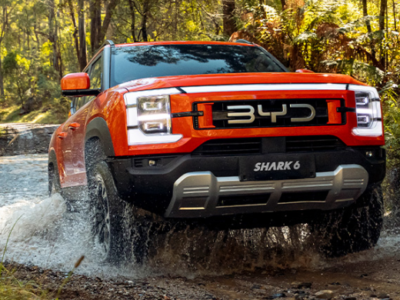
BYD Shark 6 vs Ford Ranger Raptor: Which Performance Ute Is Better in 2026?

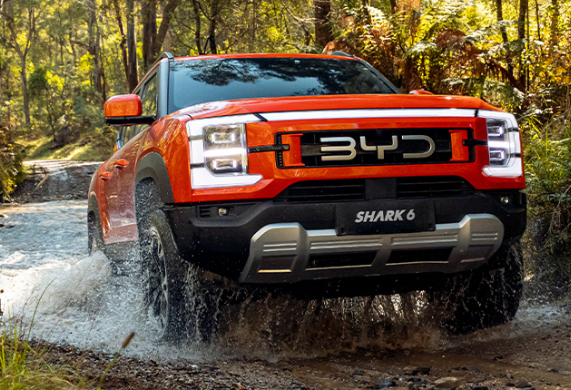
The BYD Shark 6 vs Ford Ranger Raptor comparison has become much more interesting in 2026. The Shark 6 is no longer simply a cheaper plug-in hybrid alternative to traditional diesel utes. With the arrival of the BYD Shark 6 Performance, it now produces more power and torque than the Ranger Raptor while also offering plug-in hybrid efficiency and a 3,500kg braked towing capacity.
The Ford Ranger Raptor remains a very different type of machine. Its 3.0-litre twin-turbo petrol V6, FOX Live Valve suspension, locking front and rear differentials, BFGoodrich all-terrain tyres and Baja mode make it a purpose-built high-performance off-roader rather than simply a powerful dual-cab.
So, should we buy the futuristic BYD Shark 6 Performance, or spend considerably more on the established Ford Ranger Raptor?
Content in this publication
- BYD Shark 6 vs Raptor: Quick Comparison
- BYD Shark 6 vs Ford Ranger Raptor Price
- BYD Shark 6 vs Raptor Engine and Power
- BYD Shark 6 vs Raptor 0-100km/h
- BYD Shark 6 vs Raptor Fuel Consumption
- BYD Shark 6 Electric Range
- BYD Shark 6 vs Raptor Off Road
- Suspension: Shark 6 vs Ranger Raptor
- BYD Shark 6 vs Raptor Towing Capacity
- Shark 6 vs Raptor for Daily Driving
- Interior and Technology
- Vehicle-to-Load Gives the Shark an Extra Advantage
- BYD Shark 6 vs Raptor Reliability
- Ranger Raptor Aftermarket vs Shark 6 Aftermarket
- Shark 6 vs Raptor for Camping
- BYD Shark 6 vs Raptor for Towing a Caravan
- What About the Regular BYD Shark 6 Premium vs Raptor?
- BYD Shark 6 Performance vs Ranger Raptor: Key Differences
- Which Is Better for Long-Distance Touring?
- Which Is Cheaper to Run?
- BYD Shark 6 vs Raptor: Which Should You Buy?
- BYD Shark 6 vs Ford Ranger Raptor Pros and Cons
- FAQ
- Conclusion
BYD Shark 6 vs Raptor: Quick Comparison
For the most relevant 2026 comparison, we are primarily looking at the Shark 6 Performance rather than the regular Shark 6 Premium.
| Specification | BYD Shark 6 Performance | Ford Ranger Raptor |
|---|---|---|
| Engine | 2.0L turbo petrol PHEV | 3.0L twin-turbo petrol V6 |
| System power | 350kW | 292kW |
| Torque | 700Nm | 583Nm |
| Drivetrain | Electric AWD | Full-time 4WD |
| Transmission | Single-speed reduction | 10-speed automatic |
| 0-100km/h | 5.5 sec claimed | Around 6 sec |
| Battery | 29.6kWh LFP | — |
| Electric range | 80km WLTP | — |
| Claimed fuel consumption | 1.3L/100km* | 11.5L/100km |
| Braked towing | 3,500kg | 2,500kg |
| Ground clearance | 230mm | 272mm |
| Wheels | 18-inch | 17-inch |
| Off-road tyres | More road-oriented | BFGoodrich KO2 |
| Australian price before on-roads | From $62,900 | $90,690 |
*The BYD figure is a plug-in-hybrid weighted figure with usable battery charge and should not be interpreted as fuel consumption once the battery is depleted.
That price difference immediately tells us something important: despite its impressive performance figures, the Shark 6 is not really trying to copy the Ranger Raptor. The two utes achieve performance in completely different ways.
BYD Shark 6 vs Ford Ranger Raptor Price
Price could be one of the strongest arguments in favour of the Shark 6.
The 2026 Shark 6 Performance has been listed at $62,900 before on-road costs, while the MY26.5 Ford Ranger Raptor is priced at $90,690 before on-road costs in Australia.
That produces a difference of almost $28,000 before on-road costs.
And if we compare the standard Shark 6 Premium rather than the Performance, the gap can become even larger. BYD has advertised the Premium from $57,900 drive-away during promotional periods, although offers and prices can change.
For buyers mainly interested in acceleration, equipment, technology and everyday comfort, it can therefore be difficult to ignore how much performance BYD provides for the money.
The Raptor's premium is paying for something different: specialised suspension, chassis engineering, off-road hardware and the Ranger's established ecosystem.
BYD Shark 6 vs Raptor Engine and Power
This is where the comparison becomes particularly interesting.
BYD Shark 6 Performance Powertrain
The Shark 6 Performance combines a 2.0-litre turbocharged four-cylinder petrol engine with electric motors and a 29.6kWh lithium iron phosphate battery.
Total system output is:
350kW and 700Nm.
The regular Shark 6 Premium remains very powerful at 321kW and 650Nm, but the Performance increases those numbers further.
The Shark primarily delivers the sort of immediate response we associate with electric motors. There is no conventional multi-speed gearbox constantly changing gears during acceleration.
Ford Ranger Raptor Engine
The Ranger Raptor takes the traditional performance approach.
Under the bonnet is a 3.0-litre twin-turbo EcoBoost petrol V6 producing:
292kW and 583Nm.
It is connected to a 10-speed automatic transmission and a sophisticated full-time four-wheel-drive system.
On paper, therefore, the BYD produces 58kW more power and 117Nm more torque.
But maximum outputs alone do not tell us which vehicle feels more exciting.
BYD Shark 6 vs Raptor 0-100km/h
BYD claims the Shark 6 Performance can accelerate from 0-100km/h in 5.5 seconds.
The standard Shark 6 Premium is only slightly slower at a claimed 5.7 seconds.
That is extraordinary performance for such a large and heavy plug-in hybrid ute.
The Shark 6 Performance weighs around 2,775kg, yet electric assistance allows it to launch extremely quickly.
The Ranger Raptor is also quick for a dual-cab, but outright straight-line acceleration is not really the reason the Raptor exists.
The Ford feels more like a conventional high-performance vehicle. There is a twin-turbo V6, multiple gears, exhaust noise and a drivetrain designed to remain entertaining when the sealed road disappears.
The BYD is arguably the more effortless accelerator; the Raptor provides more mechanical theatre.
BYD Shark 6 vs Raptor Fuel Consumption
This could be the largest difference between these vehicles in everyday ownership.
The Shark 6 Performance has an official consumption figure of around 1.3L/100km when the battery has sufficient charge. It also provides approximately 80km of WLTP electric range.
However, we should not compare 1.3L/100km directly with a conventional petrol vehicle without context.
Once battery charge falls below 25 per cent, the claimed consumption figure for the Shark 6 Performance rises to around 10.5L/100km.
That demonstrates why regularly charging a PHEV matters.
Someone commuting 30-60km per day and charging every night could potentially complete a large proportion of normal driving electrically.
Someone travelling hundreds of kilometres without charging will not achieve anything close to the headline 1.3L/100km figure.
Ranger Raptor Fuel Consumption
The Ranger Raptor's official combined fuel consumption is 11.5L/100km, with an 80-litre fuel tank.
Driving aggressively or spending considerable time off-road can push real consumption significantly higher.
Fuel efficiency is simply not the Raptor's main objective.
BYD Shark 6 Electric Range
One of the biggest differences between a Shark 6 and Raptor is that the BYD can operate using electricity alone.
The Performance provides approximately 80km of WLTP electric range, while its 29.6kWh Blade battery supports up to 7kW AC and 55kW DC charging.
That makes the Shark especially interesting for owners who use their ute for both commuting and weekend travel.
We could potentially drive to work without using much petrol during the week and still have a petrol engine available for longer journeys.
The Ranger Raptor offers none of this. Every kilometre is powered by its petrol V6.
BYD Shark 6 vs Raptor Off Road
This is where the specification table stops telling the full story.
The Ranger Raptor is the considerably more specialised off-road vehicle.
Ford equips it with 2.5-inch FOX Live Valve shock absorbers capable of continuously adjusting damping, plus front and rear locking differentials, full-time 4WD, BFGoodrich KO2 tyres, underbody protection and seven drive modes including Baja and Rock Crawl.
Its ground clearance is 272mm, approach angle is 32 degrees and Ford quotes an 850mm wading depth.
This hardware matters when driving quickly across rough tracks.
You may be interested in reading BYD Shark 6 vs MG U9: Which Ute Makes More Sense in 2026?
The Shark 6 certainly isn't helpless away from bitumen.
It uses independent double-wishbone coil-spring suspension at both ends and electric all-wheel drive, while terrain settings include Mud, Sand and Snow.
The Performance has around 230mm of ground clearance.
For beaches, gravel roads, camping tracks and moderate trails, that could be enough for many owners.
But buyers expecting to repeatedly attack rough tracks at speed should understand that the Raptor was designed specifically for that job.
Suspension: Shark 6 vs Ranger Raptor
Both vehicles use suspension setups that are unusual compared with conventional work-focused dual-cab utes.
The Shark 6 has independent suspension front and rear.
That helps it deliver a more SUV-like ride, particularly when the tray is empty. It also suits the Shark's role as a family-oriented lifestyle ute.
The Raptor uses independent front suspension but retains a live rear axle with coil springs.
The real star, however, is its FOX Live Valve damping system.
Ford says the shocks can respond to changing terrain hundreds of times per second.
At normal speeds the Raptor can be surprisingly comfortable. Increase the pace on rough terrain and the additional suspension travel and sophisticated dampers really start to justify the price.
BYD Shark 6 vs Raptor Towing Capacity
There has been a major change here.
The regular Shark 6 Premium is rated to tow 2,500kg braked.
The new Shark 6 Performance increases that figure to a much more competitive 3,500kg.
Meanwhile, despite the Ranger family offering 3,500kg towing in many configurations, the Raptor itself is rated at 2,500kg braked.
Therefore:
Shark 6 Premium: 2,500kg
Shark 6 Performance: 3,500kg
Ranger Raptor: 2,500kg
That could make the Shark 6 Performance particularly attractive for buyers wanting to tow heavier caravans, boats or trailers.
We should still remember that towing close to maximum capacity affects range, fuel consumption, payload and vehicle dynamics regardless of which ute we choose.
For city and suburban use, the Shark 6 makes a compelling case.
Electric motors deliver smooth acceleration without waiting for a gearbox to downshift. Driving short distances on battery power also makes it quiet.
Its independent rear suspension further separates it from traditional work utes.
The Raptor remains surprisingly civilised considering its capability, but it is a wide vehicle with chunky all-terrain tyres and a petrol engine that encourages enthusiastic driving.
For someone spending 90 per cent of their time on sealed roads, the BYD's drivetrain probably makes more sense.
Interior and Technology
BYD has placed enormous emphasis on technology.
The Shark 6 Premium uses a 15.6-inch rotating central display, while the Performance retains a large 15.6-inch touchscreen.
The cabin feels closer to a modern electrified SUV than an old-school work ute.
The Ranger Raptor takes a different approach but is hardly basic.
It includes a 12-inch portrait touchscreen, 12.4-inch digital instrument cluster, B&O premium audio system, powered front seats and a 360-degree camera.
Raptor-specific seats, steering-wheel controls and displays also help create a more performance-focused environment.
The Shark feels more futuristic.
The Ford feels more purpose-built.
Vehicle-to-Load Gives the Shark an Extra Advantage
Another interesting Shark 6 feature is vehicle-to-load, or V2L.
BYD includes V2L functionality capable of using energy stored in the vehicle's battery to power external electrical equipment.
For camping, tools or outdoor appliances, this can be genuinely useful.
The Ranger Raptor provides a 400W 230V inverter in the rear console and another power outlet in the bed, but its available electrical capacity is much smaller than a large PHEV battery can provide.
BYD Shark 6 vs Raptor Reliability
This comparison is more difficult because the current-generation Ranger Raptor has been on the market considerably longer than the Shark 6 Performance.
Ford's Ranger platform is well established in Australia and there is an extensive dealer, servicing and aftermarket network around the vehicle.
The BYD Shark 6 is much newer, particularly in Performance specification.
The long-term durability of its petrol-electric system under demanding Australian towing and off-road conditions will therefore become clearer as owners accumulate more kilometres.
BYD currently provides a six-year/150,000km vehicle warranty and an eight-year/160,000km traction-battery warranty, subject to its terms and exclusions.
That warranty coverage helps address some of the uncertainty associated with a newer model.
Ranger Raptor Aftermarket vs Shark 6 Aftermarket
Anyone planning extensive modifications should also consider the aftermarket.
Ranger owners have access to an enormous Australian ecosystem of suspension components, bull bars, canopies, racks, snorkels, recovery gear, long-range tanks and touring accessories.
The Shark 6 aftermarket is developing quickly as sales increase, but it cannot yet match the Ranger's depth.
For someone building a serious touring or off-road vehicle, that established Raptor/Ranger ecosystem may be valuable.
For an owner keeping the ute relatively standard, it matters less.
The decision becomes especially interesting for campers.
You may be interested in readingBYD Shark 6 vs MG U9: Which Ute Makes More Sense in 2026?You may be interested in reading
 Test Drive Review: The Fiat 500 Abarth 0-60 Acceleration
A Shark 6 provides quiet electric operation, V2L power and the ability to commute efficiently during the week.
We could arrive at a campsite and use battery energy for appliances without needing a separate generator for many small electrical loads.
The Raptor counters with superior tyre and suspension hardware when reaching particularly difficult camping locations.
So the choice depends on what type of camping we actually do.
For normal campsites, beaches and moderate trails, the Shark's electrical features are extremely useful.
For fast desert running, rough tracks and serious recreational off-roading, the Ford is in another category.
BYD Shark 6 vs Raptor for Towing a Caravan
For a large caravan, the new Shark 6 Performance's 3,500kg maximum braked towing capacity changes the equation considerably.
The Raptor's 2,500kg rating means some larger Australian caravans simply fall outside its legal towing limit.
However, maximum tow rating should never be considered in isolation.
Owners need to calculate:
- actual loaded trailer mass
- tow-ball mass
- vehicle payload
- gross vehicle mass
- gross combination mass
- passengers and accessories
- axle limits
Those figures can determine whether a particular vehicle-and-caravan combination is legal even when the trailer is technically below the advertised maximum towing capacity.
Not everybody needs the newer Performance.
The standard Shark 6 Premium already produces 321kW and 650Nm and completes 0-100km/h in a claimed 5.7 seconds.
That means it remains more powerful on paper than the Ranger Raptor.
Its biggest limitation in this comparison is towing capacity, which remains at 2,500kg.
For buyers who rarely tow more than that, the Premium may actually represent the more rational value proposition.
The Performance becomes particularly interesting when we need the 3,500kg tow rating or simply want the most powerful version.
BYD Shark 6 Performance vs Ranger Raptor: Key Differences
Ultimately, these vehicles represent two very different interpretations of a performance ute.
The BYD Shark 6 Performance prioritises electrification, strong straight-line acceleration, technology, everyday refinement and value.
The Ford Ranger Raptor prioritises chassis control, suspension travel, rough-road speed, specialised off-road hardware and driver engagement.
That distinction matters more than the horsepower figures.
Which Is Better for Long-Distance Touring?
For remote Australian touring, the Ranger Raptor has several advantages.
There are more Ford dealers, more independent workshops familiar with Rangers and a substantially larger aftermarket ecosystem.
Its conventional petrol drivetrain also means refuelling takes only a few minutes.
The Shark 6 does not require charging to continue travelling because its petrol engine keeps the hybrid system operating, so it is not limited like a battery-electric vehicle.
However, once its battery's usable charge is low, the efficiency advantage becomes much smaller. The Performance rises from a weighted 1.3L/100km to around 10.5L/100km with less than 25 per cent battery charge.
For regular long journeys, that difference deserves consideration.
Which Is Cheaper to Run?
If we have home charging and frequently travel within the Shark 6's electric range, the BYD has enormous potential to reduce petrol consumption.
Imagine driving 40km to 60km most days and charging overnight.
A large portion of those kilometres could potentially be completed electrically.
The Raptor cannot replicate that because its V6 must run every time we drive.
However, running costs include more than fuel.
Insurance, tyres, servicing, depreciation, charging costs and eventual resale values all matter.
Raptor tyres and performance components aren't necessarily cheap either, so its higher purchase price is only the beginning of the ownership-cost comparison.
BYD Shark 6 vs Raptor: Which Should You Buy?
For most buyers primarily using their ute for daily driving, family transport, commuting, towing and occasional off-roading, the BYD Shark 6 Performance offers the stronger value proposition.
It is dramatically cheaper, produces 350kW and 700Nm, can travel short distances electrically and now offers a 3,500kg braked towing capacity.
But the Ford Ranger Raptor is still the more specialised performance off-roader.
If our idea of owning a performance ute involves Baja-style driving, rough trails, jumps, technical terrain and aggressive off-road use, the Raptor's FOX suspension, locking differentials, BFGoodrich tyres and chassis engineering matter far more than the Shark's superior power figure.
In simple terms, the Shark 6 is a fast, sophisticated electrified lifestyle ute.
The Ranger Raptor is a purpose-built high-speed off-road performance ute.
For many people, the Shark 6 will be easier to justify financially. For enthusiasts who specifically want what makes a Raptor a Raptor, the BYD does not completely replace it.
BYD Shark 6 vs Ford Ranger Raptor Pros and Cons
| BYD Shark 6 Performance | Ford Ranger Raptor | |
|---|---|---|
| Main advantage | Performance and value | Off-road engineering |
| Power | Excellent | Excellent |
| Acceleration | Very quick | Very quick |
| Fuel efficiency | Excellent when regularly charged | High consumption |
| Towing | 3,500kg | 2,500kg |
| Off-road suspension | Good | Exceptional |
| Ground clearance | 230mm | 272mm |
| Technology | Excellent | Excellent |
| V2L | Yes | Limited onboard power |
| Aftermarket | Growing | Huge |
| Purchase price | Much lower | Much higher |
| Engine character | Smooth/electrified | V6 performance experience |
FAQ
Is the BYD Shark 6 faster than a Ford Ranger Raptor?
The 2026 BYD Shark 6 Performance has a claimed 0-100km/h time of 5.5 seconds and produces 350kW and 700Nm. That gives it extremely strong straight-line performance for a dual-cab ute.
Is the BYD Shark 6 better than the Ranger Raptor off road?
Not for serious high-speed off-roading. The Ranger Raptor has specialised FOX Live Valve suspension, locking front and rear differentials, BFGoodrich KO2 tyres, greater ground clearance and dedicated Baja and Rock Crawl modes. The Shark 6 is capable enough for moderate recreational use, but its focus is broader.
Can a BYD Shark 6 tow more than a Ranger Raptor?
The Shark 6 Performance can tow up to 3,500kg braked, compared with 2,500kg for the Ranger Raptor. The standard Shark 6 Premium is also rated to 2,500kg.
Does the BYD Shark 6 need to be charged?
No. Because it is a plug-in hybrid rather than a pure EV, it can continue driving using petrol once battery charge falls. However, regularly plugging it in is essential if we want to take maximum advantage of its electric range and lower fuel consumption.
Is the BYD Shark 6 Performance worth buying instead of a Raptor?
They suit different priorities. The Shark 6 Performance costs significantly less while offering more maximum power, stronger towing capability and plug-in-hybrid operation. The Ranger Raptor justifies its higher price mainly through specialised suspension, off-road hardware and chassis engineering rather than superior straight-line specifications.
Conclusion
The BYD Shark 6 vs Raptor comparison illustrates how quickly the ute market is changing.
A few years ago, getting close to Ranger Raptor performance required buying another large petrol-powered performance truck. The Shark 6 Performance now delivers 350kW, 700Nm, a claimed 5.5-second 0-100km/h time and 3,500kg towing, while costing substantially less than the Ford.
Yet specification-sheet dominance does not make the vehicles identical.
The Shark 6 Performance is the more compelling all-round proposition for buyers prioritising value, electrification, towing and everyday performance.
The Ranger Raptor remains the more serious option for drivers whose priority is specialised high-speed off-road capability.
You may be interested in readingBYD Shark 6 vs MG U9: Which Ute Makes More Sense in 2026?You may be interested in reading
Test Drive Review: The Fiat 500 Abarth 0-60 AccelerationYou may be interested in reading
 Customizing Your Ride: A Comprehensive Guide to the Fiat 500 Body Kit
That is ultimately the key difference: BYD has built an extremely powerful hybrid ute, while Ford has built an off-road performance vehicle that happens to have a tray.
If you want to know other articles similar to BYD Shark 6 vs Ford Ranger Raptor: Which Performance Ute Is Better in 2026? you can visit the category Models.
BYD Shark 6 vs Ranger vs HiLux: Which Ute Makes the Most Sense in 2026?
BYD Shark 6 vs MG U9: Which Ute Makes More Sense in 2026?
BYD Shark 6 vs Kia Tasman: Which Ute Is Better?
BYD Shark 6 vs 7: What We Know So Far

Honda Passport Years to Buy: Best Model Years and Which Ones to Avoid
Honda Passport Alternatives: 8 SUVs to Consider
Leave a Reply
More content of your interest