
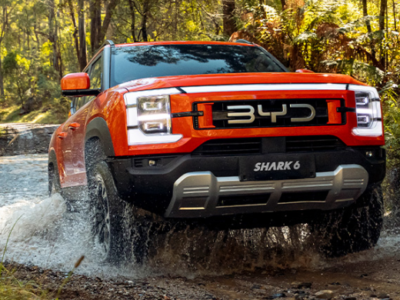
BYD Shark 6 vs MG U9: Which Ute Makes More Sense in 2026?

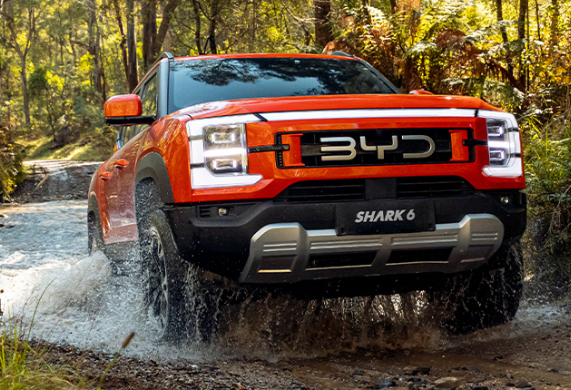
The BYD Shark 6 vs MG U9 comparison is one of the more interesting battles in the Australian ute market because these two vehicles approach the dual-cab formula in completely different ways.
The BYD Shark 6 uses a sophisticated plug-in hybrid powertrain built around electric motors and a petrol engine. The MG U9, officially marketed as the MGU9, takes a more traditional approach with a 2.5-litre turbo-diesel engine, an eight-speed automatic transmission and a serious 4x4 system.
Yet they have plenty in common. Both are large Chinese-built dual-cab utes, both use independent rear suspension rather than the conventional leaf-spring arrangement found in many work-focused pickups, and both aim to combine genuine utility with SUV-like comfort.
For 2026, the comparison has become even more interesting because BYD has expanded the Shark 6 range. The familiar Shark 6 Premium now sits below the more powerful Shark 6 Performance, which increases towing capacity to the important 3,500kg benchmark.
BYD lists 321kW for the Premium and 350kW for the Performance, while the Performance can now tow 3.5 tonnes.
MG counters with a 160kW and 520Nm diesel powertrain across its U9 range, a ZF eight-speed automatic and up to 3,500kg of braked towing capacity.
So, which one better suits the way we actually use a ute? Let’s compare them in detail.
Content in this publication
- BYD Shark 6 vs MG U9 Specs
- BYD Shark 6 vs MG U9 Engine and Performance
- Which Is Faster: BYD Shark 6 or MG U9?
- BYD Shark 6 vs MG U9 Fuel Economy
- BYD Shark 6 vs MG U9 Electric Range
- BYD Shark 6 vs MG U9 Towing Capacity
- Payload Capacity: An Important Difference
- BYD Shark 6 vs MG U9 Off-Road Capability
- Size and Dimensions
- BYD Shark 6 vs MG U9 Tub and Practicality
- Interior and Comfort
- Ride Comfort
- BYD Shark 6 vs MG U9 Technology
- Safety
- BYD Shark 6 vs MG U9 Price
- Warranty Comparison
- BYD Shark 6 Advantages
- MG U9 Advantages
- BYD Shark 6 vs MG U9 for Towing
- BYD Shark 6 vs MG U9 for Daily Driving
- BYD Shark 6 vs MG U9 for Long-Distance Touring
- Is the BYD Shark 6 Better Than the MG U9?
- FAQs About BYD Shark 6 vs MG U9
- Final Thoughts on the BYD Shark 6 vs MG U9
BYD Shark 6 vs MG U9 Specs
Here is a quick overview of the major differences.
| Specification | BYD Shark 6 Premium | BYD Shark 6 Performance | MG U9 |
|---|---|---|---|
| Powertrain | 1.5L turbo PHEV | 2.0L turbo PHEV | 2.5L turbo-diesel |
| Maximum system power | 321kW | 350kW | 160kW |
| Maximum torque | 650Nm | 700Nm | 520Nm |
| Transmission | Single-speed hybrid drive | Single-speed hybrid drive | 8-speed automatic |
| Drivetrain | AWD | AWD | 4x4 |
| 0-100km/h | 5.7 sec | 5.5 sec | Around 10.9 sec |
| Battery | 29.6kWh LFP | 29.6kWh LFP | N/A |
| Electric range | Up to 100km NEDC | 80km WLTP | N/A |
| Braked towing | 2,500kg | 3,500kg | 3,500kg |
| Payload | Around 790kg | Around 725kg | Up to 870kg depending on grade |
| Fuel tank | 60L | 60L | 80L |
| Length | 5,457mm | 5,457mm | 5,500mm |
| Wheelbase | 3,260mm | 3,260mm | 3,300mm |
| Ground clearance | 230mm | 230mm | Around 220mm |
The Shark 6 Premium has a 2,500kg towing limit, while the Performance increases that figure to 3,500kg.
Published Australian specifications put payload at approximately 790kg for the Premium and around 725kg for the Performance.
MG lists payloads of roughly 870kg for the Explore, 835kg for the Explore X and 770kg for the Explore Pro.
Those numbers already highlight the biggest difference: BYD concentrates on power and electrification, while MG places more emphasis on conventional towing and load-carrying ability.
BYD Shark 6 vs MG U9 Engine and Performance
BYD Shark 6: Electric Performance With Petrol Backup
The Shark 6 is technically a plug-in hybrid, but it does not behave exactly like a conventional petrol-electric hybrid.
Its DMO Super Hybrid system places a powerful electric motor at each axle.
In the Shark 6 Premium, combined system output reaches an impressive 321kW and 650Nm.
That gives the ute acceleration that would have seemed absurd for a dual-cab only a few years ago.
BYD claims:
0-100km/h in 5.7 seconds.
The 2026 Shark 6 Performance takes things even further.
Its larger 2.0-litre turbocharged petrol engine works with the electrified drivetrain to produce 350kW and 700Nm, cutting the claimed 0-100km/h time to approximately 5.5 seconds.
That means overtaking performance is one of the Shark’s strongest qualities.
Press the accelerator and there is no waiting for a diesel engine to build boost or an automatic gearbox to find the correct ratio.
Electric torque arrives almost immediately.
MG U9: Traditional Turbo-Diesel Muscle
MG takes the opposite approach.
Every current diesel U9 variant uses a:
2.5-litre four-cylinder turbo-diesel producing 160kW and 520Nm.
It is connected to a ZF eight-speed automatic transmission and a conventional 4x4 system.
Those figures do not look spectacular beside the Shark 6.
But outright acceleration is rarely the only consideration when buying a ute.
A diesel engine remains appealing for owners who regularly travel enormous distances, tow caravans through remote areas or work somewhere where plugging a vehicle into a charger is not practical.
The 80-litre fuel tank also gives the MG plenty of traditional touring flexibility.
Which Is Faster: BYD Shark 6 or MG U9?
There is not much competition here.
The Shark 6 has substantially more power and accelerates much harder.
A Shark 6 Premium produces roughly double the MG’s maximum power, while the Performance stretches the advantage even further.
Published figures put the regular Shark at around 5.7 seconds from 0-100km/h versus roughly 10.9 seconds for the MG U9.
For normal driving, that translates into effortless overtaking, quick motorway merging and surprisingly strong acceleration from such a large vehicle.
The MG is better thought of as a conventional diesel 4x4 ute.
It delivers strong low-speed torque, but it does not attempt to match the BYD’s sports-car-like straight-line acceleration.
BYD Shark 6 vs MG U9 Fuel Economy
This category requires more explanation than simply comparing official numbers.
BYD advertises very low fuel-consumption figures when the battery has sufficient charge.
The Premium is officially listed at around 2.0L/100km under its applicable test conditions, while figures of approximately 7.9L/100km once battery charge drops significantly have also been published.
The Performance is advertised at around 1.3L/100km with sufficient battery charge under WLTP testing.
But that does not mean we should expect to drive indefinitely at 1-2L/100km.
A plug-in hybrid achieves its biggest advantage when we regularly recharge it.
Imagine commuting 40km per day and charging overnight.
Much of that driving may be covered using stored electricity rather than petrol.
Take the same vehicle on a 1,000km highway trip without charging, however, and the combustion engine will inevitably play a much larger role.
MG U9 Fuel Consumption
MG quotes approximately 7.9L/100km combined for its 2.5-litre diesel.
The important difference is consistency.
There is not a large traction battery that needs regular charging to extract the greatest efficiency benefit.
We fill the tank, drive and fill it again.
That simplicity can make the U9 attractive for long-distance drivers even if a regularly charged Shark 6 can consume dramatically less fuel during shorter daily journeys.
BYD Shark 6 vs MG U9 Electric Range
The Shark has another advantage unavailable in the diesel MG: it can travel meaningful distances using battery power.
The Shark 6 Premium uses a roughly 29.6kWh BYD Blade LFP battery, with up to 100km of electric driving under the NEDC test cycle.
The Performance uses a similar battery capacity but quotes around 80km WLTP electric range.
Actual range will depend on temperature, speed, terrain, accessories and load.
Nevertheless, having tens of kilometres of usable EV range fundamentally changes how the vehicle can be used.
If our weekday driving consists mainly of commuting, school runs and shopping, we could potentially complete a significant percentage of those trips without routinely using much petrol.
The current diesel MG U9 does not offer that possibility.
However, MG has also announced an electric MGU9 version, showing that electrification is likely to become an increasingly important part of the model range.
BYD Shark 6 vs MG U9 Towing Capacity
Towing used to give the MG an obvious advantage.
That has changed for 2026.
The Shark 6 Premium is rated to tow:
2,500kg braked.
That is adequate for many trailers, boats and smaller caravans but falls short of the 3,500kg benchmark expected by many Australian ute buyers.
The new Shark 6 Performance fixes that weakness.
Maximum braked towing capacity increases to:
You may be interested in reading Test Drive Review: The Fiat 500 Abarth 0-60 Acceleration
3,500kg.
That makes it far more relevant to buyers considering heavier towing.
MG U9 Towing
All three main diesel U9 grades are rated at:
3,500kg braked.
Consequently, anyone comparing the MG against a Shark specifically for towing needs to distinguish between Shark variants.
Against the Shark 6 Premium, MG has the higher towing rating.
Against the Shark 6 Performance, both offer the same headline 3,500kg maximum.
Payload Capacity: An Important Difference
Payload is one area we should not overlook.
Powerful drivetrains, batteries, luxury equipment and independent suspension all add weight.
The Shark 6 Premium has a published payload of approximately 790kg, while the heavier Performance drops to around 725kg.
MG does somewhat better depending on specification.
Its figures are approximately:
- U9 Explore: 870kg
- U9 Explore X: 835kg
- U9 Explore Pro: 770kg
Payload includes passengers, accessories, luggage, cargo and tow-ball download.
That is particularly important when towing.
A vehicle may technically be capable of pulling a 3,500kg caravan while still running into GVM, axle-load or payload limitations once passengers, accessories and tow-ball mass are included.
For serious towing, we would always calculate the complete combination rather than looking only at the headline towing number.
BYD Shark 6 vs MG U9 Off-Road Capability
Both manufacturers have taken unconventional approaches compared with traditional utes.
The Shark uses double-wishbone independent suspension at both ends rather than a solid rear axle with leaf springs.
BYD also includes terrain modes for conditions such as mud, sand and snow.
Current Australian specifications list around 230mm of ground clearance and up to roughly 700mm of wading depth.
MG also moves away from the traditional leaf-sprung formula.
The U9 uses an independent multi-link rear suspension, combined with a BorgWarner 4x4 system.
MG offers dedicated Eco, Normal, Sport, Mud, Snow, Sand, Tow and Custom modes, while higher specifications can add substantial differential-lock functionality.
Which Is Better for Serious 4WD Use?
The difference is not simply about ground clearance.
MG’s conventional mechanical 4x4 arrangement will probably feel more familiar to buyers moving from a diesel Ranger, HiLux, D-Max or similar ute.
BYD instead uses its electric motors and electronics to control torque.
That makes the Shark incredibly responsive, but its driving experience is fundamentally different from a traditional low-range diesel 4x4.
For occasional beaches, gravel roads, muddy tracks and camping trails, both provide substantial capability.
Buyers planning extreme remote-area touring should also consider something less glamorous: fuel and charging infrastructure.
Diesel remains extremely easy to source throughout regional Australia.
A plug-in hybrid does not require charging because it can continue on petrol, but owners will not obtain its full electrification benefits without access to electricity.
Size and Dimensions
Neither vehicle is small.
The BYD Shark 6 measures approximately:
5,457mm long, 1,971mm wide and 1,925mm high, with a 3,260mm wheelbase.
The MG U9 stretches to approximately:
5,500mm long with a 3,300mm wheelbase.
That makes the MG slightly longer.
Both require some adjustment if we are coming from a normal SUV, particularly in city parking garages and tight shopping-centre car parks.
The payoff is excellent cabin space.
These are not utes where rear-seat passengers feel like an afterthought.
BYD Shark 6 vs MG U9 Tub and Practicality
BYD lists approximately 1,200 litres of tray capacity for the Shark 6.
One of its most interesting additions is Vehicle-to-Load functionality.
That allows electrical equipment to draw energy from the traction battery, potentially making the Shark useful for camping, tools and other outdoor equipment.
MG also lists roughly 1,200 litres of tub capacity in standard form.
However, the U9 Explore Pro introduces something unusual.
MG U9 Smart Hatch
An optional Smart Hatch creates an opening between the passenger compartment and tray.
With the rear seats configured appropriately, cargo capacity can increase significantly, while longer items can be carried more easily.
That is a clever solution for surfboards, building materials and long recreational equipment.
The Explore Pro also gets an electric folding tailgate with integrated steps, making access to the tub easier.
Interior and Comfort
One of the defining characteristics of both vehicles is that neither feels like a stripped-out agricultural work ute.
The Shark 6’s dashboard looks more like something from a modern electric SUV.
Premium versions feature BYD’s large 15.6-inch rotating infotainment display, digital instruments, smartphone connectivity and a substantial collection of comfort and safety technology.
The U9 follows the same general philosophy.
Wireless Apple CarPlay and Android Auto are offered, along with wireless phone charging.
Higher trims can add heated and ventilated front seats, a driver’s-seat massage function, panoramic sunroof and premium audio.
For families using their ute as their primary vehicle, this matters considerably.
We are effectively looking at two dual-cab pickups with interiors attempting to provide SUV-level refinement.
Ride Comfort
This may be one of the most interesting similarities.
Most traditional utes use leaf springs at the rear because they are inexpensive, durable and well suited to carrying loads.
Neither the Shark nor U9 follows that template.
The BYD uses double-wishbone suspension front and rear.
The MG uses independent multi-link suspension.
As a result, both are designed to provide a more compliant, passenger-car-like experience than many conventional work utes.
The trade-off becomes apparent when we look back at payload figures.
Heavy-duty load carrying clearly was not the only engineering priority.
These vehicles are aimed at customers who want their ute to serve as a family vehicle, recreational vehicle and workhorse rather than simply hauling maximum weight every day.
BYD Shark 6 vs MG U9 Technology
Technology is another area where these Chinese utes challenge established competitors.
You may be interested in readingTest Drive Review: The Fiat 500 Abarth 0-60 AccelerationYou may be interested in reading
 Customizing Your Ride: A Comprehensive Guide to the Fiat 500 Body Kit
The BYD particularly stands out because electrification becomes a practical feature rather than merely a fuel-saving measure.
Its battery can supply external electrical equipment through V2L functionality.
For camping, we could power appliances without carrying a separate generator.
For work, the same technology could potentially power tools or charging equipment.
MG’s strengths are different.
The U9 brings its clever Smart Hatch, electronic tailgate solution, advanced cameras and a broad selection of comfort technologies.
Both are much more digitally focused than old-school pickups.
Safety
Both the BYD Shark 6 and MG U9 have achieved strong safety ratings in the Australian market.
As expected in modern vehicles, buyers can find features such as autonomous emergency braking, adaptive cruise control, lane-support technology and multiple cameras and parking aids depending on grade.
Anyone buying primarily for family use should still compare individual safety-assistance features between specifications rather than assuming every variant includes exactly the same equipment.
BYD Shark 6 vs MG U9 Price
Pricing moves frequently because both manufacturers regularly run promotional campaigns.
The MG U9 has generally been positioned competitively in the Australian market, with lower grades starting in the low-$50,000 range and higher trims moving beyond $60,000 drive-away depending on offers.
The BYD Shark 6 Premium has also been positioned around the upper-$50,000 range during promotional periods.
Because manufacturer offers change, it is better to check live pricing before treating a small purchase-price difference as decisive.
The bigger ownership question is how we drive.
Someone commuting every day and charging the Shark at home faces a dramatically different fuel-cost equation from someone towing long distances without frequent charging.
Warranty Comparison
The BYD Shark 6 is backed by a long vehicle warranty and an additional traction-battery warranty.
MG also provides a competitive multi-year warranty package for the U9.
Warranty terms can differ based on vehicle use, especially commercial operation.
Tradies and fleet buyers should therefore check the detailed policy rather than relying only on the headline duration.
BYD Shark 6 Advantages
The Shark 6 makes the strongest case for itself when we want our ute to behave like an electrified performance SUV during everyday driving.
Its major strengths include extraordinary acceleration, meaningful electric-only driving capability, V2L power functionality, smooth electric torque delivery and the possibility of very low petrol consumption when routinely charged.
The Performance model also removes one of the biggest criticisms of the original Shark by increasing towing capacity to 3,500kg.
MG U9 Advantages
The MG’s appeal comes from familiarity combined with modern comfort.
We get a conventional diesel engine, an eight-speed ZF automatic, a proper 4x4 system, a large 80-litre fuel tank and 3,500kg towing capacity across the diesel range.
Payload can also be higher than the Shark’s depending on specification.
Add the Smart Hatch option, comfortable independent rear suspension and competitive pricing, and the U9 becomes a particularly interesting alternative to established diesel utes.
BYD Shark 6 vs MG U9 for Towing
For heavier towing, the comparison depends heavily on which BYD we choose.
The MG U9 and Shark 6 Performance both carry 3,500kg braked towing ratings, while the Shark 6 Premium is limited to 2,500kg.
However, maximum trailer capacity should not be viewed independently from payload, GVM, GCM and tow-ball mass.
MG’s diesel drivetrain may also be attractive for long touring routes where refuelling infrastructure is more important than the ability to commute electrically.
The Shark Performance, meanwhile, combines 3.5-tonne towing capability with performance the MG cannot match.
BYD Shark 6 vs MG U9 for Daily Driving
Daily commuting reverses the priorities.
Suppose we have home charging and drive 30-60km most days.
The Shark’s plug-in hybrid system suddenly becomes highly relevant because much of our routine driving can potentially occur using stored battery energy.
We also get rapid acceleration and quiet low-speed operation.
The MG remains easy to live with, but short urban journeys are not where a diesel powertrain provides its most compelling advantages.
That makes the Shark particularly interesting for buyers who need ute capability at weekends but drive it like an SUV during the working week.
BYD Shark 6 vs MG U9 for Long-Distance Touring
For regular long-distance touring, the MG’s simplicity has genuine appeal.
An 80-litre diesel tank, conventional 4x4 hardware and readily available fuel make planning remote trips straightforward.
The Shark can certainly travel beyond its battery range because its petrol engine remains available, so it is not restricted like a full EV.
However, once we stop regularly charging, part of the reason for choosing a PHEV disappears.
This is why these two vehicles suit noticeably different usage patterns despite looking like close competitors on paper.
Is the BYD Shark 6 Better Than the MG U9?
There is not a universal answer because their strengths are unusually different.
The Shark 6 is the more performance-focused and electrified option.
It makes particularly strong sense when we can charge regularly and want a ute that doubles as a comfortable, powerful everyday vehicle.
The MG U9 is the more conventional diesel alternative, especially attractive when long-distance driving, load carrying and straightforward 3.5-tonne towing are major priorities.
The arrival of the Shark 6 Performance closes much of the capability gap because it matches MG’s headline towing rating while providing far more system power.
But it also carries less payload than some U9 variants.
That is why comparing only horsepower or towing capacity does not tell the whole story.
FAQs About BYD Shark 6 vs MG U9
Is the BYD Shark 6 more powerful than the MG U9?
Yes. The Shark 6 Premium produces up to 321kW and 650Nm from its plug-in hybrid system, while the Shark 6 Performance increases output to 350kW and 700Nm.
The MG U9’s 2.5-litre turbo-diesel produces 160kW and 520Nm.
Can the MG U9 tow more than the BYD Shark 6?
The MG U9 can tow up to 3,500kg braked.
The regular Shark 6 Premium is rated at 2,500kg, but the 2026 Shark 6 Performance increases its maximum braked towing capacity to 3,500kg, matching the MG.
Is the BYD Shark 6 cheaper to run than the MG U9?
It can be if we charge it regularly.
The Shark’s ability to complete shorter journeys using stored electricity can significantly reduce petrol use.
Drivers who rarely charge it will not obtain the same advantage, while the U9 offers predictable diesel consumption without requiring charging.
Does the MG U9 have a hybrid engine?
The current Australian U9 discussed here uses a 2.5-litre turbo-diesel engine rather than a hybrid system.
MG has also shown interest in electrified versions, including an electric MGU9.
Which has more payload, the BYD Shark 6 or MG U9?
The MG can carry more in some configurations.
The U9 Explore is rated at around 870kg payload, while the Shark 6 Premium is approximately 790kg and the Performance around 725kg.
Actual available payload decreases once passengers, accessories, tow-ball download and cargo are added.
Final Thoughts on the BYD Shark 6 vs MG U9
The BYD Shark 6 vs MG U9 battle demonstrates just how quickly the Australian ute market is changing.
A few years ago, choosing a dual-cab meant comparing one turbo-diesel against another.
Now we can choose between a 350kW plug-in hybrid ute capable of travelling substantial distances electrically and a technologically advanced diesel ute with independent suspension, 3.5-tonne towing and an expandable load area.
The Shark 6 stands out for its performance, electrification, V2L capability and everyday refinement.
Owners with access to regular charging can make excellent use of its PHEV architecture.
You may be interested in readingTest Drive Review: The Fiat 500 Abarth 0-60 AccelerationYou may be interested in reading
Customizing Your Ride: A Comprehensive Guide to the Fiat 500 Body KitYou may be interested in reading
 A Trip Down Memory Lane: The 1977 Fiat 124 Spider
The MG U9 takes a more familiar route with diesel power, an eight-speed automatic, strong towing ability, useful payload and traditional long-distance convenience.
And with the Shark 6 Performance now capable of towing 3,500kg and electrified versions of the MGU9 emerging, this comparison is likely to become even more competitive.
If you want to know other articles similar to BYD Shark 6 vs MG U9: Which Ute Makes More Sense in 2026? you can visit the category Models.
BYD Shark 6 vs Ranger vs HiLux: Which Ute Makes the Most Sense in 2026?
BYD Shark 6 vs Ford Ranger Raptor: Which Performance Ute Is Better in 2026?
BYD Shark 6 vs Kia Tasman: Which Ute Is Better?
BYD Shark 6 vs 7: What We Know So Far

Honda Passport Years to Buy: Best Model Years and Which Ones to Avoid
Honda Passport Alternatives: 8 SUVs to Consider
Leave a Reply
More content of your interest