
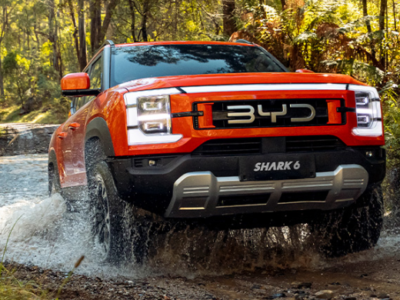
BYD Shark 6 vs Ranger vs HiLux: Which Ute Makes the Most Sense in 2026?

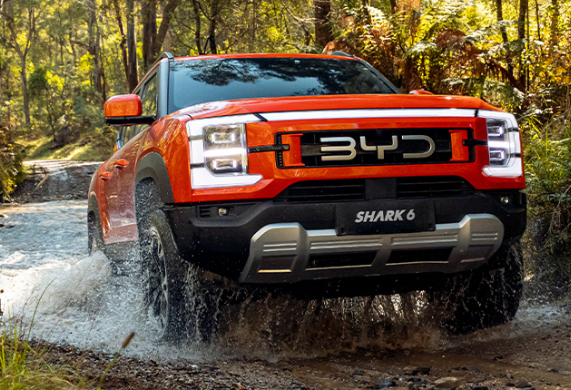
The BYD Shark 6 vs Ranger vs HiLux comparison has become much more interesting in 2026.
For years, Australian ute buyers choosing a dual-cab had a fairly familiar decision to make. The Ford Ranger offered excellent all-round capability and powerful diesel engines, while the Toyota HiLux built its reputation around durability, practicality and straightforward workhorse credentials.
Then the BYD Shark 6 arrived with something completely different: a plug-in hybrid drivetrain, enormous power figures, a refined independent suspension setup and an interior that feels closer to a modern SUV than a traditional work ute.
And BYD has now made the comparison even closer.
The original Shark 6 Premium produces 321 kW and 650 Nm, while the newer Shark 6 Performance increases output to 350 kW and 700 Nm. More importantly, the Performance increases maximum braked towing capacity from the Premium's 2,500 kg to 3,500 kg, matching the headline towing figure offered by many Ranger and diesel HiLux variants.
So, should we choose the electrified Shark 6, the versatile Ranger or the proven HiLux? Let's compare them properly.
Content in this publication
- BYD Shark 6 vs Ford Ranger vs Toyota HiLux Specs
- BYD Shark 6 vs Ranger vs HiLux: Power
- Which Is Fastest?
- BYD Shark 6 vs Ranger vs HiLux Towing Capacity
- Shark 6 Performance vs Ranger vs HiLux for Towing
- Payload and Work Use
- Fuel Economy: Hybrid vs Diesel
- Toyota HiLux Fuel Economy
- Ranger Fuel Economy
- Electric Driving in the Shark 6
- Charging the BYD Shark 6
- BYD Shark 6 vs Ranger vs HiLux Off Road
- Ride Comfort and Suspension
- Interior and Technology
- Size and Practicality
- Reliability and Long-Term Ownership
- BYD Shark 6 vs Ford Ranger for Daily Driving
- BYD Shark 6 vs Toyota HiLux for Work
- Which Is Better for Camping?
- Which One Is Better for Long Highway Trips?
- Shark 6 Premium or Performance?
- Who Should Consider the Ford Ranger?
- Who Should Consider the Toyota HiLux?
- Who Should Consider the BYD Shark 6?
- BYD Shark 6 vs Ranger vs HiLux: The Biggest Differences
- Final Thoughts
- Frequently Asked Questions
BYD Shark 6 vs Ford Ranger vs Toyota HiLux Specs
We should first establish that these ranges contain several different variants.
For the Ranger, the 3.0-litre V6 turbo-diesel makes a useful comparison with the Shark 6 because it produces 184 kW and 600 Nm. Ford also sells 2.0-litre diesel, Ranger PHEV and Ranger Raptor variants.
Toyota's conventional 2.8-litre turbo-diesel HiLux produces up to 150 kW and 500 Nm with the automatic transmission. Toyota also offers V-Active 48-volt technology on selected 2.8-litre variants, while the current HiLux range has expanded further with electric variants.
| Specification | BYD Shark 6 Premium | BYD Shark 6 Performance | Ford Ranger 3.0 V6 Diesel | Toyota HiLux 2.8 Diesel |
|---|---|---|---|---|
| Engine | 1.5L turbo PHEV | 2.0L turbo PHEV | 3.0L V6 turbo-diesel | 2.8L 4-cyl turbo-diesel |
| Maximum power | 321 kW | 350 kW | 184 kW | 150 kW |
| Maximum torque | 650 Nm | 700 Nm | 600 Nm | 500 Nm |
| Transmission/drivetrain | AWD hybrid | AWD hybrid | 10-speed auto/full-time 4WD on V6 | 6-speed auto/4WD |
| 0–100 km/h | 5.7 sec | 5.5 sec | Not the main focus | Not the main focus |
| Maximum braked towing | 2,500 kg | 3,500 kg | Up to 3,500 kg | Up to 3,500 kg |
| Battery | 29.6 kWh | 29.6 kWh | — | — |
| Electric range | 100 km NEDC | 80 km WLTP | — | — |
Exact capability can vary according to configuration, trim level and fitted equipment.
BYD Shark 6 vs Ranger vs HiLux: Power
This is where the Shark 6 immediately separates itself from the traditional diesel utes.
The Shark 6 Premium combines a 1.5-litre turbocharged petrol engine with electric motors to generate:
- 321 kW
- 650 Nm
- 0–100 km/h in 5.7 seconds
Those are unusually high numbers for a mainstream dual-cab ute.
BYD Shark 6 Performance
The newer Performance goes further with:
- 350 kW
- 700 Nm
- 0–100 km/h in 5.5 seconds
BYD uses a larger 2.0-litre turbocharged petrol engine in this version while retaining the plug-in hybrid concept.
Ford Ranger V6
The Ranger's 3.0-litre V6 turbo-diesel produces 184 kW and 600 Nm, paired with a 10-speed automatic transmission.
The numbers are significantly lower than the BYD's combined hybrid outputs, but outright acceleration isn't the only thing that matters in a ute. The Ranger's diesel engine is designed around predictable torque delivery, towing and long-distance utility.
Toyota HiLux
Automatic versions of the 2.8-litre turbo-diesel HiLux produce 150 kW and 500 Nm.
The HiLux therefore looks modest beside the Shark 6 on a specification sheet. But Toyota isn't trying to create a performance ute with the regular diesel HiLux. Its priorities remain load-carrying capability, towing, off-road use and general utility.
Which Is Fastest?
The Shark 6 is clearly the performance-focused option among these mainstream configurations.
A 5.5-second 0–100 km/h time for the Shark 6 Performance is closer to what we expect from a sporty SUV than a large dual-cab ute.
Electric motors also provide immediate response. We don't have to wait for a diesel transmission to downshift or an engine to build boost before getting strong acceleration.
For drivers who regularly merge onto motorways, overtake on country roads or simply enjoy strong acceleration, this is one of the Shark's most obvious attractions.
BYD Shark 6 vs Ranger vs HiLux Towing Capacity
Towing used to be one of the clearest weaknesses of the Shark 6 comparison.
That's no longer quite so simple.
The Shark 6 Premium is rated to tow 2,500 kg braked.
That's adequate for many:
- Small caravans
- Box trailers
- Jet skis
- Boats
- Camping trailers
- Motorbike trailers
However, serious caravan owners can easily exceed 2.5 tonnes.
The Shark 6 Performance increases maximum braked towing capacity to 3,500 kg.
That's an important upgrade because 3.5 tonnes has effectively become the benchmark figure buyers expect from serious Australian dual-cab utes.
Ford Ranger Towing Capacity
Ford lists a maximum 3,500 kg braked towing capacity for appropriately equipped Ranger variants, although the Ranger Raptor is limited to 2,500 kg.
Ford also offers features aimed specifically at towing, including a Tow/Haul drive mode and, on selected versions, technologies such as Pro Trailer Backup Assist.
Toyota HiLux Towing Capacity
Current diesel 4x4 HiLux variants can tow up to 3,500 kg braked.
Some 4x2 configurations can have a lower maximum, so buyers should always check the specifications of the exact HiLux they are considering.
Once we compare the Shark 6 Performance rather than the Premium, all three can carry a headline 3,500 kg braked tow rating in suitable configurations.
But maximum towing capacity isn't the whole calculation.
We still need to consider:
- Payload
- Tow-ball mass
- Passengers
- Accessories
- Vehicle GVM
- Gross combined mass
- Cargo in the tray
A vehicle being rated to tow 3,500 kg doesn't automatically mean we can simultaneously fill the cabin and tray while staying within every legal weight limit.
For frequent heavy towing over long distances, buyers should calculate the complete vehicle-and-trailer combination rather than choosing purely from the advertised maximum.
Payload and Work Use
This is one area where traditional ute design remains extremely relevant.
The broader Ranger range can provide high payload figures, although the actual number depends heavily on body style, engine and specification. Higher-spec dual-cab models generally have considerably less payload than basic cab-chassis work variants.
The Shark is heavy because it carries a petrol engine, electric motors and a large traction battery.
Current Shark 6 figures are approximately:
- Shark 6 Premium kerb weight: 2,710 kg
- Shark 6 Performance kerb weight: 2,775 kg
- GVM: 3,500 kg for both
That leaves a nominal difference between kerb weight and GVM of approximately 790 kg for the Premium and 725 kg for the Performance, before considering the precise definitions, accessories and vehicle configuration applicable to an individual vehicle.
If our ute is primarily a work vehicle carrying heavy tools, equipment and accessories every day, payload deserves close attention.
Fuel Economy: Hybrid vs Diesel
Fuel economy is one of the most complicated parts of any BYD Shark 6 vs Ranger vs HiLux comparison because a plug-in hybrid can't fairly be represented by one fuel-consumption number.
The Premium has an official combined figure of around 2.0 L/100 km with sufficient battery charge.
For the Performance, the quoted figure can be around 1.3 L/100 km WLTP under charged-battery test conditions.
Those numbers demonstrate the advantage of using electricity for a substantial part of a journey.
They do not mean the Shark will continuously consume one or two litres of petrol every 100 kilometres after the battery has been depleted.
With a low battery, fuel consumption rises significantly.
The Premium can consume around 7.9 L/100 km, while the Performance can be around 10.5 L/100 km WLTP under corresponding low-charge testing.
That distinction is extremely important for potential owners.
If we charge at home and mostly make shorter journeys, a Shark 6 could cover a large percentage of our kilometres electrically.
If we never plug it in and constantly drive long highway distances, much of that advantage disappears.
Toyota HiLux Fuel Economy
The turbo-diesel HiLux can return figures in the region of 7.1–7.4 L/100 km depending on configuration.
As with every manufacturer test figure, real-world fuel use will vary according to load, speed, towing, terrain and driving style.
You may be interested in reading Toyota Corolla AE86 Engine Swap – The Ultimate Guide
The diesel HiLux therefore offers a more conventional ownership pattern: fill the tank, drive hundreds of kilometres and refuel quickly.
Ranger Fuel Economy
The Ranger's consumption varies considerably according to engine.
A 2.0-litre diesel Ranger, 3.0 V6 diesel, Ranger PHEV and petrol Ranger Raptor are very different vehicles, so comparing the entire Ranger range through one consumption figure would be misleading.
For buyers considering a Shark specifically because it can be charged, the Ranger PHEV is particularly relevant because Ford now offers a plug-in hybrid Ranger alongside its diesels.
The Ranger PHEV combines strong output with the ability to complete shorter journeys using electric energy.
Electric Driving in the Shark 6
The Shark 6's plug-in hybrid system is arguably its biggest everyday advantage.
The Premium's official electric range can be around 100 km on the NEDC cycle, while the Performance is rated at approximately 80 km WLTP.
Testing cycles differ, so those two figures shouldn't be treated as directly equivalent real-world measurements.
For owners with home charging, this creates an interesting use case.
Imagine our normal weekday commute is 30 or 40 kilometres. We can potentially complete much of that driving using electricity and keep the petrol engine primarily for longer journeys.
That isn't something a conventional diesel Ranger or HiLux can replicate.
Charging the BYD Shark 6
The Shark 6 can offer:
- Type 2 AC charging
- Up to 7 kW AC charging
- CCS2 DC charging
- Up to 55 kW DC charging
- Vehicle-to-load capability
Its 29.6 kWh Blade Battery isn't enormous compared with a full EV battery, which makes home charging practical for many owners.
Why V2L Matters in a Ute
Vehicle-to-load, or V2L, allows electricity stored in the traction battery to power external electrical devices.
That's particularly useful in a ute.
Potential applications include:
- Camping equipment
- Portable fridges
- Lighting
- Laptops
- Battery chargers
- Selected power tools
- Outdoor appliances
For people who spend weekends camping or need access to electrical power away from the grid, this feature gives the Shark an unusual advantage.
BYD Shark 6 vs Ranger vs HiLux Off Road
We shouldn't assume an electrified ute can't go off road.
The Shark 6 has approximately 230 mm of unladen ground clearance, a 31-degree approach angle and double-wishbone suspension front and rear.
It also provides terrain modes including:
- Mud
- Sand
- Snow
- Mountain
The Premium and Performance can offer approximately 700 mm of wading depth.
Those are respectable numbers.
Ranger Off-Road Ability
The Ranger remains extremely well developed for Australian off-road use.
Ford offers 4WD configurations, multiple drive modes and up to around 800 mm wading capability on applicable variants.
Depending on grade, multiple dedicated drive modes may also be available.
There's also a huge aftermarket ecosystem surrounding the Ranger.
Finding:
- Bull bars
- Suspension upgrades
- Canopies
- Snorkels
- Underbody protection
- Long-range tanks
- Touring accessories
is generally straightforward.
HiLux Off-Road Ability
The HiLux has decades of experience behind it.
That matters particularly to buyers travelling into remote areas where simplicity, parts availability and established aftermarket support may matter more than acceleration or a large touchscreen.
Its traditional 4WD hardware and huge Australian accessory market make the HiLux especially familiar to touring and work users.
Ride Comfort and Suspension
The Shark 6 takes a very different approach underneath.
Instead of using the traditional leaf-sprung rear suspension common among work-oriented utes, BYD uses double wishbones at both the front and rear.
That helps explain why the Shark feels conceptually closer to an SUV with a tray.
For buyers who spend most of their time:
- Driving around cities
- Commuting
- Carrying children
- Travelling on motorways
- Using the ute recreationally
the emphasis on ride quality can be extremely appealing.
The traditional Ranger and HiLux configurations remain more explicitly shaped by commercial-duty requirements, although modern Ranger variants in particular have become considerably more comfortable and sophisticated than old-school utes.
Interior and Technology
The Shark 6 makes its strongest argument inside the cabin.
The Premium and Performance receive a 15.6-inch infotainment touchscreen, along with modern connectivity and extensive driver-assistance technology.
It feels deliberately designed to appeal to buyers moving from a modern SUV into a ute.
Ford Ranger Interior
Ford has also pushed the Ranger well beyond traditional work-truck cabins.
Current Ranger models can feature:
- 12-inch touchscreen
- Wireless Apple CarPlay
- Wireless Android Auto
- Digital instrumentation
- Dual-zone climate control
- 360-degree camera depending on grade
- Advanced driver-assistance systems
The Ranger therefore feels considerably more technologically competitive than older generations.
Toyota HiLux Interior
The HiLux's philosophy tends to lean more toward straightforward functionality than technological theatre.
That can actually be attractive to buyers who want a ute primarily as a tool rather than an extension of their smartphone.
But buyers prioritising huge displays, EV-style interfaces and cabin novelty may find the Shark more appealing.
Size and Practicality
The Shark 6 Premium and Performance are substantial vehicles.
Approximate dimensions include:
- 5,457 mm long
- 1,971 mm wide
- 1,925 mm high
- 3,260 mm wheelbase
The pickup tub is listed at around 1,200 litres.
That generous wheelbase contributes to cabin space but also means we should think about where the vehicle will be used.
Urban parking garages, narrow car parks and tight off-road tracks can make the Shark's overall dimensions noticeable.
The Ranger and HiLux are also large vehicles, of course, but buyers moving from a mid-size SUV should test parking manoeuvrability before purchasing any of these utes.
Reliability and Long-Term Ownership
This may be one of the biggest philosophical differences between the three.
Toyota HiLux
The HiLux nameplate has been sold for generations and is widely used commercially and in demanding environments.
That gives buyers access to a very large pool of long-term ownership history, mechanics familiar with the vehicle and aftermarket support.
Ford Ranger
The Ranger is another enormously established product in Australia, with an extensive dealer network and large accessory ecosystem.
Its current generation also offers buyers an enormous range of specifications, from basic work vehicles to luxury-oriented and high-performance versions.
You may be interested in readingToyota Corolla AE86 Engine Swap – The Ultimate GuideYou may be interested in reading
 Does the Toyota Camry Have CVT Transmission?
BYD Shark 6
The Shark 6 is much newer.
Its hybrid system offers compelling advantages, but there simply isn't the same multi-generation history for us to examine.
That doesn't automatically mean it will be unreliable. It simply means buyers deciding between these vehicles are comparing a relatively new technological proposition against two extremely established ute nameplates.
BYD offers a substantial vehicle warranty and a separate traction-battery warranty, subject to applicable terms and conditions.
BYD Shark 6 vs Ford Ranger for Daily Driving
For everyday commuting, the Shark's combination of electric driving, huge power and independent rear suspension creates a compelling formula.
If we:
- Can charge at home
- Drive shorter distances during the week
- Want strong acceleration
- Value cabin technology
- Don't regularly carry extremely heavy payloads
the Shark 6 becomes particularly interesting.
The Ranger counters with broader configurations, established towing credentials and a mature ecosystem of work and touring equipment.
And buyers interested in combining plug-in capability with the Ranger platform now also have the Ranger PHEV to consider.
BYD Shark 6 vs Toyota HiLux for Work
For traditional commercial use, the HiLux's priorities are easy to understand.
It offers multiple body configurations and a proven diesel-based formula built around work, towing and utility.
The Shark is different.
It can absolutely perform ute duties, especially now that the line-up includes configurations with stronger towing capability, but the additional weight of its plug-in hybrid system needs to be considered when payload is important.
The HiLux therefore represents the conventional approach.
The Shark represents the electrified alternative.
Which Is Better for Camping?
The answer depends on how we camp.
The Shark's V2L function is extremely useful for campsites because the vehicle itself can become an energy source.
That's excellent for powering equipment without carrying a separate generator or large portable battery system.
The Ranger and HiLux, however, have enormous established accessory markets.
Building either into a serious touring vehicle with canopies, drawer systems, auxiliary batteries, rooftop tents and long-range equipment is relatively easy.
Remote-area travellers should also think about access to charging, fuel, service facilities and spare parts rather than looking only at vehicle specifications.
Which One Is Better for Long Highway Trips?
Diesel still has an obvious practical attraction for long-distance driving.
We can fill a Ranger or HiLux in minutes and continue travelling.
The Shark can also continue using petrol when its EV range is exhausted, so it doesn't suffer from the same charging dependency as a battery-electric vehicle.
However, once we stop regularly plugging it in, we're carrying a substantial hybrid system without enjoying its maximum efficiency advantage.
This means the Shark's strongest ownership case generally involves actually charging it.
This has become an important question.
Our towing needs remain below 2,500 kg and we don't require the Performance model's extra capability.
Its 321 kW and 650 Nm are already far beyond what most drivers realistically need.
Consider the Performance When:
We specifically need:
- 3,500 kg maximum braked towing
- 350 kW
- 700 Nm
- Quicker 5.5-second acceleration
- The higher-performance Shark specification
The Performance closes one of the biggest specification gaps that previously separated the Shark from Ranger and HiLux.
Who Should Consider the Ford Ranger?
The Ranger suits buyers looking for enormous choice.
The range includes diesel, plug-in hybrid and performance-focused configurations, along with multiple body styles and trim levels.
It particularly suits drivers who value:
- Heavy towing
- Work capability
- Off-road equipment
- Touring accessories
- Multiple engine choices
- Established servicing
- Modern interior technology
Few ute ranges cover as many different use cases.
Who Should Consider the Toyota HiLux?
The HiLux makes sense when traditional ute qualities remain the priority.
Its diesel 4x4 variants combine up to 3,500 kg towing with the familiar 2.8-litre turbo-diesel platform, while Toyota offers multiple work-focused configurations.
It particularly suits buyers prioritising:
- Work use
- Remote-area travel
- Conventional diesel operation
- Aftermarket support
- Familiar mechanical architecture
- Established ownership history
Who Should Consider the BYD Shark 6?
The Shark 6 is particularly interesting for buyers who don't necessarily need their ute to behave like a traditional ute every minute of the day.
It combines:
- Strong electric-assisted acceleration
- Plug-in charging
- V2L
- SUV-like suspension
- Large infotainment display
- AWD
- Up to 350 kW and 700 Nm
- Up to 3,500 kg towing in Performance form
That makes it an unusual combination of performance vehicle, family car, lifestyle ute and plug-in hybrid.
BYD Shark 6 vs Ranger vs HiLux: The Biggest Differences
Ultimately, these three vehicles approach the same category from different directions.
The BYD Shark 6 prioritises electrification, performance, technology and everyday refinement.
The Ford Ranger combines conventional ute capability with a broad range of engines, body styles and technology, including its own plug-in hybrid option.
The Toyota HiLux continues to emphasise straightforward utility, diesel capability and an established work-and-touring formula.
That's why specifications alone don't settle the comparison.
A buyer commuting 40 km per day and charging every night has very different requirements from someone towing a 3.3-tonne caravan across Australia or carrying equipment to construction sites every morning.
Final Thoughts
The BYD Shark 6 vs Ranger vs HiLux battle illustrates how rapidly the ute market is changing.
A few years ago, choosing a serious dual-cab almost automatically meant choosing a diesel. In 2026, plug-in hybrid utes can no longer be dismissed as niche alternatives.
The Shark 6 Premium already brought 321 kW, electric driving and V2L technology to the segment. The arrival of the 350 kW, 700 Nm Shark 6 Performance with 3,500 kg towing removes one of the most obvious specification disadvantages against traditional diesel rivals.
At the same time, the Ranger and HiLux retain important advantages derived from mature model ranges, established servicing networks, broad accessory support and configurations specifically designed around commercial work.
So rather than asking which ute is universally better, we should ask what we actually need it to do.
For charging-friendly suburban life and performance, the Shark offers a very different proposition. For a broad mix of work, towing and touring, the Ranger provides numerous configurations. And for buyers who want a conventional diesel ute built around familiar workhorse priorities, the HiLux remains a distinctly different alternative.
Frequently Asked Questions
Is the BYD Shark 6 Better Than the Ford Ranger?
They focus on different priorities. The Shark 6 offers plug-in hybrid driving, significantly higher combined power outputs and V2L capability, while the Ranger provides a wide range of diesel, plug-in hybrid and performance configurations along with strong towing and payload options.
Can the BYD Shark 6 Tow 3,500 kg?
The BYD Shark 6 Performance can tow up to 3,500 kg braked. Lower-spec Shark 6 configurations may have a lower maximum towing capacity, so buyers should check the exact variant.
Is the BYD Shark 6 More Powerful Than the Ranger and HiLux?
In the configurations compared here, yes in terms of manufacturer-rated combined output. The Shark 6 Premium produces 321 kW and 650 Nm, while the Performance produces 350 kW and 700 Nm. The Ford Ranger 3.0-litre V6 diesel produces 184 kW and 600 Nm, while automatic 2.8-litre diesel HiLux variants produce up to 150 kW and 500 Nm.
Is the Shark 6 Good for Long-Distance Driving?
It can be. Because it's a plug-in hybrid rather than a full EV, it can continue using its petrol engine after available electric range is depleted. However, owners who regularly recharge the battery are better positioned to take advantage of the PHEV system's efficiency.
You may be interested in readingToyota Corolla AE86 Engine Swap – The Ultimate GuideYou may be interested in reading
Does the Toyota Camry Have CVT Transmission?You may be interested in reading
 Toyota Camry Trim Levels 2014: A Detailed Guide to Choosing the Best
BYD Shark 6, Ranger or HiLux: Which Should We Buy?
The choice depends mainly on usage. Buyers should compare towing weight, payload, access to charging, kilometres driven each day, off-road requirements, servicing availability and the amount of work equipment or touring accessories they expect to carry.
If you want to know other articles similar to BYD Shark 6 vs Ranger vs HiLux: Which Ute Makes the Most Sense in 2026? you can visit the category Models.
BYD Shark 6 vs MG U9: Which Ute Makes More Sense in 2026?
BYD Shark 6 vs Ford Ranger Raptor: Which Performance Ute Is Better in 2026?
BYD Shark 6 vs Kia Tasman: Which Ute Is Better?
BYD Shark 6 vs 7: What We Know So Far

Honda Passport Years to Buy: Best Model Years and Which Ones to Avoid
Honda Passport Alternatives: 8 SUVs to Consider
Leave a Reply
More content of your interest