
Volvo S90 Reliability: Problems, Costs & Best Years

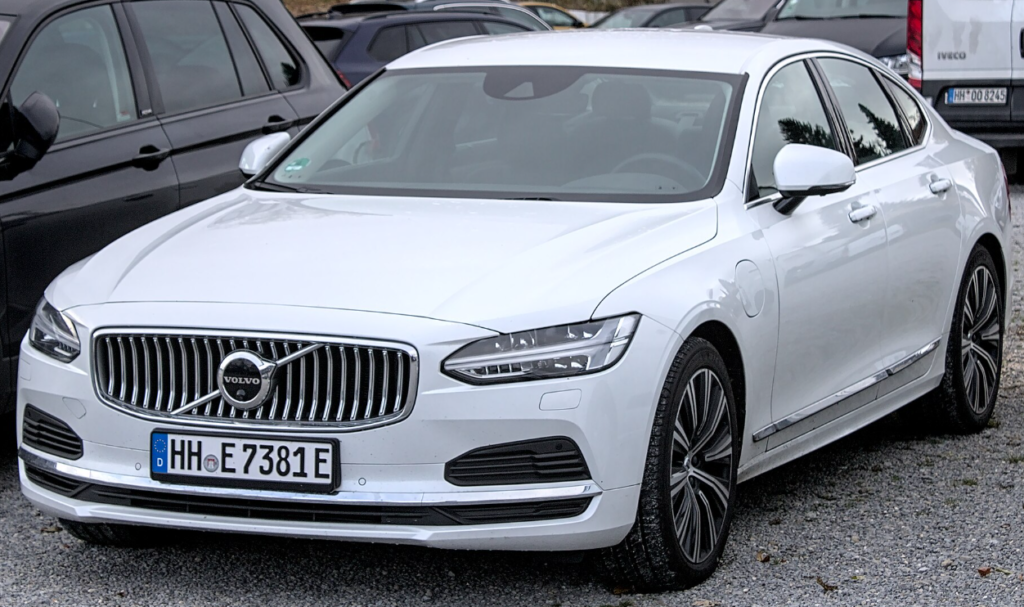
The Volvo S90 is one of the most distinctive luxury sedans on the market. With its elegant Scandinavian styling, comfortable interior, advanced safety technology, and impressive range of engines, it offers an appealing alternative to traditional German luxury cars.
But is the Volvo S90 reliable?
That's an important question, especially when we're considering a used luxury vehicle. While the Volvo S90 delivers excellent comfort and sophisticated technology, long-term ownership can involve expensive repairs, electronic faults, and maintenance costs that shouldn't be overlooked.
In this comprehensive Volvo S90 reliability guide, we'll examine owner experiences, reliability survey results, common mechanical problems, engine durability, maintenance expenses, and the best model years to consider.
We'll also explain which versions deserve extra attention and whether the Volvo S90 is a sensible purchase for drivers planning to keep their vehicle for many years.
Content in this publication
- Is the Volvo S90 a Reliable Car?
- Volvo S90 Reliability Ratings and Owner Surveys
- Most Common Volvo S90 Problems
- Volvo S90 Engine Reliability
- Volvo S90 Reliability by Model Year
- Best Volvo S90 Years to Buy Used
- Volvo S90 Years to Avoid or Inspect Carefully
- Volvo S90 Maintenance Costs
- How Many Miles Can a Volvo S90 Last?
- Is the Volvo S90 Reliable After 100,000 Miles?
- Volvo S90 Reliability vs BMW 5 Series
- Volvo S90 Reliability vs Mercedes-Benz E-Class
- Volvo S90 Reliability vs Lexus ES
- Volvo S90 Safety and Reliability
- Volvo S90 Recalls and Software Updates
- What to Check Before Buying a Used Volvo S90
- How to Improve Volvo S90 Reliability
- Is the Volvo S90 a Good Used Car?
- Volvo S90 Reliability: Pros and Cons
- Frequently Asked Questions About Volvo S90 Reliability
- Final Verdict: Is the Volvo S90 Reliable and Worth Buying?
Is the Volvo S90 a Reliable Car?
The Volvo S90 offers mixed reliability, with generally capable mechanical components but some notable weaknesses involving electronics, infotainment systems, and complex powertrains.
It can be a dependable luxury sedan when properly maintained, but it isn't necessarily the best choice for buyers seeking inexpensive, trouble-free ownership.
The S90's reliability depends on several factors:
- Model year and production date.
- Engine and transmission configuration.
- Previous maintenance history.
- Software updates and completed recalls.
- Mileage and driving conditions.
- Whether the vehicle has a mild-hybrid or plug-in hybrid system.
Some owners enjoy years of comfortable driving with relatively few problems. Others experience frustrating electronic malfunctions or costly repairs.
Our overall assessment is that the Volvo S90 can be a good used luxury car, provided we choose carefully and budget realistically for maintenance.
Volvo S90 Reliability Ratings and Owner Surveys
Before examining individual problems, it's useful to understand what available reliability data actually tells us.
What Car? Reliability Survey Results
A What Car? reliability survey published in 2026 gave the Volvo S90 and V90 a combined reliability score of 76.7%.
The survey found that 47% of the surveyed vehicles had experienced a fault.
Among the reported problems, the most prominent categories included:
| Problem category | Share of reported faults |
|---|---|
| Infotainment and satellite navigation | 24% |
| Non-engine electrical systems | 18% |
| 12-volt battery | 12% |
The survey also found that 44% of affected vehicles were out of service for more than a week.
However, 94% of reported repairs were completed without a charge to owners.
Importantly, these results combine the S90 sedan and V90 estate. They shouldn't be interpreted as an independent failure rate for the S90 alone.
Nevertheless, the results highlight a consistent concern: electrical systems can be a significant source of frustration.
RepairPal Reliability Information
RepairPal does not currently publish a statistically supported reliability rating specifically for the Volvo S90 because there isn't enough qualifying repair data.
For Volvo as a brand, RepairPal provides an overall reliability rating of 3.5 out of 5.
That means we should be careful about websites claiming the S90 has a precise reliability score without explaining their methodology.
What Do These Results Mean?
We can draw three practical conclusions.
First, the Volvo S90 is not automatically unreliable simply because some owners experience problems.
Second, modern electronics appear to deserve more attention than the car's basic structural design.
Third, buying a well-maintained example is considerably more important than relying on a general reliability score.
Most Common Volvo S90 Problems
Like almost every modern luxury sedan, the Volvo S90 has several issues that prospective buyers should understand.
Not every vehicle will experience these problems, and their frequency varies considerably between generations, engines, and markets.
1. Infotainment System Problems
Infotainment malfunctions are among the most frequently discussed Volvo S90 reliability concerns.
Earlier vehicles use Volvo's Sensus infotainment system, while later examples feature Google-based technology in supported markets.
Potential symptoms include:
- Touchscreen freezing or responding slowly.
- Unexpected system restarts.
- Bluetooth connection difficulties.
- Navigation errors.
- Intermittent backup camera displays.
- Temporary loss of certain vehicle settings.
These problems are particularly annoying because so many functions are integrated into the central display.
Fortunately, software updates can resolve some issues without requiring expensive hardware replacement.
However, persistent faults may involve modules, wiring, or display components that require professional diagnosis.
Our advice: During a test drive, operate every major touchscreen function and verify that the installed software is up to date.
2. Electrical System and Battery Issues
The S90 contains numerous electronic modules controlling everything from driver assistance to climate functions.
As a result, a weak 12-volt battery can sometimes create several apparently unrelated warnings.
Symptoms may include:
- Difficulty starting the vehicle.
- Random dashboard messages.
- Start-stop system becoming unavailable.
- Intermittent sensor warnings.
- Electrical accessories operating inconsistently.
A battery problem doesn't necessarily mean a major electrical failure.
Nevertheless, persistent faults should be investigated rather than assuming the battery is always responsible.
We recommend checking battery condition, charging performance, fault codes, and relevant service records.
3. Brake Wear and Vibration
Some Volvo S90 owners experience brake vibration, particularly when slowing down from higher speeds.
Possible causes include uneven brake-disc thickness, rotor surface problems, worn components, or other braking-system issues.
Common symptoms include:
- Pulsation through the brake pedal.
- Steering-wheel vibration during braking.
- Grinding or squealing noises.
- Uneven brake wear.
RepairPal identifies rear brake rotor vibration among the reported S90 problems.
Although brake maintenance is a normal ownership expense, repeated brake problems can become costly.
Before purchasing a used S90, we should inspect brake discs, pads, calipers, and service history.
4. Engine Cooling System Problems
Cooling-system faults are another concern worth checking, especially on older vehicles.
Potential issues include coolant leaks, deteriorated hoses, thermostat problems, and failures involving cooling-system components.
Warning signs include:
- Falling coolant levels.
- Engine temperature warnings.
- Sweet-smelling coolant near the engine.
- Visible fluid leaks.
- Unusual engine temperature fluctuations.
Ignoring coolant loss can eventually cause overheating and severe engine damage.
For that reason, any unexplained reduction in coolant level deserves immediate investigation.
5. Transmission Hesitation or Rough Shifting
Most modern Volvo S90 versions use an eight-speed automatic transmission.
The gearbox generally provides smooth operation, but some owners have reported shifting hesitation or rough engagement.
Possible symptoms include delayed acceleration, noticeable jolts when changing gears, and inconsistent low-speed shifting.
Not every hesitation indicates mechanical transmission failure. Software calibration, engine performance, mounts, and maintenance conditions can influence shifting behavior.
Still, we recommend testing the transmission when cold and after reaching normal operating temperature.
A used vehicle that consistently shifts harshly should be inspected before purchase.
6. Diesel EGR and Emissions Problems
Diesel-powered Volvo S90 models, particularly those sold in Europe, have additional emissions-related components.
These can include:
- Exhaust gas recirculation systems.
- Diesel particulate filters.
- Emissions sensors.
- AdBlue equipment on applicable versions.
Short journeys and repeated low-speed driving may contribute to emissions-system problems.
Potential warning signs include reduced power, increased fuel consumption, engine warning lights, and unsuccessful particulate-filter regeneration.
Certain older Volvo diesel vehicles were also affected by recalls involving intake-system components.
We should always confirm that the necessary recall repairs have been completed.
7. Suspension and Steering Wear
The Volvo S90 is a heavy luxury sedan, so suspension condition becomes increasingly important with mileage.
Components that may eventually require replacement include control-arm bushes, dampers, springs, and suspension joints.
Signs of deterioration include knocking noises over bumps, uneven tire wear, steering vibration, or reduced ride quality.
Vehicles equipped with optional suspension technology may have additional components to maintain.
An independent suspension inspection is particularly valuable when buying a higher-mileage example.
Volvo S90 Engine Reliability
Engine selection plays a major role in ownership costs.
The S90 has been offered with different petrol, diesel, mild-hybrid, and plug-in hybrid powertrains depending on the market.
Let's examine their relative strengths and potential disadvantages.
Volvo S90 T5 Reliability
The T5 uses a turbocharged four-cylinder petrol engine.
Compared with more complicated configurations, its main advantage is relatively straightforward mechanical design.
It generally avoids the additional supercharger hardware found on certain T6 versions and the high-voltage components associated with plug-in hybrids.
This can make the T5 an appealing option for buyers who prioritize simplicity.
However, it's still a modern direct-injection turbocharged engine that requires appropriate oil, regular servicing, and attention to cooling-system condition.
We consider a well-maintained T5 worth considering when simplicity matters more than maximum performance.
Volvo S90 T6 Reliability
The earlier T6 combines turbocharging and supercharging to deliver stronger performance.
This setup provides responsive acceleration across a broad engine-speed range.
However, greater mechanical complexity introduces more components that could eventually require repair.
You may be interested in reading Volvo S90 Years: Best, Worst & Complete Model Guide
Potential ownership concerns include:
- Cooling-system condition.
- Supercharger-related hardware.
- Engine sensors and accessories.
- Oil leaks.
- Transmission behavior.
The T6 shouldn't automatically be avoided, but it's important to examine its maintenance history carefully.
A properly serviced T6 can still be an attractive choice for drivers who appreciate stronger performance.
Volvo S90 B5 and B6 Reliability
The B5 and B6 designations refer to newer powertrain configurations used in different markets.
Many of these versions incorporate 48-volt mild-hybrid technology.
Mild-hybrid systems can improve engine restarting and energy recovery, contributing to smoother operation and potentially lower fuel consumption.
However, they also introduce additional electrical components.
These may include a 48-volt battery, integrated starter-generator, power electronics, and control modules.
Because long-term reliability data remains less extensive for newer versions, we should avoid assuming that a mild-hybrid S90 is automatically more dependable than an older petrol model.
Instead, confirm the condition of both the conventional electrical system and mild-hybrid components.
Volvo S90 T8 Recharge Reliability
The T8 plug-in hybrid combines a petrol engine with an electric propulsion system and a rechargeable high-voltage battery.
Its main advantages are strong acceleration and the ability to complete some journeys using electric power.
However, it is also one of the most technically complex S90 configurations.
Potential long-term costs involve:
- High-voltage battery components.
- Charging equipment.
- Cooling systems.
- Electric drive components.
- Hybrid control electronics.
These systems are not guaranteed to fail, but repairs outside warranty can be expensive.
When considering a used T8 Recharge, we recommend obtaining a battery health assessment and checking the hybrid system with appropriate diagnostic equipment.
For drivers who rarely charge the battery, the additional complexity may not deliver enough practical benefit.
Volvo S90 D4 and D5 Diesel Reliability
The D4 and D5 diesel engines are attractive for drivers covering substantial annual motorway mileage.
They generally deliver strong torque and good fuel economy.
However, diesel emissions equipment introduces additional maintenance risks.
Buyers should check EGR operation, particulate-filter condition, coolant levels, and evidence of any emissions-related repairs.
Timing-belt requirements should also be verified against the exact engine code and maintenance schedule.
For frequent long-distance driving, a properly maintained diesel S90 can make sense.
For predominantly short urban journeys, a petrol version may be a more practical choice.
Volvo S90 Reliability by Model Year
Not all S90 model years carry the same ownership considerations.
The following table summarizes our buying guidance for the modern generation, introduced in 2016 in some markets and sold from the 2017 model year in the United States.
| Model years | Reliability considerations | Buying advice |
|---|---|---|
| 2017–2018 | Early-production technology, aging components, and some reported faults | Inspect carefully |
| 2019–2020 | Potentially attractive used value, but condition varies | Worth considering |
| 2021 | Mature versions of the established design | Strong candidate |
| 2022–2023 | Newer technology and updated powertrains | Check software and hybrid systems |
| 2024–2025 | Newer vehicles with less long-term aging evidence | Attractive with warranty and recall checks |
This table represents practical purchasing guidance, not an independently verified year-by-year failure ranking.
Mileage, maintenance, regional specifications, and recall history can matter more than production year alone.
Best Volvo S90 Years to Buy Used
If we were shopping for a used Volvo S90, we'd start by examining well-maintained examples from 2020 through 2023.
2020–2021 Models
These vehicles can offer an appealing balance between equipment, comfort, and used-market pricing.
They also belong to a relatively mature phase of the S90's production history.
However, their current age means we should pay particular attention to batteries, suspension wear, fluid leaks, and accumulated maintenance needs.
2022–2023 Models
These newer vehicles may offer updated technology and revised powertrains.
Their main advantage is generally lower age-related wear compared with earlier examples at similar mileage.
Nevertheless, buyers should inspect infotainment performance, electrical systems, and hybrid components where fitted.
Which Year Would We Choose?
For buyers prioritizing value, a carefully maintained 2020 or 2021 S90 can be particularly appealing.
For buyers who prefer more recent technology and potentially remaining warranty coverage, a 2022 or 2023 model may be more suitable.
Our preferred vehicle would be the one with the clearest maintenance records, a clean inspection, and no unresolved recalls.
Volvo S90 Years to Avoid or Inspect Carefully
The 2017 and 2018 model years deserve additional scrutiny.
These early versions are now older, and some buyers have reported infotainment, electrical, or drivetrain concerns.
That doesn't mean every 2017 or 2018 Volvo S90 is unreliable.
A well-maintained early example could prove more dependable than a neglected newer vehicle.
However, we would be cautious about purchasing one with:
- Missing service records.
- Persistent infotainment faults.
- Rough transmission shifting.
- Unexplained coolant loss.
- Multiple unresolved warning lights.
- Outstanding safety recalls.
Rather than completely avoiding particular years, we recommend avoiding poorly maintained examples.
Volvo S90 Maintenance Costs
The Volvo S90 belongs to the luxury-car segment, so we shouldn't expect economy-car maintenance expenses.
Although some independent specialists can offer competitive servicing, genuine parts, specialist labor, and advanced diagnostic work may increase costs.
Typical Maintenance Expenses
Below are illustrative US ownership expenses. These are planning estimates rather than guaranteed Volvo dealer prices.
| Maintenance item | Illustrative cost (USD) |
|---|---|
| Routine engine oil service | $150–$300 |
| Brake pads and discs, one axle | $350–$900 |
| 12V battery replacement | $250–$500 |
| Wheel alignment | $100–$220 |
| Premium tire set | $700–$1,400 |
| Larger scheduled service | $400–$900+ |
Actual costs vary by location, engine, model year, workshop, and parts required.
Major electronic, transmission, suspension, or plug-in hybrid repairs can exceed these routine figures substantially.
How Often Does the Volvo S90 Need Servicing?
For many recent US-market petrol and hybrid models, Volvo uses scheduled maintenance intervals of approximately 10,000 miles or one year.
The correct schedule always depends on the vehicle's model year, engine, and market.
Regular maintenance should include oil and filter replacement, brake inspections, tire checks, fluid inspections, and any time-based services specified by Volvo.
We should never assume that low mileage eliminates the need for annual servicing.
Is Volvo S90 Maintenance Expensive?
Compared with mainstream sedans, yes.
Compared with certain premium European alternatives, the difference may be less dramatic.
The important consideration is unexpected repair cost rather than routine servicing alone.
We recommend maintaining a separate repair budget when purchasing an older luxury vehicle, particularly once its original warranty has expired.
How Many Miles Can a Volvo S90 Last?
A common question is whether the Volvo S90 can reach 150,000 or even 200,000 miles.
The answer is that high mileage is possible, but there is no guaranteed lifespan.
A well-maintained modern engine and transmission may remain serviceable for many years.
However, overall vehicle durability also depends on electronic modules, suspension components, emissions systems, and other expensive equipment.
For buying and budgeting purposes, we can consider these mileage stages:
| Mileage | Main considerations |
|---|---|
| Under 50,000 miles | Service records, software updates, tires, brakes |
| 50,000–100,000 miles | Suspension wear, battery age, fluid leaks |
| 100,000–150,000 miles | More extensive age-related repairs and scheduled component replacements |
| Over 150,000 miles | Greater importance of detailed history and specialist inspection |
These are inspection guidelines, not predicted failure milestones.
If we're considering an S90 with more than 100,000 miles, a comprehensive pre-purchase inspection becomes especially valuable.
Is the Volvo S90 Reliable After 100,000 Miles?
A high-mileage Volvo S90 can still be a good vehicle, but ownership risk generally increases as components age.
We should pay close attention to evidence of preventive maintenance.
An S90 with 120,000 miles and complete records may be a better purchase than one with 70,000 miles and an uncertain past.
Important checks include engine oil consumption, cooling-system integrity, transmission performance, suspension condition, and electrical diagnostics.
For plug-in hybrids, battery and charging-system health deserve additional attention.
We should also consider the relationship between purchase price and potential repair expenses.
An inexpensive used luxury sedan can quickly become expensive if several major components need replacement.
Volvo S90 Reliability vs BMW 5 Series
The BMW 5 Series is one of the S90's most obvious competitors.
Both offer comfortable long-distance driving, premium interiors, and advanced technology.
However, their ownership characteristics differ.
The BMW offers a broader range of engines and often emphasizes sporty handling.
The Volvo focuses more on relaxed comfort, distinctive design, and a minimalist cabin.
In reliability terms, the comparison depends heavily on exact generations and engines.
A well-maintained BMW with a proven engine configuration may be preferable to a neglected S90, while a carefully maintained Volvo may be a better purchase than a poorly serviced BMW.
We would compare specific vehicles rather than assuming either brand is universally more dependable.
Volvo S90 Reliability vs Mercedes-Benz E-Class
The Mercedes-Benz E-Class is another important luxury-sedan rival.
You may be interested in readingVolvo S90 Years: Best, Worst & Complete Model GuideYou may be interested in reading
 Toyota Corolla AE86 Engine Swap – The Ultimate Guide
Both vehicles provide excellent highway comfort and sophisticated safety and convenience features.
However, the E-Class also uses complex electronic systems, advanced engines, and equipment that can become expensive to maintain.
The Volvo may appeal to buyers who value understated styling and a distinctive interior.
The Mercedes may offer a wider choice of versions depending on the market.
For used buyers, maintenance history and the exact engine specification should take priority over badge reputation.
Volvo S90 Reliability vs Lexus ES
The Lexus ES is particularly relevant for drivers who place long-term dependability above sporty performance or design.
Lexus has a strong general reputation for reliability, particularly with established hybrid powertrains.
The Volvo S90 offers a different combination of technology, styling, and driving character.
However, the Lexus ES may be the more reassuring choice for buyers whose main goal is minimizing unexpected repair expenses.
We would lean toward the Lexus for predictable long-term ownership, while choosing the Volvo for its Scandinavian luxury experience.
Volvo S90 Safety and Reliability
Volvo's reputation for safety is one of the main reasons people consider the S90.
The model introduced numerous driver-assistance and occupant-protection technologies, with equipment varying according to production year and market.
Available features have included automatic emergency braking, lane-keeping assistance, adaptive cruise control, and blind-spot monitoring.
The S90 also achieved a five-star Euro NCAP safety rating in testing published in 2017.
However, safety and reliability are not the same thing.
A vehicle can provide excellent crash protection while still experiencing software problems or expensive mechanical repairs.
We should evaluate both qualities independently.
Volvo S90 Recalls and Software Updates
Checking safety recalls is an essential part of assessing Volvo S90 reliability.
Volvo has issued recalls affecting certain S90 vehicles, including software-related issues.
Rearview Camera Recall
Certain 2022–2025 US-market S90 vehicles were included in a recall involving the rearview camera image potentially failing to appear when reversing.
The remedy involves a software update, and recall applicability depends on the vehicle identification number.
2025 Plug-In Hybrid Braking Recall
In 2025, the US National Highway Traffic Safety Administration issued an urgent warning involving certain Volvo plug-in hybrid and electric vehicles.
The affected list included the 2025 Volvo S90 plug-in hybrid.
Under specific conditions, a software defect could cause loss of braking capability while travelling downhill.
Owners of affected, unrepaired vehicles were instructed to avoid regenerative braking modes and obtain the recall remedy.
This is a serious safety matter rather than a routine reliability inconvenience.
Before purchasing an S90 Recharge, we should confirm that every applicable safety recall has been completed.
How to Check Recalls
We recommend checking the vehicle's VIN with the official recall authority for the country where it is registered.
In the United States, owners can use the NHTSA recall database or contact an authorized Volvo dealer.
Never assume a recall is complete simply because the seller says the vehicle has been serviced.
What to Check Before Buying a Used Volvo S90
A careful inspection can dramatically improve our chances of choosing a dependable used vehicle.
Here's the checklist we'd use.
1. Verify the Maintenance History
Look for invoices showing oil changes, inspections, scheduled services, and completed repairs.
A complete history is more convincing than a seller's general assurance that the vehicle has been maintained.
2. Test the Infotainment System
Check navigation, Bluetooth, cameras, climate controls, audio functions, and touchscreen response.
Pay attention to unexpected restarts or warning messages.
3. Inspect the Engine
Look for coolant leaks, oil leaks, unusual noises, and signs of overheating.
Check whether the engine runs smoothly both cold and warm.
4. Test the Transmission
Drive the car in stop-and-go traffic and at highway speeds.
Shifts should be reasonably smooth and consistent.
Persistent hesitation, slipping, or harsh engagement deserves professional investigation.
5. Examine the Suspension
Listen for knocking noises over uneven roads.
Check tire wear and ask whether suspension components have previously been replaced.
6. Check Hybrid Components
For mild-hybrid and plug-in hybrid versions, request an appropriate diagnostic inspection.
On plug-in hybrids, verify charging performance and have high-voltage battery condition assessed by a qualified technician.
7. Confirm Recall Completion
Use the VIN to verify whether any safety recalls remain open.
8. Get an Independent Inspection
An experienced Volvo specialist can identify problems that may be missed during an ordinary test drive.
This small upfront expense can help prevent much larger repair bills.
How to Improve Volvo S90 Reliability
Although we cannot prevent every fault, good maintenance practices can reduce avoidable problems.
Follow the Correct Service Schedule
Use the maintenance schedule specified for the exact vehicle.
Regular oil changes and inspections are essential for turbocharged engines.
Use the Correct Fluids
Engine oil, coolant, brake fluid, and transmission-related service products should meet Volvo's specifications.
Incorrect fluids can contribute to expensive problems.
Address Warning Lights Quickly
Ignoring a persistent warning light can turn a relatively minor issue into a more serious repair.
Have warning messages diagnosed rather than repeatedly clearing fault codes.
Maintain the Battery
Modern vehicles rely heavily on stable electrical power.
A healthy 12-volt battery and charging system help avoid unexpected electrical interruptions.
Keep Software Updated
Volvo periodically releases software improvements and corrective updates.
Keeping the vehicle updated can improve functionality and resolve certain known faults.
Choose a Qualified Workshop
Modern Volvos often require specialized diagnostic equipment.
A workshop experienced with Volvo vehicles can provide more accurate diagnosis and appropriate maintenance.
Is the Volvo S90 a Good Used Car?
Yes, the Volvo S90 can be an excellent used luxury sedan for the right buyer.
Its attractive styling, supportive seats, quiet cabin, and sophisticated driving experience make it appealing.
It also offers something different from the more familiar German luxury choices.
However, the S90 is best suited to drivers who understand that premium-car ownership comes with premium-car maintenance responsibilities.
We would particularly consider one if it had a complete service history, a clean diagnostic inspection, and a purchase price that leaves room for future maintenance.
We would be less enthusiastic about a neglected, high-mileage example with unresolved electronic problems or an uncertain repair history.
Volvo S90 Reliability: Pros and Cons
| Advantages | Disadvantages |
|---|---|
| Comfortable and refined interior | Potential electronic faults |
| Strong safety engineering | Premium maintenance expenses |
| Attractive Scandinavian design | Some infotainment reliability concerns |
| Range of efficient powertrains | Complex hybrid configurations |
| Good long-distance comfort | Expensive specialist repairs possible |
| Appealing used luxury value | Long-term reliability varies by specification |
Overall, we believe the strengths of the S90 can outweigh its weaknesses when we purchase the right example.
Frequently Asked Questions About Volvo S90 Reliability
1. Is the Volvo S90 more reliable than a BMW?
There isn't a universal answer. Reliability depends on the exact BMW 5 Series generation, engine, model year, and maintenance history being compared. The Volvo S90 has documented electrical and infotainment concerns, while BMW ownership can also involve expensive repairs. We recommend comparing individual vehicles and their service records.
2. What is the most reliable Volvo S90 engine?
The T5 petrol engine is an attractive choice for buyers who prefer a comparatively straightforward powertrain. However, there isn't enough consistent model-specific evidence to establish it as the statistically most reliable S90 engine. A well-maintained T5, T6, diesel, or hybrid may provide dependable service, depending on its condition.
3. What are the worst Volvo S90 years?
The 2017 and 2018 model years deserve extra attention because they are early examples of the modern generation and may have aging or technology-related issues. However, we wouldn't automatically reject them. Maintenance history, diagnostic results, and recall completion are more useful than a blanket model-year rule.
4. Is the Volvo S90 expensive to maintain?
Yes, compared with mainstream sedans. Routine servicing may be manageable, but premium components, electronic diagnostics, and advanced hybrid repairs can increase ownership expenses. Using an experienced independent Volvo specialist may help reduce some out-of-warranty costs.
5. Can a Volvo S90 last 200,000 miles?
It's possible for a well-maintained Volvo S90 to reach 200,000 miles, but that shouldn't be treated as a guaranteed lifespan. At higher mileage, the condition of the engine, transmission, electrical systems, suspension, and hybrid components becomes increasingly important. Thorough maintenance and timely repairs are essential.
Final Verdict: Is the Volvo S90 Reliable and Worth Buying?
The Volvo S90 is a sophisticated luxury sedan with plenty to offer, but its reliability record is not flawless.
Its biggest concerns involve electrical systems, infotainment issues, and the potential repair costs associated with complex powertrains.
That said, the S90 can still provide a comfortable and satisfying ownership experience when properly maintained.
For buyers looking at used examples, we recommend prioritizing complete service history, verified recall repairs, and a professional pre-purchase inspection.
A well-maintained 2020–2023 model is a sensible place to begin searching, while earlier examples deserve closer scrutiny.
If our absolute priority is low-cost, predictable ownership, alternatives such as the Lexus ES may be more appealing.
But if we value distinctive Scandinavian styling, advanced safety engineering, and excellent long-distance comfort, the Volvo S90 remains a compelling luxury sedan.
You may be interested in readingVolvo S90 Years: Best, Worst & Complete Model GuideYou may be interested in reading
Toyota Corolla AE86 Engine Swap – The Ultimate GuideYou may be interested in reading
 Does the Toyota Camry Have CVT Transmission?
Ultimately, the key to Volvo S90 reliability is choosing the right vehicle and maintaining it properly rather than relying on brand reputation alone.
If you want to know other articles similar to Volvo S90 Reliability: Problems, Costs & Best Years you can visit the category Blog.
Is Haval Jolion a Good Car? Honest Review, Reliability, Pros and Cons
How to Start Haval Jolion With Spare Key: Complete Guide
How to Calculate Per Diem on an Auto Loan

How to Calculate the Residual Value of a Car

Is the Honda Passport Selling Well? Sales Numbers Tell the Story

Is Nissan Rogue a Good Car? Reliability, Pros, Cons & What to Know
Leave a Reply
More content of your interest