
Nissan Qashqai Fuel Tank Capacity: Complete Guide

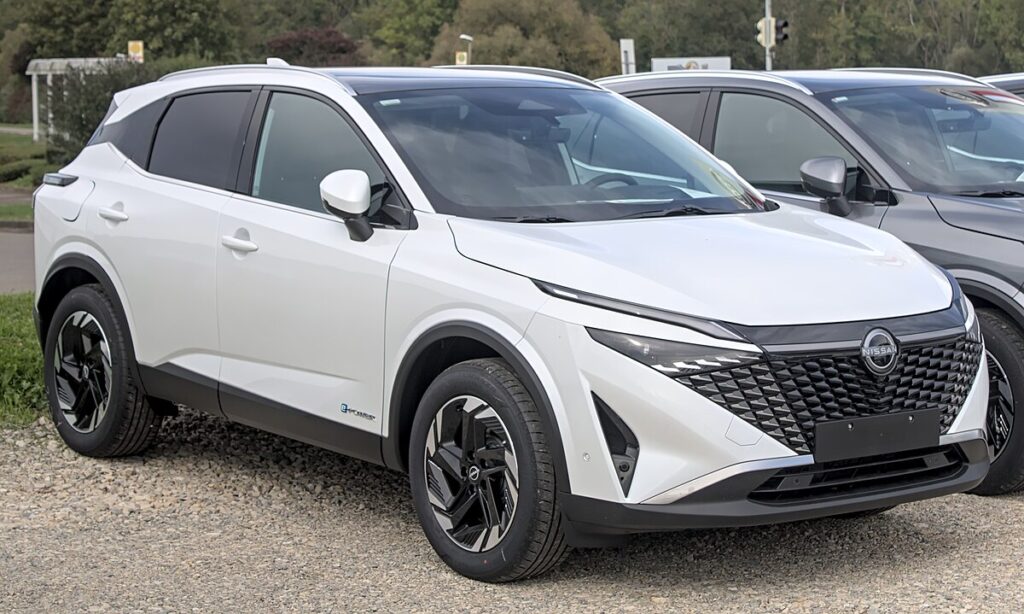
The Nissan Qashqai fuel tank capacity varies depending on the model year, engine, generation, and country where the vehicle was sold. While many modern Qashqai models feature a 55-litre fuel tank, certain older petrol and diesel versions have a larger 65-litre capacity.
Knowing the exact fuel tank size is useful when planning long journeys, calculating running costs, comparing fuel efficiency, or simply understanding how far we can travel before needing to refuel.
In this comprehensive guide, we'll explore the Nissan Qashqai fuel tank capacity across different generations, compare petrol, diesel, mild-hybrid, and e-POWER versions, and calculate how much driving range we can expect from a full tank.
Content in this publication
- What Is the Nissan Qashqai Fuel Tank Capacity?
- Nissan Qashqai Fuel Tank Capacity by Generation
- Nissan Qashqai Fuel Tank Size by Engine
- Nissan Qashqai Petrol Fuel Tank Capacity
- Nissan Qashqai Diesel Fuel Tank Capacity
- Nissan Qashqai e-POWER Fuel Tank Capacity
- Nissan Qashqai Mild-Hybrid Fuel Tank Capacity
- Nissan Qashqai Fuel Tank Capacity in Gallons
- How Far Can a Nissan Qashqai Go on a Full Tank?
- What Affects Nissan Qashqai Fuel Range?
- How Much Does It Cost to Fill a Nissan Qashqai?
- Nissan Qashqai Fuel Warning Light: How Much Is Left?
- Why Does My Qashqai Take Less Fuel Than Expected?
- How to Check Your Nissan Qashqai Fuel Tank Capacity
- Nissan Qashqai Fuel Tank Capacity in the UK
- Nissan Qashqai Fuel Tank Capacity in Australia
- Does Fuel Tank Capacity Affect Fuel Economy?
- Tips to Get More Miles From a Nissan Qashqai Tank
- Common Nissan Qashqai Fuel Tank Problems
- Frequently Asked Questions
- Conclusion
What Is the Nissan Qashqai Fuel Tank Capacity?
The latest Nissan Qashqai models generally have a 55-litre (14.5 US gallon) fuel tank, including current mild-hybrid petrol and e-POWER hybrid versions.
However, earlier generations were available with different capacities.
Some first-generation models had a 65-litre tank, while second-generation vehicles could have either a 55-litre or 65-litre tank depending on the engine, drivetrain, and market.
Here's a quick comparison:
| Nissan Qashqai generation | Model years | Fuel tank capacity |
|---|---|---|
| First generation (J10) | 2007–2013 | Typically 65 litres |
| Second generation (J11) | 2014–2021 | 55–65 litres |
| Third generation (J12) | 2021–2026 | 55 litres |
| Qashqai e-POWER | 2022–2026, market-dependent | 55 litres |
| Qashqai mild hybrid | 2021–2026, market-dependent | 55 litres |
These figures cover commonly documented configurations rather than every regional specification.
The important takeaway is that not every Nissan Qashqai has the same fuel tank capacity, particularly when comparing vehicles from different generations.
Nissan Qashqai Fuel Tank Capacity by Generation
Let's examine how the fuel tank capacity has changed since the Qashqai was introduced.
First-Generation Nissan Qashqai (2007–2013)
The original Nissan Qashqai, known internally as the J10, helped establish the compact crossover SUV segment.
It was offered with several petrol and diesel engines, including:
- 1.6-litre petrol
- 2.0-litre petrol
- 1.5 dCi diesel
- 1.6 dCi diesel
- 2.0 dCi diesel
Many first-generation Qashqai specifications list a 65-litre fuel tank, providing a relatively generous capacity for a compact crossover.
This larger tank was particularly useful for drivers covering long motorway distances.
For example, a Qashqai averaging 6.5 litres per 100 kilometres could theoretically travel approximately 1,000 kilometres using 65 litres.
Actual range would generally be lower once we account for fuel reserves and real-world driving conditions.
Nissan Qashqai+2 Fuel Tank Capacity
The Qashqai+2 was an extended version of the original model featuring seven seats.
Its fuel tank capacity was also 65 litres in documented versions, including the 2013 2.0-litre model.
Despite its larger body and additional seating, the Qashqai+2 did not necessarily have a larger fuel tank than the standard first-generation Qashqai.
Second-Generation Nissan Qashqai (2014–2021)
The second-generation Qashqai, known as the J11, introduced a more modern design, improved fuel efficiency, and several new engine options.
This generation is particularly important because fuel tank capacities differed between configurations.
Many UK-market front-wheel-drive versions used a 55-litre tank, including several smaller petrol and diesel engines.
However, certain variants were equipped with a 65-litre tank.
For example, specifications for the later J11 show a 65-litre tank on the 1.7 dCi four-wheel-drive version, while the corresponding front-wheel-drive version used a 55-litre tank.
Some international 2.0-litre petrol versions also had 65-litre tanks.
Consequently, we should never assume that every 2014–2021 Qashqai has the same capacity.
Third-Generation Nissan Qashqai (2021–2026)
The third-generation Qashqai, internally designated J12, introduced substantial improvements in efficiency, technology, and electrification.
Modern UK and Australian specifications list a 55-litre fuel tank.
This applies to the current mild-hybrid and e-POWER powertrains covered by Nissan's published technical specifications.
Although 55 litres is smaller than the capacity of some older versions, the improvements in fuel consumption help compensate for the difference.
For drivers considering a newer Qashqai, the key question is not simply how much fuel it holds, but how efficiently it uses that fuel.
Nissan Qashqai Fuel Tank Size by Engine
Engine selection has historically influenced the Qashqai's fuel tank capacity.
The following table provides examples of documented configurations.
| Engine | Generation | Fuel tank |
|---|---|---|
| 1.6 petrol | J10 | Typically 65 L |
| 2.0 petrol | J10 | Typically 65 L |
| 1.5 dCi diesel | J10 | Typically 65 L |
| 1.2 DIG-T petrol | J11, selected European models | 55 L |
| 1.5 dCi diesel | J11, selected European models | 55 L |
| 1.3 DIG-T petrol | J11, 2019 UK specification | 55 L |
| 1.7 dCi diesel FWD | J11, 2019 UK specification | 55 L |
| 1.7 dCi diesel 4WD | J11, 2019 UK specification | 65 L |
| 1.3 mild hybrid | J12 | 55 L |
| 1.5 e-POWER hybrid | J12 | 55 L |
These examples illustrate why engine size alone is not a reliable way to identify tank capacity.
Transmission, driven wheels, model year, and regional specifications may also matter.
For an exact match, we should check the technical documentation for our particular vehicle.
Nissan Qashqai Petrol Fuel Tank Capacity
Petrol-powered Qashqai models have been offered with several different tank sizes over the years.
Earlier 2.0-litre petrol versions commonly featured a 65-litre fuel tank.
By contrast, many later European 1.2 DIG-T and 1.3 DIG-T models were equipped with 55-litre tanks.
Does a Larger Petrol Engine Mean a Larger Tank?
Not necessarily.
A larger engine may consume more fuel, but manufacturers do not always increase the tank capacity to compensate.
Fuel tank design depends on several factors, including:
- Vehicle platform and underbody layout
- Available packaging space
- Engine and drivetrain configuration
- Vehicle weight targets
- Emissions requirements
- Intended market
Therefore, checking the exact engine and model year is more reliable than estimating capacity from engine displacement.
Nissan Qashqai Diesel Fuel Tank Capacity
Diesel-powered Nissan Qashqai models were particularly popular in the UK and across Europe.
Their reputation for economical motorway driving made them attractive to commuters and families travelling long distances.
Depending on the generation and version, diesel Qashqai models could have either a 55-litre or 65-litre fuel tank.
For example, some second-generation 1.5 dCi models featured a 55-litre tank, while the later 1.7 dCi four-wheel-drive version was available with 65 litres.
Why Diesel Versions Can Travel Further
Diesel engines often deliver lower fuel consumption than comparable traditional petrol engines, particularly on longer journeys.
Suppose we compare two hypothetical Qashqai vehicles:
| Specification | Petrol example | Diesel example |
|---|---|---|
| Tank capacity | 55 L | 55 L |
| Average consumption | 7.0 L/100 km | 5.0 L/100 km |
| Theoretical range | 786 km | 1,100 km |
Despite having identical fuel tank capacities, the diesel vehicle travels considerably further in this example.
These are illustrative consumption figures, not official values for specific engine variants.
Real-world results will depend on driving conditions, maintenance, and the exact powertrain.
Nissan Qashqai e-POWER Fuel Tank Capacity
The Nissan Qashqai e-POWER uses a different hybrid system from a conventional mild hybrid.
Its wheels are powered by an electric motor, while a petrol engine generates electricity to support the system.
Unlike a plug-in hybrid, the Qashqai e-POWER does not require charging from an external power source.
Instead, we simply refuel it with petrol.
How Many Litres Does the Qashqai e-POWER Hold?
Current Nissan Qashqai e-POWER specifications list a 55-litre petrol tank.
That means the vehicle can offer significant driving range without requiring an unusually large fuel tank.
How Far Can the e-POWER Travel on One Tank?
Nissan's 2026 UK technical specifications list combined fuel consumption of approximately 4.3–4.5 L/100 km for the newer e-POWER powertrain.
Using a 55-litre fuel tank, the theoretical range is:
At 4.3 L/100 km:
55 ÷ 4.3 × 100 = 1,279 km
At 4.5 L/100 km:
55 ÷ 4.5 × 100 = 1,222 km
This produces a theoretical combined-cycle range of approximately 1,220–1,280 kilometres.
These figures are mathematical estimates based on official consumption ratings, rather than guaranteed real-world distances.
In practice, it is sensible to plan for less range and refuel before the tank gets close to empty.
Why e-POWER Can Be More Efficient in Cities
The e-POWER system can recover energy during deceleration and braking.
It can also manage the petrol engine's operation independently from the direct mechanical demands of driving the wheels.
This helps improve efficiency in certain driving conditions, particularly stop-and-go traffic.
However, fuel consumption will still vary with driving speed, temperature, terrain, and vehicle load.
Nissan Qashqai Mild-Hybrid Fuel Tank Capacity
The Nissan Qashqai mild hybrid uses a petrol engine supported by a small electrical system.
Unlike e-POWER, the petrol engine provides mechanical drive to the wheels.
The electrical assistance is designed to improve efficiency and support functions such as stop-start operation.
Current UK specifications list a 55-litre tank for the mild-hybrid Qashqai.
Mild Hybrid vs e-POWER Fuel Range
Although both powertrains use the same nominal fuel tank capacity, their fuel economy differs.
For the 2026 UK specification:
| Specification | Mild hybrid | e-POWER |
|---|---|---|
| Fuel tank | 55 litres | 55 litres |
| Fuel type | Petrol | Petrol |
| Combined consumption | Approximately 6.2–6.4 L/100 km | Approximately 4.3–4.5 L/100 km |
| External charging | Not required | Not required |
| Wheel propulsion | Petrol engine | Electric motor |
The e-POWER system offers a greater theoretical range under the published combined-cycle figures because it uses less fuel per kilometre.
Whether that advantage is replicated in everyday driving depends on how and where the vehicle is used.
Nissan Qashqai Fuel Tank Capacity in Gallons
Fuel tank capacities are normally published in litres in the UK, Europe, and Australia.
However, some drivers prefer gallons, especially when comparing specifications from international websites.
It is important to distinguish between US gallons and UK imperial gallons.
| Fuel capacity | US gallons | UK gallons |
|---|---|---|
| 55 litres | 14.5 | 12.1 |
| 60 litres | 15.9 | 13.2 |
| 65 litres | 17.2 | 14.3 |
The 60-litre row is included for conversion reference, not as a confirmed Qashqai tank specification.
When comparing fuel economy in miles per gallon, we must also establish whether the figure uses the UK or US measurement system.
A UK mpg figure is numerically higher than a US mpg figure for the same actual fuel consumption.
How Far Can a Nissan Qashqai Go on a Full Tank?
Fuel range depends on two main variables:
- The quantity of usable fuel.
- The vehicle's average fuel consumption.
We can estimate range using the following formula:
Driving range (km) = Fuel tank capacity (L) ÷ Fuel consumption (L/100 km) × 100
For example, if we have a Qashqai with a 55-litre tank averaging 6.0 L/100 km:
55 ÷ 6.0 × 100 = 917 km
This represents theoretical range if the entire nominal fuel capacity were consumed.
Actual trips should include a sensible reserve.
Estimated Range With a 55-Litre Tank
| Average consumption | Theoretical range |
|---|---|
| 4.0 L/100 km | 1,375 km |
| 4.5 L/100 km | 1,222 km |
| 5.0 L/100 km | 1,100 km |
| 5.5 L/100 km | 1,000 km |
| 6.0 L/100 km | 917 km |
| 6.5 L/100 km | 846 km |
| 7.0 L/100 km | 786 km |
| 7.5 L/100 km | 733 km |
| 8.0 L/100 km | 688 km |
This table applies mathematically to any vehicle with a nominal 55-litre tank.
It is not a list of official fuel economy figures for every Nissan Qashqai engine.
Estimated Range With a 65-Litre Tank
Older Qashqai versions with a 65-litre tank have more fuel storage capacity.
| Average consumption | Theoretical range |
|---|---|
| 5.0 L/100 km | 1,300 km |
| 5.5 L/100 km | 1,182 km |
| 6.0 L/100 km | 1,083 km |
| 6.5 L/100 km | 1,000 km |
| 7.0 L/100 km | 929 km |
| 7.5 L/100 km | 867 km |
| 8.0 L/100 km | 813 km |
| 8.5 L/100 km | 765 km |
| 9.0 L/100 km | 722 km |
A larger tank can reduce the frequency of refuelling stops.
However, it does not necessarily reduce fuel costs, because fuel economy determines how much petrol or diesel we consume over a given distance.
What Affects Nissan Qashqai Fuel Range?
Even two identical Nissan Qashqai vehicles can deliver noticeably different fuel economy.
Several factors affect the distance we can travel between refuelling stops.
Driving Speed
Driving at higher motorway speeds increases aerodynamic resistance.
As speed rises, the engine or hybrid system generally needs more energy to maintain momentum.
Consequently, sustained high-speed driving can substantially reduce fuel range.
City Traffic
Frequent stopping and accelerating can increase petrol consumption.
However, hybrid vehicles such as the Qashqai e-POWER may recover some energy during braking, helping to reduce fuel use in these conditions.
Tyre Pressure
Underinflated tyres increase rolling resistance.
Maintaining the manufacturer's recommended tyre pressure can improve efficiency, tyre life, and safety.
Vehicle Weight
A heavily loaded Qashqai requires more energy to accelerate and climb hills.
Roof boxes and other external accessories may also increase aerodynamic drag.
Weather Conditions
Cold weather can increase fuel consumption because engines take longer to reach efficient operating temperatures.
Heating, air conditioning, strong winds, and wet roads can also influence efficiency.
Vehicle Maintenance
Dirty filters, neglected servicing, mechanical faults, or unsuitable tyres can negatively affect fuel consumption.
Keeping the vehicle in good condition helps us achieve more consistent fuel economy.
How Much Does It Cost to Fill a Nissan Qashqai?
The cost of filling a Nissan Qashqai depends on the fuel tank capacity and the local price per litre.
We can calculate it using:
Refuelling cost = Litres added × Price per litre
Let's use an illustrative petrol price of £1.50 per litre.
| Fuel added | Cost at £1.50/L |
|---|---|
| 20 litres | £30.00 |
| 30 litres | £45.00 |
| 40 litres | £60.00 |
| 45 litres | £67.50 |
| 50 litres | £75.00 |
| 55 litres | £82.50 |
| 65 litres | £97.50 |
These calculations are examples and do not represent current pump prices.
Also, the actual cost of a normal fill-up is usually lower than the cost of the entire tank capacity because some fuel remains when we stop to refuel.
Monthly Fuel Cost Example
Suppose we drive 1,000 kilometres per month in a Qashqai averaging 6.0 L/100 km.
Monthly consumption would be:
1,000 × 6.0 ÷ 100 = 60 litres
At £1.50 per litre:
60 × £1.50 = £90
Our estimated monthly fuel cost would therefore be £90.
If another Qashqai averages 4.5 L/100 km over the same distance, it would consume 45 litres, costing £67.50.
The hypothetical saving is £22.50 per month.
This demonstrates why fuel efficiency can be more important than fuel tank size when comparing running costs.
Nissan Qashqai Fuel Warning Light: How Much Is Left?
The fuel warning light is designed to alert us when the remaining fuel supply is low.
However, the amount left when the warning appears is not necessarily identical across different Qashqai generations.
The warning threshold may depend on the vehicle's calibration, fuel level sensor, and driving conditions.
We should therefore avoid assuming that the warning light always means there are exactly five, seven, or ten litres remaining.
Can We Drive After the Fuel Light Comes On?
Usually, some fuel remains when the low-fuel warning appears.
Nevertheless, the exact distance available is uncertain.
Driving on steep gradients, around corners, or with fluctuating fuel levels can affect fuel delivery and gauge readings.
The safest approach is to locate a fuel station as soon as practical instead of relying on an estimated emergency range.
Is Driving With a Nearly Empty Tank Bad?
Frequently operating a vehicle with very little fuel is not recommended.
Possible consequences include:
- Running out of fuel unexpectedly
- Difficulties restarting after fuel starvation
- Additional complications for certain diesel fuel systems
- Reduced flexibility when traffic or road closures occur
It is better to refuel before the vehicle reaches a critically low fuel level.
Why Does My Qashqai Take Less Fuel Than Expected?
Some owners notice that their Nissan Qashqai accepts significantly less fuel than the advertised tank capacity.
For example, a model with a 55-litre tank might accept only 43 or 47 litres during a normal refuelling stop.
This does not automatically indicate a problem.
Several explanations are possible.
Fuel Remains in the Tank
The most common reason is simple: the tank was not completely empty.
A dashboard reading close to empty does not necessarily mean that all the fuel has been consumed.
Fuel Gauge Calibration
Fuel gauges are designed to provide practical information rather than precise laboratory measurements.
Their readings may not change at a perfectly linear rate.
Pump Shut-Off
Fuel pumps automatically stop when their nozzle detects conditions indicating that the tank is full.
We should not continue forcing additional fuel into the system after the normal automatic shut-off.
Different Published Specifications
Another possibility is that we are comparing the vehicle against specifications for a different engine or market.
This is particularly relevant to second-generation Qashqai models, where both 55-litre and 65-litre capacities existed.
How to Check Your Nissan Qashqai Fuel Tank Capacity
If we are unsure whether our Qashqai has a 55-litre or 65-litre tank, there are several ways to verify it.
Check the Owner's Manual
The owner's manual is a sensible starting point.
Look for a section covering technical specifications, capacities, or recommended fuel.
Some manuals cover multiple versions, so make sure the information applies to the correct engine and drivetrain.
Identify the Model Generation
Determine whether the vehicle belongs to the J10, J11, or J12 generation.
This helps narrow the possible specifications.
Confirm the Engine and Drivetrain
Check the engine displacement, fuel type, and whether the vehicle has front-wheel drive or four-wheel drive.
These details can be particularly important for J11 models.
Consult the Vehicle-Specific Specifications
A Nissan dealership or authorised service centre may be able to confirm the correct fuel tank capacity using the vehicle identification number (VIN).
This is generally more reliable than using an online listing that only identifies the vehicle as a Nissan Qashqai.
Nissan Qashqai Fuel Tank Capacity in the UK
In the United Kingdom, many modern Nissan Qashqai models use a 55-litre tank.
This includes the current mild-hybrid and e-POWER configurations listed in Nissan's 2026 UK specifications.
Older UK models may differ.
For example, the 2019 Qashqai technical specifications identified a 65-litre capacity for the 1.7 dCi four-wheel-drive version, compared with 55 litres for several front-wheel-drive engines.
For UK drivers buying a used Qashqai, checking the engine and drivetrain is particularly important.
Nissan Qashqai Fuel Tank Capacity in Australia
Australian specifications can differ from those published in Europe.
For example, some older Australian-market Qashqai models used 65-litre tanks, whereas the later J12 models use 55 litres.
Current Australian e-POWER specifications also list 55 litres.
The vehicle's fuel economy and equipment specifications may vary from UK models even where the tank size is identical.
This is why Australian owners should use locally applicable specifications rather than assuming that European figures cover every version.
Does Fuel Tank Capacity Affect Fuel Economy?
Fuel tank size and fuel economy are related to driving range, but they are not the same thing.
Fuel tank capacity measures how much fuel the vehicle can hold.
Fuel economy describes how much fuel the vehicle uses to travel a certain distance.
A Qashqai with a larger tank can travel further between refuelling stops if both vehicles have identical fuel consumption.
However, adding a larger tank does not inherently make the engine more efficient.
Example: Larger Tank vs Better Efficiency
Consider two hypothetical vehicles.
Vehicle A has a 65-litre tank and consumes 7.0 L/100 km.
Its theoretical range is approximately 929 km.
Vehicle B has a smaller 55-litre tank but consumes only 5.0 L/100 km.
Its theoretical range is 1,100 km.
Despite having a smaller fuel tank, Vehicle B travels further because it consumes less fuel.
For anyone choosing between different Nissan Qashqai generations, this is an important distinction.
Tips to Get More Miles From a Nissan Qashqai Tank
Regardless of whether our Qashqai has a 55-litre or 65-litre fuel tank, good driving habits can help us travel further.
Maintain a Steady Speed
Avoid unnecessary acceleration and harsh braking.
When possible, maintain a consistent speed while respecting traffic conditions and speed limits.
Check Tyre Pressures Regularly
Use the manufacturer's recommended pressures for the current load.
Correct tyre inflation reduces unnecessary rolling resistance.
Remove Unnecessary Weight
Avoid carrying heavy objects that are not needed.
Removing unused roof racks or roof boxes may also improve aerodynamic efficiency.
Plan Journeys Efficiently
Combining errands into fewer trips can reduce fuel consumption, especially when it avoids repeated cold starts.
Use the Correct Fuel
Always follow the vehicle manufacturer's recommendations regarding petrol octane rating or diesel fuel specifications.
Requirements can vary by engine and country.
Keep Up With Maintenance
Follow the recommended service schedule and investigate any unusual changes in fuel consumption.
Mechanical faults can reduce efficiency even when the vehicle appears to drive normally.
Common Nissan Qashqai Fuel Tank Problems
Although fuel tanks are generally designed for long service life, problems can occur with the wider fuel system.
Incorrect Fuel Gauge Readings
A malfunctioning fuel level sender or related electrical issue may cause the gauge to display an inaccurate reading.
If the displayed fuel level changes erratically or remains stuck, further diagnosis may be necessary.
Difficulty Refuelling
If the fuel pump repeatedly stops before the tank is full, possible explanations include a problem with the pump nozzle, filler neck, tank ventilation, or evaporative-emissions system.
These issues should be investigated rather than repeatedly forcing extra fuel into the tank.
Fuel Smell Around the Vehicle
A persistent petrol or diesel smell should not be ignored.
It may indicate a problem involving the filler cap or seal, fuel lines, tank, or another component.
If we suspect a fuel leak, we should stop driving when safe, switch off the engine, avoid ignition sources, and arrange professional assistance.
Unexpectedly Poor Fuel Range
If our Qashqai begins travelling significantly fewer kilometres per tank, the cause may not be the fuel tank itself.
Potential reasons include tyre problems, engine faults, altered driving conditions, or increased vehicle load.
Comparing consumption over several refuelling cycles can help establish whether there is a genuine change.
Frequently Asked Questions
1. How many litres is a Nissan Qashqai fuel tank?
Current Nissan Qashqai models generally have a 55-litre fuel tank. However, some older Qashqai versions, including certain first- and second-generation models, have a 65-litre tank. The exact capacity depends on the model year, engine, drivetrain, and market.
2. What is the Nissan Qashqai e-POWER fuel tank capacity?
The Nissan Qashqai e-POWER has a 55-litre petrol tank in current UK and Australian specifications. Although its wheels are driven electrically, it uses a petrol engine to generate electricity and does not need external charging.
3. How many miles can a Nissan Qashqai travel on a full tank?
Driving range depends on the engine, tank size, and fuel consumption. For example, a Qashqai with a 55-litre tank averaging 6.0 L/100 km has a theoretical range of approximately 570 miles (917 km). Real-world range is typically lower when allowing for a fuel reserve.
4. Does the Nissan Qashqai diesel have a bigger fuel tank?
Not always. Some older diesel versions have a 65-litre tank, while other diesel Qashqai models use a 55-litre tank. For example, certain J11 front-wheel-drive diesels had 55 litres, while the later 1.7 dCi four-wheel-drive version used 65 litres in UK specifications.
5. Why does my Nissan Qashqai only take 45 litres of fuel?
A Nissan Qashqai with a 55-litre tank may accept only 45 litres during refuelling because approximately 10 litres remained before filling. This is simply an illustrative example; the actual amount remaining cannot be determined accurately from the gauge alone. Normal pump shut-off and fuel gauge calibration also affect refuelling observations.
Conclusion
Understanding the Nissan Qashqai fuel tank capacity is useful for calculating fuel costs, estimating driving range, and planning long journeys.
The latest Qashqai mild-hybrid and e-POWER models have a 55-litre fuel tank in current published specifications. By comparison, older generations included versions with 65-litre tanks, particularly certain first-generation vehicles and selected second-generation configurations.
However, a larger fuel tank does not automatically mean better driving range.
Modern hybrid technology can significantly improve fuel efficiency, allowing newer Qashqai models to travel impressive distances despite having a smaller tank than some predecessors.
Before calculating costs or planning a particularly long journey, we recommend confirming the exact fuel tank capacity for our vehicle's model year, engine, drivetrain, and country.
By combining that information with realistic fuel economy figures, we can estimate running costs more accurately, avoid unnecessary refuelling stops, and make better decisions about how we use our Nissan Qashqai.
If you want to know other articles similar to Nissan Qashqai Fuel Tank Capacity: Complete Guide you can visit the category Service and Parts.
Kia Picanto Dashboard Warning Lights & Symbols: Complete Guide

Hyundai i20 Dashboard Warning Lights Guide
Vauxhall Antara Dashboard Lights: Complete Warning Symbol Guide
Hyundai i10 Dashboard Warning Lights and Their Meanings: Complete Guide
Peugeot 308 Dashboard Symbols, Warning Lights & Fault Guide

Hyundai Kona Dashboard Warning Lights
Leave a Reply
More content of your interest