

Mercedes-Benz A-Class Dashboard Warning Lights Explained


Mercedes-Benz A-Class dashboard warning lights help us distinguish normal operation from a fault that needs attention. A glowing symbol can mean the parking brake is applied, a safety feature is unavailable or the engine must be switched off. The useful answer depends on the symbol, its colour and the message beside it.
In this guide, we explain the main A-Class warning lights with pictures, meanings and practical next steps. We also cover common display messages, diesel-specific alerts and the differences that matter on plug-in hybrid versions.
Model coverage: the illustrations mainly represent the W177/V177 generation. Earlier A-Class models and later software versions can use different graphics or wording. Equipment also varies by engine and country. Some illustrations are monochrome; use the actual dashboard colour and complete message to determine the action. Your own vehicle’s handbook takes priority.
Content in this publication
- Mercedes A-Class Warning Light Colours: Quick Reference
- Urgent Engine, Brake and Steering Warnings
- Engine Management and Diesel Warning Messages
- ABS, ESP and Tyre Pressure Warning Lights
- Parking Brake, HOLD and Transmission Symbols
- Occupant Safety and Driver Assistance Warnings
- Key, Lighting and Other Vehicle Messages
- Normal Indicators, Service Reminders and Hybrid Displays
- What to Do Before Resetting an A-Class Warning
- Conclusion
- Frequently Asked Questions
Mercedes A-Class Warning Light Colours: Quick Reference
We should use colour as a guide, not as a diagnosis. A red seat belt reminder calls for fastening a belt; a red oil-pressure message can require an immediate engine shutdown. Flashing is equally context-dependent: it may indicate normal stability-control intervention or a fault.
| Colour or state | Typical meaning | What we should do |
|---|---|---|
| Red fault warning | A serious condition or immediate safety issue | Read the message and stop safely when instructed. |
| Amber or yellow | A malfunction, unavailable feature or condition needing attention | Follow the instructions and arrange the necessary check. |
| Green | A function is active | Check that it matches the selected feature. |
| Blue | Usually main-beam headlights | Avoid dazzling other road users. |
| White or grey | Status or standby information | Read the display rather than assuming a fault. |
| Flashing | A warning, reminder or active system intervention | Identify the particular symbol and message. |
Many lights briefly illuminate when the ignition is switched on. This is normally a self-test. A lamp that remains after starting, appears during the journey or fails an expected self-check needs attention. On an electrified version, engine silence does not necessarily mean the vehicle is switched off.
Urgent Engine, Brake and Steering Warnings
Engine Oil Warning: Pressure, Level or Measurement
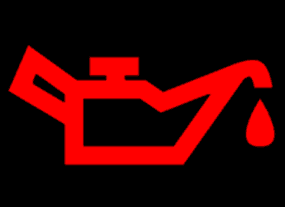 | Read the message before deciding whether to top up or stop.The oil-can picture can accompany different oil messages. A low-pressure instruction requires a safe stop and shutdown. Do not continue driving or leave the engine running to complete an electronic measurement when the display tells you to switch it off.A low-level message is different. Follow the checking procedure and add only the specified amount of approved oil when requested. A high-level warning or measurement fault is not a reason to add more. A normal oil quantity does not prove that lubrication pressure is safe, and resetting a service reminder will not repair an oil-system fault. |
Red Coolant or Engine Temperature Warning
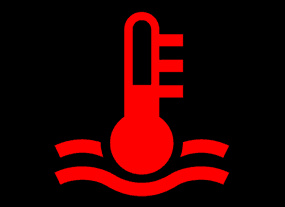 | Stop safely and follow the cooling instructions.A red thermometer warning can concern overheating or a cooling-system fault. Depending on the message, possible conditions include insufficient coolant or a problem with temperature sensing, coolant circulation, airflow or the radiator fan. An additional warning tone can indicate excessive temperature.Do not continue under heavy engine load. Follow the handbook’s shutdown and cooling instructions, and never remove a hot coolant cap. Once the system has cooled, inspect only the items that are safe to check. If the warning returns, coolant keeps disappearing or the engine produces steam, arrange assistance rather than repeatedly topping up and continuing. |
Low Coolant or Cooling-System Message
 | Check the level only when the system has cooled.A reservoir-style graphic or coolant message is different from proof that the engine is already overheating. Low coolant still needs attention because it can compromise cooling. Read whether the display requests a level check, a workshop visit or a stop.Use the correct coolant specification and reservoir. On electrified cars, separate cooling circuits may be present. Do not identify fluids by colour alone or open an unfamiliar system. A yellow temperature-related warning can also concern cooling hardware rather than low fluid; adding coolant without checking the message can be the wrong response. |
Red or Yellow Brake System Warning
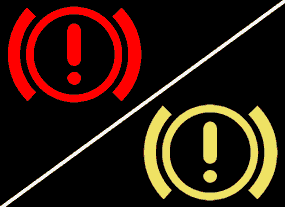 | Red: stop safely. Yellow: follow the message and obtain prompt inspection.The red brake warning can indicate insufficient brake fluid or a brake-assistance fault. Stopping distances or pedal effort may change. Stop in a safe place and do not continue if the message or braking condition requires it. Do not attempt to solve a red brake warning by adding fluid and assuming the system is repaired.A yellow brake-system warning can identify another malfunction, including recuperative braking on applicable versions. Drive cautiously only when the instructions permit and braking remains controllable, leaving extra distance. Any abnormal pedal feel or reduced braking performance is a reason to stop and seek assistance. |
Power Steering Warning
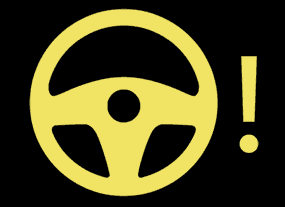 | Stop safely if steering assistance or control is compromised.A steering-wheel warning can identify a problem with power assistance or the steering system. A red warning on the covered models requires stopping safely and specialist assistance. Steering can become much heavier, particularly during low-speed manoeuvres.Keep firm control while moving to safety. The yellow illustration helps identify the system, but the actual colour and wording on your car determine the instruction. Do not keep driving an A-Class that is difficult to control simply because a warning temporarily disappears after restarting. |
Battery, Charging or Electrical Fault Warning
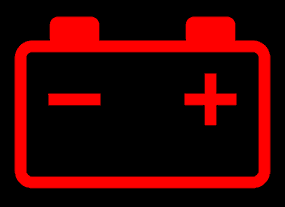 | Follow the exact battery message; shutdown instructions can differ.A battery-shaped symbol can accompany an electrical fault, charging problem or low 12-volt charge condition. It does not automatically identify a failed battery, and it should not be confused with the traction-battery charge display on an A 250 e.Some A-Class messages specifically request a safe stop while leaving the engine running to restore a low 12-volt charge. Other messages require a different response. Follow the wording rather than applying a blanket rule to switch off. Never run the engine in an enclosed space. If the message does not clear as instructed, or serious electrical symptoms appear, obtain assistance. |
Engine Management and Diesel Warning Messages
Check Engine or Engine Diagnosis Warning
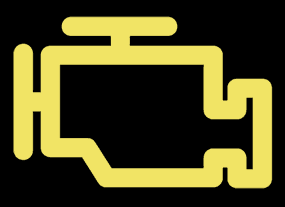 | Arrange prompt diagnosis and note any change in performance.The engine outline indicates a monitored fault involving systems such as the engine, fuel supply or exhaust. The car may enter a reduced-performance mode. The lamp does not tell us which sensor, valve or other component needs replacement.Avoid heavy acceleration while arranging a check. If the light flashes, the engine shakes, power drops sharply or another stop warning appears, reduce demand and stop safely if symptoms persist. Preserve fault codes and record when the problem occurred. Clearing the light before diagnosis can remove information that helps identify the original cause. |
Diesel Fuel Filter Warning
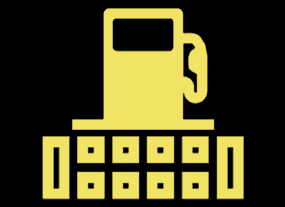 | Have the filter and any water-related condition checked.On equipped diesel versions, a fuel-filter message can indicate a dirty filter or water that requires draining. It is not a low-fuel reminder and does not call for a fuel additive as a universal fix.Arrange the specified workshop attention. Avoid opening diesel fuel-system components without the correct procedure and equipment. If difficult starting, poor running or reduced power accompanies the warning, report those symptoms. A replacement or draining procedure should address the cause, rather than simply erase the message. |
Engine Air Filter Message
 | Arrange inspection and replacement when requested.On applicable diesel models, an air-cleaner message can indicate that the engine air filter is dirty. This is the intake filter, not the cabin pollen filter used by the ventilation system.Have the correct filter fitted and the intake checked as appropriate. Do not operate the vehicle without its air filter or assume clearing the message restores airflow. If an engine warning is also present, the workshop should investigate it separately instead of assuming one filter service explains everything. |
Diesel Preheating and Particulate Filter Messages
A diesel preglow indicator can be part of normal starting. Use the starting sequence described for your car; the duration depends on operating conditions. A persistent fault message or difficult starting needs diagnosis rather than automatic replacement of every glow plug.
Particulate-filter messages require engine-specific instructions. Repeated short trips can interfere with normal exhaust cleaning, but there is no single regeneration drive that applies to every A-Class. Do not attempt a high-load cleaning drive when there is overheating, severe rough running or a stop instruction. Persistent warnings need assessment, and hot exhaust components must be kept away from combustible material.
AdBlue and Exhaust Aftertreatment Warnings
On diesel versions using AdBlue, distinguish a low-fluid request from a system malfunction. A refill can address low level but may not repair a dosing or sensor fault. Act before a displayed no-restart limit is reached.
Use the correct fluid, filler and quantity specified by the display or handbook. Never put AdBlue in the fuel tank or dilute it. If a fault remains after an appropriate refill, arrange diagnosis instead of repeatedly adding more. Not all A-Class engines use the same emissions equipment.
ABS, ESP and Tyre Pressure Warning Lights
ABS Warning Light
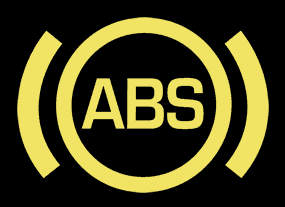 | Drive cautiously only as permitted and arrange inspection.The ABS light indicates that anti-lock braking or related functions may be unavailable. The car may still brake, but its response during hard braking can differ. Avoid sudden inputs and allow more stopping distance.Other assistance features may also become unavailable because they depend on the braking system. A combination of warnings does not necessarily mean several separate parts have failed. However, a red brake warning, poor pedal feel or reduced stopping ability changes the response: stop safely and seek assistance. |
ESP Stability-Control Indicator
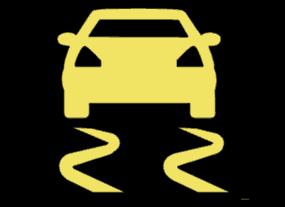 | Flashing commonly means intervention; steady illumination needs attention.The skidding-car symbol usually flashes while ESP is stabilising the vehicle. Ease off and adapt to the available grip. Repeated intervention tells us that the tyres are reaching their traction limits.A lamp that remains on can indicate a malfunction. Read any accompanying message and arrange a check. If stability assistance is unavailable, take particular care on wet or slippery roads. ESP cannot compensate for unsuitable tyres, excessive speed or insufficient following distance even when it is functioning normally. |
ESP OFF Indicator
 | Check whether stability control was deliberately disabled.The OFF symbol differs from the flashing intervention lamp. It can indicate that ESP has been switched off or that a particular setting changes its operation. AMG and other versions may have different available modes.Use the normal road setting unless the handbook describes a specific reason to select another one. If OFF appears unexpectedly or the system cannot be restored, check for a fault message. Disabling ESP to hide another warning does not resolve the underlying problem. |
Tyre Pressure Warning
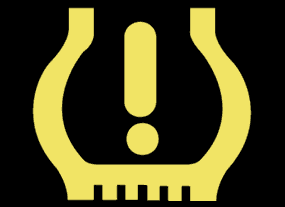 | Reduce speed smoothly, stop safely and check the tyres.The tyre-shaped symbol with an exclamation mark generally warns of low pressure on equipped cars. Check all tyres for damage and use a gauge; visual appearance cannot reliably confirm inflation. A puncture, unusual pulling or a visibly deflated tyre may make further driving unsafe.Set cold pressures to the vehicle specification for the load. A warning that flashes before staying on can indicate a monitoring fault. Some versions have a tyre-pressure loss warning system instead of direct pressure sensors. Correct the tyres before restarting or resetting the appropriate system; a reset cannot repair a leak or a failed sensor. |
Parking Brake, HOLD and Transmission Symbols
Electric Parking Brake Indicator
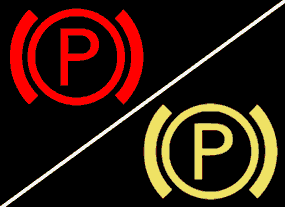 | Red can mean applied; yellow or fault messages need attention.The parking-brake indicator normally confirms that the brake is applied. It should change when the brake releases. The pictured red and yellow forms illustrate different states rather than one universal instruction.If the brake will not release, do not force the vehicle to move against it. If it cannot apply, follow the handbook’s procedure for securing the car and obtain assistance. A flashing indication or fault message requires checking the exact instruction. Normal parking-brake status should not be confused with the separate brake-system warning. |
HOLD Function Indicator
 | Normal when the vehicle is being held at a standstill.HOLD means the relevant braking function is keeping the stationary vehicle in place under its operating conditions. It is a convenience for driving situations such as waiting in traffic, not proof that the car is fully parked and switched off.Remain ready to use the brake pedal if the function becomes unavailable. Before leaving the vehicle, select the correct parking position and apply the parking brake as instructed. If HOLD cannot be activated, check the operating conditions and any messages before assuming a hardware fault. |
Transmission or Gearbox Warning
 | Follow the specific restriction or stop instruction.Transmission messages can describe overheating, restricted operation, unavailable gears or a more serious malfunction. Some permit careful driving; others require an immediate safe stop. The gearbox picture alone does not identify which action applies.Do not repeatedly force selections between drive and reverse. If the display requests a stop, secure the vehicle and seek assistance. If it permits cautious travel, avoid heavy loads and follow the stated limits. Transmission-cooling instructions can differ from engine-overheating instructions, so use the exact message rather than a generic reset procedure. |
“Parking Lock Inoperative” or Gear Selection Messages
A message about selecting P only when stationary is different from a fault preventing P from engaging. Stop fully before choosing the parking position. If the parking lock is inoperative, use the instructed parking-brake procedure and do not assume the transmission can prevent the car rolling.
Brake-pedal requests during gear selection can be normal operating prompts. Persistent inability to select a gear, unexpected movement or a transmission stop warning needs assistance. Avoid experimenting with emergency-release mechanisms on a slope.
Occupant Safety and Driver Assistance Warnings
Restraint System or Airbag Warning
 | Have the restraint system checked immediately.A persistent restraint-system warning can indicate a fault affecting airbags or belt tensioners. Components may not operate as intended in a collision. The car can otherwise feel normal, so normal driving behaviour does not rule out a safety problem.Do not probe connectors or try to extinguish the lamp by moving wiring under a seat. Tell the repairer about recent seat work, electrical issues or accident repairs. A separate PASSENGER AIR BAG OFF status display must be interpreted differently from a restraint-system malfunction. |
Seat Belt and Passenger Airbag Indicators
Seat belt reminders ask occupants to fasten their belts correctly. Objects on the passenger seat can affect reminders on some versions; secure luggage in a suitable place. A warning that persists with a properly fastened belt needs investigation.
The passenger-airbag status must match the seating arrangement. Never put a rear-facing child restraint in front of an active passenger frontal airbag. If the airbag status is unexpected, resolve it before using that position in a way that depends on deactivation.
Distance Warning and Collision Risk
 | Increase the gap and be prepared to brake.The red triangle containing a vehicle warns about the driving situation ahead on equipped models. A persistent distance warning can mean the gap is too small for the speed. An additional tone can warn that an obstacle is being approached too quickly.Respond to traffic and brake or steer appropriately. Do not study settings while the risk develops. This is different from a message saying Active Brake Assist is unavailable. Even with the feature operating, keep a safe distance and remain responsible for avoiding a collision. |
A system-unavailable message can reflect dirty sensors, temporary operating limits or a malfunction. A disabled-state indication is different from an immediate collision alert. Read the wording when safely parked.
Inspect accessible sensor areas as described in the handbook and clean obvious dirt gently. Weather or poor visibility can also affect operation. If the warning persists, arrange a check. Never test automatic braking by deliberately approaching an obstacle.
Active Steering Assist: Hands-on Request or Status
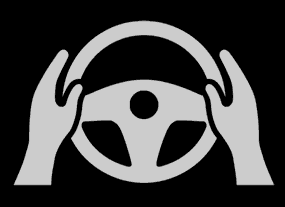 | Keep control of the wheel and respond to takeover instructions.A steering-wheel or hands-on graphic can remind us to provide steering input on equipped cars. It is distinct from the power-steering malfunction symbol. Driver assistance cannot take responsibility for the vehicle.Keep your hands on the wheel and watch the road. Lane markings, bends, weather and camera visibility can limit operation. If assistance becomes unavailable, steer normally and investigate a persistent fault. Do not try to defeat hands-on monitoring or assume the system will handle every road layout. |
General Warning or Display Message
 | Read the full explanation in the instrument display.An exclamation-mark triangle draws attention to a condition requiring review. It is not a diagnosis of a failed component. Its meaning depends on the accompanying text and other indicators.Record the complete wording while safely parked. Acknowledging the message only changes what is shown; it does not necessarily resolve the condition. If several warnings appear, give priority to braking, steering, oil pressure, temperature and any explicit stop instruction. |
Key, Lighting and Other Vehicle Messages
Key Not Detected or Key Battery Message
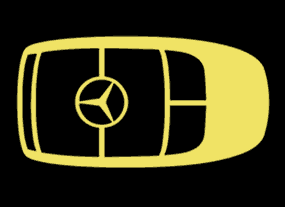 | Check what the car is asking before replacing parts.A key graphic can accompany several messages, including a missing key, weak key battery or recognition problem. Confirm that the correct key is inside the vehicle and follow the starting instructions.If the handbook provides a backup recognition location, use the procedure for your specific model. Do not assume every A-Class has the same location or key-battery arrangement. An engine that is still running after a key warning does not guarantee it can be restarted after shutdown. |
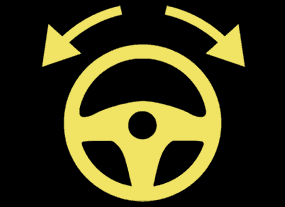 | Follow the exact instruction; do not force the wheel.A steering-related symbol with arrows can accompany an instruction to move the steering wheel during starting or a related fault message. It is different from Active Steering Assist requesting driver input.Follow the handbook’s starting procedure and avoid forcing a locked wheel. If the message remains, the vehicle cannot start normally or the steering is not free to operate, obtain assistance. Do not drive with an unresolved steering-control problem. |
Exterior Lighting Fault
 | Check and repair the affected lighting function.A bulb-style symbol can identify a fault in exterior lighting. Read which lamp is affected and inspect the vehicle when parked. A normal dashboard headlamp indicator does not prove that every exterior light works.The repair depends on the fitted system: a conventional bulb, LED unit or lighting-control component can require different work. Avoid night driving with inadequate illumination. Faulty brake lights or indicators also need prompt attention because other road users depend on them. |
Trailer Coupling Warning
 | Check the coupling instruction before towing.On vehicles fitted with the relevant towing equipment, this symbol can identify a coupling-related condition. Confirm that the mechanism has reached its required position and is securely locked according to the handbook.Do not tow with an uncertain coupling status or assume a warning will clear once the trailer is moving. If the mechanism does not lock or the message persists, have it checked. This symbol is not relevant to every A-Class specification. |
Stationary Heater Message
 | Check the operating condition or fault described.This graphic relates to stationary heating on equipped vehicles. The system may be unavailable because an operating requirement is not met, or a fault may need inspection. It is not an engine-coolant warning merely because it includes heat lines.Follow the system’s operating precautions, especially restrictions on running a fuel-burning heater in enclosed spaces or near combustible material. If the message reports a persistent malfunction, arrange a check instead of repeatedly attempting to restart it. |
Normal Indicators, Service Reminders and Hybrid Displays
Lighting, Cruise Control and ECO Start-Stop
Green lighting or cruise-control indicators generally describe selected functions. Blue normally identifies main beam. An automatic high-beam status indication is different from confirmation that full beam is actually on; remain ready to dip manually.
ECO start-stop can be unavailable because its operating conditions are not met. Temperature, battery charge and cabin demands can influence operation. A temporary unavailable state is different from a malfunction message, and normal automatic stopping does not mean the vehicle has been fully switched off.
ATTENTION ASSIST and the Coffee-Cup Symbol
On equipped versions, ATTENTION ASSIST can recommend a break when it detects driving behaviour consistent with reduced attention. Treat the suggestion seriously and stop at a suitable safe place. The system does not measure fatigue with certainty and cannot guarantee that it will recognise every tired driver.
Do not wait for a coffee-cup alert before resting if you already feel sleepy. A missing warning is not evidence that continuing a long journey is safe.
ASSYST PLUS: Service A and Service B
ASSYST PLUS tracks service requirements. A Service A or Service B reminder is different from a red mechanical-fault warning. Check the service due information and arrange the required work for your engine and vehicle specification.
Reset the service display only after the maintenance has been carried out. Clearing the counter does not change oil, replace filters or inspect brakes. An unrelated engine or safety-system warning still requires its own investigation.
A 250 e and Other Electrified Versions
Plug-in hybrid A-Class models add charging, electric-drive and high-voltage information. A charge-level display or electric-mode status is not a fault by itself. Battery temperature, charge and power demand can influence whether the petrol engine runs.
A drive-system stop instruction or high-voltage fault requires the specified safe response and qualified assistance. Do not touch orange cables or open battery enclosures. Charging warnings should be checked against the plug-in handbook; these procedures do not apply to a conventional petrol or diesel A-Class.
What to Do Before Resetting an A-Class Warning
Start with the message, not a reset tutorial. A service reset may be appropriate after maintenance, and tyre-system initialization can be appropriate after pressures are corrected. Neither process repairs a malfunction.
- Park safely and record the exact wording and symbol colour.
- Note whether the lamp is steady or flashing and whether the car behaves differently.
- Follow any stop, shutdown or leave-running instruction precisely.
- Check only simple items that are safe and relevant.
- Preserve fault codes and arrange diagnosis of the affected system.
Several warnings can share an electrical or communication cause, but we should not assume they are all harmless. A basic engine-code reader may not access every braking, restraint or assistance module. Clearing messages without diagnosing them can make the original problem harder to trace.
Conclusion
Understanding Mercedes-Benz A-Class dashboard warning lights means reading the picture together with its colour and accompanying text. Brake, steering, oil-pressure and overheating faults need a particularly careful response. Other indicators simply describe lighting, driver assistance or maintenance status.
Match the advice to your A-Class generation, engine and equipment. Follow the exact instruction, repair the cause and reset only when the relevant procedure calls for it.
Frequently Asked Questions
1. Can I drive my A-Class with the check engine light on?
A steady light with normal running may allow careful travel for prompt diagnosis if no stop instruction is present. Flashing, rough running or severe power loss requires greater urgency. Reduce load and stop safely if symptoms persist.
2. What does the red triangle with a car mean?
On equipped models, it is a distance or collision-related warning. Increase the gap and be prepared to brake. It is different from a message saying Active Brake Assist is unavailable or switched off.
3. Does the battery symbol always mean I should switch off?
No. Follow the exact message. Some low-charge messages request a safe stop while leaving the engine running; other electrical faults require different action. Never leave an engine running in an enclosed space.
4. How do I reset the tyre pressure warning?
Inspect the tyres, repair damage and set the correct cold pressures first. Then use the restart or initialization procedure for your fitted monitoring system. A monitoring fault or puncture cannot be repaired by resetting the display.
5. Is Service A or Service B the same as an engine fault?
No. Those are maintenance reminders tracked by ASSYST PLUS. An engine diagnosis warning identifies a separate monitored fault. Complete the required service before resetting its reminder and investigate any remaining warning independently.
If you want to know other articles similar to Mercedes-Benz A-Class Dashboard Warning Lights Explained you can visit the category Service and Parts.
Kia Picanto Dashboard Warning Lights & Symbols: Complete Guide

Hyundai i20 Dashboard Warning Lights Guide

Vauxhall Antara Dashboard Lights: Complete Warning Symbol Guide

Hyundai i10 Dashboard Warning Lights and Their Meanings: Complete Guide

Peugeot 308 Dashboard Symbols, Warning Lights & Fault Guide

Hyundai Kona Dashboard Warning Lights
Leave a Reply
More content of your interest