
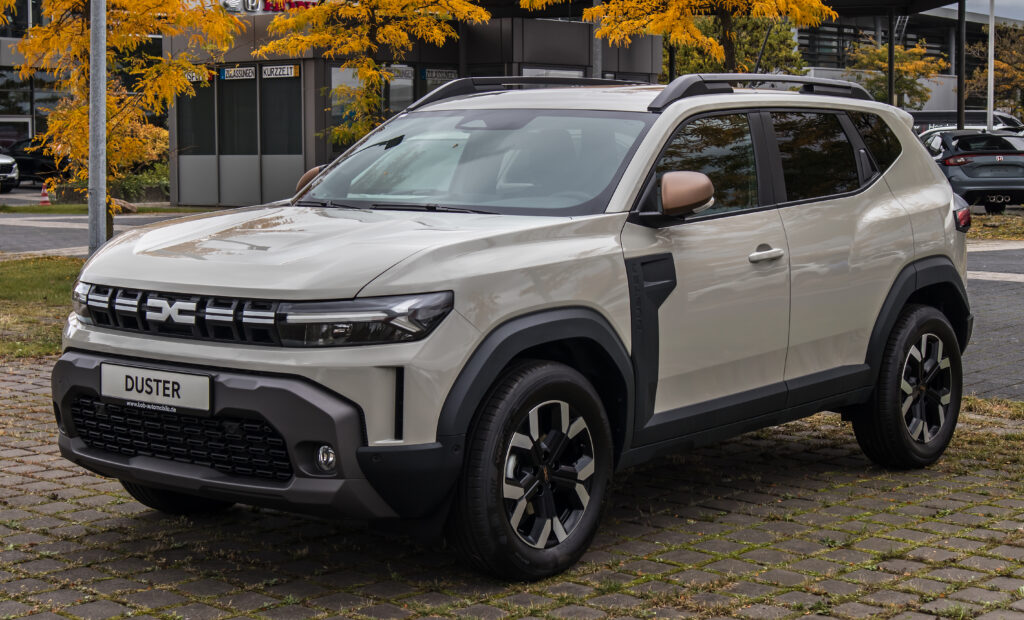
Dacia Duster Wading Depth: How Deep Can It Really Go?

We’ve all been there — you’re cruising down a trail, the trees open up, and suddenly a river calmly blocks your path like nature’s version of a toll booth. The water isn’t raging. It’s not scary. But it’s deep enough to make you pause.
And that’s when the big question hits:
Can the Dacia Duster actually cross this?
The Duster has built a reputation as the “budget off-roader that shouldn’t be this capable.” Yet wading depth — water crossing ability — is where confidence and mechanical sympathy must meet. Too shallow and you turn back for no reason. Too deep and you hydro-lock your engine into a very expensive sculpture.
So let’s unpack everything. Not just the official number — but what it really means in real life.
Content in this publication
- What Is Wading Depth (And Why It Matters More Than Ground Clearance)
- Official Dacia Duster Wading Depth
- Why the Number Is Conservative (and Also Optimistic)
- The Hidden Limiting Factor: Air Intake Height
- Real-World Wading Depth (What Owners Actually Experience)
- Understanding the Bow Wave Trick
- 2WD vs 4x4: Does It Change Wading Ability?
- Water Crossing Preparation Checklist
- The Biggest Mistake Drivers Make
- What Happens After a Water Crossing
- Increasing Duster Wading Depth (Yes, It’s Possible)
- Other Useful Mods
- Manual vs Automatic Duster in Water
- Crossing Moving Water: The Forgotten Danger
- How to Judge Depth Without Measuring Tools
- Cold Water vs Warm Water Crossings
- Common Myths About the Duster in Water
- When You Should Absolutely Turn Around
- Realistic Capability: Where the Duster Stands
- Driving Philosophy: Respect vs Fear
- Closing Thoughts: The Confidence Zone
- FAQs
What Is Wading Depth (And Why It Matters More Than Ground Clearance)
Ground clearance gets all the attention. Instagram loves it. Brochures highlight it.
But for off-roaders, wading depth is survival.
Wading depth = the maximum water depth a vehicle can safely cross without damaging engine, electronics, or drivetrain.
Think of it like a submarine’s crush depth — except instead of pressure, your enemy is water ingestion.
The Three Catastrophic Things Water Can Do
- Enter the engine → hydro-lock (instant mechanical failure)
- Enter differentials → destroys bearings and gears later
- Enter electronics → gremlins for years
Ground clearance keeps your belly safe.
Wading depth keeps your engine alive.
Official Dacia Duster Wading Depth
The factory specification for the Dacia Duster is:
✔ Approximately 350 mm (35 cm / 13.8 inches)
That’s just over the height of a standard school ruler.
But here’s the catch:
That number assumes perfect conditions.
And off-roading is never perfect.
Why the Number Is Conservative (and Also Optimistic)
Manufacturers calculate wading depth using controlled lab conditions:
- Still water
- Flat bottom
- No bow wave
- No throttle spikes
- No submerged obstacles
In reality?
Water moves. Drivers panic. Rocks exist.
So the 350 mm rating is both:
- Safe in ideal conditions
- Risky if you don’t understand technique
The Duster doesn’t drown because of the exhaust.
It drowns because of air intake placement.
Where the Duster Breathes
The air intake sits inside the front fender area, roughly headlight height but behind plastic trim.
This means:
- Water below bumper → safe
- Water touching headlights → dangerous
- Splashing over bonnet → game over
Hydrolock Explained Simply
Engines compress air.
Water doesn’t compress.
One gulp = bent connecting rods.
Real-World Wading Depth (What Owners Actually Experience)
Let’s translate the lab number into trail reality.
| Water Height | Risk Level | What Happens |
|---|---|---|
| Below wheel center | Very Safe | Daily driving level |
| Half wheel | Safe | Gravel roads & puddles |
| Bottom of bumper | Moderate | Requires steady throttle |
| Mid bumper | Skilled only | Maintain bow wave |
| Headlight level | Dangerous | Intake risk |
| Over bonnet | Engine death |
In real use, 25–30 cm is the comfortable crossing zone.
Understanding the Bow Wave Trick
Here’s where technique beats horsepower.
You may be interested in reading Dacia Duster Battery Replacement — Complete Owner’s Guide
When you drive slowly into water, the vehicle pushes water forward creating a small wave.
Behind that wave?
A pocket of lower water level.
You literally create a dry bubble around your engine bay.
Correct Method
- Enter slowly
- Hold steady 1st gear
- Maintain constant throttle
- Never stop mid-crossing
Wrong Method
- Accelerate hard
- Stop halfway
- Change gears
- Panic rev
Stopping collapses the bow wave — and water rushes into the engine bay.
2WD vs 4x4: Does It Change Wading Ability?
Yes — but not how most people think.
Wading depth is the same
However:
| Feature | Effect |
|---|---|
| 4x4 traction | Prevents stalling mid-river |
| Low torque control | Smooth throttle |
| Stability | Avoid wheelspin splash |
| 2WD limitation | More throttle needed |
So the 4x4 Duster doesn’t go deeper — it crosses safer.
Water Crossing Preparation Checklist
Before entering water, we run a quick ritual.
Pre-Crossing Inspection
- Walk the crossing first
- Check current strength
- Locate exit point
- Remove loose stones from path
Vehicle Setup
- First gear manual mode
- Disable start-stop
- Turn off AC fan (prevents water ingestion via cabin intake)
- Windows slightly open (escape route)
The Biggest Mistake Drivers Make
Speed.
People treat water like mud: attack it.
But water behaves differently.
Mud slows you gradually.
Water stops your engine instantly.
Momentum helps traction — but kills engines.
What Happens After a Water Crossing
Even a perfect crossing introduces moisture into hidden components.
Post-Wade Ritual
- Light brake taps to dry discs
- Check engine air filter
- Inspect differential breathers
- Listen for bearing noise days later
Water damage is rarely immediate — it shows up weeks later as whining gears.
Increasing Duster Wading Depth (Yes, It’s Possible)
The Duster can actually become a surprisingly capable mini-expedition vehicle.
Snorkel Installation
Raises air intake to roof height.
New effective wading depth:
~650–700 mm
Now the limit becomes electronics, not engine.
Other Useful Mods
Extended Breathers
Differentials breathe air.
In water, they inhale water.
Solution:
- Extend breather hoses upward
Waterproof Grease
Prevents bearing corrosion after crossings.
Radiator Fan Override
Fans can bend if spinning underwater.
Manual vs Automatic Duster in Water
Manual wins. Every time.
Why?
- Predictable torque
- No clutch pack overheating
- No gear hunting
Automatic gear changes mid-river can break your bow wave — a silent killer.
Crossing Moving Water: The Forgotten Danger
Depth isn’t always the problem.
Flow is.
Simple Rule
If water reaches halfway up your wheels and you struggle to stand in it, don’t cross.
You may be interested in readingDacia Duster Battery Replacement — Complete Owner’s GuideYou may be interested in reading
 Dacia Duster Interior Dimensions: Space, Comfort, and Real-World Practicality
A Duster weighs about 1.3–1.4 tons.
Flowing water exerts lateral force — even shallow streams can push vehicles sideways.
How to Judge Depth Without Measuring Tools
We use natural markers:
- Tyre sidewall lettering = ~20 cm
- Wheel hub center = ~35 cm
- Number plate bottom = danger zone
Nature rarely gives rulers — but it gives references.
Cold Water vs Warm Water Crossings
Temperature changes risk.
Cold Water Risks
- Rapid cooling of exhaust → cracks
- Sensor contraction
- Brake performance loss
Best Practice
Idle for 30 seconds after exit to normalize temperature.
Common Myths About the Duster in Water
Myth 1: “Exhaust sucking water kills engine”
False — exhaust pressure pushes water out.
Myth 2: “Faster = safer”
False — faster = splash intake.
Myth 3: “4x4 makes it waterproof”
Very false — traction ≠ sealing.
When You Should Absolutely Turn Around
We all hate turning back. But smart off-roaders last longer.
Turn around if:
- Water hides exit
- Current visible
- Mud base unknown
- Night crossing
- Intake level uncertain
Courage is driving through.
Wisdom is driving home.
Realistic Capability: Where the Duster Stands
Compared to hardcore off-roaders, the Duster sits in a unique niche:
- More capable than crossovers
- Less extreme than body-on-frame SUVs
- Extremely efficient for its weight
It’s not a boat — but it’s far from fragile.
Driving Philosophy: Respect vs Fear
We don’t baby the Duster.
We understand it.
Off-roading isn’t about brute force — it’s about mechanical empathy.
Treat water like electricity:
Invisible.
Instant.
Unforgiving.
Closing Thoughts: The Confidence Zone
So how deep can the Dacia Duster really go?
- Official: 350 mm
- Comfortable real-world: ~300 mm
- With snorkel: ~700 mm
But numbers are only half the story.
Technique is the other half.
When we combine preparation, smooth driving, and mechanical respect, the Duster transforms from a cheap SUV into a quiet explorer — the kind that crosses rivers not dramatically, but calmly… like it belongs there.
And that’s the magic of it.
FAQs
1. Can the Dacia Duster cross flooded roads safely?
Yes, if water stays below the bumper and current is weak. Above that, risk increases rapidly.
2. Will water damage the exhaust?
No. Exhaust gases flow outward. The real danger is the air intake.
3. Is a snorkel necessary for occasional crossings?
Not necessary for shallow water, but highly recommended for frequent off-road use.
4. What happens if the engine stalls in water?
Do NOT restart. Water may already be inside the cylinders — restarting causes severe engine damage.
5. Does speed help when crossing water?
No. Constant slow speed is safest. Speed increases splash and intake risk.
You may be interested in readingDacia Duster Battery Replacement — Complete Owner’s GuideYou may be interested in reading
Dacia Duster Interior Dimensions: Space, Comfort, and Real-World PracticalityYou may be interested in reading
 Dacia Duster Traction Control Light On — What It Really Means and How We Fix It
If you want to know other articles similar to Dacia Duster Wading Depth: How Deep Can It Really Go? you can visit the category Service and Parts.
Audi A4 Gearbox Oil: Complete Guide to Types, Changes, Levels, and Common Problems
Audi A4 Gearbox Replacement Cost: What Should We Expect to Pay?
Audi A4 Gearbox Service: What It Includes, When to Do It, and Why It Matters
Audi A4 Windscreen Replacement Cost: What Should You Expect to Pay?
Audi A4 Oil Capacity: Complete Guide by Engine and Model
Hyundai Palisade Warning Lights: Complete Dashboard Guide
Leave a Reply
More content of your interest