Volvo XC40 dashboard symbols explain the status of the car’s safety, braking, powertrain and convenience systems. Some tell us to take action immediately, while others confirm that a function is switched on. The message beside a symbol is often the most useful part: it tells us whether to stop, arrange service or simply check a setting.
This illustrated guide covers common Volvo XC40 warning lights and indicators, including the red warning triangle, parking brake, tyre pressure, lane assistance and electric-drive alerts. Each entry pairs Volvo’s symbol artwork with an explanation and practical next steps.
Model scope: the references include Volvo’s XC40 and XC40 Recharge Pure Electric support manuals. Petrol, diesel, mild-hybrid, plug-in-hybrid and electric versions do not share every warning. Graphics and messages can also change with model year, market and software. Engine-oil and engine-temperature entries apply to vehicles with a combustion engine; electric-specific entries are labelled separately. Match the illustration and message to your own car’s manual.
A serious fault, urgent safety condition or specific reminder. Read the message immediately. A parking brake applied indication is different from a red brake-system fault.
Amber or yellow
A fault, reduced function or condition needing attention. Some amber indications, such as rear fog lights, simply show a selected function.
Green
Usually confirms an active function, such as automatic holding brakes or exterior lighting.
Often shows a selected feature, standby condition or whether an assistance system can detect what it needs.
Colour helps us prioritise, but it does not replace the message. A flashing parking-brake symbol means something different from flashing stability control. We should also distinguish a temporary start-up check from a warning that persists or appears while the car is moving.
Red warning symbols and urgent alerts
Red warning triangle
Red — read the associated messageThe red triangle is a general warning that can accompany a fault affecting safety or the ability to drive. It can appear beside another symbol, so the triangle alone does not identify a failed component.Read the instruction immediately and stop safely when directed. If braking, steering or propulsion is affected, do not continue a normal journey. Once stationary, record the full wording so a workshop can assess the actual condition instead of guessing from the triangle.
Brake system warning
Red brake symbolA red brake-system warning concerns a braking fault. It is not the same as the circled P that normally confirms an applied parking brake. The driver display should provide more detail.Slow carefully and move to safety. An abnormal pedal, reduced braking or an instruction to stop requires immediate assistance. Do not keep driving merely because the car still produces some braking force. A brake warning needs diagnosis before we assume that a sensor is the only issue.
Parking brake indicator and fault warning
Red circled P — steady or flashingSteady illumination normally confirms that the parking brake is engaged. Flashing indicates a parking-brake problem on the referenced XC40 displays. Read the message rather than treating both states as ordinary parking confirmation.Before moving, confirm that the brake releases. Before leaving, make sure the vehicle is securely parked. If operation is uncertain, keep control with the brake pedal and seek assistance. Forcing the car to move against a brake that will not release can cause damage.
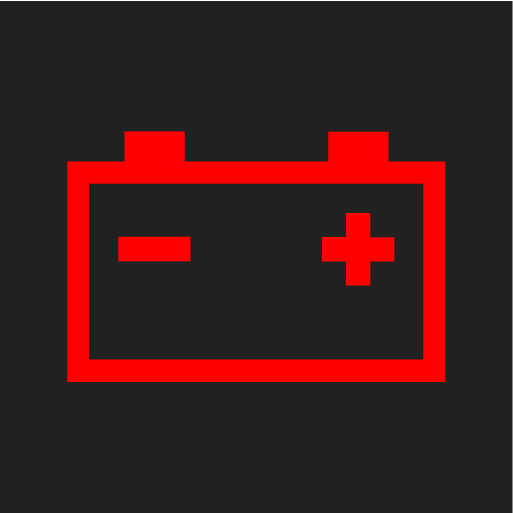
Electrical system warning
Red battery symbol — all powertrains, interpretation variesThis symbol reports an electrical-system problem. On an electric XC40, it is not simply an instruction to charge the driving battery. On other versions, it also should not be treated as proof that the battery itself is the failed component.Follow the message and arrange prompt professional help. If electrical functions are failing or the car instructs us to stop, stop safely. A full traction battery or a successful jump-start does not establish that the underlying electrical fault is resolved.
High engine temperature warning
Red thermometer — combustion-engine versionsThis warning concerns excessive engine temperature. Petrol, diesel and hybrid XC40s with an engine need the appropriate cooling-system response; it is not the same as the electric model’s cold-battery symbol.Stop safely and follow the exact driver-display instruction and handbook procedure. Do not remove a hot coolant cap or approach escaping steam. Coolant leakage or a persistent high-temperature warning requires assistance. Continuing because the car still drives normally can turn overheating into severe engine damage.
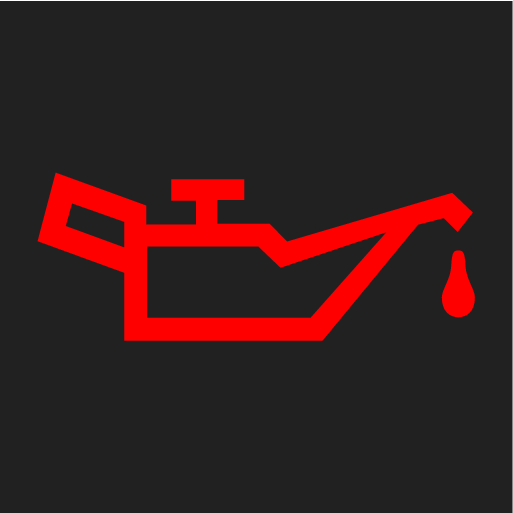
Low engine oil pressure
Red oil can — combustion-engine versionsThe red oil-can warning concerns pressure needed for engine lubrication. Pull over safely and switch off the engine. Check the oil level using the procedure for your engine, topping up only when required with the specified oil.A correct oil level does not prove that pressure is safe. If the symbol remains or the engine makes unusual noises, arrange assistance. Do not confuse this urgent warning with a routine oil-service reminder or an electronic oil-level notification.
Seat belt reminder
Red belt symbolThe seat-belt reminder indicates that a monitored occupant is not correctly restrained. It can illuminate or flash and may be accompanied by a sound or seating-position information.Check everyone’s belt before moving. Make sure a passenger has not unbuckled and that belongings are not triggering a seat sensor. If the warning persists with the seat empty or the belt correctly fastened, have it checked rather than inserting a dummy buckle or otherwise defeating the reminder.
Airbag and SRS warning
Red restraint-system symbolThe airbag warning indicates a detected fault in a safety or restraint system. The car may still drive normally, but that does not show whether the affected protection would work as intended during a collision.Read the message and arrange prompt inspection. This is different from a passenger-airbag deactivation status indication. Do not probe restraint wiring or attempt to conceal the warning. Professional diagnosis should identify the actual fault before any parts are replaced.
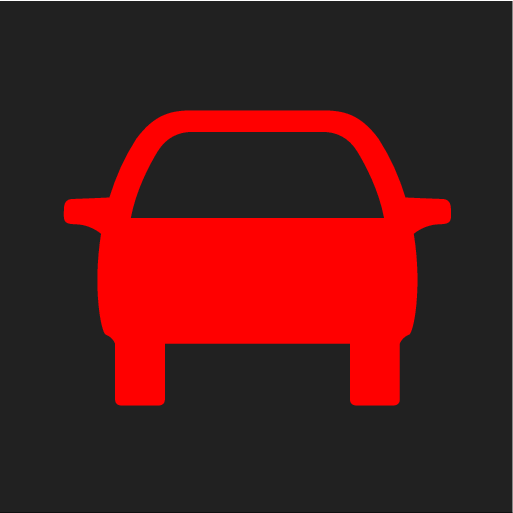
Collision risk warning
Red collision alertThis alert warns of a possible collision with traffic or another detected road user or obstacle. The detection categories and operating limits vary with the car’s equipment and software. It is an immediate driving alert, not automatically a stored mechanical fault.Look at the situation ahead and take appropriate action to avoid the hazard. Never wait for automatic braking to respond. If warnings occur repeatedly without an obvious cause, record the circumstances when parked and arrange an assistance-system check.
Amber warnings: information, brakes and vehicle control
Amber information symbol
Amber information alertThe information symbol accompanies a problem or notification affecting one of the car’s systems. We need the written message to determine what needs attention; the symbol by itself is not a diagnosis.Read it when safely stopped and check for additional icons. A blocked sensor, a function limitation and a service requirement can call for different responses. Dismissing the notification from view does not mean the underlying condition has disappeared.
Amber brake-system warning
Amber brake symbolAn amber brake warning also signals a braking-system issue, but its colour and message distinguish it from the red warning. We should not assume it is harmless or interchangeable with a parking-brake status lamp.Read the instructions and arrange the specified inspection. If braking performance changes, another brake warning appears or the message says to stop, move to safety and request assistance. Do not experiment with emergency stops to decide whether a dashboard warning is genuine.
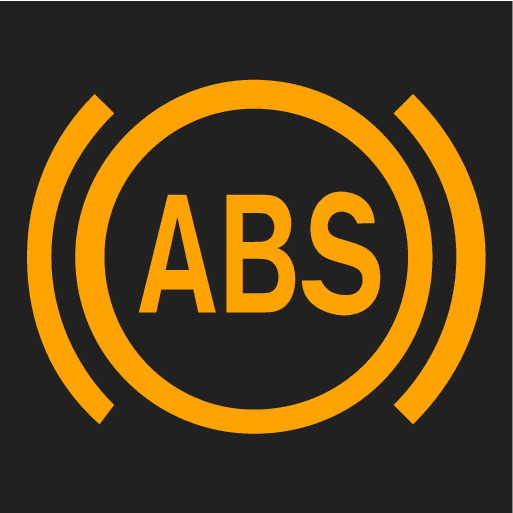
ABS warning
Amber ABSABS helps prevent wheel lock under hard braking. With an isolated ABS warning, normal friction braking can remain available while anti-lock assistance is disengaged. Increase space and avoid abrupt inputs.Arrange diagnosis promptly. If the red brake warning accompanies it or the pedal feels abnormal, stop safely and seek assistance. A fault code and proper testing are needed to identify the cause; the letters ABS do not automatically mean the entire control unit needs replacement.
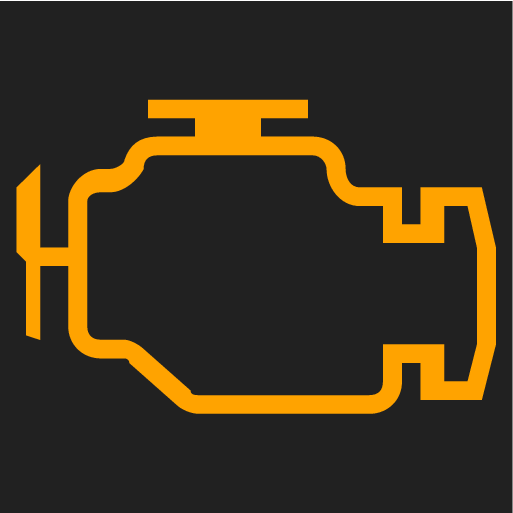
Check engine or emissions warning
Amber engine symbol — combustion-engine versionsThe engine-shaped symbol indicates an emissions-system fault on applicable XC40s. It is not used to diagnose the fully electric drivetrain, and it does not identify a particular sensor or component by itself.Arrange a workshop check. If the engine runs roughly, power falls sharply, the warning flashes or another urgent message appears, reduce load and stop safely when necessary. Clearing an emissions code without testing the cause may only hide a fault until the next drive.
Tyre pressure warning
Amber tyre symbolSteady illumination usually asks us to check tyre pressures. Stop safely, inspect for damage and measure the tyres against the vehicle’s cold-pressure specification. Do not use the sidewall maximum as the recommended pressure.Flashing followed by a steady light can indicate a monitoring-system fault. Follow the correct calibration or pressure-storage instructions after correcting the tyres. A reset should never replace inspection of a puncture, and a damaged or visibly flat tyre should not be driven on.
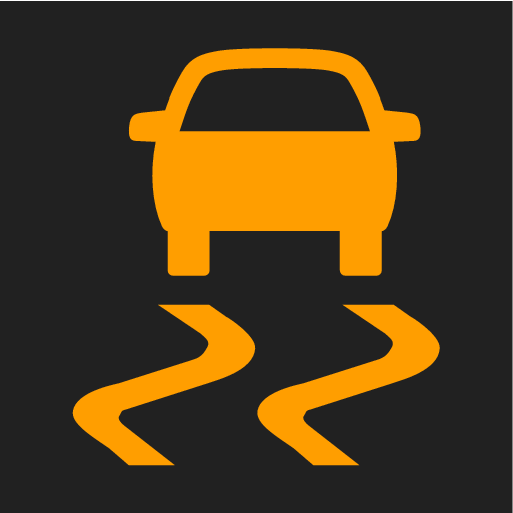
Stability-control warning or intervention
Amber slipping-car symbolA flashing stability symbol normally means the system is intervening. Ease off and adapt to the available grip. The assistance cannot overcome excessive speed, ice or unsuitable tyre condition.A continuously illuminated symbol can indicate a system fault. Have it checked and recognise that assistance may be reduced. Note any accompanying ABS or other warnings, because linked systems can be affected by a shared input rather than several independent component failures.
Stability-control sport mode
Amber sport-mode indication — applicable versionsThis symbol shows that the stability system’s sport setting is selected on the referenced XC40 display. It describes a chosen operating mode rather than, by itself, a system malfunction.Check the selected setting and restore the normal mode when appropriate for ordinary driving. The symbol does not give the car extra grip or remove the need to drive within road conditions. Do not confuse a deliberately selected mode with a persistent stability-control fault warning.
Headlamp-system malfunction
Amber headlamp warningA headlamp-system warning concerns a fault in exterior lighting or its associated control equipment. The lights may still produce some illumination, so a quick glance is not enough to establish that everything is functioning correctly.Read the message and arrange inspection. Assess whether the car is safe to use after dark or in poor visibility. Do not assume a basic bulb replacement will repair an adaptive or electronically controlled lighting fault.
Lane assistance and driver-support symbols
Lane keeping aid: warning or intervention
Amber lane symbolAn amber lane-assistance indication can mean that the system is warning or intervening, rather than simply reporting a broken sensor. Read its context and pay attention to the lane position.Keep your hands on the wheel and correct course smoothly when needed. Poor markings, weather and camera obstruction can affect assistance. A separate malfunction message needs investigation, but we should not diagnose a fault from every brief lane-warning indication during driving.
Lane keeping aid: available or standby
White or grey lane symbolOn the referenced display, white indicates that lane assistance is on and road markings are detected. Grey means it is selected but the necessary markings have not been detected.A grey symbol is therefore not automatically a failure. We must steer the car ourselves regardless of colour. If the system remains unavailable in suitable conditions or reports a fault, check accessible camera areas as instructed and arrange inspection when the warning persists.
Collision-avoidance system unavailable
Amber system-limitation symbol — applicable electric displaysThis symbol indicates that the collision-risk system is unavailable or operating with reduced capability. It differs from the red alert warning us of an immediate collision risk.Read the message and check for an obstruction in accessible sensor areas. Keep control of distance and braking yourself. If the limitation persists after conditions improve or the indicated obstruction is removed, have it assessed. Switching assistance off does not repair a malfunction.
Driver Alert indicator
Driver-support indication — applicable displaysThe Driver Alert indication concerns the driver-monitoring or attention-support function. Read any accompanying recommendation rather than deciding from the icon alone that a mechanical fault has occurred.If you feel tired, stop safely and rest whether or not the car issues an alert. The system cannot guarantee that a driver is fit to continue. Persistent fault messages should be checked, while a recommendation to take a break should be treated as a driving-safety prompt.
XC40 Recharge Pure Electric symbols
Reduced performance: turtle symbol
Amber reduced-performance alert — electric versionsThe turtle indicates that the car’s available performance is reduced. The message should explain what action is needed. The symbol alone is not enough to decide whether the cause is charge level, operating conditions or a system problem.Avoid overtaking or other manoeuvres requiring full acceleration. If the car cannot maintain a safe speed, stop somewhere secure and request assistance. Follow any charging or service instruction rather than assuming all reduced-power warnings will clear after a restart.
Cold battery symbol
Battery-temperature status — electric versionsA cold-battery indication means low temperature is reducing the battery’s available capacity. It is different from the red electrical-system fault and does not by itself establish that the battery is damaged.Allow extra range margin and follow the car’s preconditioning guidance. Actual range and performance depend on conditions, so do not plan around a guaranteed distance. If a separate fault or stop message appears, follow that instruction rather than attributing every symptom to cold weather.
Vehicle key not detected
Key-recognition warning — applicable electric displaysThis warning means the car did not detect the key when starting. Check that the intended key is inside and read the displayed guidance. It does not automatically indicate a failed propulsion system.Use the handbook’s backup key-reading or starting procedure when required. A depleted key battery and other recognition issues may need different solutions. If the warning persists with the correct key and procedure, arrange assistance instead of repeatedly trying to select drive.
Emergency call system warning
Emergency-call fault indication — where displayedThis warning concerns the emergency-call system. It does not necessarily mean the main drivetrain has failed, but it can affect an important assistance function.Read the message and contact Volvo support or a workshop as instructed. Do not press an emergency button simply to test whether the warning is genuine. Until the issue is resolved, do not assume an automatic emergency call will operate normally if an incident occurs.
Normal brake, lighting and comfort indicators
Automatic hold while stationary
Green brake-hold indicationThis symbol confirms that the automatic holding function is active and the car is using its brakes to remain stationary. It is not the same as a brake-system malfunction warning.Verify that the car is securely held before lifting your foot. If the indication changes or a warning appears, control the vehicle with the brake pedal. When leaving, use the normal parking procedure rather than assuming the temporary holding feature replaces parking and shutdown requirements.
Manual main beam
Blue headlamp symbolThe blue symbol confirms that main beam is switched on. It normally needs no repair and should be interpreted as lighting status.Dip the headlights for other road users and whenever conditions require. If the indication appears unexpectedly, check the stalk and lighting settings. A bright instrument display is not enough to determine which exterior lights are operating; use the actual lighting indicators and observe the road illumination.
Active main beam switched on
Blue automatic-main-beam symbolThis symbol identifies automatic main beam when the stronger beam is actually operating on the referenced XC40 display. It is different from the white or grey selected-but-not-illuminating state.Continue supervising the headlights. Weather, bends and unusual lighting can limit automatic detection, so switch manually whenever necessary to avoid dazzling others. The automatic setting does not remove our responsibility to choose suitable lighting for the conditions.
Active main beam selected but not illuminating
White or grey automatic-main-beam symbolAutomatic main beam can be enabled while the main beams remain off. This indication commonly reflects the feature waiting for suitable conditions rather than a lamp fault.Check the separate blue indication to see whether main beam is actually on. Do not repeatedly change settings simply because automatic control is keeping the stronger beam off around traffic. An explicit malfunction message should be handled separately from this ordinary status.
Rear fog lamp
Amber rear-fog indicatorThe rear-fog symbol confirms that the bright rear fog lamp is on. Amber does not always mean a fault; in this case it normally identifies an exterior-lighting selection.Use it only when visibility and local rules justify it, then switch it off when conditions improve. Leaving it on unnecessarily can dazzle following drivers and make brake lights less obvious. Check the control setting if it remains illuminated unexpectedly.
Front fog lamps
Green fog-lamp indicator — where fittedThis indicator shows that the front fog lamps are operating. Its direction and colour distinguish it from the rear-fog symbol. Not every XC40 has the same fog-light equipment.Use the lamps appropriately for conditions and local regulations. A normal dashboard indication does not guarantee that every exterior bulb or lighting module works, so a physical lighting check is still useful when visibility seems poor or another driver reports a failed lamp.
Position lamps
Green position-light indicatorThe position-lamp symbol confirms that the corresponding exterior lights are switched on. It does not by itself prove that dipped headlights are providing sufficient illumination for night driving.Check the full lighting setting as darkness develops. Daytime lights and illuminated instruments can make it easy to overlook the actual exterior-lighting mode. If the road ahead is not properly lit, select the appropriate headlights rather than relying on this status symbol alone.
Direction indicator
Green flashing arrow — left-hand example shownA direction arrow shows that the corresponding turn signal is active. With hazard warning lights operating, both left and right indications flash. The illustration here shows one of the two directional symbols.Cancel a signal after the manoeuvre if it has not cancelled automatically. If flashing becomes abnormal or an exterior lamp fails, arrange a check. A ticking sound or an arrow on the display does not replace confirmation that other road users can see the signal.
Preconditioning
White/grey comfort-system status — applicable versionsThe preconditioning symbol shows that heating or air conditioning is preparing the car. It can be a normal scheduled or manually selected function rather than evidence that the engine or battery is overheating.Check the climate schedule if the indication is unexpected. The available functions depend on the drivetrain and equipment, so use the handbook for your version. Follow any separate climate-system error message independently of this normal operating symbol.
Rain sensor
White/grey wiper-system statusThe rain-sensor symbol confirms that automatic rain-sensitive wiper operation is selected. It normally describes a setting rather than a windscreen or brake-system fault.Adjust the setting and use manual wiping when necessary for clear visibility. Automatic detection may not respond exactly as expected in every type of spray or precipitation. Remember to follow the handbook’s wiper precautions for washing, maintenance or situations where unexpected wiper movement could cause damage.
Which XC40 version does this guide apply to?
The XC40 name has been used with different powertrains. A combustion-engine or plug-in-hybrid car can display engine oil and emissions warnings that do not apply to an XC40 Recharge Pure Electric. Electric battery-temperature and reduced-performance messages require their own interpretation. Do not choose a repair procedure from the badge alone.
Check the model year, powertrain and software-specific manual. The central display and driver display can also show written service notices or charging information that have no separate permanent warning lamp. Those messages still matter, particularly when they instruct us to stop or arrange service.
What should we do when several symbols appear together?
Prioritise the message with the greatest urgency and the way the car behaves. Braking changes, steering difficulty or loss of propulsion take precedence over identifying every icon. Once safely stopped, record the full messages and whether the warnings appeared at start-up or during driving.
Several warnings can share one cause because vehicle systems exchange information and electrical power. We should not assume either that every component has failed or that all warnings are harmless. Diagnosis should assess the relevant modules and conditions rather than merely clear the visible notifications.
Can Volvo XC40 warning symbols be reset?
Some reminders clear when their cause is corrected. Others require a specific procedure, such as storing tyre-pressure reference values after checking and adjusting the tyres. Follow the instructions for your vehicle rather than a universal reset sequence.
For faults, dismissing a notification or restarting the display does not repair the car. Record the information before codes are cleared and verify the repair. A maintenance reminder, an infotainment issue and a red safety warning are different conditions that should not be treated with the same reset advice.
Conclusion
Volvo XC40 dashboard symbols become easier to interpret when we combine their colour, message and powertrain applicability. Red faults need prompt attention, amber warnings need the correct follow-up and many green, blue or grey symbols simply confirm a function. Reading the exact instruction helps us choose an appropriate response without confusing normal operation with a fault or overlooking a serious warning.
1. What does the red triangle mean on a Volvo XC40?
It is a general warning associated with a potentially serious condition. Read the message and any accompanying symbol to identify the problem. Stop safely when instructed or when the car’s braking, steering or ability to drive is affected.
2. What does the turtle symbol mean on an electric XC40?
It indicates reduced performance. Read the associated message to determine the required action. Avoid manoeuvres that need full power, and seek assistance if the vehicle cannot maintain a safe speed or displays an instruction to stop.
3. Why is the lane-assistance symbol grey?
On the referenced display, grey can mean the system is selected but road markings have not been detected. That is not automatically a fault. Continue steering yourself and investigate a separate malfunction message or persistent unavailability in suitable conditions.
4. Is a flashing parking-brake symbol normal?
Continuous illumination normally confirms that the parking brake is engaged; flashing indicates a fault on the referenced XC40 displays. Read the message, secure the car and arrange help if application or release is unreliable.
5. Does the red battery symbol mean I should plug in my XC40?
Not necessarily. The red symbol identifies an electrical-system fault, which is different from ordinary low traction-battery charge. Follow the display’s instructions and arrange the appropriate assistance rather than assuming charging will repair it.
If you want to know other articles similar to Volvo XC40 Dashboard Symbols you can visit the category Service and Parts.
Auto Guide
I show you the best reviews of all car brands, the information we collect and show is verified by our mechanics, we hope that everything you read here is useful to buy the car of your dreams


































More content of your interest