
Kia EV6 Charging Speed — The Real-World Guide We Wish We Had First

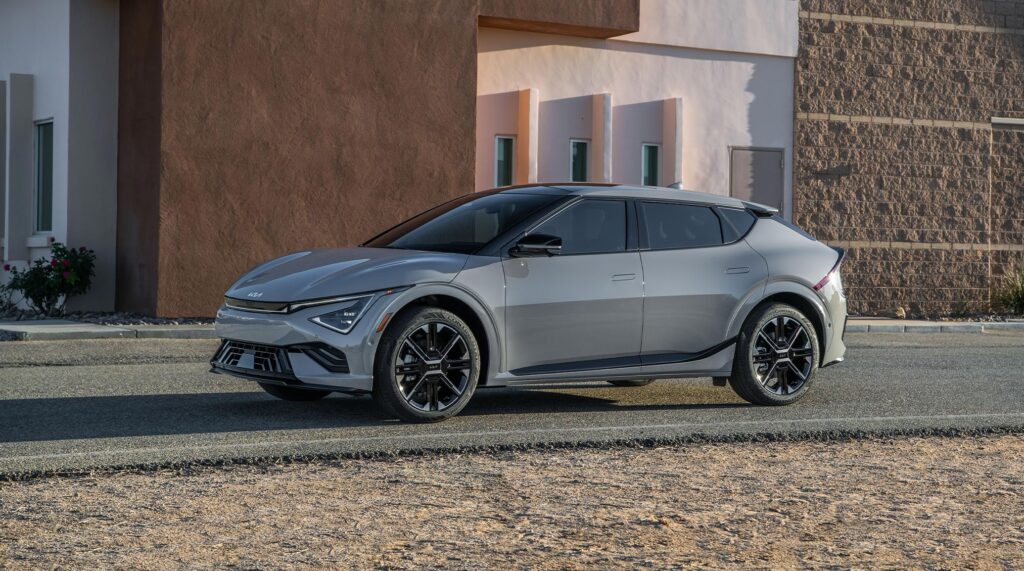
Electric cars changed the question from “How far can we drive?” to “How fast can we refill?” — and that’s exactly where the Kia EV6 quietly flexes harder than most people expect.
We’ve all seen range numbers plastered everywhere, but charging speed? That’s the difference between a road trip that feels like a coffee break… and one that feels like a layover in an airport lounge you never wanted to visit.
So let’s unpack the charging speed of the Kia EV6 — not just the brochure version, but the real-life experience, the physics behind it, and how we can actually use it smarter.
Content in this publication
- Why Charging Speed Matters More Than Range
- The Technology That Makes the EV6 Special
- Understanding the 800V Charging System
- Peak vs Sustained Charging Speed
- Real Charging Times (0-100%)
- Why 10%-80% Is the Sweet Spot
- Charging Speed vs Battery Size
- Temperature: The Invisible Charging Enemy
- Charging Speeds in Cold Weather
- The Charging Curve Explained Simply
- Charging Speed vs Real-World Travel Time
- Best Chargers for the Kia EV6
- Home Charging Strategy
- Does Fast Charging Damage the Battery?
- Efficiency vs Charging Speed
- Road Trip Strategy With the EV6
- Urban Charging vs Highway Charging
- How It Compares to Typical EV Charging Speeds
- Charging Cost Considerations
- Battery Longevity and Charging Habits
- The Psychological Effect of Fast Charging
- Common Myths About EV6 Charging
- When the EV6 Charges Slow
- Charging Speed Tips We Learned the Hard Way
- The Future of Charging and Why the EV6 Is Future-Proof
- Closing Thoughts — The Real Meaning of Fast Charging
- FAQs
Why Charging Speed Matters More Than Range
We used to obsess over battery size the way people once obsessed over megapixels in cameras. Bigger looked better — but usability told another story.
The Road-Trip Reality
Imagine two EVs:
- Car A: 550 km range, 90-minute fast charge
- Car B: 430 km range, 18-minute fast charge (EV6 territory)
Which gets us to the destination faster?
Usually Car B.
Because charging speed determines downtime, not distance.
What actually matters is:
Total trip time = driving time + charging time
The Kia EV6 dramatically reduces the second half of that equation.
The Technology That Makes the EV6 Special
Most EVs operate on a 400-volt electrical architecture.
The Kia EV6 uses 800-volt ultra-fast charging — and that’s not marketing fluff. That’s physics.
Why Higher Voltage Changes Everything
Higher voltage means:
- Lower heat
- Higher efficiency
- Faster energy transfer
- Less battery stress
In simple terms, electricity flows like water through a pipe — higher voltage makes the pipe wider.
Understanding the 800V Charging System
What It Actually Does
The EV6 can accept extremely high power input from compatible chargers.
Instead of slowly filling like a bathtub, it fills like a pressure washer.
Typical Peak Charging Power
- Up to 240 kW+ on compatible DC chargers
But peak numbers don’t tell the full story…
Peak vs Sustained Charging Speed
Many EVs advertise big peak numbers — then immediately slow down.
The EV6 holds speed longer.
Charging Curve Behavior
The EV6 maintains high charging rates from roughly:
- 10% → 60% very fast
- 60% → 80% still fast
- Above 80% slows down (like all lithium batteries)
This flat charging curve is what makes it road-trip friendly.
Real Charging Times (0-100%)
Let’s translate specs into actual time.
Ultra-Fast DC Charger (350 kW station)
- 10% → 80%: ~18 minutes
- 10% → 90%: ~25 minutes
- 0% → 100%: ~40-45 minutes
Fast DC Charger (150 kW)
- 10% → 80%: ~25 minutes
Public AC Charger (11 kW)
- 0% → 100%: ~7 hours
Home Charger (7 kW wallbox)
- Overnight: ~10-11 hours
Why 10%-80% Is the Sweet Spot
Lithium batteries don’t charge linearly.
Think of pouring soda into a glass:
- First half pours quickly
- Last bit foams and slows down
The EV6 optimizes for the useful zone — where drivers actually operate.
Charging Speed vs Battery Size
The EV6 comes with two main battery capacities:
58 kWh Battery
Faster percentage charging
Shorter sessions
Great for city drivers
77.4 kWh Battery
More range
Same ultra-fast peak power
Best for highways
Ironically, the bigger battery often finishes trips sooner — fewer stops.
You may be interested in reading Kia EV6 Battery Replacement Cost: The Real Numbers Behind Electric Ownership
Temperature: The Invisible Charging Enemy
Cold batteries charge slowly.
The EV6 solves this with battery preconditioning.
What Preconditioning Does
When navigating to a fast charger:
- Heats battery before arrival
- Unlocks maximum speed immediately
- Avoids slow cold starts
Without it, charging speed can drop by 50%.
Charging Speeds in Cold Weather
Typical winter EV behavior:
Plug in → wait 10 minutes → charging ramps up
EV6 behavior:
Plug in → full speed almost instantly
This matters massively for winter road trips.
The Charging Curve Explained Simply
Let’s visualize energy intake like eating pizza:
| Battery Level | Charging Speed |
|---|---|
| 0–20% | Hungry mode |
| 20–60% | Fast eating |
| 60–80% | Slowing down |
| 80–100% | Full stomach |
The EV6 stays in “fast eating” longer than most EVs.
Charging Speed vs Real-World Travel Time
Here’s the surprising truth:
A faster charging EV can beat a longer-range EV.
Example 900 km Journey
Typical long-range EV:
- 1 long stop: 45-60 min
Kia EV6:
- 2 short stops: 18 min each
- Total: ~36 minutes
We arrive earlier — even with less range.
Best Chargers for the Kia EV6
To unlock full speed, we need the right station.
Ideal Chargers
- 350 kW ultra-fast DC stations
- High-power CCS networks
Good Chargers
- 150 kW DC
Avoid for Trips
- 50 kW chargers (works, but slow)
Home Charging Strategy
Daily life rarely needs fast charging.
Best Routine
Charge nightly between:
- 20% → 80%
Why?
- Battery longevity
- Lower electricity cost
- Instant readiness every morning
Does Fast Charging Damage the Battery?
Short answer: No — not significantly.
Why the EV6 Handles It Well
- Liquid cooling system
- Advanced battery management
- Voltage-optimized chemistry
The car controls the stress — not the charger.
Efficiency vs Charging Speed
Fast charging isn’t just speed — it’s usable energy.
The EV6 converts power efficiently, meaning:
More kilometers per charging minute
That’s the metric that actually matters.
Road Trip Strategy With the EV6
We don’t charge to 100%.
We hop chargers.
Optimal Travel Pattern
- Drive to 15%
- Charge to 70%
- Repeat
Shortest overall time.
Urban Charging vs Highway Charging
City Life
- Home AC charging dominates
- Fast charging rarely needed
Highway Travel
- Ultra-fast charging becomes the superpower
The EV6 is built around highway convenience.
You may be interested in readingKia EV6 Battery Replacement Cost: The Real Numbers Behind Electric OwnershipYou may be interested in reading
 Kia EV6 12V Battery Reset Button — Complete Practical Guide
How It Compares to Typical EV Charging Speeds
Average EV fast charge:
- 30–45 minutes to 80%
Kia EV6:
- ~18 minutes
That difference changes ownership psychology — charging stops become snack breaks, not meal breaks.
Charging Cost Considerations
Faster charging can cost more per kWh — but less per trip.
Why?
Shorter stops mean:
- Less waiting
- More flexible routing
- Less range anxiety detours
Time is currency too.
Battery Longevity and Charging Habits
Best Practices
- Keep daily charge between 20–80%
- Fast charge mainly during travel
- Avoid constant 100% parking
The EV6 tolerates abuse better than most EVs — but good habits still help.
The Psychological Effect of Fast Charging
Here’s something interesting.
After living with ultra-fast charging, slow EVs feel broken.
We stop planning around chargers.
We just drive.
That’s the real innovation — not speed, but freedom.
Common Myths About EV6 Charging
Myth: Needs 350 kW to be fast
False — still fast at 150 kW.
Myth: Fast charging kills battery
False — modern EV thermal systems prevent this.
Myth: Big battery means slow charging
False — EV6 charges faster than many smaller batteries.
When the EV6 Charges Slow
Situations that reduce speed:
- Cold battery (without preconditioning)
- 80%+ battery level
- Shared charging stalls
- Low-power stations
Not car limitations — physics limitations.
Charging Speed Tips We Learned the Hard Way
- Arrive under 20% for fastest sessions
- Leave at 70-80%
- Use navigation for preconditioning
- Prefer fewer short stops over one long stop
The Future of Charging and Why the EV6 Is Future-Proof
Because of its 800V system:
Future chargers = faster EV6
Most EVs are already near their hardware limit.
The EV6 still has headroom.
Closing Thoughts — The Real Meaning of Fast Charging
The Kia EV6 doesn’t just charge quickly — it changes how we think about electric travel.
Instead of planning charging…
Charging disappears into the background.
We stretch our legs, grab coffee, check our phone — and the car is ready before we are.
That’s when technology stops being impressive… and starts being invisible.
FAQs
1. How long does the Kia EV6 take to charge at a fast charger?
Around 18 minutes from 10% to 80% on a 350 kW ultra-fast charger.
2. Can I charge the EV6 at home?
Yes — overnight charging using a wallbox takes about 10–11 hours.
3. Does charging speed slow after 80%?
Yes, all lithium batteries slow near full capacity to protect longevity.
4. Is ultra-fast charging safe for daily use?
Yes, but it’s best reserved for trips while AC charging handles daily needs.
5. Why is the EV6 faster than most EVs?
Its 800-volt architecture allows higher power intake with lower heat.
You may be interested in readingKia EV6 Battery Replacement Cost: The Real Numbers Behind Electric OwnershipYou may be interested in reading
Kia EV6 12V Battery Reset Button — Complete Practical GuideYou may be interested in reading
Kia EV6 12V Battery Warning — What It Means & How We Fix ItIf you want to know other articles similar to Kia EV6 Charging Speed — The Real-World Guide We Wish We Had First you can visit the category Service and Parts.
Audi A4 Fuel Tank Capacity: Complete Guide by Generation
Audi A4 Towing Capacity: Complete Guide for Safe Towing
Audi A4 Service Reset: Complete Guide for Every Generation
Audi A4 Weight: Complete Guide by Model, Generation, and Drivetrain
Audi A4 Tyre Size: Complete Fitment and Buying Guide
Hyundai Palisade Tyre Size: Complete Wheel and Tyre Guide
Leave a Reply
More content of your interest