
Audi A4 Weight: Complete Guide by Model, Generation, and Drivetrain

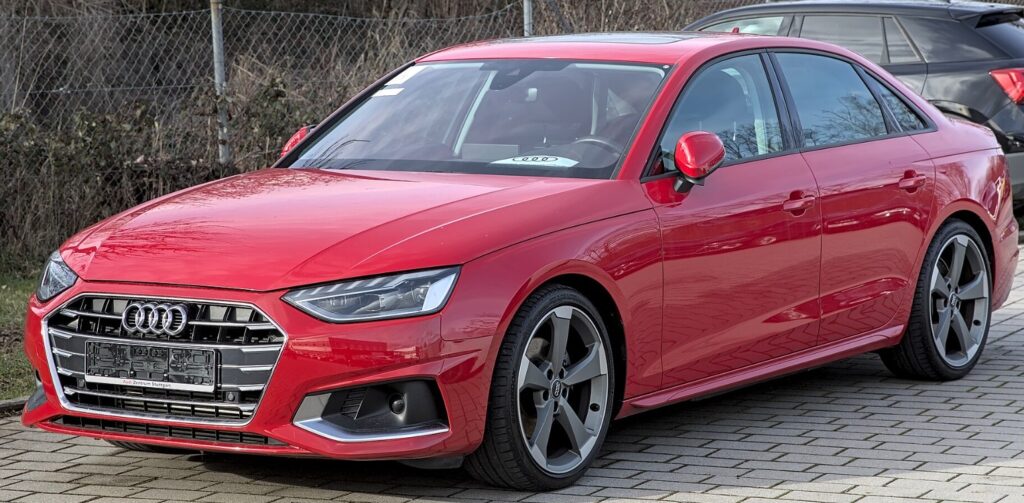
The Audi A4 weight might look like a simple specification, but there is rarely one number that applies to every A4. Engine choice, drivetrain, transmission, body style, trim level, and even optional equipment can shift the figure by hundreds of pounds.
That distinction matters more than we might initially think. Weight influences acceleration, fuel consumption, braking, tire wear, payload, handling, and even how a car feels when we throw it into a corner. Two Audi A4s parked beside one another may look almost identical yet carry noticeably different amounts of mass underneath their sheet metal.
For most modern versions, we can expect an Audi A4 sedan to weigh somewhere around 3,300 to 3,800 lb (roughly 1,500 to 1,725 kg), although earlier generations can be lighter and certain quattro, diesel, Avant, and high-specification versions can be heavier.
In this guide, we'll break down Audi A4 weight by generation, explain why those numbers change, compare sedan and Avant models, and look at what all that mass actually means once we're behind the wheel.
Content in this publication
- How Much Does an Audi A4 Weigh?
- Curb Weight vs Gross Vehicle Weight: What's the Difference?
- Audi A4 Weight by Generation
- B5 Audi A4 Weight: 1990s Simplicity
- B6 Audi A4 Weight
- B7 Audi A4 Weight
- B8 Audi A4 Weight
- B9 Audi A4 Weight
- Audi A4 Sedan Weight vs Avant Weight
- Audi A4 allroad Weight
- Does quattro Make the Audi A4 Much Heavier?
- How Engine Size Changes Audi A4 Weight
- How Transmission Type Affects Weight
- Does Audi A4 Weight Affect Fuel Economy?
- How Weight Influences Audi A4 Performance
- Does Audi A4 Weight Affect Tire Wear?
- Audi A4 Weight Distribution and Handling
- What Adds Weight to an Audi A4?
- Audi A4 Payload Capacity and Passenger Weight
- Audi A4 vs BMW 3 Series Weight
- Audi A4 vs Mercedes-Benz C-Class Weight
- Is the Audi A4 Considered a Heavy Car?
- Can You Reduce Audi A4 Weight?
- Why Audi Worked So Hard to Reduce A4 Weight
- How to Find the Exact Weight of Your Audi A4
- Why Published Audi A4 Weight Figures Sometimes Disagree
- What Is the Best Audi A4 Weight for Performance?
- Audi A4 Weight in Pounds and Kilograms
- Audi A4 Weight: The Bottom Line
- Frequently Asked Questions About Audi A4 Weight
How Much Does an Audi A4 Weigh?
Most recent Audi A4 models sit comfortably within the middle of the compact luxury-car weight spectrum.
A typical late-generation A4 sedan weighs approximately:
- 3,400–3,800 lb
- 1,540–1,725 kg
Earlier A4s can fall below that range, while an A4 Avant or A4 allroad generally carries additional weight because of its larger body, cargo hardware, suspension components, and drivetrain configuration.
For example, Audi's 2025 U.S. A4 family consisted of the A4 S line 45 TFSI, A4 allroad 45 TFSI, and S4, with the A4 and allroad using a 261-hp 2.0-liter turbocharged four-cylinder engine and quattro all-wheel drive.
That's important because quattro hardware adds mechanical components compared with an equivalent front-wheel-drive setup.
Quick Audi A4 Weight Overview
Although specifications differ according to market and configuration, a useful general reference looks like this:
| Audi A4 Version | Approximate Curb Weight |
|---|---|
| Early A4 sedan | 2,800–3,400 lb |
| Mid-generation A4 sedan | 3,200–3,700 lb |
| Modern A4 sedan | 3,400–3,800 lb |
| A4 Avant | 3,400–3,900 lb |
| A4 allroad | 3,700–4,000 lb |
| Performance-oriented versions | Often 3,600+ lb |
These figures should be treated as ranges rather than universal specifications. If we're checking weight for registration, towing, transportation, tire loading, or a trailer, the vehicle's identification label and owner's documentation are better references than a generic online figure.
Curb Weight vs Gross Vehicle Weight: What's the Difference?
One reason Audi A4 weight searches become confusing is that websites often mix several different measurements.
They are not interchangeable.
Audi A4 Curb Weight
Curb weight is essentially the weight of the vehicle in normal operating condition with its required fluids and standard equipment but without passengers or significant cargo.
Think of it as the car standing at the starting line before everyone climbs aboard.
This is usually the figure we're talking about when we ask, "How much does an Audi A4 weigh?"
Audi A4 Gross Vehicle Weight Rating
Gross Vehicle Weight Rating, commonly shortened to GVWR, represents the maximum permitted operating weight of the vehicle.
It includes:
- The car itself
- Driver
- Passengers
- Luggage
- Accessories
- Other carried loads
GVWR is therefore always higher than curb weight.
Why GVWR Matters
Suppose our A4 weighs around 3,600 lb empty. Adding four adults, suitcases, child seats, and other equipment can quickly add several hundred pounds.
That is why payload limits exist.
We shouldn't simply assume that a five-seat car can safely carry any combination of five occupants and luggage. The manufacturer's weight limits still apply.
Audi A4 Weight by Generation
The A4 has evolved enormously since the 1990s. It has gained safety structures, electronic systems, larger wheels, more powerful engines, sophisticated transmissions, and increasingly advanced interiors.
Yet Audi has simultaneously fought against unnecessary mass through lightweight engineering.
Let's follow that evolution.
B5 Audi A4 Weight: 1990s Simplicity
The first-generation B5 Audi A4, introduced during the 1990s, was noticeably lighter than today's model.
Depending on engine and drivetrain, many versions weighed roughly 2,800 to 3,400 lb (1,270 to 1,540 kg).
That sounds almost featherweight next to some modern luxury vehicles.
Why?
Cars of this period generally had:
- Smaller wheels
- Less sound insulation
- Simpler infotainment
- Fewer electronic driver aids
- Lighter seats
- Less crash-safety hardware
- Fewer electric motors
A basic front-wheel-drive four-cylinder B5 could therefore be considerably lighter than a V6 quattro model.
Does the Lower B5 Weight Improve Driving Feel?
In some ways, absolutely.
Less mass can make a car feel more delicate and responsive. Steering changes direction with less inertia, brakes have less energy to dissipate, and suspension components don't have to wrestle with as much weight.
However, the B5 also lacks much of the refinement and structural sophistication of a modern A4.
It is the automotive equivalent of a lightweight hiking boot compared with a modern luxury trainer: lighter, yes, but designed for a different era.
B6 Audi A4 Weight
The B6 generation arrived with a more substantial body, upgraded interior, improved safety technology, and broader engine selection.
Depending on specification, B6 Audi A4 weight generally falls around 3,200 to 3,700 lb (approximately 1,450 to 1,680 kg).
Quattro versions sit toward the heavier end.
Why the B6 Became Heavier
Some of that additional mass came from things buyers actually wanted:
- Improved body rigidity
- Better crash protection
- Larger engines
- Automatic transmissions
- quattro hardware
- Better seats
- Additional airbags
- More insulation
The A4 was maturing from a relatively compact premium sedan into something more polished.
B7 Audi A4 Weight
The B7 wasn't a complete clean-sheet revolution, so its overall weight remained relatively close to that of the B6.
A typical B7 can weigh approximately 3,200 to 3,800 lb, depending heavily on engine and drivetrain.
A four-cylinder front-wheel-drive sedan sits at a very different point on the scale from a V6 quattro.
Engine Choice Makes a Bigger Difference Than It Looks
Open the hood and the explanation becomes obvious.
A larger engine requires more than simply a bigger block. We may also find different:
- Cooling systems
- Exhaust components
- Transmissions
- Brakes
- Suspension hardware
- Driveline parts
Extra horsepower rarely travels alone.
It brings friends—and they all weigh something.
B8 Audi A4 Weight
With the B8 generation, Audi dramatically modernized the A4's platform and proportions.
Most mainstream B8 sedans weigh roughly 3,400 to 3,800 lb, although specifications vary considerably.
What makes the B8 interesting is its balance between size and perceived agility. It grew into a mature luxury sedan without necessarily feeling like a heavy cruiser.
Front-Wheel Drive vs quattro Weight
Here's where configuration becomes especially important.
A quattro A4 requires additional components to deliver power to four wheels rather than two.
That typically means additional:
- Driveshaft hardware
- Differentials
- Axles
- Mounting structures
Consequently, an equivalent quattro A4 generally weighs more than a front-wheel-drive model.
Yet many of us would happily accept that penalty.
Why? Because quattro provides the traction characteristics that have become one of Audi's signatures.
B9 Audi A4 Weight
The B9 generation demonstrates how clever engineering can stop a car from becoming dramatically heavier even as technology multiplies.
When Audi introduced this generation, it said the redesigned A4 could be up to 120 kg lighter than its predecessor, depending on configuration. Audi also highlighted improvements to the platform, transmissions, aerodynamics, and efficiency.
That is significant.
Luxury cars naturally want to gain weight. Add another screen here, another sensor there, larger wheels, better seats, additional structural reinforcement—and kilograms accumulate like coins in a jar.
Audi had to remove mass elsewhere to keep the equation under control.
Typical B9 Audi A4 Curb Weight
Depending on year and market, mainstream B9 sedans commonly land around 3,400 to 3,800 lb (roughly 1,540 to 1,725 kg).
Later U.S.-market cars became particularly easy to distinguish because quattro became central to the lineup. For the 2025 model year, Audi's U.S. A4 S line 45 TFSI combined a 261-hp four-cylinder engine with quattro and the S tronic transmission.
That gives us a useful reminder: whenever we compare two published Audi A4 weight figures, we should first verify whether we're actually looking at equivalent vehicles.
Audi A4 Sedan Weight vs Avant Weight
The sedan is usually lighter than the equivalent Audi A4 Avant.
That's hardly surprising.
The Avant needs a longer roof structure, larger tailgate, cargo-area trim, additional glass, and associated components.
How Much Heavier Is an A4 Avant?
The precise difference depends on engine and trim, but an Avant can weigh tens or even more than a hundred pounds above a similarly configured sedan.
Yet that additional mass buys genuine practicality.
Audi's final UK-market A4 Avant, for example, offered five seats and a 495-liter luggage compartment, alongside a power-operated tailgate and split-folding rear seats.
So we shouldn't view the additional weight purely as a disadvantage.
We're effectively exchanging a small amount of lightness for much greater cargo flexibility.
Audi A4 allroad Weight
The A4 allroad takes the Avant idea another step.
It combines wagon practicality with standard all-wheel-drive hardware, a more adventurous suspension setup, exterior protection, and equipment intended to give the car a crossover-like personality.
As a result, the allroad is generally one of the heavier members of the A4 family.
A rough expectation is approximately 3,700 to 4,000 lb, depending on model year and equipment.
Why Is the A4 allroad Heavier?
Several things contribute:
- Wagon body structure
- quattro drivetrain
- Larger wheels and tires
- Suspension hardware
- Body cladding
- Additional convenience equipment
It's still far from enormous, though.
Compared with a full-size SUV, an A4 allroad can feel relatively lean.
Does quattro Make the Audi A4 Much Heavier?
Yes, but "much" depends on perspective.
All-wheel drive inevitably brings extra components, meaning an otherwise comparable quattro car will normally weigh more than its front-wheel-drive counterpart.
Audi continues to use quattro technology throughout numerous models, including the A4 and A4 allroad.
But weight isn't the only part of the equation.
Quattro can improve:
- Launch traction
- Wet-road confidence
- Snow performance
- Power delivery
- Corner-exit grip
So while enthusiasts love discussing every pound, the extra hardware can deliver real-world advantages.
Is the Added Weight Worth It?
For a driver living somewhere with frequent rain, snow, or slippery winter roads, we'd often say yes.
For someone living in a dry climate who prioritizes simplicity and fuel efficiency, a lighter front-wheel-drive version—where available—might be more attractive.
There is no universal winner.
How Engine Size Changes Audi A4 Weight
An Audi A4's engine plays a major role in determining overall weight.
Historically, the A4 has been offered with a surprisingly broad engine lineup: compact gasoline engines, turbo diesels, V6 units, and multiple performance derivatives.
Audi's launch information for the B9 generation, for instance, described four- and six-cylinder powertrains with various transmission combinations.
Four-Cylinder Audi A4
Four-cylinder versions tend to offer the sweet spot.
They combine reasonable mass with enough torque for confident everyday acceleration.
Modern turbocharging means we no longer need a large engine simply to make decent power.
The 2025 U.S.-market A4 45 TFSI, for example, produced 261 hp and 273 lb-ft of torque from a 2.0-liter four-cylinder engine.
That's plenty of muscle without putting a bulky six-cylinder engine over the front axle.
Six-Cylinder Versions
Older and performance-focused A4-family models fitted with larger engines typically carry more front-end weight.
That can change the personality of the car.
A lighter four-cylinder A4 may feel nimble and neutral, while a larger-engine model can feel more muscular and planted.
Neither sensation is inherently better.
They're simply different flavors.
How Transmission Type Affects Weight
Manual transmissions historically tended to be lighter than sophisticated automatic gearboxes, although modern transmission design makes broad comparisons difficult.
Across different A4 generations we've seen:
- Manual transmissions
- Traditional torque-converter automatics
- Multitronic CVTs
- S tronic dual-clutch transmissions
- Tiptronic automatics
Each setup has its own mass.
That's another reason an Audi A4 weight quoted for one trim should not automatically be applied to every other version from the same year.
Does Audi A4 Weight Affect Fuel Economy?
Yes.
Moving mass requires energy.
Every time we accelerate from a stop, the engine has to overcome inertia. A heavier vehicle generally needs more energy than a lighter one under comparable conditions.
But weight is only one ingredient in fuel consumption.
Other major factors include:
- Engine efficiency
- Aerodynamics
- Transmission gearing
- Tire width
- Driving speed
- Traffic conditions
- Temperature
- Elevation
- Driving style
Audi's engineering work illustrates this perfectly. When the B9 A4 launched, the company paired weight reductions of up to 120 kg with aerodynamic and powertrain improvements and claimed fuel-efficiency gains of up to 21 percent versus its predecessor in relevant configurations.
Weight reduction works best when it is part of a bigger efficiency strategy.
How Weight Influences Audi A4 Performance
Imagine running around a track wearing a backpack filled with bricks.
That's basically what additional vehicle weight does to performance.
The engine must accelerate it. The brakes must stop it. The suspension must control it. The tires must change its direction.
Acceleration
For two cars with identical power, the lighter one normally has the acceleration advantage.
That is why power-to-weight ratio matters.
An extra 100 hp sounds spectacular, but if the vehicle carrying it is dramatically heavier, some of the advantage disappears.
Braking
Brakes convert kinetic energy into heat.
More vehicle mass means more energy must be managed when we slow down.
This doesn't automatically mean a heavier A4 has poor brakes—manufacturers can fit larger braking hardware—but mass increases the workload.
Cornering
Weight also affects how eagerly a vehicle changes direction.
A lighter car can often feel sharper.
Yet distribution matters almost as much as total weight.
A well-balanced 3,600-lb car can feel far more agile than a poorly balanced vehicle weighing considerably less.
That's where chassis tuning enters the picture.
Does Audi A4 Weight Affect Tire Wear?
Potentially.
Tires support the vehicle continuously, and a heavier car places more load through them.
But tire wear depends on many factors beyond curb weight:
- Tire pressure
- Alignment
- Driving style
- Tire compound
- Rotation schedule
- Suspension condition
- Road surface
- Climate
Hard acceleration and aggressive cornering can destroy tires on a lightweight car much faster than relaxed motorway driving does on a heavier Audi.
Weight matters—but our right foot matters too.
Audi A4 Weight Distribution and Handling
Looking only at curb weight tells us how heavy the car is, not where that weight sits.
That's a crucial difference.
A vehicle with excessive weight concentrated ahead of the front axle can tend toward understeer. Engineers therefore spend enormous effort positioning heavy components strategically.
Modern platforms, compact turbocharged engines, aluminum components, and carefully designed suspension systems help keep the A4 composed.
Why the A4 Doesn't Feel as Heavy as the Scale Suggests
A good chassis performs a small magic trick.
It hides mass.
Responsive steering, controlled body movement, strong brakes, appropriate suspension damping, and abundant quattro traction can make an A4 feel smaller and lighter than its specifications suggest.
That's why reading a curb-weight figure never tells us the entire driving story.
What Adds Weight to an Audi A4?
Options matter more than many shoppers realize.
A base-specification car and a fully loaded model don't necessarily weigh the same.
Features that can contribute additional weight include:
- Panoramic or glass sunroof
- Larger alloy wheels
- Electric seats
- Upgraded audio systems
- Larger brakes
- quattro drivetrain hardware
- Additional driver-assistance equipment
- Power tailgate components
- Larger tires
- Tow-related hardware where offered
A few pounds here and there hardly sound dramatic.
But add enough equipment and the difference becomes noticeable.
Do Bigger Wheels Increase Audi A4 Weight?
Sometimes.
Large alloy wheels aren't automatically heavier because wheel design and materials matter. However, larger wheel-and-tire packages frequently increase unsprung and rotational mass.
That's particularly relevant because rotational weight must both move forward and rotate.
A heavy wheel can therefore have a disproportionate effect on acceleration, braking, and suspension response.
Bigger isn't always better.
Audi A4 Payload Capacity and Passenger Weight
Curb weight shouldn't be confused with payload.
Payload represents the amount of passenger and cargo weight the car is designed to carry.
Suppose we're loading an A4 for a holiday:
four adults, four suitcases, a stroller, bags, drinks, and assorted "we might need this" items.
Suddenly the car is transporting considerably more than its empty curb weight.
Where Should We Find the Correct Payload Limit?
Check:
- The certification or vehicle-information label.
- The owner's manual.
- Official documentation for the specific model and market.
Do not rely on a generic internet specification when maximum legal load matters.
Audi A4 vs BMW 3 Series Weight
The A4 and BMW 3 Series compete almost nose-to-nose, and their weights frequently occupy similar territory.
Depending on drivetrain and engine, either one can be lighter.
This is why declaring one brand "lighter" isn't especially useful unless we're comparing exact configurations.
A rear-wheel-drive four-cylinder BMW shouldn't automatically be compared with an all-wheel-drive Audi loaded with options.
That's apples versus quattro-flavored oranges.
Audi A4 vs Mercedes-Benz C-Class Weight
The same principle applies to the Mercedes-Benz C-Class.
All three German compact luxury sedans have grown in size and sophistication over the years, with modern versions typically weighing considerably more than their ancestors.
Technology, crash safety, larger dimensions, hybrid systems on some rivals, luxury features, and larger wheels all contribute.
The Audi A4 remains broadly competitive in this area rather than standing out as either remarkably light or excessively heavy.
Is the Audi A4 Considered a Heavy Car?
Not really.
A modern A4 is heavier than an economy hatchback but considerably lighter than many SUVs and electric vehicles.
Think of it as a middleweight.
It has enough mass to feel substantial and refined without becoming cumbersome.
That sensation is one of the qualities many drivers appreciate about the A4: close the door and the car feels solid, yet on a twisty road it doesn't behave like a rolling bank vault.
Can You Reduce Audi A4 Weight?
Technically, yes.
But for a road car, major weight reduction rarely makes financial or practical sense.
Enthusiasts might remove or replace:
- Spare wheel equipment
- Heavy aftermarket audio
- Large wheels
- Rear seats
- Interior components
- Factory seats
Performance-focused builds may go much further.
Should We Remove Weight From a Daily A4?
Usually not.
Saving 30 lb while making the car noisier, less comfortable, or less practical defeats the purpose of owning a luxury sedan.
A better strategy is often simply avoiding unnecessarily heavy aftermarket equipment.
If performance is the goal, good tires and quality suspension components may transform the driving experience far more than removing a few kilograms from the interior.
Why Audi Worked So Hard to Reduce A4 Weight
Weight reduction is one of those rare engineering goals that benefits almost everything.
Less mass can improve:
- Acceleration
- Braking
- Efficiency
- Handling
- Ride control
- Emissions
- Component longevity
But engineers cannot simply make every component thinner.
Safety, durability, rigidity, comfort, and cost all matter.
That's why Audi's claim that the B9 generation became up to 120 kg lighter than its predecessor is more interesting than it initially sounds.
Achieving that while simultaneously modernizing the vehicle requires optimization across the entire platform.
How to Find the Exact Weight of Your Audi A4
If we're trying to determine the weight of one particular Audi A4 rather than the model family in general, broad online ranges aren't enough.
Use the VIN and vehicle documentation whenever possible.
Check the Vehicle Label
Depending on country, a manufacturer's label can provide information relating to maximum authorized vehicle and axle weights.
It is often located around the:
- Driver's door opening
- Door pillar
- Engine bay
- Vehicle documentation
Check the Owner's Manual or Official Specifications
Specifications differ according to country.
A UK A4 isn't necessarily identical to a U.S., Canadian, Australian, or European-market car.
Engines and trim packages can change dramatically.
Use a Certified Vehicle Scale
Need the vehicle's actual operating weight?
A public or commercial vehicle scale removes the guesswork.
This is particularly useful if the car has:
- Aftermarket wheels
- Suspension modifications
- Audio installations
- Cargo systems
- Other major accessories
Real weight beats brochure weight.
Why Published Audi A4 Weight Figures Sometimes Disagree
You might open three websites and find three different answers.
That doesn't necessarily mean somebody made a mistake.
One figure may represent:
- Minimum curb weight
- DIN weight
- EU weight
- U.S. curb weight
- A different drivetrain
- Another trim level
- Another engine
- A different body style
Even market-specific definitions can change what is included in the published number.
Never Compare Weight Without Comparing Specifications
When researching an A4, match as many details as possible:
model year + body style + engine + transmission + drivetrain + trim + market.
That's the formula.
Skip one part and we may accidentally compare two cars that share a badge but not a specification.
What Is the Best Audi A4 Weight for Performance?
There isn't a magical number.
A lighter A4 has theoretical advantages, but we'd rather have a slightly heavier car with better suspension, tires, brakes, and power delivery than a lighter one that lacks those strengths.
Weight is just one part of the performance puzzle.
It's a bit like judging a footballer only by height. Interesting? Sure. Enough information to predict performance? Not remotely.
Audi A4 Weight in Pounds and Kilograms
Converting between the two systems is straightforward:
1 kilogram = approximately 2.205 pounds
So:
| Kilograms | Pounds |
| 1,400 kg | 3,086 lb |
| 1,500 kg | 3,307 lb |
| 1,600 kg | 3,527 lb |
| 1,700 kg | 3,748 lb |
| 1,800 kg | 3,968 lb |
This can be helpful when comparing North American specifications with European or UK data.
Audi A4 Weight: The Bottom Line
So, how much does an Audi A4 weigh?
For most examples, we're looking at roughly 3,300 to 3,800 lb, while certain early cars may weigh less and heavier Avant or allroad configurations can approach or move beyond the upper end of that range.
But the headline figure is only the beginning.
Body style matters. Engine matters. quattro matters. Transmission choice matters. Optional equipment matters. Even the way curb weight is defined in a particular market can alter the number we see printed in a specification sheet.
More importantly, Audi has spent decades managing that weight rather than simply allowing the A4 to become progressively heavier. The B9 generation was promoted as being up to 120 kg lighter than its predecessor despite its greater sophistication, illustrating just how seriously manufacturers treat every kilogram.
For everyday drivers, that's good news.
The A4 retains the reassuring solidity we expect from a premium sedan while remaining agile enough to make a winding road interesting. It's not a featherweight sports car, and it isn't trying to be. Instead, it walks the narrow bridge between comfort, refinement, practicality, and responsiveness—and weight is one of the invisible forces helping determine how successfully it does so.
Frequently Asked Questions About Audi A4 Weight
1. How much does an Audi A4 weigh in pounds?
Most Audi A4 sedans weigh approximately 3,300 to 3,800 pounds, depending on generation, engine, drivetrain, trim, and equipment. Earlier models can be lighter, while quattro and heavily equipped versions tend to sit toward the upper end.
2. How much does an Audi A4 weigh in kilograms?
A typical modern Audi A4 weighs approximately 1,500 to 1,725 kg. The precise number varies by model year and specification, so the official documentation for the exact vehicle should always take precedence.
3. Is an Audi A4 Avant heavier than the sedan?
Generally, yes. The Avant requires additional body structure, glass, cargo-area components, and tailgate hardware. The difference isn't enormous, but an equivalent Avant normally weighs more than an A4 sedan.
4. Does Audi quattro increase A4 weight?
Yes. An all-wheel-drive system requires additional driveline components, so a quattro A4 generally weighs more than a comparable front-wheel-drive model. The trade-off is improved four-wheel traction and power delivery.
5. Where can I find the exact weight of my Audi A4?
Check the vehicle identification and certification labels, owner's documentation, or official Audi specifications corresponding to your VIN and market. If you need the vehicle's actual loaded weight rather than its published curb weight, use a certified vehicle scale.
If you want to know other articles similar to Audi A4 Weight: Complete Guide by Model, Generation, and Drivetrain you can visit the category Service and Parts.
Nissan Qashqai Fuel Tank Capacity: Complete Guide

Suzuki Swift Fuel Tank Capacity: Complete Guide
Mazda CX-5 Weight (2013–2026): Complete Guide in Pounds and KG

Kia Sportage Dashboard Symbols and Warning Lights

MINI Cooper Weight (2002–2027): Complete Weight Chart & Guide

Toyota RAV4 Engine Sizes: Complete Guide (1994–2026)
Leave a Reply
More content of your interest