

Audi A4 Glow Plug Light Flashing: Causes, Diagnosis, and Fixes

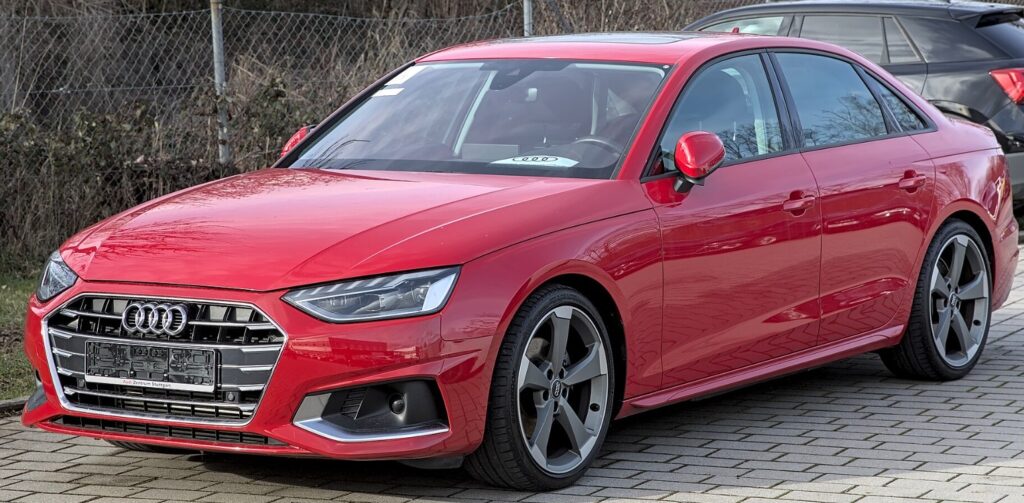
Seeing the Audi A4 glow plug light flashing while we are driving can be confusing. At first glance, we might assume the car simply has a bad glow plug. After all, the little coil-shaped symbol on the dashboard looks pretty specific. Yet on many diesel Audi A4 models, a flashing glow plug warning can mean something much broader.
Think of the glow plug light as the diesel Audi's version of a messenger. When it flashes after the engine has started, it may be telling us that the engine management system has detected a fault. The culprit could indeed be a glow plug, but it might also be a brake-light switch, EGR problem, turbo issue, sensor fault, diesel particulate filter problem, or another engine-management malfunction.
That distinction matters because replacing glow plugs without diagnosing the fault can turn into an expensive guessing game.
In this guide, we'll break down what the flashing glow plug light means, the most common causes, symptoms worth watching, diagnostic steps, repair options, and what we should do if the Audi suddenly loses power.
Content in this publication
- What Does the Glow Plug Light Mean on an Audi A4?
- Is a Flashing Glow Plug Light Serious?
- Most Common Causes of an Audi A4 Glow Plug Light Flashing
- 3. Brake Light Switch Failure
- 4. EGR Valve Problems
- 5. DPF Problems
- 6. Turbocharger or Boost Control Problems
- 7. Boost Pressure Sensor or MAP Sensor Fault
- 8. MAF Sensor Problems
- 9. Fuel Injector Problems
- 10. Fuel Pressure Problems
- 11. Throttle Body or Intake Flap Fault
- 12. Exhaust or Emissions Sensor Fault
- Audi A4 Glow Plug Light Flashing and Limp Mode
- Audi A4 Glow Plug Light Flashing but Car Drives Normally
- Audi A4 Glow Plug Light Flashing and Engine Management Light On
- How to Diagnose an Audi A4 Flashing Glow Plug Light
- Can We Drive With the Audi A4 Glow Plug Light Flashing?
- Does a Flashing Glow Plug Light Mean the Glow Plugs Need Replacing?
- How Are Bad Glow Plugs Actually Tested?
- Can a Low Battery Cause the Glow Plug Light to Flash?
- Can Cold Weather Cause the Warning?
- Can the DPF Cause the Glow Plug Light to Flash?
- How Much Does It Cost to Fix a Flashing Glow Plug Light?
- Should We Use an Audi Specialist?
- Mistakes to Avoid When the Glow Plug Light Starts Flashing
- How to Reduce the Chance of Future Diesel Problems
- Final Thoughts on the Audi A4 Glow Plug Light Flashing
- Frequently Asked Questions
- Why is my Audi A4 glow plug light flashing while driving?
- Can I keep driving my Audi A4 with the glow plug light flashing?
- Why is the glow plug light flashing and my Audi has no power?
- Can a bad brake light switch cause the glow plug light to flash?
- Will replacing the glow plugs stop the flashing light?
What Does the Glow Plug Light Mean on an Audi A4?
On a diesel Audi A4, the glow plugs help warm the combustion chambers before a cold engine starts. Diesel engines ignite fuel through compression rather than spark plugs, so additional heat can make cold starting easier.
Normally, we switch the ignition on and see the coil-shaped glow plug symbol illuminate briefly. Once the required preheating has taken place, the light disappears and we start the engine.
That's completely normal.
A flashing glow plug light after the engine is running, however, is a different story.
On many Audi and Volkswagen Group diesel vehicles, the glow plug warning lamp also doubles as an engine-management warning. When the engine control unit detects certain faults, it can flash the glow plug symbol to get our attention.
Solid Glow Plug Light vs Flashing Glow Plug Light
The behavior of the warning light gives us an important clue.
A solid light before starting usually represents normal diesel preheating. In cold weather, it may remain illuminated slightly longer.
A light that refuses to turn off after starting could point toward an issue within the glow plug system.
A flashing glow plug warning while driving frequently indicates a broader engine-management or electrical problem.
That means we shouldn't immediately order four new glow plugs simply because the dashboard shows a coil symbol.
Is a Flashing Glow Plug Light Serious?
Sometimes it is relatively minor. Other times, it can warn of a problem capable of putting the Audi into limp mode or eventually leaving us stranded.
The severity depends heavily on what other symptoms appear.
If the engine runs normally, there are no strange noises, and no additional warning lights appear, we may be dealing with something like a brake-light switch or intermittent sensor fault.
If the warning is accompanied by severe power loss, smoke, rough running, overheating, unusual turbo noises, or an oil-pressure warning, the situation deserves much more immediate attention.
When Should We Stop Driving?
Stop somewhere safe as soon as practical if we notice:
- Major loss of engine power
- Heavy smoke from the exhaust
- Violent shaking or misfiring
- Abnormal knocking or metallic noises
- An oil-pressure warning
- Excessive engine temperature
- Strong fuel or burning smells
- The engine repeatedly stalling
A flashing glow plug light alone doesn't automatically mean catastrophic engine failure, but combining it with serious symptoms changes the picture dramatically.
Most Common Causes of an Audi A4 Glow Plug Light Flashing
There isn't one universal cause because the warning is connected to the diesel engine-management system.
Still, several faults appear far more frequently than others.
1. Faulty Glow Plugs
Let's start with the obvious possibility.
Glow plugs eventually wear out. Their job is toughest during cold starts, and repeated heating cycles gradually take their toll.
A failed glow plug may cause:
- Difficult cold starting
- Rough running immediately after startup
- White smoke during cold starts
- Longer cranking
- Glow plug fault codes
A single defective plug may not make the car undriveable. Modern diesel engines can often start with one bad glow plug, particularly in mild weather.
Can Several Glow Plugs Fail Together?
They can, particularly on an older or higher-mileage engine.
If one glow plug has failed because of normal age rather than an unrelated electrical fault, the others may not be far behind. Mechanics sometimes recommend replacing the complete set depending on mileage, accessibility, condition, and the engine involved.
However, diagnosis should come first.
2. Glow Plug Control Module or Relay Fault
The glow plugs need electrical control, and failures aren't limited to the plugs themselves.
A defective glow plug control module can prevent one or more glow plugs from receiving the correct electrical supply.
This can produce symptoms almost identical to failed glow plugs.
Testing resistance at the plugs and checking their electrical supply helps us determine whether the problem lies with the plugs, wiring, or controller.
3. Brake Light Switch Failure
Here's one that surprises many Audi A4 owners.
A defective brake pedal or brake-light switch can sometimes trigger the flashing glow plug warning on Volkswagen Group diesel vehicles.
Why would a diesel preheating symbol care about the brake pedal?
Because the engine control system monitors braking inputs. Cruise control, throttle management, stability systems, and other functions may rely on accurate brake-switch information.
If the control unit sees an implausible signal, it can log a fault and illuminate the warning.
Check the Brake Lights First
Before diving deep into the engine bay, ask someone to stand behind the car while we press the brake pedal.
Check whether:
- All brake lights illuminate
- They switch off when we release the pedal
- They work consistently
- The high-mounted brake light operates
A faulty switch isn't the only explanation for dead brake lights, but this simple inspection can provide a valuable clue.
4. EGR Valve Problems
The exhaust gas recirculation system redirects a controlled amount of exhaust gas back into the engine's intake.
This helps reduce certain emissions, but diesel EGR systems live a dirty life. Carbon and oily deposits gradually accumulate, occasionally restricting movement or airflow.
An EGR fault may produce:
- Flashing glow plug warning
- Check engine light
- Poor acceleration
- Rough idle
- Hesitation
- Increased fuel consumption
- Black smoke
- Limp mode
A sticking EGR valve can sometimes be cleaned, while electrically or mechanically damaged units may require replacement.
Why Diesel EGR Systems Get Dirty
Diesel soot combines with oil mist from the crankcase ventilation system, forming sticky deposits.
Imagine blowing fireplace soot onto a lightly greased surface. Layer after layer builds until airflow passages and moving components struggle to do their jobs.
Short journeys and certain operating conditions can accelerate the process.
5. DPF Problems
The diesel particulate filter traps soot from the exhaust and periodically burns much of it away through regeneration.
When regeneration repeatedly fails or the filter becomes excessively loaded, the engine-management system may report faults.
Possible symptoms include:
- Glow plug light flashing
- DPF warning light
- Reduced engine power
- Increased idle speed
- Cooling fans continuing after shutdown
- Increased fuel consumption
- Frequent regeneration attempts
We shouldn't assume every DPF-related warning means the filter itself needs replacing.
A failed sensor, EGR problem, thermostat issue, injector fault, boost leak, or another engine problem may interfere with successful regeneration.
Don't Force a Regeneration Blindly
Driving aggressively in the hope of "clearing the DPF" isn't a universal cure.
If the car has a sensor failure or serious engine fault, repeated high-load driving may accomplish nothing.
Read the diagnostic codes first.
6. Turbocharger or Boost Control Problems
The Audi A4's turbocharging system depends on precise coordination between the turbocharger, actuators, vacuum systems on applicable engines, pressure sensors, intake hoses, and engine computer.
If actual boost pressure differs significantly from requested boost pressure, the ECU may enter limp mode.
Suddenly the Audi that normally pulls strongly can feel as though someone tied a trailer to the back.
Possible causes include:
- Split boost hose
- Loose intercooler connection
- Turbo actuator problem
- Vacuum leak
- Faulty boost pressure sensor
- Sticking turbo geometry
- Wastegate-related problems
- Turbocharger wear
Flashing Glow Plug Light and Loss of Power
This combination strongly suggests we should scan the engine-control system.
Loss of power doesn't automatically mean the turbo itself has failed. A relatively inexpensive hose or sensor can create remarkably similar symptoms.
That's why diagnosis matters.
7. Boost Pressure Sensor or MAP Sensor Fault
The engine computer needs to know how much pressure exists inside the intake system.
A contaminated or faulty manifold absolute pressure sensor can provide misleading information.
If the ECU expects one pressure level and sees another, it may detect an underboost, overboost, or implausible signal.
That could trigger warning lights or limp mode.
Cleaning may help when contamination is the problem, but an electrically failed sensor generally needs replacement.
8. MAF Sensor Problems
The mass airflow sensor measures incoming air.
Incorrect airflow readings can disrupt fueling, EGR control, turbo operation, and general engine performance.
Potential symptoms include:
- Hesitation
- Weak acceleration
- Rough running
- Poor fuel economy
- Excessive smoke
- Engine-management warnings
However, we shouldn't condemn the MAF based purely on symptoms. Air leaks and EGR faults can produce similar behavior.
9. Fuel Injector Problems
Modern TDI engines depend on extremely precise fuel injection.
A failing injector may upset combustion enough to generate engine faults and poor running.
We might notice:
- Rough idle
- Difficult starting
- Diesel knock
- Smoke
- Poor acceleration
- Increased fuel consumption
- Misfire-like behavior
Injector problems can become expensive, making accurate diagnosis particularly important.
Injector Fault Doesn't Always Mean Injector Replacement
Wiring, electrical connectors, fuel pressure problems, and control-system issues can imitate an injector failure.
Checking live data and manufacturer-specific fault information helps separate the suspects.
10. Fuel Pressure Problems
Common-rail diesel systems operate at extremely high pressure.
If rail pressure becomes too low or unstable, the Audi may struggle to start, lose power, or enter limp mode.
Potential causes include problems involving:
- Fuel pressure sensor
- Pressure regulator
- High-pressure fuel pump
- Low-pressure supply
- Fuel filter
- Injectors
- Wiring
Because modern diesel injection systems operate under enormous pressure, they shouldn't be treated like old mechanical diesel systems. High-pressure fuel-system work belongs in properly equipped hands.
11. Throttle Body or Intake Flap Fault
Although diesel engines control power differently from petrol engines, many modern TDIs use an intake throttle or anti-shudder valve for functions such as EGR management and smooth engine shutdown.
Carbon contamination or actuator failure can cause this component to stick.
That may trigger fault codes, rough running, or engine-management warnings.
12. Exhaust or Emissions Sensor Fault
Modern Audi A4 diesel engines can contain a small army of sensors monitoring temperature, pressure, oxygen content, emissions, and exhaust after-treatment.
Depending on model year and engine, faults may involve components such as:
- Exhaust gas temperature sensors
- DPF differential pressure sensor
- Oxygen sensors
- NOx-related components
- Exhaust pressure sensors
One small sensor can sometimes light up the dashboard like a Christmas tree even when the engine itself is mechanically healthy.
Audi A4 Glow Plug Light Flashing and Limp Mode
Limp mode is a protective strategy.
When the ECU detects a condition that could affect engine operation or component safety, it may deliberately limit power.
We press the accelerator, but the Audi responds lazily. Turbo boost may feel dramatically reduced, and overtaking suddenly becomes something we'd rather not attempt.
Can Restarting the Engine Clear Limp Mode?
Sometimes.
Turning the car off and restarting it may restore normal power temporarily.
That doesn't mean we've repaired anything.
If a boost-control fault caused limp mode, restarting simply resets the protective state until the ECU detects the fault again.
We should treat a successful restart as a diagnostic clue, not a cure.
Audi A4 Glow Plug Light Flashing but Car Drives Normally
This scenario can be less alarming but still deserves attention.
When the car feels completely normal, potential causes may include intermittent electrical issues, brake-switch faults, emissions-system faults, or sensor errors that haven't yet affected drivability.
The biggest mistake here is ignoring the warning for months simply because the Audi still drives nicely.
Small faults have an annoying habit of becoming larger ones at inconvenient times.
Audi A4 Glow Plug Light Flashing and Engine Management Light On
When both the glow plug symbol and check engine light appear, the ECU has probably stored diagnostic information that can point us in the right direction.
This is where an OBD diagnostic scan becomes essential.
Generic readers can retrieve many powertrain codes, but Audi/VW-specific diagnostic software usually provides much deeper information.
Why Fault Codes Matter
Without codes, we're essentially throwing darts in a dark room.
With fault codes and live data, we can begin narrowing the diagnosis.
For example, diagnostic information may reveal problems involving:
- Glow plug circuit
- EGR flow
- Turbo underboost
- Turbo overboost
- DPF pressure
- Exhaust temperature
- Fuel rail pressure
- Brake-switch plausibility
- Airflow measurement
The code isn't always a direct instruction to replace the component named in its description, though.
A turbo underboost code doesn't automatically mean "buy a turbo." It means measured boost is lower than expected. We still need to determine why.
How to Diagnose an Audi A4 Flashing Glow Plug Light
We can approach the problem logically rather than firing the parts cannon.
Step 1: Pay Attention to Other Symptoms
Before switching anything off, notice what the Audi is doing.
Does it have full power? Is it smoking? Is the idle rough? Did the warning appear during acceleration? Is another dashboard symbol illuminated?
These details matter.
Step 2: Check the Brake Lights
Because the brake-switch circuit can be involved, checking brake-light operation takes only a minute.
Don't forget the third brake light.
Step 3: Scan the ECU
Retrieve stored and pending diagnostic trouble codes.
Record them before clearing anything.
Clearing codes immediately can erase useful clues, particularly intermittent faults.
Step 4: Inspect Visible Hoses and Connections
With the engine safely switched off and cooled where necessary, inspect accessible intake and boost hoses.
Look for:
- Loose connectors
- Disconnected hoses
- Oil around boost-hose joints
- Split rubber pipes
- Damaged wiring
- Rodent damage
A light coating of oil inside diesel intake plumbing isn't automatically abnormal. Heavy leakage around a connection, however, may help identify a boost leak.
Step 5: Review Live Data
For harder faults, diagnostic live data becomes extremely useful.
A technician might compare requested versus actual values for boost pressure, EGR operation, fuel pressure, airflow, or DPF differential pressure.
Instead of asking, "Which part might be bad?" we can ask a better question:
Which measurement isn't behaving the way the ECU expects?
That's how diagnosis becomes evidence rather than guesswork.
Can We Drive With the Audi A4 Glow Plug Light Flashing?
If the Audi drives normally and there are no severe symptoms, a short careful trip to obtain diagnosis may be reasonable.
But we should avoid treating that as permission to keep driving indefinitely.
If the vehicle enters limp mode, produces significant smoke, runs badly, or shows additional critical warnings, continuing the journey may make a manageable repair more expensive.
What About a Long Journey?
A long motorway trip isn't the best experiment when an unexplained engine-management warning is flashing.
Even if the Audi feels fine now, intermittent faults can worsen under sustained load.
Get it scanned first.
Does a Flashing Glow Plug Light Mean the Glow Plugs Need Replacing?
No.
This is probably the single most important takeaway from the entire article.
The dashboard symbol refers to the glow plug system, but Audi diesel engine management can use the flashing glow plug warning for other faults.
Replacing the plugs without checking codes could leave us with:
- New glow plugs
- The same flashing light
- Less money in our wallet
- The original fault untouched
That's not diagnosis. That's automotive roulette.
How Are Bad Glow Plugs Actually Tested?
Glow plugs can be electrically tested using appropriate diagnostic procedures and equipment.
A technician may check resistance, current draw, circuit operation, or fault memory depending on the engine.
A control-module or wiring problem should also be considered.
Be Careful Removing Old Glow Plugs
Glow plugs can seize in the cylinder head, particularly after years of heat cycles and carbon exposure.
Improper removal can cause them to break.
A straightforward maintenance job can then turn into something much less entertaining.
If removal resistance is abnormal, experience matters.
Can a Low Battery Cause the Glow Plug Light to Flash?
Low system voltage can cause strange behavior in modern vehicles, particularly during starting.
A weak battery may contribute to difficult starting and various voltage-related fault codes.
However, we shouldn't automatically blame the battery every time the glow plug light flashes.
If multiple seemingly unrelated electrical warnings appear after a difficult start, checking battery condition and charging voltage makes sense.
If one consistent engine fault repeatedly returns, diagnosis should focus on that circuit.
Can Cold Weather Cause the Warning?
Cold weather naturally makes the glow plug system work harder.
The preheating light may stay on longer before starting, and weak glow plugs become much more noticeable.
However, a flashing warning after startup should still be investigated.
Cold weather may expose an existing problem rather than create one from nowhere.
Can the DPF Cause the Glow Plug Light to Flash?
Yes, certain DPF or regeneration-related faults may trigger broader engine-management warnings.
But again, we need diagnostic codes.
A clogged DPF might be the result rather than the root cause.
For example, if a faulty sensor prevents regeneration from completing correctly, replacing or cleaning the DPF without fixing the sensor doesn't solve the underlying problem.
Short Trips and Diesel A4 Ownership
Diesel engines generally appreciate reaching full operating temperature regularly.
Repeated very short trips can make life more difficult for emissions systems because the exhaust may not remain hot enough for optimal regeneration conditions.
That doesn't mean every city-driven A4 will develop DPF problems, but driving patterns can certainly influence the system.
How Much Does It Cost to Fix a Flashing Glow Plug Light?
There is no useful single repair price because the warning covers such a wide range of possible faults.
At one end of the spectrum, the cause could be an inexpensive switch, damaged hose, or individual glow plug.
At the other, we're looking at potential turbocharger, injector, DPF, or fuel-system repairs.
The cheapest diagnostic strategy is usually not "replace the cheapest component first."
It's to identify the actual fault.
Should We Use an Audi Specialist?
For straightforward problems, any competent workshop familiar with modern diesel systems may be perfectly capable.
For intermittent faults, complicated emissions issues, turbo-control problems, or stubborn electrical faults, an independent Audi/VW specialist can be especially valuable.
Access to manufacturer-specific diagnostics and experience with TDI systems can shorten the detective work considerably.
Mistakes to Avoid When the Glow Plug Light Starts Flashing
A flashing warning tends to tempt us into quick fixes. Resist the temptation.
Common mistakes include:
- Replacing glow plugs without retrieving fault codes
- Clearing codes before recording them
- Assuming limp mode automatically means turbo failure
- Ignoring brake-light operation
- Attempting repeated DPF regenerations without diagnosis
- Continuing to drive despite severe power loss or smoke
- Buying parts based solely on generic fault-code descriptions
The goal isn't to replace whatever component gets mentioned first.
The goal is to understand why the ECU detected the fault.
How to Reduce the Chance of Future Diesel Problems
We can't prevent every sensor failure or electrical fault, but good maintenance gives the engine and emissions systems the best possible environment.
Use the correct engine oil specification, follow the appropriate service schedule, don't ignore warning lights, replace filters when required, and investigate changes in performance early.
Driving style matters too.
An occasional properly warmed-up longer journey can be more suitable for a diesel than a lifetime composed exclusively of two-mile supermarket runs.
Watch for Small Changes Before Warning Lights Appear
Cars often whisper before they shout.
Perhaps fuel economy slowly deteriorates. Maybe turbo response isn't quite as sharp. Cold starts begin taking an extra second. The engine occasionally hesitates.
Individually, these changes can feel insignificant.
Together, they may be telling us something.
Paying attention early can turn tomorrow's breakdown into today's manageable repair.
Final Thoughts on the Audi A4 Glow Plug Light Flashing
An Audi A4 glow plug light flashing doesn't necessarily mean the glow plugs themselves have failed. On diesel A4 models, the flashing coil can function as a broader engine-management warning, covering everything from glow plug circuits and brake switches to EGR, DPF, turbo boost, fuel pressure, and sensor problems.
The smartest first move is simple: observe the symptoms, check the brake lights, and scan the engine control unit.
If the Audi has normal power and no alarming symptoms, we may have time to diagnose the problem calmly. If it enters limp mode, produces heavy smoke, runs badly, or displays critical warnings, the issue becomes more urgent.
Most importantly, let's avoid replacing parts based purely on the symbol displayed on the dashboard. Modern diesel engines are interconnected systems. One faulty sensor can make another component appear guilty.
A diagnostic scan is like turning the lights on in a dark garage. We may not immediately have the complete answer, but at least we're no longer guessing.
Frequently Asked Questions
Why is my Audi A4 glow plug light flashing while driving?
A flashing glow plug light while driving usually indicates that the diesel engine-management system has detected a fault. Possible causes include glow plug circuit problems, a faulty brake switch, EGR or DPF faults, boost-control problems, sensor failures, or fuel-system issues. Reading the stored diagnostic trouble codes is the best starting point.
Can I keep driving my Audi A4 with the glow plug light flashing?
If the engine runs normally and no critical warnings appear, a short careful drive for diagnosis may be possible. However, we shouldn't ignore the warning. Stop driving if there is severe power loss, heavy smoke, abnormal engine noise, overheating, oil-pressure warnings, or significant rough running.
Why is the glow plug light flashing and my Audi has no power?
Loss of power often means the ECU has placed the engine into limp mode. Turbo boost faults, intake leaks, EGR problems, emissions faults, or sensor issues are possible causes. Restarting the engine may temporarily restore power, but the underlying fault should still be diagnosed.
Can a bad brake light switch cause the glow plug light to flash?
Yes. On some Audi and other Volkswagen Group diesel vehicles, a faulty brake-switch signal can trigger the flashing glow plug warning. Checking whether all brake lights operate correctly is therefore a useful early diagnostic step.
Will replacing the glow plugs stop the flashing light?
Only if defective glow plugs or their electrical circuit are genuinely causing the warning. Because the flashing glow plug lamp can indicate several engine-management faults, the vehicle should be scanned before replacing parts.
If you want to know other articles similar to Audi A4 Glow Plug Light Flashing: Causes, Diagnosis, and Fixes you can visit the category Common Problems.
Toyota Corolla Cross Issues: Common Problems and Fixes

MG HS Problems: Common Faults, Reliability and Years to Avoid (2019–2026)

Toyota Yaris Cross Battery Problems: Causes & Fixes

Volvo XC40 Sound Not Working? Complete Troubleshooting Guide

Mazda Diesel Engine Problems: Common Faults and Fixes
Volkswagen Key Not Detected or No Key Error: Causes and Fixes
Leave a Reply
More content of your interest