
Hyundai Palisade Reliability: Is This Three-Row SUV Built to Last?

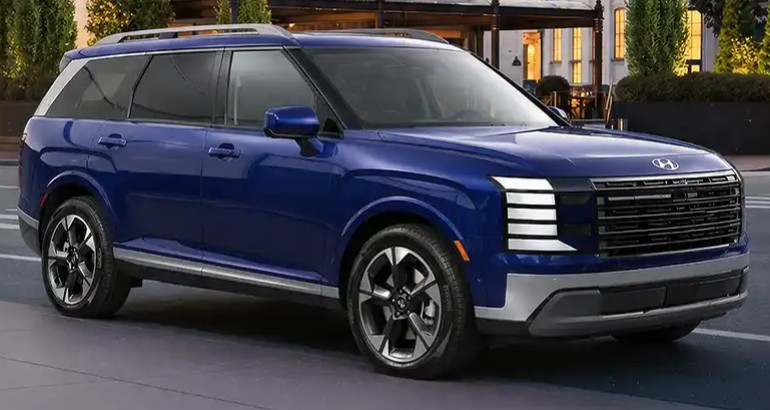
When we look at a large family SUV, reliability is rarely a side issue. It is usually near the top of the shopping list. After all, a three-row vehicle may spend its life carrying children to school, swallowing luggage for long road trips, commuting every weekday, and hauling groceries on weekends. Nobody wants an SUV that feels luxurious in the showroom but becomes a regular visitor to the service department.
That brings us to Hyundai Palisade reliability.
Since arriving for the 2020 model year in North America, the Palisade has built a strong reputation for comfort, equipment, cabin quality, and overall value. Reliability, however, requires a little more digging. The answer is not simply "good" or "bad." Different model years have experienced different recalls, owners have reported a mixture of minor and more meaningful problems, and the redesigned 2026 generation introduces new technology that has not yet accumulated the same long-term history as earlier versions.
Overall, we would describe the Hyundai Palisade as a reasonably dependable midsize three-row SUV, particularly when properly maintained. It does not appear to be a vehicle we would automatically avoid because of chronic mechanical weakness. At the same time, certain model years deserve closer inspection, and checking recall completion should be part of any used-Palisade purchase.
Let's break down what matters.
Content in this publication
- Is the Hyundai Palisade Reliable?
- Hyundai Palisade Reliability at a Glance
- How Long Can a Hyundai Palisade Last?
- Hyundai Palisade Engine Reliability
- Hyundai Palisade Transmission Reliability
- Does the Hyundai Palisade Have Major Problems?
- Windshield Wiper Recall on 2021-2023 Models
- 2026 Hyundai Palisade Reliability
- How Reliable Is the Palisade Hybrid?
- Hyundai Palisade Electrical Problems
- Interior Reliability and Build Quality
- Are Hyundai Palisade Repairs Expensive?
- Hyundai Palisade Warranty Coverage
- Which Hyundai Palisade Years Are Most Reliable?
- Is the 2020 Hyundai Palisade Reliable?
- What About 2021 and 2022 Hyundai Palisade Reliability?
- 2023-2025 Hyundai Palisade Reliability
- Hyundai Palisade Reliability Compared With Toyota Highlander
- Hyundai Palisade vs Kia Telluride Reliability
- What Makes a Palisade Last Longer?
- What to Check Before Buying a Used Hyundai Palisade
- How Important Is Maintenance History?
- Can a Hyundai Palisade Reach 200,000 Miles?
- Does High Mileage Make a Palisade Risky?
- Should You Buy an Extended Warranty?
- So, Is the Hyundai Palisade a Good Used SUV?
- Final Verdict on Hyundai Palisade Reliability
- Frequently Asked Questions About Hyundai Palisade Reliability
Is the Hyundai Palisade Reliable?
For most buyers, the short answer is yes.
The Palisade uses fairly conventional mechanical architecture compared with increasingly complicated luxury SUVs. Earlier first-generation models relied on Hyundai's naturally aspirated 3.8-liter V6 paired with an eight-speed automatic transmission. That combination delivers considerably less mechanical drama than some turbocharged, dual-clutch, or heavily electrified alternatives.
That does not make it bulletproof.
Owners have reported issues involving electronics, windshield wipers, interior components, sensors, oil consumption in some vehicles, vibration, trim quality, and transmission behavior. There have also been several safety recalls affecting particular production periods.
Still, when we look at the bigger picture, the Palisade generally behaves more like a vehicle with scattered trouble spots than one suffering from a single catastrophic design flaw.
That distinction matters.
A bad infotainment screen is irritating. A poorly designed engine that routinely requires replacement is an entirely different reliability story.
The Palisade's history sits much closer to the first category.
Hyundai Palisade Reliability at a Glance
A well-maintained Palisade should be capable of serving as a dependable family vehicle for many years. The drivetrain is generally straightforward, maintenance requirements are conventional, and Hyundai provides unusually long warranty coverage for new vehicles.
Our broad reliability assessment would look something like this:
- Engine durability: generally good, although oil level should be monitored.
- Transmission reliability: generally satisfactory, with occasional reports of hesitation or unusual shifting.
- Electrical systems: an area worth checking carefully on used examples.
- Interior durability: usually strong, though rattles, trim issues, and electronic features can appear with age.
- Safety recalls: several model years have been affected, making a VIN recall check essential.
- Long-term ownership outlook: good when maintenance history is complete and outstanding recalls have been addressed.
In other words, the Palisade is not a mechanical tank carved from granite, but neither does it resemble a ticking repair bill.
How Long Can a Hyundai Palisade Last?
Because the Palisade only entered the U.S. market for the 2020 model year, we do not yet have decades of real-world high-mileage evidence.
That makes claims such as "a Palisade will definitely last 300,000 miles" difficult to justify.
A more sensible expectation is that 150,000 to 200,000 miles is achievable when a vehicle receives consistent maintenance and is not subjected to severe neglect. Some examples may travel considerably farther.
Longevity depends heavily on how the SUV has lived.
A Palisade that receives regular oil changes, transmission servicing when appropriate, cooling-system maintenance, quality tires, and timely repairs has a far better chance of aging gracefully than one that survives on dashboard warning lights and optimism.
Mileage alone should therefore never determine whether we buy one.
A 110,000-mile Palisade with detailed service records can sometimes be a better purchase than a 60,000-mile example with mysterious gaps in its history.
Hyundai Palisade Engine Reliability
The first-generation Palisade's 3.8-liter gasoline V6 is one of the reasons we view the vehicle's overall reliability reasonably favorably.
Naturally aspirated engines avoid several additional components associated with turbocharging. There is no turbocharger spinning at enormous speed, no boost-control hardware to worry about, and typically less thermal stress than we see in highly boosted engines.
That simplicity is helpful.
The V6 also provides enough torque for everyday driving without constantly feeling strained. Engines that spend their entire lives working near their limits can age differently from engines with reasonable displacement and reserve power.
Still, buyers should not treat the engine as maintenance-free.
Oil Consumption Deserves Attention
Some Hyundai owners across different engine families have raised concerns about oil consumption, and Palisade buyers occasionally encounter similar complaints.
That does not mean every Palisade burns oil excessively.
What it does mean is that we would regularly check the dipstick rather than relying exclusively on dashboard reminders. An engine that gradually consumes oil can continue running perfectly well when the level is monitored. Allowing it to run significantly low is where an inexpensive habit can turn into a very expensive mistake.
During a used-car inspection, we would also check for oil leaks, blue exhaust smoke, unusual engine noises, overdue oil-change stickers, and evidence that the previous owner ignored maintenance.
Listen During a Cold Start
A cold engine can reveal things a warm test drive hides.
When possible, ask the seller not to start the vehicle before you arrive. Listen for prolonged rattling, knocking, rough idle, or abnormal ticking after startup.
A brief sound does not automatically mean disaster, but persistent mechanical noise deserves professional investigation.
Hyundai Palisade Transmission Reliability
Most first-generation Palisades use an eight-speed automatic transmission.
In normal operation, it should shift smoothly and quietly. Some owners may notice hesitation, delayed responses, abrupt shifts, or unusual behavior at low speeds, but widespread transmission failure has not become the Palisade's defining reputation.
That is encouraging because transmission replacement can easily transform an affordable used SUV into a financial headache.
On a test drive, we would pay attention when moving from Park into Drive and Reverse, accelerating gently from a stop, climbing a hill, slowing back down, and accelerating aggressively onto a highway.
The transmission should not repeatedly slam into gear, flare dramatically between shifts, hesitate for several seconds, or produce warning messages.
One odd shift is not necessarily meaningful. Consistent abnormal behavior is.
Does the Hyundai Palisade Have Major Problems?
The Palisade has experienced recalls and owner complaints, but there is an important difference between a recall history and fundamental unreliability.
Recalls can happen to excellent vehicles.
What matters is the nature of the defect, how widespread it is, whether a remedy exists, and whether the vehicle in front of us actually received that repair.
One of the most significant first-generation Palisade recalls involved the tow-hitch harness. NHTSA reported in August 2022 that certain 2020-2022 Hyundai Palisade vehicles were recalled because debris and moisture could accumulate in the tow-hitch harness module and create a fire risk. The recall involved approximately 245,000 Palisades, and owners of affected vehicles were initially advised to park outside and away from structures until repaired.
That is certainly worth knowing when shopping used.
It is also exactly why checking a specific VIN is more valuable than simply reading internet horror stories.
Windshield Wiper Recall on 2021-2023 Models
Another documented issue involved windshield wipers.
NHTSA's 2023 recall covered certain 2021 through 2023 Hyundai Palisades because snow or ice accumulation could cause the windshield wiper system to operate intermittently or stop functioning. Hyundai's remedy involved replacing the driver's-side windshield wiper arm.
Would that make us avoid every 2021-2023 Palisade?
No.
It would make us verify that the recall repair was completed.
That is a very different conclusion.
2026 Hyundai Palisade Reliability
The 2026 model deserves separate treatment because it begins a redesigned generation.
It brings substantial changes in styling, technology, seating systems, and available hybrid power.
New generations can be exciting, but from a reliability perspective, they also contain more unknowns. We simply cannot judge ten-year durability after a vehicle has been on the road for one year.
As of August 2026, there have already been notable recalls affecting some 2026 Palisades.
One recall, NHTSA campaign 26V160, applies to certain 2026 Palisade and Palisade Hybrid vehicles equipped with Limited or Calligraphy trim packages. NHTSA documentation states that the powered second- and third-row seats may fail to detect contact with an occupant or object during certain automatic movements. Hyundai's remedy involves updated seat-controller and infotainment software, including over-the-air updates for eligible vehicles.
Another 2026 recall, campaign 26V169, concerns certain Limited and Calligraphy models where internal wiring in a third-row seat-belt buckle may cause the instrument panel to incorrectly show that seat as buckled.
These recalls are worth taking seriously, but they do not yet tell us whether the redesigned Palisade will experience poor long-term mechanical durability.
For now, we would call 2026 reliability promising but unproven.
How Reliable Is the Palisade Hybrid?
The 2026 Palisade Hybrid introduces another layer of complexity.
A hybrid combines an internal-combustion engine with electric motors, high-voltage components, power electronics, and a traction battery. There are simply more systems interacting with each other.
That sounds alarming until we remember that well-designed hybrids can also reduce strain on certain mechanical components. Electric assistance can reduce engine workload, while regenerative braking may reduce conventional brake wear.
You may be interested in reading Audi A4 Reliability: How Dependable Is It Really?
At the moment, however, there is not enough long-term Palisade Hybrid data to make confident predictions about 150,000-mile ownership.
Hyundai does provide substantial warranty protection. For the 2026 U.S. Palisade Hybrid, Hyundai lists a 10-year/100,000-mile hybrid/electric battery warranty, alongside its broader new-vehicle and powertrain coverage.
We would therefore view the hybrid as appealing for buyers purchasing new but would avoid pretending its long-term reliability has already been proven.
Hyundai Palisade Electrical Problems
Modern vehicles are computers with wheels, and the Palisade is no exception.
Depending on trim level and model year, it may contain large displays, surround-view cameras, multiple USB ports, power seats, parking sensors, driver-assistance systems, powered tailgates, digital instrumentation, wireless connectivity, and an impressive collection of electronic convenience features.
Every feature is convenient when it works.
Every feature also represents another possible failure point.
Used buyers should operate everything before purchasing.
Fold every powered seat. Open and close the tailgate several times. Test the cameras. Pair a phone. Try the climate controls in every seating row. Check every USB outlet. Watch the dashboard for warnings.
A 20-minute electronics inspection can expose problems that a traditional five-minute test drive completely misses.
Interior Reliability and Build Quality
One reason people like the Palisade is that its cabin often feels more expensive than the badge suggests.
Soft surfaces, attractive materials, large screens, clever storage spaces, and upscale trim can make higher-spec versions feel surprisingly luxurious.
Most cabins hold up well, but age can reveal squeaks, rattles, scratched glossy trim, worn seat bolsters, misbehaving power seats, and broken interior controls.
We would pay particular attention to vehicles that spent their lives carrying young families.
That is not criticism. It is simply reality.
A three-row SUV can become a rolling cafeteria, playground, changing room, cargo van, and nap station before lunchtime. Cup holders collect sticky mysteries. Seat mechanisms work overtime. USB ports get pushed sideways. Third-row seats are folded hundreds of times.
Interior condition can therefore reveal a lot about how gently—or enthusiastically—the vehicle was treated.
Are Hyundai Palisade Repairs Expensive?
Maintenance costs generally sit below premium European three-row SUVs, which is one of the Palisade's advantages.
Routine service involves familiar items such as engine oil, filters, tires, brakes, coolant, batteries, and spark plugs.
The expensive surprises are more likely to involve sophisticated electronics, driver-assistance sensors, power seat systems, cameras, or major drivetrain components outside warranty.
That is increasingly normal across the SUV market.
A bumper is no longer merely painted plastic. It may contain radar equipment and parking sensors that require calibration after repairs.
A windshield replacement may involve recalibrating cameras.
A side mirror may contain heating, power folding, cameras, blind-spot electronics, or warning indicators.
Reliability therefore is not just about how frequently something breaks. It is also about what that failure costs when it happens.
Hyundai Palisade Warranty Coverage
Warranty coverage is one of Hyundai's strongest arguments for buyers purchasing new.
For U.S. 2026 Palisade models, Hyundai advertises a 5-year/60,000-mile new-vehicle limited warranty and a 10-year/100,000-mile powertrain limited warranty for the original owner. Hyundai's warranty documentation notes that subsequent owners generally receive 5-year/60,000-mile powertrain coverage rather than the full original-owner term.
That distinction is extremely important for used buyers.
We should never assume that buying a three-year-old Hyundai automatically gives us whatever remains of a ten-year powertrain warranty.
Read the actual warranty terms for the specific market and ownership situation.
Warranty rules also differ between countries, so U.S. coverage should not automatically be applied to Canadian, Australian, European, or other Palisades.
Which Hyundai Palisade Years Are Most Reliable?
We would generally feel most comfortable with a later first-generation Palisade that has a complete service history and all recalls completed.
Why later?
Manufacturers often make running production changes after discovering early annoyances. Software gets revised. Suppliers change. Parts are updated. Assembly procedures improve.
That does not mean the newest year is automatically best.
The redesigned 2026 Palisade, for example, offers more modern technology but has less long-term evidence behind it.
If reliability is our only concern, a mature version of an established generation often provides a pleasant middle ground: new enough to contain revisions, old enough to have a visible track record.
Is the 2020 Hyundai Palisade Reliable?
The 2020 Palisade was the first model year sold in North America.
First-year vehicles always deserve a slightly more careful inspection because owners are essentially the first large group to expose weaknesses that pre-production testing may not reveal.
The 2020 Palisade nevertheless remains a reasonable used purchase when maintained properly.
Its age matters more now than the fact that it was the launch model.
By 2026, a 2020 example may have six years of family use behind it. Tires, brakes, suspension parts, batteries, fluids, and rubber components may require replacement simply because they are normal wear items.
We therefore care less about internet arguments over whether 2020 was "good" and more about what happened to the individual vehicle during those six years.
What About 2021 and 2022 Hyundai Palisade Reliability?
The 2021 and 2022 models benefited from additional production experience while retaining largely familiar mechanical components.
They can represent attractive used buys, particularly after the steepest depreciation has already occurred.
Remember, however, that certain 2020-2022 models were included in the tow-hitch harness recall, while 2021-2023 vehicles were involved in the windshield-wiper recall discussed earlier.
Again, VIN verification is the key.
A recalled vehicle that received its approved repair is not the same proposition as one carrying an unresolved safety campaign.
2023-2025 Hyundai Palisade Reliability
The 2023 Palisade received a significant refresh with revised exterior styling, technology, and cabin features while retaining the basic architecture of the earlier vehicle.
From a reliability perspective, this is often an appealing combination.
We get a newer design and more features without moving immediately into an entirely new mechanical generation.
The 2024 and 2025 models continued refining that formula.
For buyers who prioritize a combination of modern equipment and established mechanical history, late first-generation models are arguably some of the most attractive Palisades to consider.
Still, specification and recall history vary by year, so we would inspect the exact VIN rather than making a purchasing decision purely from model-year reputation.
Hyundai Palisade Reliability Compared With Toyota Highlander
The Toyota Highlander enters almost every reliability conversation involving three-row SUVs.
Toyota has an exceptionally long history of producing durable family vehicles, and the Highlander benefits from decades of accumulated ownership data.
The Palisade cannot match that historical depth.
However, the Hyundai often provides more interior space, stronger equipment levels for the money, and a more premium cabin experience.
So which would we choose?
If maximum long-term conservatism were our only concern, the Highlander's long-established reputation could be reassuring.
If we also value interior luxury, space, warranty coverage, and equipment, the Palisade becomes much harder to dismiss.
Reliability is one ingredient, not the entire recipe.
Hyundai Palisade vs Kia Telluride Reliability
The Palisade and Kia Telluride are close relatives.
They share substantial engineering, powertrain architecture, and underlying components. As a result, dramatically separating them on reliability would be difficult to justify.
You may be interested in readingAudi A4 Reliability: How Dependable Is It Really?You may be interested in reading
 Ford Edge Reliability: How Dependable Is This SUV?
Instead, we would purchase based on condition, maintenance history, price, warranty status, recall completion, and personal preference.
A beautifully maintained Palisade is a better reliability bet than a neglected Telluride simply because someone on the internet says Kia is better—or vice versa.
Individual vehicle history matters enormously.
What Makes a Palisade Last Longer?
Reliability is partly engineered at the factory and partly created in the driveway.
Regular oil changes are obvious, but good ownership goes further.
Check oil between services. Do not ignore warning lights. Replace weak batteries before voltage problems begin creating strange electrical symptoms. Keep drains clear. Use the correct fluids. Maintain tire pressures. Rotate tires. Address suspension noises before one worn component damages another.
And perhaps most importantly, avoid the temptation to postpone small repairs indefinitely.
Cars rarely reward procrastination.
A minor coolant leak becomes overheating. A worn tire becomes damaged suspension. A weak battery creates repeated no-start situations. A small vibration eventually destroys something expensive.
Preventive maintenance is boring—and wonderfully cheaper than emergency maintenance.
What to Check Before Buying a Used Hyundai Palisade
If we were inspecting a used Palisade tomorrow, we would focus on four areas.
First, we would obtain the VIN and check recalls.
NHTSA specifically recommends using its VIN lookup because it shows whether a particular U.S. vehicle has an unrepaired safety recall.
Second, we would review the maintenance history carefully.
Third, we would perform a long test drive rather than a quick trip around the dealership.
Finally, we would pay for an independent pre-purchase inspection unless the vehicle came with unusually comprehensive manufacturer-backed certification.
That inspection may feel unnecessary when the SUV looks immaculate under showroom lights.
Those showroom lights are very persuasive.
Mechanics are less easily impressed.
How Important Is Maintenance History?
Extremely.
When comparing two used Palisades, we would often choose the one with better documentation even if it had slightly higher mileage.
Service records tell a story.
Regular oil changes suggest someone cared. Repeated dealer visits for the same fault may reveal an unresolved problem. Large gaps in maintenance can be warning signs. Recent replacement of tires, brakes, or a battery may save us hundreds of dollars immediately after purchase.
Reliability statistics describe populations.
Maintenance history describes the actual vehicle sitting in front of us.
And that is the vehicle we are buying.
Can a Hyundai Palisade Reach 200,000 Miles?
We believe it is realistic for well-maintained examples, although the Palisade is still too young as a model line for us to call 200,000 miles routine.
Reaching that mileage requires more than oil changes.
By then, an owner should expect normal age-related replacements involving suspension components, wheel bearings, engine mounts, sensors, batteries, cooling-system components, belts, hoses, brakes, and perhaps electronic hardware.
That does not mean the vehicle is unreliable.
A 200,000-mile SUV containing only its original oil filter would be impressive—but also deeply concerning.
Long-life vehicles survive because owners replace worn parts before those parts cause secondary damage.
Does High Mileage Make a Palisade Risky?
Mileage increases risk, but condition determines whether that risk is acceptable.
At 100,000 miles, we become more interested in fluid condition, suspension wear, drivetrain behavior, oil consumption, service history, cooling performance, and previous repairs.
A high-mileage highway vehicle can sometimes age remarkably well.
A low-mileage SUV used entirely for short journeys, exposed to harsh winters, repeatedly driven while cold, or poorly maintained can be much less appealing.
The odometer is useful.
It is not a crystal ball.
Should You Buy an Extended Warranty?
That depends heavily on price, coverage, deductible, exclusions, and how long we plan to keep the Palisade.
An extended warranty can make sense for a used high-spec Palisade loaded with electronic equipment, especially if the owner dislikes unexpected repair bills.
But we should read the fine print carefully.
A cheap warranty that excludes nearly every component likely to fail is simply an expensive stack of paper.
Manufacturer-backed coverage generally deserves stronger consideration than mysterious third-party contracts, although every plan should be evaluated individually.
So, Is the Hyundai Palisade a Good Used SUV?
Yes, it can be.
Its combination of space, comfort, usable performance, strong equipment levels, and generally sensible mechanical design makes the Palisade an appealing secondhand family SUV.
We would not buy one blindly.
We would check recalls, verify service history, inspect the electronics, monitor engine behavior, examine transmission operation, and arrange a professional inspection.
But those are steps we recommend for virtually any modern used three-row SUV.
The Palisade does not give us a strong reason to run away.
It gives us a reason to shop carefully.
Final Verdict on Hyundai Palisade Reliability
So where does Hyundai Palisade reliability ultimately stand?
We would rate the Palisade as a solid rather than legendary performer.
Its first-generation drivetrain has developed enough history to inspire reasonable confidence, and there is no single universal mechanical failure that automatically makes the entire model line a poor purchase. Some vehicles have experienced oil-consumption concerns, electrical annoyances, wiper problems, recalls, or other defects, but that pattern is not unusual in a feature-heavy modern SUV.
The safest used-buy strategy is straightforward: look for a late first-generation example with comprehensive service records, a clean inspection, smooth drivetrain behavior, fully functional electronics, and no outstanding recalls.
The redesigned 2026 Palisade remains more difficult to judge because long-term durability data simply does not exist yet. Its early seat-related recalls deserve attention, although Hyundai has developed remedies for affected vehicles.
Would we trust a well-maintained Palisade for family duty?
Yes.
Would we expect it to survive years of neglected servicing simply because Hyundai provides a long warranty?
Absolutely not.
Reliability works a little like a partnership. Hyundai builds the vehicle, but once we take the keys, keeping it healthy becomes our half of the deal.
Frequently Asked Questions About Hyundai Palisade Reliability
1. Is the Hyundai Palisade considered a reliable SUV?
Generally, yes. The Palisade has a reasonably good reliability outlook, particularly when serviced correctly. It has experienced recalls and some owner-reported problems, but it has not developed a reputation for universal catastrophic drivetrain failure.
2. What is the most reliable Hyundai Palisade year?
Later first-generation models are attractive because they combine an established drivetrain with several years of production refinement. Rather than choosing solely by year, however, we recommend prioritizing service history, vehicle condition, recall completion, and an independent inspection.
3. How many miles will a Hyundai Palisade last?
A properly maintained Palisade could reasonably reach 150,000 to 200,000 miles or more. Because the model only dates to the 2020 model year in North America, exceptionally high-mileage long-term data remains more limited than it is for older competitors.
4. Does the Hyundai Palisade have engine problems?
There is no evidence that every Palisade engine suffers from one unavoidable major defect. Some owners have reported issues such as oil consumption or other engine-related concerns, so checking the oil level, maintenance history, cold-start behavior, and overall engine condition remains important when buying used.
You may be interested in readingAudi A4 Reliability: How Dependable Is It Really?You may be interested in reading
Ford Edge Reliability: How Dependable Is This SUV?You may be interested in reading
 BMW M5 Depreciation: How Fast Does an M5 Lose Value?
5. Is a Hyundai Palisade worth buying used?
Yes, provided we choose carefully. A Palisade with documented maintenance, smooth engine and transmission operation, working electronics, no unresolved recalls, and a successful pre-purchase inspection can offer excellent family-SUV value.
If you want to know other articles similar to Hyundai Palisade Reliability: Is This Three-Row SUV Built to Last? you can visit the category Blog.
Kia Sportage Gas Tank Size: Complete Guide

BMW X1 Life Expectancy: How Long Does It Last?
Is the Toyota Yaris Cross Reliable? 2026 Guide
Kia Sportage Weight Guide: Curb, Kerb & GVWR

Toyota RAV4 Gas Tank Size (Chart & Explanation)

Toyota RAV4 Depreciation: Complete Resale Value Guide
Leave a Reply
More content of your interest