

Ram 1500 Reliability: How Dependable Is This Full-Size Truck?

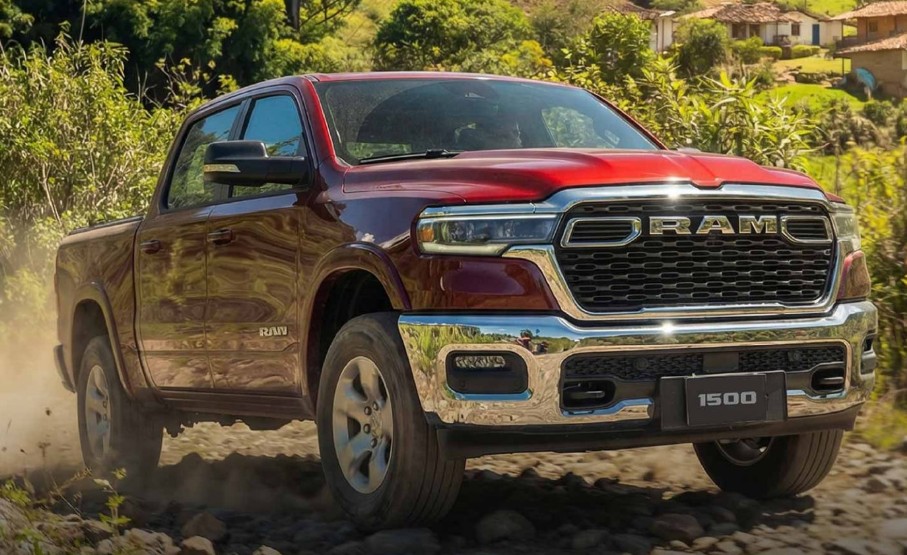
The Ram 1500 reliability question sounds simple until we start digging into engines, transmissions, electronics, suspension systems, model years, maintenance history, and how the truck was actually used. A Ram that spent its life cruising highways is a completely different animal from one that pulled a heavy trailer every weekend while crawling through mud.
So, is the Ram 1500 reliable?
Overall, we would describe the Ram 1500 as a reasonably dependable full-size pickup when it is properly maintained, particularly if we choose a proven engine and avoid buying a poorly maintained example. It is not a truck we would purchase blindly, though. Certain powertrains and features bring more complexity, and that complexity can turn into expensive repairs as mileage climbs.
One thing also deserves clarification. The Ram 1500 powertrain lineup has changed recently. For 2026, Ram officially lists the 3.6-liter Pentastar V6, two versions of the 3.0-liter Hurricane inline-six, and the returning 5.7-liter HEMI V8 among its engine choices. That means reliability discussions involving older HEMI trucks and newer Hurricane-powered models shouldn't be treated as if we were comparing identical machines.
Let's pull the Ram 1500 apart piece by piece and see where its strengths—and potential headaches—really live.
Content in this publication
- Ram 1500 Reliability at a Glance
- How Long Can a Ram 1500 Last?
- Is the Ram 1500 Engine Reliable?
- Ram 1500 Transmission Reliability
- Ram 1500 eTorque Reliability
- Ram 1500 Electrical Reliability
- Ram 1500 Air Suspension Reliability
- Ram 1500 Reliability by Generation
- Are New Ram 1500 Models Reliable?
- Ram 1500 Recalls and Reliability
- What Makes a Ram 1500 Unreliable?
- Does Towing Affect Ram 1500 Reliability?
- Ram 1500 Maintenance and Long-Term Reliability
- How Reliable Is a High-Mileage Ram 1500?
- Best Ram 1500 for Reliability
- Should You Buy a Ram 1500 With 100,000 Miles?
- Ram 1500 Reliability vs Complexity
- Signs You Should Walk Away From a Used Ram 1500
- Is a Ram 1500 Expensive to Maintain?
- How to Make a Ram 1500 Last Longer
- Is Ram 1500 Reliability Good Enough for Daily Driving?
- Is Ram 1500 Reliability Good for Work Use?
- Ram 1500 Reliability: New or Used?
- Can a Ram 1500 Be a 10-Year Truck?
- The Importance of Checking Ram 1500 Recalls
- Final Verdict: Is the Ram 1500 Reliable?
- Frequently Asked Questions About Ram 1500 Reliability
Ram 1500 Reliability at a Glance
The Ram 1500 has developed a reputation that sits somewhere between rugged workhorse and luxury cruiser.
Mechanically, the fundamental truck is generally robust. Engines such as the Pentastar V6 and long-running HEMI V8 have accumulated years of real-world service. Ram also pairs current engines with an eight-speed TorqueFlite automatic transmission.
Where things become more complicated is around the truck's supporting technology.
Higher trims can contain sophisticated infotainment systems, electronic equipment, driver-assistance technology, eTorque components, and available air suspension. Each feature makes the truck nicer to live with, but every additional component is another piece of the puzzle that could eventually require attention.
In simple terms:
A basic, well-maintained Ram 1500 is usually less intimidating to own long term than a heavily optioned truck whose maintenance history is unknown.
That same rule applies to nearly every modern luxury-oriented pickup.
How Long Can a Ram 1500 Last?
A properly maintained Ram 1500 can potentially remain useful well beyond 100,000 miles, and reaching the 150,000- to 200,000-mile territory isn't an unreasonable objective for a well-cared-for truck.
But mileage alone tells us surprisingly little.
Imagine two Ram 1500s showing 120,000 miles.
Truck A drove mostly on highways, received timely oil changes, rarely towed anything, and spent its nights inside a garage.
Truck B hauled construction equipment, idled for hours every day, skipped several services, and spent winters coated in road salt.
Technically, both have identical mileage.
Their mechanical condition may be worlds apart.
Why Engine Hours Matter Too
Pickup buyers often obsess over the odometer while forgetting operating hours.
That's a mistake.
A work truck can sit idling for long periods without adding meaningful mileage. The engine is still running, oil is still circulating, accessories are still operating, and heat cycles continue accumulating.
When shopping for a used Ram, mileage should therefore be part of the story—not the whole story.
Is the Ram 1500 Engine Reliable?
Engine reliability varies considerably depending on which powertrain we choose.
Current 2026 Ram 1500 buyers can encounter several configurations. Ram lists the 3.6L Pentastar V6 with eTorque, the 3.0L Hurricane, the high-output Hurricane and, on select models, the 5.7L HEMI V8.
Used buyers will encounter an even wider range because earlier generations include engines that are no longer offered on every new model.
3.6L Pentastar V6 Reliability
The 3.6-liter Pentastar V6 is one of the more familiar engines in the Stellantis family.
That familiarity is valuable.
An engine that has existed across numerous vehicles for many years gives mechanics more experience diagnosing it, increases parts availability, and provides buyers with a larger pool of real-world ownership information.
For 2026, the Ram 1500's Pentastar is paired with eTorque and the eight-speed automatic. Ram rates this configuration at 305 horsepower.
For drivers who don't regularly tow extremely heavy trailers, the V6 can make a lot of sense.
Why We Like the Pentastar for Long-Term Ownership
Its biggest attraction isn't earth-shaking torque.
It's familiarity.
A naturally aspirated V6 generally avoids the turbocharging hardware found on the Hurricane engine. That doesn't automatically make it more reliable, but fewer highly stressed forced-induction components can be appealing for owners planning to keep a truck for many years.
Regular oil changes remain extremely important.
Ignoring leaks, cooling-system issues, abnormal noises, or warning lights is how manageable problems become expensive ones.
5.7L HEMI V8 Reliability
Few engines are associated with Ram trucks as strongly as the 5.7-liter HEMI.
The V8 has delivered the sound, torque, and personality many buyers expect from an American pickup.
Ram brought the 5.7-liter HEMI V8 back for select 2026 Ram 1500 configurations, where it produces up to 395 horsepower and 410 lb-ft of torque according to Ram's published specifications.
From a reliability perspective, its greatest advantage is experience.
The engine isn't some mystery box that appeared yesterday.
Owners, independent shops, technicians, and aftermarket companies have years of familiarity with HEMI-powered trucks.
However, we wouldn't mistake familiarity for perfection.
On a used HEMI, listen carefully during a cold start and after the engine reaches operating temperature. Unusual ticking should be investigated rather than dismissed as "something Hemis just do."
A pre-purchase inspection can be money extremely well spent here.
3.0L Hurricane Reliability
The Hurricane changes the personality of the Ram 1500.
Instead of relying on V8 displacement, the 3.0-liter inline-six uses twin turbochargers to produce substantial power.
For the 2026 Ram 1500, Ram lists the standard-output Hurricane at up to 420 horsepower and 469 lb-ft of torque, while the high-output version can produce considerably more power.
Performance is certainly not the problem.
The bigger reliability question is long-term historical depth.
The Hurricane simply hasn't accumulated the same decades-long pickup-truck history associated with older engine families. That doesn't mean it is unreliable. It means we should separate two concepts that often get mixed together:
Proven unreliable and not yet as proven over extremely high mileage are not the same thing.
For someone buying new and trading every few years, that distinction may matter little.
For someone wanting a 250,000-mile truck, it matters considerably more.
Ram 1500 Transmission Reliability
The transmission is one of the Ram 1500's stronger mechanical characteristics.
Modern Ram 1500 models use an eight-speed automatic, and Ram continues pairing its current engines with TorqueFlite eight-speed transmissions.
When operating properly, shifts are generally smooth enough that we barely notice them.
That's exactly what we want.
A used truck shouldn't bang aggressively between gears, hesitate excessively when selecting Drive or Reverse, flare unpredictably between shifts, or shudder under light acceleration.
What to Look for During a Test Drive
Don't test a used Ram for five minutes around the dealership.
Drive it cold.
Drive it warm.
Accelerate gently.
Accelerate firmly.
Reverse.
Cruise at highway speed.
Slow down gradually.
If the transmission behaves differently after warming up, that's useful diagnostic information.
A beautiful leather interior can distract us surprisingly quickly. Mechanical behavior should always win our attention.
Ram 1500 eTorque Reliability
Ram's eTorque system uses mild-hybrid technology to assist the powertrain.
Instead of turning the truck into a conventional full hybrid, the system supports functions such as stop/start operation and torque assistance.
The technology can improve drivability and efficiency, but naturally it introduces additional components compared with an old-school engine-and-alternator arrangement.
Does that automatically make eTorque unreliable?
No.
It simply means used buyers should confirm that the system operates correctly and pay attention to battery-related or charging warnings.
Electrical systems have a funny habit of creating symptoms that look unrelated. A weak battery can make a modern vehicle light up its dashboard like a Christmas tree.
Ram 1500 Electrical Reliability
Modern pickup trucks are rolling computer networks.
The Ram 1500 is no exception.
Depending on trim level and year, we may have touchscreen infotainment, digital displays, cameras, parking sensors, power seats, active safety equipment, keyless systems, electronically controlled drivetrain components, and numerous computers communicating behind the scenes.
This is fantastic when everything works.
When it doesn't, troubleshooting can feel like hunting a ghost through a maze.
Common Electrical Symptoms Worth Investigating
Before purchasing a used Ram 1500, test every electrical feature you can find:
- Infotainment touchscreen
- Backup and surround-view cameras
- Bluetooth connectivity
- USB ports
- Power seats
- Heated and ventilated seats
- Power windows
- Power mirrors
- Remote start
- Keyless entry
- Parking sensors
- Instrument-cluster displays
- Exterior lighting
- Trailer electrical connections
- Four-wheel-drive controls
One malfunction isn't necessarily a deal breaker.
Several unrelated electrical faults can be a warning sign of battery problems, wiring damage, water intrusion, aftermarket modifications, or deeper network issues.
Ram 1500 Air Suspension Reliability
The available four-corner air suspension is one of the Ram 1500's most interesting features.
Ram currently describes its available Active-Level four-corner air suspension as capable of automatically lowering the truck to reduce aerodynamic drag.
It also contributes to the comfortable, almost luxury-SUV feeling that separates certain Ram trims from more traditional pickups.
But here's the trade-off.
Coil springs are simple.
Air suspension is not.
You may be interested in reading Is Mazda 6 a Good Car? A Complete Owner-Focused Guide
An air-suspension system depends on components such as air springs, valves, height sensors, air lines, electronics, and a compressor.
When the system ages, there are simply more pieces that could eventually fail.
Would We Avoid Ram Air Suspension?
Not automatically.
If comfort is one of our priorities and we're buying a newer truck, the system can be genuinely appealing.
For an older high-mileage Ram that we plan to keep on a tight repair budget, conventional suspension may provide greater peace of mind.
Luxury usually comes with a maintenance bill eventually. Air suspension is a perfect example.
Ram 1500 Reliability by Generation
Talking about "Ram 1500 reliability" without discussing generations can be misleading.
The truck has changed dramatically over time.
The fifth-generation Ram 1500 introduced a much more refined interpretation of the full-size pickup, bringing sophisticated interiors, additional electronics, available eTorque technology, and expanded comfort features.
Meanwhile, Ram continued selling the older-generation body style as the Ram 1500 Classic for several years. Mopar's documentation confirms separate owner resources for trucks such as the 2023 Ram 1500 Classic and newer DT-generation Ram 1500 models.
Older Ram 1500 Trucks
Older trucks offer simplicity.
That's both their advantage and disadvantage.
They're less technologically complicated, but age creates its own problems:
rubber deteriorates, seals harden, wiring corrodes, bushings wear, cooling systems age, and previous owners have had more opportunities to neglect maintenance.
At that point, condition matters more than reputation.
Fifth-Generation Ram 1500
The fifth-generation truck offers a much more premium ownership experience.
It also contains more technology.
If reliability is our absolute top priority, we should resist buying based solely on trim badges and giant screens.
A moderately equipped truck with excellent service records can be a safer long-term bet than a top-spec model whose history is a mystery.
Are New Ram 1500 Models Reliable?
Newer does not necessarily mean mechanically simpler.
The latest Ram 1500 combines modern turbocharged engines, sophisticated electronics, large displays, advanced safety systems, and available premium equipment.
For 2026, the engine lineup itself is unusually broad, covering the Pentastar V6, Hurricane inline-six variants, and returning HEMI V8.
That gives buyers meaningful choice.
If long-term predictability matters most, we might lean toward the powertrain with the service history and complexity level that best fits our risk tolerance.
If outright performance matters more, the Hurricane offers compelling numbers.
Neither decision is universally correct.
Ram 1500 Recalls and Reliability
Recalls deserve attention, but they shouldn't be confused automatically with poor reliability.
Modern vehicles from virtually every major manufacturer experience recalls.
What matters is whether a specific truck has unresolved campaigns.
For example, NHTSA published a recall involving certain 2025 Ram 1500 trucks with potentially damaged front wheel-bearing encoder rings that could interfere with the wheel-speed signal and electronic stability control. Other campaigns have also involved particular production ranges and components.
That is why we shouldn't depend on a generic list found online.
Check the individual VIN.
NHTSA specifically provides VIN-based recall lookup, and Mopar also gives owners access to recall and campaign information.
A recall repaired for free years ago isn't necessarily something to fear.
An open safety recall is something we want addressed.
What Makes a Ram 1500 Unreliable?
This is where ownership habits enter the picture.
A neglected Ram can become expensive quickly.
Heavy pickup trucks generate substantial loads and heat. Add towing, oversized tires, off-road use, long idle periods, short trips, or aggressive driving, and maintenance becomes even more important.
The biggest reliability killers are often painfully ordinary:
- Extending oil changes too far
- Ignoring coolant leaks
- Continuing to drive with warning lights
- Using incorrect fluids
- Neglecting drivetrain maintenance
- Installing poor-quality aftermarket electronics
- Running oversized tires without considering added drivetrain stress
- Ignoring suspension noises
- Towing beyond the truck's proper configuration
- Buying a used truck without inspecting its history
Trucks are tough.
They are not immortal.
Treating one like a bulldozer that never needs service is a recipe for disappointment.
Does Towing Affect Ram 1500 Reliability?
Absolutely.
Towing places additional demand on the engine, cooling system, transmission, brakes, suspension, tires, and drivetrain.
That doesn't mean we shouldn't tow with a Ram 1500. That's one of the truck's purposes.
But buyers should understand that towing capability depends on the exact configuration. Ram lists maximum towing capacities that vary substantially by engine, drivetrain, axle ratio, body configuration, equipment, passengers, and payload.
A truck that spends most weekends near its working limits deserves more scrutiny than one used primarily for commuting.
Inspect Used Tow Vehicles Carefully
Look for:
- Trailer-brake-controller wear
- Hitch and receiver condition
- Rear suspension sag
- Differential leaks
- Transmission behavior
- Brake condition
- Uneven tire wear
- Cooling-system leaks
- Aftermarket towing modifications
A tow hitch alone isn't evidence of abuse.
It's simply a clue telling us to investigate further.
Ram 1500 Maintenance and Long-Term Reliability
Maintenance is the bridge between a good truck and a reliable truck.
Ram and Mopar provide year-specific owner manuals, maintenance schedules, service records, recall information, and VIN resources.
We should use the schedule for the exact model year rather than applying some universal internet timetable.
Oil Changes Matter More Than Most Owners Think
Engine oil doesn't simply lubricate.
It also helps manage heat, contamination, deposits, and wear.
That becomes particularly important in turbocharged engines because turbochargers operate under enormous heat and rotational speeds.
Saving a few dollars by stretching oil intervals makes little sense if we're trying to keep a $40,000, $50,000, or $70,000 truck for years.
Use the Correct Oil Specification
Viscosity isn't the whole story.
Always use oil meeting the required specifications for the particular engine and model year.
The owner's manual wins every argument here.
Not a forum post.
Not a friend's truck.
Not something a parts-store employee remembers from another model.
How Reliable Is a High-Mileage Ram 1500?
High mileage shouldn't automatically scare us.
Poor maintenance should.
A 160,000-mile truck with detailed service records may be a smarter purchase than an 80,000-mile truck that lived a mysterious life.
We want evidence.
Receipts.
Maintenance records.
Consistent ownership.
Clean fluids.
No unexplained warning lights.
No suspicious modifications.
A seller who can explain exactly what was serviced usually gives us more confidence than someone who says, "Never needed anything."
Sometimes "never needed anything" actually means "nothing was ever done."
Best Ram 1500 for Reliability
There isn't one configuration that wins for everyone.
For a buyer focused heavily on mechanical simplicity, a conventional-suspension truck with a well-established naturally aspirated engine can be attractive.
For buyers who want classic V8 character and proven service knowledge, a properly maintained HEMI remains appealing.
For buyers prioritizing modern torque and performance, the Hurricane is difficult to ignore.
The question we should ask isn't:
Which engine is perfect?
It is:
Which engine suits our workload, ownership period, maintenance budget, and tolerance for complexity?
That produces much better decisions.
Should You Buy a Ram 1500 With 100,000 Miles?
Potentially, yes.
But at 100,000 miles, we stop shopping for a model and start shopping for an individual vehicle.
Service history becomes critical.
We want to know whether the truck was maintained consistently rather than receiving a frantic makeover two weeks before being listed for sale.
100,000-Mile Ram 1500 Inspection Checklist
Before signing anything, we would check:
- Cold-start engine noise
- Oil leaks
- Coolant level and condition
- Transmission shift quality
- Four-wheel-drive engagement
- Differential leaks
- Suspension noise
- Steering play
- Wheel-bearing noise
- Brake condition
- Tire wear patterns
- Air-suspension operation, where equipped
- Infotainment functionality
- Cameras and sensors
- Battery and charging behavior
- Exhaust condition
- Frame corrosion
- Evidence of accident repairs
- Trailer-hitch wear
- Recall status
- Service history
Spend the money on a professional pre-purchase inspection.
You may be interested in readingIs Mazda 6 a Good Car? A Complete Owner-Focused GuideYou may be interested in reading
How Long Do Mazda 6 Engines Last? A Complete Lifespan GuideA $150 inspection that exposes a $4,000 problem is not an expense.
It's a bargain.
Ram 1500 Reliability vs Complexity
Here's the uncomfortable truth about modern trucks.
Many reliability discussions aren't really about whether the engine will explode.
They're about complexity.
A basic pickup from decades ago might have manual seats, simple gauges, basic suspension, and little electronic equipment.
A modern Ram can resemble a luxury sedan wearing work boots.
That's wonderful when we spend hours behind the wheel.
But sophisticated components cost more to diagnose and replace.
The smartest long-term configuration is therefore not necessarily the most expensive one.
Sometimes the middle trim is the sweet spot.
Signs You Should Walk Away From a Used Ram 1500
Some problems can be negotiated.
Others tell us to keep our wallet closed.
Be cautious when several of these appear together:
- Multiple dashboard warning lights
- Rough or delayed transmission engagement
- Heavy engine ticking or knocking
- Blue or persistent white exhaust smoke
- Visible coolant contamination
- Severe corrosion
- Suspension leaning to one side
- Inoperative air suspension
- Random electrical failures
- Poorly installed aftermarket wiring
- Evidence of tuning without documentation
- Mismatched tires
- Missing maintenance history
- Seller refusing an independent inspection
- Recently cleared diagnostic codes
That last point matters.
A truck with no warning light today isn't necessarily fault-free.
A scan tool can reveal recently cleared codes and pending faults.
Is a Ram 1500 Expensive to Maintain?
A Ram 1500 isn't an economy car, and we shouldn't budget for it like one.
Everything is bigger.
Tires.
Brakes.
Oil capacity.
Suspension components.
Fuel consumption.
And when premium features fail, repairs can become expensive.
However, routine maintenance is far cheaper than deferred maintenance.
Replacing worn brakes today is cheaper than replacing damaged brake hardware tomorrow.
Fixing a small coolant leak is cheaper than overheating an engine.
Replacing a weak battery is cheaper than paying technicians to chase ten strange electrical symptoms.
Reliability often looks boring.
That's good.
How to Make a Ram 1500 Last Longer
If we want our Ram to stay dependable, there is no secret potion.
The formula is wonderfully dull:
- Follow the correct maintenance schedule.
- Use proper fluids and quality filters.
- Check engine oil regularly.
- Repair leaks early.
- Keep the cooling system healthy.
- Avoid repeatedly overloading the truck.
- Warm the vehicle normally rather than abusing it immediately after startup.
- Maintain tires at the correct pressure.
- Service brakes before they're completely worn.
- Inspect suspension and steering components.
- Wash road salt from the underbody.
- Investigate warning lights promptly.
- Keep software and recall work up to date.
- Avoid questionable performance modifications.
That's reliability in the real world.
Not glamorous.
Just effective.
Is Ram 1500 Reliability Good Enough for Daily Driving?
Definitely, assuming we have a healthy truck.
The Ram 1500's comfort is one reason many people use it more like a family vehicle than a traditional work pickup.
Its refined ride, spacious cabin, powerful engines, and modern technology make long drives easy.
The downside?
A full-size pickup used exclusively for short urban trips may never exercise the capabilities we're paying to carry around every day.
Reliability may be only one piece of the ownership equation. Fuel, parking, tires, insurance, and maintenance also matter.
Is Ram 1500 Reliability Good for Work Use?
The Ram 1500 can be an effective work truck, provided the workload matches its configuration.
Payload and towing limits vary by engine and setup. For example, Ram's published 2026 specifications show maximum available payload and towing figures changing depending on configuration.
Don't buy based on the biggest number in an advertisement.
Check the actual truck.
The yellow payload label inside the driver's door jamb is much more relevant to our individual vehicle than a maximum figure from a brochure.
A reliable truck operated beyond its limits can become an unreliable truck remarkably quickly.
Ram 1500 Reliability: New or Used?
Buying new gives us predictable history.
We're the history.
That eliminates questions about neglected oil changes, questionable modifications, overheating incidents, or abusive towing.
Used trucks can offer tremendous value, though.
The trick is accepting that two visually identical Rams can have completely different futures.
If buying used, we'd rather have:
a slightly less glamorous truck with excellent records
than
a fully loaded truck with no history.
Every time.
Can a Ram 1500 Be a 10-Year Truck?
Yes.
But choosing a truck for 10 years should influence how we configure it today.
Ask yourself:
Will we still love those massive wheels once replacement tires become routine?
Do we need air suspension?
Do we want maximum horsepower, or would a simpler powertrain meet our needs?
Are we willing to maintain turbocharged performance hardware over the long term?
Will we actually tow enough to justify our configuration?
Buying for long-term reliability means thinking beyond the showroom.
The feature that feels irresistible during a 20-minute test drive may become an expensive repair nine winters later.
The Importance of Checking Ram 1500 Recalls
Before buying any used Ram, enter the VIN into an official recall lookup.
NHTSA specifically recommends checking vehicles for open recalls and notes that recall repairs are generally performed by the manufacturer at no cost to the owner.
This should be part of every used-car purchase—not only Ram shopping.
Don't assume the previous owner completed every campaign.
Verify it.
Final Verdict: Is the Ram 1500 Reliable?
Yes, the Ram 1500 can be a reliable full-size pickup, especially when we choose the right configuration, maintain it carefully, and buy used examples based on condition rather than appearance alone.
The strongest argument in the Ram's favor is that many of its core powertrain combinations are familiar, capable, and supported by a large service ecosystem. Its eight-speed automatic is widely used across the lineup, the Pentastar has years of history behind it, and the HEMI has returned for 2026 alongside the newer Hurricane engines.
Its biggest reliability challenge isn't necessarily one catastrophic mechanical weakness.
It's complexity.
Higher-end Ram 1500 models can contain enough electronics, comfort technology, suspension hardware, and drivetrain sophistication to rival expensive luxury vehicles. That's fantastic while everything works—and potentially costly once components age.
If long-term dependability is our priority, we would focus on three things:
maintenance history, mechanical simplicity, and condition.
A clean service record beats a fancy trim badge.
A careful owner beats low mileage.
And a thorough inspection beats guessing.
Pick the right Ram 1500, look after it properly, and there is no reason it can't serve as a comfortable daily driver, capable tow vehicle, hardworking pickup, and long-term companion.
After all, reliability isn't simply about finding a truck that never breaks.
It's about choosing one whose strengths, weaknesses, and maintenance requirements we understand before handing over the keys.
Frequently Asked Questions About Ram 1500 Reliability
1. How reliable is the Ram 1500 overall?
The Ram 1500 can provide good long-term reliability when properly maintained. Powertrain choice, model year, previous usage, maintenance history, and optional equipment all influence ownership experience. When shopping used, the condition of the individual truck often matters more than general reliability rankings.
2. How many miles can a Ram 1500 last?
A well-maintained Ram 1500 can potentially remain serviceable through 150,000 to 200,000 miles or beyond. However, mileage shouldn't be treated as a guaranteed lifespan. Highway use, towing, idling, maintenance quality, corrosion, and previous repairs all affect longevity.
3. Which Ram 1500 engine is best for reliability?
There is no universal winner. The Pentastar V6 appeals to buyers looking for a familiar naturally aspirated engine, while the 5.7L HEMI offers extensive historical service knowledge and traditional V8 performance. The newer Hurricane delivers impressive power but has less long-term high-mileage history than the older engine families.
4. Is a Ram 1500 reliable after 100,000 miles?
It can be. A 100,000-mile Ram with consistent maintenance and gentle previous use can have plenty of life remaining. Before buying one, inspect the engine, transmission, cooling system, suspension, electronics, four-wheel-drive system, underbody, and service records. Checking the VIN for unresolved recalls is also essential.
You may be interested in readingIs Mazda 6 a Good Car? A Complete Owner-Focused GuideYou may be interested in reading
How Long Do Mazda 6 Engines Last? A Complete Lifespan GuideYou may be interested in reading
Are Mazda 6 Easy to Steal? A Practical Look at Mazda 6 Theft Risk5. What should I check before buying a used Ram 1500?
Start with service history and a cold-engine test drive. Check for abnormal engine sounds, transmission hesitation, leaks, suspension problems, warning lights, electrical faults, frame corrosion, uneven tires, accident repairs, and poorly installed modifications. On trucks equipped with air suspension, operate the system through its available settings. Finally, have an independent mechanic perform a pre-purchase inspection and verify recall status using the VIN.
If you want to know other articles similar to Ram 1500 Reliability: How Dependable Is This Full-Size Truck? you can visit the category Blog.
How to Reset the Oil Light on a Kia Sportage

Volvo S90 Reliability: Problems, Costs & Best Years
Is Haval Jolion a Good Car? Honest Review, Reliability, Pros and Cons
How to Start Haval Jolion With Spare Key: Complete Guide

How to Calculate Per Diem on an Auto Loan

How to Calculate the Residual Value of a Car
Leave a Reply
More content of your interest