
Tesla Model Y Battery Capacity: Complete Guide

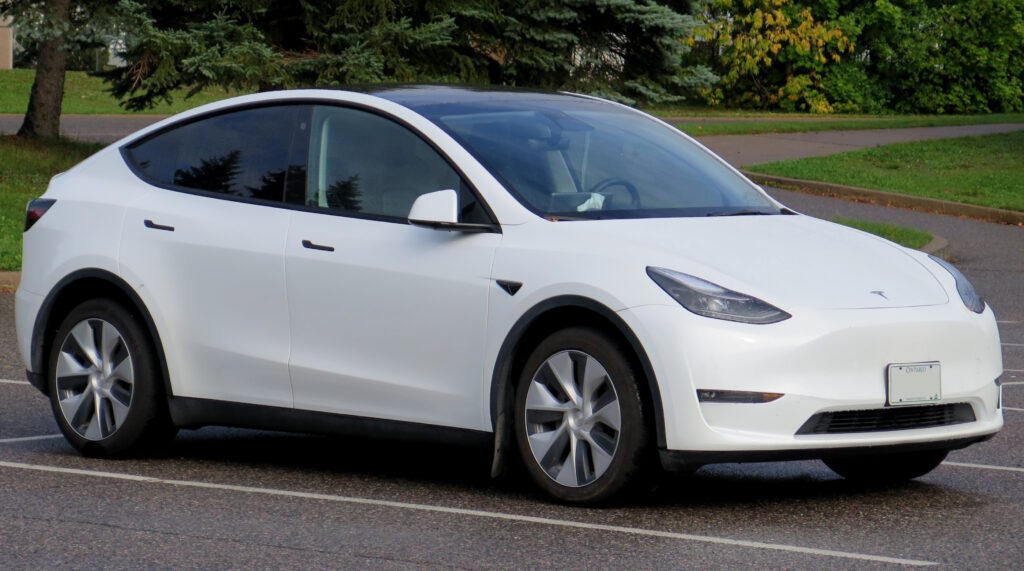
The Tesla Model Y battery capacity is one of the most important specifications to understand before buying this popular electric SUV. Whether we're considering the Rear-Wheel Drive, Long Range, Premium, or Performance version, the battery determines how much energy the vehicle can store and plays a major role in driving range, charging convenience, and long-term ownership costs.
But how many kWh does a Tesla Model Y battery actually have?
The answer depends on the model year, manufacturing location, battery chemistry, and configuration. Different versions of the Model Y use battery packs with different capacities, and Tesla doesn't always publish detailed battery specifications for every market.
In recent configurations, usable battery capacity commonly ranges from approximately 60 kWh to 79 kWh, although some older and region-specific versions fall outside this range.
In this complete guide, we'll explore Tesla Model Y battery sizes, differences between versions, driving range, charging times, battery degradation, replacement costs, and practical ways to maximize battery lifespan.
Content in this publication
- Tesla Model Y Battery Capacity by Version
- What Is the Tesla Model Y RWD Battery Capacity?
- Tesla Model Y Long Range Battery Capacity
- Tesla Model Y Performance Battery Capacity
- Tesla Model Y Battery Capacity by Year
- Tesla Model Y Gross vs Usable Battery Capacity
- What Type of Battery Does the Tesla Model Y Use?
- How Far Can a Tesla Model Y Go on a Full Battery?
- How Long Does a Tesla Model Y Battery Take to Charge?
- How Much Does It Cost to Charge a Tesla Model Y Battery?
- How Long Does a Tesla Model Y Battery Last?
- How to Check Tesla Model Y Battery Health
- Should You Charge a Tesla Model Y to 100%?
- How to Extend Tesla Model Y Battery Life
- Can You Upgrade Tesla Model Y Battery Capacity?
- Tesla Model Y Battery Replacement Cost
- Tesla Model Y Battery Capacity vs Tesla Model 3
- Is a Bigger Tesla Model Y Battery Worth It?
- Frequently Asked Questions About Tesla Model Y Battery Capacity
- Conclusion: Which Tesla Model Y Battery Is Best?
Tesla Model Y Battery Capacity by Version
Tesla offers the Model Y with different powertrains and battery configurations. Consequently, not every Model Y has the same battery capacity.
The following table provides approximate specifications for selected recent European-market configurations.
| Tesla Model Y Version | Gross Battery Capacity | Usable Battery Capacity |
|---|---|---|
| Model Y RWD | Around 64 kWh | Around 60 kWh |
| Model Y Premium RWD | Around 79 kWh | Around 74 kWh |
| Model Y Premium AWD | Around 82 kWh | Around 79 kWh |
| Model Y Performance AWD | Around 82 kWh | Around 79 kWh |
These figures are approximate, based on specific battery configurations, and should not be interpreted as universal specifications for every 2026 Tesla Model Y.
Battery capacity can vary by country, production date, and supplier. Tesla may also change battery hardware during a model's production cycle.
Why Does Tesla Model Y Battery Capacity Vary?
Several factors explain why Tesla Model Y battery sizes aren't identical across versions.
These include:
- Battery chemistry: Tesla uses different lithium-ion battery technologies.
- Vehicle configuration: RWD and AWD models can have different battery packs.
- Manufacturing location: Vehicles produced in different factories may use different cells.
- Production year: Battery technology evolves as Tesla updates its vehicles.
- Market requirements: European, American, and Asian configurations aren't always identical.
- Battery suppliers: Different manufacturers can provide cells with different energy capacities.
For these reasons, we should verify the exact vehicle configuration when comparing battery specifications.
What Is the Tesla Model Y RWD Battery Capacity?
The Tesla Model Y Rear-Wheel Drive is generally the entry-level version of the electric SUV.
It focuses on practicality, energy efficiency, and a lower purchase price compared with higher-performance configurations.
Some recent Model Y RWD vehicles use batteries with approximately:
| Specification | Estimated Value |
|---|---|
| Gross battery capacity | 64 kWh |
| Usable battery capacity | 60 kWh |
| Battery chemistry | LFP in selected versions |
| Drive configuration | Rear-Wheel Drive |
| Electrical architecture | Approximately 400 V |
The exact specifications depend on the region and production year.
Is a 60 kWh Tesla Model Y Battery Enough?
For many drivers, a battery with approximately 60 kWh of usable energy is more than sufficient.
Consider a typical driver who travels 30 miles per day.
Even at a consumption rate of 300 Wh per mile, daily electricity use would be approximately 9 kWh.
That represents only 15% of a 60 kWh battery.
This makes the entry-level Model Y practical for commuting, shopping, school transportation, and regular daily activities.
Of course, highway driving, winter temperatures, and heavy acceleration can increase electricity consumption.
Nevertheless, a 60 kWh battery provides considerable flexibility for drivers who have access to convenient charging.
Tesla Model Y Long Range Battery Capacity
The Tesla Model Y Long Range is designed for drivers who want greater driving flexibility and fewer charging stops.
Long Range versions typically use larger battery packs than entry-level RWD configurations, although their exact capacity varies.
Some recent Long Range and Premium configurations have usable battery capacities of approximately 74–79 kWh.
However, earlier Model Y Long Range vehicles may use different battery packs.
Tesla Model Y Long Range RWD Battery
A Long Range Rear-Wheel Drive configuration combines a relatively large battery with a single electric motor.
This combination can deliver excellent efficiency because a single-motor drivetrain generally requires less energy than a comparable dual-motor setup under certain conditions.
As a result, a Long Range RWD vehicle may achieve greater driving range than an AWD model despite having similar or even slightly lower battery capacity.
Tesla Model Y Long Range AWD Battery
The All-Wheel Drive version uses two electric motors.
This provides improved traction and stronger acceleration, particularly in challenging driving conditions.
However, having two motors can increase energy consumption.
A larger battery can help compensate for this difference, although the final driving range depends on the vehicle's efficiency and configuration.
When choosing between RWD and AWD, we should consider both battery size and energy consumption instead of comparing capacity alone.
Tesla Model Y Performance Battery Capacity
The Tesla Model Y Performance is designed for drivers seeking powerful acceleration and sportier driving characteristics.
Despite its higher performance, its battery isn't necessarily much larger than that of other premium configurations.
Some recent European Performance models have approximately 79 kWh of usable battery capacity.
| Specification | Approximate Value |
|---|---|
| Gross battery capacity | 82 kWh |
| Usable battery capacity | 79 kWh |
| Battery chemistry | Nickel-based lithium-ion |
| Drive system | Dual Motor AWD |
| Electrical architecture | Approximately 400 V |
These estimates apply to selected configurations and may differ by market.
Does the Performance Model Have a Bigger Battery?
Not always.
Some Performance and Premium AWD configurations use batteries with similar capacities.
The most significant differences often involve motor output, acceleration, suspension tuning, tires, and vehicle dynamics.
Performance-oriented wheels and tires can also affect electricity consumption.
Therefore, the Performance version doesn't automatically deliver the longest driving range.
For buyers prioritizing efficiency, a Long Range RWD configuration may be more suitable.
Tesla Model Y Battery Capacity by Year
Tesla has introduced different battery configurations since the Model Y entered production in 2020.
The battery capacity of a particular vehicle depends on much more than its model year.
Here's a general overview.
| Model Year | Main Battery Characteristics |
|---|---|
| 2020 | Early Long Range and Performance lithium-ion batteries |
| 2021 | Different high-capacity battery configurations |
| 2022 | Increasing use of LFP batteries in selected RWD models |
| 2023 | LFP and nickel-based battery options |
| 2024 | Multiple battery suppliers and configurations |
| 2025 | Refreshed Model Y and updated battery options |
| 2026 | Different LFP, nickel-based, and selected 4680-cell configurations |
2020–2022 Tesla Model Y Battery Capacity
Early Model Y vehicles were primarily offered in Long Range and Performance configurations.
These generally featured relatively large lithium-ion battery packs.
Depending on the model and production period, estimated gross battery capacity commonly fell within the upper-70 to low-80 kWh range.
Later, Tesla introduced additional RWD options using smaller battery packs.
2023–2024 Tesla Model Y Battery Capacity
During this period, Tesla continued using different battery technologies across its Model Y lineup.
Some RWD versions were equipped with LFP batteries, while Long Range and Performance configurations generally used larger nickel-based packs.
Battery suppliers and configurations varied between manufacturing locations.
As a result, two Model Y vehicles manufactured during the same year could have different usable capacities.
2025–2026 Tesla Model Y Battery Capacity
The refreshed Tesla Model Y, commonly known as Juniper, introduced updates to its appearance, interior, technology, and overall efficiency.
Battery configurations also evolved across markets.
Selected recent RWD versions have usable capacities around 60 kWh, while higher-capacity configurations can approach 79 kWh.
However, we shouldn't assume that every refreshed Model Y has the same battery specifications.
The specific vehicle configuration remains the most reliable reference.
Tesla Model Y Gross vs Usable Battery Capacity
One of the most confusing aspects of electric vehicle specifications is the difference between gross and usable battery capacity.
These measurements aren't identical.
What Is Gross Battery Capacity?
Gross battery capacity represents the total nominal energy-storage capacity of a battery pack.
For example, a battery might have a gross capacity of 82 kWh.
However, not all that energy is necessarily available for normal driving.
The battery management system can restrict access to certain portions of the battery to protect its components.
What Is Usable Battery Capacity?
Usable battery capacity is the energy available to power the vehicle under normal operating conditions.
For example:
| Battery Measurement | Example |
|---|---|
| Gross capacity | 82 kWh |
| Usable capacity | 79 kWh |
| Reserved difference | 3 kWh |
The difference helps explain why a battery's advertised total capacity may be higher than the energy available for driving.
When estimating Tesla Model Y driving range, usable battery capacity is generally the more useful measurement.
What Type of Battery Does the Tesla Model Y Use?
Tesla uses different lithium-ion battery technologies depending on vehicle configuration and production location.
Understanding these differences can help us choose the right Model Y.
Lithium Iron Phosphate (LFP) Batteries
LFP batteries are used in certain entry-level Model Y configurations.
Their main advantages include:
- Good potential for long cycle life.
- Strong thermal stability.
- Reduced dependence on nickel and cobalt.
- Competitive manufacturing costs.
- Suitability for regular daily driving.
One disadvantage is their lower energy density compared with some nickel-based alternatives.
This means an LFP battery may need additional weight or physical space to store the same amount of energy.
Nickel Manganese Cobalt (NMC) Batteries
NMC batteries are used in certain higher-capacity Model Y configurations.
They offer high energy density, making them suitable for vehicles requiring greater energy storage without excessive battery weight.
Their characteristics can support long driving range and strong power delivery.
However, nickel-based batteries have different cost, material, and charging considerations compared with LFP technology.
Tesla 4680 Battery Cells
Tesla has also introduced cylindrical 4680 battery cells in selected vehicles.
The term 4680 refers to the cell's approximate physical dimensions:
- Diameter: 46 mm.
- Length: 80 mm.
Importantly, 4680 describes a battery cell format, not a completely separate battery chemistry.
The capacity of a battery pack using these cells depends on the number of cells, their chemistry, and the overall pack design.
How Far Can a Tesla Model Y Go on a Full Battery?
Driving range depends on usable battery capacity and electricity consumption.
A larger battery usually helps increase range, but efficiency plays an equally important role.
We can estimate theoretical driving range using this formula:
Driving Range = Usable Battery Capacity × 1,000 ÷ Energy Consumption
For example, imagine a Tesla Model Y with a 60 kWh usable battery consuming 250 Wh per mile.
60,000 ÷ 250 = 240 miles.
Under those conditions, the vehicle could theoretically travel approximately 240 miles.
Tesla Model Y Estimated Range by Battery Size
The following table compares hypothetical driving ranges at different consumption levels.
| Usable Battery Capacity | At 250 Wh/mile | At 300 Wh/mile |
|---|---|---|
| 60 kWh | 240 miles | 200 miles |
| 70 kWh | 280 miles | 233 miles |
| 74 kWh | 296 miles | 247 miles |
| 79 kWh | 316 miles | 263 miles |
These are mathematical examples, not official EPA or WLTP range ratings.
Actual driving range varies according to vehicle configuration, driving conditions, temperature, and battery health.
Factors That Reduce Driving Range
Several conditions can increase energy consumption.
Highway speed: Driving at higher speeds increases aerodynamic resistance and electricity consumption.
Cold weather: Low temperatures can reduce battery efficiency and increase energy demand for cabin heating.
Aggressive acceleration: Frequent hard acceleration requires additional electricity.
Large wheels: Certain wheel and tire combinations increase rolling resistance and aerodynamic drag.
Heavy loads: Carrying additional passengers or cargo can increase energy consumption.
Steep terrain: Driving uphill requires additional energy, although regenerative braking may recover some energy on descents.
Understanding these factors helps us make more realistic range estimates.
How Long Does a Tesla Model Y Battery Take to Charge?
Charging time depends on the battery's usable capacity, charging equipment, starting charge level, and temperature.
A larger battery generally requires more energy to charge, but charger power also matters.
Tesla Model Y Home Charging Time
Home charging is often the most convenient option for electric vehicle owners.
Let's assume we're using a charger delivering approximately 7 kW.
| Usable Battery Capacity | Approximate 0–100% Charging Time |
|---|---|
| 60 kWh | 9–10 hours |
| 70 kWh | 11–12 hours |
| 74 kWh | 12 hours |
| 79 kWh | 12–13 hours |
These are illustrative estimates that account for typical charging losses.
Actual results depend on electrical installation, charging equipment, onboard charger limits, and environmental conditions.
Tesla Model Y Supercharging Time
Tesla Superchargers can provide significantly more power than typical home charging systems.
Some Model Y configurations support peak DC charging power of up to 250 kW, while others have lower maximum charging rates.
However, the battery doesn't maintain maximum charging power throughout the session.
Charging power generally decreases as the battery approaches full capacity.
This is why charging from 80% to 100% can take disproportionately longer than charging through a lower state-of-charge range.
Why Charging From 10% to 80% Is Popular
During road trips, many electric vehicle drivers prefer charging from approximately 10% to 80%.
This can reduce the time spent waiting at fast chargers.
For example, a 79 kWh battery charged from 10% to 80% receives approximately:
79 × 0.70 = 55.3 kWh.
The exact energy required from the charging station will be higher because of charging losses.
Actual charging duration also depends on battery temperature and the vehicle's charging curve.
How Much Does It Cost to Charge a Tesla Model Y Battery?
Charging cost depends on electricity prices and the amount of energy purchased.
We can estimate the expense using the following formula:
Charging Cost = Electricity Purchased (kWh) × Electricity Price
Suppose electricity costs $0.15 per kWh.
| Usable Capacity | Approximate Energy Purchased | Charging Cost |
|---|---|---|
| 60 kWh | 66.7 kWh | $10.00 |
| 74 kWh | 82.2 kWh | $12.33 |
| 79 kWh | 87.8 kWh | $13.17 |
These examples assume approximately 90% charging efficiency for a near-empty-to-full charge.
Real electricity tariffs and charging losses vary.
Public fast charging may cost more than home charging, particularly at high-powered commercial stations.
For most owners, the cost per mile is a more practical ownership measurement than the price of a full charge.
How Long Does a Tesla Model Y Battery Last?
Tesla Model Y batteries are designed for long-term operation, but their capacity gradually decreases with age and use.
This process is called battery degradation.
Battery lifespan depends on several factors, including:
- Battery chemistry.
- Charging frequency.
- High-temperature exposure.
- Driving mileage.
- Charging habits.
- Battery management.
- Environmental conditions.
A battery can continue operating even after losing a portion of its original capacity.
What Is Tesla Model Y Battery Degradation?
Battery degradation occurs when the battery gradually loses its ability to store energy.
For example, suppose a Model Y originally had 75 kWh of usable battery capacity.
If the battery retains 90% of its original capacity after years of use, it would have approximately:
75 × 0.90 = 67.5 kWh.
That reduction could decrease driving range.
However, degradation isn't necessarily constant or linear.
Some batteries experience a faster initial reduction followed by a slower rate of decline.
Tesla Model Y Battery Warranty
Tesla provides a high-voltage battery warranty with coverage depending on the vehicle and market.
For new vehicles in the United States, commonly listed coverage includes:
| Model Y Configuration | Battery Warranty |
|---|---|
| Standard RWD / AWD | 8 years or 100,000 miles |
| Premium RWD / AWD | 8 years or 120,000 miles |
| Performance | 8 years or 120,000 miles |
The warranty generally includes a minimum 70% battery-capacity retention requirement, subject to Tesla's applicable terms.
Coverage can differ by country, model year, and vehicle configuration.
The warranty doesn't mean every battery will lose 30% of its capacity. It establishes a threshold for qualifying warranty coverage.
How to Check Tesla Model Y Battery Health
Battery health becomes particularly important when purchasing a used Tesla Model Y.
Fortunately, compatible Tesla vehicles offer battery-health information through their software.
Depending on the vehicle and software version, battery information may be available under:
Controls → Service → Battery Health
Some vehicles also support a detailed Battery Health Test.
This test evaluates the battery's energy-retention characteristics and can require an extended charging and testing process.
Can You Estimate Battery Health From Displayed Range?
Displayed range alone isn't a reliable battery-health measurement.
The range estimate may depend on battery-management calculations, energy-consumption assumptions, software calibration, and other factors.
A slightly reduced displayed range doesn't necessarily indicate a serious battery problem.
When evaluating a used Tesla Model Y, we should consider battery-health information, charging performance, service history, and overall vehicle condition.
Should You Charge a Tesla Model Y to 100%?
The ideal charging limit depends on the battery installed in the vehicle.
Some Tesla Model Y configurations recommend an 80% daily charging limit, while certain LFP-equipped vehicles may display different recommendations.
For routine driving, it's best to follow the charging guidance shown in the vehicle's software.
Charging to 100% can be useful before a long journey when additional range is required.
However, leaving certain battery chemistries at very high states of charge for extended periods can accelerate degradation.
The goal is to follow the manufacturer's battery-specific charging recommendations rather than applying one rule to every Model Y.
How to Extend Tesla Model Y Battery Life
We can take several practical steps to maintain good battery condition.
Follow the Recommended Charging Limit
Use the daily charging limit recommended by the vehicle.
Different battery types can have different charging requirements.
Avoid Prolonged Extreme Charge Levels
Unless necessary, avoid leaving the vehicle at an extremely low state of charge for extended periods.
Likewise, follow the vehicle's recommendations when charging to high percentages.
Minimize Unnecessary Heat Exposure
High temperatures can accelerate battery aging.
Parking in shaded areas when practical and allowing the vehicle's thermal-management system to operate normally can help.
Use Battery Preconditioning
When navigating to a compatible fast charger, Tesla vehicles can prepare their batteries for charging.
This helps improve charging conditions and may reduce charging time.
Maintain Proper Tire Pressure
Correct tire pressure doesn't directly increase battery capacity, but it can improve energy efficiency.
That means more useful driving distance from the electricity stored in the battery.
Can You Upgrade Tesla Model Y Battery Capacity?
Some Tesla owners wonder whether it's possible to install a larger battery pack.
Technically, electric vehicle batteries can be replaced, but upgrading to a higher-capacity pack is complicated.
Different battery systems may have different:
- Physical dimensions.
- Electrical connections.
- Cooling requirements.
- Battery-management software.
- Mounting hardware.
- Vehicle compatibility requirements.
Installing a larger battery isn't comparable to upgrading the storage capacity of a smartphone or computer.
For most buyers, choosing a Model Y with the desired battery capacity from the factory is simpler and more practical.
Tesla Model Y Battery Replacement Cost
Replacing a high-voltage battery can be one of the most expensive electric vehicle repairs.
However, replacement costs vary considerably depending on the exact battery configuration.
Important factors include:
- Battery pack size and chemistry.
- Model year.
- Replacement battery availability.
- Labor costs.
- Country and service provider.
- Warranty coverage.
- Whether the complete pack must be replaced.
A battery problem doesn't always require replacement of the entire pack.
Some issues may involve specific components, electrical connections, or battery-management systems.
Before considering an expensive replacement, we should obtain a detailed professional diagnosis.
Tesla Model Y Battery Capacity vs Tesla Model 3
The Tesla Model Y and Tesla Model 3 share elements of their underlying electric vehicle technology.
However, their battery sizes and efficiency characteristics can differ.
The Model Y is a crossover SUV, while the Model 3 is a sedan.
| Feature | Tesla Model Y | Tesla Model 3 |
|---|---|---|
| Vehicle type | Electric SUV | Electric sedan |
| Battery options | Multiple configurations | Multiple configurations |
| Battery chemistry | LFP and nickel-based options | LFP and nickel-based options |
| Driving efficiency | Generally lower | Generally higher |
| Main advantage | Space and versatility | Efficiency and handling |
Because the Model 3 generally has a more aerodynamic body, it can achieve greater efficiency under comparable driving conditions.
This demonstrates why battery capacity shouldn't be the only specification we examine.
A vehicle with a smaller battery can sometimes travel farther than a less efficient model with a larger pack.
Is a Bigger Tesla Model Y Battery Worth It?
Choosing a larger battery makes sense for some drivers but isn't essential for everyone.
A smaller battery may be perfectly adequate if we commute short distances and charge regularly at home.
However, a larger pack can offer important advantages for longer journeys.
These include greater driving flexibility, fewer charging stops, and a larger energy reserve in challenging weather conditions.
Before choosing a Model Y configuration, we should ask ourselves:
- How many miles do we normally drive per day?
- Can we charge at home?
- How often do we take long road trips?
- Do we need all-wheel drive?
- How important is maximum driving range?
- Are we willing to pay more for additional battery capacity?
Answering these questions helps identify the version that best matches our needs.
Frequently Asked Questions About Tesla Model Y Battery Capacity
1. How many kWh is a Tesla Model Y battery?
Tesla Model Y battery capacity depends on the configuration and production year. Selected recent versions have approximately 60–79 kWh of usable capacity, although other battery sizes exist. The exact figure should be verified for the specific vehicle.
2. What is the Tesla Model Y Long Range battery capacity?
Some recent Long Range and Premium configurations use battery packs with approximately 74–79 kWh of usable energy. However, earlier models and regional versions can have different capacities.
3. Does the Tesla Model Y Performance have a bigger battery?
Not necessarily. Certain Performance and Premium AWD models use batteries with similar capacities. Differences in acceleration and driving characteristics primarily come from powertrain tuning, motors, tires, and suspension systems.
4. How long will a Tesla Model Y battery last?
Tesla Model Y batteries are designed for many years of operation. Their actual lifespan depends on charging habits, mileage, temperature exposure, and battery chemistry. Tesla's high-voltage battery warranty generally provides eight years of coverage, with mileage limits depending on the configuration and market.
5. Is the Tesla Model Y battery big enough for road trips?
Yes. The Tesla Model Y can be suitable for long-distance travel, especially when compatible fast-charging stations are available. Higher-capacity versions may provide greater range between stops, but actual journey efficiency and charging performance are equally important.
Conclusion: Which Tesla Model Y Battery Is Best?
The Tesla Model Y battery capacity varies according to model year, drivetrain, battery chemistry, and manufacturing location.
Selected recent RWD versions have approximately 60 kWh of usable battery capacity, while certain Premium and Performance configurations offer around 74–79 kWh.
For drivers who primarily commute and charge at home, an entry-level Model Y may provide more than enough energy storage.
Meanwhile, drivers who frequently travel long distances may appreciate the flexibility of a larger battery.
However, battery capacity isn't the only factor worth considering.
Charging speed, real-world efficiency, battery health, warranty coverage, and vehicle price all influence the ownership experience.
Ultimately, the best Tesla Model Y battery isn't necessarily the largest one. It's the battery that delivers enough range, efficiency, and charging convenience for our everyday needs.
If you want to know other articles similar to Tesla Model Y Battery Capacity: Complete Guide you can visit the category Service and Parts.
Volvo S90 Engine Oil: Type, Capacity & Change Guide
Volvo S90 Boot Space: Size, Capacity and Practicality
SEO Title: Volvo S90 Oil Capacity: Complete Guide by Engine
Kia Sorento Oil Type: Complete Guide by Year & Engine
Kia Sorento Engine Capacity: Complete Guide by Year
Peugeot 308 Clutch Replacement Cost: Complete UK Guide for 2026
Leave a Reply
More content of your interest