
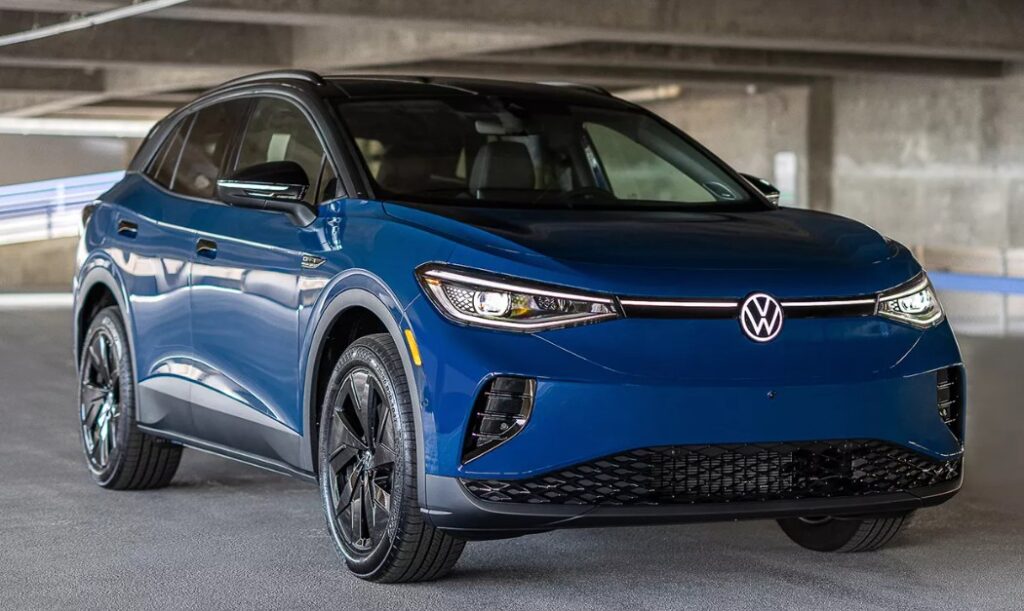
Volkswagen ID.4 Reliability

Content in this publication
- Why Reliability Matters More in an Electric SUV
- What Makes the Volkswagen ID.4 Different From Traditional SUVs?
- The Good News: The ID.4’s Core Mechanical Reliability Is Strong
- Where Reliability Concerns Begin: Software Problems
- Infotainment Issues: The Most Common Complaint
- Charging Reliability: Mostly Good, Occasionally Inconsistent
- Volkswagen ID.4 Reliability by Model Year
- How Reliable Is the ID.4 Compared to Other EVs?
- Volkswagen ID.4 vs Tesla Model Y Reliability
- Volkswagen ID.4 vs Hyundai Ioniq 5 Reliability
- Volkswagen ID.4 vs Ford Mustang Mach-E Reliability
- Real-World Owner Experiences
- Common Volkswagen ID.4 Problems
- Does the ID.4 Have Expensive Repairs?
- Volkswagen Warranty Coverage
- How Long Can a Volkswagen ID.4 Last?
- Should You Buy a Used Volkswagen ID.4?
- Best Volkswagen ID.4 Model Years
- Is the Volkswagen ID.4 Reliable Enough for Families?
- Long-Term Reliability Expectations
- Who Should Avoid the Volkswagen ID.4?
- Who Will Love the Volkswagen ID.4?
- Final Verdict on Volkswagen ID.4 Reliability
- FAQs
Why Reliability Matters More in an Electric SUV
Buying an electric SUV is a little like stepping into the future with one foot still planted in the present. We want innovation, silent acceleration, and lower running costs—but we also want confidence. Nobody wants a futuristic vehicle that behaves like a moody smartphone on wheels.
That is exactly why Volkswagen ID.4 reliability has become such a hot topic among EV buyers. The Volkswagen ID.4 entered the market with massive expectations. Volkswagen positioned it as the electric SUV for everyday people: practical, spacious, comfortable, and modern without feeling intimidating.
But how reliable is it really?
The answer is surprisingly nuanced. The ID.4 shines in some areas while stumbling in others, especially when software enters the conversation. Like many first-generation EVs from traditional automakers, it combines excellent mechanical engineering with growing pains in digital systems.
Let’s unpack the full picture.
What Makes the Volkswagen ID.4 Different From Traditional SUVs?
Before judging reliability, we need to understand what makes the ID.4 fundamentally different from a gasoline SUV.
Unlike a conventional vehicle, the ID.4 has:
- No engine oil
- No spark plugs
- No timing belt
- No transmission in the traditional sense
- Far fewer moving parts
That alone changes the reliability equation dramatically.
Electric vehicles tend to avoid many of the catastrophic mechanical failures that plague internal combustion vehicles. There is no turbocharger waiting to fail, no transmission slipping after 100,000 miles, and no engine overheating because of aging components.
Instead, EV reliability shifts toward:
- Battery durability
- Software stability
- Charging system consistency
- Electronic component integration
And that is precisely where the ID.4 tells its story.
The Good News: The ID.4’s Core Mechanical Reliability Is Strong
If we isolate the physical hardware, the ID.4 is generally dependable.
Volkswagen engineered the MEB platform specifically for electric vehicles rather than adapting a gasoline chassis. That matters because purpose-built EVs tend to have fewer compromises.
Owners often praise the ID.4 for:
Smooth Electric Drivetrain
The electric motor itself has proven relatively robust. Unlike complex combustion engines, EV motors are incredibly simple mechanically.
Most drivers report:
- Smooth acceleration
- Quiet operation
- Minimal vibration
- Consistent performance over time
The drivetrain rarely appears in reliability complaints.
Solid Ride Quality
Volkswagen has decades of suspension tuning experience, and it shows.
The ID.4 rides with a planted, mature feel that many competitors struggle to match. It absorbs bumps confidently without feeling floaty or overly stiff.
That matters because a vehicle that feels solid often ages better psychologically. A rattly cabin can make even a mechanically healthy car feel unreliable.
Battery Longevity Looks Promising
Battery degradation is one of the biggest fears among EV shoppers.
Fortunately, early data suggests the ID.4 battery pack holds up reasonably well. Most owners report minimal degradation after several years of use.
Volkswagen also includes substantial battery warranties, typically covering:
- 8 years
- Or around 100,000 miles
That safety net gives buyers additional peace of mind.
Where Reliability Concerns Begin: Software Problems
Now we arrive at the elephant in the room.
If the ID.4 were judged solely on hardware, it would likely score very well. But software has become the weak link.
Modern EVs are essentially computers wrapped in sheet metal, and Volkswagen underestimated how critical software refinement would become.
Some owners have experienced:
- Frozen infotainment systems
- Delayed touchscreen responses
- Random warning messages
- Connectivity glitches
- Navigation failures
- Backup camera lag
None of these issues usually leave the vehicle stranded—but they can become deeply frustrating.
It is like owning a beautiful house with smart lights that randomly flicker. The structure is excellent, but the digital layer sometimes feels unfinished.
Infotainment Issues: The Most Common Complaint
Touch Controls Frustrate Many Drivers
One of the biggest criticisms of the ID.4 centers around its touch-sensitive controls.
Volkswagen replaced many physical buttons with capacitive touch panels. In theory, this creates a cleaner, futuristic interior. In practice, it can feel unnecessarily complicated.
Owners often complain about:
- Sluggish menu navigation
- Accidental inputs
- Poorly illuminated controls
- Delayed climate adjustments
Reliability is not just about whether a car starts every morning. It is also about whether daily interactions feel dependable and intuitive.
And here, the ID.4 sometimes misses the mark.
Software Updates Have Improved Things
To Volkswagen’s credit, updates have gradually improved the experience.
Later model years generally perform better than earlier versions. Over-the-air updates have addressed some bugs and optimized responsiveness.
Still, the ID.4’s software reputation lingers like a stubborn stain.
Charging Reliability: Mostly Good, Occasionally Inconsistent
Charging reliability is another crucial factor in EV ownership.
The ID.4 supports fast charging, making road trips more practical. However, some owners have reported inconsistent charging experiences at public stations.
Issues may include:
- Charging sessions unexpectedly stopping
- Communication errors with chargers
- Slower-than-expected charging speeds
It is important to note that public charging infrastructure itself is often partially responsible. Sometimes the charger—not the car—is the problem.
Still, reliability perception matters. If drivers constantly wonder whether charging will work smoothly, confidence erodes.
Volkswagen ID.4 Reliability by Model Year
Not all ID.4 model years are equal.
Some years appear more refined than others.
You may be interested in reading Kia EV9 Insurance Group: What Owners Need to Know Before Buying
2021 Volkswagen ID.4
The launch-year model carried the burden of first-generation technology.
Common complaints included:
- Software instability
- Infotainment bugs
- Electronic glitches
- Slow interface performance
Mechanically, it remained fairly solid, but digital frustrations were more common.
2022 Volkswagen ID.4
Volkswagen introduced several refinements.
Software improved modestly, though some owners still reported glitches. Build quality remained generally strong.
This year feels more polished than the initial launch model.
2023 Volkswagen ID.4
The 2023 model showed meaningful progress.
Volkswagen addressed various software issues and improved charging functionality. Interior quality changes divided opinions, but reliability perception improved slightly.
Many buyers consider this a safer year to purchase.
2024 Volkswagen ID.4 and Beyond
Later models continue evolving.
Volkswagen appears increasingly aware that software quality directly shapes customer satisfaction. Updates and refinements have made newer ID.4s feel more mature.
Still, long-term data for newer years remains limited.
How Reliable Is the ID.4 Compared to Other EVs?
The ID.4 occupies an interesting middle ground.
It is neither the most reliable EV nor the least reliable.
Let’s compare it with key rivals.
Volkswagen ID.4 vs Tesla Model Y Reliability
Tesla Model Y
Tesla dominates EV conversations, but reliability discussions become complicated.
Tesla vehicles often deliver:
- Better software
- Faster interfaces
- Superior charging integration
But they also frequently suffer from:
- Panel gaps
- Build inconsistencies
- Paint issues
- Quality control concerns
The ID.4 often feels better assembled physically, while Tesla feels more refined digitally.
It is a fascinating tradeoff.
Volkswagen ID.4 vs Hyundai Ioniq 5 Reliability
Hyundai Ioniq 5
The Ioniq 5 has earned praise for:
- User-friendly technology
- Charging speed
- Interior innovation
However, some owners report electrical issues and charging-related recalls.
The ID.4 feels more conservative overall, though arguably less technologically polished.
Volkswagen ID.4 vs Ford Mustang Mach-E Reliability
Ford Mustang Mach-E
The Mach-E delivers strong performance and modern software but has experienced:
- Battery contactor recalls
- Software bugs
- Charging concerns
The ID.4 may feel less exciting, but sometimes steadier in everyday use.
Real-World Owner Experiences
Reliability statistics only tell part of the story. Owner experiences often reveal the emotional reality behind the numbers.
Many ID.4 owners genuinely love their vehicles.
Common praise includes:
- Comfortable seats
- Quiet cabin
- Smooth ride
- Spacious interior
- Relaxed driving dynamics
Yet even satisfied owners frequently mention software frustrations.
This creates an unusual contradiction: people often enjoy driving the ID.4 while simultaneously criticizing parts of the ownership experience.
It is like dating someone charming who occasionally forgets your birthday. The positives are real, but so are the annoyances.
Common Volkswagen ID.4 Problems
Let’s examine the most frequently reported concerns.
Infotainment Freezing
Screens may occasionally freeze or reboot unexpectedly.
Door Handle Issues
Some owners have reported problems with electronic door handles.
12-Volt Battery Problems
Like many EVs, the small 12-volt battery can create unexpected issues if it fails.
Ironically, a tiny battery can immobilize a giant electric SUV.
Sensor Glitches
Drivers sometimes encounter:
- Parking sensor errors
- False collision warnings
- Driver-assistance hiccups
Software Delays
Menus occasionally lag or respond slowly.
Does the ID.4 Have Expensive Repairs?
One advantage of EV ownership is reduced maintenance.
The ID.4 avoids many traditional service costs.
You generally do not need:
- Oil changes
- Exhaust repairs
- Engine maintenance
- Transmission servicing
Routine maintenance mainly includes:
- Tire rotations
- Brake fluid checks
- Cabin air filters
- Tire replacements
That can significantly reduce ownership costs over time.
However, out-of-warranty electronic repairs could become expensive later in the vehicle’s life.
Volkswagen Warranty Coverage
Volkswagen provides reassuring warranty protection.
You may be interested in readingKia EV9 Insurance Group: What Owners Need to Know Before BuyingYou may be interested in reading
Kia EV9 How to Charge: The Complete Beginner-to-Expert GuideTypical coverage includes:
Limited Vehicle Warranty
- Around 4 years or 50,000 miles
Battery Warranty
- Around 8 years or 100,000 miles
This coverage helps offset concerns about newer EV technology.
How Long Can a Volkswagen ID.4 Last?
The million-dollar question.
While the ID.4 has not existed long enough for definitive lifespan data, the outlook appears encouraging.
Many EVs are proving capable of:
- 150,000+ miles
- 200,000+ miles
- Long battery life with manageable degradation
Because electric motors experience less mechanical stress, the ID.4 could theoretically outlast many gasoline SUVs.
The real unknown is software aging.
Will the vehicle’s electronics remain smooth and supported ten years from now? That remains harder to predict.
Should You Buy a Used Volkswagen ID.4?
A used ID.4 can represent strong value.
Depreciation on EVs can be steep, which benefits secondhand buyers.
Still, we should approach carefully.
What to Check Before Buying
Battery Health
Request diagnostic information if possible.
Software Version
Ensure updates have been installed.
Charging History
Frequent fast charging is not necessarily harmful, but understanding usage patterns helps.
Recall Completion
Verify recall work has been completed.
Best Volkswagen ID.4 Model Years
If reliability is your top priority, later models generally appear safer.
Recommended Choices
- 2023 ID.4
- 2024 ID.4
More Caution Recommended
- Early 2021 models
That does not mean early models are disasters—it simply means they experienced more growing pains.
Is the Volkswagen ID.4 Reliable Enough for Families?
Absolutely—especially for calm, practical family use.
The ID.4 excels at daily life:
- School runs
- Grocery trips
- Urban commuting
- Weekend getaways
Its quiet cabin and spacious layout make it feel almost lounge-like.
For families prioritizing comfort over sporty excitement, it can be an excellent companion.
Long-Term Reliability Expectations
The ID.4 reflects a broader truth about modern EVs.
Mechanical reliability is improving rapidly. Software reliability is still evolving.
Volkswagen’s traditional engineering strengths remain visible in:
- Ride comfort
- Structural solidity
- Drivetrain smoothness
But software refinement still trails leaders like Tesla in some respects.
The encouraging news is that software can improve over time through updates—something impossible with flawed mechanical hardware.
That gives the ID.4 room to grow.
Who Should Avoid the Volkswagen ID.4?
The ID.4 may not suit everyone.
You might want another EV if you:
- Hate touchscreen-heavy interiors
- Expect flawless software
- Want ultra-fast performance
- Prioritize cutting-edge tech above comfort
The ID.4 feels more mature and relaxed than flashy.
It is less “Silicon Valley gadget” and more “European living room on wheels.”
Who Will Love the Volkswagen ID.4?
You may love the ID.4 if you value:
- Comfortable driving
- Quiet operation
- Practical space
- Simple EV ownership
- Smooth ride quality
It feels approachable rather than overwhelming.
And honestly, that matters more than many people realize.
Final Verdict on Volkswagen ID.4 Reliability
So, is the Volkswagen ID.4 reliable?
Overall, yes—with caveats.
The core mechanical and electric systems appear fundamentally solid. The battery, drivetrain, and ride quality inspire confidence. Maintenance costs are generally lower than traditional SUVs, and the vehicle excels in everyday comfort.
However, software issues remain the primary blemish on its reputation.
The ID.4 is not unreliable in the catastrophic sense. It is rarely plagued by major drivetrain failures. Instead, it occasionally frustrates owners through technology glitches and inconsistent digital experiences.
In many ways, the ID.4 represents the growing pains of a legacy automaker adapting to the software-driven future of automobiles.
And despite those bumps, it remains one of the more comfortable and approachable electric SUVs available today.
For buyers seeking a calm, spacious EV with strong fundamentals, the ID.4 still deserves serious consideration.
FAQs
Is the Volkswagen ID.4 expensive to maintain?
No. The ID.4 generally costs less to maintain than gasoline SUVs because it eliminates oil changes, engine servicing, and many traditional repairs.
What is the biggest reliability issue with the Volkswagen ID.4?
Software and infotainment glitches are the most commonly reported concerns among owners.
Does the Volkswagen ID.4 battery degrade quickly?
Current data suggests battery degradation is relatively modest, especially when compared to early EV fears.
You may be interested in readingKia EV9 Insurance Group: What Owners Need to Know Before BuyingYou may be interested in reading
Kia EV9 How to Charge: The Complete Beginner-to-Expert GuideYou may be interested in reading
Is Kia EV9 Compatible With Tesla Charger?Which Volkswagen ID.4 year is most reliable?
Later models like the 2023 and 2024 ID.4 appear more refined and reliable than early 2021 versions.
Can the Volkswagen ID.4 last over 200,000 miles?
Potentially yes. Electric drivetrains have fewer moving parts, and many EVs are showing strong long-term durability.
If you want to know other articles similar to Volkswagen ID.4 Reliability you can visit the category Blog.
Volvo S90 Reliability: Problems, Costs & Best Years
Is Haval Jolion a Good Car? Honest Review, Reliability, Pros and Cons
How to Start Haval Jolion With Spare Key: Complete Guide
How to Calculate Per Diem on an Auto Loan

How to Calculate the Residual Value of a Car

Is the Honda Passport Selling Well? Sales Numbers Tell the Story
Leave a Reply
More content of your interest