
VW T-Cross vs VW Taigo: Which SUV Is Better in 2026?

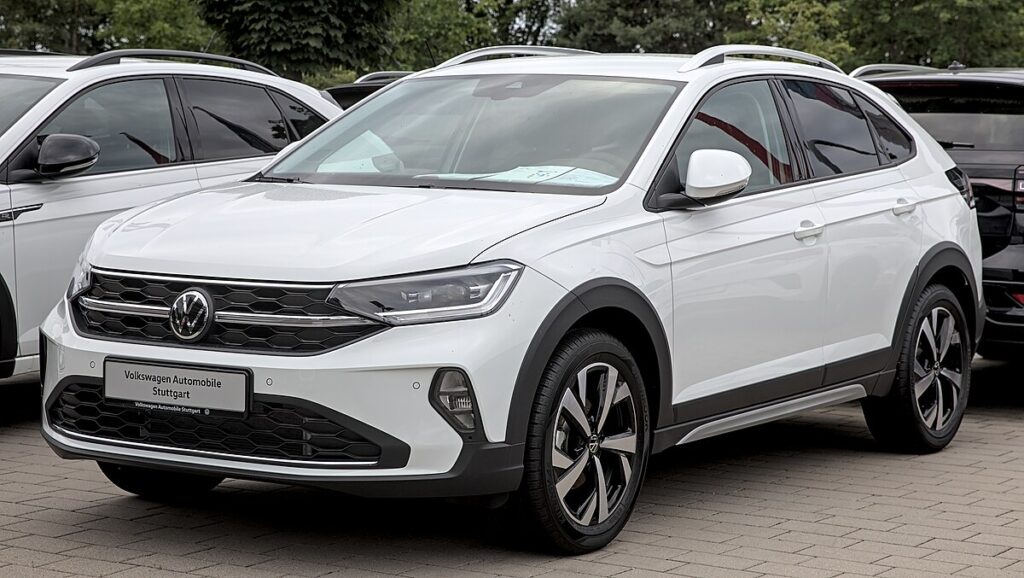
Choosing between the Volkswagen T-Cross and Volkswagen Taigo can be surprisingly difficult. Both compact SUVs offer efficient petrol engines, modern technology, comfortable interiors, and the familiar driving experience associated with Volkswagen.
However, despite sharing several mechanical components, these vehicles target slightly different buyers.
The VW T-Cross is a traditional compact SUV designed around practicality, passenger space, and everyday convenience. The VW Taigo, meanwhile, features a sportier, coupe-inspired design while maintaining many of the practical qualities expected from a small SUV.
But which one is actually better?
In this comprehensive VW T-Cross vs VW Taigo comparison, we'll examine their dimensions, engines, performance, fuel consumption, boot space, interior quality, comfort, safety, reliability, maintenance costs, and overall value.
By the end, we'll have a clearer idea of which Volkswagen makes the most sense for different driving needs.
Content in this publication
- VW T-Cross vs VW Taigo: Quick Comparison
- 1. VW T-Cross vs VW Taigo Exterior Design
- 2. Volkswagen T-Cross vs Taigo Dimensions
- 3. Interior Space and Passenger Comfort
- 4. VW T-Cross vs VW Taigo Boot Space
- 5. VW T-Cross vs VW Taigo Engine Options
- 6. Performance and Acceleration
- 7. VW T-Cross vs VW Taigo Fuel Economy
- 8. Ride Comfort and Suspension
- 9. Interior Quality and Technology
- 10. VW T-Cross vs VW Taigo Safety
- 11. VW T-Cross vs VW Taigo Reliability
- 12. Maintenance and Running Costs
- 13. VW T-Cross vs Taigo Price and Value
- 14. Which Is Better for Families?
- 15. Which Is Better for Motorway Driving?
- 16. VW T-Cross vs VW Taigo Ground Clearance
- 17. VW T-Cross Advantages and Disadvantages
- 18. VW Taigo Advantages and Disadvantages
- 19. VW T-Cross vs VW Taigo: Which Should You Buy?
- 20. Frequently Asked Questions
- Conclusion: Is the VW T-Cross Better Than the VW Taigo?
VW T-Cross vs VW Taigo: Quick Comparison
Before examining their differences in detail, let's compare their main specifications.
| Feature | Volkswagen T-Cross | Volkswagen Taigo |
|---|---|---|
| Vehicle type | Compact SUV | Coupe-style compact SUV |
| Length | 4,127 mm | 4,266 mm |
| Width | 1,760 mm | 1,757 mm |
| Height | 1,573 mm | 1,518 mm |
| Wheelbase | 2,551 mm | 2,554 mm |
| Boot capacity | 385–455 litres | 440 litres |
| Maximum boot capacity | 1,281 litres | 1,222 litres |
| Petrol engines | 1.0 TSI / 1.5 TSI | 1.0 TSI / 1.5 TSI |
| Power | 95–150 PS | 95–150 PS |
| Transmission | Manual / DSG automatic | Manual / DSG automatic |
| Drivetrain | Front-wheel drive | Front-wheel drive |
| Sliding rear seats | Yes | No |
| Seating capacity | 5 | 5 |
Specifications represent selected European and UK-market versions. Equipment, engines, and dimensions may vary by country and model year.
At first glance, the biggest differences involve exterior styling, vehicle height, and interior flexibility.
The Taigo is longer and sportier, while the T-Cross is taller and offers more adaptable luggage space.
Neither vehicle is necessarily superior in every category.
1. VW T-Cross vs VW Taigo Exterior Design
Exterior design is one of the most noticeable differences between these two Volkswagen SUVs.
Although they share similar foundations, they have distinct personalities.
Volkswagen T-Cross Design
The Volkswagen T-Cross features a conventional compact SUV appearance.
Its upright body, relatively tall roofline, and defined wheel arches give it a practical and robust look.
The front end includes Volkswagen's familiar grille design, while modern lighting elements contribute to its contemporary appearance.
The vehicle's relatively short length also helps it maintain balanced proportions.
One of the T-Cross's biggest styling advantages is that it looks like a traditional SUV despite its compact dimensions.
This makes it attractive to buyers who want a raised driving position without purchasing a significantly larger vehicle.
Volkswagen Taigo Design
The Volkswagen Taigo takes a different approach.
Its most distinctive feature is the sloping roofline, which creates a coupe-inspired silhouette.
Compared with the T-Cross, the Taigo looks longer, lower, and more aerodynamic.
Its roof flows towards the rear of the vehicle, creating a sportier profile.
The sculpted bodywork and distinctive rear styling further reinforce this impression.
For drivers who prefer modern crossovers with dynamic designs, the Taigo may be the more attractive option.
Which Volkswagen Looks Better?
Styling preferences are subjective.
However, we'd choose the T-Cross if we wanted a traditional SUV appearance.
The Taigo would be our preference if sporty styling and a sleeker silhouette were more important.
Design winner: Volkswagen Taigo for sporty styling, Volkswagen T-Cross for traditional SUV appeal.
2. Volkswagen T-Cross vs Taigo Dimensions
Dimensions matter when comparing compact SUVs, particularly for drivers who frequently navigate narrow city streets or small parking spaces.
Although these vehicles share a similar wheelbase, their exterior proportions differ.
Dimensions Comparison
| Measurement | VW T-Cross | VW Taigo |
|---|---|---|
| Length | 4,127 mm | 4,266 mm |
| Width | 1,760 mm | 1,757 mm |
| Height | 1,573 mm | 1,518 mm |
| Wheelbase | 2,551 mm | 2,554 mm |
The Taigo is approximately 139 mm longer than the T-Cross.
However, the T-Cross is around 55 mm taller.
Their widths and wheelbases are almost identical.
Which Is Easier to Park?
The T-Cross has a slight advantage in urban environments.
Its shorter body makes it easier to fit into compact parking spaces.
The upright driving position also provides a useful view of surrounding traffic.
The Taigo remains relatively easy to manoeuvre, although its longer rear section and sloping roofline can make rearward visibility less straightforward.
Parking sensors and reversing cameras can reduce these disadvantages.
For everyday city driving, we'd generally favour the T-Cross.
3. Interior Space and Passenger Comfort
Interior space is particularly important when purchasing a vehicle for family use.
Both Volkswagens can accommodate five occupants, although comfort depends on passenger height and seating arrangements.
Front Seat Space
The T-Cross and Taigo provide comfortable front seating positions with good adjustability.
Both have dashboards that prioritise accessibility and everyday usability.
The main difference comes from the driving position.
In the T-Cross, we sit higher and experience a more traditional SUV environment.
The Taigo feels slightly more like a raised hatchback.
Neither approach is automatically better.
Drivers accustomed to SUVs may prefer the T-Cross, while those transitioning from hatchbacks may appreciate the Taigo.
Rear Passenger Space
The T-Cross has a particularly useful advantage: its sliding rear bench.
Depending on the seating position, we can prioritise additional rear legroom or increased luggage capacity.
The rear seats can slide by approximately 14 cm.
This feature makes the T-Cross highly adaptable.
For example, when carrying young children, we can move the seats forwards to create more luggage space.
When transporting taller adults, we can move them backwards to improve legroom.
The Taigo uses a fixed rear bench.
Although its wheelbase is almost identical to the T-Cross, the sloping roofline can make the rear cabin feel less spacious.
Nevertheless, the Taigo remains practical for everyday use.
Which Has More Comfortable Rear Seats?
For frequent rear-seat passengers, we'd generally recommend the T-Cross.
Its taller roofline and adjustable rear bench provide greater flexibility.
Interior practicality winner: VW T-Cross.
4. VW T-Cross vs VW Taigo Boot Space
Boot capacity is one of the most interesting differences between these vehicles.
Despite its coupe-inspired design, the Taigo offers a surprisingly generous luggage compartment.
VW T-Cross Boot Capacity
The Volkswagen T-Cross offers approximately 385 to 455 litres of luggage space.
The exact capacity depends on the position of its sliding rear bench.
When the rear seats are moved forwards, boot capacity increases.
With the rear seats folded, maximum luggage capacity reaches approximately 1,281 litres.
This flexibility makes the T-Cross particularly convenient for family holidays, shopping trips, and transporting bulky objects.
VW Taigo Boot Capacity
The Volkswagen Taigo provides approximately 440 litres of boot space.
Unlike the T-Cross, this capacity doesn't depend on a sliding rear bench.
When we fold the rear seats, available luggage volume increases to approximately 1,222 litres.
For a compact crossover with a sloping roofline, these figures are impressive.
Boot Space Comparison
| Configuration | VW T-Cross | VW Taigo |
|---|---|---|
| Rear seats upright | 385–455 L | 440 L |
| Maximum with rear seats upright | 455 L | 440 L |
| Rear seats folded | 1,281 L | 1,222 L |
| Sliding rear bench | Yes | No |
Which Has the Bigger Boot?
The answer depends on how we configure the T-Cross.
The Taigo offers more boot space than the T-Cross when the latter's rear bench is positioned for maximum passenger legroom.
However, the T-Cross offers slightly more capacity when its rear seats are moved forwards.
It also provides greater maximum luggage volume with the rear seats folded.
For buyers who frequently change between carrying passengers and luggage, the T-Cross is the more flexible option.
5. VW T-Cross vs VW Taigo Engine Options
Both vehicles offer similar petrol engines in many European markets.
The available engine range depends on the model year, country, and equipment level.
1.0 TSI 95 PS Engine
The entry-level 1.0 TSI is a turbocharged three-cylinder petrol engine producing approximately 95 PS.
It is designed primarily for drivers who prioritise fuel economy and affordability.
This engine is suitable for daily commuting, city driving, and occasional motorway journeys.
However, acceleration may feel modest when carrying several passengers or travelling uphill.
For predominantly urban use, the 95 PS version should be adequate for many drivers.
1.0 TSI 115 PS Engine
The more powerful 1.0 TSI produces approximately 115 PS.
This engine offers a better balance between performance and efficiency.
Compared with the 95 PS version, it provides stronger acceleration and more flexibility during motorway driving.
Depending on the version, buyers may be able to choose between a manual gearbox and a seven-speed DSG automatic transmission.
You may be interested in reading Peugeot 2008 vs Volkswagen T-Cross: The Definitive, Data-Rich Comparison Guide
For most drivers, we'd consider the 115 PS engine an excellent all-round option.
1.5 TSI 150 PS Engine
The 1.5 TSI is the most powerful commonly available petrol engine in these models.
Producing approximately 150 PS, it offers significantly stronger acceleration.
This engine is particularly attractive for drivers who frequently use motorways or travel with several passengers.
It also delivers more comfortable overtaking performance.
However, the stronger engine may increase the purchase price and certain ownership expenses.
Engine Comparison
| Engine | Power | Best use |
|---|---|---|
| 1.0 TSI | 95 PS | Urban driving |
| 1.0 TSI | 115 PS | Everyday mixed driving |
| 1.5 TSI | 150 PS | Motorway journeys and stronger performance |
The important point is that both vehicles offer closely related engines.
Therefore, choosing the right engine is probably more important than choosing between the T-Cross and Taigo purely for performance.
6. Performance and Acceleration
Although both SUVs share similar engines, small differences in weight, aerodynamics, and transmission calibration can influence acceleration.
For example, selected 1.5 TSI DSG versions have the following official figures.
| Specification | VW T-Cross | VW Taigo |
|---|---|---|
| Engine | 1.5 TSI | 1.5 TSI |
| Power | 150 PS | 150 PS |
| Gearbox | 7-speed DSG | 7-speed DSG |
| 0–62 mph | 8.4 seconds | 8.2 seconds |
These are representative UK-market figures and may vary by version.
The Taigo has a marginal acceleration advantage.
However, a difference of approximately 0.2 seconds is unlikely to be noticeable in normal driving.
T-Cross Driving Experience
The T-Cross provides light steering, predictable handling, and a convenient driving position.
It feels particularly well suited to urban environments.
Its compact dimensions make changing lanes and manoeuvring through traffic relatively straightforward.
Taigo Driving Experience
The Taigo provides a similar overall driving experience.
However, its sportier exterior creates a more dynamic impression.
The lower-looking body may appeal to drivers who want a crossover that resembles a conventional hatchback.
In practice, both vehicles prioritise everyday usability rather than aggressive performance.
7. VW T-Cross vs VW Taigo Fuel Economy
Fuel consumption is an important consideration, especially for drivers who cover substantial annual mileage.
Both Volkswagen models use efficient turbocharged petrol engines.
Official figures vary depending on the engine, transmission, wheel size, and vehicle specification.
Fuel Economy Comparison
| Engine type | VW T-Cross | VW Taigo |
|---|---|---|
| Efficient 1.0 TSI versions | Around 50–51 mpg | Around 52–53 mpg |
| 1.5 TSI DSG versions | Around 47–48 mpg | Around 48 mpg |
| Fuel type | Petrol | Petrol |
Approximate UK imperial mpg figures for selected versions, using official combined-cycle ratings. Actual fuel consumption varies.
Which Volkswagen Is More Fuel-Efficient?
The Taigo can have a slight advantage in official fuel consumption when comparing certain equivalent versions.
However, the differences are relatively small.
Several factors influence real-world fuel consumption, including driving habits, traffic conditions, vehicle load, tyre pressure, and road gradients.
For example, frequent acceleration and braking in heavy city traffic can significantly increase fuel consumption.
Similarly, travelling at high motorway speeds may produce less favourable results than official testing suggests.
We wouldn't consider fuel economy alone a decisive reason to choose one model over the other.
Fuel economy winner: Slight advantage to the VW Taigo in some comparable versions.
8. Ride Comfort and Suspension
Ride comfort plays an important role in everyday satisfaction.
Both vehicles share similar mechanical foundations and are designed primarily for normal roads.
Volkswagen T-Cross Comfort
The T-Cross provides a relatively comfortable ride for a small SUV.
Its elevated driving position offers a useful view of the road.
The suspension handles ordinary road imperfections reasonably well, although sharp bumps may be more noticeable with larger wheels.
The upright cabin is particularly appealing for urban commuting.
Volkswagen Taigo Comfort
The Taigo also offers a comfortable driving experience.
Its lower silhouette doesn't automatically mean it has significantly firmer suspension.
In fact, ride quality can depend more on the chosen wheel and tyre combination than on the difference between these two models.
Versions equipped with larger alloy wheels and lower-profile tyres may transmit more road imperfections into the cabin.
Which Is More Comfortable?
Both vehicles are competitive in their class.
For drivers who appreciate a higher driving position and upright seating environment, we'd choose the T-Cross.
For those who prefer a more hatchback-like driving position, the Taigo may feel more natural.
A test drive remains the best way to compare comfort.
9. Interior Quality and Technology
The Volkswagen T-Cross and Taigo share several interior technologies.
Depending on specification, both can offer digital instrumentation, touchscreen infotainment, and modern driver-assistance systems.
Infotainment Features
Available equipment may include:
- Digital instrument displays.
- Touchscreen multimedia systems.
- Apple CarPlay connectivity.
- Android Auto connectivity.
- USB-C charging ports.
- Wireless smartphone charging.
- Bluetooth connectivity.
- Satellite navigation.
- Automatic climate control.
Availability depends on trim level and market.
Dashboard Quality
Both vehicles use a combination of durable plastics, decorative trim, and modern display technology.
Higher specifications may include additional comfort features and more attractive interior finishes.
However, neither model is intended to compete directly with premium luxury SUVs.
Their interiors focus on functionality and ease of use.
Which Has Better Technology?
There isn't a clear overall winner.
A higher-specification T-Cross may offer more technology than an entry-level Taigo.
Similarly, a well-equipped Taigo may provide more features than a basic T-Cross.
We recommend comparing actual equipment lists rather than assuming one model is automatically better.
10. VW T-Cross vs VW Taigo Safety
Safety is one of the most important factors when buying a family vehicle.
Both Volkswagen models offer modern safety equipment, although exact features depend on the version.
Available Safety Features
Depending on specification, equipment may include:
- Automatic emergency braking.
- Forward collision warning.
- Lane-keeping assistance.
- Adaptive cruise control.
- Parking sensors.
- Reversing cameras.
- Electronic stability control.
- Multiple airbags.
- ISOFIX child-seat mounting points.
Euro NCAP Safety Ratings
The published Euro NCAP assessments highlight an important distinction.
| Safety assessment | VW T-Cross | VW Taigo |
|---|---|---|
| Assessment year | 2025 | 2022 |
| Overall rating | 3 stars | 5 stars |
| Adult occupant protection | 74% | 94% |
| Child occupant protection | 81% | 84% |
| Vulnerable road users | 60% | 71% |
| Safety assistance | 57% | 70% |
The T-Cross previously received a five-star rating under the 2019 testing protocol.
However, its 2025 reassessment resulted in three stars.
The Taigo received five stars in 2022.
It's important to recognise that Euro NCAP testing requirements evolve over time.
Consequently, results from different assessment years aren't directly comparable.
The ratings should be considered alongside the vehicle's exact safety equipment and the applicable testing methodology.
11. VW T-Cross vs VW Taigo Reliability
Reliability can have a significant impact on long-term ownership costs.
Both SUVs share many Volkswagen Group mechanical components, including engines and transmissions.
Consequently, their potential maintenance concerns are often similar.
VW T-Cross Common Reliability Considerations
When evaluating a used Volkswagen T-Cross, we'd pay particular attention to:
- Engine maintenance history.
- Turbocharger operation.
- Cooling-system condition.
- DSG transmission behaviour.
- Electrical warning messages.
- Infotainment functionality.
- Suspension wear.
- Previous accident repairs.
A properly maintained vehicle is generally preferable to one with an incomplete service history.
VW Taigo Common Reliability Considerations
The Taigo uses closely related mechanical technology.
Therefore, many of the same inspection points apply.
We'd check that the engine runs smoothly, the transmission changes gears correctly, and all electronic systems function normally.
When considering an automatic version, we'd also pay attention to unusual hesitation, vibration, or inconsistent gear changes.
These symptoms don't necessarily indicate a serious fault, but they deserve professional inspection.
Is the Taigo More Reliable Than the T-Cross?
There isn't enough directly comparable long-term failure-rate information to conclude that one vehicle is definitively more reliable.
The specific engine, gearbox, maintenance history, and individual vehicle condition are likely to be more important.
Reliability winner: No clear overall winner.
12. Maintenance and Running Costs
Buying a car involves more than paying the initial purchase price.
We also need to consider ongoing expenses.
These include servicing, fuel, insurance, tyres, brakes, taxes, and potential repairs.
Servicing Costs
Since the T-Cross and Taigo share several engines and mechanical components, routine servicing expenses can be relatively similar.
However, costs vary according to the engine, gearbox, service schedule, and local labour rates.
For example, servicing requirements for a manual transmission may differ from those of a DSG automatic gearbox.
The correct maintenance schedule should always be checked in the manufacturer's documentation.
Tyre Replacement Costs
Tyre costs depend on wheel diameter and tyre specification.
You may be interested in readingPeugeot 2008 vs Volkswagen T-Cross: The Definitive, Data-Rich Comparison GuideYou may be interested in reading
 Nissan Qashqai vs Volkswagen T-Cross: Definitive 2025 Comparison for Buyers
Vehicles equipped with larger alloy wheels may require more expensive tyres.
This applies to both the T-Cross and Taigo.
Insurance Costs
Insurance premiums vary according to driver age, location, driving record, vehicle specification, and insurer.
We shouldn't assume that either model is consistently cheaper to insure.
The best approach is to obtain quotations for the exact versions we're considering.
Which Costs Less to Maintain?
For equivalent engines and similar equipment, maintenance costs should be broadly comparable.
The condition of a used vehicle and the cost of local servicing will usually have a greater influence on long-term expenses.
13. VW T-Cross vs Taigo Price and Value
The purchase price is another important factor.
Both vehicles compete in the compact SUV segment, although their retail prices vary by country and specification.
In some markets, the Taigo may cost more than a similarly equipped T-Cross.
However, promotions, dealer discounts, and equipment differences can change the comparison.
Is the T-Cross Good Value?
The T-Cross provides considerable practicality within compact exterior dimensions.
Its sliding rear bench is especially useful for families.
For buyers who regularly carry passengers and luggage, this flexibility can justify choosing the T-Cross even when its purchase price is slightly higher.
Is the Taigo Good Value?
The Taigo offers distinctive styling without sacrificing too much practicality.
Its generous boot and familiar petrol engines make it a sensible everyday vehicle.
If we find a Taigo with the equipment we want at a competitive price, it can offer excellent value.
Which Would We Choose at the Same Price?
If both vehicles had identical engines, equipment, warranties, and conditions, we'd generally choose the T-Cross for practicality.
However, we'd choose the Taigo if exterior design were our main priority and we rarely needed adjustable rear seating.
14. Which Is Better for Families?
Families often need a vehicle that can handle multiple responsibilities.
These may include transporting children, carrying shopping, fitting child seats, and accommodating luggage for holidays.
Both vehicles can perform these tasks.
However, the T-Cross offers some important advantages.
Family Advantages of the T-Cross
Its taller roofline makes the cabin feel more spacious.
The sliding rear seats allow us to adapt the interior to different situations.
The compact exterior dimensions also make the vehicle convenient for school runs and supermarket parking.
Is the Taigo Suitable for Families?
Absolutely.
The Taigo has five seats and a generous boot.
For a family with one child or occasional rear-seat passengers, it may provide sufficient space.
However, the fixed rear bench offers less flexibility.
Which Is Better for Child Seats?
Both vehicles offer ISOFIX mounting provisions in applicable specifications.
Nevertheless, we recommend testing the installation of the specific child seat we intend to use.
Large rear-facing child seats can occupy considerable space and may require adjustments to the front passenger seat.
Family winner: Volkswagen T-Cross.
15. Which Is Better for Motorway Driving?
Both vehicles are capable of motorway driving.
However, engine choice can make a noticeable difference.
The 95 PS 1.0 TSI is adequate for ordinary journeys but may feel less relaxed when accelerating with several passengers.
The 115 PS version offers more flexibility.
Meanwhile, the 150 PS 1.5 TSI is particularly attractive for frequent motorway use.
T-Cross Motorway Experience
The T-Cross provides good visibility and a comfortable upright driving position.
Its suspension and steering are well suited to everyday motorway travel.
Taigo Motorway Experience
The Taigo offers similar motorway capability.
Its sportier design may appeal to drivers who prefer a lower-looking crossover.
However, both vehicles share closely related mechanical components, so we shouldn't expect dramatic differences in driving performance.
For frequent long-distance journeys, we'd favour the 1.5 TSI engine in either model.
16. VW T-Cross vs VW Taigo Ground Clearance
Ground clearance can be important when driving over steep ramps, speed bumps, and uneven roads.
Both vehicles have SUV-inspired styling, but neither is designed for demanding off-road conditions.
The T-Cross has a taller overall body, while the Taigo has a lower exterior silhouette.
However, vehicle height and ground clearance are not the same measurement.
Actual clearance depends on the specific model and suspension configuration.
Drivers who regularly encounter rough roads should verify official ground-clearance specifications for the versions sold in their country.
They should also consider tyre size, suspension characteristics, and front-bumper clearance.
Neither vehicle offers the off-road capabilities of a dedicated four-wheel-drive SUV.
17. VW T-Cross Advantages and Disadvantages
Advantages
- Upright driving position.
- Good outward visibility.
- Compact dimensions for city driving.
- Sliding rear seats.
- Flexible luggage capacity.
- Practical family-friendly interior.
- Efficient petrol engines.
- Available DSG automatic transmission.
- Modern infotainment and safety equipment.
Disadvantages
- Less distinctive exterior styling than the Taigo.
- Boot capacity depends on rear-seat position.
- Higher trim levels can be expensive.
- Some interior materials feel basic.
- The 2025 Euro NCAP reassessment resulted in three stars.
18. VW Taigo Advantages and Disadvantages
Advantages
- Sporty coupe-inspired exterior.
- Generous 440-litre boot.
- Competitive fuel efficiency.
- Modern technology.
- Familiar Volkswagen petrol engines.
- Comfortable everyday driving experience.
- Five-star Euro NCAP result from 2022.
- Attractive alternative to traditional compact SUVs.
Disadvantages
- Fixed rear bench.
- Less maximum luggage volume than the T-Cross.
- Longer exterior body.
- Sloping roof may affect the feeling of rear-seat space.
- Rearward visibility can be more restricted.
- Sporty styling doesn't guarantee sportier handling.
- Some versions can become expensive with optional equipment.
19. VW T-Cross vs VW Taigo: Which Should You Buy?
After comparing their features, it's clear that these two SUVs appeal to different priorities.
The T-Cross focuses on flexibility and practicality.
The Taigo offers a more distinctive appearance while maintaining impressive everyday usability.
Final Comparison
| Category | Our preferred choice |
|---|---|
| Exterior styling | VW Taigo |
| City driving | VW T-Cross |
| Rear-seat flexibility | VW T-Cross |
| Boot capacity with seats folded | VW T-Cross |
| Fixed boot capacity | VW Taigo |
| Family practicality | VW T-Cross |
| Engine performance | Tie |
| Fuel economy | Slight advantage to Taigo |
| Reliability | No clear winner |
| Interior technology | Depends on trim |
| Maintenance costs | Broadly comparable |
| Traditional SUV feel | VW T-Cross |
| Sporty appearance | VW Taigo |
Choose the Volkswagen T-Cross If:
We regularly carry passengers, want a higher driving position, need flexible luggage space, or prioritise easy city parking.
The T-Cross makes particular sense for small families and drivers who value practicality.
Choose the Volkswagen Taigo If:
We want a stylish compact crossover, appreciate coupe-inspired styling, and don't need sliding rear seats.
The Taigo is especially attractive for individual drivers, couples, and smaller households.
20. Frequently Asked Questions
Is the VW Taigo bigger than the T-Cross?
The Volkswagen Taigo is longer than the T-Cross, measuring approximately 4,266 mm compared with 4,127 mm.
However, the T-Cross is taller.
Their wheelbases are almost identical, meaning their overall passenger accommodation is relatively similar.
The biggest differences are their body shapes and interior flexibility.
Which has a bigger boot, the VW T-Cross or Taigo?
The Volkswagen T-Cross provides between 385 and 455 litres of boot space, depending on the rear-seat position.
The Volkswagen Taigo offers 440 litres.
With the rear seats folded, the T-Cross has approximately 1,281 litres of capacity, compared with 1,222 litres in the Taigo.
Therefore, the T-Cross offers greater maximum luggage capacity.
Is the VW Taigo based on the T-Cross?
The Volkswagen Taigo and T-Cross share the Volkswagen Group MQB A0 platform.
They also use several similar engines, transmissions, and electronic systems.
However, they have different body designs, exterior dimensions, and interior configurations.
The Taigo isn't simply a T-Cross with a different badge.
Is the VW Taigo more fuel-efficient than the T-Cross?
Certain Volkswagen Taigo versions have slightly better official fuel-consumption figures than comparable T-Cross models.
However, the differences are relatively small.
Engine choice, driving conditions, transmission, and wheel size can have a greater impact on real-world economy.
We recommend comparing the official figures for the exact versions available locally.
Which is better, the VW T-Cross or VW Taigo?
The Volkswagen T-Cross is generally the better choice for buyers who prioritise practicality, family convenience, and flexible passenger space.
The Volkswagen Taigo is a strong alternative for those who value sporty styling and want a compact crossover with a generous boot.
Both vehicles offer similar engine options and everyday driving characteristics.
The best choice ultimately depends on individual priorities.
Conclusion: Is the VW T-Cross Better Than the VW Taigo?
The VW T-Cross vs VW Taigo comparison highlights two different approaches to the compact SUV market.
Although these Volkswagen models share many mechanical components, their design philosophies are noticeably different.
The Volkswagen T-Cross is the more practical choice. Its upright body, compact dimensions, sliding rear seats, and flexible boot make it particularly attractive for families and city drivers.
The Volkswagen Taigo offers a sportier alternative. Its coupe-inspired design creates a distinctive appearance, while its 440-litre boot provides more everyday practicality than we might initially expect.
Performance differences are relatively small when comparing equivalent engines.
Both vehicles offer efficient petrol powertrains, comfortable driving characteristics, and modern equipment.
For us, the Volkswagen T-Cross is the better all-round option because of its versatile interior and practical design.
However, if we prefer a stylish crossover and don't need adjustable rear seats, the Volkswagen Taigo is an equally sensible alternative.
You may be interested in readingPeugeot 2008 vs Volkswagen T-Cross: The Definitive, Data-Rich Comparison GuideYou may be interested in reading
Nissan Qashqai vs Volkswagen T-Cross: Definitive 2025 Comparison for BuyersYou may be interested in reading
 Ford Puma vs Volkswagen T-Cross: The Ultimate In-Depth Comparison for 2025
Ultimately, we should choose the T-Cross for functionality and the Taigo for design, while carefully comparing the engines, equipment, safety features, and prices of the exact versions available in our market.
If you want to know other articles similar to VW T-Cross vs VW Taigo: Which SUV Is Better in 2026? you can visit the category Models.
Honda Passport vs Toyota 4Runner: Which SUV Is Better?
Honda Passport vs Ford Bronco: Which SUV Is Better?
Honda Passport vs Ford Explorer: Which SUV Is Better?
Honda Passport or Pilot: Which SUV Is Better?
Honda Passport vs Jeep Grand Cherokee: Which SUV Is Better?
Honda Passport vs Nissan Pathfinder: Which SUV Is Better?
Leave a Reply
More content of your interest