

Why Are Toyota Hilux So Tough? The Engineering Behind the Legend

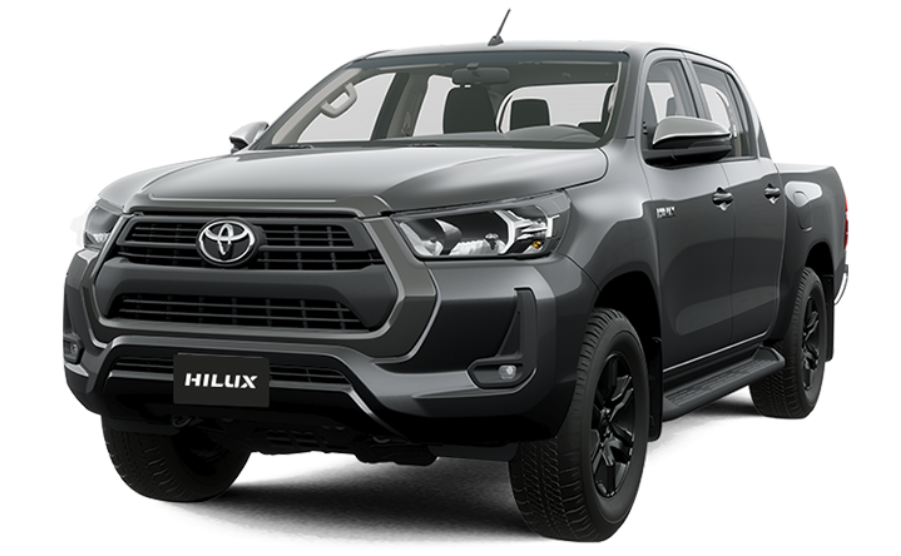
Ask almost anyone who has spent time around farms, construction sites, remote mining roads, deserts, or rough country tracks, and the Toyota Hilux will probably need little introduction. Its reputation has grown far beyond ordinary pickup-truck marketing. For many drivers, the Hilux has become shorthand for durability itself.
But why are Toyota Hilux so tough?
It isn't because Toyota discovered some magical steel that never bends. Nor is every Hilux indestructible. Like any mechanical machine, one can break when abused, overloaded, neglected, or poorly maintained.
The real answer is more interesting.
The Hilux has been designed from the beginning as a working truck rather than a passenger car pretending to be rugged. Toyota has spent decades refining a relatively straightforward formula: a strong separate chassis, durable drivetrains, load-friendly suspension, sensible mechanical engineering, extensive testing, and a design philosophy that prioritizes surviving difficult conditions.
Think of the Hilux less like a delicate multitool packed with tricks and more like a good steel hammer. It may evolve, gain technology, and become more comfortable, but its basic job remains the same: keep working.
Let's dig into exactly what creates that reputation.
Content in this publication
- Why Is the Toyota Hilux Considered So Tough?
- The Hilux Was Born as a Work Truck
- The Ladder Frame Is the Hilux's Backbone
- The Suspension Is Built for Real Work
- Toyota Tests the Hilux Where Trucks Actually Work
- Hilux Engines Usually Favor Durability Over Drama
- The 1GD Diesel Continues That Philosophy
- Part-Time Four-Wheel Drive Keeps Things Purposeful
- The Hilux Is Designed to Carry Weight
- Toyota Doesn't Design the Hilux for One Country
- Repairability Is an Underrated Form of Toughness
- Simple Doesn't Mean Primitive
- Toyota's QDR Philosophy Helps Explain the Reputation
- Why Old Hilux Trucks Keep Appearing on the Road
- Is a Toyota Hilux Really Indestructible?
- Are Older Hilux Models Tougher Than New Ones?
- Does the Hilux's Reputation Exceed Reality?
- Why Competitors Can Be Tough Too
- What Actually Makes a Hilux Last?
- The Real Secret Behind Toyota Hilux Toughness
- Conclusion: Why Are Toyota Hilux So Tough?
- Frequently Asked Questions
Why Is the Toyota Hilux Considered So Tough?
The Hilux's toughness comes from several engineering decisions working together rather than one spectacular component.
Its reputation is primarily built around:
- A strong ladder-frame chassis designed to handle twisting and heavy loads
- Suspension engineered around commercial and off-road use
- Proven diesel and petrol engines with strong low-speed performance
- Simple, durable driveline layouts on many generations
- Robust four-wheel-drive hardware
- Conservative engineering rather than chasing maximum performance
- Development in demanding environments around the world
- Decades of improvements based on real commercial use
- Strong global parts and servicing support
- A design philosophy centered on quality, durability, and reliability
Put those pieces together and we get something more important than laboratory strength: a truck capable of handling repeated punishment over many years.
That's the difference.
A vehicle can survive one dramatic obstacle and still be unreliable. Hilux toughness is really about repeatedly turning up for work.
The Hilux Was Born as a Work Truck
To understand the Hilux, we need to travel back to 1968.
The original Hilux wasn't designed primarily as a fashionable lifestyle pickup. Toyota conceived it as a practical light truck. The first generation already used separate-frame construction, a rigid rear axle, and a payload-oriented suspension arrangement.
Those roots matter.
Modern pickups have become quieter, safer, faster, and considerably more luxurious, yet the Hilux's underlying priorities still come from the commercial world.
A contractor wants the truck to start on Monday morning.
A farmer wants it to cross muddy ground carrying equipment.
A remote worker cares whether the vehicle will make it home, not whether the dashboard has the fanciest animation.
Toyota has spent generations trying to satisfy exactly those expectations.
Decades of Evolution Matter More Than Hype
Toyota has been refining the Hilux for more than half a century.
That gives engineers something new manufacturers simply cannot manufacture overnight: experience.
Every generation exposes weaknesses.
A suspension component wears faster than expected. A seal doesn't like a certain environment. Customers carry loads differently in Australia than they do in Thailand. Roads in Africa place different stresses on vehicles than European highways. Extreme heat reveals problems that ordinary testing may not.
Over decades, those lessons accumulate.
The modern Hilux therefore isn't merely one truck designed by one engineering team. In a sense, it is the result of millions of vehicles collectively teaching Toyota what a working pickup needs to survive.
The Ladder Frame Is the Hilux's Backbone
One of the biggest answers to why Toyota Hilux trucks are so tough sits underneath the body.
The Hilux uses body-on-frame construction built around a ladder-style chassis.
Instead of making the body itself carry virtually all structural loads, as happens with typical unibody cars and crossovers, the Hilux has a separate structural frame underneath.
Imagine two long steel rails running from front to rear, joined by crossmembers.
It looks somewhat like a ladder lying flat beneath the truck—hence the name.
Why a Ladder Frame Works So Well
A ladder frame is particularly useful for vehicles expected to carry cargo, tow, travel off-road, and absorb repeated stresses.
When one wheel climbs onto a rock while another drops into a hole, the vehicle experiences twisting forces. Add hundreds of kilograms of cargo and those stresses become even greater.
A strong frame provides a solid foundation for dealing with that punishment.
Toyota has continued refining this concept rather than abandoning it. Even the Hilux introduced in Japan in 2026 retains a traditional ladder-frame structure, with Toyota reporting increased plate thickness in sections of the frame side rails to balance rigidity against bending and twisting forces.
That tells us something important.
The Hilux's toughness isn't merely a nostalgic reputation. Toyota continues engineering structural strength into the basic architecture.
Rigid Doesn't Mean Completely Inflexible
Here's a subtle point.
A truck shouldn't necessarily be designed like an immovable block of concrete.
Vehicles experience enormous dynamic loads. Engineers have to control where forces travel through the chassis while balancing stiffness, durability, weight, ride comfort, and handling.
So when we call a Hilux frame strong, we don't simply mean "make everything thicker."
Good structural engineering is about managing stress.
The chassis has to cope with bending, torsion, vibration, payload, towing forces, suspension movement, and thousands upon thousands of impacts without allowing those stresses to destroy the truck prematurely.
That's a far more sophisticated definition of toughness.
The Suspension Is Built for Real Work
A strong chassis wouldn't mean much if the suspension wilted the moment we loaded the bed.
Historically, the Hilux has relied heavily on a robust rear suspension arrangement suited to truck duties, including rigid-axle and leaf-spring layouts across generations.
Leaf springs aren't glamorous.
You won't normally hear them discussed with the excitement reserved for adaptive sports suspension or electronically controlled dampers.
But for carrying loads?
They make tremendous sense.
Why Leaf Springs Suit the Hilux
Leaf springs are mechanically straightforward and naturally suited to supporting significant weight.
They can distribute loads effectively while remaining durable enough for commercial applications. They're also familiar to mechanics around the world, which matters when a truck is operating hundreds of kilometers from a sophisticated dealership.
This highlights an important principle behind the Hilux.
Sophistication isn't automatically toughness.
Sometimes a simpler solution is better because there are fewer opportunities for something expensive or delicate to ruin your day.
Toyota hasn't ignored comfort, however. When developing the eighth-generation Hilux, the company specifically revised the leaf-spring suspension and shock absorbers while offering suspension specifications aimed at different operating environments, including heavy-duty applications.
The challenge has always been maintaining that workhorse ability without making every paved-road journey feel like we're driving a wheelbarrow down a staircase.
Toyota Tests the Hilux Where Trucks Actually Work
Durability isn't created entirely inside an engineering office.
Toyota has repeatedly developed the Hilux using conditions encountered by actual customers.
During development of the eighth-generation model, Toyota engineers drove in environments ranging from muddy forests and flooded roads to deserts exceeding 50°C, while gathering feedback from Hilux owners across different regions.
That's significant because environmental extremes attack vehicles differently.
Heat punishes cooling systems, lubricants, batteries, plastics, electronics, transmissions, and seals.
Water exposes sealing weaknesses.
Dust attacks air filtration and moving components.
Corrugations generate relentless vibration.
Heavy cargo stresses frames, brakes, suspension, driveline components, and wheel bearings.
Mud tests traction systems while simultaneously contaminating components underneath the truck.
A vehicle that feels perfectly reliable during a short paved-road test can behave very differently after weeks of punishment.
Testing for Repetition Is the Secret
The important word isn't simply extreme.
It's repetition.
Crossing one rough trail makes a good advertisement. Crossing rough roads every week for ten years is what creates a reputation.
The Hilux became famous because many examples perform difficult jobs repeatedly.
That's a less dramatic story—but a much more impressive one.
Hilux Engines Usually Favor Durability Over Drama
Another reason behind Toyota Hilux durability is engine philosophy.
Hilux engines haven't traditionally been designed to transform the truck into a drag-strip hero.
Instead, engines—particularly its diesels—have generally emphasized usable torque, efficiency, reliability, and low-speed pulling ability.
That's exactly what we want in a work truck.
Why Low-End Torque Matters
Off-road driving and heavy hauling often happen at relatively low speeds.
We want the engine to pull confidently without constantly needing huge revs.
Strong low-rpm torque can help when climbing, towing, moving heavy loads, or negotiating rough terrain where maintaining controlled speed matters more than chasing horsepower figures.
Toyota specifically highlighted improved low-speed torque when launching the eighth-generation Hilux, showing how closely its powertrain strategy remained connected to real working conditions.
Conservative Engineering Can Be an Advantage
Here's where things become interesting.
The most powerful engine isn't necessarily the longest-lasting one.
Extracting extraordinary output from a relatively small engine can produce amazing performance, but commercial vehicles often benefit from a more conservative balance.
Heat, cylinder pressure, turbocharger workload, transmission stress, cooling demand, and maintenance sensitivity all matter.
The Hilux formula has generally prioritized useful performance over ridiculous headline numbers.
It doesn't need to win a horsepower argument at the pub.
It needs to tow the trailer home.
The 1GD Diesel Continues That Philosophy
Modern Hilux models in many markets have used Toyota's 2.8-liter 1GD-series turbodiesel.
Depending on market and model year, outputs and calibrations differ, so we shouldn't assume every 2.8-liter Hilux is mechanically identical.
What remains consistent is the goal: generous diesel torque packaged into a utility-focused powertrain.
Toyota's 2026 Japanese Hilux continues with the 1GD-FTV diesel and describes the engine in terms of both performance and durability.
Again, we see continuity.
Technology changes.
The fundamental mission does not.
You may be interested in reading Which Toyota Hilux Is the Most Reliable? The Best Years and Engines
Part-Time Four-Wheel Drive Keeps Things Purposeful
Four-wheel drive is another major ingredient in the Hilux toughness story.
Many Hilux 4x4 configurations use a selectable or part-time four-wheel-drive system.
Under normal suitable conditions, the vehicle can operate in two-wheel drive. When slippery or difficult terrain arrives, the driver can engage four-wheel drive according to the system's requirements.
On capable versions and generations, low-range gearing further improves control in demanding terrain.
Why Low Range Matters More Than People Think
Low-range gearing isn't about going faster.
It does the opposite.
It multiplies torque while allowing us to crawl at low speed.
That's exactly what we need when navigating steep climbs, difficult descents, deep mud, rocks, or other terrain where precision matters.
Power without control is like bringing a chainsaw to cut a birthday cake. Technically impressive, perhaps, but not particularly useful.
A proper off-road driveline gives the driver leverage.
That is part of what separates genuinely capable work trucks from crossovers wearing chunky tires.
The Hilux Is Designed to Carry Weight
Pickup toughness has to include payload.
After all, an empty pickup that only survives shopping-center parking lots isn't being challenged very much.
From its early generations, the Hilux was designed around meaningful cargo capacity. Toyota's own historical record notes that the first-generation Hilux offered a 1,000 kg payload.
That commercial DNA shaped what came afterward.
Payload Changes Everything Mechanically
Once we add substantial weight, practically every major system works harder.
The suspension compresses.
Tires carry additional load.
Wheel bearings experience more stress.
The engine needs greater effort to accelerate.
The transmission handles more torque demand.
Brakes must dissipate additional energy.
The chassis carries higher bending forces.
Cooling becomes more important.
Designing a truck to do that reliably requires thinking about durability as a complete system rather than strengthening a few isolated parts.
That's where decades of commercial-vehicle engineering become valuable.
Toyota Doesn't Design the Hilux for One Country
The Hilux is unusual because its reputation isn't built around one market.
Over its history, it has been sold across huge portions of the world, serving environments as different as Southeast Asia, Australia, Africa, Latin America, Europe, and the Middle East.
That global exposure affects engineering.
A pickup designed almost exclusively around smooth suburban roads can make certain assumptions.
The Hilux cannot.
One Truck Has to Face Wildly Different Conditions
Consider what global use can involve.
A Hilux might spend Monday crossing Australian outback tracks, metaphorically speaking, while another spends its life hauling agricultural equipment in South America.
Elsewhere, one may face tropical humidity and another desert heat.
Some operate close to excellent dealer networks. Others work in areas where a roadside mechanic may have to keep them alive using whatever tools are available.
That creates pressure to make important mechanical systems durable, understandable, and serviceable.
We could call it evolutionary pressure for trucks.
Weak solutions eventually reveal themselves.
Repairability Is an Underrated Form of Toughness
There's a difference between a vehicle that never fails and one that can survive a long working life.
No truck is literally immune to failure.
Bushings wear.
Bearings wear.
Injectors age.
Clutches eventually need attention.
Shock absorbers weaken.
Seals leak.
Electrical components can fail.
The real question is what happens next.
Can the problem be diagnosed?
Can replacement parts be found?
Can a competent mechanic repair it?
Will the rest of the vehicle remain worth fixing?
That's where the Hilux's enormous global footprint becomes valuable.
A Tough Truck Needs a Strong Support Ecosystem
Durability isn't only metallurgy.
It is also parts availability, technical familiarity, service networks, and aftermarket knowledge.
A rare pickup might be extremely well engineered, but if replacing one ordinary component requires waiting six weeks for an imported part, its practical toughness suddenly feels much less impressive.
Hilux owners benefit from decades of widespread use.
Mechanics know them.
Parts suppliers understand them.
Used components and aftermarket replacements are widely available in many major Hilux markets.
That doesn't make repairs free, obviously.
It makes long-term ownership easier to sustain.
Simple Doesn't Mean Primitive
People sometimes explain Hilux reliability by saying, "They're simple."
That's partly true, particularly when discussing older trucks, but it's also an oversimplification.
Modern Hilux models contain turbocharging, common-rail diesel injection, emissions controls, electronic safety systems, traction management, infotainment, sensors, and plenty of computerized hardware.
They're no longer bare mechanical tractors.
So why can the reputation survive increasing complexity?
Because simplicity should really mean purposeful engineering.
Toyota tends to keep the core architecture appropriate for the truck's mission.
The ladder frame remains.
The cargo bed remains structurally separated from the cabin.
The drivetrain remains focused on usable off-road ability.
Modern technology gets layered onto a platform whose job is still clearly defined.
Toyota's QDR Philosophy Helps Explain the Reputation
Toyota regularly uses the phrase Quality, Durability and Reliability, often shortened to QDR.
For the Hilux, those aren't abstract advertising words. They map neatly onto what commercial users actually demand.
Quality means components should be built consistently.
Durability means those components should survive hard use.
Reliability means the vehicle should repeatedly perform its function without unacceptable failure.
The three reinforce each other.
A truck doesn't earn a legendary reputation from one good model year.
It earns it through consistency.
Why Old Hilux Trucks Keep Appearing on the Road
One of the most convincing parts of the Hilux story is simply visibility.
In numerous countries, older Hilux generations still perform ordinary jobs decades after leaving the factory.
That doesn't mean every surviving truck reached old age effortlessly.
Many have received replacement clutches, suspension components, cooling-system parts, injectors, bearings, seals, or even major engine work.
But that's exactly the point.
Durability does not mean zero maintenance.
Longevity Comes From a Repairable Foundation
A truly disposable vehicle becomes economically unreasonable to repair as it ages.
A durable platform gives owners reasons to keep investing in it.
If the frame remains healthy, the drivetrain is fundamentally sound, replacement parts are available, and the truck still performs useful work, repairing worn components makes financial sense.
That creates the cycle we associate with famously long-lived Hilux examples.
Maintain.
Repair.
Work.
Repeat.
You may be interested in readingWhich Toyota Hilux Is the Most Reliable? The Best Years and EnginesYou may be interested in reading
Are Toyota Hilux Any Good? The Real-World AnswerIs a Toyota Hilux Really Indestructible?
No.
And saying otherwise does the truck a disservice.
The Hilux is tough—not supernatural.
Poor maintenance can destroy one.
Extreme overloading can damage suspension and chassis components.
Incorrect modifications can accelerate wear.
Deep-water crossings can destroy engines if water enters the intake.
Contaminated diesel can damage modern fuel systems.
Rust can kill an otherwise mechanically healthy truck.
Repeated overheating can ruin virtually any engine.
Neglected automatic transmissions can develop problems.
Even the toughest work boot eventually falls apart if we spend years kicking concrete walls.
The Famous Reputation Can Encourage Abuse
There's an ironic downside to owning something known for toughness.
People abuse it because they expect it to survive.
Used Hilux buyers should remember this.
A truck with 150,000 km of careful highway and rural driving might be healthier than another with 80,000 km spent overloaded on mine roads.
Mileage tells only part of the story.
Maintenance records, corrosion, modifications, underbody damage, towing history, suspension condition, and previous commercial use can matter just as much.
Are Older Hilux Models Tougher Than New Ones?
This debate never dies.
Older Hilux fans often argue that previous generations were tougher because they were mechanically simpler.
There's some logic there.
An older diesel Hilux may have fewer sensors, fewer emissions components, less sophisticated electronics, and simpler fuel systems.
That can make remote repairs easier.
But "simpler" and "stronger" aren't synonyms.
Modern Hilux Models Gain Strength in Other Areas
Newer trucks benefit from improvements in structural engineering, braking, engine control, safety, manufacturing, suspension tuning, materials, and driver assistance.
Modern Hilux models also provide levels of power, refinement, occupant protection, and comfort older trucks couldn't approach.
So which is tougher?
It depends on what we mean.
If toughness means repairable with basic equipment in an extremely remote environment, an older model has clear advantages.
If toughness means carrying people safely and comfortably across difficult terrain while providing modern performance and control, newer versions bring substantial improvements.
Toughness evolves.
Does the Hilux's Reputation Exceed Reality?
A little mythology inevitably surrounds a vehicle this famous.
Stories become exaggerated.
Internet videos become folklore.
People start believing a Hilux could survive being dropped from the moon and driven home with three wheels.
We shouldn't confuse entertainment with engineering.
Still, dismissing the reputation as pure hype would be equally misleading.
Toyota's own historical material shows that the Hilux has maintained commercial-vehicle priorities since its 1968 debut, while later development programs explicitly focused on ruggedness, global testing, frame strength, suspension capability, and durability.
The legend exists because millions of owners gave it fertile ground to grow.
Why Competitors Can Be Tough Too
None of this means Toyota possesses a monopoly on durable pickups.
Ford Ranger, Isuzu D-Max, Mitsubishi Triton/L200, Nissan Navara, Mazda BT-50 and other pickups have served demanding users around the world.
Some may outperform a particular Hilux in power, comfort, towing, technology, payload, efficiency, price, or specific off-road situations depending on generation and market.
The Hilux's special advantage is the continuity of its reputation.
It's not merely about whether today's truck is strong.
It's about having generations of evidence behind the badge.
Reputation Becomes Part of Resale Value
Durability creates trust.
Trust supports demand.
Demand strengthens resale values.
Strong resale values encourage owners to maintain trucks because they know the vehicle retains economic worth.
That creates another feedback loop.
A Hilux with a reputation for lasting is worth maintaining, and a well-maintained Hilux reinforces the reputation for lasting.
Mechanical toughness and market psychology start feeding each other.
What Actually Makes a Hilux Last?
Even great engineering needs help from the owner.
If we want a Hilux to remain tough for hundreds of thousands of kilometers, ordinary maintenance becomes far more important than heroic driving.
Oil needs changing at the proper interval.
Cooling systems need attention.
Correct fluids matter.
Filters matter—especially in dusty environments.
Fuel quality matters enormously for modern diesels.
Suspension components should be inspected.
Driveline fluids shouldn't be forgotten simply because they're hidden beneath the truck.
Corrosion deserves attention.
And if the truck regularly tows, carries maximum loads, drives off-road, or operates in severe heat and dust, maintenance may need to reflect those harsher conditions.
The truck may be strong.
Physics is stronger.
The Real Secret Behind Toyota Hilux Toughness
After examining all the engineering, history, and mythology, the answer becomes surprisingly simple.
The Hilux is tough because toughness was never an accidental side effect.
It was part of the job description.
Toyota didn't take an ordinary family vehicle, lift the suspension, add black plastic around the wheel arches, and declare victory.
The Hilux grew from commercial-truck roots.
Its chassis architecture reflects that.
Its suspension reflects that.
Its powertrain priorities reflect that.
Its global testing reflects that.
Even its reputation reflects decades spent doing jobs that expose weaknesses quickly.
Toughness Is Really Consistency
Perhaps that is the best way to define the Hilux.
Being tough isn't surviving one impossible afternoon.
It's starting again the next morning.
And the morning after that.
And five years later.
A Toyota Hilux earns its reputation not because nothing can break it, but because its core engineering gives it a remarkable ability to tolerate hard work, recover through maintenance, and continue being useful long after easier lives have worn other vehicles down.
Conclusion: Why Are Toyota Hilux So Tough?
So, why are Toyota Hilux so tough?
Because Toyota has spent generations engineering the Hilux around the realities of work.
A sturdy ladder frame provides the backbone. Load-friendly suspension allows the truck to carry serious weight. Proven powertrains prioritize usable torque and durability. Proper four-wheel-drive hardware gives it genuine rough-terrain capability. Global development exposes weaknesses before customers do. And decades of worldwide ownership have created an enormous ecosystem of parts, mechanics, and practical knowledge.
None of those ingredients sounds mythical by itself.
Together, they're formidable.
The Toyota Hilux is a bit like an old pair of work boots. It may get scratched. It may become muddy. Parts eventually wear. The shine disappears.
But that's beside the point.
What matters is whether it is ready when another difficult day's work begins.
For generations of Hilux owners, the answer has very often been yes.
Frequently Asked Questions
1. Why does the Toyota Hilux have a reputation for being indestructible?
The Hilux earned its reputation through decades of commercial and off-road use. Strong body-on-frame construction, durable drivetrains, load-oriented suspension, global testing, and widespread servicing support have allowed many examples to remain operational for extremely long periods. "Indestructible" is an exaggeration, but the underlying durability reputation has genuine engineering and ownership history behind it.
2. What makes the Toyota Hilux chassis so strong?
The Hilux uses a separate ladder-frame structure designed to manage the bending and twisting forces generated by payload, towing, rough roads, and off-road driving. Toyota has continued refining frame rigidity across generations rather than moving the Hilux to a conventional passenger-car-style unibody architecture.
3. How many miles can a Toyota Hilux last?
There is no guaranteed lifespan because maintenance, climate, workload, engine type, driving style, and previous use vary enormously. Well-maintained Hilux trucks can accumulate very high mileage, and examples exceeding 200,000 miles are not unusual in markets where the model is widely used. Mileage alone, however, shouldn't determine condition. Service history is more important.
4. Are old Toyota Hilux models tougher than modern ones?
Older Hilux models can be easier to repair because their mechanical systems are simpler and they contain less electronic equipment. Modern Hilux trucks, however, benefit from stronger engineering analysis, better safety, more sophisticated suspension tuning, improved performance, and more advanced manufacturing. Which one is "tougher" depends on whether we prioritize simplicity or overall capability.
5. Can a Toyota Hilux still break down?
Absolutely. A Hilux can suffer engine, transmission, fuel-system, suspension, electrical, corrosion, or cooling problems just like any other vehicle. Overloading, neglect, poor fuel, inappropriate modifications, overheating, and insufficient servicing can dramatically shorten its lifespan. Its reputation for toughness should never replace proper maintenance.
You may be interested in readingWhich Toyota Hilux Is the Most Reliable? The Best Years and EnginesYou may be interested in reading
Are Toyota Hilux Any Good? The Real-World AnswerYou may be interested in reading
 Is Infiniti QX60 a Good Car? A Complete Buyer’s Guide
If you want to know other articles similar to Why Are Toyota Hilux So Tough? The Engineering Behind the Legend you can visit the category Blog.
Volvo S90 Reliability: Problems, Costs & Best Years
Is Haval Jolion a Good Car? Honest Review, Reliability, Pros and Cons
How to Start Haval Jolion With Spare Key: Complete Guide
How to Calculate Per Diem on an Auto Loan

How to Calculate the Residual Value of a Car

Is the Honda Passport Selling Well? Sales Numbers Tell the Story
Leave a Reply
More content of your interest