
Hyundai i40 Towing Capacity: Complete Practical Guide

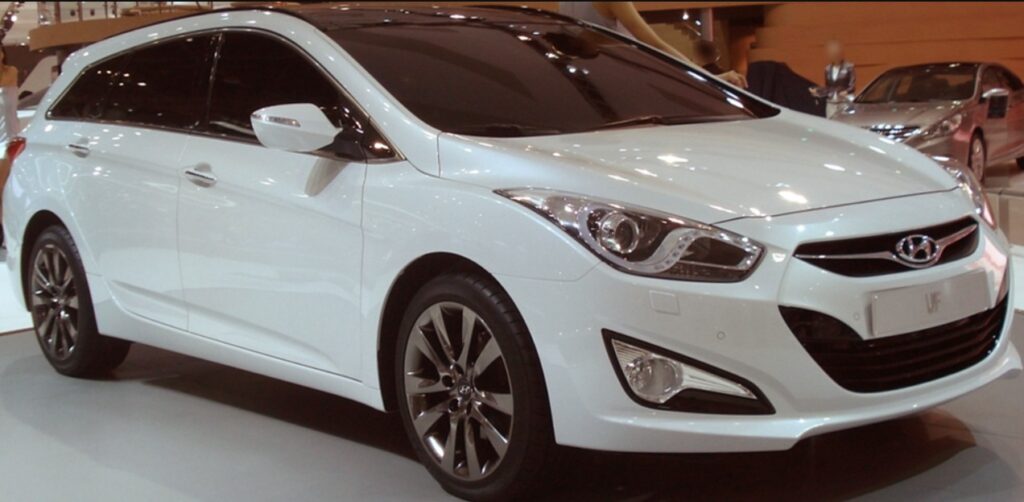
The Hyundai i40 towing capacity makes this comfortable family car more useful than many people expect. Although the i40 was designed mainly for commuting, motorway travel, and family duties, selected versions can tow trailers, small caravans, boats, and light equipment with confidence.
However, we should never assume that every Hyundai i40 can tow the same weight. The exact limit depends on the model year, engine, transmission, body style, and local specification. Some versions are rated to tow 1,500 kg with brakes, while others can reach 1,800 kg. Unbraked limits are generally around 700 to 750 kg.
Content in this publication
- What Is the Hyundai i40 Towing Capacity?
- Braked and Unbraked Towing Explained
- Hyundai i40 Towing Capacity by Year
- Hyundai i40 Tourer Towing Capacity
- Hyundai i40 Saloon Towing Capacity
- Which Hyundai i40 Engine Is Best for Towing?
- Can a Hyundai i40 Tow a Caravan?
- Can the Hyundai i40 Tow a Trailer?
- How to Confirm Your Exact Towing Limit
- What Is Nose Weight?
- Payload Matters When Towing
- How Towing Affects Fuel Economy
- Automatic vs Manual Hyundai i40 for Towing
- Essential Checks Before Towing
- Common Towing Mistakes to Avoid
- Is the Hyundai i40 a Good Tow Car?
- Conclusion
- Frequently Asked Questions
What Is the Hyundai i40 Towing Capacity?
The maximum Hyundai i40 towing capacity is generally listed at up to 1,800 kg for a braked trailer. That figure applies only to versions officially approved for that load. Other i40 variants may be limited to 1,500 kg, so checking the specific vehicle is essential.
A braked trailer has its own braking system. This reduces the amount of work the car’s brakes must perform and allows a heavier legal towing limit.
For an unbraked trailer, the i40 is usually restricted to approximately 700 or 750 kg. The difference may sound small on paper, but it matters when loading tools, camping equipment, furniture, or garden waste.
Braked and Unbraked Towing Explained
Braked Towing Capacity
Braked towing capacity refers to the heaviest trailer the vehicle can tow when that trailer has functioning brakes.
Depending on the i40 version, the braked towing limit is commonly:
- 1,500 kg
- 1,800 kg
A correctly equipped i40 may therefore tow a compact caravan, medium utility trailer, small horse trailer, or lightweight boat trailer. Still, the trailer’s actual loaded weight must remain within the approved figure.
Unbraked Towing Capacity
An unbraked trailer relies entirely on the Hyundai’s braking system. Because the car must stop both itself and the trailer, the legal limit is much lower.
Typical Hyundai i40 unbraked limits include:
- 700 kg
- 750 kg
We must count everything carried inside the trailer. A trailer weighing 400 kg empty may quickly reach 700 kg after adding machinery, luggage, fuel, bicycles, or building materials.
Hyundai i40 Towing Capacity by Year
The rating changed between model years and specifications. Australian towing data, for example, lists:
- 2013 Hyundai i40: 750 kg unbraked and 1,500 kg braked
- 2014 Hyundai i40: 750 kg unbraked and 1,800 kg braked
- 2015 Hyundai i40: 750 kg unbraked and 1,800 kg braked
- 2016 Hyundai i40: 750 kg unbraked and 1,500 kg braked
These numbers demonstrate why we should not rely on a single universal figure. A newer car is not automatically rated to pull more than an older one.
Some 2019 versions are also listed with a maximum braked capacity of 1,800 kg, but that does not mean every 2019 i40 carries that approval.
Hyundai i40 Tourer Towing Capacity
The estate version, known as the Hyundai i40 Tourer, is often the first choice for drivers who expect to tow. Its large boot, practical rear opening, and long-distance comfort make it better suited to family holidays and caravan trips.
One 1.7 CRDi Tourer specification is listed with:
- Kerb weight: 1,638 kg
- Unbraked towing capacity: 700 kg
- Braked towing capacity: 1,500 kg
These figures show that even within the diesel Tourer range, the maximum may be 1,500 kg rather than 1,800 kg. [6]
Hyundai i40 Saloon Towing Capacity
The saloon can also tow, although it offers less cargo flexibility than the Tourer. Its lower, streamlined body can feel stable on the motorway, but towing approval still depends on the exact engine and transmission.
The original i40 range included engines such as the 1.6 GDI petrol, while diesel models were popular with drivers covering longer distances.
When buying a used saloon specifically for towing, we should inspect the official plate and handbook rather than trusting a general online listing.
Which Hyundai i40 Engine Is Best for Towing?
Diesel Engines
The diesel i40 is usually the more natural towing option. Diesel engines tend to deliver stronger torque at lower engine speeds, helping the car pull away with a loaded trailer and maintain speed on hills.
The 1.7 CRDi may feel more relaxed than a smaller petrol engine when carrying a heavy load. That does not increase the legal towing limit, but it can make the towing experience smoother and less tiring.
Petrol Engines
A petrol Hyundai i40 can handle lighter trailers, camping trailers, or small utility loads. Nevertheless, it may require more revs when accelerating or climbing.
For occasional light towing, petrol may be perfectly adequate. For regular caravan use, diesel is generally the more practical choice, provided the particular vehicle has a suitable official rating.
Can a Hyundai i40 Tow a Caravan?
Yes, many Hyundai i40 versions can tow a caravan, but the caravan’s maximum technically permissible laden mass must stay within the car’s approved braked limit.
A 1,500 kg-rated i40 may suit a lightweight caravan with a loaded weight comfortably below that number. A model rated at 1,800 kg offers more flexibility, but towing at the absolute maximum is not always pleasant.
A sensible setup leaves a safety margin. Wind, steep gradients, passengers, luggage, and wet roads can make a technically legal combination feel demanding.
Can the Hyundai i40 Tow a Trailer?
The i40 can tow many common trailer types, including:
- Small camping trailers
- Box trailers
- Garden trailers
- Motorcycle trailers
- Lightweight boat trailers
- Small caravans
- Utility trailers
The deciding factor is the trailer’s actual loaded weight, not its empty weight.
Imagine a suitcase. It may feel light when empty, but once packed, it becomes another object entirely. A trailer behaves the same way. We must include every item placed inside it.
How to Confirm Your Exact Towing Limit
Check the Owner’s Manual
The handbook may provide the towing limits for the engine and transmission installed in the car.
Inspect the Vehicle Identification Plate
The plate normally displays weight figures such as the gross vehicle weight and gross combination weight.
A common method is:
Gross combination weight minus gross vehicle weight = theoretical trailer limit
However, the official towing limit stated by Hyundai must still be followed if it is lower.
Check the Registration Documents
Some countries list towing or maximum train weight information in the vehicle registration records.
Ask Hyundai or an Approved Dealer
Using the vehicle identification number, a dealer may confirm the original specification.
What Is Nose Weight?
Nose weight is the downward force applied by the trailer coupling onto the tow ball.
Too little nose weight may cause instability and snaking. Too much can overload the rear suspension, tow bar, or rear axle.
We should distribute the load evenly and keep heavy objects low and close to the trailer axle. Think of balancing a tray: if everything sits at one end, control becomes difficult.
The tow bar, trailer coupling, and vehicle each have their own limits. The lowest permitted figure always wins.
Payload Matters When Towing
Towing capacity is only one part of the calculation. We must also consider the car’s payload.
Payload includes:
- Driver and passengers
- Luggage
- Roof boxes
- Accessories
- Tow-ball load
- Equipment stored in the boot
A family of five with luggage may use much of the i40’s available payload before the caravan is attached. The tow-ball load then adds further pressure to the rear axle.
How Towing Affects Fuel Economy
Towing increases aerodynamic drag and weight. As a result, fuel consumption rises.
The greatest changes usually occur when:
- Towing a tall caravan
- Driving into strong wind
- Travelling at higher speed
- Climbing steep roads
- Carrying excessive weight
Smooth acceleration and steady cruising can reduce consumption. Speed acts like an invisible wall: the faster we push a caravan through the air, the harder the engine must work.
Automatic vs Manual Hyundai i40 for Towing
An automatic transmission may make towing easier in traffic because there is no clutch pedal to manage. However, it can generate additional heat when working hard.
A manual gives us direct control over gear selection, but frequent hill starts can accelerate clutch wear.
Regardless of transmission type, we should:
- Use the correct gear on hills.
- Avoid labouring the engine at very low revs.
- Follow transmission service intervals.
- Allow extra stopping distance.
- Reduce speed before descents.
Essential Checks Before Towing
Before every journey, inspect:
- Tyre pressures on the car and trailer
- Trailer tyre condition and age
- Tow-ball security
- Breakaway cable
- Electrical connector
- Brake lights and indicators
- Mirrors and visibility
- Trailer brakes
- Number plate
- Load distribution
These checks take only a few minutes but may prevent a dangerous breakdown or unstable trailer.
Common Towing Mistakes to Avoid
Assuming Every i40 Can Tow 1,800 kg
Some versions are limited to 1,500 kg. The maximum figure should never be applied blindly.
Using the Trailer’s Empty Weight
The relevant figure is the loaded weight.
Ignoring Passenger and Luggage Weight
The car itself can become overloaded even when the trailer is legal.
Loading Too Much at the Rear
Heavy objects placed behind the trailer axle may encourage swaying.
Driving at Normal Solo-Car Speed
A towing combination needs more time to accelerate, turn, and stop.
Is the Hyundai i40 a Good Tow Car?
The Hyundai i40 can be a capable tow car for moderate loads. Its comfortable cabin, stable motorway manners, spacious Tourer body, and efficient diesel options make it appealing for occasional caravan trips.
Still, it is not a heavy-duty SUV or pickup. Drivers planning to tow near 1,800 kg regularly may prefer a heavier vehicle with stronger low-speed performance and a larger safety margin.
For a lightweight caravan or general-purpose trailer, however, a correctly specified and well-maintained i40 can be a sensible partner.
Conclusion
The Hyundai i40 towing capacity generally ranges from 1,500 to 1,800 kg for braked trailers, while the unbraked limit is usually approximately 700 to 750 kg.
The crucial lesson is simple: check the exact vehicle rather than relying on the highest advertised figure. Model year, engine, gearbox, and market specification can all change the rating.
When we combine the correct trailer weight, sensible loading, proper tyre pressures, and patient driving, the i40 becomes more than a comfortable family car. It becomes a practical travel companion capable of pulling holiday gear without unnecessary drama.
Frequently Asked Questions
1. What is the maximum Hyundai i40 towing capacity?
The highest commonly published rating is 1,800 kg for a braked trailer, although many versions are limited to 1,500 kg.
2. What is the Hyundai i40 unbraked towing capacity?
Depending on the model, it is normally around 700 or 750 kg.
3. Can a Hyundai i40 tow a 1,500 kg caravan?
Yes, provided the specific car is approved to tow at least 1,500 kg and the caravan’s actual loaded weight does not exceed that limit.
4. Is the Hyundai i40 Tourer good for towing?
The Tourer is practical for towing because of its large luggage area, comfortable ride, and diesel engine options. One 1.7 CRDi version is rated at 1,500 kg braked.
5. How do we find the exact towing capacity?
Check the owner’s handbook, vehicle weight plate, registration documents, or ask Hyundai to verify the specification using the vehicle identification number.
If you want to know other articles similar to Hyundai i40 Towing Capacity: Complete Practical Guide you can visit the category Service and Parts.
Land Rover Defender 90 Boot Space: Size, Dimensions and Practicality
Toyota Hilux Key Battery Replacement: Complete DIY Guide
Toyota Hilux Windscreen Replacement Cost: Prices, Factors, and Money-Saving Tips
Toyota Hilux GVM Upgrade Cost: Prices, Payload and What to Expect
Toyota Hilux Dashboard Symbols and Meanings: Complete Warning Light Guide
Tyre Pressure for Subaru XV: PSI, Bar and kPa Guide
Leave a Reply
More content of your interest