
Dacia Jogger MPG: Real-World Fuel Economy Explained

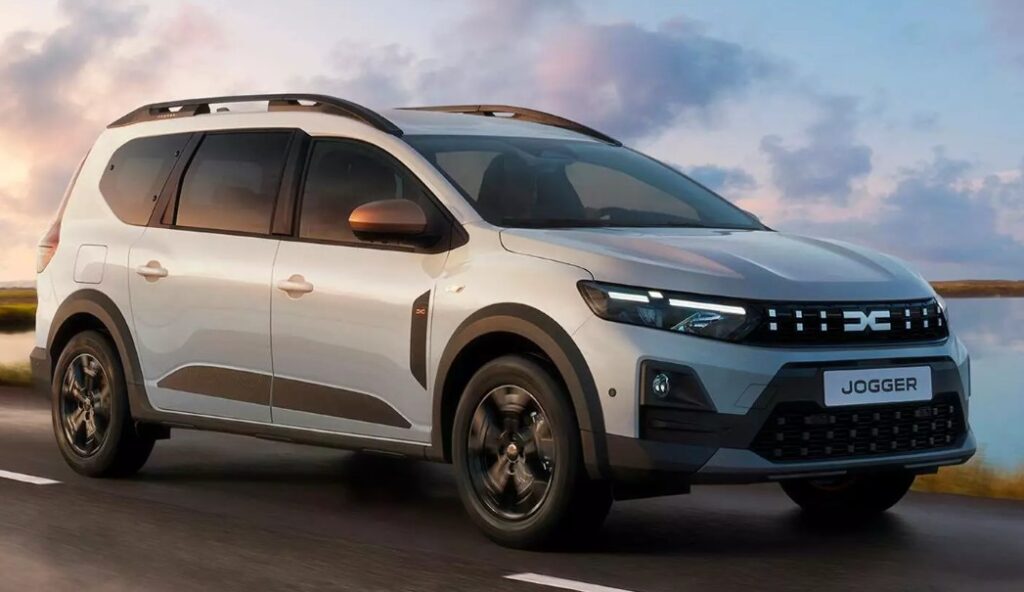
The Dacia Jogger has carved out a rather unusual corner of the family-car market. It offers up to seven seats, a flexible interior, SUV-inspired styling and a price that does not require us to remortgage the house. Yet practicality is only half the story. For many buyers, the crucial question is much simpler: what Dacia Jogger MPG can we realistically expect?
Official figures provide a useful starting point. The current UK-market Jogger TCe 110 petrol is listed at approximately 47 mpg combined, while the newer Hybrid 155 can achieve around 61 mpg combined, depending on the selected specification. These are WLTP figures, so everyday results will vary with traffic, temperature, speed, passenger load and driving style.
On paper, those numbers look encouraging for a long, spacious seven-seater. In practice, the Jogger can be economical, but it is not magic. Fill every seat, add roof equipment, accelerate like we are escaping a volcanic eruption and cruise at motorway speeds all afternoon, and fuel consumption will rise.
So, how economical is the Dacia Jogger in town, on motorways and during mixed family driving? Is the hybrid genuinely worth paying extra for? And what can we do to squeeze more miles from every litre?
Let us break it down properly.
Content in this publication
- What Is the Official Dacia Jogger MPG?
- Dacia Jogger TCe 110 MPG
- Dacia Jogger Hybrid MPG
- Dacia Jogger MPG in Town
- Dacia Jogger Motorway MPG
- Dacia Jogger MPG With Seven Passengers
- Does the Dacia Jogger Hybrid Save Enough Fuel?
- How the Jogger Compares With Other Seven-Seaters
- What Does WLTP MPG Actually Mean?
- Why Your Dacia Jogger MPG May Be Lower
- How to Improve Dacia Jogger MPG
- Understanding the Jogger MPG Display
- Dacia Jogger MPG During Winter
- Dacia Jogger MPG During Summer
- Does the Jogger’s Trim Level Affect MPG?
- Is the Earlier LPG Jogger Economical?
- Is the Dacia Jogger Fuel-Efficient for Its Size?
- Which Dacia Jogger Has the Best MPG?
- Buying a Used Jogger: What MPG Should We Expect?
- Final Verdict: Is Dacia Jogger MPG Good?
- Frequently Asked Questions
What Is the Official Dacia Jogger MPG?
The answer depends mainly on which engine sits beneath the bonnet.
The current UK Jogger range is centred around two powertrains:
- TCe 110 petrol: approximately 47 mpg combined
- Hybrid 155: approximately 61 mpg combined
Dacia directly compares the Jogger Expression Hybrid 155 at 61 mpg with the Expression TCe 110 at 47 mpg under the WLTP combined test. The manufacturer also warns that actual driving results can vary, which is important because laboratory figures cannot reproduce every school run, motorway queue or rainy winter morning.
The petrol version uses a 1.0-litre turbocharged three-cylinder engine and a six-speed manual gearbox. It produces 110 hp and drives the front wheels. Dacia lists the TCe 110 with a configured combined figure of around 47–47.1 mpg, depending on version and configuration.
The Hybrid 155 combines a petrol engine with electric motors and an automatic transmission. Its ability to recover energy while braking and move under electric power at lower speeds gives it a noticeable advantage in stop-start traffic.
Dacia Jogger MPG Comparison Table
| Dacia Jogger version | Official combined MPG | Realistic mixed-driving estimate | Best suited to |
|---|---|---|---|
| TCe 110 petrol manual | Around 47 mpg | Roughly 40–47 mpg | Lower purchase cost, motorway use |
| Hybrid 155 automatic | Around 61 mpg | Roughly 50–60 mpg | Town driving, mixed routes, frequent traffic |
| Earlier Hybrid 140 | Up to around 56.5–57.7 mpg | Roughly 48–57 mpg | Used-hybrid buyers |
| Earlier LPG/Bi-Fuel | Up to around 37.1 mpg on LPG | Varies significantly | Lower fuel cost where LPG is available |
These real-world estimates are not guaranteed figures. They are practical ranges intended to show how official ratings may translate into normal driving. Journey length, trim level, weather, tyre condition and passenger load can move the result in either direction.
Earlier Hybrid 140 versions were officially quoted at up to 56.5 or 57.7 mpg combined, depending on model year and specification. Older LPG versions had lower MPG when measured by volume, but LPG’s lower price could still reduce the cost per mile.
Dacia Jogger TCe 110 MPG
The TCe 110 is the straightforward option. There is no hybrid battery, no electric motor assistance and no complicated plug-in routine. We get a small turbocharged petrol engine, a manual gearbox and a relatively light vehicle for its size.
That simplicity is part of its charm.
An official figure near 47 mpg is respectable for a car capable of carrying seven people. However, reaching that number consistently requires sensible driving and favourable conditions.
Real-World TCe 110 Fuel Economy
During mixed driving, a realistic result for many owners may fall somewhere around 40–47 mpg. A gentle rural journey could produce more, while short urban trips may pull the average into the mid-to-high 30s.
Several scenarios can influence the number:
- Light traffic and steady A-road speeds may return close to official economy.
- Cold, short journeys can reduce efficiency substantially.
- Fully loaded motorway travel may produce low-to-mid 40s.
- Heavy congestion can be less economical than in the hybrid.
- Aggressive acceleration can quickly push consumption upward.
The little turbo engine does not need to be worked brutally, but it can feel busier when the Jogger is filled with adults, children and luggage. The harder we ask it to pull, the more fuel it demands.
Why the Small Petrol Engine Can Still Work
A 1.0-litre engine in a seven-seater may sound like a hamster being asked to move a wardrobe. Yet turbocharging gives the TCe 110 useful low-range torque, so it can handle ordinary family duties without constantly needing maximum revs.
The key is anticipation. Let the engine build speed smoothly instead of demanding instant acceleration in a high gear. Changing down early on steep hills can sometimes be more efficient than pressing the accelerator deeply while the engine struggles.
Dacia Jogger Hybrid MPG
The Hybrid 155 is the economy champion of the current range.
Dacia quotes approximately 61 mpg combined for the Jogger Expression Hybrid 155, compared with around 47 mpg for the equivalent TCe 110 petrol. That represents a substantial improvement on paper.
The hybrid does not need to be plugged in. It recharges its battery through regenerative braking and energy recovered during deceleration. That makes it easy to live with because we can use it like a conventional petrol car.
How the Hybrid Improves Fuel Economy
The system saves fuel in several ways:
- It can move using electric power at low speeds.
- It switches the petrol engine off when it is not needed.
- It recovers energy while slowing down.
- It assists the engine during acceleration.
- It reduces the amount of time spent idling in traffic.
Dacia states that its full-hybrid system can provide up to 80% electric driving time in urban conditions and fuel savings of up to 40% in an urban cycle compared with an equivalent petrol engine. These figures depend heavily on driving conditions and are based on internal or WLTP-related testing.
Real-World Hybrid 155 MPG
A sensible real-world expectation would be somewhere around 50–60 mpg during mixed driving, with the possibility of better results on warm, gentle urban routes.
Some journeys will be lower. A cold motorway run with seven occupants and a roof box may sit well below the official figure. On the other hand, light-footed city driving can allow the hybrid system to shine.
Dacia even publishes an owner review reporting more than 65 mpg on one journey, although an individual customer result should never be treated as a guaranteed average.
Where the Hybrid Performs Best
The hybrid usually makes the strongest case when our routine includes:
- Urban traffic
- School runs
- Frequent braking and acceleration
- Lower-speed suburban roads
- Regular short-to-medium journeys
- Mixed routes with plenty of deceleration
Every time we slow down, the system has an opportunity to recover energy. A normal petrol car turns much of that movement into wasted heat through the brakes. The hybrid catches part of it, like collecting rainwater instead of letting it disappear down the drain.
Dacia Jogger MPG in Town
Urban driving can be cruel to conventional petrol cars. Engines spend time idling, acceleration is frequent and low gears consume more fuel.
In these conditions, the TCe 110 might achieve somewhere in the mid-30s to low-40s mpg, depending on traffic and journey length. Short winter trips may return even less because the engine barely reaches its ideal operating temperature.
The hybrid is far better suited to this environment. Electric assistance, regenerative braking and automatic engine shut-off can deliver a considerable advantage. In favourable city conditions, averages in the mid-50s or above may be achievable.
However, not every urban journey is ideal. If we drive two miles from a freezing start with the heater, heated windows and lights working hard, fuel economy may still disappoint. Hybrid technology improves physics; it does not cancel physics.
Dacia Jogger Motorway MPG
Motorways reverse the picture slightly.
At a steady cruising speed, the TCe 110 no longer suffers from repeated stops and starts. Once in sixth gear, it can settle into a reasonably efficient rhythm. Depending on wind, gradient, load and speed, we might see approximately 41–47 mpg.
The hybrid can also perform well, but its advantage may shrink. At sustained motorway speeds, there are fewer opportunities for regenerative braking, and the petrol engine has to provide more continuous power.
A Hybrid Jogger might return somewhere around 45–55 mpg on a typical motorway journey, though slower cruising can improve the result.
Why Speed Matters So Much
Air resistance rises rapidly as speed increases. The difference between cruising at 60 mph and 75 mph may feel modest from the driver’s seat, but the engine experiences a much greater workload.
The Jogger is practical and relatively streamlined for its shape, yet it still presents a large body to the air. At higher speeds, it must punch through that air like a suitcase being pushed through water.
Reducing motorway speed slightly can make a noticeable difference to MPG, especially over long distances.
Dacia Jogger MPG With Seven Passengers
A seven-seat car is often purchased because we genuinely plan to use all seven seats. That means extra weight.
Seven occupants, bags, pushchairs and holiday equipment can add several hundred kilograms. The engine must use more energy to accelerate that mass and climb hills.
The effect is usually most noticeable:
- During acceleration
- On steep roads
- In stop-start traffic
- When overtaking
- With a roof box or cycle rack fitted
- When tyre pressures are too low for the load
A fully loaded Jogger might lose several MPG compared with the same route carrying only one or two people. The difference depends on terrain and driving style.
You may be interested in reading What to Expect When Driving a Fiat 500: Owner's Perspective
The good news is that added weight has less impact during steady cruising than during constant acceleration. On a long, flat motorway, the MPG penalty may be manageable. On a hilly urban route, it can be much more obvious.
Does the Dacia Jogger Hybrid Save Enough Fuel?
This is where the buying decision becomes personal.
The hybrid can use substantially less fuel, particularly in town. But it generally costs more to purchase. To decide whether it is financially worthwhile, we need to compare:
- The initial price difference
- Annual mileage
- Petrol prices
- Urban versus motorway use
- Insurance costs
- Finance interest
- Expected ownership period
- Resale value
Suppose we drive 10,000 miles per year.
At 47 mpg, the petrol model would use approximately 213 UK gallons annually. At 61 mpg, the hybrid would use about 164 gallons. That is a difference of roughly 49 UK gallons, or approximately 223 litres.
The annual cash saving then depends on the price paid per litre. The hybrid may save more for high-mileage urban drivers, but a low-mileage owner could take years to recover the higher purchase price through fuel alone.
Choose the Petrol Jogger When
The TCe 110 may make more sense when:
- Keeping the purchase price low is the priority.
- Most journeys are long and steady.
- Annual mileage is relatively modest.
- We prefer a manual gearbox.
- We plan to keep the car for only a short period.
- Fuel savings would not offset the hybrid premium.
Choose the Hybrid Jogger When
The Hybrid 155 may be the stronger choice when:
- We spend a lot of time in traffic.
- Annual mileage is high.
- We prefer an automatic.
- Smooth low-speed driving matters.
- We expect to keep the car for several years.
- Reduced fuel consumption is a major priority.
How the Jogger Compares With Other Seven-Seaters
The Jogger’s strongest advantage is not necessarily that it beats every rival on MPG. Its real strength is the combination of respectable economy, seven-seat flexibility and accessible pricing.
Many larger seven-seat SUVs carry more weight, use wider tyres and require more powerful engines. Even when their official figures look competitive, purchase costs can be dramatically higher.
Smaller hybrid crossovers may beat the Jogger for fuel economy, but they rarely provide the same third-row practicality.
That is why we should judge the Jogger in context. It is not trying to be a tiny economy hatchback. It is trying to move a family, their bags and possibly a reluctant dog without draining the bank account.
For that mission, 47 mpg from the petrol or around 61 mpg from the hybrid is an attractive proposition.
What Does WLTP MPG Actually Mean?
WLTP stands for Worldwide Harmonised Light Vehicle Test Procedure. It is the standard laboratory process used to measure fuel consumption, emissions and electric range.
Dacia explains that WLTP is intended to reflect everyday vehicle use more accurately than the older test system. Nevertheless, it remains a controlled procedure rather than a prediction for every driver.
The test cannot perfectly account for:
- Individual acceleration habits
- Local hills
- Wind direction
- Traffic congestion
- Roof accessories
- Passenger weight
- Poor road surfaces
- Extreme temperatures
- Mechanical condition
Think of WLTP MPG as a reference point rather than a promise. It helps us compare one vehicle with another under similar conditions. It does not guarantee that our dashboard will show exactly the same number.
Why Your Dacia Jogger MPG May Be Lower
Sometimes an owner sees an average far below the official figure and assumes something is wrong. Occasionally there is a fault, but driving conditions are usually responsible.
Short Journeys
Cold engines consume more fuel. If most trips last five or ten minutes, the engine spends a large proportion of its time warming up.
Cold Weather
Winter reduces efficiency through thicker fluids, colder tyres, increased electrical demand and longer engine warm-up times. Hybrid batteries can also perform less efficiently when cold.
High Motorway Speeds
Driving faster increases aerodynamic resistance. A small reduction in cruising speed may produce a surprisingly useful MPG improvement.
Low Tyre Pressure
Soft tyres create extra rolling resistance. The engine must work harder simply to keep the car moving.
Always follow the pressure label on the vehicle rather than copying a random figure from an online discussion. Adjust pressures when carrying a heavy load if the manufacturer specifies a separate fully laden setting.
Roof Bars and Roof Boxes
Roof equipment disrupts airflow. Even empty roof bars can create extra drag, while a large roof box may noticeably reduce motorway economy.
Heavy Acceleration
Turbocharged engines can be efficient under light loads, but frequent full-throttle acceleration increases fuel use quickly.
Air Conditioning and Heating
Climate control requires energy. The effect may be modest during a long journey but more visible during short trips.
Mechanical Problems
Possible causes of unusually poor economy include:
- Dirty air filter
- Worn spark plugs
- Incorrect wheel alignment
- Binding brakes
- Faulty oxygen sensor
- Engine-management problems
- Underinflated or unsuitable tyres
A sudden, unexplained fall in MPG deserves investigation, especially if it appears alongside warning lights, rough running or reduced performance.
How to Improve Dacia Jogger MPG
We do not need to crawl along every road or drive without heating to save fuel. Small, consistent habits often work better than extreme measures.
Accelerate Smoothly
Build speed progressively. Fast acceleration burns more fuel and often gains little time before the next junction.
Look Further Ahead
Anticipation is one of the most effective eco-driving tools. If traffic ahead is slowing, lift off early rather than accelerating toward it and braking hard.
In the hybrid, gradual deceleration also gives the regenerative system more opportunity to recover energy.
Use the Correct Gear
In the manual TCe 110, avoid both unnecessary high revs and forcing the engine to pull from very low revs in a high gear.
A strained engine with the accelerator pressed deeply may consume more fuel than one operating comfortably in a lower gear.
Keep Tyres Properly Inflated
Check pressures when the tyres are cold. Recheck them before long journeys and when carrying a full passenger load.
Remove Unnecessary Weight
There is no need to treat the Jogger like a stripped racing car, but permanently carrying unused tools, sports equipment and boxes adds weight.
Remove Roof Equipment
Take off roof bars and boxes when they are not needed. The benefit is greatest during motorway travel.
Combine Short Trips
One warm journey is usually more efficient than several separate cold starts. Grouping errands can improve the weekly average.
Use Eco Mode Sensibly
Eco modes generally soften accelerator response and reduce energy demand from certain systems. They can help, although the driver’s behaviour still matters more than the button itself.
Dacia provides model-specific tutorials for functions such as Eco Mode, and equipment availability may vary between versions.
Maintain a Steady Motorway Speed
Cruise control can help on flat roads, but it may use extra fuel when aggressively maintaining speed on hills. Sometimes a gentle reduction in speed uphill is more efficient.
Understanding the Jogger MPG Display
The onboard computer normally shows both instantaneous and average fuel consumption.
Instantaneous MPG jumps around constantly. It may display an extremely high number while coasting and a very low number during acceleration. That is normal.
Average MPG is more useful, but we need to understand when it was reset. An average calculated over 2,000 miles tells us more than one measured over a five-mile trip.
How to Calculate MPG Manually
For a more accurate long-term picture:
You may be interested in readingWhat to Expect When Driving a Fiat 500: Owner's PerspectiveYou may be interested in reading
 Comparing the Fiat 500e to the Traditional Fiat 500: Pros and Cons
- Fill the fuel tank completely.
- Reset the trip counter.
- Drive normally.
- Refill the tank to the same level.
- Record the litres added.
- Record the miles travelled.
- Convert litres to UK gallons by dividing by 4.546.
- Divide miles travelled by gallons used.
For example, if we cover 450 miles and add 45 litres:
- 45 litres ÷ 4.546 = 9.90 UK gallons
- 450 miles ÷ 9.90 gallons = approximately 45.5 mpg
Repeating this over several tanks gives a much better picture than judging the car from a single journey.
UK MPG Versus US MPG
This distinction matters when reading international websites.
A UK imperial gallon is larger than a US gallon, so the same vehicle produces a higher numerical MPG figure under the UK system.
For example:
- 50 UK mpg equals approximately 41.6 US mpg.
- 60 UK mpg equals approximately 50 US mpg.
Always check which measurement system is being used before comparing figures.
Dacia Jogger MPG During Winter
A winter decline is normal.
The engine takes longer to warm up, tyres lose pressure as temperatures fall and electrical systems work harder. Heated screens, lights, blowers and seat heaters all require energy.
The hybrid may run its petrol engine more frequently to warm the cabin and maintain system temperature. As a result, the electric-driving percentage can fall.
A winter reduction of several MPG does not automatically indicate a problem. We should compare the car with its own previous winter performance, not only with its best summer result.
Dacia Jogger MPG During Summer
Warm weather generally helps fuel economy because the engine reaches operating temperature more quickly and tyres roll more efficiently.
However, extreme heat can bring its own penalty. Strong air-conditioning use increases energy demand, and holiday travel often means extra passengers, luggage and roof equipment.
Summer can therefore produce either the best or worst MPG of the year. A light rural drive on a mild morning is ideal. A fully loaded motorway journey with a roof box and air conditioning working flat out is not.
Does the Jogger’s Trim Level Affect MPG?
Slightly.
Different trims may use different wheel designs, equipment levels and vehicle weights. Larger wheels or wider tyres can increase rolling resistance, while extra equipment adds mass.
The effect is usually much smaller than the difference created by speed, traffic or driver behaviour, but official figures can vary between configurations.
That is why we should check the exact specification of the vehicle we intend to buy rather than assuming every Jogger has an identical MPG rating.
Is the Earlier LPG Jogger Economical?
Earlier Jogger models were available with a petrol-LPG Bi-Fuel engine in some markets.
Dacia previously quoted up to around 37.1 mpg while running on LPG and a combined petrol-LPG range of as much as 621 miles. The MPG number looks lower than the petrol model because LPG contains less energy per litre. However, LPG can be considerably cheaper at the pump, so the cost per mile may still be attractive.
Dacia has also claimed fuel-cost savings of more than 40% for its Bi-Fuel technology compared with petrol, based on its stated fuel-price assumptions. Actual savings depend on local LPG availability and current prices.
Before buying a used LPG Jogger, consider:
- Availability of nearby LPG stations
- Current petrol and LPG prices
- Remaining factory warranty
- Service history
- Condition of the LPG system
- Reduced convenience if local filling stations stop selling LPG
An LPG Jogger can make sense, but only when the fuel is easy to obtain.
Is the Dacia Jogger Fuel-Efficient for Its Size?
Yes, particularly when we remember what it offers.
The Jogger measures roughly 4.55 metres long and can accommodate up to seven occupants. The TCe 110 still manages an official combined figure around 47 mpg, while the Hybrid 155 pushes the figure to approximately 61 mpg.
Those numbers are impressive not because they break records, but because they come from a genuinely useful family vehicle.
It is easy to make a lightweight two-seat car economical. Making a tall, flexible seven-seater return small-car-like fuel consumption is a more interesting achievement.
Which Dacia Jogger Has the Best MPG?
The Hybrid 155 has the strongest official fuel-economy figure in the current UK range.
Its estimated 61 mpg combined rating comfortably exceeds the TCe 110’s approximately 47 mpg. It should deliver the greatest advantage in urban and mixed driving, where regenerative braking and electric operation can work frequently.
That does not automatically make it the best choice for every buyer. The petrol version may still have a lower total ownership cost when annual mileage is limited or most travel takes place on steady motorways.
The best Jogger is not simply the one with the highest MPG. It is the one whose engine matches our routine.
Buying a Used Jogger: What MPG Should We Expect?
When test-driving a used Jogger, the displayed average MPG can provide clues, but it should not decide the purchase by itself.
A low figure might reflect:
- Recent short trips
- Dealership idling
- Previous towing
- Winter use
- A recently reset computer
- Heavy urban driving
A high figure may reflect one unusually gentle motorway journey.
Ask the seller how the vehicle was used and calculate fuel economy over several full tanks after purchase. More importantly, check the service history, tyre condition, warning lights and general mechanical health.
A well-maintained car with a mediocre dashboard reading may be a better buy than a neglected car showing an impressive average.
Final Verdict: Is Dacia Jogger MPG Good?
The Dacia Jogger is impressively economical for a practical seven-seat family car.
The TCe 110’s official figure of around 47 mpg makes it a solid choice for buyers seeking simplicity and a lower initial price. In normal mixed use, somewhere around 40–47 mpg is a sensible expectation.
The Hybrid 155 raises the official figure to approximately 61 mpg and should perform especially well in urban traffic. A realistic mixed-driving result around 50–60 mpg would still represent strong economy for a vehicle of this size and flexibility.
Neither engine can ignore heavy loads, cold weather, roof boxes or impatient driving. Yet treated sensibly, the Jogger stretches fuel remarkably well. It is less like a thirsty seven-seat bus and more like a family-sized Swiss Army knife: affordable, adaptable and surprisingly efficient.
For drivers covering frequent urban miles, the hybrid is the standout. For lower-mileage households and motorway-focused users, the TCe 110 remains a convincing value proposition.
Frequently Asked Questions
1. What MPG does a Dacia Jogger get?
The current TCe 110 petrol returns approximately 47 mpg combined under WLTP testing. The Hybrid 155 can achieve around 61 mpg combined, depending on trim and configuration. Real-world economy will vary with traffic, weather, load and driving style.
2. What is the real-world MPG of the Dacia Jogger Hybrid?
A realistic mixed-driving expectation is roughly 50–60 mpg. Urban drivers may achieve stronger results because the hybrid can recover braking energy and operate electrically at low speeds. Cold motorway journeys may return less.
3. Is the Dacia Jogger economical on the motorway?
Yes. The petrol model may return approximately 41–47 mpg during sensible motorway driving, while the hybrid could achieve around 45–55 mpg. Speed, wind, passenger load and roof equipment can significantly influence the result.
4. Why is my Dacia Jogger MPG so low?
Common reasons include short trips, cold weather, low tyre pressures, heavy acceleration, high motorway speeds, roof boxes and a fully loaded cabin. A sudden drop accompanied by warning lights or rough running may require mechanical inspection.
5. Is the Dacia Jogger Hybrid worth buying for fuel economy?
It can be worthwhile for high-mileage drivers who frequently travel in towns or congested traffic. Drivers covering fewer miles or spending most of their time on motorways may find that the cheaper TCe 110 delivers a better overall financial return.
You may be interested in readingWhat to Expect When Driving a Fiat 500: Owner's PerspectiveYou may be interested in reading
Comparing the Fiat 500e to the Traditional Fiat 500: Pros and ConsYou may be interested in reading
 Understanding the Fiat 500's Infotainment System and Common Issues
If you want to know other articles similar to Dacia Jogger MPG: Real-World Fuel Economy Explained you can visit the category Driving.
Vauxhall Meriva MPG: Real-World Fuel Economy Guide
Hyundai i40 MPG: Real-World Fuel Economy Guide
Kia Rio Fuel Consumption: Real-World Efficiency, MPG Insights & Smart Driving Tips
Kia Rio Miles Per Gallon: Real MPG, Efficiency Tips & What to Expect
Citroen C1 Fuel Consumption: The Real-World Guide to MPG, Costs, and Smarter Driving
Vauxhall Insignia Top Speed: How Fast Can This Smart Executive Car Really Go?
Leave a Reply
More content of your interest