
Dacia Jogger Engine Size: Petrol and Hybrid Options Explained

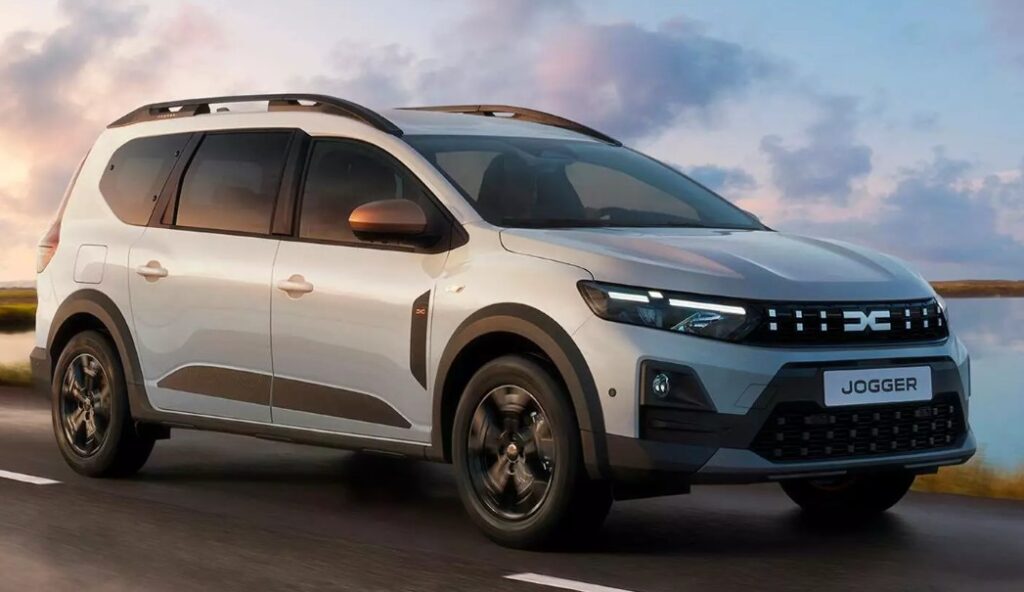
The Dacia Jogger is a bit of an automotive puzzle—in the best possible way. It carries up to seven people, offers van-like flexibility, wears a hint of SUV styling, and costs considerably less than many conventional family cars. Yet when we lift the bonnet, we find engines that look surprisingly small for a vehicle with such a big job to do.
So, what is the Dacia Jogger engine size?
Current UK versions of the Dacia Jogger are offered with either a 1.0-litre turbocharged petrol engine or a 1.8-litre petrol-electric full-hybrid powertrain. Earlier Jogger Hybrid 140 models used a 1.6-litre petrol engine supported by two electric motors.
That simple answer only tells us half the story. Engine capacity matters, but turbocharging, electric assistance, torque, transmission design, vehicle weight, passenger load and driving conditions all influence how the Jogger performs.
A one-litre engine may sound as though it belongs in a tiny city hatchback, not a seven-seat family wagon. However, modern engines can punch well above their displacement. Let us look at what each Jogger engine offers, how the different versions feel on the road and which one makes the most sense for your lifestyle.
Content in this publication
- Dacia Jogger Engine Sizes at a Glance
- What Does Engine Size Actually Mean?
- The 1.0-Litre TCe 110 Petrol Engine
- The 1.8-Litre Hybrid 155 Engine
- The Earlier 1.6-Litre Hybrid 140
- What About the 1.0-Litre ECO-G LPG Engine?
- 1.0-Litre Petrol vs 1.8-Litre Hybrid
- Engine Size and Seven-Seat Performance
- Engine Size and Towing
- Reliability and Engine Complexity
- Insurance, Tax and Running Costs
- Which Dacia Jogger Engine Should We Choose?
- Does a Bigger Jogger Engine Mean Better Performance?
- Common Misunderstandings About Jogger Engine Size
- Buying a Used Jogger: Confirm the Exact Engine
- Conclusion: Small Engine, Big Job
- Frequently Asked Questions
Dacia Jogger Engine Sizes at a Glance
The engine range varies according to model year and market, but these are the main powertrains buyers are likely to encounter:
| Jogger version | Petrol engine size | Cylinders | Powertrain type | Maximum output | Transmission |
|---|---|---|---|---|---|
| TCe 110 | 999 cc / 1.0 litre | 3 | Turbocharged petrol | 110 hp | Six-speed manual |
| Hybrid 155 | 1.8 litres | 4 | Full hybrid | Marketed as 155 hp | Automatic multi-mode |
| Earlier Hybrid 140 | 1.6 litres | 4 | Full hybrid | 140 hp | Automatic multi-mode |
| ECO-G 100, selected markets | 999 cc / 1.0 litre | 3 | Petrol and LPG | Around 100 hp | Six-speed manual |
For the current UK Jogger, Dacia lists the TCe 110 as a 999 cc, three-cylinder petrol engine producing 110 hp and 200 Nm of torque. The newer Hybrid 155 uses a 1.8-litre petrol engine, two electric motors and an automatic transmission.
The key point is that the largest engine is not automatically the thirstiest in everyday driving. Because the Hybrid 155 can use electric power at low speeds and recover energy during braking, it may consume less fuel than the smaller one-litre petrol model, particularly in urban traffic.
What Does Engine Size Actually Mean?
Engine size, also called engine displacement or capacity, describes the total volume swept by all the pistons inside the cylinders. It is normally expressed in cubic centimetres or litres.
For example:
- 999 cc is normally described as a 1.0-litre engine.
- 1,598 cc is normally described as a 1.6-litre engine.
- An engine close to 1,800 cc is described as a 1.8-litre unit.
Traditionally, a larger engine suggested more power, greater torque and higher fuel consumption. That relationship is no longer quite so straightforward.
Modern turbochargers force extra air into a relatively small engine, allowing it to burn more fuel and create more power when needed. Hybrid systems add electric motors that can assist the petrol engine immediately, particularly during acceleration.
This means a small turbocharged engine can perform like an older, larger naturally aspirated unit, while a hybrid can use a larger petrol engine without behaving like an old-fashioned fuel guzzler.
The 1.0-Litre TCe 110 Petrol Engine
The TCe 110 is the simplest engine in the Jogger range. It is a 999 cc, three-cylinder turbocharged petrol engine producing 110 hp and up to 200 Nm of torque. It is paired with a six-speed manual gearbox and drives the front wheels. Dacia quotes a 0–62 mph time of approximately 11.2 seconds for the current UK version.
Those numbers will not make a sports car nervous, but that is not the point. The TCe 110 is designed to move a practical family vehicle without making its purchase price or running costs balloon.
Is a 1.0-Litre Engine Too Small for the Jogger?
At first glance, yes, it sounds small. The Jogger can accommodate seven people and carry a substantial amount of luggage, so a one-litre engine may seem like a cyclist being asked to pull a caravan.
In ordinary driving, however, the turbocharger makes a major difference. The engine develops its useful torque without needing to be pushed to extremely high revs. With one or two occupants, it generally feels capable enough around town and on open roads.
The limitations become clearer when the vehicle is heavily loaded. Seven passengers, luggage, steep hills and motorway speeds can expose the engine’s modest capacity. It may need lower gears, firmer accelerator inputs and more patience when overtaking.
That does not make it unsuitable. It simply means we should judge it as an affordable family engine rather than a high-performance one.
How the TCe 110 Feels Around Town
Urban driving suits the TCe 110 reasonably well. The engine is light, responsive enough at moderate speeds and easy to manage with the manual gearbox.
Three-cylinder engines often have a slightly uneven soundtrack compared with four-cylinder units. Some drivers enjoy that character; others may notice more vibration when starting, idling or accelerating hard.
The manual transmission also gives us direct control over the engine. We can select a lower gear before climbing a hill or joining fast-moving traffic rather than waiting for an automatic gearbox to react.
In heavy stop-start congestion, however, repeated clutch use can become tiring. This is one area where the automatic hybrid has a clear advantage.
How the TCe 110 Performs on Motorways
Once the Jogger reaches a steady motorway speed, the TCe 110 can cruise comfortably. Sixth gear helps keep engine speed and noise under control.
The challenge arrives when momentum is lost. Accelerating from a slower lane, climbing a long gradient or passing another vehicle may require a downshift.
With a full family on board, we should plan overtaking manoeuvres rather than expecting a sudden wave of power. Think of the TCe 110 as a steady distance runner. It keeps moving, but it does not sprint whenever we snap our fingers.
TCe 110 Fuel Economy
Dacia currently lists a configured combined figure of approximately 47 mpg for the UK-market Jogger TCe 110, although the exact figure can vary by trim, equipment and testing configuration.
Real-world consumption depends heavily on how the car is used. A lightly loaded Jogger travelling calmly on open roads may return respectable economy. Short journeys, cold starts, roof boxes, heavy loads and aggressive acceleration will reduce it.
Because the engine is relatively small, drivers may sometimes press it harder to maintain speed. This is why a small engine does not always guarantee tiny fuel bills.
When the 1.0-Litre Engine Is Most Efficient
The TCe 110 tends to work best when:
- The vehicle carries one to four people most of the time.
- Journeys include flowing A-roads or moderate motorway use.
- The driver changes gear early without making the engine labour.
- Acceleration is smooth and progressive.
- Tyre pressures are correct.
- Heavy cargo and roof-mounted equipment are used occasionally rather than constantly.
The 1.8-Litre Hybrid 155 Engine
The latest Jogger Hybrid 155 uses a 1.8-litre four-cylinder petrol engine supported by two electric motors, a self-charging battery and a clutchless multi-mode automatic gearbox.
Dacia describes the system as a 155 hp full hybrid, while its technical material also refers to a combined actual power figure of 158 hp. The petrol engine itself produces 109 hp, with a 49 hp electric motor supplying additional assistance.
The numbers may appear slightly confusing because hybrid system outputs are not always calculated by simply adding the maximum outputs of every component. The petrol engine and electric motors do not necessarily reach peak power at exactly the same moment.
What matters from behind the wheel is that the Hybrid 155 feels stronger and more relaxed than the basic petrol model, especially when pulling away or travelling through busy streets.
Why Did Dacia Choose a 1.8-Litre Engine?
A hybrid petrol engine works differently from a small turbocharged unit. Instead of relying primarily on turbo boost, the hybrid uses electric motors to support acceleration and reduce the amount of time the combustion engine must work inefficiently.
The 1.8-litre engine can operate within a more effective rev range while the electric system fills gaps in performance. At low speeds, the Jogger may move using electric power alone for short periods. When more energy is required, the petrol engine joins in.
It is rather like having two people carry a heavy table instead of asking one person to drag it across the floor. Neither component must handle every part of the job alone.
Hybrid 155 Performance
The Hybrid 155 is the more powerful choice, but its biggest advantage is not outright speed. It is the way power arrives.
Electric motors can deliver torque immediately. As a result, the Jogger responds promptly when pulling away from traffic lights or creeping into a gap at a junction. There is no clutch pedal and no need to balance revs during a hill start.
At higher speeds, the petrol engine takes a larger role. The hybrid remains a practical family car rather than a performance machine, but it generally feels less strained when carrying passengers.
The smoother delivery also makes the vehicle seem more refined, even when the stopwatch difference is not dramatic.
Hybrid 155 Fuel Economy
Dacia advertises up to a 30% reduction in fuel consumption for the Hybrid 155 compared with the TCe 110 under its stated comparison. The manufacturer cites approximately 61 mpg for the Jogger Expression Hybrid 155 versus 47 mpg for the equivalent TCe 110 under combined WLTP testing. Actual driving results will vary.
The hybrid’s strongest economy normally appears in:
- Urban traffic.
- Stop-start commuting.
- Routes with frequent braking and deceleration.
- Short to medium journeys where electric assistance is used regularly.
- Driving conditions that allow the battery to recover energy.
On a long motorway journey at a constant high speed, the advantage may narrow. The car cannot rely as heavily on low-speed electric operation, and the petrol engine remains active for longer periods.
Does the Hybrid Need to Be Plugged In?
No. The Jogger Hybrid 155 is a self-charging full hybrid, not a plug-in hybrid.
The battery is charged through energy recovered while slowing down and through operation of the petrol engine. We drive it much like a conventional automatic car. There is no charging cable, home wall box or public charger required.
This makes the Hybrid 155 attractive for drivers who want some electric operation without changing their refuelling routine.
The Main Components of the Hybrid 155
The powertrain includes:
- A 1.8-litre four-cylinder petrol engine.
- A main electric traction motor.
- A secondary electric motor or high-voltage starter-generator.
- A 1.4 kWh, 280-volt battery.
- A clutchless multi-mode automatic gearbox.
- Regenerative braking technology.
The result is a system that can alternate between electric driving, petrol power and combined operation without asking the driver to make those decisions manually.
The Earlier 1.6-Litre Hybrid 140
Used-car shoppers may find Dacia Jogger Hybrid 140 models rather than the newer Hybrid 155.
The Hybrid 140 uses a 1.6-litre naturally aspirated petrol engine, two electric motors, a 1.2 kWh battery and a multi-mode automatic transmission. Dacia introduced this setup as the first hybrid powertrain offered in one of its production vehicles.
Its petrol engine produces less power than the newer 1.8-litre unit, but electric assistance gives the complete system a combined output of approximately 140 hp.
Is the 1.6-Litre Hybrid Still Worth Considering?
Absolutely, provided the price, condition and service history are right.
The Hybrid 140 still offers smooth low-speed driving, automatic convenience and good urban fuel economy. It may also represent better used value now that the newer Hybrid 155 has arrived.
The Hybrid 155 is the more developed and powerful system, but that does not suddenly make the earlier model obsolete. For calm family driving, the Hybrid 140 remains a credible option.
Used buyers should focus on:
- Complete maintenance records.
- Warning lights or stored fault codes.
- Smooth transitions between electric and petrol operation.
- Battery and hybrid-system warranty coverage.
- Correct operation of the automatic transmission.
- Evidence of accident repairs or flood damage.
- Tyre condition and even wear.
What About the 1.0-Litre ECO-G LPG Engine?
In selected European markets, the Jogger has also been available with an ECO-G engine capable of running on petrol or liquefied petroleum gas.
This engine is typically based on a 1.0-litre, three-cylinder turbocharged unit. It uses two fuel tanks and allows the driver to switch between petrol and LPG.
The main attraction is lower fuel cost where LPG is widely available and competitively priced. Total driving range can also be impressive because the car carries both fuels.
However, availability varies considerably by country. LPG filling stations may be common in one region and frustratingly scarce in another. Before buying an ECO-G model, we should check local fuel availability rather than being dazzled by theoretical savings.
Does LPG Change the Engine Size?
No. The physical displacement remains approximately one litre whether the engine is running on petrol or LPG.
What changes is the fuel being burned and, in some versions, the precise power output. Factory-built LPG systems are engineered specifically for dual-fuel operation, unlike some aftermarket conversions.
1.0-Litre Petrol vs 1.8-Litre Hybrid
Choosing between these engines is less about selecting the “best” unit and more about matching the powertrain to our normal journeys.
| Category | TCe 110 | Hybrid 155 |
| Engine capacity | 1.0 litre | 1.8 litres |
| Induction | Turbocharged | Naturally aspirated hybrid system |
| Cylinders | Three | Four |
| Gearbox | Six-speed manual | Multi-mode automatic |
| Driving character | Simple and direct | Smooth and responsive |
| Best environment | Mixed and open-road driving | Towns and stop-start traffic |
| Purchase price | Lower | Higher |
| Fuel-saving potential | Good with careful driving | Stronger in urban use |
| Full-load performance | Adequate but requires planning | More relaxed |
| Driver involvement | Higher | Lower |
Which Engine Is Better for City Driving?
The Hybrid 155 is the stronger city option.
Electric assistance makes pulling away smooth, regenerative braking captures energy, and the automatic gearbox removes the need for constant clutch work. The system is designed to spend a significant amount of urban driving time using electric power when conditions allow.
The TCe 110 remains perfectly usable in a city, but congestion exposes its disadvantages. Repeated gear changes and clutch operation can make daily traffic feel like an unwanted leg workout.
Which Engine Is Better for Motorway Driving?
The answer is more balanced.
The Hybrid 155 offers greater power and easier acceleration, which is helpful when the Jogger is loaded. However, the hybrid’s biggest efficiency advantage tends to occur at lower speeds.
The TCe 110 can be economical on long, steady journeys and costs less to buy. Drivers who spend most of their time cruising on motorways may take many miles to recover the hybrid’s higher purchase price through fuel savings alone.
For frequent motorway travel with seven occupants, we would lean toward the hybrid for its stronger performance. For one or two occupants travelling at steady speeds, the TCe 110 may be sufficient.
Which Engine Is Better for Rural Roads?
The petrol model can feel pleasantly light and straightforward on rural roads. Its manual gearbox allows us to choose the right gear before a bend or hill.
The hybrid responds more strongly when leaving junctions and climbing gradients, although its automatic transmission may occasionally raise the petrol engine speed in ways that sound unusual to drivers accustomed to conventional gear changes.
Neither version is four-wheel drive. The Jogger’s adventurous appearance should not be mistaken for serious off-road engineering.
Engine Size and Seven-Seat Performance
Seven seats are one of the Jogger’s main selling points, but every occupied seat adds weight.
A vehicle that feels lively with only the driver aboard may feel completely different with six passengers, suitcases, a pushchair and weekend supplies. This is where torque and power delivery become more important than engine capacity alone.
The TCe 110 produces up to 200 Nm, which is a healthy figure for a one-litre engine. Nevertheless, a heavily loaded vehicle has more mass to accelerate and stop.
When carrying seven people regularly:
- Leave additional space before overtaking.
- Use lower gears before steep climbs.
- Avoid letting the engine struggle at very low revs.
- Check tyre pressures for the loaded condition.
- Remember that braking distances may increase.
- Keep luggage within the vehicle’s payload limit.
- Consider whether the Hybrid 155 better suits your routine.
The TCe 110 can perform the task, but the hybrid does it with less drama.
Engine Size and Towing
Engine capacity often influences towing confidence, but the vehicle’s official towing limit is the figure that matters legally and mechanically.
For the current UK TCe 110, Dacia lists a maximum braked towing weight of 1,200 kg and a maximum unbraked towing weight of 645 kg under the stated configuration.
Specifications can differ by powertrain, model year and country, so we should always check:
- The vehicle identification plate.
- The owner’s manual.
- The registration document.
- Dacia’s specifications for the exact version.
- The trailer’s maximum authorised mass.
- Local licence and towing regulations.
A small turbo engine can tow within its approved limit, but frequent towing on hills may require regular gear changes. The engine cooling system, clutch and brakes also work harder.
Is the Hybrid Automatically Better for Towing?
Not necessarily.
The hybrid offers more system power, yet hybrid battery placement, vehicle weight, cooling requirements and transmission design can affect its official towing rating. A more powerful model does not always receive a higher legal towing limit.
Never estimate towing capacity from horsepower or engine size. Use the approved figure for the exact car.
Reliability and Engine Complexity
The TCe 110 is mechanically simpler than the full hybrid. It has a turbocharger and modern emissions equipment, but it does not include a high-voltage battery, electric traction motors or a multi-mode hybrid transmission.
The Hybrid 155 contains more components, yet complexity does not automatically mean unreliability. Hybrid systems can reduce conventional brake wear through regenerative braking, and the petrol engine may spend less time idling in traffic.
The right comparison is not “simple equals reliable” and “complex equals unreliable.” Maintenance quality, software updates, driving conditions, component design and manufacturing consistency all matter.
TCe 110 Maintenance Considerations
Owners should pay particular attention to:
- Correct engine-oil specification.
- Scheduled oil and filter changes.
- Coolant level and condition.
- Spark-plug replacement intervals.
- Air-filter condition.
- Turbocharger noises or loss of boost.
- Warning lights.
- Clutch operation.
- Evidence of oil or coolant leaks.
Dacia describes the current TCe 110 as using a low-maintenance chain-driven design. A chain normally avoids a routine cambelt replacement interval, but it still depends on clean, correctly specified oil and proper servicing.
Hybrid Maintenance Considerations
The hybrid still has a petrol engine that requires routine maintenance. It is not an electric car with almost no engine servicing.
Checks may include:
- Engine oil and filter.
- Coolant systems.
- Spark plugs.
- Air and cabin filters.
- Brake fluid.
- Hybrid-system diagnostic checks.
- Battery cooling passages.
- Transmission operation.
- Software updates.
Work involving the high-voltage system should be performed by trained technicians. Orange-coloured hybrid cables and components must never be treated like ordinary 12-volt wiring.
Insurance, Tax and Running Costs
A larger engine does not automatically create higher total ownership costs.
The Hybrid 155 may cost more initially and could carry a higher insurance premium. However, it may save fuel, especially for drivers completing large numbers of urban miles.
The TCe 110 is cheaper to purchase and mechanically more familiar. For low-mileage owners, its lower entry price may outweigh the hybrid’s fuel advantage.
We should compare:
- Purchase or finance cost.
- Expected annual mileage.
- Petrol prices.
- Typical urban-to-motorway ratio.
- Insurance quotations.
- Local vehicle taxes.
- Servicing plans.
- Warranty coverage.
- Anticipated ownership period.
- Likely resale value.
The cheapest engine at the dealership is not always the cheapest after five years, and the most economical engine on paper is not automatically the best financial choice.
Which Dacia Jogger Engine Should We Choose?
The TCe 110 makes sense when we want the lowest purchase price, prefer a manual gearbox and do not regularly carry a full complement of passengers. It is also a sensible choice for moderate annual mileage and longer, flowing journeys.
The Hybrid 155 suits urban families, automatic-car buyers and drivers who frequently carry passengers or encounter stop-start traffic. Its greater power and electric assistance make the Jogger feel more effortless.
The older Hybrid 140 can be an appealing used purchase if it is priced below the newer version and has a strong maintenance history.
The ECO-G LPG model may be extremely economical in areas with affordable and widely available LPG, but less practical where filling infrastructure is limited.
Choose the TCe 110 When:
- Price is the main priority.
- You enjoy driving a manual.
- Most journeys involve open roads.
- Annual mileage is modest.
- Seven-seat use is occasional.
- You want the mechanically simpler option.
Choose the Hybrid 155 When:
- You regularly drive in urban traffic.
- You want an automatic.
- The vehicle often carries several passengers.
- Smooth low-speed operation matters.
- You plan to keep the car long enough to benefit from fuel savings.
- You prefer stronger acceleration and a more relaxed driving experience.
Does a Bigger Jogger Engine Mean Better Performance?
In this case, broadly yes—but not simply because 1.8 litres is larger than 1.0 litre.
The Hybrid 155 combines its larger petrol engine with electric assistance. The motors provide immediate response, while the petrol engine supports sustained performance. It is the complete powertrain, not displacement alone, that makes the hybrid stronger.
The TCe 110 uses turbocharging to extract useful power from a compact engine. It is an impressive example of downsizing, but physics still collects its bill when the car is fully loaded.
In other words, the one-litre engine is clever. The hybrid is clever and has more muscle.
Common Misunderstandings About Jogger Engine Size
“A 1.0-Litre Engine Cannot Power Seven Seats”
It can. The TCe 110 is engineered and approved for the Jogger. The more accurate question is whether its performance matches our expectations when all seven seats are occupied.
“The 1.8-Litre Hybrid Must Use More Fuel”
Not necessarily. Electric assistance, regenerative braking and efficient engine operation can allow the larger hybrid to consume less fuel in everyday urban driving.
“Hybrid 155 Means the Petrol Engine Produces 155 hp”
No. The advertised figure refers to the complete hybrid system. The petrol engine, traction motor and other hybrid components work together.
“The Hybrid Must Be Charged Overnight”
No. It is a self-charging full hybrid. We refuel it with petrol and do not connect it to an external charger.
“Small Engines Are Always Cheap to Run”
Not always. A small engine driven hard in a heavily loaded car can use more fuel than expected. Purchase price, insurance, maintenance and driving style all affect total cost.
Buying a Used Jogger: Confirm the Exact Engine
Used listings sometimes contain incomplete or incorrect engine descriptions. A dealer may label a vehicle simply as “1.0,” “hybrid” or “automatic” without identifying the full powertrain.
Before buying, confirm:
- Model year.
- Engine capacity.
- Power output.
- Fuel type.
- Manual or automatic transmission.
- TCe, ECO-G or Hybrid designation.
- Number of seats.
- Official emissions figure.
- Service history.
- Remaining manufacturer or hybrid warranty.
This matters particularly during the transition from Hybrid 140 to Hybrid 155. Both are automatic full hybrids, but they do not use the same petrol engine.
Conclusion: Small Engine, Big Job
The Dacia Jogger engine range proves that capacity alone tells us very little about how a modern family car will behave.
The 1.0-litre TCe 110 is compact, turbocharged and impressively capable for its size. It keeps the Jogger affordable and works well for drivers who value simplicity, manual control and sensible open-road economy.
The 1.8-litre Hybrid 155 is the more powerful and sophisticated choice. Its electric motors transform low-speed response, reduce fuel consumption in suitable conditions and make city driving far more relaxed.
Meanwhile, the earlier 1.6-litre Hybrid 140 remains relevant on the used market, and the 1.0-litre ECO-G offers an alternative route to lower fuel costs in countries with good LPG availability.
Which engine is right for us? That depends less on the number stamped in the brochure and more on the journeys waiting outside our front door. A lightly loaded motorway commuter and a seven-person urban family may buy the same Jogger, but they should not necessarily choose the same engine.
Frequently Asked Questions
1. What engine size is the Dacia Jogger TCe 110?
The Dacia Jogger TCe 110 has a 999 cc, or 1.0-litre, three-cylinder turbocharged petrol engine. It produces 110 hp and up to 200 Nm of torque in the current UK specification.
2. What engine size is the Dacia Jogger Hybrid 155?
The current Jogger Hybrid 155 uses a 1.8-litre, four-cylinder petrol engine supported by two electric motors and a self-charging battery. The complete system is marketed with an output of 155 hp.
3. Did the Dacia Jogger Hybrid previously have a 1.6-litre engine?
Yes. Earlier Jogger Hybrid 140 models used a 1.6-litre naturally aspirated petrol engine combined with two electric motors and a multi-mode automatic transmission.
4. Is the 1.0-litre Dacia Jogger underpowered?
It is adequate for everyday driving, but it can feel strained when carrying seven passengers, climbing steep hills or overtaking at motorway speeds. Drivers who regularly use the full seating capacity may prefer the Hybrid 155.
5. Which Dacia Jogger engine is most economical?
The Hybrid 155 is generally the most economical choice in urban and stop-start driving because it can use electric power and recover energy during braking. The TCe 110 can still be economical on steady open-road journeys and costs less to purchase.
If you want to know other articles similar to Dacia Jogger Engine Size: Petrol and Hybrid Options Explained you can visit the category Service and Parts.
Vauxhall Mokka Tyre Pressure Reset: Complete Guide
How to Reset the Tire Pressure System on Your Hyundai Tucson
Hyundai Kona Tire Pressure: Complete PSI Guide
Vauxhall Corsa Timing Belt Replacement Cost UK 2026
Mazda CX-5 Tire Size Chart: 2013–2026 Guide
How to Reset a Honda Civic: Complete Step-by-Step Guide
Leave a Reply
More content of your interest